

P0022 on 2007-2016 Toyota Sienna 3.5L V6: Causes and Fixes for Over-Retarded Camshaft Timing
On the 2007-2016 Toyota Sienna, code P0022 is most often caused by a faulty Bank 2 (front) intake Oil Control Valve (OCV) or low/dirty engine oil. Replacing the OCV is a common, affordable DIY fix costing around $40-$90 for the part. Bank 2 is the cylinder bank closer to the radiator.
- P0022 on your Sienna almost always points to a problem with oil flow to the Bank 2 (front) intake camshaft.
- Before buying any parts, check your engine oil level and condition. A simple oil change can sometimes fix the problem.
- The most common failed part is the Bank 2 intake Oil Control Valve (OCV/VVT solenoid). It's relatively inexpensive and accessible for DIY replacement.
- A good diagnostic step is to swap the front (Bank 2) and rear (Bank 1) intake OCVs to see if the trouble code follows the part.
- Always use high-quality oil and filters to prevent sludge buildup, which is a primary enemy of the VVT-i system.
What's Unique About the 2007-2016 Toyota Sienna
The 2GR-FE engine is widely used and generally reliable, but its VVT-i system is sensitive to oil maintenance. A common issue across many Toyota models with this engine, including the Sienna, is the failure of the VVT-i Oil Control Valves (OCVs). Additionally, some earlier 2GR-FE engines (2007-2010 Siennas) were subject to a Limited Service Campaign (LSC 90K) for a rubber VVT-i oil supply line that could degrade, leak, or rupture, leading to a catastrophic loss of oil pressure. While a rupture causes a much more severe problem than just a P0022 code, a small leak can affect the oil pressure available to the VVT-i system. Owners often find that sticking to a consistent oil change schedule with quality oil and filters prevents many VVT-i related codes like P0022.
Generation note: This guide covers the 2007-2010 (second generation) and 2011-2016 (third generation) Toyota Sienna models equipped with the 2GR-FE 3.5L V6. The causes and fixes for P0022 are largely identical across these years as the engine and VVT-i system design remained consistent. A key difference is the VVT-i oil line on 2007-2010 models, which was prone to rupture and replaced with an all-metal part under a service campaign.
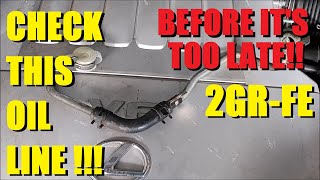
🎬 Watch: How to check if your VVT oil line is leaking.Symptoms You May Notice
- Check Engine Light is on
- Engine is hard to start
- Rough or unstable idle
- Engine hesitation or lack of power, especially on acceleration
- Stalling at low speeds or when stopping
- Decreased fuel economy
- Black smoke from the tailpipe (less common)
- Replacing the camshaft position sensor. The sensor is usually not the cause of a P0022 code; it is accurately reporting the timing problem. A faulty sensor would typically set a different code related to the sensor circuit itself (e.g., P0345, P0347, P0348).
Most Likely Causes
- Dirty or Low Engine Oil 🔴 High Probability The VVT-i system is operated by engine oil pressure. Sludge from infrequent oil changes or using the wrong viscosity oil can clog passages and impede the function of the OCVs and phasers. This is often the first and easiest thing to check.
How to confirm: Check the oil level on the dipstick. Inspect the oil's condition. If it is dark, thick, or below the minimum level, this is a likely contributor.
Typical fix: Perform an engine oil and filter change using the manufacturer-specified oil (typically SAE 0W-20 or 5W-20, check your owner's manual). Reset the code and drive to see if it returns.
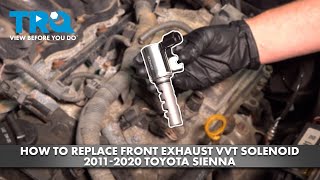
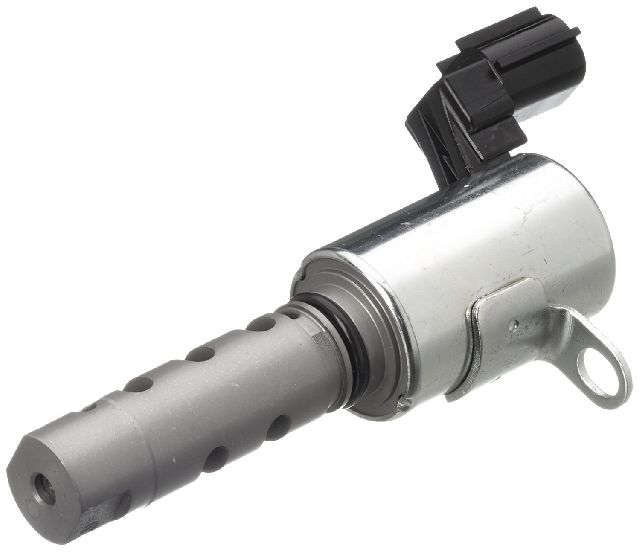
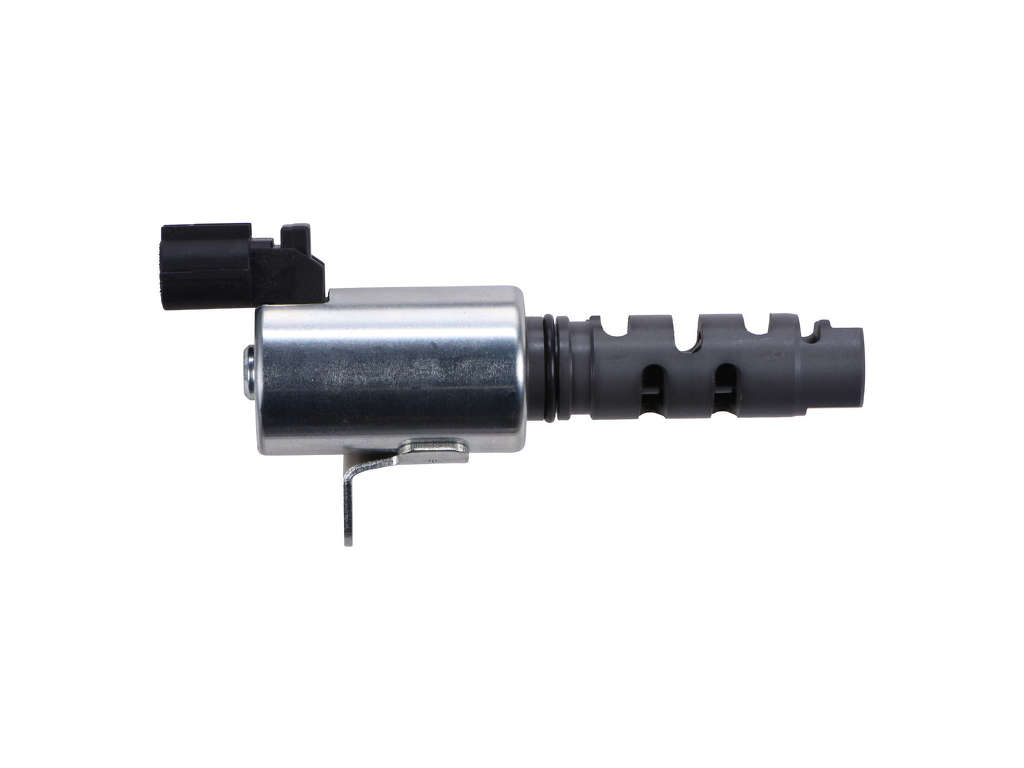
Est. part cost: $40-$80 - Faulty Bank 2 Oil Control Valve (OCV) 🔴 High Probability → Shop Engine Variable Valve Timing (VVT) Solenoid The OCV (or VVT solenoid) is an electromechanical valve that is a very common failure point. It can get stuck or clogged with debris, preventing it from properly directing oil to the cam phaser.
How to confirm: You can test the OCV with a multimeter for correct resistance (typically 6.9 - 7.9 Ohms at 68°F). Or, by applying 12V power to see if it actuates. A common diagnostic step is to swap the Bank 1 and Bank 2 intake OCVs. If the code changes to P0012 (Bank 1 over-retarded), the OCV is confirmed faulty.
Typical fix: Replace the Bank 2 (front, intake) Oil Control Valve. The Bank 2 OCVs are on the cylinder head closest to the radiator and are relatively easy to access.
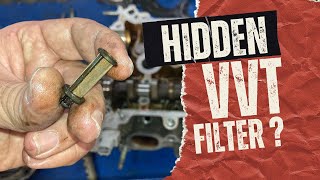
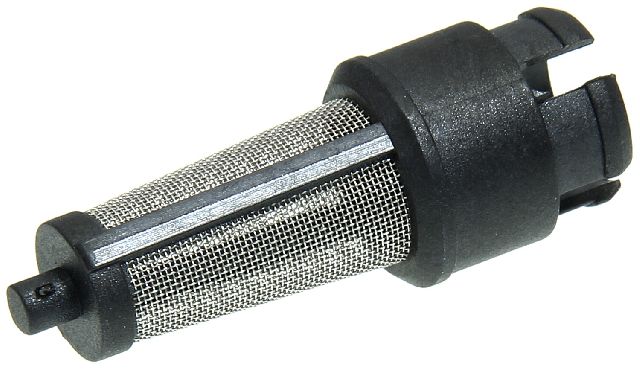
Est. part cost: $40-$90 - Clogged OCV Filter Screen 🟡 Medium Probability There are small mesh filters in the oil passages leading to the OCVs. These can become clogged with sludge or debris, starving the VVT-i system of oil pressure. They are often overlooked during diagnosis.
How to confirm: The filters are located in the cylinder head, secured by a bolt near the OCV. For Bank 2, it is on the front of the engine. The bolt must be removed to extract and visually inspect the small, thimble-shaped filter.
Typical fix: Remove and clean the filter screen with brake cleaner. If it is damaged or cannot be cleaned, it should be replaced. They are inexpensive.
Est. part cost: $5-$15 - Collapsed or Improperly Installed Oil Filter ⚪ Low Probability → Shop Engine Oil Filter Adapter The 2GR-FE uses a cartridge-style oil filter. If a low-quality filter is used, or if the center support cage is not reinstalled during an oil change, the filter can collapse, restricting oil flow and causing pressure issues throughout the engine, including the VVT-i system.
How to confirm: Remove the oil filter housing and inspect the filter element. If it is crushed, deformed, or the center support tube is missing, this is the likely cause.
Typical fix: Replace the oil filter with a high-quality OEM or equivalent brand (e.g., Denso, Toyota) and ensure all components of the filter housing are correctly installed.
Est. part cost: $10-$20
Rare But Worth Checking
- Failing VVT-i Camshaft Phaser/Actuator: → Shop Engine Camshaft The phaser is the gear on the end of the camshaft. It can fail internally, getting stuck in a retarded position. This is often accompanied by a rattling noise on startup. This is a much more expensive and labor-intensive repair than an OCV. Toyota issued a TSB (T-SB-0094-09) for a similar ticking noise issue that could be related to the VVT-i gear assembly on some 2GR-FE engines.
- Stretched Timing Chain: → Shop Engine Timing Chain While less common on well-maintained Toyota engines, a timing chain can stretch over very high mileage (typically over 150,000-200,000 miles), causing the cam/crank correlation to be off and setting a timing code.
- Failing Engine Control Module (ECM): In very rare cases, the ECM itself can be the source of the problem, but all other mechanical and electrical possibilities should be exhausted first.
Diagnosis Steps
- Check Engine Oil Level and Condition: Verify the oil is full and clean. If low or dirty, perform an oil change with the correct viscosity oil and a quality filter. Reset the code and see if it returns. This simple step solves the problem in many cases. 🎬 Watch: Two quick DIY methods to fix the P0022 code.
- Scan for Other Codes: Check for any other pending or active codes that could provide more clues.
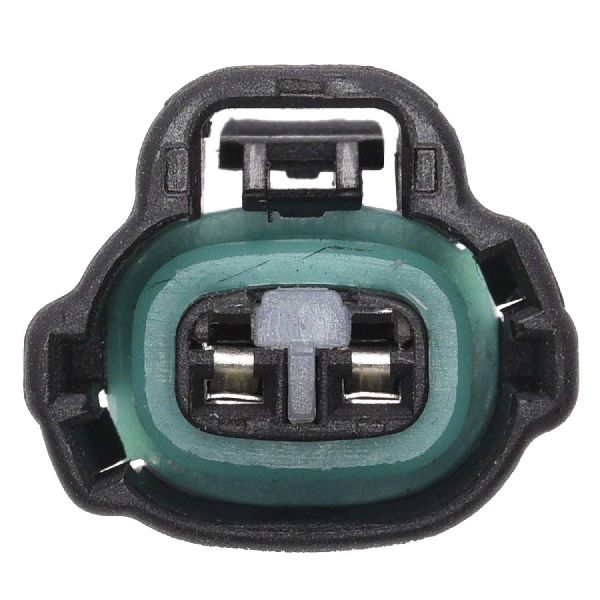
- Inspect OCV Wiring: Check the wiring and connector for the Bank 2 intake OCV (front of the engine) for any damage, corrosion, or loose connections.
- Swap OCVs: A highly effective diagnostic step. Swap the Bank 2 (front) intake OCV with the Bank 1 (rear) intake OCV. They are identical parts. Clear the codes and drive the vehicle. If the code returns as P0012 (Bank 1 over-retarded), the OCV is confirmed faulty and needs to be replaced.
- Test the OCV: If you don't swap them, you can remove the suspect OCV and test it. Check its resistance with a multimeter (should be 6.9 - 7.9 Ohms). Apply 12V to its terminals to see if the internal plunger moves freely.
- Inspect OCV Filter: Remove and inspect the small mesh filter screen for the Bank 2 OCV. It is located on the front of the engine, usually below the OCV, and is held in by a single bolt. Clean it thoroughly with brake cleaner or replace it if damaged.
- Advanced Diagnostics: If the above steps do not resolve the issue, the problem may be a faulty VVT-i cam phaser or a timing chain issue. These diagnoses require more advanced tools (like an oscilloscope to check cam/crank signals or Toyota's Techstream software) and expertise and are best left to a professional mechanic.
Parts You'll Likely Need
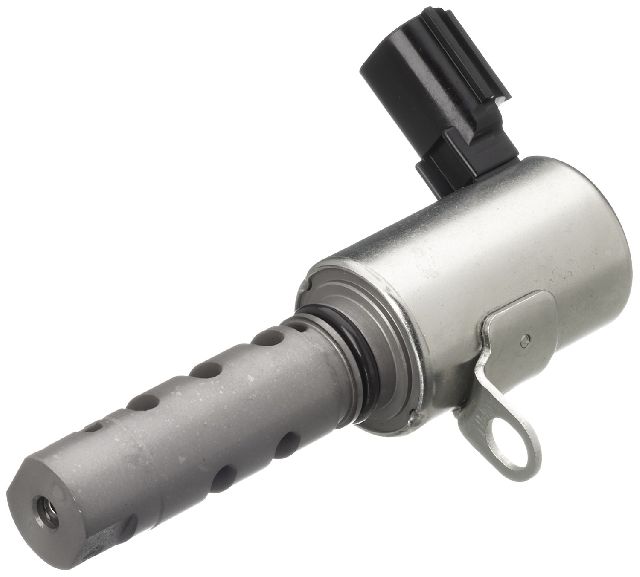
- Engine Variable Valve Timing (VVT) Oil Control Valve (Bank 2, Intake)
(OEM #15330-0P020 (supersedes 15330-31020))— This solenoid is the most common failure point for code P0022. It gets stuck or clogged, preventing correct VVT-i operation. The Bank 1 and Bank 2 intake OCVs are the same part.
Trusted brands: Denso (OEM supplier), Aisin, Genuine Toyota
OEM price range: $100-$130
Aftermarket price range: $40-$90 - Engine Oil and Filter — Low or dirty oil is a primary cause of VVT-i system faults. An oil change is a critical first step in diagnosis and repair.
Trusted brands: Toyota Genuine Motor Oil, Mobil 1, Pennzoil
OEM price range: $50-$80
Aftermarket price range: $40-$60 - OCV Filter Screen
(OEM #15678-31020)— This small filter can get clogged with sludge, restricting oil flow to the OCV and cam phaser. It's inexpensive and wise to clean or replace when servicing the OCV. Note: Part number 15678-46020 may also be applicable.
Trusted brands: Genuine Toyota
OEM price range: $5-$15
Aftermarket price range: $3-$10
Related Codes That Often Appear With This One
- P0012 — Intake Camshaft Position Timing - Over-Retarded (Bank 1). Seeing both P0012 and P0022 simultaneously points strongly to a systemic oil issue, like low oil level, severe sludge, or a collapsed oil filter, affecting both banks.
- P0021 — Intake Camshaft Position Timing - Over-Advanced (Bank 2). Seeing both P0021 and P0022 can indicate an erratic OCV or severe oil flow problem causing the phaser to behave erratically.
Technical Service Bulletins (TSBs) & Recalls
- T-SB-0094-09 (Rev1): Addresses a ticking/clicking noise from the cylinder head area which may be accompanied by VVT-i related DTCs like P0014, P0015, etc. While not directly for P0022, it relates to the VVT-i gear assembly, a rare cause of this code.
Platform-Specific Known Issues
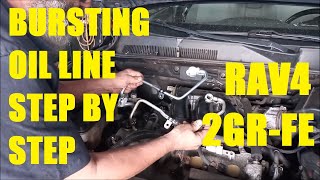
- Rupturing VVT-i Oil Line (LSC 90K): Early 2GR-FE engines (approx. 2007-2010 Siennas) had a VVT-i oil line for Bank 1 (rear bank) that used a rubber hose section. This hose was prone to degradation and rupture, causing rapid, catastrophic oil loss. Toyota issued Limited Service Campaign 90K to replace this with an all-metal line. While a full rupture is a major event, a minor leak at the hose crimps could lower oil pressure to the VVT system and potentially contribute to timing codes like P0022 before a complete failure.
Mechanic-Grade Diagnostic Values
- Oil Control Valve (OCV) resistance — expected: 6.9 to 7.9 Ω at 20°C (68°F). Failure: Resistance is outside of this range, indicating an electrical fault in the solenoid coil.
- Techstream Live Data: VVT Target Angle vs. Actual Angle (Bank 2 Intake) — expected: The actual angle should closely follow the target angle as engine RPM and load change.. Failure: A significant and persistent lag between the target and actual angle when the OCV is commanded.
- DTC Set Condition (Retarded Timing) — expected: Camshaft timing should change by at least 5 degrees CA within 5 seconds of being commanded.. Failure: It takes 5 seconds or more for the timing to change by 5 degrees CA.
Hidden / Shadow Codes Worth Checking
- Mode 6, Test ID for VVT System: Mode 6 provides raw test data from the ECM's self-tests. For the VVT system, it can show the measured camshaft response time in milliseconds or degrees of variance, compared to the ECM's programmed pass/fail threshold. (see via A professional scan tool like Toyota Techstream is required to properly interpret these values. Generic scanners may show raw hexadecimal data (e.g., TID $81, CID $11) which is difficult to decipher without manufacturer-specific documentation.)
Scan Tool Commands That Help
- Toyota Techstream: Active Test: Control the VVT linear (Bank 2) — This bidirectional test is used to manually command the Bank 2 intake OCV to operate. While observing live data for target vs. actual cam angle, a technician can toggle the solenoid to confirm if it's mechanically stuck or if the oil passages are clear. If the command is sent but the cam angle doesn't change, it points to a problem with the OCV, oil flow, or the phaser itself.
Wiring & Ground Locations
- Engine Control Module (ECM) — Located on the right side of the dashboard, typically behind the glove box.. The ECM sends the control signal to the Bank 2 OCV. In rare cases of a persistent code with a known-good OCV and wiring, the ECM driver circuit could be at fault. Testing for signal at the ECM connector pins is a final diagnostic step.
- ECM Connector Pinout — On the ECM itself. The 2GR-FE uses multiple connectors with many pins.. A detailed pinout chart allows a technician to test for continuity and voltage directly at the ECM for the OCV circuit, ruling out wiring harness breaks or shorts between the component and the computer. A full wiring diagram for the 2015 Sienna 2GR-FE is available online which can be used as a reference.
- Ground Point EB — On the front of the engine.. This is a major engine ground point shown in wiring diagrams. While not directly tied only to the OCV, a poor ground connection at this location can cause a variety of sensor and actuator issues, leading to erratic behavior and fault codes.
"I Checked Everything" — The Actual Cause
- This is not a fault diagnosed with a smoke test. The equivalent scenario is 'Standard diagnostics pass, but the code remains.' A common example is when a technician tests or even replaces the Bank 2 OCV, confirms the oil is clean and full, but the P0022 code returns. The actual cause is often a clogged OCV filter screen located in the cylinder head, which was not inspected during the initial repair. This tiny, inexpensive filter gets blocked by sludge and starves the VVT phaser of the oil pressure it needs to adjust timing, even with a perfectly functional OCV.
When the Usual Fixes Don't Work
- In some cases, owners have replaced the Bank 2 Oil Control Valve (OCV) and performed an oil change, only for the P0022 code to return. This indicates the problem lies deeper than the most common failure point. The next step that often resolves the issue is cleaning or replacing the small, easily-overlooked OCV filter screen in the cylinder head. If that filter is clean and the code still persists, especially if accompanied by a startup rattle, the cause is likely the more expensive and labor-intensive VVT camshaft phaser, which has failed mechanically.
OEM Part Supersession History
15330-31020→15330-0P020— Likely an internal revision for improved durability or performance. The design is externally identical.
Heads up: None. The parts are interchangeable.
Model Year Variations Within This Range
- 2007-2010: These earlier models were equipped with a VVT-i oil supply line for Bank 1 (rear) that contained a rubber hose section. This hose was prone to leaking or rupturing. Toyota issued Limited Service Campaign (LSC) 90K to replace it with an improved all-metal line. A leak in this line could cause oil pressure problems for the entire VVT system, potentially triggering timing codes on either bank before a catastrophic failure.
Diagnostic Flowchart
Other Known Issues on This Vehicle
Issues unrelated to this code that are worth knowing about as an owner of this generation:
- Power Sliding Door Failure 🟠 Medium — Very common across all generations. The cable mechanism is known to fray and break, or the latch motor can fail.
- Melting / Sticky Dashboard 🟡 Low — Common on 2004-2010 models, especially in hot, humid climates. The dash surface degrades, becomes shiny and sticky, causing glare. (Ref: Warranty Enhancement Program ZE6 (Expired))
- VVT-i Oil Line Rupture 🔴 High — Affects early 2GR-FE engines (approx. 2007-2010). A rubber oil line section degrades and can rupture, causing rapid oil loss and potential engine seizure. (Ref: Limited Service Campaign (LSC) 90K (Expired))
- Water Pump Failure 🟠 Medium — The water pump on the 2GR-FE is a known wear item and can fail prematurely, sometimes before 100,000 miles, leading to coolant leaks and overheating.
- Transmission Issues (2007-2011 models) 🟠 Medium — Some owners of earlier models report issues like rough shifting, hesitation, or jerking.
Used vs. New Parts: Buying Guide for This Vehicle
When a used part is the smart pick: A used Oil Control Valve (OCV) from a reputable auto recycler can be a cost-effective option. It is an external, self-contained electromechanical part that is easy to replace if it fails.
Donor-vehicle mileage cap: roughly under 100000 miles for the part to have meaningful remaining life.
What to inspect on the donor part:
- Source from a vehicle with documented low mileage, preferably one taken out of service due to collision damage, not engine failure.
- Visually inspect the part for physical damage, cracks in the connector, or heavy sludge on the screen.
- If possible, test the resistance with a multimeter before purchase to ensure it's within the 6.9-7.9 Ohm spec.
OEM-only on this vehicle (don't cheap out):
- VVT Cam Phaser (Actuator)
- Timing Chain and Tensioners
- Oil Filter Cartridge
Aftermarket brands forum-validated for this vehicle:
- Denso (often the OEM supplier)
- Aisin
Brands owners have reported issues with on this vehicle:
- Unbranded 'white-box' solenoids from online marketplaces are known to have high failure rates and may not perform to OEM specifications, causing the code to return.
Real Owner Stories
Aggregated from forums and TSBs cited above. Mileages and costs reflect what owners reported in those sources.
2010 Toyota Tacoma (1GR-FE)
Symptoms: Recurring P0022 code.
What fixed it: The community identified the fix as addressing oil change frequency, cleaning a gummed-up Oil Control Valve (OCV), or clearing a clogged OCV filter.
Source hint: TacomaWorld.com - Thread 'Code p0022'
Toyota Sienna (2GR-FE)
Symptoms: P0022 code persisted even after an initial oil change.
What fixed it: Replacing the Bank 2 (front) OCV and its corresponding filter screen.
Source hint: SiennaChat.com - Multiple threads discuss P0012/P0022 codes
Toyota Tundra (NHTSA ODI #10579431)
Symptoms: The check engine light came on with codes P0012 and P0022, indicating camshaft position timing over-retarded for both Bank 1 and Bank 2.
What fixed it: A local Toyota shop checked the codes and activated both VVT systems to verify operation; at the time of inspection, both systems were found to be working fine.
Related OBD-II Codes
Frequently Asked Questions
Where is the Bank 2 Oil Control Valve located on my 2GR-FE engine?
Does TSB-0094-09 apply to my P0022 code?
What is the correct oil viscosity for my Sienna to prevent VVT-i issues?
Is there a specific recall or service campaign for oil leaks on early 2007-2010 Siennas?
Can a simple oil filter change fix a P0022 code?
How can I tell if the OCV filter screen is the problem?
Helpful Videos
![How to Fix P0022 Engine Code in 4 Minutes [2 DIY Methods / Only $6.53]](https://img.youtube.com/vi/BO7HzbeFxqo/mqdefault.jpg)
We Have This Part in Stock


The information in this article is provided for general reference and educational purposes only. Vehicle specifications, procedures, and part compatibility can vary by production date, trim level, and region. Always consult your vehicle's factory service manual and verify part numbers before purchasing or performing repairs. Safety-critical components such as airbags, seat belts, and braking systems should be installed by a qualified professional.
- Toyota Sienna:
- 🧭 Diagnostic Flowchart
- 🎬 Helpful Videos
- 🛍️ Shop This Part
- What's Unique About the 2007-2016 Toyota Sienna
- Symptoms You May Notice
- Most Likely Causes
- Rare But Worth Checking
- Diagnosis Steps
- Parts You'll Likely Need
- Related Codes That Often Appear With This One
- Technical Service Bulletins (TSBs) & Recalls
- Platform-Specific Known Issues
- Mechanic-Grade Diagnostic Values
- Hidden / Shadow Codes Worth Checking
- Scan Tool Commands That Help
- Wiring & Ground Locations
- "I Checked Everything" — The Actual Cause
- When the Usual Fixes Don't Work
- OEM Part Supersession History
- Model Year Variations Within This Range
- Other Known Issues on This Vehicle
- Used vs. New Parts: Buying Guide for This Vehicle
- Real Owner Stories
- 2010 Toyota Tacoma (1GR-FE)
- Toyota Sienna (2GR-FE)
- Toyota Tundra (NHTSA ODI #10579431)
- Related OBD-II Codes
- Frequently Asked Questions
- 🎟️ Get 5% Off