

P0024 on 2004-2009 Audi A8 4.2L V8: Exhaust Cam Timing Causes and Fixes
On the 2004-2009 Audi A8 4.2L V8, code P0024 is most often caused by low/dirty engine oil or a failing camshaft adjuster solenoid on Bank 2 (driver's side). However, it can also be a severe warning of failing timing chain guides, an extremely expensive repair. Always check oil first. A startup rattle is a key symptom that should not be ignored.
- Always check your engine oil level and condition first; use only VW 502 00 specification oil.
- P0024 on a 2007-2009 FSI engine is often a faulty, swappable solenoid. On a 2004-2006 engine, the fix is a more involved camshaft adjuster replacement.
- Any rattling or chain noise from the engine, especially on startup, is a critical warning. Stop driving and have the vehicle inspected immediately to avoid catastrophic engine failure.
- Do not replace the camshaft position sensor; it is almost never the cause of this code.
- Due to the risk of a severe timing chain issue, professional diagnosis with an Audi-specific scan tool is highly recommended.
What's Unique About the 2004-2009 Audi A8
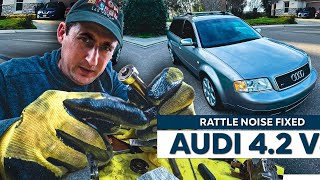
The 4.2L V8 used in the D3 generation A8 is notorious for timing chain issues. The chains are located at the rear of the engine, against the firewall, meaning the entire engine must be removed for service, leading to exceptionally high repair costs. While P0024 can be a simple fix like an oil change or a faulty solenoid, it can also be the first and only warning of failing plastic timing chain guides. A rattling noise from the engine, especially on startup, accompanying this code should be considered a critical warning sign of impending, catastrophic engine failure. Audi has issued a Technical Service Bulletin (TSB) acknowledging that a 1-3 second rattle on a cold start can be caused by the upper chain tensioners and does not necessarily indicate damage, though it points to wear in the system.
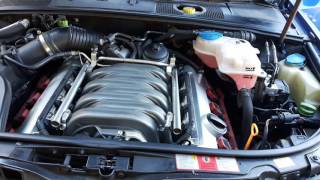
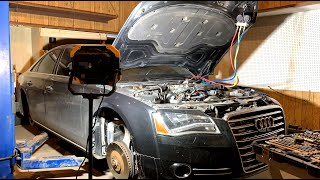
🎬 Watch: Hear a 2008 Audi A8 4.2L V8 cold start rattleGeneration note: The 2004-2009 range covers the Audi A8 D3 generation but includes two important variations of the 4.2L V8 engine: - 2004-2006 (approx.): Port-injected V8 (Engine codes like BFM). On these, the VVT solenoid is integrated into the upper cam chain tensioner/adjuster unit. - 2007-2009 (approx.): FSI (Direct Injection) V8 (Engine codes like BVJ). These engines have four separate, externally accessible VVT solenoids (oil control valves), often called N205 valves. This difference is critical for diagnosis and parts ordering.
Symptoms You May Notice
- Check Engine Light is on
- Rough, unstable idle, especially when cold
- Engine rattling or chain noise, particularly on startup, which may last 1-3 seconds or persist when warm
- Misfires on Bank 2 (cylinders 5, 6, 7, 8), often triggering codes P0300, P0305, P0306, P0307, P0308
- Noticeable loss of power and acceleration
- Reduced fuel economy
- Engine stalling at low RPMs
- Replacing the Camshaft Position Sensor. The sensor is almost always doing its job correctly by reporting the timing error. The fault lies in the mechanical or hydraulic components that control the timing, not the sensor itself. One forum user replaced the sensor for a similar code with no success before looking at the solenoid.
Most Likely Causes
- Low, Dirty, or Incorrect Engine Oil 🔴 High Probability The VVT system is entirely dependent on clean oil of the correct viscosity (VW 502 00 spec) and pressure to function. Sludge from infrequent oil changes can clog the small passages in the solenoids and adjusters, causing them to stick.
How to confirm: Check the oil level on the dipstick and review service records. If the oil is low, dark, or past its change interval, this is the first step.
Typical fix: Perform an engine oil and filter change using a high-quality, manufacturer-approved oil. Some owners use an engine flush product like LiquiMolly before the oil change, though results vary.
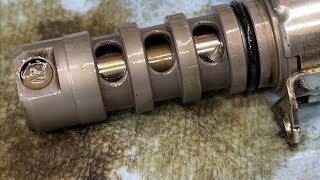
Est. part cost: $80-$150 - Faulty Camshaft Adjuster Solenoid (Oil Control Valve / N205 Valve) 🟡 Medium Probability → Shop Engine Camshaft Applies mainly to 2007-2009 FSI engines. These solenoids control oil flow and can become clogged with debris or fail electrically. The internal filter screen can also break off and jam the mechanism.
How to confirm: Swap the Bank 2 exhaust solenoid with the Bank 1 exhaust solenoid. Clear codes and drive. If the code changes to P0014 (Bank 1), the solenoid is faulty. The resistance can also be tested with a multimeter; a value between 5.0 and 8.0 ohms is expected at room temperature.
Typical fix: Replace the faulty solenoid. It is recommended to replace the O-ring seal at the same time to prevent leaks.
Est. part cost: $50-$150 - Failing Camshaft Adjuster / Tensioner Unit 🟡 Medium Probability → Shop Engine Camshaft Applies mainly to 2004-2006 non-FSI engines where the solenoid is integrated. The unit's internal seals can fail, or the tensioner pads can wear, causing a loss of oil pressure and incorrect timing adjustment. The hydraulic tensioner can leak down, causing chain slack on startup.
How to confirm: This is harder to confirm without ruling out other causes. If oil is good and the code persists, this unit is the next likely suspect. A persistent rattle and VCDS data showing large cam phase deviation point to this part.
Typical fix: Replace the entire Bank 2 camshaft adjuster unit. This is a labor-intensive job that requires removal of the valve cover.
Est. part cost: $400-$800 - Worn Timing Chain Guides / Stretched Chain ⚪ Low Probability → Shop Engine Timing Chain The plastic guides for the timing chains at the rear of the engine are a known major failure point. They become brittle with age and heat cycles, breaking apart and allowing the chain to lose tension. This is a well-documented issue across many Audi 4.2L V8s.
How to confirm: A persistent rattling or slapping noise from the rear of the engine, especially on startup, is the primary indicator. A mechanic can use a tool like VCDS to check 'cam phase deviation' (measuring blocks 091/092/093); a value greater than +/- 8 degrees consistently suggests a significant timing issue requiring major service.
Typical fix: This is a catastrophic failure requiring complete engine removal to replace all timing chains, tensioners, and guides. It is an extremely expensive repair, often costing more than the value of the vehicle.
Est. part cost: $1500-$2500
Rare But Worth Checking
- Failed Oil Check Valves: These small, non-return valves in the cylinder heads can fail or get clogged, allowing oil to drain from the top of the engine when shut off. This starves the tensioners on startup, causing a rattle and potentially contributing to timing codes over time. Replacing them is less intensive than a full timing job but requires removing the intake manifold.
Diagnosis Steps
- Verify engine oil level and condition. If low, dirty, or incorrect, perform an oil change with VW 502 00 specification oil and a new filter. Clear codes and re-test.
- Listen carefully to the engine during a cold start. Note any rattling or slapping noises from the rear of the engine. A brief 1-3 second rattle is noted in a TSB, but a longer or more metallic sound is a serious concern.
- Scan the vehicle for all codes. Note if P0024 is accompanied by misfire codes or other timing codes like P0019.
- For 2007-2009 FSI models: Locate the Bank 2 (driver's side) exhaust camshaft adjuster solenoid (N205 valve). Swap it with an identical solenoid from another position (e.g., Bank 1 exhaust). Clear codes and drive. If the code changes to P0014, the solenoid you moved is bad and must be replaced.
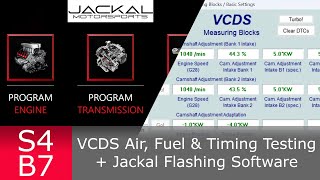
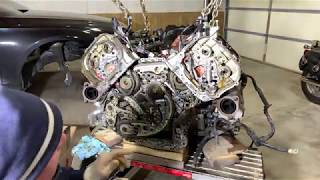
- For all models: If the above steps do not resolve the issue, use a diagnostic tool (like VCDS) to monitor camshaft adjustment values (Measuring Blocks 091-093). Significant deviation (e.g., > +/- 8 degrees) at idle points towards a mechanical timing problem (adjuster unit or main timing chain 🎬 Watch: How to check cam adjustment timing using VCDSs).
- If a mechanical timing issue is suspected, professional service is required for an engine-out timing system overhaul.
Parts You'll Likely Need
- Camshaft Adjuster Solenoid (for 2007-2009 FSI)
(OEM #06E109257P)— This solenoid is a common failure point on FSI engines, getting clogged or failing electrically. It's the most likely part to fail after ruling out oil issues.
Trusted brands: Genuine Audi, Bosch, Beck/Arnley
OEM price range: $100-$180
Aftermarket price range: $40-$90 - Camshaft Adjuster / Tensioner Unit (for 2004-2006)
(OEM #077109087P)— On earlier models, the solenoid is part of this larger unit. The entire assembly can fail hydraulically or mechanically, causing chain slack between the cams. This part has been superseded from older versions ending in C and E.
Trusted brands: Genuine Audi, INA, Bapmic
OEM price range: $600-$800
Aftermarket price range: $350-$500 - Engine Oil and Filter Kit — The VVT system is highly sensitive to oil quality and level. This is always the first and cheapest step in diagnosis and repair.
Trusted brands: Liqui Moly, Castrol EDGE, Mobil 1
OEM price range: $100-$150
Aftermarket price range: $80-$120
Related Codes That Often Appear With This One
- P0300 — Random/Multiple Cylinder Misfire Detected. Incorrect cam timing disrupts the combustion process, causing misfires across the entire bank.
- P0305, P0306, P0307, P0308 — Cylinder-specific misfire codes for Bank 2. These are a direct result of the incorrect exhaust valve timing on that bank.
- P0019 — Crankshaft Position - Camshaft Position Correlation Bank 2 Sensor 'B'. This indicates a more severe mechanical timing misalignment between the crank and the Bank 2 exhaust cam, often seen when a chain has stretched or jumped a tooth. An Audi Q7 owner with a 4.2L V8 reported this code along with P0024, pointing to a likely timing chain failure.
Platform-Specific Known Issues
- The 4.2L V8's timing components are located at the rear of the engine, against the firewall. Any service to the main timing chains, guides, or tensioners requires the engine and transmission to be removed from the vehicle, making it an exceptionally labor-intensive and expensive job, often costing over $7,000.
Mechanic-Grade Diagnostic Values
- VCDS Camshaft Phase Deviation (Measuring Block 093) — expected: At warm idle, the value for Bank 2 should be within +/- 6 degrees. Some sources allow up to +/- 8 degrees.. Failure: A consistent reading greater than +/- 8 degrees at warm idle strongly suggests a mechanical timing issue like stretched chains or failing guides.
- Camshaft Adjuster Solenoid (N205) Resistance (FSI engines) — expected: 5.0 to 8.0 ohms at approximately 20°C (68°F).. Failure: A reading outside this range, or an open circuit, indicates a failed solenoid. Note that a solenoid can be mechanically stuck even if its resistance is within spec.
- Camshaft Adjuster Solenoid (N205) Voltage Supply (FSI engines) — expected: Battery voltage should be present at terminal 1 of the solenoid's electrical connector with the ignition on.. Failure: No voltage indicates a wiring issue, a bad fuse (SB7), or a problem with the Motronic Engine Control Module Power Supply Relay (J271).
Scan Tool Commands That Help
- VCDS (VAG-COM): Engine -> Measuring Blocks -> Groups 091, 092, 093 — This is the primary diagnostic step after checking oil. It allows a technician to view the specified vs. actual camshaft position and, most importantly, the 'Phase Position' or 'Camshaft Adaptation' value in Block 093. This value shows how much the ECU is compensating and is the key indicator of mechanical chain stretch or guide failure.
- VCDS (VAG-COM): Engine -> Basic Settings -> Group 094 (Camshaft Adjustment Test) — This function can be used to run a test cycle on the camshaft adjusters. A 'pass' or 'fail' result can help determine if the system is capable of functioning correctly under test conditions.
- VCDS (VAG-COM): Engine -> Output Tests / Final Control Diagnosis (Function 03) — This allows for direct activation of the N205 solenoid. A technician can command the solenoid to operate while observing its effect on the engine or by using a test light on the connector to verify the ECM is sending the signal. This isolates the solenoid and its wiring from the mechanical parts.
Wiring & Ground Locations
- G163 — This is the component identifier for the Bank 2 Camshaft Position Sensor. On non-FSI engines, it is located at the rear of the driver's side cylinder head.. While the sensor is rarely the cause, knowing its precise location is critical for inspection of its wiring and connector, which can become brittle from heat.
- N205 Connector (FSI) — The 2-pin connector on the Bank 2 exhaust camshaft adjuster solenoid.. Pin 1 is the voltage supply from the power supply relay. Pin 2 is the ground-side control wire to the Engine Control Module (J623). Testing at these pins can quickly diagnose an electrical open/short vs. a failed solenoid.
- Ground Point 12 / 640 — These are official Audi designators for ground connections in the left (driver's side) of the engine compartment.. A poor engine ground can cause a host of intermittent electrical issues, including incorrect readings from sensors and improper operation of solenoids. Verifying these grounds are clean and tight is a crucial step in diagnosing elusive electrical faults.
Real Owner Repair Stories
- AudiWorld Forums user (2009 Audi A8L, 109k miles) — Check engine light with fault code P0024.
❌ Tried (didn't work) Replacing the Bank 2 camshaft solenoid.
✅ What actually fixed it The code returned one month after the solenoid was replaced. The repair shop then diagnosed the issue as requiring a full timing chain, tensioner, and guide replacement, indicating the solenoid was not the ultimate cause. - YouTube user 'Jeep solid' (2007 Audi A8L D3) — P0024 code returned after a previous repair, accompanied by misfire codes P0305, P0306, P0307, P0308.
❌ Tried (didn't work) An initial repair which included an oil change and replacing valve cover gaskets did not permanently fix the code.
✅ What actually fixed it Upon re-inspection, the user found a small chunk of metal inside the port for the exhaust VVT solenoid. He removed the debris, cleaned the area, and swapped the intake and exhaust solenoids on the same bank to confirm if the solenoid itself was damaged. This highlights that debris can cause the solenoid to jam, mimicking a failure.
When the Usual Fixes Don't Work
- In one documented case for a 2009 A8L, replacing the camshaft adjuster solenoid for P0024 did not solve the problem, as the code returned a month later. The final diagnosis pointed to the underlying timing chain system, demonstrating that the solenoid can be a symptom rather than the root cause, even on the FSI engines where it is a common failure point.
OEM Part Supersession History
077109087C, 077109087E→077109087P— Part revision and improvement by the manufacturer for the non-FSI camshaft adjuster/tensioner unit.
Heads up: The newer 'P' revision should be used for all replacements.06E109257P→06E109257J (and others)— Part revision for the FSI camshaft adjuster solenoid. Multiple revisions exist.
Heads up: While the solenoids are generally interchangeable between intake/exhaust on the FSI engine, it is critical to order the correct part number for the vehicle's specific year and engine code (BVJ). Always verify the part number on the old solenoid before ordering a replacement.
Model Year Variations Within This Range
- 2004-2006 (BFM engine, non-FSI): The VVT solenoid is integrated into the camshaft adjuster/tensioner unit (PN 077109087P). Diagnosis cannot isolate the solenoid; the entire unit must be considered. The Bank 2 camshaft position sensor (G163) is located at the rear of the driver's side cylinder head, making access more difficult.
- 2007-2009 (BVJ engine, FSI): Features four individual, externally accessible VVT solenoids (PN 06E109257P or similar). This allows for easy swapping for diagnostic purposes. The camshaft position sensors are located on the front of the engine and are more accessible.
Diagnostic Flowchart
Other Known Issues on This Vehicle
Issues unrelated to this code that are worth knowing about as an owner of this generation:
- Adaptive Air Suspension Failure 🔴 High — Very common, especially on vehicles over 80,000 miles. Leaking air struts/springs or failing compressors are typical.
- MMI Infotainment System Failure 🟠 Medium — Common as the vehicle ages. Can be caused by a variety of component failures in the fiber optic loop.
- Excessive Oil Consumption 🟠 Medium — More prevalent on higher-mileage engines, particularly early models.
- Water Ingress and Electrical Problems 🟠 Medium — Occurs over time as seals and drains age.
Used vs. New Parts: Buying Guide for This Vehicle
When a used part is the smart pick: For this repair, used parts are generally not recommended due to the high labor costs and critical nature of the timing system. The only exceptions might be cosmetic items like engine covers, or electrical connectors if the original is damaged during repair. A used VVT solenoid could be considered a temporary diagnostic tool if acquired very cheaply, but installing a used wear item is risky.
Donor-vehicle mileage cap: roughly under 60000 miles for the part to have meaningful remaining life.
What to inspect on the donor part:
- For a VVT solenoid, check that the screen is intact and there is no visible sludge or debris.
- Ask for the donor vehicle's VIN to check its service history if possible.
- Avoid parts from engines that show signs of heavy oil sludge or coolant contamination.
OEM-only on this vehicle (don't cheap out):
- Timing Chains
- Timing Chain Guides
- Timing Chain Tensioners
- Camshaft Adjuster / Tensioner Unit (non-FSI)
- Oil Non-Return Check Valves
Aftermarket brands forum-validated for this vehicle:
- INA (Often the OEM supplier for tensioners and adjusters)
- Bosch (Often the OEM supplier for solenoids and sensors)
- Elring (For gaskets and seals)
Brands owners have reported issues with on this vehicle:
- Unbranded, no-name 'complete' timing kits from online marketplaces. The cost savings on the parts are insignificant compared to the cost of labor if a cheap guide breaks and the engine must be removed again.
Real Owner Stories
Aggregated from forums and TSBs cited above. Mileages and costs reflect what owners reported in those sources.
2007 Audi Q7 4.2L FSI V8
Symptoms: Rough idle, misfires, and codes P0024 and P0019.
What fixed it: The owner suspected a timing chain tensioner failure requiring significant engine work.
Source hint: AudiWorld forum thread titled 'Probably last leg my 07 4.2 V8 rough idle misfired P0024 P0019'
2009 Audi A8L 4.2L V8
Symptoms: Recurring P0024 code.
What fixed it: After a solenoid replacement failed to resolve the issue, a full timing chain service was recommended.
Source hint: AudiWorld forum thread titled '2009 Audi A8L Quattro Questions'
2008 Audi A8 4.2L FSI V8
Symptoms: Engine rattle on startup.
What fixed it: Identified by forum members as the 'dreaded timing chain guide and tensioner issue' requiring engine removal.
Source hint: AudiWorld forum thread titled '08 4.2 V8 FSI engine rattle startup'
Related OBD-II Codes
Frequently Asked Questions
I hear a brief 1-3 second rattle when I start my 2008 Audi A8 4.2L; is this the cause of my P0024 code?
Can I swap parts to test if the N205 solenoid is causing the P0024 code on my 2007 FSI engine?
What specific oil should I use in my A8 4.2L V8 to prevent VVT and timing issues?
My mechanic says the engine needs to come out to fix the timing guides. Is that true for the 2004-2009 A8?
What VCDS values should I look for to confirm a mechanical timing failure?
Is the P0024 code related to the misfires I'm having on cylinders 5, 6, 7, and 8?
Helpful Videos
We Have This Part in Stock


The information in this article is provided for general reference and educational purposes only. Vehicle specifications, procedures, and part compatibility can vary by production date, trim level, and region. Always consult your vehicle's factory service manual and verify part numbers before purchasing or performing repairs. Safety-critical components such as airbags, seat belts, and braking systems should be installed by a qualified professional.
- Audi A8:
- 🧭 Diagnostic Flowchart
- 🎬 Helpful Videos
- 🛍️ Shop This Part
- What's Unique About the 2004-2009 Audi A8
- Symptoms You May Notice
- Most Likely Causes
- Rare But Worth Checking
- Diagnosis Steps
- Parts You'll Likely Need
- Related Codes That Often Appear With This One
- Platform-Specific Known Issues
- Mechanic-Grade Diagnostic Values
- Scan Tool Commands That Help
- Wiring & Ground Locations
- Real Owner Repair Stories
- When the Usual Fixes Don't Work
- OEM Part Supersession History
- Model Year Variations Within This Range
- Other Known Issues on This Vehicle
- Used vs. New Parts: Buying Guide for This Vehicle
- Real Owner Stories
- 2007 Audi Q7 4.2L FSI V8
- 2009 Audi A8L 4.2L V8
- 2008 Audi A8 4.2L FSI V8
- Related OBD-II Codes
- Frequently Asked Questions
- 🎟️ Get 5% Off