

P0024 on 2013-2016 Hyundai Genesis Coupe 3.8L: Exhaust Timing Over-Advanced Causes and Fixes
On a 2013-2016 Genesis Coupe 3.8L, code P0024 is most often caused by low/dirty engine oil or a failing exhaust Oil Control Valve (OCV) on the driver's side (Bank 2). Start by checking your oil; if the oil is clean and full, the OCV is the next likely culprit. This is a more involved repair as it's located under the valve cover, requiring its removal for access.
- P0024 on your Genesis Coupe 3.8L points to an over-advanced exhaust camshaft on the driver's side.
- Before buying any parts, check your engine oil. A simple oil change with the correct 5W-30 synthetic oil and an OEM filter often resolves the issue. Double-check filter installation.
- The most likely failed part is the exhaust Oil Control Valve (OCV), Hyundai P/N 24375-3CGA1, which is located under the driver's side valve cover.
- If multiple camshaft codes (e.g., P0014, P0011, P0021) appear at once, suspect a global oil pressure issue, not multiple failed parts.
What's Unique About the 2013-2016 Hyundai Genesis Coupe
The 2013-2016 Genesis Coupe uses the Lambda II GDI (Gasoline Direct Injection) V6. Unlike many engines where all CVVT solenoids (OCVs) are easily accessible from the outside, the exhaust OCVs on this specific engine are located *inside* the valve covers. This makes diagnosing and replacing the Bank 2 exhaust OCV—a common fix for P0024—a more labor-intensive job than on many other vehicles, as the valve cover must be removed to access it. The intake OCVs, by contrast, are externally mounted and easier to service.
Symptoms You May Notice
- Check Engine Light is on
- Rough or unstable engine idle, sometimes hunting between 600-1000 RPM
- Reduced engine power and sluggish acceleration
- Hesitation when accelerating
- Decreased fuel economy
- Engine may stall at low speeds or when stopped
- Hard starting
- Rattling noise from the engine, which could indicate a more serious timing chain issue
- Replacing the Camshaft Position Sensor (CMP). While a sensor can fail, it typically throws its own specific circuit code (e.g., P0345, P0346, P0347, P0348, P0349). P0024 is a performance code indicating a timing *discrepancy* reported by a functioning sensor. The CMP sensor is correctly reporting a real timing issue.
Most Likely Causes
- Low, Dirty, or Incorrect Viscosity Engine Oil 🔴 High Probability The CVVT system is hydraulic and extremely sensitive to oil pressure and cleanliness. The GDI engine can be prone to oil contamination. Sludge or low oil levels can restrict the small passages in the Oil Control Valve and phaser, causing them to stick or respond slowly.
How to confirm: Check the oil dipstick for a low level. Inspect the oil's color and consistency. Dark, thick, or sludgy oil is a clear indicator. Confirm the oil viscosity used during the last oil change matches the manufacturer's recommendation (typically 5W-30 full synthetic). Using the wrong weight, like 5W-20, has been anecdotally linked to this code. In a related Hyundai report, NHTSA ODI #11597363, an owner noted that when P0014 and P0024 appeared, the engine oil was found to be low.
Typical fix: Perform an engine oil and filter change using a high-quality, full synthetic oil of the correct viscosity and a quality OEM filter. An incorrectly installed cartridge oil filter can also cause oil pressure issues.
Est. part cost: $40-$80 - Faulty Bank 2 Exhaust Oil Control Valve (OCV) 🟡 Medium Probability → Shop Engine Variable Valve Timing (VVT) Solenoid The OCV (also called a VVT solenoid) is an electromechanical part that can fail by sticking from sludge, clogging with debris, or failing electrically. It's a very common failure point in many CVVT systems and a frequent culprit for P0024 on this platform.
How to confirm: After confirming good oil, the OCV is the next suspect. A technician can command the solenoid with a scan tool to check its response. A DIY method is 🎬 See this quick video on how to address the P0024 code. to check the solenoid's internal resistance with a multimeter. For the Genesis Sedan (BH) with a similar engine, the spec is 6.7-7.7 ohms at 68°F, which is a good reference. The most definitive test is to swap it with the Bank 1 exhaust OCV; if the code changes to P0014 (Bank 1 Exhaust), the OCV is confirmed bad. NHTSA ODI #11063653 describes a case where a mechanic diagnosed P0014 and P0024 as the engine timing solenoids needing replacement due to the camshaft timing being advanced.
Typical fix: Replace the Bank 2 (driver's side) exhaust Oil Control Valve. This requires removing the valve cover for access.
Est. part cost: $70-$150
Rare But Worth Checking
- Stretched Timing Chain or Worn Timing Components: → Shop Engine Timing Chain This is a more serious mechanical issue. If you hear rattling noises from the front of the engine, especially on startup, it could point to 🎬 Watch: A detailed walkthrough of the timing chain replacement process. a worn timing chain, tensioners, or guides. Chain stretch can cause the physical cam timing to be incorrect, leading to over-advanced codes.
- Faulty CVVT Cam Phaser: The actuator gear on the end of the camshaft can fail mechanically, getting stuck in an advanced position due to internal debris or a failed locking pin. This is less common than an OCV failure and much more expensive to fix, as it requires significant engine disassembly. One owner reported needing a phaser replacement along with the OCV.
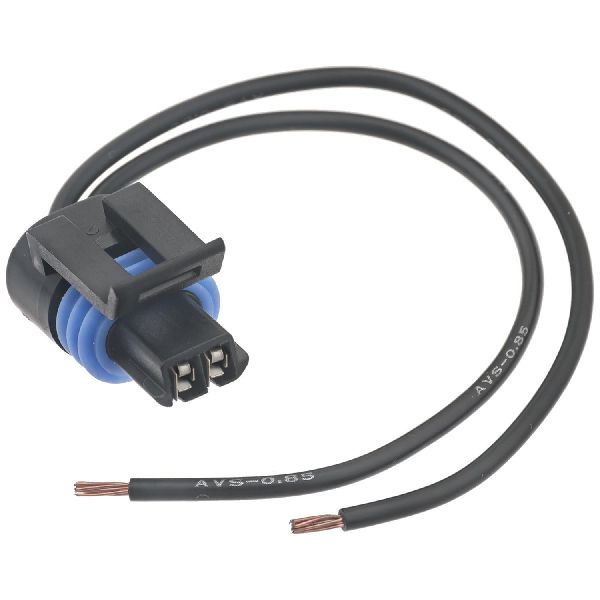
- Wiring or Connector Issue: A damaged wire or corroded connector pin for the Bank 2 exhaust OCV can interrupt the signal from the ECM, causing the code. This should be checked before replacing the OCV itself.
- Aftermarket Engine Tune: In some cases, an aftermarket ECU tune can alter the expected camshaft timing parameters, potentially triggering a P0024 code if the adjustments are too aggressive or not perfectly calibrated. One owner noted the code appeared after installing a tune.
Diagnosis Steps
- Verify the code with an OBD-II scanner. Check for any other related codes.
- Check the engine oil level and condition. If low, top it off. If old, dirty, or the wrong viscosity, perform a complete oil and filter change with a manufacturer-recommended full synthetic 5W-30 oil and an OEM filter. Ensure the cartridge filter is installed correctly.
- If the code returns, inspect the wiring harness and connector for the Bank 2 (driver's side) exhaust OCV for any visible damage, corrosion, or loose connections. The connector is located on the valve cover.
- If wiring is okay, the next step is to test the OCV itself. This requires removing the driver's side valve cover.
- Once accessed, you can test the OCV's internal resistance with a multimeter. Compare the reading to the specification (approx. 6.7-7.7 ohms).
- A practical test is to swap the Bank 2 exhaust OCV with the Bank 1 (passenger side) exhaust OCV. This requires removing both valve covers. Reassemble with new gaskets, clear the codes, and drive. If the code returns as P0014, you have confirmed the OCV is faulty.
- If the code remains P0024 after the swap, the problem lies elsewhere. At this point, the issue is likely with the CVVT phaser (actuator), the timing chain/guides, or a blockage in the oil passages within the head or camshaft. Professional diagnosis is strongly recommended.
- A professional technician can use a bi-directional scan tool to command the OCV on and off while the engine is running to see if the engine note changes or stumbles, which indicates the phaser is attempting to move.
Parts You'll Likely Need
- Engine Oil Control Valve (VVT Solenoid), Bank 2 Exhaust
(OEM #24375-3CGA1)— This solenoid controls oil flow to the cam phaser and is the most common component to fail, either by clogging or electrical fault, leading to the P0024 code. It is located under the valve cover.
Trusted brands: Hyundai (OEM), Mando
OEM price range: $90-$150
Aftermarket price range: $50-$100 - Valve Cover Gasket, Bank 2 (Driver's Side)
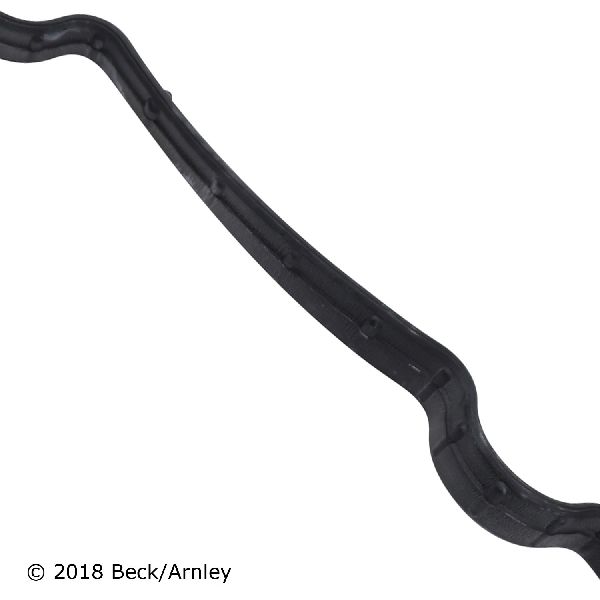
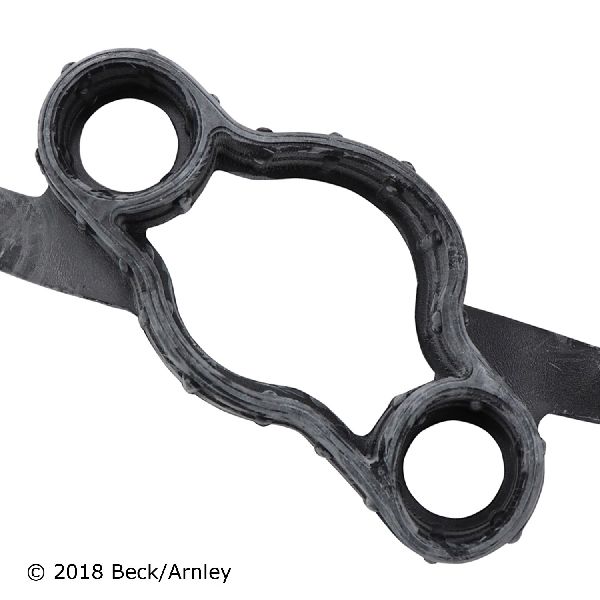
(OEM #22441-3CGA1)— Required for replacing the exhaust OCV, as it is located under the valve cover. The gasket should always be replaced when the cover is removed to prevent oil leaks. The kit usually includes spark plug tube seals.
Trusted brands: Hyundai (OEM), Fel-Pro, Mahle, Beck/Arnley
OEM price range: $30-$50
Aftermarket price range: $20-$40
Related Codes That Often Appear With This One
- P0014 — P0014 is the equivalent code for the exhaust camshaft on Bank 1 (passenger side). If you see both P0014 and P0024, it strongly suggests a systemic problem like low oil pressure, severe oil sludge, or an issue with the oil filter housing, rather than two failed OCVs.
- P0011, P0021 — These are the codes for the *intake* camshafts being over-advanced on Bank 1 and Bank 2, respectively. Seeing all four codes (P0011, P0014, P0021, P0024) simultaneously is a major red flag for a global oil pressure problem, such as a failing oil pump, severe sludge, or an incorrectly installed oil filter.
Technical Service Bulletins (TSBs) & Recalls
- While no TSB is directly for P0024 on this model, Hyundai has issued related service campaigns like SC953 (TSB 19-01-002) for other engines (2.0L/2.4L) to update knock sensor logic to detect engine bearing wear, which can be related to oiling issues that also cause timing codes. This highlights Hyundai's focus on monitoring engine health via software.
Platform-Specific Known Issues
- Exhaust OCV Location: A key challenge for this repair is that the exhaust OCVs are located under the valve covers, whereas the intake OCVs are externally accessible. This significantly increases the labor required for diagnosis (swapping) and replacement compared to many other vehicles.
- Cartridge Oil Filter Installation: → Shop Engine Oil Filter Adapter The Lambda GDI engine uses a cartridge-style oil filter. If the filter or the housing's center pin is installed incorrectly during an oil change, it can lead to severe oil pressure problems, triggering multiple timing codes, including P0024.
Mechanic-Grade Diagnostic Values
- Bank 2 Exhaust OCV (VVT Solenoid) Coil Resistance — expected: 6.7 - 7.7 Ohms at 20°C (68°F) for Genesis Sedan (BH) Lambda II, or 9.4 - 10.4 Ohms at 20°C (68°F) for Genesis Coupe (BK) Lambda MPI. The GDI is likely closer to the sedan's spec.. Failure: A reading outside the specified range, or an open/infinite resistance, indicates a failed solenoid coil.
- Scan Tool Live Data: CVVT Timing Error — expected: Difference between 'Cam Actual Position' and 'Cam Desired Position' should be less than 20 degrees.. Failure: A difference greater than 20 degrees will trigger the P0024 fault code.
- OCV Power Supply Voltage (at connector) — expected: Battery voltage (approx. 12V) with ignition on, engine off.. Failure: Low or no voltage indicates a wiring issue between the ECM and the OCV.
- Camshaft Position Sensor (CMP) Voltage Output — expected: Typically 0.5V to 4.5V, varying with engine speed.. Failure: A flatline voltage or readings outside this range can indicate a faulty sensor, though this usually sets a different code.
Scan Tool Commands That Help
- Hyundai GDS or equivalent bi-directional scanner: Actuator Test for Bank 2 Exhaust OCV — This command forces the OCV to activate while the engine is running. A functioning OCV and phaser will cause the engine to hesitate, stumble, or stall. If there is no change in engine operation, it points to a faulty OCV, a clogged oil passage, or a stuck phaser.
Wiring & Ground Locations
- Bank 2 Exhaust OCV Connector — On the driver's side (Bank 2) valve cover, connecting to the OCV which is located underneath the cover.. This is the primary connection point for testing the OCV's power supply and signal. Damage or corrosion here can directly cause P0024.
- Engine Control Module (ECM) — Typically located in the engine bay, often on the driver's side near the firewall or battery.. The ECM sends the control signal (a duty cycle) to the OCV. The 'Cvvt 2 control' wire runs from the ECM to the OCV connector.
Real Owner Repair Stories
- Reddit user Positive-Athlete-997 (2015 Genesis Coupe 3.8L, 62k miles) — Check Engine Light with P0024 code.
❌ Tried (didn't work) The user did not list things that failed, but went for the common cause.
✅ What actually fixed it The issue was resolved by replacing the Bank 2 Oil Control Valve (OCV) with an OEM part. The user also noted that it's important to inspect the cam phaser at the same time, as theirs was also found to be bad. - Reddit user throwaway-781234 (2013 Genesis Coupe 3.8L, ~80k miles) — Check Engine Light with P0011, P0014, P0021, and P0024, plus engine juddering.
❌ Tried (didn't work) Adding an anti-shudder additive to the transmission fluid.
✅ What actually fixed it Replacing the timing chain and sprockets (phasers) cleared all four timing codes (P0011, P0014, P0021, P0024). The separate juddering issue was later traced to a failing alternator that set a P0560 code.
Documented NHTSA Reports
- An owner reported in NHTSA ODI #11589365 that the check engine light for codes P0014 and P0024 turned off upon restarting the vehicle but reappeared approximately three minutes after resuming driving.
- In NHTSA ODI #11513071, a technician recommended a vehicle replacement if not under warranty after diagnosing P0014 and P0024 as "B camshaft position timing over advanced."
- According to NHTSA ODI #11438666, an owner experienced a loss of power while driving; a subsequent check revealed codes P0014 and P0024, which were described as crankshaft issues.
OEM Part Supersession History
24375-3CGA1 (for 3.8L GDI)→No supersession found.— N/A
Heads up: Be cautious of similar-looking OCVs. Part numbers like 24375-03010, 24375-03020, and 24360-3CAB1 are for different Hyundai/Kia engines (e.g., 1.4L/1.6L or older MPI V6s) and are not compatible with the 3.8L GDI engine, despite potentially having a similar appearance. Using the wrong part will not resolve the issue.
Diagnostic Flowchart
Real Owner Stories
Aggregated from forums and TSBs cited above. Mileages and costs reflect what owners reported in those sources.
2015 Genesis Coupe 3.8 — 65000 miles
Symptoms: Intermittent check engine light that would turn on for a day then turn off. The car also had an aftermarket Alpha Speed tune.
What fixed it: Forum members and mechanics suggested replacing the OCV with an OEM unit, checking the cam phaser, or addressing potential issues caused by the aftermarket tune.
Source hint: r/genesiscoupe - P0024 check engine code
2015 Genesis Coupe 3.8 — 63000 miles
Symptoms: Check engine light illuminated with the engine idle hunting between 600-1000 RPM while in neutral.
What fixed it: While the dealership suspected a sensor, forum consensus pointed toward replacing the OCV or addressing underlying oil pressure issues.
Source hint: r/genesiscoupe - P0024 code 2015 3.8
2014 Hyundai Santa Fe V6 (3.3L Lambda GDI)
Symptoms: Oil light illuminated and P0024 code appeared immediately after an oil change.
What fixed it: Correcting the installation of the OEM oil filter, which had been installed incorrectly and starved the engine of oil pressure.
Source hint: r/Hyundai - 2014 Santa Fe V6- oil light and P0024 codes after oil change
2013 Hyundai Genesis Coupe 3.8L
Symptoms: P0014, P0024, P0011, and P0021 codes all appeared at the exact same time following an oil change.
What fixed it: Diagnosed as a systemic oil pressure problem caused by the recent oil change, rather than the simultaneous failure of all four CVVT components.
Source hint: r/MechanicAdvice - 2013 Genesis Coupe 3.8l p0014 p0024 p0011 p0021 codes all at the same time
Related OBD-II Codes
Frequently Asked Questions
I just changed the oil on my 3.8L Genesis Coupe and got a P0024 code. What did I do wrong?
Where is the Bank 2 Exhaust Oil Control Valve (OCV) located on the 2013-2016 Genesis Coupe 3.8L?
How can I test if the Bank 2 Exhaust OCV is bad on my Genesis Coupe?
Can using the wrong oil viscosity cause a P0024 code on my 3.8L Lambda engine?
Is there a TSB or recall for the P0024 code on the 2013-2016 Genesis Coupe?
My Genesis Coupe is hunting between 600-1000 RPM at idle and throwing a P0024. Are these related?
Helpful Videos
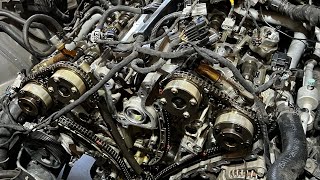
![How to Fix KIA P0024 Engine Code in 4 Minutes [1 DIY Method / Only $19.45]](https://img.youtube.com/vi/bhojtamyYoM/mqdefault.jpg)
We Have This Part in Stock


The information in this article is provided for general reference and educational purposes only. Vehicle specifications, procedures, and part compatibility can vary by production date, trim level, and region. Always consult your vehicle's factory service manual and verify part numbers before purchasing or performing repairs. Safety-critical components such as airbags, seat belts, and braking systems should be installed by a qualified professional.
- Hyundai Genesis Coupe:
- 🧭 Diagnostic Flowchart
- 🎬 Helpful Videos
- 🛍️ Shop This Part
- What's Unique About the 2013-2016 Hyundai Genesis Coupe
- Symptoms You May Notice
- Most Likely Causes
- Rare But Worth Checking
- Diagnosis Steps
- Parts You'll Likely Need
- Related Codes That Often Appear With This One
- Technical Service Bulletins (TSBs) & Recalls
- Platform-Specific Known Issues
- Mechanic-Grade Diagnostic Values
- Scan Tool Commands That Help
- Wiring & Ground Locations
- Real Owner Repair Stories
- Documented NHTSA Reports
- OEM Part Supersession History
- Real Owner Stories
- 2015 Genesis Coupe 3.8 — 65000 miles
- 2015 Genesis Coupe 3.8 — 63000 miles
- 2014 Hyundai Santa Fe V6 (3.3L Lambda GDI)
- 2013 Hyundai Genesis Coupe 3.8L
- Related OBD-II Codes
- Frequently Asked Questions
- 🎟️ Get 5% Off