

P0025 on 2017-2020 Lincoln MKZ 3.0L: Exhaust Cam Timing Causes and Fixes
For a 2017-2020 Lincoln MKZ with the 3.0L V6, code P0025 most often means the Bank 2 exhaust Variable Camshaft Timing (VCT) solenoid is sticking due to dirty oil. Always check your oil level and condition first; an oil change may fix it. If not, the solenoid is the next likely part to replace. Bank 2 is the cylinder bank closer to the firewall.
- Start with the simplest fix: check your engine oil. Low, old, or dirty oil is the number one cause of P0025. An oil and filter change might solve the problem.
- The most likely failed part is the Bank 2 (firewall side) exhaust VCT solenoid. It gets stuck from oil debris.
- When replacing the VCT solenoid, you must also replace the valve cover gasket to prevent future oil leaks.
- Do not immediately replace the camshaft position sensor; it is rarely the root cause.
- If you hear a rattling noise from the engine on startup, the problem could be a more serious issue like a bad cam phaser or stretched timing chain, which requires professional diagnosis.
What's Unique About the 2017-2020 Lincoln MKZ
The 3.0L Twin-Turbo V6 (an EcoBoost engine) in this MKZ is known for being sensitive to oil condition. Ford has issued Technical Service Bulletins (TSBs) like SSM 50067 and SSM 47170 that directly address VCT codes, including P0025, noting they can be caused by small debris causing the VCT solenoids to stick. This suggests a known sensitivity in the system. Additionally, some 3.0L EcoBoost engines have documented issues with camshaft phasers, which can be a more serious cause of this code if oil and solenoids are ruled out.
Symptoms You May Notice
- Check Engine Light is on
- Rough idling
- Reduced engine power and poor acceleration
- Poor fuel economy
- Engine stalling, especially when coming to a stop
- Rattling or ticking noise from the engine, especially on cold starts (if related to cam phasers)
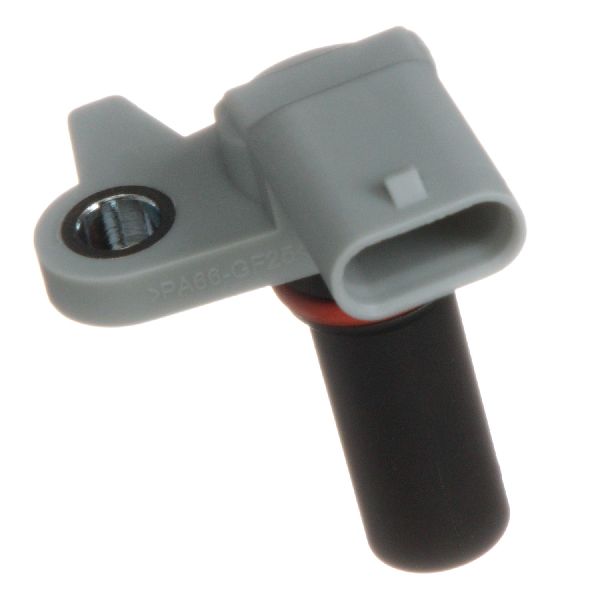
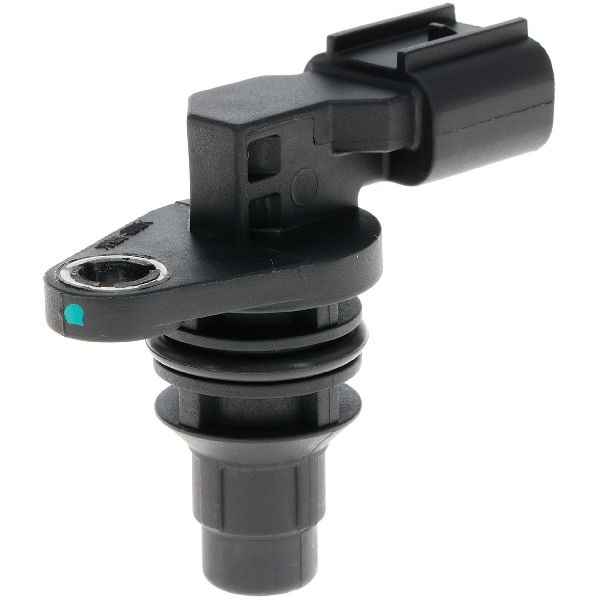
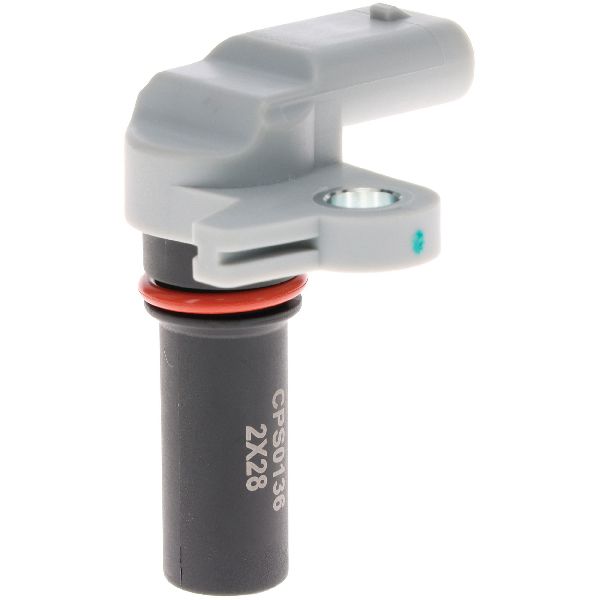
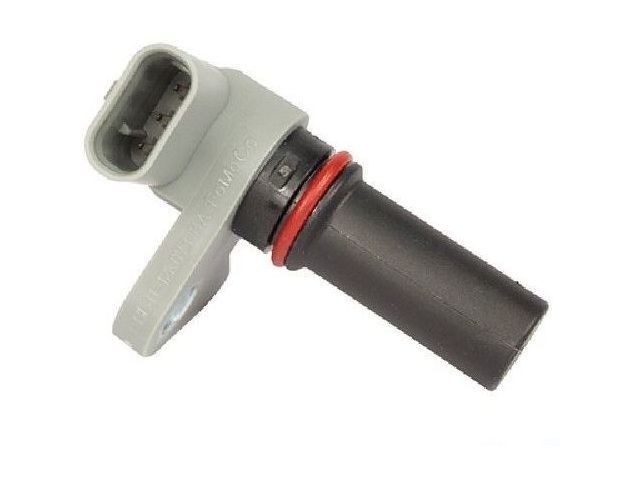
- Replacing the Camshaft Position (CMP) Sensor. The sensor is usually doing its job correctly by reporting the timing problem; it is rarely the cause of the P0025 code itself.
Most Likely Causes
- Low, Dirty, or Incorrect Viscosity Engine Oil 🔴 High Probability The VCT system is hydraulic and highly sensitive to oil pressure and cleanliness. Ford TSBs confirm that debris in the oil is a primary cause of VCT solenoid issues. Using an oil filter without a proper anti-drainback valve can also contribute to debris issues and delayed oil pressure on startup.
How to confirm: Check the oil dipstick for level and inspect the oil's color and consistency. If it's low, dark, or sludgy, it needs to be changed. Ensure the correct oil viscosity (typically 5W-30 full synthetic) is being used.
Typical fix: Perform an engine oil and filter change using the full synthetic oil that meets Ford's specifications for this engine. Using a high-quality Motorcraft filter (like the FL-500S) is recommended.
Est. part cost: $50-$100 - Faulty Bank 2 Exhaust VCT Solenoid 🔴 High Probability → Shop Engine Variable Valve Timing (VVT) Solenoid TSBs SSM 50067 and SSM 47170 specifically mention that these solenoids can stick due to debris, a known issue on this platform. It's the most common component failure for this code. The four VCT solenoids (intake/exhaust for each bank) are identical on the 3.0L engine.
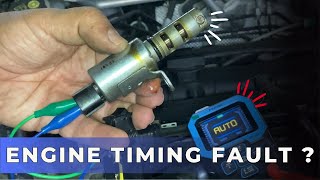
How to confirm: After confirming the oil is good, a technician can use a scan tool to command the solenoid on and off 🎬 Watch: A mechanic explains how to diagnose Ford VCT solenoids. to check its response. Another common method is to swap the suspect solenoid with an identical one (e.g., the intake solenoid on Bank 2 or the exhaust solenoid from Bank 1) and see if the code follows the part (e.g., changes to P0022 or P0015). 🎬 Watch: How to diagnose and replace variable valve timing solenoids.
Typical fix: Replace the Bank 2 exhaust VCT solenoid. Since this requires removing the valve cover on the firewall side, the valve cover gasket and spark plug tube seals should be replaced at the same time to prevent future oil leaks.
Est. part cost: $70-$150
Rare But Worth Checking
- Failed Camshaft Phaser: → Shop Engine Camshaft While less common than a solenoid, the 3.0L EcoBoost engine family has known issues with premature cam phaser failure. This is a more complex and expensive repair, often indicated by a distinct rattling or diesel-like noise on startup. 🎬 See what a failing EcoBoost cam phaser rattle sounds like.
- Stretched Timing Chain or Failed Tensioner: → Shop Engine Timing Chain Over time, the timing chain can stretch, or the guides and tensioners can fail, causing the base engine timing to be incorrect. This is a major mechanical repair and is usually accompanied by rattling noises from the front of the engine. A user on a Ford Edge forum with a related 2.7L engine reported that P0025 was ultimately caused by a stretched timing chain after solenoid replacement did not fix the issue.
Diagnosis Steps
- Read the code with an OBD-II scanner and record any other codes present.
- Check the engine oil level and condition. This is the most common and cheapest fix. If the oil is low, dirty, or the wrong type, perform an oil and filter change with the manufacturer-specified oil (5W-30 Full Synthetic).
- Inspect the wiring and connector for the Bank 2 exhaust VCT solenoid (on the firewall-side valve cover) for damage, corrosion, or loose connections.
- Using a capable scan tool, monitor the desired vs. actual camshaft position PIDs for Bank 2. Also, command the VCT solenoid on and off to check for a response. TSB SSM 50067 suggests cycling the solenoid 10 times to try and clear debris.
- If the solenoid is suspected, swap it with the intake solenoid on the same bank or the exhaust solenoid from Bank 1. Clear the codes and drive the vehicle to see if the code changes (e.g., to P0022 or P0015). If it does, the solenoid is faulty.
- If the oil and solenoid are confirmed to be good, the issue is likely more mechanical. Listen for engine rattles that could indicate a timing chain or cam phaser issue, especially on cold starts.
- For advanced diagnosis, a technician may use an oscilloscope to check the correlation between the crankshaft and camshaft sensors to verify base timing, which can confirm a stretched chain or failed phaser.
Parts You'll Likely Need
- Variable Camshaft Timing (VCT) Solenoid
(OEM #FT4Z-6M280-B)— This is the most common part to fail for this code, often getting stuck due to oil debris, as noted in Ford TSBs. The solenoids are the same for intake and exhaust on the 3.0L engine.
Trusted brands: Motorcraft, Dorman
OEM price range: $70-$120
Aftermarket price range: $40-$80 - Valve Cover Gasket Kit
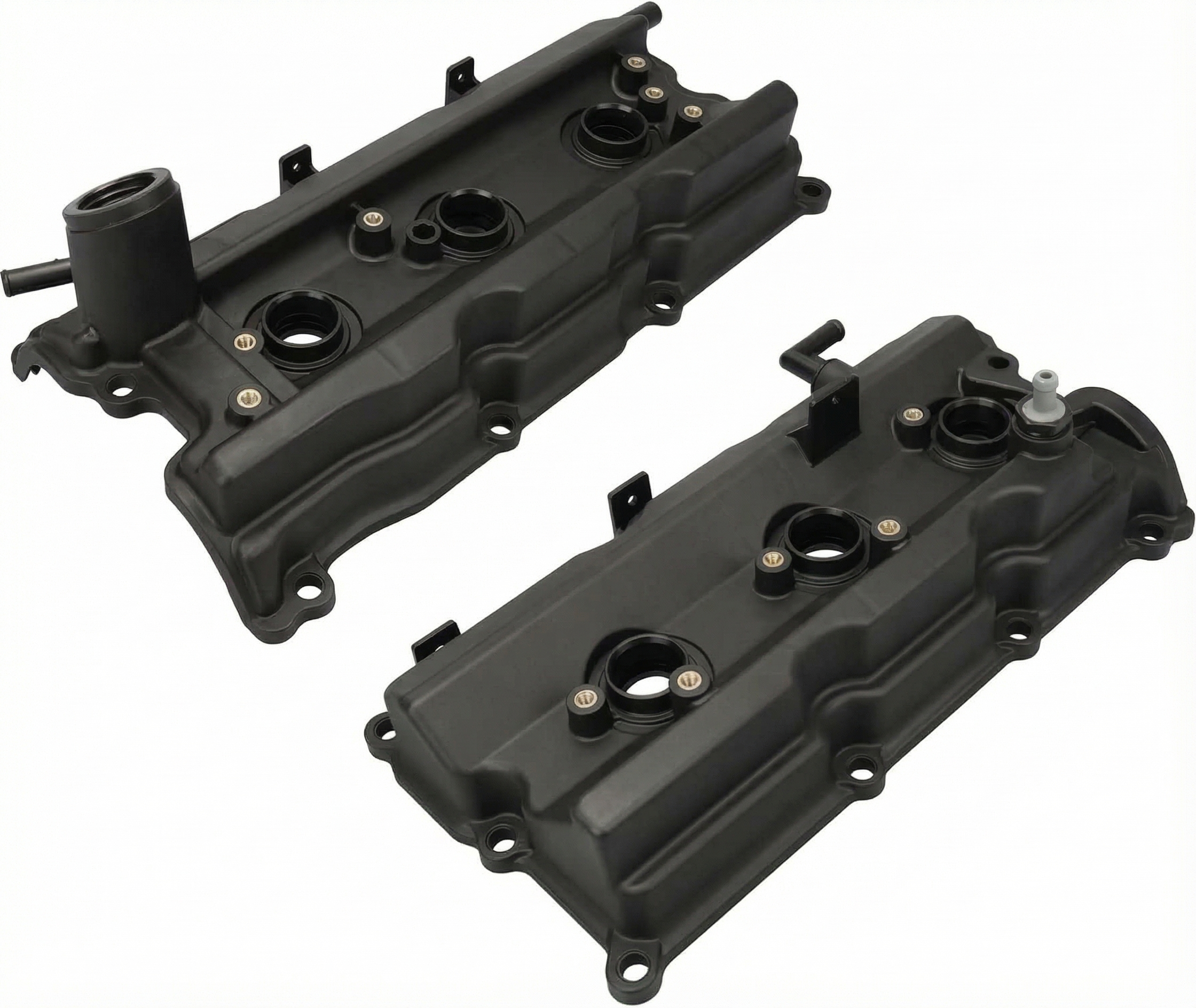
(OEM #FT4Z-6584-D)— Accessing the VCT solenoids on the 3.0L V6 requires removing the valve cover. The gasket is a one-time-use part and must be replaced to prevent oil leaks. This part number is for the Bank 2 (firewall side) cover.
Trusted brands: Motorcraft, Fel-Pro, Mahle
OEM price range: $60-$100
Aftermarket price range: $30-$60
Related Codes That Often Appear With This One
- P0015 — This is the same over-retarded timing code but for Bank 1. Seeing both P0015 and P0025 together strongly suggests a systemic problem like very low/dirty oil or low oil pressure affecting the entire engine.
- P0024 — This code is for an over-advanced timing condition on the same camshaft. Seeing both codes intermittently can point to an erratic VCT solenoid or an oil pressure problem causing the cam timing to be unstable.
Technical Service Bulletins (TSBs) & Recalls
- SSM 50067 / SSM 47170: Notes that P0025 may be due to small debris causing the VCT solenoid to stick and advises cycling the solenoid with a scan tool 10 times to clear debris before replacement.
- SSM 49821: A general TSB covering many 2015-2021 Ford/Lincoln vehicles that may exhibit a wide range of VCT codes, including P0025.
- TSB 19-2387: Supersedes earlier TSBs for oil pan leaks on 2018-2019 models, detailing a procedure to replace the original RTV-sealed pan with an updated pan using a press-in-place gasket.
Platform-Specific Known Issues
- Ford has issued multiple TSBs (e.g., SSM 49821, SSM 47170, SSM 50067) related to a range of VCT codes including P0025, often pointing to debris in the oil causing solenoids to stick.
- The 3.0L EcoBoost engine can be prone to oil leaks from the engine oil pan's RTV seal, as noted in TSB 19-2387. A significant oil leak could lead to a low oil level, triggering VCT codes.
Mechanic-Grade Diagnostic Values
- VCT Solenoid Internal Resistance — expected: 6.9 to 7.9 Ω at 68°F (20°C). Failure: A reading of 0 ohms (short), infinite/OL (open), or significantly outside the specified range indicates a faulty solenoid coil.
- VCT Solenoid Connector Voltage — expected: Battery voltage (approx. 12V) or >10.5V with Key On, Engine Off. Failure: Low or no voltage at the power supply pin points to a wiring issue, a blown fuse, or a problem with the PCM power relay.
- Scan Tool PID: VCT_EXH_ERR2 (Bank 2 Exhaust Cam Error) — expected: At or very close to 0 degrees at idle. Failure: A consistent or spiking deviation from 0 degrees on this PID confirms the camshaft is not at its commanded position, indicating a fault in the VCT system.
Scan Tool Commands That Help
- Ford IDS, FORScan, or other professional scan tools: VCT Solenoid On/Off Test or Actuator Active Command — This bidirectional control is used to functionally test the VCT solenoid. Per TSB SSM 50067, it should be used to cycle the solenoid 10 times to attempt to dislodge small debris before deciding to replace the part. If commanding the solenoid causes no change in idle quality, it points to a stuck solenoid or clogged oil passage.
Wiring & Ground Locations
- Engine Ground Strap — A braided strap or thick wire running from the engine block or cylinder head to the vehicle's frame or firewall.. A poor engine ground can cause erratic behavior in sensors and actuators, including the VCT solenoids and Camshaft Position sensors. While not a primary cause, it can create confusing electrical symptoms and should be checked for corrosion and tightness.
- Power Distribution Box (Engine Bay Fuse Box) — Located in the engine bay, on the driver's side.. This box contains fuses and relays that supply power to the Powertrain Control Module (PCM) and the VCT solenoid circuits. A fault here could cut power to the system.
- Battery Ground Point — A ground point with a Black/Purple wire is located right next to the battery.. This is a main grounding point for the vehicle's electrical system. Corrosion or a loose connection here can cause widespread, intermittent electrical issues.
Real Owner Repair Stories
- Ford Edge Forum user (2016 Ford Edge Sport 2.7L EcoBoost (similar V6 architecture)) — Check engine light with codes P0019 and P0025.
❌ Tried (didn't work) Replaced all four VCT solenoids, Performed multiple oil changes
✅ What actually fixed it The timing chain was found to be stretched. The codes were resolved after a technician replaced the timing chain, tensioners, and guides.
OEM Part Supersession History
FT4Z-6M280-A→FT4Z-6M280-B— Ford often updates VCT solenoid designs to improve durability and resistance to contamination from oil debris.
Model Year Variations Within This Range
- 2017-2020: The 2017 model year marked the introduction of the 3.0L Twin-Turbo V6, replacing the previous 3.7L V6. All diagnostic information and parts (like VCT solenoid FT4Z-6M280-B) are specific to this 3.0L engine for the 2017-2020 period. No major running changes affecting this code within this year range have been documented.
Diagnostic Flowchart
Other Known Issues on This Vehicle
Issues unrelated to this code that are worth knowing about as an owner of this generation:
- Oil Pan Gasket Leak 🟠 Medium — A widely documented issue on 2.7L and 3.0L EcoBoost engines from 2017-2019. The original RTV sealant was prone to failure, leading to oil leaks. Later models and service replacements use an improved press-in-place gasket. (Ref: TSB 19-2387, TSB 19-2219)
- Carbon Buildup on Intake Valves 🟠 Medium — As a direct-injection-only engine, the 3.0L EcoBoost is susceptible to carbon buildup on the intake valves over time (typically 50,000+ miles), which can cause rough idle, misfires, and a gradual loss of power.
- Internal Water Pump Failure 🔴 High — While not as common as on the 3.5L EcoBoost, the 3.0L's timing-chain-driven internal water pump can fail. A leak can allow coolant to mix with engine oil, leading to catastrophic engine damage if not caught early. This is a very labor-intensive repair.
- Fractured Intake Valves 🔴 High — A recall (NHTSA 22V-468) was issued for some 2021-2022 2.7L and 3.0L EcoBoost engines due to intake valves that could fracture, potentially causing catastrophic engine failure. While outside the 2017-2020 MKZ range, it highlights a known valvetrain vulnerability in the engine family. (Ref: NHTSA Recall 22V-468)
Used vs. New Parts: Buying Guide for This Vehicle
When a used part is the smart pick: For this specific repair, using used parts is generally not recommended for the common failure items. However, if diagnosis leads to a major component failure like a damaged cylinder head (due to clogged oil passages), a low-mileage used head from a reputable salvage yard could be a cost-effective alternative to a new part.
Donor-vehicle mileage cap: roughly under 60000 miles for the part to have meaningful remaining life.
What to inspect on the donor part:
- For a VCT solenoid, there are no reliable visual cues. Its failure is internal and related to the donor car's maintenance history, which is unknown.
- For a larger component like a cylinder head, inspect for any visible sludge, scoring on cam journals, or signs of overheating (warpage).
- Check the salvage source for any available vehicle history on the donor car, such as evidence of a front-end collision (engine likely ran well until the accident) vs. a cash-for-clunkers scenario (engine may have been poorly maintained).
OEM-only on this vehicle (don't cheap out):
- While not strictly required, using an OEM Motorcraft VCT solenoid (FT4Z-6M280-B) is highly recommended. Given the system's sensitivity to oil flow and the part's relatively low cost, the quality control of the OEM part provides the best chance of a lasting repair.
Aftermarket brands forum-validated for this vehicle:
- VCT Solenoid: Dorman, Standard Motor Products (SMP)
- Valve Cover Gasket: Fel-Pro, Mahle
Brands owners have reported issues with on this vehicle:
- No specific brands were consistently cited in forums or TSBs as being problematic for this part on this vehicle. However, unbranded, low-cost parts from online marketplaces should be avoided due to uncertain quality and material specifications.
Real Owner Stories
Aggregated from forums and TSBs cited above. Mileages and costs reflect what owners reported in those sources.
2018 Lincoln MKZ 3.0L Twin-Turbo V6
Symptoms: The Check Engine Light came on with a P0025 code, and the engine was idling roughly and had poor acceleration.
What fixed it: After confirming the oil was clean and full, the mechanic swapped the Bank 2 exhaust VCT solenoid with the Bank 2 intake solenoid. The code changed to P0022, confirming the solenoid was bad. Replacing the faulty solenoid and the valve cover gasket fixed the issue.
Source hint: Common Causes: Faulty Bank 2 Exhaust VCT Solenoid
2019 Lincoln MKZ 3.0L Twin-Turbo V6
Symptoms: Noticed an oil leak on the garage floor, which was followed by the Check Engine Light for P0025 and the engine stalling when coming to a stop.
What fixed it: The original RTV-sealed oil pan was found to be leaking. It was replaced with the updated pan that uses a press-in-place gasket, as detailed in TSB 19-2387. Correcting the oil level with a fresh oil change cleared the VCT code.
Source hint: TSB 19-2387
2017 Lincoln Continental 3.0L V6
Symptoms: Check Engine Light was on for P0025. The technician suspected a sticking VCT solenoid due to debris.
What fixed it: Following the procedure in TSB SSM 50067, the technician used a scan tool to command the Bank 2 exhaust VCT solenoid on and off 10 times. This successfully cleared the internal debris, and the code did not return, avoiding the need for a replacement part.
Source hint: TSB SSM 50067 / SSM 47170
Related OBD-II Codes
Frequently Asked Questions
My mechanic mentioned TSB SSM 50067 for my 2018 MKZ's P0025 code. What does it say?
I have a P0025 code and I'm also noticing an oil leak. Could these be related on my 2019 MKZ?
What is the very first thing I should check if my Lincoln MKZ shows a P0025 code?
The mechanic wants to replace the Bank 2 exhaust VCT solenoid. Should I replace anything else at the same time?
Is swapping the VCT solenoids a valid diagnostic test for the 3.0L Twin-Turbo engine?
What specific oil and filter should I use to help prevent P0025 on my MKZ 3.0L?
Helpful Videos

Used OEM Parts in Stock
New Aftermarket Parts Available


The information in this article is provided for general reference and educational purposes only. Vehicle specifications, procedures, and part compatibility can vary by production date, trim level, and region. Always consult your vehicle's factory service manual and verify part numbers before purchasing or performing repairs. Safety-critical components such as airbags, seat belts, and braking systems should be installed by a qualified professional.
- Lincoln MKZ:
- 🧭 Diagnostic Flowchart
- 🎬 Helpful Videos
- 🛍️ Shop This Part
- What's Unique About the 2017-2020 Lincoln MKZ
- Symptoms You May Notice
- Most Likely Causes
- Rare But Worth Checking
- Diagnosis Steps
- Parts You'll Likely Need
- Related Codes That Often Appear With This One
- Technical Service Bulletins (TSBs) & Recalls
- Platform-Specific Known Issues
- Mechanic-Grade Diagnostic Values
- Scan Tool Commands That Help
- Wiring & Ground Locations
- Real Owner Repair Stories
- OEM Part Supersession History
- Model Year Variations Within This Range
- Other Known Issues on This Vehicle
- Used vs. New Parts: Buying Guide for This Vehicle
- Real Owner Stories
- 2018 Lincoln MKZ 3.0L Twin-Turbo V6
- 2019 Lincoln MKZ 3.0L Twin-Turbo V6
- 2017 Lincoln Continental 3.0L V6
- Related OBD-II Codes
- Frequently Asked Questions
- 🎟️ Get 5% Off