

P0030 on 2012-2017 Hyundai Veloster: Heater Circuit Causes and Fixes
This code almost always means the heating element inside the upstream oxygen sensor (Bank 1, Sensor 1), located in the exhaust manifold, has failed. Replacing the sensor is the most common fix. Before replacing, check the 15A 'SNSR 3' fuse. Expect to pay $80-$150 for an aftermarket part or around $180 for an OEM sensor. It's a straightforward DIY job for many owners.
- P0030 on a 2012-2017 Veloster points directly to a fault in the heater circuit of the upstream oxygen sensor (before the catalytic converter).
- The most common cause by far is the failure of the sensor itself. Replacing the Bank 1, Sensor 1 O2 sensor will likely fix the issue.
- Before buying a new sensor, perform a quick visual inspection of the wiring for any melting or damage, and check the 15A 'SNSR 3' fuse in the engine bay fuse box.
- This is a common and relatively simple DIY repair that requires basic hand tools and potentially a special O2 sensor socket.
What's Unique About the 2012-2017 Hyundai Veloster
For the 1.6L Gamma GDI engine in the first-generation Veloster, the P0030 code is a very common and straightforward issue. There are no widespread, unique design flaws that cause this code; it's typically just the standard wear-and-tear failure of the oxygen sensor's heating element due to thousands of heat cycles. The diagnosis is usually simple, and unlike some vehicles, there aren't frequent reports of complex wiring or ECU issues mimicking a sensor failure for this specific code.
Symptoms You May Notice
- Check Engine Light is on
- Decreased fuel economy
- Failing a vehicle emissions test
- Slightly rough or hesitant running on a cold start
- Replacing the downstream (post-catalytic converter) oxygen sensor. P0030 specifically refers to Sensor 1, which is the upstream sensor.
Most Likely Causes
- Failed Upstream Oxygen Sensor 🔴 High Probability → Shop Oxygen Sensor The internal heating element is a common failure point in all oxygen sensors due to constant, rapid heat cycles which cause the delicate filament to burn out. This is a standard wear-and-tear item.
How to confirm: Disconnect the sensor and measure the resistance between the two heater circuit pins (usually the two same-colored wires, often white or black) with a multimeter. A reading of infinite resistance (open circuit) confirms the element has failed. A typical good reading for a Hyundai sensor is around 9.0 Ω at room temperature (68°F/20°C), though a range of 8.1-11.1 Ω is also cited as acceptable for some Hyundai models.
Typical fix: Replace the upstream oxygen sensor (Bank 1, Sensor 1).
Est. part cost: $80-$180 - Damaged Wiring or Connector 🟡 Medium Probability The wiring harness for the upstream O2 sensor is routed near the hot exhaust manifold. Over time, the protective loom can degrade, allowing wires to become brittle, melted, or chafed, leading to a short or open circuit.
How to confirm: Visually inspect the entire wiring harness from the sensor to the main engine harness. Look for any signs of melting, chafing, or contact with hot components. Check for corrosion or pushed-out pins inside the connector itself.
Typical fix: Repair the damaged section of the wire or replace the connector pigtail.
Est. part cost: $15-$40 - Blown Fuse ⚪ Low Probability A short circuit in the heater wiring or within the failed sensor itself can draw too much current and cause the corresponding fuse to blow as a protective measure.
How to confirm: Locate the fuse for the oxygen sensor heater circuit in the engine bay fuse box. On the Veloster, this is typically the 15A fuse labeled 'SNSR 3'. Visually inspect the fuse or test it for continuity with a multimeter.
Typical fix: Replace the blown fuse. If it blows again immediately, a persistent short circuit exists that must be found and repaired before installing another fuse.
Est. part cost: $1-$5
Rare But Worth Checking
- Faulty Engine Control Module (ECM): → Shop Engine Control Module (ECM) This is very rare. The driver circuit within the ECM that provides the ground path for the O2 sensor heater can fail. This should only be considered after all other possibilities (sensor, wiring, fuses) have been definitively ruled out with proper testing.
Diagnosis Steps
- Read the code with an OBD-II scanner to confirm P0030 is the primary or only code present.
- Visually inspect the upstream oxygen sensor's wiring harness and connector. Look for any obvious signs of melting, fraying, or corrosion.
- Locate and check the fuse for the oxygen sensor heater circuit. In the engine bay fuse box, inspect the 15A fuse labeled 'SNSR 3'.
- If the fuse and wiring appear intact, disconnect the oxygen sensor electrical connector.
- Using a multimeter set to Ohms (Ω), measure the resistance across the two heater pins on the sensor side of the connector (typically the two wires of the same color). An open circuit (infinite resistance) or a dead short (near zero resistance) indicates a failed sensor. A healthy sensor should have a specific low resistance, for Hyundai often around 9.0 Ω at 20°C (68°F).
- To verify the vehicle's wiring, turn the ignition to the 'ON' position (engine off). Use a multimeter to check for 12V battery power on one of the heater circuit pins in the vehicle-side connector. The other pin is the control (ground) from the ECM.
- If 12V power is present at the connector and the sensor's resistance is out of spec, the oxygen sensor is faulty and needs to be replaced.
- If 12V power is NOT present at the connector and the fuse is good, there is an open circuit in the power wire between the fuse box and the sensor connector that must be traced and repaired.
Parts You'll Likely Need
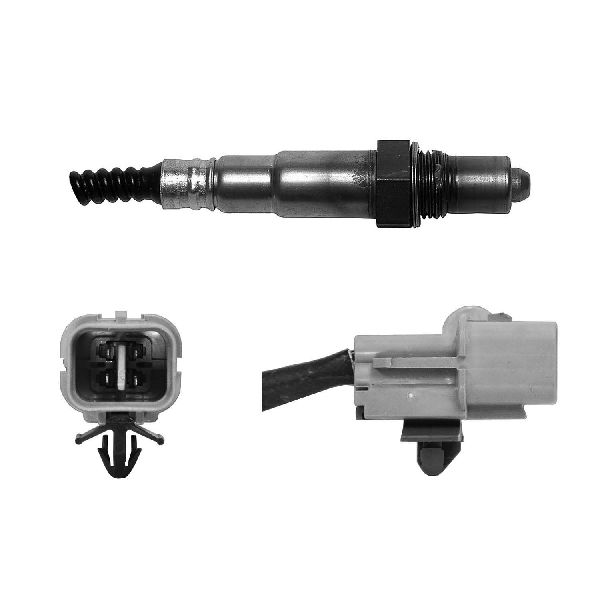
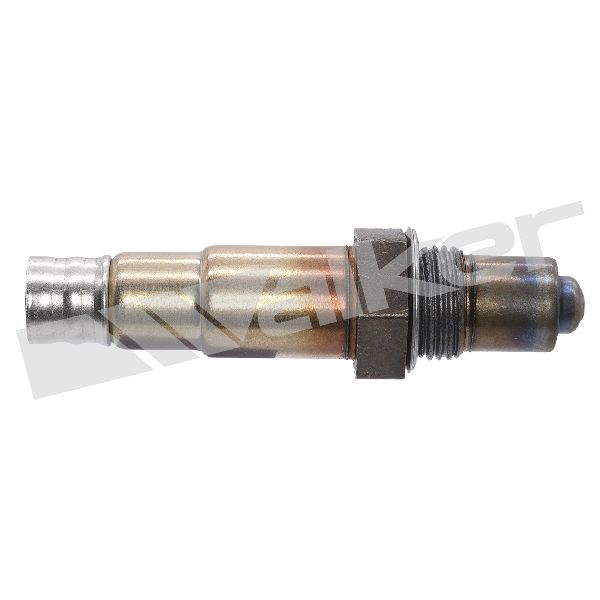
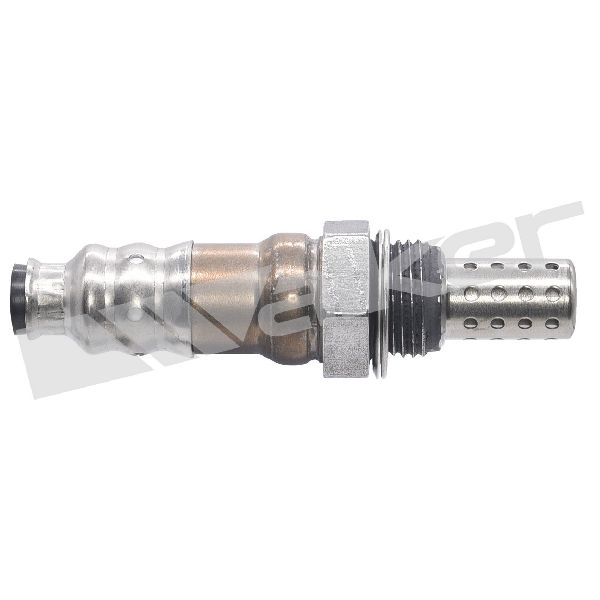
- Upstream Oxygen Sensor (Bank 1 Sensor 1)
(OEM #39210-2B210)— This is the component that contains the heater circuit reported as faulty by the P0030 code. The internal heating element failing is the most common cause. This part number is for the non-turbo 1.6L engine.
Trusted brands: Hyundai (OEM), Denso, Bosch, NGK/NTK
OEM price range: $175-$260
Aftermarket price range: $80-$150
Technical Service Bulletins (TSBs) & Recalls
- 16-FL-002: Noted for 2013-2015 Veloster Turbo models, addresses a faulty oxygen sensor (related to codes like P2261, P0133/P0134) and requires an ECU update. Not directly applicable to P0030 on a non-turbo.
Platform-Specific Known Issues
- While not specific to P0030, Hyundai did issue TSB #16-FL-002 for some 2013-2015 Veloster models with the turbo engine for faulty oxygen sensors that could illuminate the check engine light (often with different codes). This service involved replacing the sensor and updating the ECU software. This highlights that O2 sensors are a known service item on the platform, but this TSB is not a direct fix for P0030 on a non-turbo model.
Mechanic-Grade Diagnostic Values
- Upstream O2 Sensor Heater Circuit Resistance — expected: Approx. 9.0 Ω at 20°C (68°F). Some sources state a range of 8.1 ~ 11.1 Ω is acceptable.. Failure: Infinite resistance (OL) indicates an open circuit (burned out element). Near-zero resistance indicates an internal short.
- Voltage at Heater Power Pin (Vehicle-Side Connector) — expected: Battery Voltage (approx. 12V) with Key On, Engine Off.. Failure: 0V indicates a blown fuse or an open in the power supply wire from the main relay/fuse box.
- Voltage at Heater Control Pin (Vehicle-Side Connector) — expected: A pulse-width modulated (PWM) ground signal from the ECM when the heater is commanded on. This is best observed with an oscilloscope.. Failure: No signal or a constant ground/open can indicate a wiring problem or a faulty ECM driver.
Wiring & Ground Locations
- Upstream O2 Sensor Connector (C15-2) — Attached to a bracket on the transmission, near the top-rear of the engine.. 🎬 See this video to locate the Bank 1 Sensor 1 This is the primary test point for diagnosing the sensor and vehicle-side wiring. The upstream sensor on the non-turbo 1.6L is a 5-wire sensor. The two heater wires are typically the same color (e.g., two black wires or two white wires) and are used for the resistance test.
- Engine Ground (G105) — Typically located on the left side of the engine compartment, with a strap connecting the chassis to the engine/transmission.. While the ECM directly provides the heater ground, a poor main engine ground can cause widespread electrical issues and potentially affect sensor readings or ECM function, though it is unlikely to be the sole cause of P0030.
OEM Part Supersession History
39210-2B210→N/A— This part number appears to be stable for the specified vehicle range.
Heads up: Aftermarket cross-references sometimes list 234-5055 (Denso) and 234-4568 as compatible or superseding parts.
Model Year Variations Within This Range
- 2012-2017: No significant variations have been documented for the upstream oxygen sensor, its wiring, or the P0030 diagnostic logic for the non-turbo 1.6L GDI engine within this generation. The same OEM part number (39210-2B210) is listed for the entire range.
Diagnostic Flowchart
Other Known Issues on This Vehicle
Issues unrelated to this code that are worth knowing about as an owner of this generation:
- Connecting Rod Bearing Failure 🔴 High — A significant issue, particularly noted in 2015-2016 models but affects the broader engine family. Can lead to catastrophic engine seizure at moderate mileage (e.g., 60k-100k miles). (Ref: Hyundai Recall 198 (NHTSA 20V746000) and Service Campaign 966 (TSB 21-01-023H) were issued to install a Knock Sensor Detection System (KSDS) to provide an early warning of failure. A class-action lawsuit settlement also extended engine warranties.)
- Dual-Clutch Transmission (DCT) Problems 🟠 Medium — Common on models equipped with the optional 7-speed DCT. Owners report hesitation from a stop, shuddering, and jerky shifting, particularly in hot weather or low-speed traffic. (Ref: Multiple TSBs have been issued, including 16-01-058 and 21-AT-013H, which involve software updates (reprogramming the TCM) to improve clutch engagement logic. In some cases, clutch pack replacement is required.)
- GDI Intake Valve Carbon Buildup 🟠 Medium — An inherent issue with all Gasoline Direct Injection (GDI) engines. Becomes noticeable after 60,000-100,000 miles, causing a gradual loss of performance, rough idle, and potential misfires.
- Excessive Oil Consumption 🟠 Medium — Reported by many owners and often linked to the broader GDI engine family issues. Can become apparent after 80,000 miles and may be a contributing factor to premature catalytic converter failure or an early symptom of internal engine wear.
Used vs. New Parts: Buying Guide for This Vehicle
When a used part is the smart pick: It is almost never a smart choice to buy a used oxygen sensor. It is a wear-and-tear item with a finite lifespan, and its remaining life is impossible to determine. The labor to install it is the same as for a new part, making the risk of premature failure not worth the small cost savings.
Donor-vehicle mileage cap: roughly under 10000 miles for the part to have meaningful remaining life.
What to inspect on the donor part:
- If forced to use a used part, source it from the lowest-mileage vehicle possible.
- Ensure the connector and wiring are completely intact with no signs of heat damage or brittleness.
- Verify the part number on the sensor body matches the required OEM number exactly.
Aftermarket brands forum-validated for this vehicle:
- Denso
- NGK/NTK
- Bosch
Brands owners have reported issues with on this vehicle:
- Unnamed or generic "white-box" brands are frequently reported on forums to have a high failure rate or cause compatibility issues, even if they are advertised as direct-fit.
Real Owner Stories
Aggregated from forums and TSBs cited above. Mileages and costs reflect what owners reported in those sources.
2016 Hyundai Veloster 1.6L GDI
Symptoms: Check engine light on with code P0030.
What fixed it: Confirmed the fuse was good and replaced the upstream O2 sensor (Bank 1, Sensor 1) with Denso part #234-5052.
Source hint: Veloster.org Forum thread titled 'p0030-ho2s-heater-control-circuit-bank-1-sensor-1.66539/'
2013-2015 Hyundai Veloster Turbo
Symptoms: Check engine light illuminated (related to oxygen sensor faults).
What fixed it: Replacement of the sensor and an ECU software update as per TSB #16-FL-002.
Source hint: TSB 16-FL-002
Documented NHTSA Reports
Hyundai Engine Diagnostics
Symptoms: An owner reported multiple fault codes appearing simultaneously, including P0302 (Cylinder 2 Misfire), P0301, P0014 (Exhaust Camshaft Position Timing), and P0030 (HO2S Heater Control Circuit Bank 1, Sensor 1).
What fixed it: The vehicle was towed to a Hyundai dealer for diagnostic evaluation after these codes were detected.
Source hint: NHTSA ODI #11675752
Related OBD-II Codes
Frequently Asked Questions
Does TSB #16-FL-002 apply to my 2014 Veloster with the P0030 code?
Which fuse should I check for the O2 sensor heater circuit on my Veloster?
What is the correct resistance for a new upstream O2 sensor on the 1.6L Gamma engine?
Can I use an aftermarket sensor like Denso for this repair?
Is the P0030 code related to the connecting rod bearing recall on my 2015 Veloster?
Why did my O2 sensor heater fail so early?
Helpful Videos
We Have This Part in Stock



The information in this article is provided for general reference and educational purposes only. Vehicle specifications, procedures, and part compatibility can vary by production date, trim level, and region. Always consult your vehicle's factory service manual and verify part numbers before purchasing or performing repairs. Safety-critical components such as airbags, seat belts, and braking systems should be installed by a qualified professional.
- Hyundai Veloster:
- 🧭 Diagnostic Flowchart
- 🎬 Helpful Videos
- 🛍️ Shop This Part
- What's Unique About the 2012-2017 Hyundai Veloster
- Symptoms You May Notice
- Most Likely Causes
- Rare But Worth Checking
- Diagnosis Steps
- Parts You'll Likely Need
- Technical Service Bulletins (TSBs) & Recalls
- Platform-Specific Known Issues
- Mechanic-Grade Diagnostic Values
- Wiring & Ground Locations
- OEM Part Supersession History
- Model Year Variations Within This Range
- Other Known Issues on This Vehicle
- Used vs. New Parts: Buying Guide for This Vehicle
- Real Owner Stories
- 2016 Hyundai Veloster 1.6L GDI
- 2013-2015 Hyundai Veloster Turbo
- Documented NHTSA Reports
- Hyundai Engine Diagnostics
- Related OBD-II Codes
- Frequently Asked Questions
- 🎟️ Get 5% Off