

P0030 on 2007-2011 Toyota Camry 3.5L V6: Heater Circuit Fault Explained
P0030 on a 2007-2011 Camry V6 indicates a fault in the heater circuit of the Bank 1, Sensor 1 Air/Fuel Ratio Sensor. This is almost always a failed sensor. Bank 1 is the cylinder head against the firewall, making this sensor difficult to access. Expect to pay $70-$120 for a quality aftermarket sensor (Denso is OEM) and $180-$250 for the OEM part.
- P0030 on this Camry V6 points directly to the heater circuit for the upstream Air/Fuel Ratio sensor on the REAR cylinder bank (Bank 1), near the firewall.
- Do not confuse this with the easily accessible sensor at the front of the engine (Bank 2). This is the most common misdiagnosis.
- The most likely cause is a failed sensor with an open internal heater element. Confirm by measuring resistance (spec: 2-30 ohms).
- Accessing this sensor is difficult and requires removing the airbox assembly. A 22mm offset oxygen sensor socket is highly recommended.
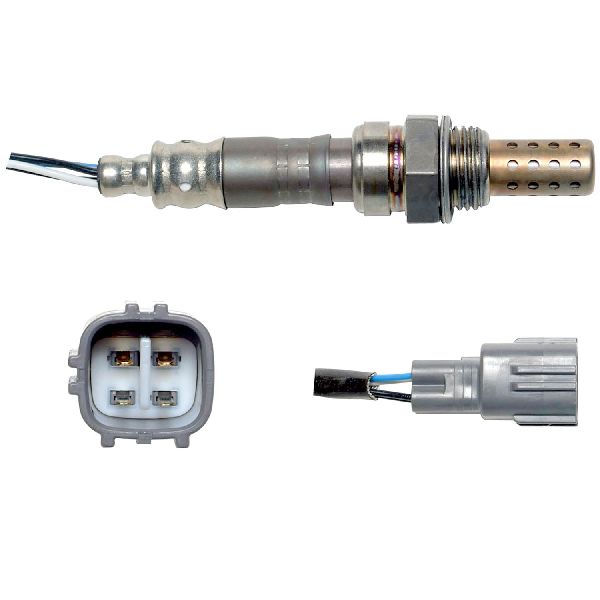
- Using an OEM-quality brand like Denso (Part #234-9049) is highly recommended for longevity and proper performance.
What's Unique About the 2007-2011 Toyota Camry
On the 2GR-FE V6 engine in the Camry, Bank 1 is the rear cylinder bank, located against the firewall. This makes accessing the Bank 1, Sensor 1 (upstream) sensor particularly challenging compared to Bank 2, which is easily accessible at the front of the engine bay behind the radiator. Many DIYers and even some shops mistakenly replace the front sensor (Bank 2, Sensor 1) before realizing the fault is for the difficult-to-reach rear sensor. Access often requires removing the engine cover and the entire air filter housing assembly to create enough room to work.
Symptoms You May Notice
- Check Engine Light is on
- Decreased fuel economy
- Vehicle may fail an emissions test
- Rough idle, especially when the engine is cold
- Hesitant acceleration
- Replacing the wrong sensor. Technicians and DIYers often replace the easily accessible Bank 2, Sensor 1 (front, by the radiator) instead of the correct Bank 1, Sensor 1 (rear, by the firewall).
Most Likely Causes
- Failed Bank 1, Sensor 1 Air/Fuel Ratio Sensor 🔴 High Probability → Shop Oxygen Sensor The internal heater element is a common failure point for all oxygen sensors over time due to constant, rapid heat cycles. This is the most frequent cause of P0030.
How to confirm: Using a multimeter, disconnect the sensor and measure the resistance across the two heater pins (often the two same-colored wires). A healthy sensor will typically read between 2 and 30 ohms when cold. A reading of 'OL' (over-limit/open) or a value far outside this range confirms a failed heater element.
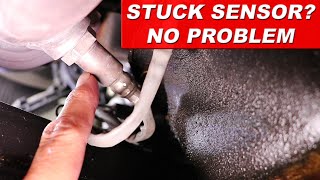
Typical fix: Replace the Bank 1, Sensor 1 Air/Fuel Ratio Sensor. This sensor is located on the rear exhaust manifold, against the firewall. Access is tight and requires removing the air intake assembly. 🎬 Watch: A mechanic's guide to replacing the rear Bank 1 sensor.
Est. part cost: $70-$250 - Damaged Wiring or Connector 🟡 Medium Probability
How to confirm: Visually inspect the wiring harness and connector leading to the Bank 1, Sensor 1. Look for any signs of melting from contact with the exhaust, corrosion in the pins, chafing, or loose connections. Check for 12V power and a good ground at the harness-side of the connector with the key on, engine off.
Typical fix: Repair or replace the damaged section of the wiring harness or the connector itself.
Est. part cost: $10-$50 - Blown A/F Heater Fuse ⚪ Low Probability
How to confirm: Locate the fuse box in the engine compartment and check the fuse labeled 'A/F Heater' or similar (e.g., HTR, O2 Heater). A visual inspection or a continuity test with a multimeter will confirm if it's blown.
Typical fix: Replace the blown fuse. If the new fuse blows immediately, it indicates a short circuit in the wiring that must be diagnosed and repaired.
Est. part cost: $1-$5
Rare But Worth Checking
- Faulty Engine Control Module (ECM): → Shop Engine Control Module (ECM) This is extremely rare. The ECM should only be considered after all other possibilities, including the sensor, wiring, and fuses, have been thoroughly ruled out.
- Exhaust Leak: An exhaust leak before the sensor can allow outside air to enter the exhaust stream, skewing sensor readings. While this might not directly cause a P0030, it can cause related performance issues and other O2 sensor codes.
Diagnosis Steps
- Verify the code with an OBD-II scanner. Confirm P0030 is present and note any other codes.
- Identify Bank 1, Sensor 1. On the 3.5L 2GR-FE V6, this is the upstream sensor on the exhaust manifold against the firewall.
- Check the 'A/F Heater' fuse and relay in the engine bay fuse box.
- Inspect the wiring harness and connector for any visible damage, such as melting, corrosion, or breaks. Ensure the connector is securely plugged in.
- Disconnect the sensor. With the ignition key in the 'ON' position (engine off), use a multimeter to check for ~12V power at the appropriate pin on the harness-side connector.
- If power is present, switch the multimeter to measure resistance (Ohms) and test the heater circuit on the sensor side of the connector (usually across the two wires of the same color). A normal reading for a 2GR-FE sensor is between 1.8 to 3.4 ohms at 20°C (68°F). An open circuit (OL) or very high resistance confirms the sensor's heater has failed.
- If the sensor resistance is good but the code persists, the issue may lie in the ground side of the circuit, which is often controlled by the ECM.
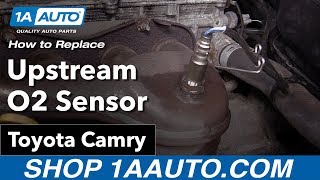
- If the sensor has failed, replace the Bank 1, Sensor 1 Air/Fuel Ratio sensor. A 22mm offset oxygen sensor socket is highly recommended 🎬 Watch: Step-by-step walkthrough for replacing the upstream O2 sensor. for this job due to tight access.
- To gain access, you will likely need to remove the plastic engine cover and the air filter box assembly.
- After replacement, clear the codes with a scanner and perform a test drive to ensure the Check Engine Light does not return.
Parts You'll Likely Need
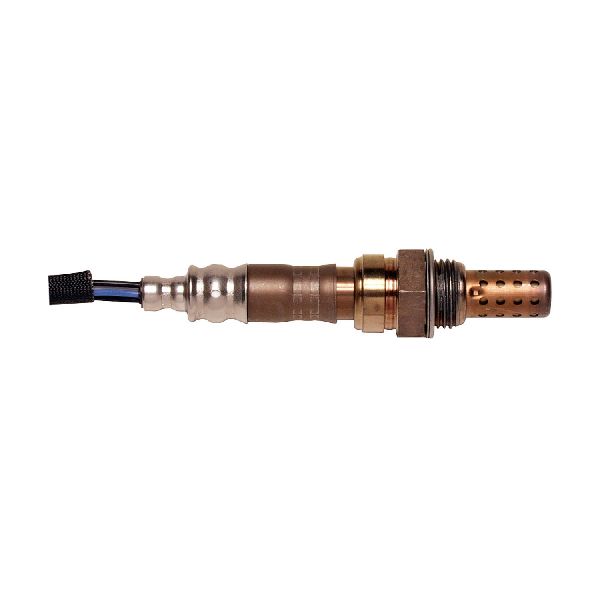
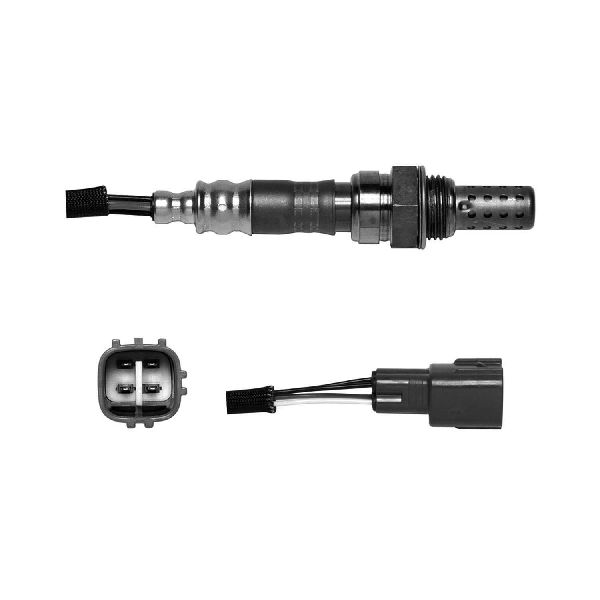
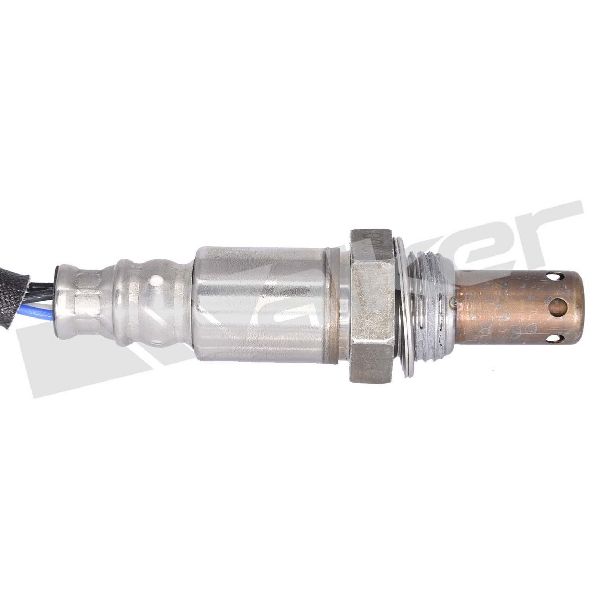
- Air/Fuel Ratio Sensor (Bank 1, Sensor 1)
(OEM #89467-06030 (supersedes 89467-33080))— This is the upstream sensor for the rear cylinder bank. The internal heater element is the most common failure point that triggers code P0030.
Trusted brands: Denso (OEM Supplier, Part No. 234-9049), NGK/NTK
OEM price range: $180-$250
Aftermarket price range: $70-$120 - 22mm Offset Oxygen Sensor Socket — Specialty tool often required to access and remove/install the oxygen sensor in tight spaces, especially the rear Bank 1 sensor.
Trusted brands: Lisle, OEMTOOLS, GearWrench
Aftermarket price range: $10-$30
Related Codes That Often Appear With This One
- P0171 (System Too Lean Bank 1) or P0174 (System Too Lean Bank 2) can sometimes appear if the sensor is providing inaccurate readings before it fully fails.
- P0031 (Heater Control Circuit Low) or P0032 (Heater Control Circuit High) are specific variations of P0030, indicating whether the current draw was too low (<0.8A) or too high (>10A).
Technical Service Bulletins (TSBs) & Recalls
- T-SB-0094-09 Rev2: While not for P0030, this TSB addresses ticking noises and various VVT-i related codes (P0014, P0015, etc.) on the 2GR-FE engine from 2005-2009. It is relevant for overall engine health diagnosis if other codes are present.
- TSB-0105-11: Addresses MIL ON with VVT-i related codes due to Oil Control Valve (OCV) failure on 2007-2011 Camrys with the 2GR-FE. This is another engine-specific issue to be aware of, though not a direct cause of P0030.
Platform-Specific Known Issues
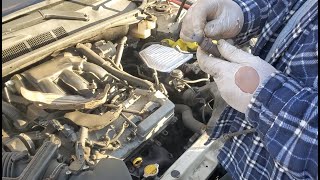
- Difficult Access to Bank 1 Sensor: The primary challenge for this repair is the location of the Bank 1 sensor. It is on the rear exhaust manifold, tucked against the firewall with very limited space. A real-world repair documented on YouTube for a similar code (P0051, Bank 2) on the same engine clearly shows the easy access for the front sensor versus the difficult access for the rear, corroborating owner complaints. The mechanic had to remove the air intake housing to create enough room to work on the front sensor, and the rear sensor is even less accessible.
Mechanic-Grade Diagnostic Values
- A/F Sensor Heater Element Resistance — expected: 1.8 to 3.4 Ω at 20°C (68°F). Failure: A reading of 'OL' (open circuit) or a value outside the specified range.
- A/F Sensor Heater Circuit Current Draw — expected: Nominally 5 to 7 Amps. The ECM expects current to be between 0.8 A and 10 A.. Failure: Current less than 0.8 A will set a P0031 (Low Circuit) code. Current greater than 10 A will set a P0032 (High Circuit) code.
- A/F Sensor Installation Torque — expected: 44 N*m (32 ft.*lbf) without SST, or 40 N*m (30 ft.*lbf) with an SST (special service tool).. Failure: Improper torque can lead to exhaust leaks or damaged threads.
Hidden / Shadow Codes Worth Checking
- P0031 / P0032: These are not shadow codes but specific sub-codes for P0030. P0031 (Heater Control Circuit Low) is set when the ECM detects heater current is less than 0.8 A. P0032 (Heater Control Circuit High) is set when current exceeds 10 A. These indicate an open or shorted circuit, respectively. (see via Standard OBD-II scanner.)
Scan Tool Commands That Help
- Toyota Techstream: Active Test: A/F CONTROL — This function allows the technician to manually increase or decrease fuel injection volume by +/- 12.5% or 25%. While not a direct heater test, it is used to verify the A/F sensor's ability to correctly detect rich and lean conditions, confirming overall sensor health after a heater-related repair.
- Advanced OBD-II Scanners (e.g., Thinkdiag, Autel): Actuation Test: O2 Sensor Heater (Bank 1 Sensor 1) — This bidirectional command allows the user to manually turn the sensor's heater circuit on and off while monitoring its status ('Active'/'Inactive') and voltage. This directly tests the integrity of the entire circuit, from the ECM to the heater element itself, without having to wait for a drive cycle.
Wiring & Ground Locations
- Engine Harness Ground (Rear) — On the rear cylinder head (Bank 1), located under the throttle body assembly.. A poor ground at this location can cause erratic sensor readings and faults for components located on the rear of the engine, including the Bank 1 A/F sensor.
- Engine Harness Ground (Front) — On the front cylinder head (Bank 2) valve cover, near the VVT-i oil line attachment point.. While less likely to cause a Bank 1 specific code, a poor main harness ground can create system-wide electrical issues that may manifest unexpectedly.
- A/F Sensor Heater Relay — Located in the engine compartment fuse/relay box.. The heater circuit receives its 12V power via this relay. A faulty relay will prevent power from reaching the sensor's heater, directly causing a P0030 code even if the sensor and fuse are good.
- Bank 1 Sensor 1 Heater Circuit Pins — On the sensor-side connector, these are typically the two wires of the same color (e.g., two black wires). On the ECM, the control wire is labeled HA1A.. These are the specific pins that must be probed with a multimeter to measure the heater element's resistance.
OEM Part Supersession History
89467-33080→89467-06030— Standard part revision, likely for improved durability or manufacturing process.
Heads up: The new part number (89467-06030) is a direct replacement for the old one and is fully compatible.
Diagnostic Flowchart
Real Owner Stories
Aggregated from forums and TSBs cited above. Mileages and costs reflect what owners reported in those sources.
Toyota Camry 3.5L 2GR-FE V6
Symptoms: Check Engine Light on with code P0030.
What fixed it: Replaced the rear, firewall-side upstream A/F sensor, which is noted as a common failure item.
Source hint: toyotanation.com
Toyota Tacoma
Symptoms: Multiple heater circuit codes present.
What fixed it: Diagnosed the heater control circuit by checking fuses, relays, and testing sensor resistance.
Source hint: TacomaWorld - 'Heater Control Circuit' thread (https://www.tacomaworld.com/threads/heater-control-circuit.660706/)
Toyota 3.5L 2GR-FE V6
Symptoms: Check Engine Light on with a similar heater circuit code (P0051 for Bank 2).
What fixed it: Removed the air intake housing to create enough room to access and replace the sensor.
Source hint: YouTube repair documented in vehicle_specific_issues
Related OBD-II Codes
Frequently Asked Questions
Where is Bank 1 Sensor 1 located on my 2007-2011 Camry 3.5L V6?
What is the correct resistance reading for the A/F sensor heater on the 2GR-FE engine?
Does TSB-0105-11 or T-SB-0094-09 Rev2 apply to my P0030 code?
What tools do I need to replace the Bank 1 Sensor 1 on this V6 Camry?
Can a blown fuse cause the P0030 code on my Camry?
Are there other Toyota or Lexus models that share this exact P0030 issue?
Helpful Videos
![How to Fix TOYOTA P0030 Engine Code in 2 Minutes [1 DIY Method / Only $19.55]](https://img.youtube.com/vi/x3kRXkvb8oU/mqdefault.jpg)
We Have This Part in Stock


The information in this article is provided for general reference and educational purposes only. Vehicle specifications, procedures, and part compatibility can vary by production date, trim level, and region. Always consult your vehicle's factory service manual and verify part numbers before purchasing or performing repairs. Safety-critical components such as airbags, seat belts, and braking systems should be installed by a qualified professional.
- Toyota Camry:
- 🧭 Diagnostic Flowchart
- 🎬 Helpful Videos
- 🛍️ Shop This Part
- What's Unique About the 2007-2011 Toyota Camry
- Symptoms You May Notice
- Most Likely Causes
- Rare But Worth Checking
- Diagnosis Steps
- Parts You'll Likely Need
- Related Codes That Often Appear With This One
- Technical Service Bulletins (TSBs) & Recalls
- Platform-Specific Known Issues
- Mechanic-Grade Diagnostic Values
- Hidden / Shadow Codes Worth Checking
- Scan Tool Commands That Help
- Wiring & Ground Locations
- OEM Part Supersession History
- Real Owner Stories
- Toyota Camry 3.5L 2GR-FE V6
- Toyota Tacoma
- Toyota 3.5L 2GR-FE V6
- Related OBD-II Codes
- Frequently Asked Questions
- 🎟️ Get 5% Off