

P0031 on 2004-2008 Audi A4: Causes and Fixes for O2 Sensor Heater Circuit Low
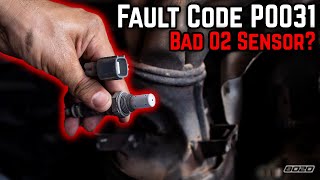
On a 2004-2008 Audi A4, code P0031 almost always means the heater element inside the front (pre-catalyst) oxygen sensor has failed. The most likely fix is replacing the Bank 1, Sensor 1 O2 sensor. Before replacing, check the fuse for the O2 sensor heater (often Fuse 34 or 43). Expect to pay $70-$150 for a quality aftermarket part and around one hour of labor.
- P0031 on a 2004-2008 Audi A4 points to an issue with the heater in the front oxygen sensor (Bank 1, Sensor 1).
- The most probable cause is a failed O2 sensor, which is a common wear item. Replacing the sensor is the usual fix.
- Before buying a new sensor, always check the fuse for the O2 heater circuit first; it's a cheap and easy check that can save significant time and money.
- Use a quality OEM (Bosch) or equivalent (NTK, Denso) direct-fit sensor, as these engines can be sensitive to universal or budget parts.
What's Unique About the 2004-2008 Audi A4
The 2004-2008 Audi A4 spans two generations, the B6 and B7, which featured different primary engines (1.8T and 2.0T, respectively, alongside V6 options). While the fundamental cause of P0031 is the same across these engines—typically a failed sensor—the exact part number and location of the O2 sensor will differ. For these models, Bank 1 Sensor 1 is the upstream sensor in the exhaust downpipe. On the 1.8T, it is relatively accessible at the rear of the engine compartment. On the 2.0T, access can be tighter. The diagnosis and repair are straightforward and consistent for both generations.
Generation note: This range covers the Audi A4 B6 (2002-2005) and B7 (2005.5-2008) generations. The primary 4-cylinder engines were the 1.8T (B6) and 2.0T FSI (B7). V6 engines (3.0L, 3.2L) were also available. The meaning and diagnostic procedure for P0031 are the same, but the specific O2 sensor part number and its exact location may vary slightly between engines. For V6 models, Bank 1 is on the passenger side of the engine.
Symptoms You May Notice
- Check Engine Light is on.
- Decreased fuel economy.
- Rough idle, especially when the engine is cold.
- Occasional stall on the first start of the day.
- Hesitation during acceleration.
- Failing a vehicle emissions test.
- A 'rotten egg' smell from the exhaust, indicating an overly rich fuel mixture.
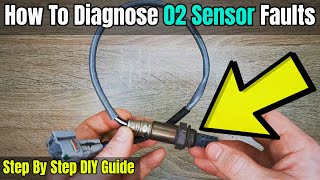
- Replacing the O2 sensor without first checking the fuse and inspecting the wiring. A 5-minute fuse check can save time and money. 🎬 See why these heater circuits fail and how to fix them.
- Using a cheap, universal O2 sensor. While some can be spliced successfully, many owners report that these VW/Audi engines are sensitive and work best with direct-fit OEM-quality sensors from brands like Bosch or NTK.
Most Likely Causes
- Failed Bank 1, Sensor 1 Oxygen Sensor 🔴 High Probability → Shop Oxygen Sensor The internal heater element of the O2 sensor is a wear item that burns out over time, similar to a light bulb filament. This is the most common cause of P0031 by a large margin.
How to confirm: After checking fuses, unplug the sensor and measure the resistance between the two heater pins (often the two same-colored wires, typically white or black) with a multimeter. 🎬 Watch: How to test the O2 sensor heater element. A good heater will have a low resistance (typically 2-15 ohms). An open circuit (infinite resistance or 'OL') confirms the heater has failed.
Typical fix: Replace the Bank 1, Sensor 1 (upstream) oxygen sensor. Using an O2 sensor socket is highly recommended.
Est. part cost: $70 - $180 - Blown Fuse 🟡 Medium Probability A short in the O2 sensor or its wiring can cause the corresponding fuse to blow. This is a common oversight in diagnosis.
How to confirm: Check the fuse box located on the driver's side of the dashboard. For many 1.8T models, this is fuse #34 (15A) or #43. For 2.0T models, check the fuse box in the engine bay as well. Always consult the owner's manual or a vehicle-specific diagram.
Typical fix: Replace the blown fuse. If it blows again immediately, a short circuit exists in the wiring or, more likely, in the new sensor itself.
Est. part cost: $1 - $5 - Damaged Wiring or Connector ⚪ Low Probability The O2 sensor wiring is located near the hot exhaust system and can become brittle, melt, or chafe over time, leading to a short or open circuit. The connector on the firewall can also accumulate corrosion.
How to confirm: Visually inspect the wiring harness from the sensor to the firewall connector for any signs of melting, cracking, or abrasion. Unplug the connector and check for corrosion or pushed-out pins. Check for 12V power and good ground at the connector with the key on.
Typical fix: Repair the damaged section of the wiring harness or clean/replace the connector.
Est. part cost: $5 - $50
Rare But Worth Checking
- Engine Control Module (ECM) Fault: This is extremely rare. The ECM's internal driver (MOSFET) for the heater circuit can fail, but all other possibilities, especially the sensor, fuse, and wiring, must be exhaustively ruled out first.
Diagnosis Steps
- Read the code with an OBD-II scanner to confirm P0031 is present.
- Check the fuses. Locate the fuse for the oxygen sensor heater circuit. On many B6 models, this is fuse #34 (15A) in the driver-side dash panel. Verify it is not blown.
- Visually inspect the Bank 1, Sensor 1 oxygen sensor's wiring harness and connector. The connector is typically black and mounted to the firewall. Look for any signs of melting, chafing, or corrosion.
- Test the heater circuit power. Unplug the sensor, turn the ignition to the 'On' position (engine off), and use a multimeter to verify that there are 12 volts at the heater power pin on the vehicle's harness connector.
- Test the heater element resistance. With the sensor still unplugged, use a multimeter set to Ohms to measure the resistance across the heater pins on the sensor itself (usually the two wires of the same color). A good heater will have a low resistance (typically under 30 ohms, often 2-15 ohms). An infinite resistance reading (open circuit) means the heater has failed and the sensor must be replaced.
- If the sensor's resistance is good and the wiring has power, check the ground circuit for continuity from the harness connector to a known good ground point on the chassis.
- If all wiring and the sensor itself test good, the issue may be with the ECM, but this is highly unlikely.
Parts You'll Likely Need
- Bank 1 Sensor 1 Oxygen Sensor
(OEM #1.8T Engine: 06A906262BR / 2.0T Engine: 06F906262AC (Verify by VIN))— This is the upstream (pre-catalyst) sensor whose internal heater element is the most common failure point for code P0031. Bosch is the original equipment manufacturer (OEM).
Trusted brands: Bosch (OEM), NGK/NTK, Denso
OEM price range: $150-$250
Aftermarket price range: $70-$180
Platform-Specific Known Issues
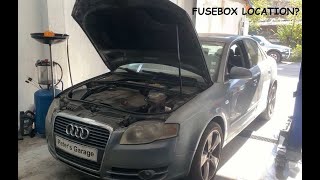
- Fuse Location Confusion: Owners often have difficulty locating the correct fuse. For B6 1.8T models, fuse #34 (15A) is a common culprit. For B7 2.0T models, the fuse may be in the engine compartment fuse box (E-box), often in a less obvious position. 🎬 Watch: Locate the fuse box and relay panels on your B7. Always start by checking the fuse panel on the driver's side end of the dashboard.
- Access to Sensor: On the 1.8T engine, the sensor is located at the back of the engine, but is generally accessible from above with a proper O2 sensor socket and extension. Access on the 2.0T can be more restricted.
Mechanic-Grade Diagnostic Values
- O2 Sensor Heater Element Resistance — expected: 2-30 Ohms (often 5-15 Ohms on a good Bosch sensor). Failure: An open circuit ('OL' or infinite resistance) indicates a burned-out heater. A reading of 0 Ohms indicates a short circuit.
- Voltage at Harness Connector (Heater Power Pin) — expected: 12V (Battery Voltage) with Key On, Engine Off (KOEO). Failure: 0V or significantly low voltage points to a blown fuse or a break in the power wire from the relay/fuse box.
- Voltage at Harness Connector (Heater Ground Pin) — expected: This is a Pulse-Width Modulated (PWM) ground controlled by the ECM. With the sensor connected and engine running, a multimeter will show a fluctuating voltage. A test light connected to battery positive should pulse.. Failure: A constant 0V or 12V indicates a problem with the ECM driver or the wiring to the ECM.
Scan Tool Commands That Help
- VCDS (VAG-COM): Engine -> Basic Settings -> Group 034 — This runs the oxygen sensor aging test for the pre-cat sensor. While not a direct heater test, a failure here can corroborate a sensor performance issue related to slow warm-up.
- VCDS (VAG-COM) or Generic OBD-II Scanner: Generic OBD-II -> Mode 6 -> Test ID $01 — This allows viewing of the non-continuous monitor test results for the O2 sensor, which can include heater performance data, though interpreting the values may require a service manual.
- VCDS (VAG-COM): Engine -> Measuring Blocks -> Groups 030-036 — To observe live data. Group 032 shows long-term fuel trims, which will be affected by a faulty sensor. Group 033 shows live voltage from Bank 1 Sensor 1. Group 036 shows the heater status ('Heater ON'/'Heater OFF'). If the status is 'ON' but the sensor remains cold and voltage is static, it points to a failed heater.
Wiring & Ground Locations
- Firewall Ground Stud (Multiple) — There are several ground points on the firewall in the engine bay. A key one for the engine harness is often located near the center or on the driver's side, under the plastic rain tray/cowl cover.. A corroded or loose main engine harness ground can cause a variety of intermittent electrical faults, including sensor heater circuit codes, due to unstable voltage and ground references for the ECM.
- G44 - Ground Connection — Located behind the driver's side A-pillar kick panel inside the cabin.. This ground point serves multiple components, including the instrument cluster and potentially control modules that communicate with the ECM. While not a direct cause, a fault here can create widespread electrical issues.
- O2 Sensor Connector (Bank 1, Sensor 1) — Typically a black, 6-pin connector mounted on a bracket on the firewall, often tucked near or under the coolant expansion tank.. This is the primary point for testing. The two same-colored wires (often white or black) are for the heater circuit. One will have 12V+ (KOEO) and the other is the PWM ground from the ECM.
Real Owner Repair Stories
- Car Talk Community Forum (2008 Audi A4 Avant 3.2L V6) — Car bucking, multiple 'Circuit Low' codes appearing simultaneously for all four O2 sensor heaters (P0031, P0051, P0037, P0057), plus codes for EVAP pump and fuel pressure regulator.
❌ Tried (didn't work) Clearing codes, disconnecting battery overnight.
✅ What actually fixed it The user was advised that having all heater circuits fail at once points to a common power supply problem, not four failed sensors. The root cause is almost certainly a single blown fuse or a faulty power relay that supplies the 12V feed to all of these components.
OEM Part Supersession History
06F906262AC→Multiple aftermarket equivalents exist, such as Bosch 0 258 017 044. The key is ensuring it is a 5-wire/6-pin wideband sensor.— Standard part lifecycle and manufacturing updates.
Heads up: Be cautious of part numbers listed for different engine codes or model years. While they may physically connect, the heater resistance or sensor calibration can differ. Always verify fitment by VIN. The 2.0T engine uses a 5-conductor (wideband) sensor.
Model Year Variations Within This Range
- 2005.5-2008 (B7): On the 2.0T FSI engine, the fuse for the O2 sensor heaters is often located in the engine compartment fuse box (the 'E-box') rather than the interior dash panel fuse box which is common for the B6 1.8T. This leads to frequent confusion during diagnosis.
Diagnostic Flowchart
Used vs. New Parts: Buying Guide for This Vehicle
When a used part is the smart pick: For this repair, a used part is almost never a smart choice. The oxygen sensor's heater element is a wear item with a finite lifespan, similar to a spark plug or a light bulb. Buying a used sensor means you are buying a part with an unknown amount of remaining life, and it could fail shortly after installation.
Donor-vehicle mileage cap: roughly under 30000 miles for the part to have meaningful remaining life.
What to inspect on the donor part:
- If forced to buy used, source from a vehicle with the lowest possible mileage.
- Ensure the connector is not damaged, corroded, or full of dirt.
- Inspect the wiring pigtail for any signs of melting, fraying, or previous repairs.
- The sensor tip should be free of heavy, black, sooty deposits (rich running) or white, chalky deposits (coolant/oil contamination).
OEM-only on this vehicle (don't cheap out):
- Oxygen Sensor
Aftermarket brands forum-validated for this vehicle:
- Bosch (OEM supplier)
- NGK / NTK
- Denso
Brands owners have reported issues with on this vehicle:
- Universal 'splice-in' sensors (Bosch warns against soldering the wires, and improper crimps can cause resistance issues)
- Unbranded, no-name parts from online marketplaces.
Real Owner Stories
Aggregated from forums and TSBs cited above. Mileages and costs reflect what owners reported in those sources.
2007 Audi A4 2.0T
Symptoms: EPC light coming on daily, Check Engine Light. Threw codes P310B, P0031, P0444, P0033, P0243, P2400, and P2294.
What fixed it: The user reported that after replacing the J757 relay located under the ECU, the EPC light had not come back on. It is not explicitly confirmed this solved the P0031 code itself, but it resolved the main symptom in a multi-code situation.
Source hint: AudiForums.com - Audi A4 - P0243 - P0033 - P0444
2004-2008 Audi A4
Symptoms: Check Engine Light on with multiple heater circuit codes including P0031, P0037, P0136, and P0141.
What fixed it: The owner traced the issue to a single blown fuse that powered all the O2 sensor heaters. Replacing the fuse resolved all codes.
Source hint: Audizine.com: Thread titled 'P0031, P0037, P0136, P0141, P2401, P2402, P2414... Help!'
2004-2008 Audi A4
Symptoms: Check Engine Light on with code P0031.
What fixed it: After verifying the fuses were intact, replacing the front O2 sensor (Bank 1, Sensor 1) with a Bosch unit resolved the code.
Source hint: Audiworld.com: Thread 'P0031 - O2 Sensor Heater Control Circuit Low (Bank 1 Sensor 1)'
Audi A4 (2.0T engine)
Symptoms: Check Engine Light on with codes P0031 and P0036.
What fixed it: Replacing a single blown fuse in the engine bay fuse box fixed the issue, often after the owner had needlessly replaced the sensors first.
Source hint: VWVortex.com / Reddit: Numerous threads for platform-mate vehicles like the GTI and Jetta with the 2.0T engine
Related OBD-II Codes
Frequently Asked Questions
Where is the fuse for the oxygen sensor on my 2005 Audi A4 1.8T?
I checked the dash fuse on my 2007 A4 2.0T and it's fine. Could there be another one?
What is the most common fix for P0031 on this A4?
How can I test the oxygen sensor heater to confirm it's bad?
Is it difficult to access the front O2 sensor on the 1.8T engine?
My friend's VW Jetta has the same P0031 code. Is the problem the same?
Helpful Videos

We Have This Part in Stock


The information in this article is provided for general reference and educational purposes only. Vehicle specifications, procedures, and part compatibility can vary by production date, trim level, and region. Always consult your vehicle's factory service manual and verify part numbers before purchasing or performing repairs. Safety-critical components such as airbags, seat belts, and braking systems should be installed by a qualified professional.
- Audi A4:
- 🧭 Diagnostic Flowchart
- 🎬 Helpful Videos
- 🛍️ Shop This Part
- What's Unique About the 2004-2008 Audi A4
- Symptoms You May Notice
- Most Likely Causes
- Rare But Worth Checking
- Diagnosis Steps
- Parts You'll Likely Need
- Platform-Specific Known Issues
- Mechanic-Grade Diagnostic Values
- Scan Tool Commands That Help
- Wiring & Ground Locations
- Real Owner Repair Stories
- OEM Part Supersession History
- Model Year Variations Within This Range
- Used vs. New Parts: Buying Guide for This Vehicle
- Real Owner Stories
- 2007 Audi A4 2.0T
- 2004-2008 Audi A4
- 2004-2008 Audi A4
- Audi A4 (2.0T engine)
- Related OBD-II Codes
- Frequently Asked Questions
- 🎟️ Get 5% Off