

P0031 on 2011-2020 Dodge Grand Caravan 3.6L: Causes and Fixes for O2 Sensor Heater
On a 3.6L Grand Caravan, P0031 almost always means the upstream oxygen sensor on the rear cylinder bank (Bank 1) has failed. The internal heater burns out, requiring sensor replacement. Expect to pay $40-$80 for an aftermarket sensor (Denso or NTK recommended) or $90-$150 for an OEM Mopar part. Access is tight, making it a moderately difficult DIY job requiring a special O2 sensor socket.
- P0031 on a 3.6L Grand Caravan is most often a failed heater in the Bank 1, Sensor 1 (rear, upstream) O2 sensor.
- Access to this sensor is difficult due to its location against the firewall.
- For 2011 models ONLY, if you see P0031 along with P0037, P0051, and P0057, the cause is almost certainly a PCM software glitch that requires a dealer reflash (TSB 18-059-16), not new sensors.
- Always test the sensor's heater resistance with a multimeter before buying a new one. An open circuit (OL reading) confirms failure.
- Check the M25 (20A) fuse in the engine bay fuse box before replacing any parts, especially if multiple heater codes are present.
What's Unique About the 2011-2020 Dodge Grand Caravan
The 3.6L Pentastar engine is mounted transversely (sideways) in the Grand Caravan, which places Bank 1 against the firewall. This makes accessing the P0031-related sensor (Bank 1, Sensor 1) notoriously difficult compared to the front bank. Additionally, for the 2011 model year, a known PCM software issue can cause multiple O2 sensor heater codes (including P0031, P0037, P0051, P0057) to appear at once; in this specific case, a dealer reflash per TSB 18-059-16 is the fix, not sensor replacement.
Symptoms You May Notice
- Check Engine Light is on
- Decreased fuel economy (by 10-20%)
- Rough idle, especially during cold starts
- Hesitation during acceleration
- Failure to pass an emissions test
- A 'rotten egg' smell from the exhaust in some cases
- Replacing the wrong oxygen sensor (e.g., Bank 2 front sensor, or a downstream Sensor 2). Remember, P0031 is ALWAYS Bank 1, Sensor 1 (Rear, Upstream).
- Replacing the oxygen sensor when the actual fault is a damaged wire, corroded connector, or blown fuse.
- On 2011 models, replacing all four O2 sensors when multiple heater codes are present (P0031, P0037, P0051, P0057), instead of investigating the PCM software update TSB 18-059-16 first.
Most Likely Causes
- Failed Bank 1, Sensor 1 Oxygen Sensor 🔴 High Probability → Shop Oxygen Sensor The internal heater element is a common wear item that simply burns out over time, similar to a light bulb filament. This is the most frequent cause of P0031, especially on vehicles with over 80,000 miles.
How to confirm: Disconnect the sensor and use a multimeter to measure the resistance between the two heater circuit pins (often the two same-colored wires, e.g., two black or two white). A healthy sensor should have a resistance between 2 and 30 Ohms at room temperature (approx. 70°F / 21°C). An infinite resistance reading (OL) confirms an open circuit and a failed heater.
Typical fix: Replace the Bank 1, Sensor 1 (upstream, rear) oxygen sensor. Soaking the threads with penetrating oil beforehand is highly recommended.
Est. part cost: $40-$150 - Damaged Wiring or Connector 🟡 Medium Probability The wiring harness for the rear oxygen sensor is routed in a hot, tight space near the exhaust manifold, making it susceptible to melting, chafing, or corrosion over time. The plastic connector can also become brittle and break.
How to confirm: Visually inspect the entire wiring harness and connector leading to the sensor for any signs of melting, breaks, frayed wires, or corroded pins. Pay close attention to where the harness might rub against the engine block or heat shields.
Typical fix: Repair the damaged section of the wiring harness using heat-shrink butt connectors or replace the connector pigtail.
Est. part cost: $15-$50 - Blown Fuse ⚪ Low Probability
How to confirm: Check the fuse box (Totally Integrated Power Module or TIPM) in the engine bay. Fuse M25 (a 20A mini fuse) is often labeled 'O2 SENSOR HEATER' or is tied to the 'Automatic Shutdown' relay which powers the heaters. If this fuse is blown, it will likely cause codes for other sensors as well.
Typical fix: Replace the blown fuse. If it blows again, a short circuit exists in the heater wiring or within one of the O2 sensors that must be found and repaired.
Est. part cost: $1-$5
Rare But Worth Checking
- Faulty Powertrain Control Module (PCM) or TIPM: This is rare and should only be considered after all other possibilities are exhausted. The internal driver circuit in the PCM or the non-serviceable relay in the TIPM can fail, but it's more likely to be a sensor or wiring issue. However, for 2011 models, a PCM software update is a HIGH probability cause if multiple O2 codes are present.
- Broken Engine Ground Strap: The 3.6L Pentastar platform is known for engine-to-chassis ground straps that can corrode and break. This is often a braided strap from the engine mount to the shock tower. While this typically causes multiple, widespread electrical issues, it's a known weak point worth inspecting during diagnosis.
Diagnosis Steps
- Scan for Codes: Read the OBD-II codes. Confirm P0031 is present. Note any other codes, especially other O2 sensor heater codes (P0037, P0051, P0057) or U0140.
- Check for TSBs (Especially 2011 Models): If you have a 2011 model and multiple heater codes are present, investigate TSB 18-059-16 before proceeding. A dealer PCM reflash is the likely fix.
- Visual Inspection: Visually inspect the wiring and connector for the Bank 1, Sensor 1 O2 sensor (rear, upstream). Look for any signs of melting, chafing, or corrosion. Check the connector for broken tabs or pushed-out pins.
- Check the Fuse: In the engine bay TIPM, locate and inspect fuse M25 (20A). Replace if blown. If it blows again, a short circuit is present.
- Test the Sensor Heater: Disconnect the sensor and allow it to cool. Use a multimeter set to Ohms to measure the resistance across the two heater pins on the sensor side (usually same-colored wires). A reading between 2-30 Ohms is good; an open circuit (OL) or very high resistance means the sensor is bad and needs replacement.
- Test the Circuit: If the sensor tests good, check for 12V power and a good ground at the vehicle-side connector harness with the key on, engine off. Lack of 12V power points to a fuse or TIPM/relay issue. Lack of a ground signal (which is controlled by the PCM) could point to a wiring or PCM driver issue.
- Replace the Part: If the sensor is confirmed bad, replace the Bank 1, Sensor 1 oxygen sensor. Apply anti-seize compound to the new sensor's threads.
Parts You'll Likely Need
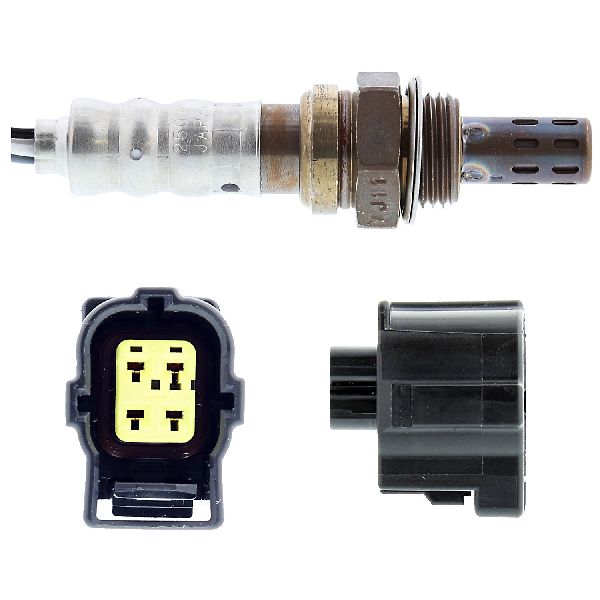
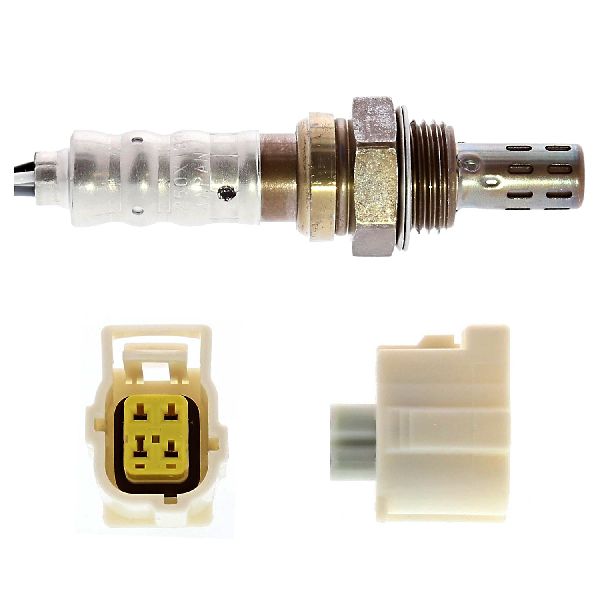
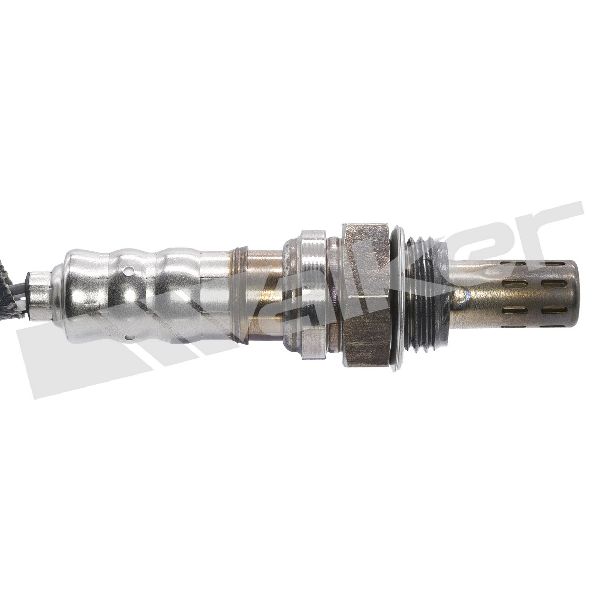
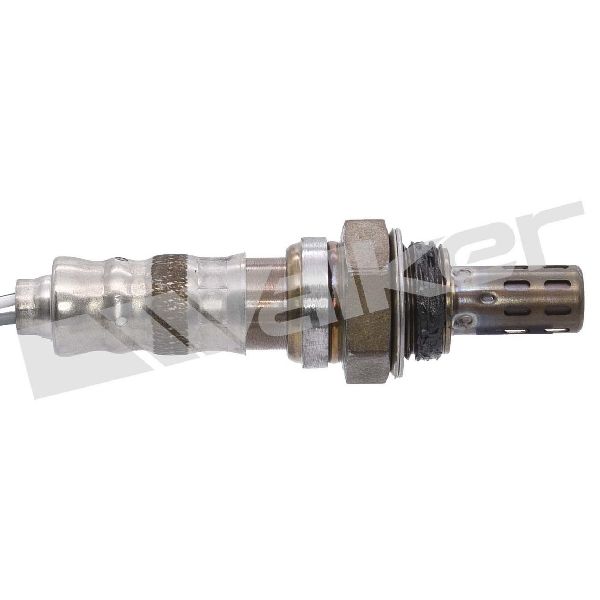
- Oxygen Sensor (Bank 1, Sensor 1)
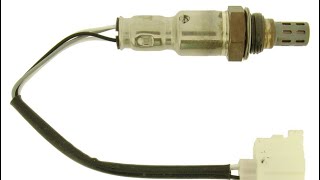
(OEM #5149171AB)— The internal heater element in this specific sensor is the most common failure point for code P0031 on this vehicle. Bank 1 is the rear bank, and Sensor 1 is the upstream position.
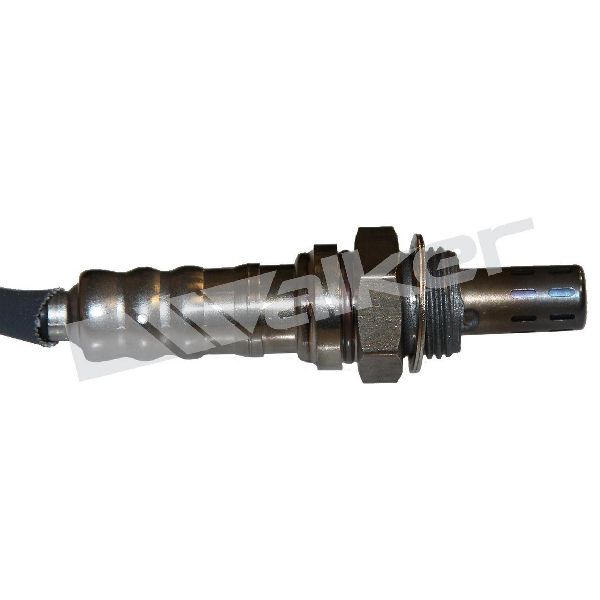
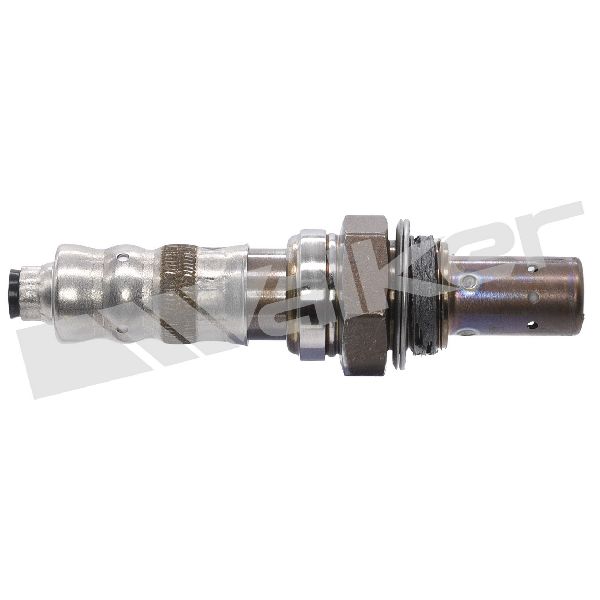
Trusted brands: Mopar (OEM), NTK (P/N: 22134), Denso (P/N: 234-4587), Walker Products (P/N: 350-34523)
OEM price range: $90-$150
Aftermarket price range: $40-$80
Related Codes That Often Appear With This One
- P0037, P0051, P0057 — These are the heater circuit low codes for the other three oxygen sensors. If all four appear at once, it strongly points to a common power/ground issue (like a blown M25 fuse), or a PCM software fault (especially on 2011 models), not four simultaneously failed sensors.
- U0140 — Lost Communication With Body Control Module (TIPM). TSB 18-059-16 specifically notes that this code can appear alongside the O2 heater codes on 2011 models and is resolved by the same PCM software flash.
Technical Service Bulletins (TSBs) & Recalls
- TSB 18-059-16 / Customer Satisfaction Notification L41 - Addresses multiple O2 sensor heater codes (both low and high circuit faults) and U0140 on 2011 models caused by a PCM software issue. The fix is a PCM reflash.
- TSB Bulletin #18-092-15 - A cross-manufacturer reference for Dodge vehicles noting that P0031 (O2 Sensor 1/1 Heater Circuit Low) can occur alongside other heater circuit low codes like P0037, P0051, and P0057.
- TSB Bulletin #25-002-14 - Identifies P0031 as an "O2 Sensor 1/1 Heater Circuit Low" fault, often grouped with other heater performance codes such as P0030 and P0032.
- TSB Bulletin #25-003-13 - Notes that P0031 may be triggered in conjunction with soot-related codes or slow response codes like P014D in certain Dodge engine families.
- TSB Bulletin #25-004-12 - Confirms P0031 as a specific heater circuit low fault for the 1/1 (upstream, Bank 1) oxygen sensor.
Platform-Specific Known Issues
- Customer Satisfaction Notification L41 / TSB 18-059-16: Affects 2011 models. A PCM software glitch can cause P0031, P0037, P0051, and P0057 to appear simultaneously, sometimes with U0140. The fix is a PCM reflash, not sensor replacement.
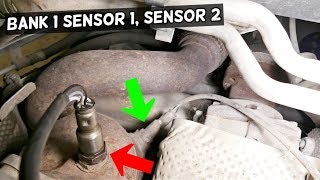
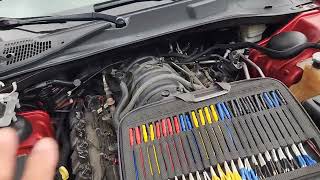
- Difficult Access: The Bank 1 (rear) sensors are located near the firewall in a tight space, making them significantly harder to access and replace than the Bank 2 (front) sensors. Access is typically from underneath the vehicle, and may require removing heat shields. 🎬 Watch this walkthrough for accessing and replacing the rear sensor.
- Wiring Harness Melting: The proximity of the rear O2 sensor harness to the hot exhaust manifold makes it prone to melting if not properly secured in its clips.
Mechanic-Grade Diagnostic Values
- O2 Sensor Heater Element Resistance — expected: 2.0 to 30.0 Ohms at 70°F (21°C). Some sources narrow this to 4-10 Ohms.. Failure: A reading of OL (Open Loop/infinite resistance) or near 0 Ohms indicates a failed heater element.
- Heater Circuit Power Supply (at harness connector) — expected: ~12V (Battery Voltage) with key on, engine off, sensor disconnected.. Failure: No voltage or significantly low voltage points to a problem with the fuse, TIPM relay, or wiring.
- Heater Control Circuit (at harness connector) — expected: This is a PCM-controlled ground. A professional test involves checking for a short to ground on this wire back at the PCM connector.. Failure: A constant ground with key off or a resistance to ground below 5.0 Ohms indicates a short in the harness.
- O2 Sensor Signal Circuit Bias Voltage (at harness connector) — expected: Approximately 5.0 Volts with key on, engine off, sensor disconnected.. Failure: Significantly lower or no voltage may indicate a wiring issue back to the PCM.
Hidden / Shadow Codes Worth Checking
- P0031, P0037, P0051, P0057 (all simultaneously): When all four O2 sensor heater circuit low codes appear at once, it is not a failure of all four sensors. It acts as a 'shadow code' pointing to a single root cause: either a PCM software fault (on 2011 models per TSB 18-059-16) or a common power supply failure from the TIPM or a blown fuse. (see via Standard OBD-II scanner. The diagnostic significance comes from seeing all four codes together.)
Scan Tool Commands That Help
- wiTECH (or equivalent professional scanner): O2 Heater Test / Actuator Test — This function allows a technician to command the O2 sensor heater circuit on and off directly. It is used to verify the integrity of the PCM driver, wiring, and TIPM relay without having to replace the sensor first. If the heater can be activated with the scan tool, the fault is almost certainly the sensor itself.
Wiring & Ground Locations
- PCM Connector C2 — On the Powertrain Control Module (PCM) located on the driver's side of the engine bay.. The O2 sensor heater control circuit (K99 - typically a Brown/Light Green wire) and the O2 return circuit (K902) for Bank 1 Sensor 1 terminate here. Advanced diagnostics, like checking for shorts or continuity, are performed at this connector.
- Engine Ground Strap — A braided strap connecting the top engine mount (passenger side) to the chassis/shock tower area.. This is a primary engine-to-chassis ground. Corrosion or breakage is common and can cause erratic voltage and sensor readings across the engine, including for O2 sensors which rely on a stable ground reference.
- TIPM (Totally Integrated Power Module) — The main fuse and relay box in the engine bay, typically on the driver's side.. The TIPM contains the non-serviceable relay that provides the 12V power to the O2 sensor heater circuit. A failure inside the TIPM can cut power, causing a P0031 code.
Real Owner Repair Stories
- DodgeForum.com user (2011 Dodge Grand Caravan Crew 3.6L with 127,000 miles) — Check Engine Light on, then started running very rough with a blinking MIL. Codes P0031, P0037, P0051, and P0057 all appeared simultaneously.
❌ Tried (didn't work) Checking fuses, Disconnecting the battery to reset the system
✅ What actually fixed it The owner discovered Chrysler's Customer Satisfaction Notification L41 (TSB 18-059-16), which described a PCM software error causing these exact symptoms on 2011 models. The required fix was a PCM reflash at the dealership, not sensor replacement. - Go-Parts.com Case Study (WrenchTheory501) (Dodge Durango with 3.6L Pentastar engine (same engine family)) — Check Engine Light with multiple O2 sensor heater codes, intermittent severe misfire (P0300), and rich/lean running conditions.
❌ Tried (didn't work) Replacing both upstream O2 sensors, Replacing coil packs
✅ What actually fixed it The final cause was a faulty Powertrain Control Module (PCM). The internal O2 heater driver circuits had failed, requiring replacement of the PCM.
OEM Part Supersession History
5149171AA, 68066160AA→5149171AB— Standard part revision and consolidation by the manufacturer.
Heads up: Using the older part numbers is not recommended as the latest revision (5149171AB) contains the most up-to-date design and materials.
Model Year Variations Within This Range
- 2011 only: This model year is subject to TSB 18-059-16 (Customer Satisfaction Notification L41) for a PCM software glitch. If multiple O2 heater codes (P0031, P0037, P0051, P0057) appear at once, the cause is almost certainly the software and requires a dealer reflash, not new sensors.
Diagnostic Flowchart
Used vs. New Parts: Buying Guide for This Vehicle
When a used part is the smart pick: A used part is a smart choice for the wiring harness connector pigtail if the original is melted or broken. It is not recommended to buy a used oxygen sensor.
Donor-vehicle mileage cap: roughly under 150000 miles for the part to have meaningful remaining life.
What to inspect on the donor part:
- For a connector pigtail, inspect for non-brittle plastic.
- Ensure locking tabs are intact.
- Check for clean, un-corroded pins.
- Verify the attached wires are flexible and not stiff, cracked, or previously repaired.
OEM-only on this vehicle (don't cheap out):
- Powertrain Control Module (PCM) - Due to programming requirements, a new or professionally remanufactured and programmed PCM is required if it fails.
Aftermarket brands forum-validated for this vehicle:
- NTK (often the original equipment manufacturer)
- Denso
Brands owners have reported issues with on this vehicle:
- Unbranded 'white-box' or generic parts-store-branded sensors have a higher reported failure or incompatibility rate on this platform according to forum discussions.
Real Owner Stories
Aggregated from forums and TSBs cited above. Mileages and costs reflect what owners reported in those sources.
2011 Dodge Grand Caravan Crew 3.6L
Symptoms: Check engine light came on, and a scan revealed codes P0031, P0037, P0051, and P0057 were all present at the same time.
What fixed it: A dealer PCM reflash. A previous emissions recall (V51) had overwritten the necessary software fix from an earlier notification (L41). The dealer had to re-apply the L41 software update to resolve the false codes.
Source hint: owner_reports section citing dodgetalk.com
2011 Dodge Grand Caravan 3.6L
Symptoms: The vehicle was throwing all four O2 sensor heater circuit low codes simultaneously (P0031, P0037, P0051, P0057).
What fixed it: The owner discovered the issue was related to Chrysler's Customer Satisfaction Notification L41, confirming the problem was with the PCM software and not the physical sensors.
Source hint: DodgeForum.com: 2011 GC Crew 3.6L -o2- P0031, P0037, P0051, P0057
2011 Chrysler Town & Country 3.6L — ~85000 miles
Symptoms: Check engine light with decreased fuel economy. A scan showed P0031.
What fixed it: After confirming the heater circuit had infinite resistance with a multimeter, the owner replaced the Bank 1, Sensor 1 oxygen sensor. The most difficult part was accessing the sensor near the firewall.
Source hint: vehicle_specific_issues section describing common sensor failure over 80,000 miles and difficult access
Related OBD-II Codes
Frequently Asked Questions
Where is the Bank 1, Sensor 1 oxygen sensor located on my 2011-2020 Grand Caravan?
My 2011 Grand Caravan has P0031 and other O2 sensor codes (P0037, P0051, P0057) all at once. What's the problem?
How can I test the O2 sensor heater myself to confirm it's bad?
What fuse should I check for the P0031 code?
Why is the wiring a common cause for P0031 on this van?
I have a 2014 Chrysler Town & Country with P0031. Does this article apply?
Helpful Videos
We Have This Part in Stock

The information in this article is provided for general reference and educational purposes only. Vehicle specifications, procedures, and part compatibility can vary by production date, trim level, and region. Always consult your vehicle's factory service manual and verify part numbers before purchasing or performing repairs. Safety-critical components such as airbags, seat belts, and braking systems should be installed by a qualified professional.
- Dodge Grand Caravan:
- 🧭 Diagnostic Flowchart
- 🎬 Helpful Videos
- 🛍️ Shop This Part
- What's Unique About the 2011-2020 Dodge Grand Caravan
- Symptoms You May Notice
- Most Likely Causes
- Rare But Worth Checking
- Diagnosis Steps
- Parts You'll Likely Need
- Related Codes That Often Appear With This One
- Technical Service Bulletins (TSBs) & Recalls
- Platform-Specific Known Issues
- Mechanic-Grade Diagnostic Values
- Hidden / Shadow Codes Worth Checking
- Scan Tool Commands That Help
- Wiring & Ground Locations
- Real Owner Repair Stories
- OEM Part Supersession History
- Model Year Variations Within This Range
- Used vs. New Parts: Buying Guide for This Vehicle
- Real Owner Stories
- 2011 Dodge Grand Caravan Crew 3.6L
- 2011 Dodge Grand Caravan 3.6L
- 2011 Chrysler Town & Country 3.6L — ~85000 miles
- Related OBD-II Codes
- Frequently Asked Questions
- 🎟️ Get 5% Off