

P0031 on 2012-2017 Kia Rio: Heater Circuit Low Causes and Fixes
On a 2012-2017 Kia Rio, code P0031 almost always means the heater element inside the upstream oxygen sensor (Bank 1, Sensor 1) has failed. The most common fix is to replace the sensor. Before replacing, check the 10A 'SENSOR2' fuse in the engine bay fuse box. An aftermarket sensor costs about $60-$130, while an OEM part is $150-$250. It's a DIY-friendly job with a 2/5 difficulty.
- P0031 on a 2012-2017 Kia Rio almost always points to a failed upstream oxygen sensor (Bank 1, Sensor 1).
- Before replacing the sensor, always check the 10A 'SENSOR2' fuse in the engine compartment fuse box first.
- This is a DIY-friendly repair that can be done with basic tools and a special 22mm oxygen sensor socket.
- Ignoring the code will lead to poor gas mileage and will cause the vehicle to fail an emissions test.
- Use a quality aftermarket brand like Denso, NGK, or Bosch for a reliable repair without the higher cost of an OEM part. Kia and Hyundai vehicles are known to be sensitive to cheap, unbranded sensors.
What's Unique About the 2012-2017 Kia Rio
The 1.6L GDI engine in the third-generation (UB) Kia Rio has a simple and common layout. Since it's a four-cylinder, there is only one exhaust bank, making "Bank 1" the only bank. The upstream "Sensor 1" is conveniently located on the exhaust manifold, making it relatively easy to access from the top of the engine bay compared to many other vehicles. The P0031 code on this platform is a very common and straightforward issue, almost always pointing to the sensor itself having worn out from normal heat cycles.
Symptoms You May Notice
- Check Engine Light is on
- Decreased fuel economy
- Rough idle, especially when the engine is cold
- Failing a vehicle emissions test
- Sluggish acceleration or poor engine performance
- Replacing the downstream (Bank 1, Sensor 2) oxygen sensor instead of the upstream (Bank 1, Sensor 1) sensor. The code P0031 specifically points to the upstream sensor.
- Replacing the oxygen sensor without first checking for a blown fuse, which is a much cheaper and simpler potential fix.
Most Likely Causes
- Failed Upstream Oxygen Sensor (Bank 1, Sensor 1) 🔴 High Probability → Shop Oxygen Sensor The internal heater element is a wear-and-tear component that fails after many thousands of heat cycles. This is the most common failure point for this code on the Rio.
How to confirm: After confirming the fuse is good, disconnect the sensor and test the resistance of the heater circuit pins (usually the two same-colored wires) on the sensor connector with a multimeter. A typical specification for a good heater is between 2.5 and 8.0 Ohms. An open circuit (infinite resistance) or a reading far outside this range indicates a failed heater element.
Typical fix: Replace the upstream oxygen sensor. This requires a special 22mm (or 7/8") oxygen sensor socket to remove and install.
Est. part cost: $60-$250 - Blown Fuse 🟡 Medium Probability A short circuit within the failing oxygen sensor's heater element can cause the protective fuse to blow. A new fuse may blow again immediately if the shorted sensor is not replaced.
How to confirm: Check the fuse labeled 'SENSOR2' (10A) in the engine compartment fuse box. If the fuse is blown, replace it. If it blows again, the sensor is shorted and needs replacement.
Typical fix: Replace the blown 10A fuse with one of the same amperage rating. This is often a temporary fix until the underlying short in the sensor is addressed.
Est. part cost: $1-$5 - Damaged Wiring or Connector ⚪ Low Probability The wiring harness is routed near the hot exhaust manifold and can become brittle, melt, or frayed over time, leading to a short or open circuit.
How to confirm: Visually inspect the wiring harness and connector leading to the upstream O2 sensor for any signs of melting, chafing, corrosion, or broken wires. Use a multimeter to check for 12V power and good ground at the harness connector with the key on, engine off.
Typical fix: Repair the damaged section of wiring or replace the connector pigtail.
Est. part cost: $10-$30
Rare But Worth Checking
- Faulty Powertrain Control Module (PCM): This is very rare. The PCM should only be suspected if the sensor, fuse, and wiring have all been tested and confirmed to be in good working order.
Diagnosis Steps
- Read the code with an OBD-II scanner to confirm P0031 is the primary code present.
- Locate the engine compartment fuse box.
- Check the 10A fuse for the oxygen sensors, labeled 'SENSOR2' on the fuse diagram. If it's blown, replace it and see if the code returns. If it blows again, the sensor is shorted and must be replaced.
- If the fuse is good, visually inspect the wiring and connector for the upstream oxygen sensor. It is located on the exhaust manifold. Look for any signs of melting, corrosion, or physical damage.
- Disconnect the sensor and use a multimeter to test the resistance across the two heater circuit pins on the sensor side (typically the two wires of the same color). A reading between 2.5 and 8.0 Ohms is expected. A reading of infinite resistance (open circuit) or near zero (short circuit) means the heater has failed and the sensor must be replaced.
- If resistance is within spec, test the harness connector for power. With the ignition on (engine off), check for 12-volt power on one pin and a good ground on another. Lack of power or ground points to a wiring issue or a problem with the PCM.
- If the sensor's heater circuit is faulty (open or shorted) and the wiring is intact, the upstream oxygen sensor is faulty and needs to be replaced.
Parts You'll Likely Need
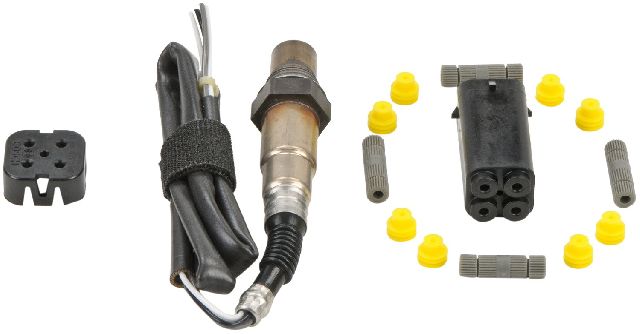
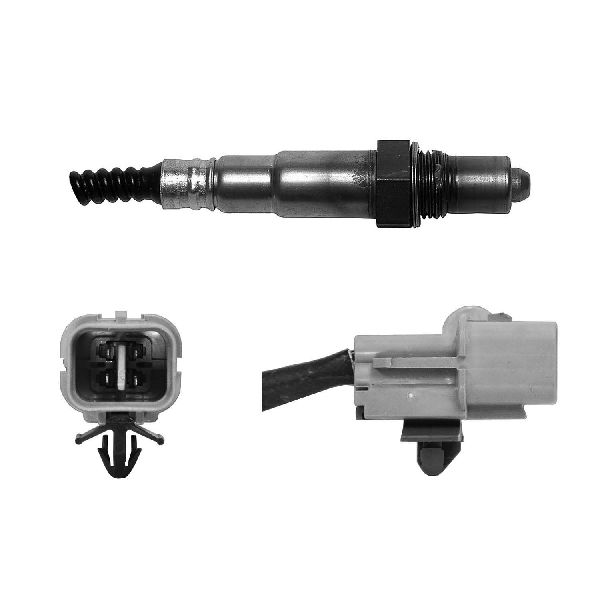
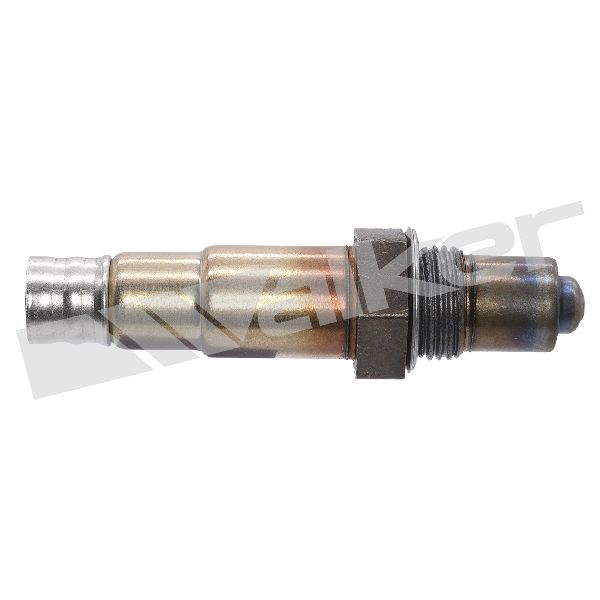
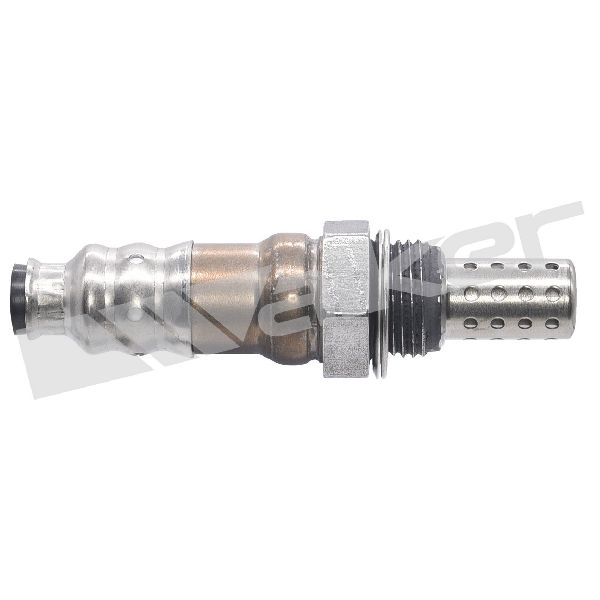
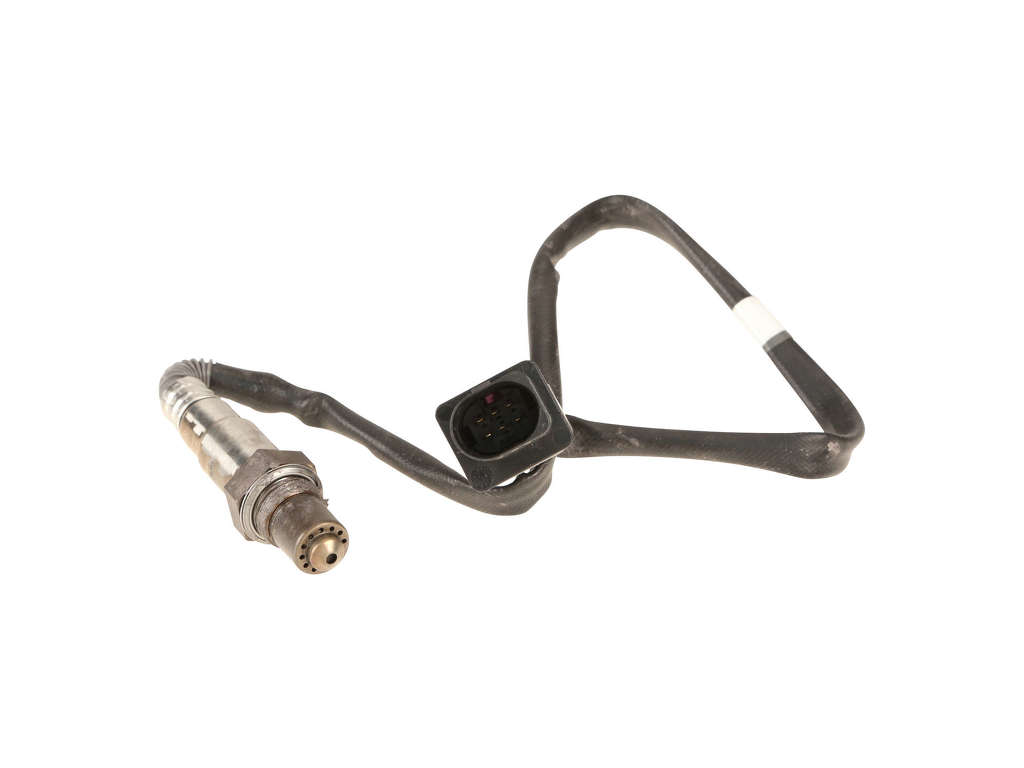
- Upstream Oxygen Sensor / Air-Fuel Ratio Sensor
(OEM #39210-2B210)— This is the most common failure for code P0031, as the internal heater element burns out or shorts from normal use.
Trusted brands: Denso (e.g., 234-5055), NGK/NTK (e.g., 27093), Bosch
OEM price range: $150-$250
Aftermarket price range: $60-$135
Related Codes That Often Appear With This One
- P0030 — This is a general fault for the same heater circuit. P0031 is more specific, indicating a 'low' circuit condition (short or low voltage). They point to the same root cause.
- P0131 — This code for 'O2 Sensor Circuit Low Voltage' can appear because a non-functioning heater prevents the sensor from reaching the correct temperature to produce a valid voltage signal.
- P0130 — This code indicates a general malfunction in the O2 sensor circuit. It can be triggered if the heater failure prevents the sensor from sending any plausible signal to the ECU.
- P0036 — This code for the downstream O2 sensor heater circuit (Bank 1, Sensor 2) can appear at the same time if both sensors fail due to age, which is a common occurrence.
Platform-Specific Known Issues
- Fuse Location Clarification: For the 2012-2017 Kia Rio, the fuse for the O2 sensor heater is a 10A fuse labeled 'SENSOR2' located in the main engine compartment fuse box, not the interior fuse panel.
- Real-World Failure Pattern: Owners on forums frequently report that a blown O2 sensor fuse is often a symptom of a shorted sensor. Replacing just the fuse often leads to it blowing again shortly after, confirming the need to replace the sensor itself.
Mechanic-Grade Diagnostic Values
- Heater Circuit Power Supply Voltage — expected: 11V - 16.5V (approx. battery voltage) with Key On, Engine Off, measured at the harness-side connector.. Failure: 0V or significantly low voltage indicates a blown fuse, faulty relay, or an open in the power wire.
- Heater Circuit Current Draw (via Scan Tool) — expected: 0.9A - 9.9A during heater operation.. Failure: Current less than 0.8A is a condition for setting P0031.
- O2 Sensor Heater Element Resistance (Upstream) — expected: 4.5 - 8.0 Ohms at 20°C (68°F).. Failure: An open circuit ('OL' on a multimeter) or a reading near zero Ohms (short circuit) confirms a failed heater element.
Scan Tool Commands That Help
- Kia GDS (Global Diagnostic System): Live Data / Current Data Analysis - 'Heater Circuit Duty Cycle' — This allows a technician to monitor the PCM's command to the heater circuit in real-time. A value stuck at 0% or 100% can help confirm an open or short circuit condition when combined with voltage/resistance tests.
- Kia GDS (Global Diagnostic System): O2 Test Result (Mode 6) — Used to view the results of the onboard oxygen sensor monitoring self-tests, which can confirm if the heater circuit test is failing.
Wiring & Ground Locations
- ECM Pin 31 (Green wire) — At the main Engine Control Module (ECM) connector.. This is the specific pin for the Upstream Oxygen Sensor Heater control. Checking for continuity from this pin to the sensor connector can isolate a wiring fault from a sensor or PCM fault.
- ECM Pins 77 & 78 (Black & Brown wires) — At the main Engine Control Module (ECM) connector.. These are primary ground pins for the ECM and its sensor circuits. A poor connection or corrosion at these ground points can cause erratic sensor readings and various electrical fault codes.
- Engine Block Ground Strap — Main ground strap connecting the engine block/transmission to the vehicle's chassis.. A poor or corroded main engine ground can cause a variety of electrical issues, including incorrect voltage readings and sensor faults like P0031. Ensuring this connection is clean and tight is a crucial step in diagnosing any electrical fault.
Real Owner Repair Stories
- Reddit r/MechanicAdvice user post (2014 Kia Rio LX Sedan, 1.6L GDI) — Rough idle that gets progressively worse as the engine warms up. Shuddering at a stop.
✅ What actually fixed it The owner found multiple heater circuit codes for both upstream (P0030, P0031) and downstream (P0036, P0037) sensors, along with valve control solenoid codes. The community advised that the collection of codes strongly pointed to sensor failure, and replacement of the O2 sensors was the correct path forward. The owner purchased a set of Denso sensors to perform the repair.
Diagnostic Flowchart
Other Known Issues on This Vehicle
Issues unrelated to this code that are worth knowing about as an owner of this generation:
- Worn MDPS Steering Coupler 🟡 Low — Very common, often occurs after 50,000 miles. Causes a clicking or knocking sound in the steering column when turning the wheel, especially when stationary. (Ref: TSB CHA-074 / NHTSA TSB 10058034)
- Engine Stalling and Performance Issues 🟠 Medium — Commonly reported between 50,000 and 100,000 miles. Can be caused by a dirty throttle body, failing ignition coils, or carbon buildup on intake valves, a known issue for GDI engines.
- Automatic Transmission Hard Shifts/Hesitation 🟠 Medium — Frequently reported between 40,000 and 80,000 miles. Symptoms include jerking, hesitation, or slipping. Often linked to the transmission control module or fluid issues.
- HECU Electrical Short Fire Risk 🔴 High — Affects a wide range of Kia models, including the 2012-2017 Rio. An electrical short in the Hydraulic Electronic Control Unit (HECU) can cause a fire while parked or driving. (Ref: NHTSA Recall 23V594000)
- Carbon Buildup on Intake Valves 🟠 Medium — Inherent to Gasoline Direct Injection (GDI) engines like the 1.6L Gamma. Over time (typically 80k-120k miles), carbon deposits build up on intake valves, leading to misfires, rough idle, and power loss.
Used vs. New Parts: Buying Guide for This Vehicle
When a used part is the smart pick: For this repair, a used part is almost never a smart choice. The oxygen sensor is a wear-and-tear component with a finite lifespan of 60,000 to 100,000 miles. A used sensor from a junkyard has an unknown history and is likely near the end of its life. The only used part that could be considered is a connector pigtail if the original was damaged.
Donor-vehicle mileage cap: roughly under 15000 miles for the part to have meaningful remaining life.
What to inspect on the donor part:
- For a connector pigtail: check for brittle plastic, corrosion on the pins, and any signs of melting or heat damage.
Aftermarket brands forum-validated for this vehicle:
- Denso (often the OEM supplier)
- NGK / NTK
- Bosch
Brands owners have reported issues with on this vehicle:
- Generic, unbranded 'white-box' sensors from online marketplaces like Amazon or eBay. These are frequently reported by Kia/Hyundai owners to have incorrect heater resistance or poor calibration, causing the code to return immediately or leading to other performance issues.
Real Owner Stories
Aggregated from forums and TSBs cited above. Mileages and costs reflect what owners reported in those sources.
2014 Kia Rio LX Sedan 1.6l 4 cylinder GDI
Symptoms: Idles rough, and seems to get progressively worse as it runs. It will just shudder with my foot on the break. Acting like it wants to pull forward. Check engine light on.
What fixed it: The owner was advised to replace the upstream and downstream O2 sensors as part of the repair process for multiple codes including P0031.
Source hint: Reddit r/MechanicAdvice
2012-2013 Kia Soul 1.6L Gamma GDI
Symptoms: P0031 fault code present; vehicle shares the same engine and oxygen sensor part number as the Rio.
What fixed it: Replacement of the upstream O2 sensor (Part #39210-2B210).
Source hint: platform_mates context for Kia Soul 1.6L
2012-2017 Kia Rio
Symptoms: Blown O2 sensor fuse; replacing the fuse resulted in it blowing again shortly after.
What fixed it: Replacing the oxygen sensor itself to resolve the underlying short circuit.
Source hint: vehicle_specific_issues - Real-World Failure Pattern
Related OBD-II Codes
Frequently Asked Questions
Where is the fuse for the oxygen sensor heater located on my 2012-2017 Kia Rio?
My 2014 Kia Rio is idling rough and has a P0031 code; could this be related to carbon buildup?
Is there a specific part number for the oxygen sensor I should use for a 2012 Kia Soul with the same engine?
If I replace the 'SENSOR2' fuse and it blows again immediately, what does that mean for my Rio?
What tool do I need to replace the upstream O2 sensor on my Kia Rio?
Are there any major safety recalls for the 2012-2017 Kia Rio I should be aware of while fixing this?
Helpful Videos
We Have This Part in Stock


The information in this article is provided for general reference and educational purposes only. Vehicle specifications, procedures, and part compatibility can vary by production date, trim level, and region. Always consult your vehicle's factory service manual and verify part numbers before purchasing or performing repairs. Safety-critical components such as airbags, seat belts, and braking systems should be installed by a qualified professional.
- Kia Rio:
- 🧭 Diagnostic Flowchart
- 🎬 Helpful Videos
- 🛍️ Shop This Part
- What's Unique About the 2012-2017 Kia Rio
- Symptoms You May Notice
- Most Likely Causes
- Rare But Worth Checking
- Diagnosis Steps
- Parts You'll Likely Need
- Related Codes That Often Appear With This One
- Platform-Specific Known Issues
- Mechanic-Grade Diagnostic Values
- Scan Tool Commands That Help
- Wiring & Ground Locations
- Real Owner Repair Stories
- Other Known Issues on This Vehicle
- Used vs. New Parts: Buying Guide for This Vehicle
- Real Owner Stories
- 2014 Kia Rio LX Sedan 1.6l 4 cylinder GDI
- 2012-2013 Kia Soul 1.6L Gamma GDI
- 2012-2017 Kia Rio
- Related OBD-II Codes
- Frequently Asked Questions
- 🎟️ Get 5% Off