

P0031 on 2008-2013 Subaru Forester XT: Front O2 Sensor Heater Circuit Causes and Fixes
On a 2008-2013 Forester XT, P0031 almost always means the internal heater in the front oxygen sensor has failed. The most common fix is replacing the sensor. Before buying a new one, check the 15A A/F sensor fuse in the interior fuse panel as a quick, free first step. A bent heat shield shorting the sensor wiring is a known cause for blowing this fuse.
- P0031 on your Forester XT points directly to a problem with the front (pre-turbo) oxygen sensor heater circuit.
- The most common cause by a wide margin is a failed internal heater in the sensor itself, requiring sensor replacement.
- Before replacing the sensor, always check the 15A A/F sensor fuse in the interior fuse panel; a shorted wire can blow it.
- Use only an OEM or Denso/NTK replacement sensor; other brands are known to be incompatible with Subaru's ECU.
- The flashing cruise control and VDC lights are a normal, intentional symptom designed by Subaru to get your attention and do not indicate a separate fault.
What's Unique About the 2008-2013 Subaru Forester
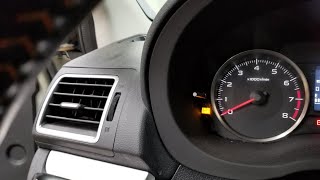
On the turbocharged Forester XT, the front A/F sensor is a common failure item due to high exhaust heat cycles. When this code appears, Subaru's system is designed to get the driver's attention by also illuminating a flashing cruise control light and disabling the traction control system (VDC). This is normal behavior and does not indicate a separate problem with those systems; it's a safety precaution to ensure the driver addresses the engine fault. 🎬 Watch: Why your cruise control and VDC lights are flashing. The sensor itself is a wideband A/F sensor, typically a high-quality Denso unit from the factory. Using a Denso or OEM replacement is strongly recommended, as many owners and technicians report that other brands, like Bosch, can be incompatible and cause the code to persist.
Generation note: This range covers the end of the second generation (SG; 2008) and the entire third generation (SH; 2009-2013) of the Forester. For the XT model with the EJ255 engine, the cause, diagnosis, and fix for P0031 are virtually identical across these years.
Symptoms You May Notice
- Check Engine Light (CEL) is on.
- Flashing cruise control light.
- Traction control/Vehicle Dynamics Control (VDC) light is on.
- Reduced fuel economy.
- Rough idle, especially when cold.
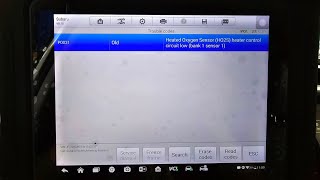
- Possible hesitation during acceleration before the engine is fully warm. 🎬 Watch a P0031 diagnostic walkthrough on a 2011 Forester XT.
- Failing an emissions test.
- Replacing the rear oxygen sensor (Sensor 2). P0031 specifically refers to the front, pre-catalytic converter sensor (Sensor 1).
- Ignoring the fuse. Some people replace the sensor only to find the code returns instantly because the underlying issue was a simple blown fuse.
- Using a cheap, universal, or incorrect brand of sensor. Subarus are notoriously sensitive to the A/F sensor, and using a non-OEM equivalent (like a brand other than Denso or NTK) can cause the code to persist, return, or cause other performance issues.
Most Likely Causes
- Failed Front Air/Fuel (O2) Sensor Heater Element 🔴 High Probability The front A/F sensor is a wear-and-tear item exposed to extreme heat cycles on this turbocharged engine, causing the internal heater filament to burn out over time, creating an open circuit.
How to confirm: Unplug the sensor's electrical connector at the passenger-side strut tower. Use a multimeter set to Ohms to test the resistance between the two heater circuit pins (usually the two same-colored black wires). A good sensor will read a low resistance, typically between 2.0 and 4.0 ohms. 🎬 See how to test and replace the A/F sensor. A failed sensor will show an open circuit (infinite resistance or 'OL').
Typical fix: Replace the Bank 1, Sensor 1 Air/Fuel Ratio sensor.
Est. part cost: $120-$280 - Blown A/F Sensor Fuse ⚪ Low Probability Wiring for the O2 sensor can sometimes come into contact with hot exhaust components or a bent heat shield, causing a short circuit that blows the protective fuse.
How to confirm: Check the interior fuse box, located under the driver's side dashboard. The fuse is typically a 15A fuse. On some models, it is the third fuse up from the bottom in the black fuse block. Visually inspect it or test for continuity with a multimeter.
Typical fix: Replace the blown 15A fuse. If it blows again, inspect the wiring harness for a short to ground, paying close attention to the area near the exhaust manifold heat shields.
Est. part cost: $1-$5 - Damaged Wiring or Connector ⚪ Low Probability The sensor wiring is routed near hot exhaust and engine components, making it susceptible to melting, chafing, or corrosion over time. The main connector is located on the passenger-side strut tower where it is exposed to the elements.
How to confirm: Visually inspect the entire wiring harness from the sensor in the exhaust manifold up to the connector on the strut tower. Check for any signs of burns, cuts, frayed wires, or corrosion in the connector pins.
Typical fix: Repair the damaged section of the wire or replace the connector pigtail.
Est. part cost: $10-$40
Rare But Worth Checking
- Failed Engine Control Module (ECM): This is extremely rare. All other possibilities, including the sensor, fuse, and wiring, must be exhaustively ruled out before considering the ECM as the cause.
Diagnosis Steps
- Read the code with an OBD-II scanner to confirm P0031 is the primary code.
- Check the 15A A/F heater fuse in the interior fuse panel under the driver's dash. This is a critical and easy first step.
- If the fuse is good, visually inspect the wiring and connector for the front A/F sensor. The harness runs from the passenger side exhaust manifold up to a connector on the strut tower. Look for melting, chafing, or damage, especially from heat shields.
- Disconnect the sensor at the strut tower connector. Test the resistance of the heater circuit pins on the SENSOR side (two black wires) using a multimeter. A reading of 'OL' or infinite resistance confirms the heater has failed. A good sensor should read between 2.0 and 4.0 ohms.
- If the sensor tests good, check for 12V power and a good ground at the VEHICLE-side connector with the ignition on. Lack of voltage points back to the fuse or a wiring issue.
- If power and ground are present and the sensor's resistance is within spec, there may be an intermittent wiring issue. If all wiring and the sensor are confirmed good, the ECM driver circuit could be at fault, but this is highly unlikely.
Parts You'll Likely Need
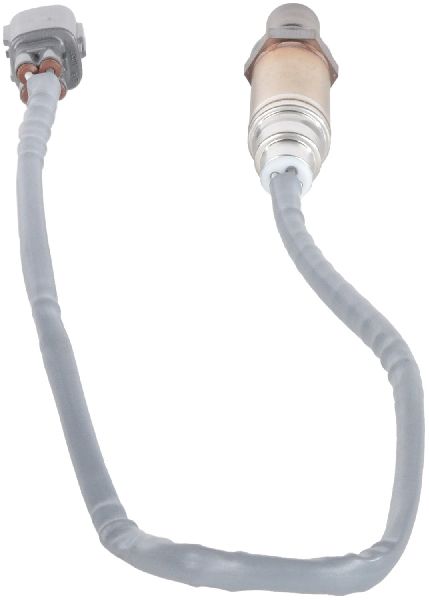
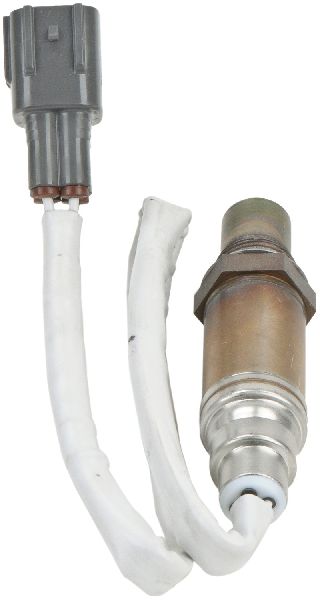
- Front Air/Fuel Ratio Sensor (Bank 1, Sensor 1)
(OEM #22641AA480)— The internal heater element is a common failure point and is integral to the sensor, requiring the replacement of the entire unit.
Trusted brands: Denso (OEM Supplier), NTK
OEM price range: $220-$280
Aftermarket price range: $120-$180
Related Codes That Often Appear With This One
- P0037 — HO2S Heater Control Circuit Low (Bank 1 Sensor 2). This code for the rear sensor can appear with P0031 if a shared component, like the A/F heater fuse, has failed due to a short circuit in either sensor's wiring.
- P0032 — HO2S Heater Control Circuit High (Bank 1 Sensor 1). This is the companion code indicating a short circuit to power in the heater circuit, whereas P0031 indicates an open or short to ground.
Platform-Specific Known Issues
- Accessing the Sensor: The sensor is located on the passenger side exhaust manifold, before the turbo. Access can be gained from underneath the vehicle or by removing the passenger side front wheel and splash shield for better visibility and tool access.
- Seized Sensor Removal: Due to constant exposure to high heat, the sensor often becomes seized in the exhaust manifold. It is highly recommended to apply penetrating oil (like PB Blaster) and let it soak before attempting removal. A specialized 22mm (or 7/8") slotted oxygen sensor socket is required.
Mechanic-Grade Diagnostic Values
- A/F Sensor #1 Heater Resistance (Sensor-side) — expected: 2.0 to 4.0 Ohms at room temperature.. Failure: Infinite resistance ('OL') indicates an open heater coil. A reading significantly outside the expected range also indicates failure.
- A/F Sensor #1 Heater Power (Harness-side) — expected: Battery voltage (approx. 12V) with Key On, Engine Off.. Failure: Zero or low voltage points to a blown fuse, faulty A/F heater relay, or an open in the power wire.
- A/F Sensor #1 Heater Ground (Harness-side) — expected: The ECM provides a pulse-width modulated (PWM) ground. Testing with a simple multimeter may be inconclusive. An oscilloscope is best, but checking for continuity to ground with the key off can sometimes reveal a dead short.. Failure: A constant, direct short to ground with the key off points to a wiring issue. No ground signal from the ECM when running points to a wiring or ECM driver issue.
- Subaru Select Monitor Live Data: 'A/F Sensor #1 Resistance' — expected: Should reflect the manually measured resistance (2-4 ohms).. Failure: A reading of 255 ohms is a common value displayed by Subaru scan tools to indicate an open/failed heater circuit.
- Subaru Select Monitor Live Data: 'A/F Sensor #1 Current' — expected: Should show current flow when the heater is commanded on by the ECM.. Failure: Zero amps indicates an open circuit (matching P0031). Significantly high amperage (over 10A) would indicate a short and typically sets P0032.
Scan Tool Commands That Help
- Subaru Select Monitor (SSM): Current Data Display & Save — Use this to view live data parameters like 'A/F Sensor #1 Resistance' and 'A/F Sensor #1 Current'. This helps confirm if the ECM is seeing the same electrical fault (open circuit, no current) that you measure manually, which is useful for verifying the failure or diagnosing intermittent issues.
- Subaru Select Monitor (SSM) or capable aftermarket scanner: Clear Memory / Clear DTCs — After replacing the sensor or fuse, the code must be cleared from the ECM. On many modern Subarus, simply disconnecting the battery is not sufficient to clear the code, and a scanner must be used to perform the reset.
Wiring & Ground Locations
- A/F Sensor Heater Relay — Located in the main fuse and relay block in the engine bay. It is often labeled 'A/F HEATER RELAY' or may be part of an integrated relay assembly.. This relay supplies the 12V power to the heater circuit. If the relay fails, the heater will not receive power, causing P0031 even with a good sensor and fuse.
- A/F Sensor Connector (Harness Side) — On the passenger side strut tower in the engine bay.. This is the primary test point. The heater power wire (often Yellow/Red) and the ECM-controlled ground wire can be tested here for voltage and signal.
- ECM Connector B84 (on a sample WRX harness) — At the Engine Control Module, typically located in the passenger footwell area.. For advanced diagnosis, pins for the A/F heater ground signal (e.g., Pins 4 & 5 on one documented harness) can be checked for continuity back to the sensor connector to rule out a break in the harness.
- Exhaust Heat Shield Ground Strap — A small, often overlooked braided strap connecting the exhaust heat shield to the vehicle frame or subframe.. On some OEM Denso sensors, a large washer on the sensor body is designed to ground through the exhaust manifold and heat shield. A corroded or broken heat shield ground strap can interrupt this path, potentially contributing to sensor errors, as noted in one specific repair case.
Real Owner Repair Stories
- Reddit user in r/subaru (Late model Subaru Forester (year not specified, but behavior is relevant)) — Persistent O2 sensor codes after replacing the sensor with an aftermarket NTK part.
❌ Tried (didn't work) Replacing the front A/F sensor with a new NTK sensor.
✅ What actually fixed it The user noticed a completely severed and corroded grounding strap from the exhaust heat shield to the frame. The OEM Denso sensor has a large washer that makes contact with the heat shield, implying it uses this for grounding. The aftermarket NTK sensor did not have this feature. Re-establishing the ground connection resolved the code. - The Factory Five Forum user (818 build with Subaru donor) (Subaru 2.5L Hybrid with VF39 turbo (EJ255/257 family)) — P0031 code present on a fresh build with a new Denso A/F sensor.
❌ Tried (didn't work) Confirmed 12V power at the sensor connector., Confirmed good grounds at the ECM., Confirmed sensor heater resistance was good (1.5 ohms).
✅ What actually fixed it The issue was resolved by replacing the brand new Denso sensor with another new Denso sensor. This indicates that even new, high-quality sensors can be faulty out of the box, a critical detail after all wiring checks pass inspection.
OEM Part Supersession History
22641AA381→22641AA480— Standard part evolution for improved performance, reliability, or manufacturing efficiency.
Heads up: While 22641AA480 is the correct part for many turbo models in this range, some 2009 models may use 22641AA490. Always verify the part number with a VIN.
Model Year Variations Within This Range
- 2008-2009: There may be a part number variation between the 2008 (SG generation) and 2009 (SH generation) Forester XT. While 22641AA480 is commonly cited, some parts catalogs list 22641AA490 specifically for the 2009 Forester XT. It is critical to confirm the correct part number for your specific vehicle's VIN before purchasing.
Diagnostic Flowchart
Other Known Issues on This Vehicle
Issues unrelated to this code that are worth knowing about as an owner of this generation:
- Piston Ringland Failure 🔴 High — A well-documented weak point of the EJ255/EJ257 engines, particularly in modified vehicles or those driven hard. Can occur at any mileage but becomes more likely with age and aggressive use. Primary symptom is excessive oil consumption.
- Secondary Air Injection System Failure 🟠 Medium — Common on 2008+ models. The air pump can fail or the valves can get stuck open or closed, often due to moisture. This triggers codes like P0410, P2441, P2443, etc., but does not typically affect drivability after the initial cold start sequence.
- Turbo Oil Feed Banjo Bolt Filter Clogging 🔴 High — A small mesh filter inside the banjo bolt that supplies oil to the turbo can clog with debris over time, starving the turbo of oil and leading to catastrophic failure. Many owners proactively remove this filter as a preventative measure. It is believed Subaru stopped installing the turbo feed line filter around 2010, but filters may still exist for the AVCS oil lines.
Used vs. New Parts: Buying Guide for This Vehicle
When a used part is the smart pick: A used part is generally NOT recommended for the Air/Fuel sensor itself due to its nature as a wear item. However, sourcing a used wiring harness connector pigtail from a junkyard is a smart choice if your original connector is melted or corroded. A used A/F Heater Relay or fuse box is also a viable and cost-effective repair.
Donor-vehicle mileage cap: roughly under 80000 miles for the part to have meaningful remaining life.
What to inspect on the donor part:
- For a connector pigtail: Ensure the plastic is not brittle, the locking tab is intact, and there is no visible corrosion on the pins. Cut a generous length of wire.
- For a relay: Look for a donor vehicle with no signs of electrical fires or water damage in the engine bay.
OEM-only on this vehicle (don't cheap out):
- Air/Fuel Ratio Sensor
Aftermarket brands forum-validated for this vehicle:
- Denso (is the Original Equipment Manufacturer)
- NTK
Brands owners have reported issues with on this vehicle:
- Bosch (some users report incompatibility issues with Subaru ECUs)
- Unbranded, 'white-box' sensors from online marketplaces
Real Owner Stories
Aggregated from forums and TSBs cited above. Mileages and costs reflect what owners reported in those sources.
2013 Subaru Forester
Symptoms: Check Engine Light with P0031 immediately after exhaust work. Clearing the code resulted in it coming back immediately.
What fixed it: A second shop replaced the front oxygen sensor, which solved the issue. The first shop's replacement part was likely faulty or they did not actually replace it.
Source hint: Reddit r/AskMechanics
2008-2013 Subaru Forester XT (EJ255)
Symptoms: Check engine light on, flashing cruise control, and VDC light on. Experienced reduced fuel economy and rough idle when cold.
What fixed it: Replaced the Bank 1, Sensor 1 Air/Fuel Ratio sensor after confirming an open circuit in the heater filament.
Source hint: subaruforester.org / NASIOC
Related OBD-II Codes
Frequently Asked Questions
My 2008-2013 Forester XT has a flashing cruise control light and the VDC light is on along with the CEL. Are these separate failures?
Where is the front A/F sensor located on the EJ255 engine, and do I need special tools?
Is there a specific brand of sensor recommended for the Forester XT?
Could a simple fuse be causing my P0031 code?
Why did my A/F sensor fail on my turbocharged Forester?
How can I confirm the sensor is actually dead before buying a $200 part?
Helpful Videos

We Have This Part in Stock


The information in this article is provided for general reference and educational purposes only. Vehicle specifications, procedures, and part compatibility can vary by production date, trim level, and region. Always consult your vehicle's factory service manual and verify part numbers before purchasing or performing repairs. Safety-critical components such as airbags, seat belts, and braking systems should be installed by a qualified professional.
- Subaru Forester:
- 🧭 Diagnostic Flowchart
- 🎬 Helpful Videos
- 🛍️ Shop This Part
- What's Unique About the 2008-2013 Subaru Forester
- Symptoms You May Notice
- Most Likely Causes
- Rare But Worth Checking
- Diagnosis Steps
- Parts You'll Likely Need
- Related Codes That Often Appear With This One
- Platform-Specific Known Issues
- Mechanic-Grade Diagnostic Values
- Scan Tool Commands That Help
- Wiring & Ground Locations
- Real Owner Repair Stories
- OEM Part Supersession History
- Model Year Variations Within This Range
- Other Known Issues on This Vehicle
- Used vs. New Parts: Buying Guide for This Vehicle
- Real Owner Stories
- 2013 Subaru Forester
- 2008-2013 Subaru Forester XT (EJ255)
- Related OBD-II Codes
- Frequently Asked Questions
- 🎟️ Get 5% Off