

P0036 on 2011-2012 BMW X3 N52: O2 Sensor Heater Circuit Causes and Fixes
On a 2011-2012 BMW X3 with the N52 engine, code P0036 almost always means the downstream (post-catalytic converter) oxygen sensor has failed. The internal heating element, a common wear item, burns out. Replacing the sensor is the standard fix. Expect to pay around $120-$180 for an OEM-quality part and consider it a 2/5 difficulty DIY job requiring a special O2 sensor socket.
- This guide is for the 2011-2012 BMW X3 xDrive28i with the N52 engine.
- P0036 points to a failure in the heater circuit of the downstream (post-catalyst) O2 sensor.
- The most likely fix is replacing the sensor itself. Before buying a new sensor, check your vehicle's fuse map for the O2 sensor heater fuse, likely in the glove box or rear cargo area.
- You can continue to drive the vehicle, but you won't be able to pass an emissions test until the issue is resolved.
- The correct OEM part number for the sensor is 11787596909. A 22mm O2 sensor socket is highly recommended for the job.
What's Unique About the 2011-2017 BMW X3
This guide specifically covers the 2011-2012 X3 xDrive28i, which was the only version within the F25 generation to use the naturally aspirated N52 3.0L engine. Later 28i models switched to a 4-cylinder turbo (N20), and 35i models used a turbo I6 (N55), which may have different exhaust configurations and part numbers. For the N52, this code is straightforward and overwhelmingly points to the failure of a common wear-and-tear component, the O2 sensor itself, a fact corroborated in numerous owner forums.
Generation note: The 2011-2017 year range covers the entire second generation (F25) of the BMW X3. However, the N52 3.0L I6 engine specified in this guide was only installed in the xDrive28i model for the 2011 and 2012 model years. The P0036 fault and its causes are identical on the many other BMW models that used the N52 engine.
Symptoms You May Notice
- Check Engine Light (Malfunction Indicator Lamp) illuminated in the instrument cluster.
- Inability to pass a state emissions inspection.
- Potentially no other noticeable driving symptoms; performance is rarely affected.
- Replacing the upstream (pre-catalyst) oxygen sensor. P0036 specifically refers to Sensor 2, which is the downstream sensor.
- Replacing the catalytic converter. A faulty downstream O2 sensor can sometimes trigger catalyst efficiency codes, but P0036 points directly to the sensor's heater circuit, not the catalyst's performance.
Most Likely Causes
- Failed Downstream Oxygen Sensor 🔴 High Probability → Shop Oxygen Sensor The internal heater element is a common failure point on oxygen sensors as they age from thousands of heat cycles. It's a wear item, similar to a lightbulb filament, that eventually burns out. This is the cause for P0036 in the vast majority of cases.
How to confirm: After checking fuses, test the resistance of the heater circuit pins on the sensor's electrical connector. A typical resistance value is between 2-10 ohms; a reading of 'OL' (over-limit) or infinite resistance confirms the internal heater has an open circuit and has failed. A scanner capable of live data may also show 0.00 Amps for the heater circuit current, confirming the fault.
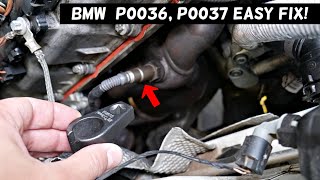
Typical fix: Replace the Bank 1 Sensor 2 (downstream) oxygen sensor. It is recommended to use a 22mm O2 sensor socket or a slim crowfoot socket for easier removal. Applying penetrating fluid to the threads beforehand is also advised. The torque specification is approximately 37 ft-lbs (50 Nm). 🎬 Watch: How to replace downstream sensors on the N52 engine.
Est. part cost: $100 - $180 - Blown O2 Sensor Heater Fuse ⚪ Low Probability → Shop Oxygen Sensor Wiring shorts or a failing sensor can sometimes blow the corresponding fuse. This is less common than the sensor failing on its own.
How to confirm: The fuse for the O2 sensor heaters on the F25 chassis is not consistently documented. Unlike older BMWs, there isn't a single, universally agreed-upon fuse in the glove box. Check the fuse card provided with your vehicle, which is typically folded and stored in a slot in the rear cargo area fuse panel. Locations to check include the glove box fuse panel, the rear cargo area fuse panel, and a hidden engine management fuse box in the engine bay. One video suggests checking fuses 131, 132, and 143 in the rear 🎬 See this video to locate your O2 sensor fuses. cargo area fuse panel.
Typical fix: Replace the blown fuse. If it blows again immediately, inspect the O2 sensor wiring for a short circuit to ground.
Est. part cost: $1 - $5 - Damaged Wiring or Connector ⚪ Low Probability The wiring runs under the vehicle and is exposed to road debris, heat, and moisture, which can cause damage, melting, or corrosion over time. Technicians sometimes damage the wiring during other repairs, like a transmission or clutch service.
How to confirm: Visually inspect the entire wiring harness and connector leading from the downstream O2 sensor up into the vehicle for any signs of melting, chafing, corrosion, or breaks. Check for voltage (~12V) at the heater supply pin on the vehicle-side connector with the key on.
Typical fix: Repair the damaged section of the wiring harness or replace the connector pigtail.
Est. part cost: $15 - $50
Rare But Worth Checking
- Faulty Engine Control Module (DME): → Shop Engine Control Module (ECM) This is extremely rare. The DME's driver circuit for the heater can fail, but this should only be considered after all other possibilities (sensor, fuse, wiring) have been exhaustively ruled out. A mechanic in a forum noted that even after replacing the sensor, MAF, and checking all wiring, the ECU was their last resort.
Diagnosis Steps
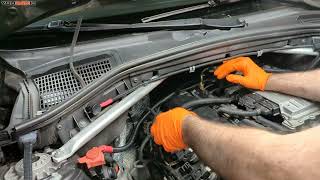
- Read the code with an OBD-II scanner to confirm P0036 is present. 🎬 Watch this DIY troubleshooting guide for the BMW X3.
- Check the vehicle's fuse card and inspect the fuses related to engine electronics/emissions in the glove box and rear cargo area fuse panels. The exact fuse is not well-documented, so checking the vehicle's specific fuse map is critical.
- If fuses are intact, safely raise and support the vehicle to access the exhaust system.
- Locate the downstream oxygen sensor (Sensor 2), which is installed in the exhaust pipe after the catalytic converter.
- Visually inspect the sensor's wiring harness and connector for any signs of melting, fraying, or physical damage.
- Disconnect the sensor. Use a multimeter to measure the resistance between the two heater circuit pins on the sensor side of the connector. A reading of 'OL' (over-limit) or infinite resistance indicates a broken heater element, confirming a bad sensor. A good sensor should read between 2-10 ohms.
- If resistance is normal, check for ~12V power at the vehicle-side connector's heater supply pin with the ignition on. No power points to a wiring or fuse issue.
- Given the extremely high failure rate of the sensor's heater element, if the fuse is good and wiring appears undamaged, the sensor itself is the culprit 99% of the time.
Parts You'll Likely Need
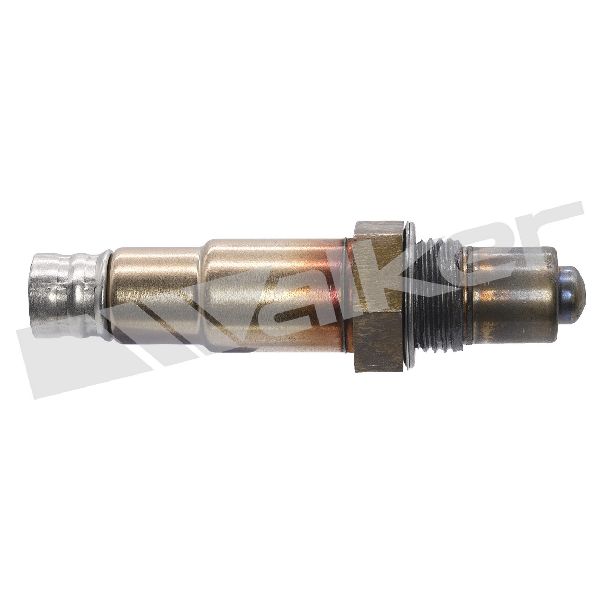
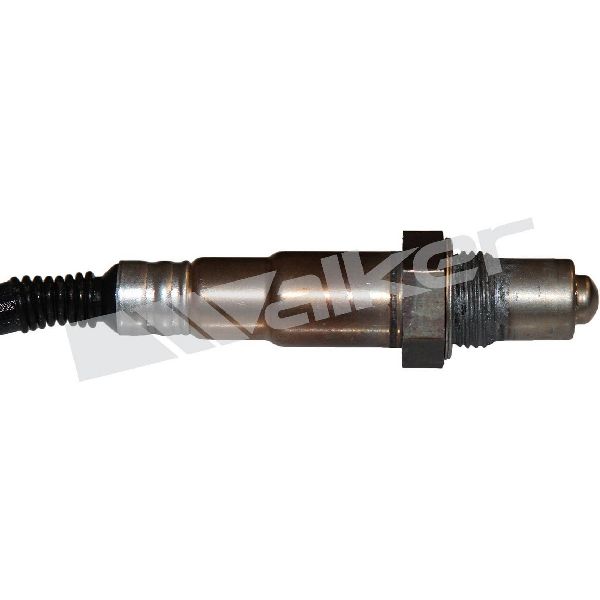
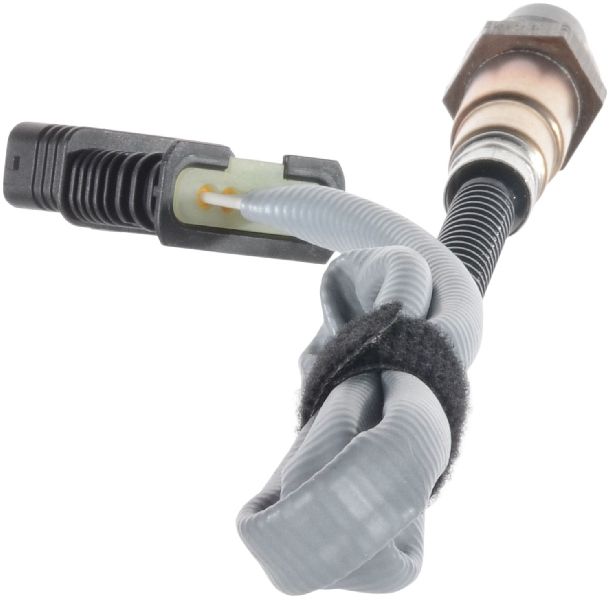
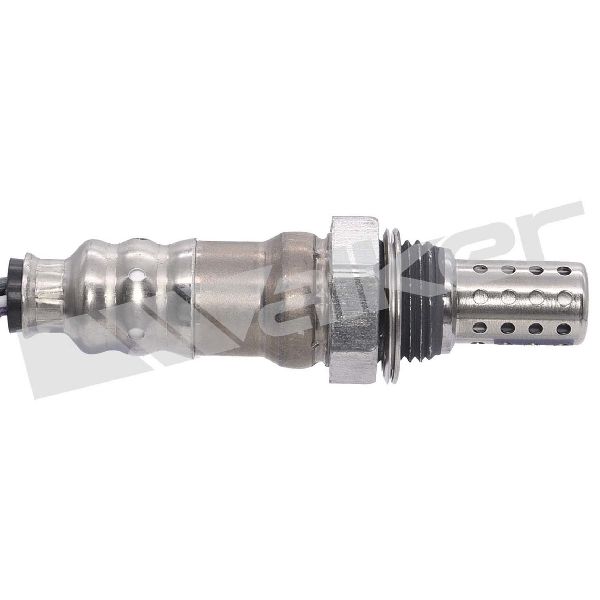
- Downstream Oxygen Sensor (Bank 1, Sensor 2)
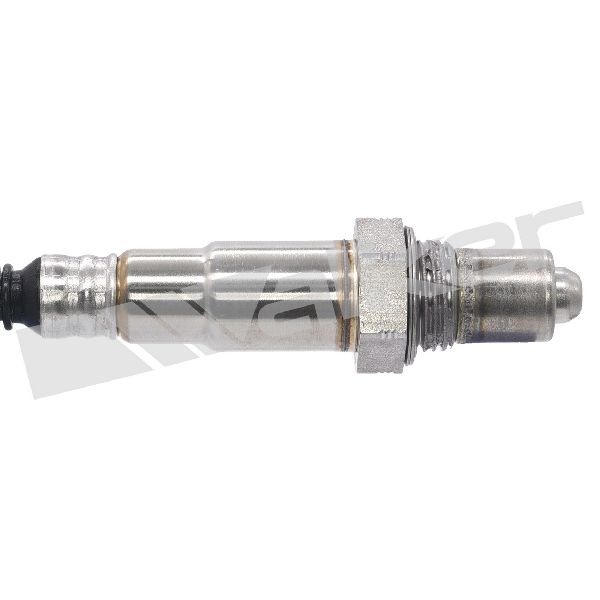
(OEM #11787596909)— This is the component identified by the code P0036, and its internal heater element is the most common failure point.
Trusted brands: Bosch (OEM supplier), NTK, Walker
OEM price range: $120-$180
Aftermarket price range: $50-$100 - 22mm Oxygen Sensor Socket — This specialized tool with a side cutout for the wire is often necessary to remove and properly torque the oxygen sensor, which can be seized in the exhaust pipe.
Trusted brands: GearWrench, Lisle, OEMTools
OEM price range: $10-$30
Aftermarket price range: $10-$30
Related Codes That Often Appear With This One
- P0037: HO2S Heater Control Circuit Low (Bank 1 Sensor 2) - This code points to the same circuit, just a different electrical condition. Diagnosis and repair are identical.
- P0056: HO2S Heater Control Circuit (Bank 2 Sensor 2) - On V-engines, seeing both codes could point to a shared fuse. On an inline-6 like the N52, this code is not applicable as there is no Bank 2.
Mechanic-Grade Diagnostic Values
- O2 Sensor Heater Element Resistance — expected: 2-10 Ohms when cold. Some sources state up to 20 Ohms.. Failure: Infinite resistance or 'OL' on a multimeter indicates a burned-out, open-circuit heater element.
- Heater Circuit Voltage at Harness Connector — expected: ~12V (Battery Voltage) with Key On, Engine Off (KOEO).. Failure: 0V or significantly low voltage points to a problem with the fuse, relay, or wiring supplying power to the heater circuit.
- Live Data - Downstream O2 Sensor Voltage (warmed up, steady cruise) — expected: A relatively stable voltage, typically between 0.6V and 0.8V.. Failure: A voltage that rapidly fluctuates similar to the upstream sensor (0.1V-0.9V) can indicate a failing catalytic converter, but is not a direct indicator for a P0036 heater fault.
Hidden / Shadow Codes Worth Checking
- 2C9E: Lambda probe heating behind catalytic converter, input signal. This is the direct BMW-specific equivalent to the generic P0036 code. (see via BMW-specific diagnostic tools like ISTA, or advanced OBD-II scanners capable of reading manufacturer codes.)
- 12B104: Oxygen sensor heating before catalytic converter, activation: Line Disconnection. While this code refers to the pre-cat sensor, it highlights the type of specific hex codes BMW uses for heater circuit faults. (see via BMW-specific diagnostic tools like ISTA, or advanced OBD-II scanners.)
Scan Tool Commands That Help
- ISTA (Integrated Service Technical Application): Ablauf O2 Sensor Heater Test / Test Plan — After replacing a sensor or checking wiring, this function allows the technician to command the DME to activate the heater circuit and monitor its response (current draw, activation status) to confirm the repair and ensure the DME driver is functioning correctly. ISTA may require specific conditions like engine temperature to be met before running the test.
- Advanced OBD-II Scanner (e.g., Foxwell, Autel): Live Data Monitoring for 'O2 Heater Current Bank 1 Sensor 2' — This is a primary diagnostic step. With the engine running, a healthy heater circuit will show a specific current draw (amperage). A reading of 0.0A confirms the circuit is open, which could be the sensor, fuse, or wiring. This helps confirm the fault is currently active.
Wiring & Ground Locations
- Main Engine Ground Strap — On the F25 chassis, a primary engine ground strap connects the right front engine mount bracket to the chassis, near the exhaust front pipe. Another ground may be located from the transfer case to the frame.. A corroded or broken main engine ground strap can cause a host of electrical issues, including erratic sensor behavior and fault codes. While not a direct cause of a specific heater circuit fault, poor grounding can lead to voltage drops and unpredictable electrical problems that can be difficult to diagnose.
- DME Connector (MSV80/MSV90) — The DME is located in the electronics box (E-box) in the engine bay, typically on the driver's side near the firewall.. For advanced diagnosis, a technician might back-probe the DME connector pins for the O2 sensor heater circuit to confirm continuity from the sensor to the DME and check if the DME is commanding the heater on. Pinouts for the MSV80/90 DME are available online.
- Fuse Panel - Rear Cargo Area — Located in the right rear of the cargo area, behind a removable panel.. This panel contains fuses for various systems, including some related to emissions. The vehicle's fuse map, often folded and stored in this panel, is essential for identifying the correct fuse to check. Fuses 131 and 132 have been cited as potential O2 sensor heater fuses.
Real Owner Repair Stories
- Bimmerpost user 'behindthen0thing' (BMW M3 (modified with no catalytic converters)) — Check Engine Light with code P0036 that kept returning after being cleared. No drivability issues like stuttering were reported.
❌ Tried (didn't work) Resetting the code multiple times.
✅ What actually fixed it Replacing the Bank 1, Sensor 2 (post-cat) oxygen sensor resolved the code permanently. - YouTube channel 'Turoczy' (2011 BMW 328i (E90 with N52 engine)) — P0036 code present. Live data on a scanner showed the Bank 1 Sensor 2 voltage was not fluctuating/responding, while the Bank 2 sensor was.
❌ Tried (didn't work) Initial assumption was a failed sensor.
✅ What actually fixed it A visual inspection of the wiring harness revealed that a rodent had chewed through the wires leading to the O2 sensor connector. Repairing the broken wires fixed the problem without needing to replace the sensor. - Bimmerpost user 'Ferruccio' (BMW 3-Series (E9x)) — Persistent Check Engine Light with BMW shadow code 2C9E (Lambda probe heating behind catalytic converter). Also experienced a very rough idle when the engine was cold.
❌ Tried (didn't work) Initial diagnosis was uncertain, with speculation about fuel pumps or injectors.
✅ What actually fixed it The mechanic confirmed the issue was the oxygen sensor itself. Replacing the faulty O2 sensor resolved the code and the associated rough idle symptom.
OEM Part Supersession History
11787596909→No direct supersession found, this part number remains current for the specified vehicle.— N/A
Heads up: This is the correct part for the 2011-2012 X3 xDrive28i with the N52 engine. It has a specific wire length (650mm). Do not confuse it with sensors for the N20 or N55 engines used in later or different X3 models, as they will have different lengths and possibly different connectors.
Model Year Variations Within This Range
- 2011-2012: The N52 3.0L I6 engine was only available in the xDrive28i trim for these two model years within the F25 generation. Models from 2013 onwards used a different engine (N20 Turbo I4) for the 28i trim, which has a completely different exhaust system and sensor configuration.
Diagnostic Flowchart
Other Known Issues on This Vehicle
Issues unrelated to this code that are worth knowing about as an owner of this generation:
- Electric Water Pump & Thermostat Failure 🔴 High — Very common. Failure typically occurs between 60,000 and 90,000 miles. Failure is often sudden and without warning, leading to rapid overheating and potential engine damage.
- Oil Filter Housing Gasket (OFHG) Leak 🔴 High — Extremely common. The gasket hardens and leaks oil. This is critical because the oil can drip onto the serpentine belt, causing it to slip off, shred, and get ingested by the front crank seal, leading to catastrophic engine failure.
- Valve Cover & Gasket (VCG) Leak 🟠 Medium — Extremely common. The plastic valve cover often warps along with the gasket failing, requiring replacement of the entire cover. Causes oil to leak onto the exhaust manifold (burning smell) and into spark plug wells (misfires).
- VANOS Solenoid Failure 🟡 Low — Common, especially on higher-mileage vehicles. Solenoids get clogged with oil debris, causing rough idle, hesitation, and VANOS-related fault codes. Cleaning is a temporary fix; replacement is the long-term solution.
Used vs. New Parts: Buying Guide for This Vehicle
When a used part is the smart pick: For this repair, a used part is almost never recommended for the oxygen sensor itself, as it is a wear item. However, sourcing a used wiring harness pigtail from a junkyard is a smart and cost-effective choice if only the connector is damaged (e.g., melted, broken clip).
Donor-vehicle mileage cap: roughly under 100000 miles for the part to have meaningful remaining life.
What to inspect on the donor part:
- For a wiring pigtail: check for flexible, non-brittle insulation.
- Ensure connector pins are clean, straight, and free of green or white corrosion.
- Avoid any parts from vehicles with signs of fire or flood damage.
OEM-only on this vehicle (don't cheap out):
- DME (Engine Computer): While a DME failure is extremely rare for this code, if it must be replaced, you cannot simply swap in a used one. It requires professional programming to match your vehicle's VIN and security system (immobilizer).
Aftermarket brands forum-validated for this vehicle:
- Bosch (often the Original Equipment Manufacturer for BMW)
- NTK / NGK (highly regarded in forums for quality and responsiveness)
Brands owners have reported issues with on this vehicle:
- Unnamed, no-brand sensors from online marketplaces like eBay or Amazon. Forum discussions frequently show these can be dead-on-arrival, fail quickly, or have incorrect resistance values, causing the code to return immediately.
Real Owner Stories
Aggregated from forums and TSBs cited above. Mileages and costs reflect what owners reported in those sources.
BMW M3/M4 (F80/F82)
Symptoms: Check engine light with code P0036; owner specifically noted there was no stuttering or performance loss.
What fixed it: Replaced the post-cat (downstream) oxygen sensor.
Source hint: Bimmerpost - M3/M4 Forum thread titled 'P0036 code'
BMW 3-Series (E90)
Symptoms: P0036 code present; owner was quoted an exorbitant repair amount by a local dealer.
What fixed it: The thread noted that while P0036 is common, some O2 sensor codes on this engine were actually traced to a cracked rocker/valve cover causing a vacuum leak.
Source hint: Bimmerpost - E90 3-Series Forum
2011-2017 BMW X3 (F25) N55 engine
Symptoms: Owner was unable to locate the specific fuse for the O2 sensor heater circuit.
What fixed it: Sought the O2 sensor fuse location in the rear cargo area and glove box panels.
Source hint: Bimmerpost - F25 X3 Forum
Related OBD-II Codes
Frequently Asked Questions
Where can I find the O2 sensor heater fuse on my F25 X3? The glove box doesn't seem to have a clear diagram.
Will P0036 cause my N52 engine to stutter or lose performance?
Can a vacuum leak from a cracked valve cover cause P0036 on my BMW?
Are the Bank 1 and Bank 2 downstream sensors the same part for the N52 engine?
What is the correct torque spec for the new oxygen sensor on my X3?
Helpful Videos
![How To Replace Downstream O2 / Lambda Sensors on a BMW N52 / N54 E90,91,92 [DIY]](https://img.youtube.com/vi/lCE57HYswxo/mqdefault.jpg)
We Have This Part in Stock


The information in this article is provided for general reference and educational purposes only. Vehicle specifications, procedures, and part compatibility can vary by production date, trim level, and region. Always consult your vehicle's factory service manual and verify part numbers before purchasing or performing repairs. Safety-critical components such as airbags, seat belts, and braking systems should be installed by a qualified professional.
- BMW X3:
- 🧭 Diagnostic Flowchart
- 🎬 Helpful Videos
- 🛍️ Shop This Part
- What's Unique About the 2011-2017 BMW X3
- Symptoms You May Notice
- Most Likely Causes
- Rare But Worth Checking
- Diagnosis Steps
- Parts You'll Likely Need
- Related Codes That Often Appear With This One
- Mechanic-Grade Diagnostic Values
- Hidden / Shadow Codes Worth Checking
- Scan Tool Commands That Help
- Wiring & Ground Locations
- Real Owner Repair Stories
- OEM Part Supersession History
- Model Year Variations Within This Range
- Other Known Issues on This Vehicle
- Used vs. New Parts: Buying Guide for This Vehicle
- Real Owner Stories
- BMW M3/M4 (F80/F82)
- BMW 3-Series (E90)
- 2011-2017 BMW X3 (F25) N55 engine
- Related OBD-II Codes
- Frequently Asked Questions
- 🎟️ Get 5% Off