

P0036 on 2007-2024 Chevrolet Silverado: O2 Sensor Heater Circuit Causes and Fixes
For a 2007-2024 Chevrolet Silverado, code P0036 almost always points to a failed downstream oxygen sensor (Bank 1, Sensor 2) or its wiring. The most likely fix is replacing the sensor itself. Expect to pay $40-$80 for an aftermarket part or $100-$180 for an OEM ACDelco part. It's a DIY-friendly job with a difficulty of 2/5.
- P0036 on a Silverado points to a problem with the heater in the driver's side, downstream O2 sensor.
- The most likely fix is replacing the sensor itself, which is a common and relatively inexpensive part.
- If a new sensor doesn't fix the code or if the fuse blows repeatedly, carefully inspect the wiring harness for damage, especially from exhaust heat or chafing on newer models per TSB 21-NA-149.
What's Unique About the 2007-2024 Chevrolet Silverado
On Chevrolet Silverado trucks, the P0036 code is a straightforward and common issue, often caused by the harsh under-vehicle environment leading to wiring damage or simple sensor failure over time. While the code's meaning is standard, the physical location and wiring routing can vary slightly across the different Silverado generations built between 2007 and 2024. For newer models (2019+), it's also worth being aware of potential wiring harness chafing issues that GM has documented in TSB 21-NA-149, which can lead to this and other electrical codes.
Generation note: The 2007-2024 range covers three main generations of the Silverado: the GMT900 (2007-2013), K2XX (2014-2018), and T1XX (2019-2024). While the function of the Bank 1 Sensor 2 is the same across all, the exact part numbers, connector types, and wire routing may differ. The fundamental causes and diagnostic steps remain consistent.
Symptoms You May Notice
- Check Engine Light is on.
- Vehicle may fail an emissions inspection.
- Slightly reduced fuel economy in some cases.
- Rough idle or hesitation for a few seconds on a cold start (less common).
- Replacing the wrong oxygen sensor (e.g., replacing the upstream Sensor 1 or a sensor on Bank 2).
- Replacing the catalytic converter (this code is for the sensor heater circuit, not converter efficiency).
- Replacing the ECM when the actual fault is a chafed wire in the harness.
Most Likely Causes
- Failed Bank 1, Sensor 2 Oxygen Sensor 🔴 High Probability → Shop Oxygen Sensor The internal heating element of the sensor has a finite lifespan and is a common failure point due to constant heat cycles. With high mileage, failure is very common.
How to confirm: Disconnect the sensor and measure the resistance across the two heater circuit pins (usually the two wires of the same color, often black). A healthy heater should have a resistance typically between 2 and 10 ohms. An open circuit (infinite resistance/OL) or a short circuit (near zero resistance) confirms the sensor's heater element is bad.
Typical fix: Replace the Bank 1, Sensor 2 oxygen sensor.
Est. part cost: $40-$180 - Damaged Wiring or Connector 🟡 Medium Probability The sensor wiring is routed under the truck and is exposed to road debris, moisture, and extreme heat from the exhaust, which can cause wires to melt, break, or fray, and connectors to corrode. A GM service bulletin (21-NA-149) notes potential for engine harness chafing on 2019-2021 models against components like the camshaft carrier cover, generator bracket, or upper control arm bushing, which could cause this code.
How to confirm: Visually inspect the wiring harness leading to the O2 sensor for any signs of physical damage, melting against the exhaust pipe, or corrosion at the connector. A video of a 2007 Silverado showed a wire broken right at the connector. Check for 12V power and a good ground at the vehicle-side connector with a multimeter (key on, engine off).
Typical fix: Repair the damaged section of wire or replace the connector pigtail. Ensure the harness is properly secured away from the exhaust and moving parts.
Est. part cost: $15-$40 - Blown Fuse ⚪ Low Probability A short in the heater circuit wiring or within the sensor itself can cause the associated fuse to blow. One owner on a forum noted their O2 sensor fuse repeatedly blew after using the factory remote start, indicating a persistent short that was triggered under specific conditions.
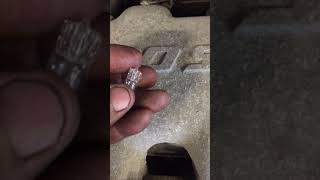
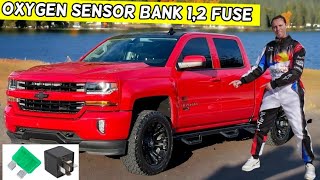
How to confirm: Locate the fuse for the O2 sensor heater circuit in the underhood fuse box. The fuse is often labeled 'O2 HTR' or similar. 🎬 See how to find and replace the O2 sensor fuse. Visually inspect the fuse or test for continuity with a multimeter.
Typical fix: Replace the blown fuse. If the new fuse blows immediately, it indicates a persistent short circuit in the wiring or the sensor that must be found and fixed.
Est. part cost: $1-$5
Rare But Worth Checking
- Faulty Engine Control Module (ECM): → Shop Engine Control Module (ECM) This is extremely rare. The ECM should only be considered after all other possibilities (sensor, wiring, fuses) have been exhaustively tested and ruled out. TSB 21-NA-149 explicitly notes that the ECM has been unnecessarily replaced for wiring-related concerns.
Diagnosis Steps
- Read the code with an OBD-II scanner to confirm P0036 is present.
- Visually inspect the Bank 1, Sensor 2 oxygen sensor and its wiring harness. Bank 1 is the driver's side. Sensor 2 is the sensor located after the catalytic converter. Look for any obvious damage, such as frayed or melted wires, or corrosion in the connector.
- Check the fuse for the oxygen sensor heater circuit in the underhood fuse block. Replace if blown.
- If the wiring and fuse are okay, disconnect the sensor and test the resistance of the heater circuit at the sensor's connector. Use a multimeter set to Ohms. 🎬 Watch: A quick guide to testing the O2 heater circuit. The two heater wires are typically the same color (e.g., two black wires). Resistance should generally be between 2 and 10 ohms. If it's an open circuit (OL) or has no resistance, the sensor is bad.
- If the sensor's resistance is good, the problem is likely in the vehicle's wiring. With the key on and engine off, carefully probe the vehicle-side connector to check for battery voltage (approx. 12V) at the heater power wire. Also check for a good ground on the ground wire.
- If voltage or ground is missing, trace the circuit back toward the ECM to find the break or short. For 2019+ models, pay close attention to the chafing points identified in TSB 21-NA-149.
- After repairing or replacing the faulty component, clear the code and drive the vehicle to ensure the fix was successful.
Parts You'll Likely Need
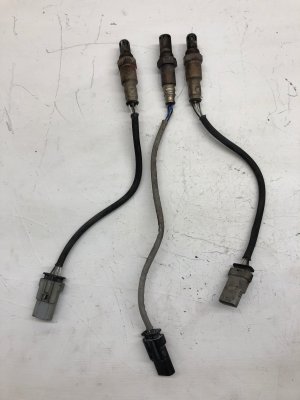
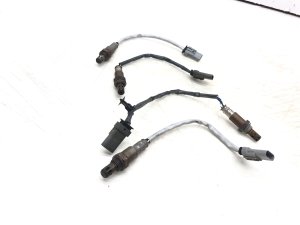
- Heated Oxygen Sensor (Bank 1, Sensor 2)
(OEM #Examples: ACDelco 213-4228 (or 12609456) for GMT900; ACDelco W0133-2066730 for K2XX; ACDelco 213-4229 is also common. Part numbers vary by year and engine, always verify with VIN.)— This is the most common failure point for this code, as the internal heater element burns out over time.
Trusted brands: ACDelco, Denso, Bosch, NGK/NTK
OEM price range: $100-$180
Aftermarket price range: $40-$80
Related Codes That Often Appear With This One
- P0054 — P0054 is 'HO2S Heater Resistance (Bank 1, Sensor 2)'. It is a closely related code that also points to a problem with the same sensor's heater, specifically its electrical resistance.
- P0141 — P0141 is 'O2 Sensor Heater Circuit Malfunction (Bank 1, Sensor 2)'. This is an older, more generic code for the same fault and can sometimes appear alongside P0036 depending on the scanner and vehicle year.
Technical Service Bulletins (TSBs) & Recalls
- 21-NA-149: Engine Wire Harness Chafing which can cause various DTCs on 2019-2021 Silverado, Sierra, Tahoe, Suburban, Yukon, and Escalade models. The bulletin provides specific locations to inspect for chafing and procedures for repair and prevention.
- Bulletin #PIT5336: A manufacturer service bulletin for GM vehicles notes that technicians may find P0036 alongside a wide range of other O2 sensor heater and circuit codes (such as P0030, P0053, and P0141) resulting in a Malfunction Indicator Lamp.
Platform-Specific Known Issues
- On 2019-2021 models, be aware of Technical Service Bulletin 21-NA-149, which describes potential for the engine wiring harness to chafe against various components. Specific inspection points include where the harness passes the camshaft carrier cover, the generator bracket, the left front upper control arm bushing, and the PCV hose clamp. This can cause a short or open circuit, triggering P0036 and other codes.
Mechanic-Grade Diagnostic Values
- O2 Sensor Heater Element Resistance — expected: 3 to 15 Ohms at ambient temperature. A common range seen in practice is 4-10 Ohms.. Failure: An open circuit (OL or infinite resistance) or a short circuit (near 0 Ohms) indicates a failed heater element inside the sensor.
- Heater Circuit Power Supply Voltage — expected: Approximately 12 Volts (battery voltage) with the ignition key on, engine off.. Failure: No voltage (0V) indicates an open circuit, a blown fuse, or a wiring issue upstream from the connector.
- Heater Circuit Ground — expected: Good continuity to chassis ground (less than 1 Ohm resistance).. Failure: High resistance or an open circuit (OL) on the ground wire indicates a faulty ground connection or a break in the wire.
Wiring & Ground Locations
- O2 Heater Fuse (2007-2013 GMT900) — In the underhood fuse box, check fuses F8 (10A) and F18 (15A), often labeled 'O2 SENS' or similar.. These fuses provide the 12V power to the oxygen sensor heater circuits. A short in the circuit will cause one to blow, cutting power and setting P0036.
- O2 Heater Fuse (2014-2018 K2XX) — In the underhood fuse box, check fuses F46 and F50. F46 is often labeled 'O2 Sensor A'.. These fuses supply power to the O2 sensor heaters for this generation. A blown fuse is a common diagnostic step.
- O2 Heater Fuse (2019-2024 T1XX) — In the underhood fuse box, check fuses F88 (15A, 'O2 B Sensor') and F89 (20A, 'O2 A Sensor').. These fuses power the heater circuits. Bank 1 Sensor 2 is typically powered by the 'O2 B Sensor' fuse.
- G110 — On the frame rail to the rear of the left (driver's side) front tire. Also sometimes located on the rear of the engine near the valve cover.. This is a primary engine and chassis ground point. A loose or corroded connection at G110 can cause various electrical issues, including intermittent or persistent O2 sensor circuit codes. GM has noted issues with loose G110 grounds on 2019-2020 models.
- B1S2 Connector Heater Pins — At the 4-wire connector for the Bank 1, Sensor 2 O2 sensor.. The two wires of the same color (typically both black or both white) are for the heater circuit. One will have 12V power (Key On), and the other is the ground/control wire from the ECM. These are the pins to test for voltage and resistance.
Real Owner Repair Stories
- iCARZONE repair case study (2020 Silverado RST 5.3L) — Intermittent Check Engine Light with a related high-voltage code (P0038).
❌ Tried (didn't work) Initial code clearing.
✅ What actually fixed it The root cause was found to be corroded terminals inside the O2 sensor connector due to road salt exposure. The fix was cleaning the terminals with electrical contact cleaner and applying dielectric grease, as recommended in GM TSB 21-NA-123. - ChevroletForum user (2007 Suburban (platform-mate)) — Recurring P0036 code and a repeatedly blown O2 heater fuse.
❌ Tried (didn't work) Replacing the fuse without finding the underlying cause.
✅ What actually fixed it The owner discovered the fuse would primarily blow after using the factory remote start. This pointed to an intermittent short circuit in the heater wiring that was triggered under specific conditions, requiring careful tracing of the harness to find the fault.
Documented NHTSA Reports
- An owner reported in NHTSA ODI #11221744 that P0036 appeared as part of an ongoing issue where the dashboard would go blank while driving, alongside multiple other codes including P0138 and P0141.
OEM Part Supersession History
ACDelco 213-4228 (GM 12609456)→N/A— This part number is specific to many GMT900 (2008-2013) models.
Heads up: Do not confuse with similar-looking sensors like ACDelco 213-4768, which is for different GM vehicles (e.g., Equinox, Terrain) and is not compatible with the Silverado, despite also being a 4-wire sensor. Always verify the part number with the vehicle's VIN.
Model Year Variations Within This Range
- 2007-2013 (GMT900): The O2 sensor heater circuit is typically protected by fuses #8 and #18 in the underhood fuse block.
- 2014-2018 (K2XX): The O2 sensor heater circuit is typically protected by fuses #46 and #50 in the underhood fuse block.
- 2019-2024 (T1XX): The O2 sensor heater circuit is typically protected by fuses #88 and #89 in the underhood fuse block. This generation is also subject to TSB 21-NA-149 for harness chafing and potential loose grounds at G110/G114.
Diagnostic Flowchart
Used vs. New Parts: Buying Guide for This Vehicle
When a used part is the smart pick: A used part is a reasonable choice for the wiring harness connector pigtail. If the original connector body is melted, cracked, or has corroded pins, sourcing a clean connector from a salvage yard is a cost-effective repair.
Donor-vehicle mileage cap: roughly under 100000 miles for the part to have meaningful remaining life.
What to inspect on the donor part:
- Inspect the plastic for brittleness or cracking.
- Ensure the locking tab is present and functional.
- Check the internal pins for any signs of green or white corrosion.
- Make sure there is at least 6-8 inches of wire attached to make splicing easy.
OEM-only on this vehicle (don't cheap out):
- Oxygen Sensor
Aftermarket brands forum-validated for this vehicle:
- Denso
- Bosch
- NGK/NTK
Real Owner Stories
Aggregated from forums and TSBs cited above. Mileages and costs reflect what owners reported in those sources.
2017 GMC Sierra 2500 6.0l V8 — 48835 miles
Symptoms: Check Engine Light with multiple codes including P0036, P0138, P0141, P013A, P013E, and P0054.
What fixed it: The owner first replaced the sensor with a Bosch part, but the codes returned. The issue was resolved by replacing the faulty aftermarket sensor with an AC Delco O2 sensor, as the owner discovered the wiring was incorrect on the Bosch part.
Source hint: GM-Trucks.com - Code P0036 and many others keep coming back after replacing O2 sensor
2007 Chevrolet Silverado 6.0L Vmax
Symptoms: The P0036 code returned immediately after replacing the oxygen sensor and clearing the code.
What fixed it: The owner's experience highlighted that the fault was not the sensor itself but a persistent issue within the electrical circuit that needed to be diagnosed separately.
Source hint: truckforums.com: A user with a 2007 Silverado 6.0L Vmax reported that the P0036 code came back immediately after replacing the sensor...
2007 Chevrolet Suburban
Symptoms: A recurring P0036 code accompanied by a repeatedly blown O2 heater fuse, which would often happen after using the factory remote start.
What fixed it: The owner traced the problem to a complex electrical short in the heater circuit. Finding and repairing the short circuit resolved the issue of the fuse blowing and cleared the code.
Source hint: chevroletforum.com: An owner of a 2007 Suburban (platform mate) traced a recurring P0036 code and a repeatedly blown O2 heater fuse to a short circuit.
Related OBD-II Codes
Frequently Asked Questions
On my Silverado, where is the Bank 1, Sensor 2 oxygen sensor located?
I have a 2020 Silverado with P0036. Does the wire chafing TSB apply to my truck?
How can I test the oxygen sensor myself to confirm it's the problem?
Is it always a bad oxygen sensor that causes P0036?
Which fuse should I check for this code?
Does this P0036 issue also affect the GMC Sierra or Chevy Tahoe?
Helpful Videos
We Have This Part in Stock

The information in this article is provided for general reference and educational purposes only. Vehicle specifications, procedures, and part compatibility can vary by production date, trim level, and region. Always consult your vehicle's factory service manual and verify part numbers before purchasing or performing repairs. Safety-critical components such as airbags, seat belts, and braking systems should be installed by a qualified professional.
- Chevrolet Silverado:
- 🧭 Diagnostic Flowchart
- 🎬 Helpful Videos
- 🛍️ Shop This Part
- What's Unique About the 2007-2024 Chevrolet Silverado
- Symptoms You May Notice
- Most Likely Causes
- Rare But Worth Checking
- Diagnosis Steps
- Parts You'll Likely Need
- Related Codes That Often Appear With This One
- Technical Service Bulletins (TSBs) & Recalls
- Platform-Specific Known Issues
- Mechanic-Grade Diagnostic Values
- Wiring & Ground Locations
- Real Owner Repair Stories
- Documented NHTSA Reports
- OEM Part Supersession History
- Model Year Variations Within This Range
- Used vs. New Parts: Buying Guide for This Vehicle
- Real Owner Stories
- 2017 GMC Sierra 2500 6.0l V8 — 48835 miles
- 2007 Chevrolet Silverado 6.0L Vmax
- 2007 Chevrolet Suburban
- Related OBD-II Codes
- Frequently Asked Questions
- 🎟️ Get 5% Off