

P0036 on 2007-2014 Ford Edge 3.5L: O2 Sensor Heater Circuit Causes and Fixes
This code indicates a failure in the heater circuit of the oxygen sensor located on the rear (firewall side) exhaust, after the catalytic converter. The most common fix is to replace the sensor itself, but access is very difficult. Expect to pay $60-$90 for an OEM Motorcraft sensor and $40-$70 for an aftermarket one. Due to the difficult location, DIY difficulty is high, and many owners pair this job with a spark plug change which also requires intake removal.
- P0036 on a 3.5L Edge points directly to the heater in the rear, downstream O2 sensor.
- The biggest challenge of this repair is not the part, but the labor. The sensor is very hard to reach against the firewall.
- Before starting this difficult repair, always check the related fuses first to rule out a simple electrical issue.
- Due to the high labor involved, consider using a high-quality OEM (Motorcraft) or reputable aftermarket (Bosch, Denso) sensor to avoid a repeat failure.
- If you are planning to change spark plugs, consider replacing the rear O2 sensors at the same time, as the intake manifold may need to be removed for both jobs.
What's Unique About the 2007-2014 Ford Edge
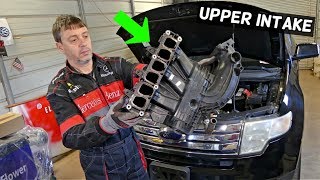
The primary challenge with a P0036 code on the 3.5L V6 Ford Edge is not the diagnosis, but the physical location of the Bank 1 Sensor 2. Because the engine is mounted transversely, Bank 1 is tucked against the firewall, making the downstream O2 sensor extremely difficult to access from either above or below the vehicle. Many mechanics and experienced DIYers recommend removing the upper intake manifold to gain adequate access, a job often done concurrently with a spark plug change. This makes the repair significantly more labor-intensive than on engines where the sensor is easily accessible.
Generation note: The 2007-2014 range covers the first generation Ford Edge, including the 2011-2014 facelift. While the engine and sensor location are the same, the fuse box layouts differ. For 2007-2010 models, check the owner's manual for O2 sensor-related fuses in the engine bay and driver's footwell fuse boxes. For 2011-2014 models, potential fuses in the under-hood box include 67, 68, 69, 70, 86, and 90, with fuse 18 in the interior panel also being relevant.
Symptoms You May Notice
- Check Engine Light is on
- Failure to pass an emissions inspection
- Slightly reduced fuel economy over time
- In rare cases, the vehicle may enter a failsafe or 'limp' mode with reduced power.
- An owner report in NHTSA ODI #11539934 noted that P0036 appeared alongside engine overheating warnings and coolant leaks.
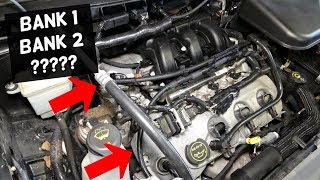
- Replacing the wrong oxygen sensor. The 3.5L V6 has four O2 sensors. It is crucial to identify and replace Bank 1 🎬 Watch: How to identify Bank 1 vs Bank 2 (rear/firewall side), Sensor 2 (downstream/post-catalytic converter).
- Replacing the catalytic converter. This code is for the sensor's heater circuit, not the converter's efficiency.
- Using a faulty aftermarket sensor. Some owners have reported buying multiple, inexpensive aftermarket O2 sensors that are dead-on-arrival, leading them to suspect a wiring issue when the problem was the new part all along.
Most Likely Causes
- Failed Bank 1, Sensor 2 Oxygen Sensor 🔴 High Probability → Shop Oxygen Sensor The internal heating element of the oxygen sensor is a common failure point due to constant, rapid heat cycles. It is considered a wear-and-tear item.
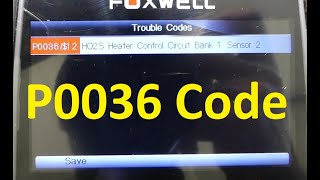
How to confirm: Disconnect the sensor and measure the resistance between the two heater circuit pins (usually the two wires of the same color). An open circuit (infinite resistance/OL) or a short (near-zero resistance) confirms the heater element has failed. The expected resistance is typically between 3 and 25 ohms. 🎬 See this guide on P0036 causes and heater circuit fixes
Typical fix: Replace the Bank 1, Sensor 2 oxygen sensor. Due to the difficult location, this may require removing the upper intake manifold for access. 🎬 Watch: Pro tips for removing the rear oxygen sensor
Est. part cost: $40 - $90 - Damaged Wiring or Connector 🟡 Medium Probability The wiring harness for the rear oxygen sensor is routed near hot exhaust components, making it susceptible to melting, chafing, or corrosion over time. The plastic wiring clamps that secure the harness can become brittle and fail, allowing the wires to contact the exhaust.
How to confirm: Visually inspect the entire wiring harness leading to the sensor for any signs of melting, frayed wires, or damage. Check the connector for corrosion, moisture, or backed-out pins. With the key on, engine off, use a multimeter to check for 12V power at the harness-side connector.
Typical fix: Repair the damaged section of the wiring harness and secure it away from heat sources using high-temperature zip ties or new clamps. If the connector is damaged, replace the pigtail.
Est. part cost: $15 - $40 - Blown Fuse ⚪ Low Probability A short circuit in the sensor's heating element or its wiring can cause the associated fuse to blow as a protective measure.
How to confirm: Check the fuses related to the O2 sensor heaters. For 2011-2014 models, check fuses 67-70, 86, and 90 in the under-hood fuse box and fuse 18 in the cabin. For 2007-2010 models, consult the owner's manual for the specific fuse number in the engine bay and interior fuse panels.
Typical fix: Replace the blown fuse. If the fuse blows again immediately, it confirms a persistent short circuit in the wiring or the sensor itself that must be found and repaired.
Est. part cost: $1 - $5
Rare But Worth Checking
- Faulty Powertrain Control Module (PCM): → Shop Engine Control Module (ECM) This is extremely rare. The PCM should only be considered after all other possibilities, including the sensor, wiring, and fuses, have been definitively ruled out. A recurring blown fuse without a detectable short in the wiring can sometimes point to an internal PCM fault. Manufacturer service bulletins such as TSB Bulletin #TSB18-2097 and TSB Bulletin #tsb18-2212 for other Edge models have noted that an illuminated MIL with DTC P0036 may require following specific service procedures to correct the PCM condition.
Diagnosis Steps
- Scan for any other OBD-II codes that may provide additional context.
- Perform a thorough visual inspection of the Bank 1, Sensor 2 oxygen sensor wiring harness. Look for any signs of melting, chafing, or corrosion on the wires and the connector. Pay close attention to the plastic clips meant to hold the harness away from the exhaust.
- Check the fuses related to the oxygen sensor heater circuit. Refer to your owner's manual for the correct fuse numbers for your model year.
- If fuses are intact, disconnect the O2 sensor electrical connector. Using a multimeter set to Ohms, measure the resistance across the two heater pins on the sensor side. A reading of infinite resistance (OL) or near-zero resistance indicates a failed heater element, and the sensor must be replaced.
- If the sensor resistance is within spec (typically 3-25 ohms), test the vehicle's wiring. With the key on and engine off, use a multimeter to check for 12-volt power and a good ground signal at the harness-side connector pins that correspond to the heater circuit.
- If power or ground is missing, the wiring must be traced back to the PCM or power source to find the break or short.
- If the sensor, fuses, and wiring all test good, the issue may be an intermittent fault or, in very rare cases, a problem with the PCM driver circuit.
Parts You'll Likely Need
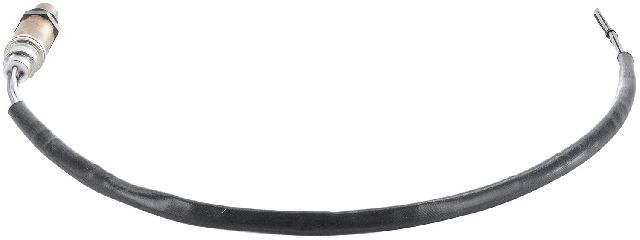
- Bank 1, Sensor 2 Oxygen Sensor (Downstream, Rear)
(OEM #DY-1155 (Motorcraft for 2011-2014 models), DY-1056 (Motorcraft for 2007-2010 models))— This is the most common cause of a P0036 code, as the internal heating element fails over time.
Trusted brands: Motorcraft, Bosch, Denso, NTK
OEM price range: $60-$90
Aftermarket price range: $40-$70
Technical Service Bulletins (TSBs) & Recalls
- While no TSB is directly for the 2007-2014 Edge 3.5L for P0036, it's notable that TSB 18-2212 was issued for the 2016-2018 Edge 2.0L for the same code, where the fix was a PCM software update. This indicates a history of sensitive fault logic in the Edge platform, though for the 3.5L, a hardware failure is far more likely.
- TSB Bulletin #TSB18-2097 also addresses 2016-2017 Edge vehicles with the 2.0L EcoBoost engine that exhibit an illuminated MIL with DTC P0036 stored in the powertrain control module.
Platform-Specific Known Issues
- The location of the Bank 1 (rear) oxygen sensors is extremely difficult to access, often requiring removal of the upper intake manifold. This significantly increases the labor time and complexity of the repair.
- A user on fordedgeforum.com confirms this, stating that for the rear O2 sensor, 'you have to take the intake off...the O2 sensor is back there in the back'.
Mechanic-Grade Diagnostic Values
- O2 Sensor Heater Element Resistance — expected: Generally around 6 ohms when cold, but can range from 3 to 25 ohms depending on the specific sensor version.. Failure: An open circuit (OL or infinite resistance) or a direct short (near 0 ohms) indicates a failed heater element.
- Heater Circuit Power Supply (at harness connector) — expected: Battery voltage (approx. 12V) with Key On, Engine Off.. Failure: Voltage below 9V or no voltage indicates an issue in the power supply wiring or a blown fuse.
- Heater Circuit Wire Colors (at sensor connector) — expected: The two heater wires are typically the same color, often white. The other two wires (e.g., black and gray) are for the sensor signal and signal ground.. Failure: N/A - This is for identification during testing.
- PCM Pin Voltage (for advanced diagnosis) — expected: The PCM provides a ground to control the heater. The specific pin for HO2S HTR 12 (Bank 1, Sensor 2 Heater Control) would need to be identified on the PCM connector from a wiring diagram for the specific model year.. Failure: If 12V power is confirmed at the harness but the heater does not operate and sensor resistance is good, a failure in the PCM's ground-side driver for that circuit is possible, though rare.
Wiring & Ground Locations
- Firewall Ground Stud — On the firewall on the driver's side, often to the right of the battery when looking from the front.. A loose or corroded main ground connection on the firewall can cause various electrical issues, including intermittent or faulty readings from sensor circuits. While not a direct cause of P0036, ensuring this ground is clean and tight is a good practice during diagnosis.
- HO2S 12 Connector (Bank 1, Sensor 2) — Connected to the O2 sensor located on the rear (firewall side) exhaust pipe, after the catalytic converter. The connector itself is often clipped to the firewall or a nearby bracket, requiring access from above after removing the intake manifold.. This is the primary connector to test for power, ground, and sensor resistance. Its difficult-to-reach location is the main challenge of this repair.
- PCM Connector Pins — At the Powertrain Control Module (PCM). The specific pin numbers for the heater control and power feed for B1S2 vary by model year and would need to be referenced from a vehicle-specific wiring diagram.. For advanced diagnosis, if a wiring break is suspected, performing a continuity test from the HO2S 12 connector back to the corresponding pins on the PCM connector is the definitive way to confirm the integrity of the harness.
OEM Part Supersession History
Not specified, but multiple revisions exist→DY-1056 (for 2007-2010), DY-1155 (for 2011-2014)— Model year updates and potentially minor changes in calibration or connector design.
Heads up: The primary difference between DY-1056 and DY-1155 is for the model year split. Using the wrong part number may result in improper fitment or incorrect heater resistance, causing the code to persist. Always verify the part by VIN.
Model Year Variations Within This Range
- 2007-2010: Uses Motorcraft O2 Sensor part number DY-1056 for the downstream position.
- 2011-2014: Uses Motorcraft O2 Sensor part number DY-1155 for the downstream position.
- 2011-2014 vs 2007-2010: Fuse box layouts and numbering for the O2 sensor heater circuits are different. The 2011 facelift introduced a revised electrical system. Owners must consult the manual for their specific year.
Diagnostic Flowchart
Other Known Issues on This Vehicle
Issues unrelated to this code that are worth knowing about as an owner of this generation:
- Internal Water Pump Failure 🔴 High — A known major flaw. Can occur without much warning, often between 80,000 and 150,000 miles. Failure allows coolant to mix with engine oil, leading to catastrophic engine damage if not caught immediately.
- Power Transfer Unit (PTU) Overheating/Failure 🔴 High — Common on AWD models. The PTU is located near the hot exhaust, causing the fluid to break down prematurely. Ford's 'lifetime fluid' recommendation is widely disputed by owners and mechanics, who advise 30,000-mile fluid changes to prevent failure.
- Throttle Body Malfunction 🟠 Medium — Carbon buildup can cause rough idle, stalling, and reduced power. It's a common maintenance item. Cleaning the throttle body often resolves the issue.
- Brake Booster Diaphragm Tear 🟠 Medium — Affects 2007-2015 models, causing a hissing noise when the brake pedal is pressed and leading to a hard or spongy pedal feel. Ford issued a warranty extension program for this issue. (Ref: Customer Satisfaction Program 13N02 / Recall 23S12)
- Transmission Hard Shifting / Failure 🟠 Medium — More common in earlier 2007-2008 models, but can affect the whole generation. Symptoms include delayed or harsh shifts, jerking, or sudden failure.
- A-Pillar Water Leaks 🟡 Low — Some models had improperly sealed A-pillar body seams, allowing water to leak into the cabin and wet the carpets, potentially damaging electronics. A customer satisfaction program (15B21) was issued for 2015 models, but the issue has been noted by owners of earlier years as well. (Ref: Customer Satisfaction Program 15B21 (for 2015 models))
Used vs. New Parts: Buying Guide for This Vehicle
When a used part is the smart pick: Never. Oxygen sensors are wear-and-tear items with a finite lifespan, typically 70,000-100,000 miles. The heating element is the most common failure point. Installing a used sensor with unknown mileage is highly likely to result in a repeat failure in the near future. The extreme labor involved in accessing this specific sensor makes it illogical to risk using a part that is not new.
What to inspect on the donor part:
- Not applicable. Do not use a used oxygen sensor for this repair.
OEM-only on this vehicle (don't cheap out):
- Oxygen Sensor (Strongly Recommended)
Aftermarket brands forum-validated for this vehicle:
- Bosch
- Denso
- NTK/NGK
Brands owners have reported issues with on this vehicle:
- Unnamed, 'white box', or ultra-low-cost online marketplace brands. While some may work, forum reports indicate a higher-than-average rate of dead-on-arrival or premature failure, which is a significant risk given the high labor cost to replace this sensor.
Real Owner Stories
Aggregated from forums and TSBs cited above. Mileages and costs reflect what owners reported in those sources.
2015 Ford Edge 3.5L
Symptoms: The owner noted that for the rear O2 sensor, the intake has to come off because the sensor is located 'back there in the back'.
What fixed it: Replacement of the rear oxygen sensor after removing the intake manifold for access.
Source hint: fordedgeforum.com: A thread titled 'Changing O2 sensor on a 2015 Ford edge 3.5L'
Ford F-150 (Similar Engine Family)
Symptoms: Persistent P0036 code after two attempts with a budget-brand sensor.
What fixed it: Switching from a Walker brand sensor to a Bosch sensor.
Source hint: fordf150forum.com: Owners of F-150s with similar engine families report that using cheap, economy-brand aftermarket O2 sensors can lead to premature failure
2007-2014 Ford Edge 3.5L
Symptoms: The owner was advised to look closely at the sensor's wiring for signs of rubbing or melting from touching the hot exhaust.
What fixed it: Inspecting and potentially repairing the sensor's wiring harness to ensure it is not shorting out against the exhaust.
Source hint: ford-forums.com: In a thread titled 'Repair P0036 Code'
Ford Edge Owner Report
Symptoms: An owner reported a coolant leak confirmed by a service tech with codes P0036, P0217, P0301, and P0316, accompanied by an engine overheating warning message.
What fixed it: The report indicated a need to replace the head gasket due to coolant in the combustion chamber.
Source hint: NHTSA ODI #11539934
Related OBD-II Codes
Frequently Asked Questions
Does TSB 18-2212 apply to my 2007-2014 Ford Edge 3.5L?
Why is the labor for replacing the Bank 1 Sensor 2 O2 sensor so expensive on the Edge?
Which fuses should I check for a P0036 code on a 2011-2014 Ford Edge?
Can I use an economy-brand aftermarket sensor to fix this code?
Is there a common wiring issue I should look for on my 2007-2014 Edge?
What resistance should I see when testing the O2 sensor heater pins?
Helpful Videos
We Have This Part in Stock

The information in this article is provided for general reference and educational purposes only. Vehicle specifications, procedures, and part compatibility can vary by production date, trim level, and region. Always consult your vehicle's factory service manual and verify part numbers before purchasing or performing repairs. Safety-critical components such as airbags, seat belts, and braking systems should be installed by a qualified professional.
- Ford Edge:
- 🧭 Diagnostic Flowchart
- 🎬 Helpful Videos
- 🛍️ Shop This Part
- What's Unique About the 2007-2014 Ford Edge
- Symptoms You May Notice
- Most Likely Causes
- Rare But Worth Checking
- Diagnosis Steps
- Parts You'll Likely Need
- Technical Service Bulletins (TSBs) & Recalls
- Platform-Specific Known Issues
- Mechanic-Grade Diagnostic Values
- Wiring & Ground Locations
- OEM Part Supersession History
- Model Year Variations Within This Range
- Other Known Issues on This Vehicle
- Used vs. New Parts: Buying Guide for This Vehicle
- Real Owner Stories
- 2015 Ford Edge 3.5L
- Ford F-150 (Similar Engine Family)
- 2007-2014 Ford Edge 3.5L
- Ford Edge Owner Report
- Related OBD-II Codes
- Frequently Asked Questions
- 🎟️ Get 5% Off