

P0036 on 2011-2019 Ford Explorer 3.5L: Heater Circuit Causes and Fixes
This code points to a failure in the heater circuit of the Bank 1, Sensor 2 oxygen sensor. The most common fix is replacing the sensor itself, which is located after the catalytic converter on the firewall side of the engine. Expect to pay $50-$90 for an aftermarket sensor or $90-$150 for an OEM Motorcraft part.
- P0036 on a 2011-2019 Explorer 3.5L almost always means the Bank 1, Sensor 2 oxygen sensor's internal heater has failed.
- Bank 1 is the cylinder bank near the firewall, and Sensor 2 is the downstream sensor located after the catalytic converter.
- Diagnosis involves checking the sensor's heater resistance (2-30 ohms is good) and verifying 12V power at the connector with the key on.
- Before replacing the sensor, always inspect the wiring for melting or chafing, as this is a common issue due to proximity to the exhaust.
- The OEM Motorcraft part is DY-1155, but quality aftermarket brands like Bosch, Denso, and NTK are also reliable options.
What's Unique About the 2011-2019 Ford Explorer
For the fifth-generation Ford Explorer with the 3.5L V6, the P0036 code is a straightforward diagnostic issue. The causes are almost always typical of any vehicle: a failed sensor heater, damaged wiring, or a blown fuse. There are no widespread, unique design flaws on this specific platform that make it unusually prone to this code, unlike some other vehicles where PCM software glitches or specific harness routing issues are common culprits. However, on some Ford models, a bad splice in the main engine harness has been known to cause this code, though it is less common than a simple sensor failure.
Generation note: The 2011-2019 model years all belong to the fifth generation of the Ford Explorer, so the information and parts are consistent across this entire range for the 3.5L Duratec V6 engine.
Symptoms You May Notice
- Check Engine Light is on.
- Inability to pass a state emissions inspection.
- Slightly decreased fuel economy (rare for a downstream sensor issue, but possible).
- In rare instances, an owner reported the accelerator failing to respond to acceleration attempts while driving at approximately 55 mph alongside the illumination of the P0036 code (NHTSA ODI #10554605).
- Replacing the wrong oxygen sensor (e.g., Bank 2 or Sensor 1). The code is specific to Bank 1, Sensor 2.
- Replacing the catalytic converter. This code relates to the sensor's internal heater circuit, not the performance of the converter itself.
Most Likely Causes
- Failed O2 Sensor Heater Element 🔴 High Probability → Shop Oxygen Sensor The heating element inside the sensor is a common failure point due to age and constant heat cycles. It's a consumable part that eventually burns out.
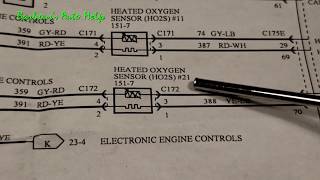
How to confirm: Disconnect the sensor and measure the resistance between the two heater circuit pins (usually the two wires of the same color, often white or black). An infinite resistance reading (open circuit) confirms the heater has failed. 🎬 See how to test O2 sensor heater resistance with a multimeter. A typical good heater has a resistance between 2 and 30 ohms.
Typical fix: Replace the Bank 1, Sensor 2 oxygen sensor. 🎬 Watch: Step-by-step guide to replacing the Bank 1 downstream sensor.
Est. part cost: $50-$150 - Damaged Wiring or Connector 🟡 Medium Probability The sensor's wiring harness is routed near hot exhaust components and can be susceptible to melting, chafing, or corrosion over time. The connector itself can also accumulate dirt and moisture, leading to poor contact. Manufacturer service bulletins for other Ford models, such as SSM 51048 and SSM 50993, note that P0036 can be caused by corrosion or water intrusion in specific harness connectors.
How to confirm: Visually inspect the wiring harness from the O2 sensor all the way back to its connection point on the main harness. Look for any signs of melting, frayed wires, or physical damage. Unplug the connector and check for corrosion, bent pins, or moisture inside.
Typical fix: Repair the damaged section of the wiring harness or replace the connector pigtail.
Est. part cost: $15-$50 - Blown Fuse ⚪ Low Probability
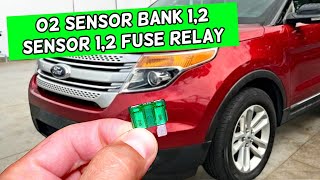
How to confirm: Check the vehicle's fuse box for a blown fuse related to the O2 sensor heater circuit. For many 2011-2019 Explorers, this is Fuse #75 (15A) in the under-hood power distribution box. 🎬 Watch: Locate the O2 sensor fuse and relay on your Explorer. A short in the sensor or wiring can cause the fuse to blow.
Typical fix: Replace the blown fuse. If the fuse blows again immediately, it indicates a short circuit in the wiring or the sensor itself that must be found and repaired.
Est. part cost: $1-$5
Rare But Worth Checking
- Faulty Powertrain Control Module (PCM): → Shop Engine Control Module (ECM) This is extremely rare. The PCM's internal driver for the heater circuit can fail, but all other possibilities should be exhausted before considering PCM replacement, as it is expensive and requires programming.
Diagnosis Steps
- Confirm the code with an OBD-II scanner.
- Locate the Bank 1, Sensor 2 oxygen sensor. On the 3.5L V6 Explorer, Bank 1 is the rear bank (near the firewall). Sensor 2 is downstream, after the catalytic converter. It is accessible from underneath the vehicle, often near the oil pan.
- Visually inspect the sensor's wiring harness and connector for any obvious damage, such as melting, chafing, or corrosion. Pay close attention to where the harness might rub against the chassis or exhaust heat shields.
- If the wiring looks good, disconnect the sensor. Use a multimeter set to Ohms to test the resistance across the two heater pins on the sensor side of the connector (typically the two wires of the same color). An open circuit (OL or infinite resistance) means the sensor's heater is bad and the sensor must be replaced. A good reading is typically between 2-30 ohms.
- If the sensor's resistance is within spec, check for power at the vehicle-side connector. With the key on and engine off, use a multimeter to check for 12V between the heater power wire and a good ground.
- If there is no power, check the O2 sensor heater fuse. In many cases, this is Fuse #75 (15A) in the power distribution box under the hood. If the fuse is blown, replace it and re-check. If it blows again, you have a short circuit to ground that needs to be traced.
- If power and ground are good and the sensor resistance is good, the issue may be in the signal return wire to the PCM or, very rarely, the PCM itself.
Parts You'll Likely Need
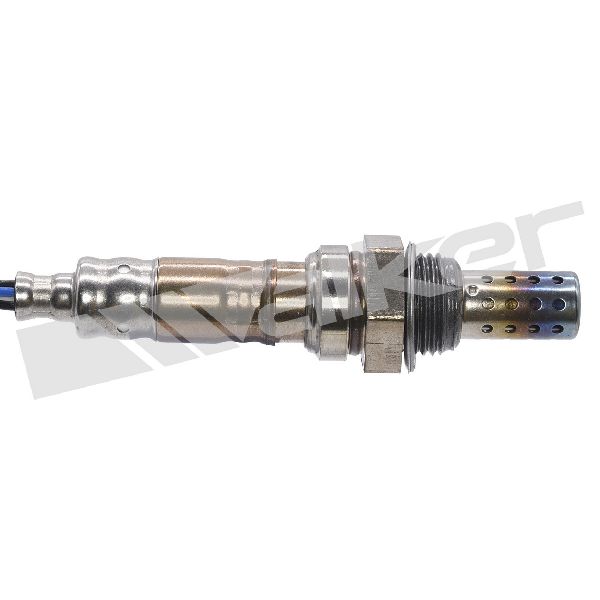
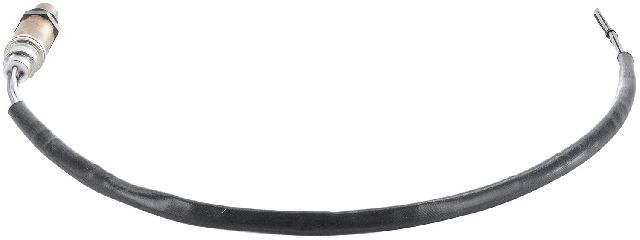
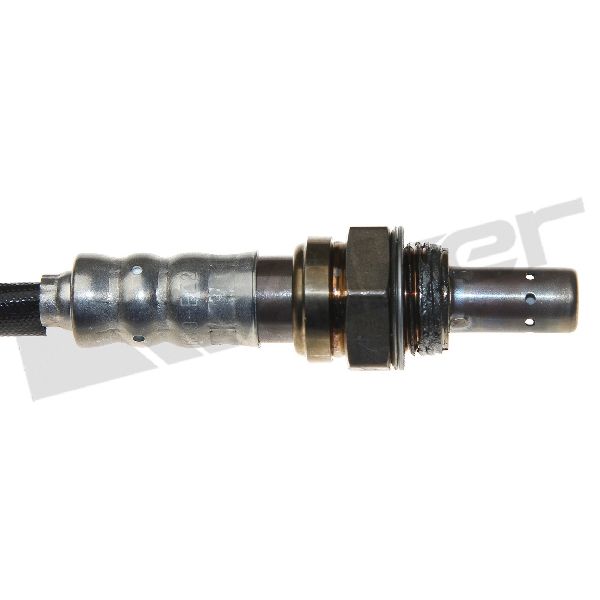
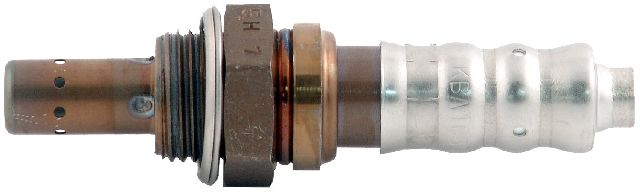
- Downstream Oxygen Sensor (Bank 1, Sensor 2)
(OEM #DY-1155 (also 8A8Z-9G444-A))— The internal heating element of the original sensor is the most common point of failure for this code.
Trusted brands: Motorcraft, Bosch, Denso, NTK, Walker Products
OEM price range: $90-$150
Aftermarket price range: $50-$90
Related Codes That Often Appear With This One
- P0137 — P0137 (O2 Sensor Circuit Low Voltage Bank 1, Sensor 2) can appear alongside P0036 if the sensor has failed completely or has a wiring issue affecting both the heater and signal circuits. TSB Bulletin #15-0078 notes that P0036 and P0137 can occur together on some Ford EcoBoost platforms.
- P0141 — P0141 is the generic equivalent of P0036 for some manufacturers, indicating a Sensor 2 Heater Circuit Malfunction. A scanner might show both if there are multiple heater circuit issues or a generic interpretation is used.
- P0420 — A pending P0420 (Catalyst System Efficiency Below Threshold) can sometimes appear after a P0036 is fixed if the new, working sensor now correctly reports a failing catalytic converter that the old, broken sensor was unable to monitor.
Technical Service Bulletins (TSBs) & Recalls
- TSB 16-0166: Addresses exhaust odor in the cabin for 2011-2015 Explorers, a known platform issue.
- TSB Bulletin #15-0078: Notes that some Ford vehicles may exhibit an illuminated MIL with DTCs P0036, P0054, P0137, and/or P0141.
- Bulletin #SSM 50993: Reports that P0036 may be caused by water intrusion in connector C1050 on certain Ford models.
- Bulletin #SSM 51048: Indicates that P0036 may be due to corrosion or water intrusion in connectors C201 and/or C1570 on some Ford platforms.
Platform-Specific Known Issues
- While not for this specific engine, a Technical Service Bulletin (TSB 18-2212) was issued for some 2016-2018 Ford Edge models with the 2.0L EcoBoost engine for a P0036 code caused by a software issue, which was resolved by a PCM reprogram. This does not apply to the 3.5L Explorer but shows that software can sometimes be a cause.
Mechanic-Grade Diagnostic Values
- O2 Sensor Heater Element Resistance — expected: 6 to 20 Ohms (typical), though some sources state as wide as 2-30 Ohms.. Failure: An infinite resistance reading (OL) indicates an open circuit (burned out element).
- Voltage at Heater Circuit Power Wire — expected: 12-14 Volts with key on, engine off.. Failure: No voltage indicates a blown fuse or an open in the power supply wire (VPWR circuit).
- Ford Mode $06 Heater Current Test — expected: Current draw should be within a specific range, for example, 0.220 Amps to 3 Amps for NTK sensors or 0.400 Amps to 3 Amps for Bosch sensors.. Failure: Current falling outside the calibrated thresholds will set a fault.
Scan Tool Commands That Help
- Ford IDS (Integrated Diagnostic System): Powertrain -> Engine -> Key On Engine Off Self Test — This on-demand test actively checks circuits, including the HO2S heater circuit, and can confirm a fault is present without needing to complete a full drive cycle.
- Ford IDS (Integrated Diagnostic System): Datalogger -> Select PIDs for HO2S12 — Used to monitor the live voltage and status of the Bank 1 Sensor 2 O2 sensor. While the heater itself doesn't output a PID, you can observe the sensor's behavior during warm-up to see if it's sluggish, which can indirectly point to a heater issue.
Wiring & Ground Locations
- G104 — Right side of the engine compartment.. This is a primary engine compartment ground. A poor connection here can cause a variety of electrical issues, including erratic voltage for sensor circuits controlled by the PCM.
- G106 — Right side of the engine compartment bulkhead (firewall).. This ground is physically close to the Bank 1 (rear bank) components. Corrosion or a loose connection here could potentially affect the ground reference for the O2 sensor heater circuit.
- Heater Circuit Wires — Within the O2 sensor's 4-wire connector.. The two wires of the same color (often white or black) are for the heater element. One receives 12V power, and the other is the ground-side control from the PCM. All voltage and resistance tests are performed on these specific wires.
Real Owner Repair Stories
- Ford-Forums.com user 'Spike1965' (2001-2009 Ford Escape (similar engine architecture and known wiring issues)) — Check Engine Light with O2 sensor circuit code (P0136, equivalent to P0036 for Bank 1 Sensor 2)
❌ Tried (didn't work) Initial diagnosis focused only on the sensor itself.
✅ What actually fixed it Found that the 4 wires in the harness had melted together in three different spots between the sensor connector and the PCM. Repairing the melted wiring resolved the code. The user noted they checked several other Escapes at a wrecking yard and found the same melted harness issue. - NHTSA ODI #10554605 — An owner reported that while driving at approximately 55 mph, the accelerator failed to respond to acceleration attempts. Additionally, the P0036 error code and the check engine warning light illuminated.
OEM Part Supersession History
8A8Z-9G444-A→DY-1155— Standard part number update and consolidation by Ford/Motorcraft.
Model Year Variations Within This Range
- 2011-2019: While the P0036 diagnosis is consistent, a YouTube video notes different part numbers for the downstream sensors on a 2015 model (DY-1173 for Bank 1 and DY-1153 for Bank 2), which conflicts with the widely cited DY-1155 part. This suggests there may be mid-generation part variations. Always confirm the part number with the vehicle's VIN before purchasing.
Diagnostic Flowchart
Other Known Issues on This Vehicle
Issues unrelated to this code that are worth knowing about as an owner of this generation:
- Internal Water Pump Failure 🔴 High — Commonly occurs after 100,000 miles. Failure can cause coolant to mix with engine oil, leading to catastrophic engine damage if not addressed immediately. (Ref: No specific recall, but it is a widely documented issue. A lawsuit was filed but later dismissed. The primary warning sign is a coolant leak from a weight hole located near the A/C compressor or oil filter housing.)
- Power Transfer Unit (PTU) Overheating and Failure 🔴 High — Common on AWD models, often due to the 'lifetime' fluid breaking down from heat exposure from the nearby exhaust. Symptoms include a burning gear oil/propane smell in the cabin, whining/grinding noises, and fluid leaks. Preventative fluid changes every 30,000 miles are recommended. (Ref: No recall, but it is a well-known design issue. Failure can be catastrophic to the drivetrain.)
- Exhaust Odor / Carbon Monoxide In Cabin 🟠 Medium — A significant number of owners reported exhaust smells, particularly during heavy acceleration or with the A/C in recirculation mode. The issue was subject to a major NHTSA investigation. (Ref: Ford issued TSB 16-0166 and a customer satisfaction program (17N03) to address the issue by sealing body gaps, checking liftgate seals, and sometimes reprogramming the HVAC module. The NHTSA investigation concluded without a formal safety recall for civilian vehicles, attributing most severe cases to unsealed modifications on police vehicles.)
- Throttle Body Malfunction 🟠 Medium — Affects many 5th generation models, causing the vehicle to suddenly lose power and enter 'limp mode,' often displaying a wrench icon on the dash. Diagnostic codes P2111 or P2112 are common. (Ref: Ford had a customer satisfaction program (13N03) to extend the warranty on the throttle body for certain models.)
- Rear Suspension Toe Link Fracture 🔴 High — Affects 2011-2017 models, particularly in regions where road salt is used. A fracture can cause a sudden loss of steering control. (Ref: Ford issued multiple recalls for this issue, including recalls 19S17 and 20S42, to replace the toe links.)
Used vs. New Parts: Buying Guide for This Vehicle
When a used part is the smart pick: A used wiring harness pigtail from a junkyard is a viable option if only the connector is damaged. Sourcing a complete used engine harness is also practical if extensive melting or damage is found, as it's more reliable than making multiple splices.
Donor-vehicle mileage cap: roughly under 100000 miles for the part to have meaningful remaining life.
What to inspect on the donor part:
- For a wiring harness, inspect for any signs of melting, brittleness, or previous repairs (tape, butt connectors).
- Ensure the locking tabs on connectors are intact.
- Check the donor vehicle for signs of flood or fire damage.
OEM-only on this vehicle (don't cheap out):
- Powertrain Control Module (PCM) - Aftermarket or improperly programmed used PCMs can cause a host of other issues. OEM is the only reliable choice.
Aftermarket brands forum-validated for this vehicle:
- Bosch
- Denso
- NTK (NGK)
Brands owners have reported issues with on this vehicle:
- Unnamed, no-brand "white box" sensors from online marketplaces are frequently reported by mechanics to fail prematurely or be dead-on-arrival.
Real Owner Stories
Aggregated from forums and TSBs cited above. Mileages and costs reflect what owners reported in those sources.
2011-2019 Ford Explorer 3.5L V6
Symptoms: The Check Engine Light was on and the owner needed to identify the correct sensor location among the four total sensors.
What fixed it: Identified Bank 1 as the rear bank (firewall side) and replaced the downstream Sensor 2.
Source hint: YouTube - 2011-19 Ford Explorer O2 oxygen sensor locations (ALL 4)
Ford V6 (Similar Architecture)
Symptoms: Owner asked about a P0036 code and was advised to check for 12V power and inspect for melted or rubbed wiring.
What fixed it: Inspected for melted or rubbed wiring and checked for 12V power at the heater circuit before sensor replacement.
Source hint: Ford Forum - Repair P0036 Code
2017 Ford Explorer Platinum
Symptoms: Owner confirmed the Bank 1 sensor location was at the back near the firewall while discussing sensor replacement.
What fixed it: Accessed the rear bank near the firewall to service the oxygen sensor.
Source hint: Reddit - r/FordExplorer - Ford Explorer Platinum 2017 Oxygen Sensor
Related OBD-II Codes
Frequently Asked Questions
Where is the Bank 1, Sensor 2 oxygen sensor located on my 3.5L V6 Explorer?
Does TSB 18-2212 for the P0036 code apply to my 2017 Ford Explorer 3.5L?
Which fuse should I check for the O2 sensor heater circuit on a 2011-2019 Explorer?
What is the correct resistance for a healthy O2 sensor heater on this vehicle?
Can I use parts from a Ford Edge or Ford Flex to fix this code?
Does TSB 16-0166 relate to my P0036 check engine light?
Helpful Videos
We Have This Part in Stock

The information in this article is provided for general reference and educational purposes only. Vehicle specifications, procedures, and part compatibility can vary by production date, trim level, and region. Always consult your vehicle's factory service manual and verify part numbers before purchasing or performing repairs. Safety-critical components such as airbags, seat belts, and braking systems should be installed by a qualified professional.
- Ford Explorer:
- 🧭 Diagnostic Flowchart
- 🎬 Helpful Videos
- 🛍️ Shop This Part
- What's Unique About the 2011-2019 Ford Explorer
- Symptoms You May Notice
- Most Likely Causes
- Rare But Worth Checking
- Diagnosis Steps
- Parts You'll Likely Need
- Related Codes That Often Appear With This One
- Technical Service Bulletins (TSBs) & Recalls
- Platform-Specific Known Issues
- Mechanic-Grade Diagnostic Values
- Scan Tool Commands That Help
- Wiring & Ground Locations
- Real Owner Repair Stories
- OEM Part Supersession History
- Model Year Variations Within This Range
- Other Known Issues on This Vehicle
- Used vs. New Parts: Buying Guide for This Vehicle
- Real Owner Stories
- 2011-2019 Ford Explorer 3.5L V6
- Ford V6 (Similar Architecture)
- 2017 Ford Explorer Platinum
- Related OBD-II Codes
- Frequently Asked Questions
- 🎟️ Get 5% Off