

P0036 on 2007-2011 Jeep Wrangler 3.8L: Causes and Fixes for O2 Sensor Heater Fault
For a 2007-2011 Jeep Wrangler, P0036 almost always means the Bank 1 Sensor 2 oxygen sensor has failed. This is the downstream sensor on the passenger side. Replacing the sensor is the most common fix, costing about $40-$80 for an aftermarket part and is a straightforward DIY job. Before replacing, check fuse M28 in the TIPM fuse box and inspect the wiring harness for melting, as this is a common issue on this platform.
- P0036 points to the heater circuit for the oxygen sensor on the passenger side, after the catalytic converter.
- The most likely fix is replacing the oxygen sensor itself, preferably with an NTK/NGK brand part (NTK 23159).
- Before replacing the sensor, always check fuse M28 in the engine bay fuse box and carefully inspect the wiring harness for any melting or damage, as this is a common issue on Wranglers.
- This is a DIY-friendly repair that requires basic hand tools and an O2 sensor socket.
What's Unique About the 2007-2011 Jeep Wrangler
On a Jeep Wrangler JK, the oxygen sensor wiring is more exposed to the elements than on a typical passenger car. Due to its proximity to the hot exhaust and its vulnerability during off-roading, wiring and connector damage is a more frequent cause of P0036 on this platform. While the sensor itself is still the most likely culprit, a thorough inspection of the harness for melting, chafing, or corrosion is critical before buying any parts. Forum users frequently report finding the wiring harness melted to the exhaust.
Symptoms You May Notice
- Check Engine Light (CEL) is on
- Failure to pass a vehicle emissions test
- Slightly reduced fuel economy may be noticed in some cases.
- Rough idle on cold start in some instances.
- Replacing the wrong oxygen sensor (e.g., the upstream Sensor 1, or the sensor on the driver's side Bank 2). P0036 is specifically for the passenger side, downstream sensor.
- Replacing the sensor without first checking the fuse (M28 in the TIPM) and inspecting the wiring for damage.
- Using a non-NTK/NGK brand oxygen sensor, which has been reported by many owners to not work correctly with the Jeep's computer system.
Most Likely Causes
- Failed Oxygen Sensor 🔴 High Probability → Shop Oxygen Sensor The internal heater element in oxygen sensors is a common failure point over time due to constant heat cycles. It is a frequently replaced part on the JK Wrangler.
How to confirm: Disconnect the sensor and measure the resistance across the two heater circuit pins (usually the two wires of the same color). An infinite resistance (open circuit) or very low resistance (short circuit) reading confirms the sensor has failed. A healthy heater should have a specific resistance, often in the range of 3-20 ohms depending on the manufacturer.
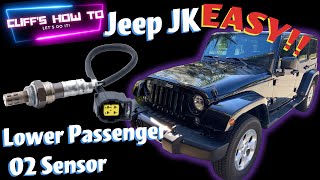
Typical fix: Replace the Bank 1, Sensor 2 oxygen sensor. 🎬 See this walkthrough for replacing the Bank 1 Sensor 2. It is highly recommended to use an NTK/NGK branded sensor, as many forum users report issues with other brands like Bosch on this specific vehicle.
Est. part cost: $40-$80 - Damaged Wiring or Connector 🟡 Medium Probability The wiring harness runs near the hot exhaust and is susceptible to damage from road debris or off-roading. Connectors can also become corroded or filled with dirt/mud. Numerous owners on forums report finding the O2 sensor harness melted to the exhaust pipe.
How to confirm: Visually inspect the entire wiring harness from the sensor back as far as you can see. Look for melted plastic, chafed wires, or breaks. Check the connector for corrosion, bent pins, or dirt. Pay close attention to the area where the harness passes over the exhaust.
Typical fix: Repair the damaged section of wire or clean/replace the connector. Use high-temperature wire loom and secure the harness away from the exhaust pipe to prevent future damage.
Est. part cost: $5-$25 - Blown Fuse ⚪ Low Probability A short circuit in the wiring or the sensor itself can cause the associated fuse to blow. This is less common than the sensor or wiring failing on its own.
How to confirm: Locate the fuse for the O2 sensor heater circuit in the vehicle's Totally Integrated Power Module (TIPM), which is the main fuse box in the engine bay. For the 2007-2011 JK, this is typically fuse M28 (20A). Visually inspect it or test with a multimeter.
Typical fix: Replace the blown fuse. If the new fuse blows immediately, there is a short circuit in the heater circuit wiring or the sensor itself that must be found and repaired.
Est. part cost: $1-$5
Rare But Worth Checking
- Faulty Powertrain Control Module (PCM): → Shop Engine Control Module (ECM) This is extremely rare. The PCM is the last thing to suspect after all other possibilities (sensor, wiring, fuses) have been thoroughly ruled out. A faulty PCM will typically cause other codes and symptoms as well.
Diagnosis Steps
- Scan the vehicle for any other stored trouble codes. Address other codes first if they are present.
- Perform a thorough visual inspection of the Bank 1, Sensor 2 (passenger side, downstream) oxygen sensor, its connector, and its wiring harness. Look for any signs of melting, chafing, corrosion, or physical damage, paying special attention to where the harness passes near the exhaust.
- Check fuse M28 (20A) in the TIPM (engine bay fuse box). Replace if blown.
- If the wiring and fuse are good, disconnect the O2 sensor connector.
- With the key on (engine off), use a multimeter to verify that 12V power and a good ground are present at the vehicle-side harness connector. One pin should have battery voltage, and the other is a pulse-width modulated ground from the PCM.
- Using the multimeter set to Ohms, measure the resistance between the two heater pins on the sensor itself (typically the two same-colored wires). If the reading is open (infinite resistance) or shorted (near zero resistance), the sensor's internal heater has failed and the sensor must be replaced. A good sensor will typically read between 3 and 20 ohms.
- If the sensor's resistance is within spec and power/ground are present, there may be an intermittent wiring issue or, in very rare cases, a problem with the PCM.
Parts You'll Likely Need
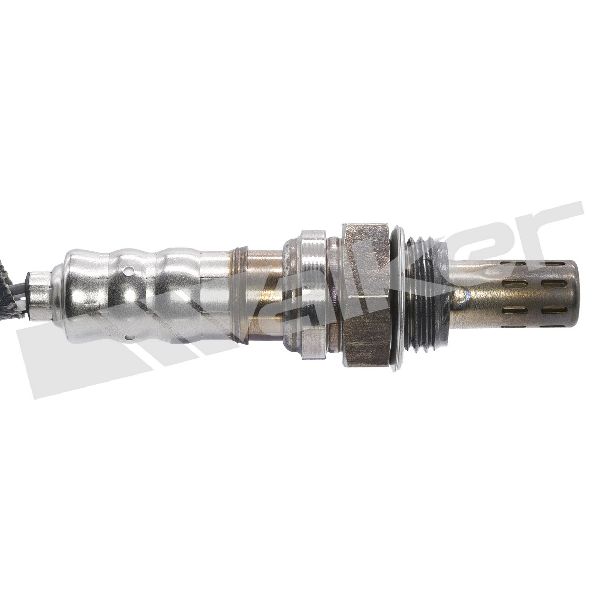
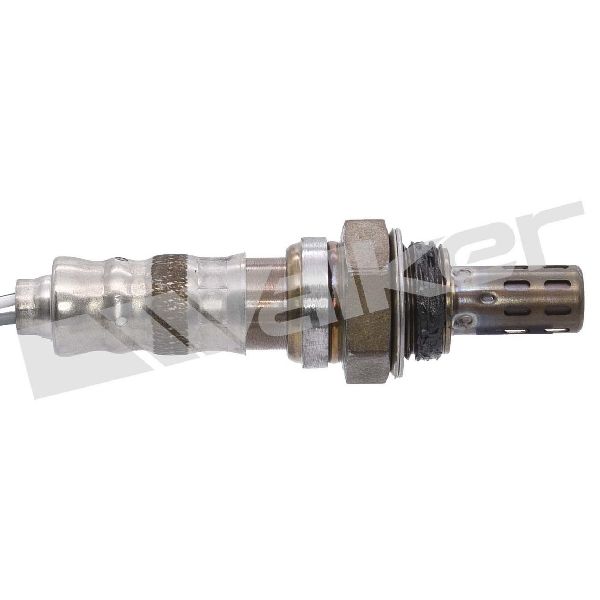
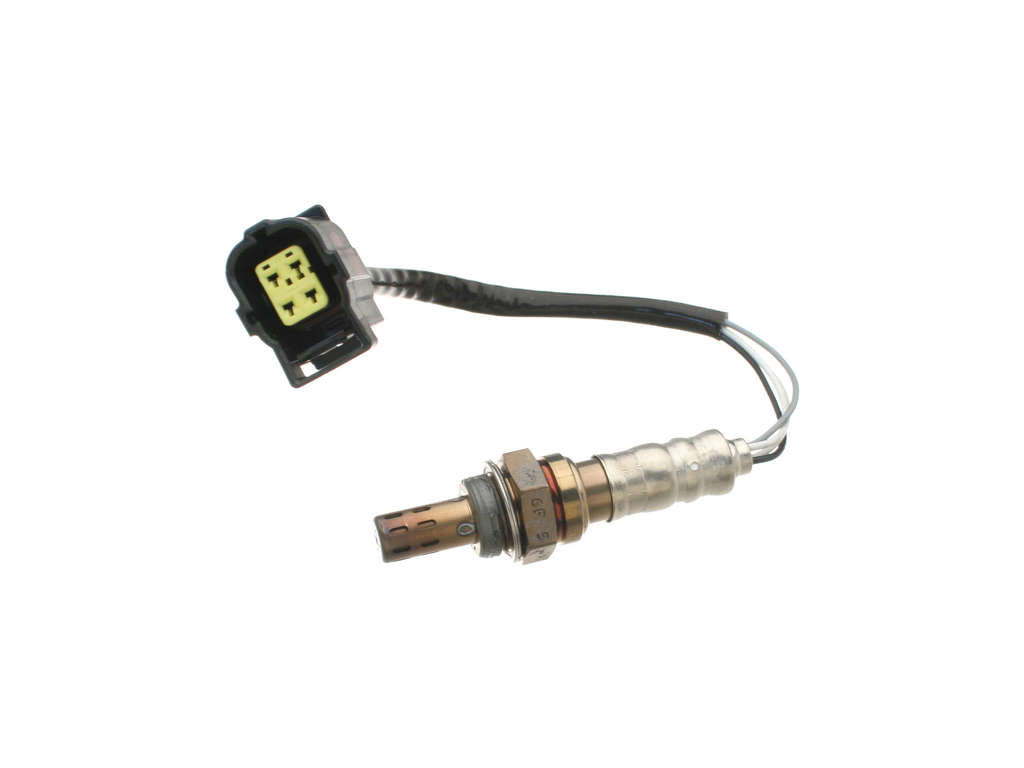
- Oxygen Sensor (Bank 1, Sensor 2)
(OEM #56029050AA)— This is the downstream (post-catalyst) sensor on the passenger side. The internal heater element is the most common failure point for code P0036. Note that on the 3.8L JK, both downstream sensors (Bank 1 and Bank 2) are often the same part number.
Trusted brands: NTK (OEM Supplier), Denso, Mopar
OEM price range: $80-$150
Aftermarket price range: $40-$80
Platform-Specific Known Issues
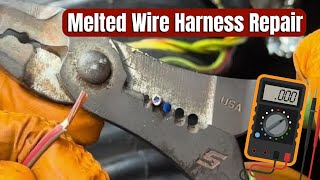
- Melted Wiring Harness: A common failure point found in forum discussions is the O2 sensor wiring harness melting against the hot exhaust pipe. Before replacing the sensor, owners should carefully trace the wiring from the sensor to the main harness, looking for melted or brittle sections. 🎬 Watch: How to find and fix a melted wiring harness. Repairing the wire and securing it away from the exhaust with high-temp loom and zip ties is often required.
Mechanic-Grade Diagnostic Values
- O2 Sensor Heater Element Resistance — expected: 2-30 Ohms, typically 4-10 Ohms when cold.. Failure: An open circuit (OL or infinite resistance) or a short circuit (near 0 Ohms) indicates a failed heater element.
- Heater Circuit Power Supply (at sensor connector) — expected: ~12V (Battery Voltage) with Key On, Engine Off.. Failure: 0V or significantly low voltage points to a blown fuse (M28), a faulty TIPM, or a break in the power wire.
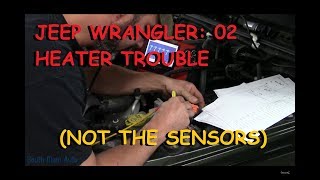
- Heater Circuit Ground (at sensor connector) — expected: Near 0 Ohms resistance to a known good chassis ground.. Failure: High or infinite resistance indicates a break in the ground wire, potentially related to ground point G104. 🎬 Watch: Troubleshooting O2 heater codes when the sensor isn't the problem.
- PCM Heater Driver Command (via Scan Tool) — expected: Scan tool should show the PCM commanding the heater on (duty cycle > 0%) during cold start.. Failure: A 0% duty cycle command when the engine is cold could indicate a PCM logic issue, though this is rare for a single sensor code.
Scan Tool Commands That Help
- wiTECH (or equivalent professional scan tool): O2 Heater Test / Actuation Test — This bidirectional control allows a technician to command the O2 heater circuit on and off (typically in 25% increments) while monitoring voltage and amperage. This can definitively test the PCM driver, wiring, and sensor heater in a controlled manner without starting the engine. It's used to isolate a fault after initial checks (fuse, visual) are complete.
Wiring & Ground Locations
- Bank 1 Sensor 2 Connector — On the passenger side of the vehicle, connected to the oxygen sensor located in the exhaust pipe after the catalytic converter.. This is the primary point for testing voltage, ground, and sensor resistance. The two same-colored wires (often white or black) are for the heater circuit.
- G104 — A common ground point located on the engine block.. Multiple forum and video sources indicate that all four O2 sensor heaters share a common ground at G104. A corroded or loose G104 can cause multiple O2 heater codes simultaneously and is often misdiagnosed as failed sensors or a bad PCM.
- PCM Connector C1 — The Powertrain Control Module is on the passenger side of the firewall. C1 is one of the large multi-pin connectors.. For advanced diagnostics, this is the termination point for the O2 sensor wiring. The Bank 1 Sensor 2 heater control wire can be tested for continuity here. Based on similar Chrysler platforms, the B1S2 signal is often on C1 Pin 31 and return on C1 Pin 32.
- Fuse M28 — In the Totally Integrated Power Module (TIPM) / fuse box in the engine bay.. This 20A fuse provides power to the O2 sensor heater circuit. It should be the first component checked after reading the code.
Real Owner Repair Stories
- JK-Forum.com user (2009 Jeep Wrangler 3.8L) — P0031, P0037, P0057 (multiple O2 heater codes) and rough idle after replacing PCM and O2 sensors.
❌ Tried (didn't work) Replacing the PCM, Replacing all O2 sensors with NTK brand, Sending the replacement PCM back for testing (seller claimed it was good)
✅ What actually fixed it The user confirmed good grounds at G104 and G103 and added new grounds. The issue was traced to the replacement PCM not delivering correct voltage to the heater control lines, despite the seller claiming it was functional. This points to the high likelihood of receiving a faulty remanufactured PCM. - YouTube - South Main Auto Repair (2008 Jeep Wrangler) — P0038 and P0052 (Heater circuit codes for B1S2 and B2S1)
❌ Tried (didn't work) A previous shop had already replaced the oxygen sensors.
✅ What actually fixed it The technician diagnosed a bad ground connection at G104, which is a shared ground for the O2 sensor heaters. After cleaning and securing the ground, the codes were resolved. This highlights that multiple heater codes are more likely a shared power or ground issue than multiple failed sensors. - JK-Forum.com user (2014 Jeep Wrangler (different generation, but same ground issue)) — Battery boiling over, then after fixing a ground, codes P0032, P0038, P0052, P0058 (all four O2 heater circuits high).
❌ Tried (didn't work) Initial assumption of a bad alternator or battery.
✅ What actually fixed it The root cause was a broken/missing engine ground strap. After adding a temporary ground from the engine block to the firewall, the alternator voltage returned to normal, but the O2 heater codes appeared. This demonstrates the sensitivity of the heater circuits to grounding problems. The final fix was properly restoring the factory grounding scheme.
When the Usual Fixes Don't Work
- While a failed sensor is the most common cause, a significant number of real-world repair stories, especially on forums, point to wiring and grounding as the root cause after a new sensor fails to fix the issue. One user on Wranglerforum replaced the sensor for P0036, but the code returned. The final fix was repairing a section of the harness that had melted onto the exhaust, causing an intermittent short. This reinforces the need to thoroughly inspect the wiring harness path, even if there is no obvious damage at the connector.
OEM Part Supersession History
56029050AA→None found. This part number appears to be stable for the specified application.— N/A
Heads up: While this part number fits many Chrysler/Dodge/Jeep vehicles, it is critical to verify fitment by VIN. The same part number may be used for upstream or downstream positions on different models, but for the 2007-2011 Wrangler 3.8L, it is specified for the downstream position.
Diagnostic Flowchart
Other Known Issues on This Vehicle
Issues unrelated to this code that are worth knowing about as an owner of this generation:
- Excessive Oil Consumption 🔴 High — Very common across the 2007-2011 model years. Many owners report consuming 1 quart of oil every 1000-2000 miles. Chrysler considers up to 1 quart per 750-1000 miles to be 'acceptable'. (Ref: No specific recall, but dealer involvement for warranty claims often requires a formal oil consumption test. Some early models had TSBs for porous timing covers contributing to leaks.)
- Cracked Exhaust Manifolds 🟠 Medium — Common failure, especially on the passenger side, due to heat cycles and the weight of the exhaust system. Often presents as an exhaust leak tick when cold that may quiet down as the engine warms up.
- Totally Integrated Power Module (TIPM) Failure 🔴 High → Shop Fuse Box — A widespread and well-documented issue affecting many Chrysler products of this era, including the JK Wrangler. Can cause a wide range of bizarre electrical problems. (Ref: No official recall, but it was the subject of a class-action lawsuit. Numerous companies now offer repair/rebuild services for faulty TIPMs.)
- Water Leaks (Hardtop and Soft Top) 🟠 Medium — Extremely common. Leaks often occur at the A-pillars, door seals, and hardtop panel seals, leading to wet carpets and potential mold issues.
- Underpowered Engine Feel 🟡 Low — This is a subjective but nearly universal complaint. The 3.8L V6, originally from Chrysler's minivan line, is often criticized for being underpowered for the weight of the Wrangler, especially with larger tires or when climbing grades.
Used vs. New Parts: Buying Guide for This Vehicle
When a used part is the smart pick: For this repair, a used part is only recommended for a replacement wiring harness pigtail if the original is melted or damaged. A complete, used engine wiring harness from a reputable salvage yard can also be a cost-effective solution if a large section is damaged. Avoid used electronic modules like the TIPM or PCM unless they come with a warranty and return policy.
Donor-vehicle mileage cap: roughly under 80000 miles for the part to have meaningful remaining life.
What to inspect on the donor part:
- For a wiring harness: Inspect for any signs of prior melting, brittleness, or previous repairs (e.g., tape, butt connectors).
- Ensure all connector locking tabs are intact and not broken.
- Check for corrosion on the pins inside the connectors.
- Verify the donor vehicle was not involved in a fire or flood.
OEM-only on this vehicle (don't cheap out):
- Powertrain Control Module (PCM)
- Totally Integrated Power Module (TIPM)
Aftermarket brands forum-validated for this vehicle:
- NTK (for O2 Sensors)
- NGK (for O2 Sensors)
- Denso (for O2 Sensors)
Brands owners have reported issues with on this vehicle:
- Bosch (for O2 Sensors on this specific platform, as widely reported in forums)
- Unbranded or 'white-box' sensors from online marketplaces.
Real Owner Stories
Aggregated from forums and TSBs cited above. Mileages and costs reflect what owners reported in those sources.
2007-2011 Jeep Wrangler JK 3.8L
Symptoms: The owner discovered multiple downstream O2 sensor codes including P0036 and P0056.
What fixed it: The owner found the wiring harness had fallen and melted on the exhaust pipe, causing a short. The fix involved repairing the wiring and securing it away from the exhaust.
Source hint: jk-forum.com: P0036, P0056, P0137, P0157... O2 sensor issues
2007-2011 Jeep Wrangler JK 3.8L
Symptoms: The vehicle threw both P0052 (Bank 2 Sensor 1) and P0036 (Bank 1 Sensor 2) codes simultaneously.
What fixed it: Replacing the respective oxygen sensors resolved the heater circuit failures.
Source hint: wranglerforum.com: P0052 and P0036 codes
Related OBD-II Codes
Frequently Asked Questions
Which brand of oxygen sensor should I buy for my 2007-2011 JK Wrangler to fix P0036?
Where is the fuse for the O2 sensor heater circuit located on my 3.8L Wrangler?
I found P0036 and my wiring is melted; is this a known issue for the Wrangler?
Could my Jeep's TIPM be causing this heater circuit code?
Does the 3.8L engine's oil consumption issue relate to P0036?
Is the passenger side or driver side sensor responsible for P0036?
Helpful Videos
We Have This Part in Stock

The information in this article is provided for general reference and educational purposes only. Vehicle specifications, procedures, and part compatibility can vary by production date, trim level, and region. Always consult your vehicle's factory service manual and verify part numbers before purchasing or performing repairs. Safety-critical components such as airbags, seat belts, and braking systems should be installed by a qualified professional.
- Jeep Wrangler:
- 🧭 Diagnostic Flowchart
- 🎬 Helpful Videos
- 🛍️ Shop This Part
- What's Unique About the 2007-2011 Jeep Wrangler
- Symptoms You May Notice
- Most Likely Causes
- Rare But Worth Checking
- Diagnosis Steps
- Parts You'll Likely Need
- Platform-Specific Known Issues
- Mechanic-Grade Diagnostic Values
- Scan Tool Commands That Help
- Wiring & Ground Locations
- Real Owner Repair Stories
- When the Usual Fixes Don't Work
- OEM Part Supersession History
- Other Known Issues on This Vehicle
- Used vs. New Parts: Buying Guide for This Vehicle
- Real Owner Stories
- 2007-2011 Jeep Wrangler JK 3.8L
- 2007-2011 Jeep Wrangler JK 3.8L
- Related OBD-II Codes
- Frequently Asked Questions
- 🎟️ Get 5% Off