

P0036 on 2018-2023 Kia Stinger 3.3T: HO2S Heater Control Circuit Causes and Fixes
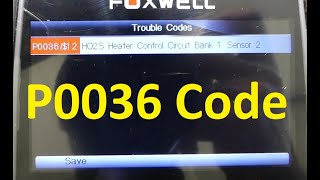
This code indicates a fault in the heater circuit for the Bank 1, Sensor 2 oxygen sensor (passenger side, downstream). The most common fix is replacing the sensor itself. Before replacing, check the 'SENSOR 3' 15A fuse in the engine bay fuse box. Expect to pay between $60 for an aftermarket part and $180 for an OEM sensor. It's a straightforward DIY job for those with basic tools.
- P0036 on a 2018-2023 Stinger 3.3T means there's a problem with the heater in the passenger-side, post-catalytic converter O2 sensor.
- The most likely cause is a failed O2 sensor, which is a common wear-and-tear item.
- Before buying a new sensor, perform a quick visual inspection of the wiring for any melting or damage and check the 'SENSOR 3' 15A fuse in the engine bay fuse box.
- This issue will not leave you stranded but should be fixed to ensure proper emissions control and to pass inspections.
- Replacing the sensor is a DIY-friendly task that requires an O2 sensor socket and basic hand tools.
What's Unique About the 2018-2023 Kia Stinger
The Kia Stinger's Lambda II 3.3L is a high-performance, twin-turbocharged engine that generates significant exhaust heat. This environment puts extra stress on all exhaust components, including oxygen sensors and their wiring. While P0036 is a generic code, the high-heat conditions make wiring damage near the hot exhaust a plausible cause that should be carefully inspected during diagnosis. The Lambda II engine is also used in the Genesis G70, G80, and G90, which share similar potential failure points.
Symptoms You May Notice
- Check Engine Light is on.
- Failure to pass an emissions inspection.
- Potentially poor fuel economy, though this is not a commonly reported symptom.
- Replacing the wrong oxygen sensor (e.g., replacing the upstream Sensor 1 or the sensor on the driver's side, Bank 2).
- Replacing the sensor without first checking the fuse and wiring.
Most Likely Causes
- Failed Bank 1, Sensor 2 Oxygen Sensor 🔴 High Probability → Shop Oxygen Sensor The internal heater element of the oxygen sensor is a common failure point due to constant heat cycles and exposure to exhaust gases. This is a wear-and-tear item.
How to confirm: Disconnect the sensor and measure the resistance across the two heater circuit pins (usually the two wires of the same color). An infinite resistance reading (open circuit) confirms the heater has failed. A healthy heater should have a resistance between 2.5 and 10.0 Ohms. You will need a multimeter for this test.
Typical fix: Replace the Bank 1, Sensor 2 (passenger side, downstream) oxygen sensor.
Est. part cost: $60-$180 - Damaged Wiring or Connector 🟡 Medium Probability The wiring harness for the downstream O2 sensor is routed near the hot exhaust system. Retaining clips can fail, allowing wires to touch the exhaust and melt, causing a short or open circuit.
How to confirm: Visually inspect the entire wiring harness leading to the sensor. Look for melted insulation, chafed wires, or corrosion inside the connector pins. Check for continuity on the heater circuit wires between the ECM and the sensor connector.
Typical fix: Repair the damaged section of the wiring harness and secure it away from the exhaust. If the connector is damaged, it may need to be replaced.
Est. part cost: $10-$50 - Blown Fuse ⚪ Low Probability
How to confirm: Locate the fuse box in the engine compartment. For the Lambda II 3.3L T-GDI engine, the oxygen sensor heater circuits are protected by the 'SENSOR 3' fuse, which is rated at 15A. Visually inspect the fuse to see if it has blown. A wiring short is a common reason for a blown fuse.
Typical fix: Replace the blown fuse. If the fuse blows again immediately, it indicates a short circuit in the wiring that must be found and repaired.
Est. part cost: $1-$5
Rare But Worth Checking
- Faulty Engine Control Module (ECM): → Shop Engine Control Module (ECM) This is extremely rare. The ECM should only be considered after all other possibilities (sensor, wiring, fuses) have been exhaustively tested and ruled out.
Diagnosis Steps
- Read the code with an OBD-II scanner to confirm P0036 is the only code present.
- Check the 'SENSOR 3' (15A) fuse in the engine compartment fuse box.
- Visually inspect the Bank 1, Sensor 2 (passenger side, downstream) oxygen sensor and its wiring harness. Look for any signs of melting, chafing, or corrosion. Ensure the connector is securely plugged in.
- If the visual inspection and fuse check are clear, disconnect the O2 sensor.
- Using a multimeter set to Ohms (Ω), measure the resistance between the two heater pins on the sensor side of the connector. A reading of infinite resistance (OL) means the heater is burned out and the sensor must be replaced. A healthy heater typically reads between 2.5 and 10.0 ohms.
- If the sensor's resistance is within spec, test the vehicle's wiring. Turn the ignition to the 'ON' position (engine off). Use a multimeter to check for 12V power on one of the heater circuit pins in the harness-side connector and for a good ground on the other.
- If power or ground is missing, trace the wiring back to the source (fuse box or ECM) to find the break or short.
- If the sensor tests good and the wiring has proper power and ground, the fault may lie within the ECM, but this is highly unlikely.
Parts You'll Likely Need
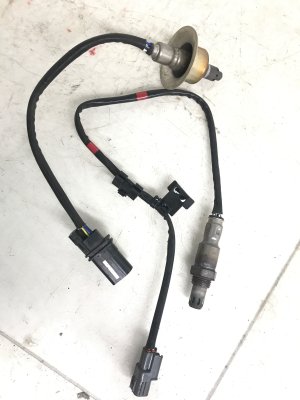
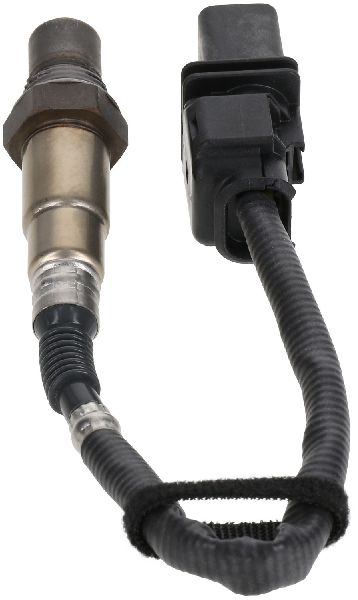
- Downstream Oxygen Sensor (Bank 1, Sensor 2)
(OEM #39210-3L200)— This is the component that contains the heater circuit reported as faulty by the P0036 code. The internal heater element failing is the most common cause.
Trusted brands: Kia (OEM), Bosch, Denso, NGK
OEM price range: $120-$200
Aftermarket price range: $60-$150
Mechanic-Grade Diagnostic Values
- O2 Sensor Heater Resistance (Bank 1, Sensor 2) — expected: 2.5 - 4.0 Ω at 20°C (68°F). Failure: Infinite resistance (OL) indicates an open circuit (burned out heater). A reading outside the specified range indicates a faulty sensor.
- Heater Circuit Power Supply (at harness connector) — expected: ~12V with Key On, Engine Off (KOEO). Failure: 0V or significantly low voltage indicates a blown fuse, bad relay, or an open in the power supply wire.
Scan Tool Commands That Help
- Kia GDS (Global Diagnostic System): Actuation Test -> Heated Oxygen Sensor Heater — This bidirectional command allows a technician to manually activate the O2 sensor heater while monitoring voltage and current. It is the most definitive way to test the entire circuit, confirming the heater element, wiring, and the ECM's ability to control the circuit are all functioning.
Wiring & Ground Locations
- B1/S2 Connector Pin 3 and Pin 4 — On the downstream oxygen sensor connector for Bank 1 (passenger side).. These are the specific pins for the heater circuit. Resistance should be measured across these two pins on the sensor itself to test the heater element.
- Engine Ground Strap (Part #91860-J5010) — Main ground wire assembly for the engine harness.. While not a direct cause, a corroded or loose main engine ground can cause a variety of electrical issues, including erratic sensor behavior. Ensuring all engine grounds are clean and tight is a good practice during any electrical diagnosis.
OEM Part Supersession History
39210-3L110→N/A - Incorrect Part
Heads up: Part number 39210-3L110, noted as incorrect in Pass 2, is consistently listed as an UPSTREAM (Sensor 1) for various Kia/Hyundai 3.3L applications, not the required downstream sensor.39210-3L200→
Heads up: This part number is listed for the Bank 1 (passenger side) DOWNSTREAM (Sensor 2) position on the 3.3T Stinger, making it the correct part for a P0036 fault.39210-3L210→
Heads up: This part number is listed for the FRONT LEFT (Bank 2, Sensor 1) position on the related Genesis G80, and is not correct for this P0036 (Bank 1, Sensor 2) fault.
Model Year Variations Within This Range
- 2022-2023: The Kia Stinger received a facelift for the 2022 model year which included refreshed exterior styling, a larger infotainment screen, and slightly different exhaust tips. However, the core 3.3L Lambda II engine, emissions system, and associated sensors remained unchanged, so the causes and fixes for P0036 are identical across the entire 2018-2023 range.
Diagnostic Flowchart
Other Known Issues on This Vehicle
Issues unrelated to this code that are worth knowing about as an owner of this generation:
- Premature Brake Rotor Warping / Pad Deposits 🟠 Medium — Common, especially on North American models. Owners report vibration under braking, sometimes within 20,000 miles. Attributed to soft OEM pad compound leaving deposits on rotors.
- High-Pressure Fuel Pump (HPFP) Failure 🔴 High — Affects 2018-2021 models (both 2.0T and 3.3T have recalls). Can cause loss of motive power. A recall (NHTSA 23V-634) was issued to inspect and replace the pump and update ECU software. (Ref: NHTSA Campaign ID: 23V634000)
- Sunset Yellow Paint Chipping 🟡 Low — Specific to 2018 models with 'Sunset Yellow' (S7Y) paint. An error in the factory paint process led to poor adhesion. (Ref: Kia Voluntary Service Campaign SC166)
- Left Turbocharger Oil Feed Pipe Leak 🔴 High — Affects 2018-2023 models with the 3.3T engine. The oil feed pipe and hose can deteriorate, leading to an oil leak, which is a fire risk and can cause low oil pressure, triggering other engine codes. (Ref: NHTSA Campaign ID: 24V169000 (Kia Recall SC300))
- HECU (Hydraulic Electronic Control Unit) Fire Risk 🔴 High — Affects 2018-2021 models. An electrical short can occur in the HECU, potentially causing an engine compartment fire while parked or driving. (Ref: NHTSA Campaign ID: 20V707000 (Expanded from an earlier recall))
- Ignition Coil Failure 🟠 Medium — Fairly common, with owners on forums reporting failures at relatively low mileage (e.g., under 60k miles). Coils at the rear of the engine bay are more prone to failure due to heat soak.
Used vs. New Parts: Buying Guide for This Vehicle
When a used part is the smart pick: For this repair, a used part is generally not recommended. Oxygen sensors are wear-and-tear items with a finite lifespan. The cost savings of a used sensor are minimal compared to the risk of premature failure and the labor to replace it again.
Donor-vehicle mileage cap: roughly under 40000 miles for the part to have meaningful remaining life.
What to inspect on the donor part:
- Verify the part number on the sensor itself matches the required OEM number (39210-3L200).
- Inspect the electrical connector for any bent, corroded, or broken pins.
- Check the wiring pigtail for any signs of melting, fraying, or brittleness.
- Avoid sensors from vehicles with known engine damage or high mileage.
Aftermarket brands forum-validated for this vehicle:
- Bosch
- Denso
- NGK / NTK
Brands owners have reported issues with on this vehicle:
- No-name or unbranded sensors from online marketplaces are frequently reported to fail quickly or be dead-on-arrival.
Real Owner Stories
Aggregated from forums and TSBs cited above. Mileages and costs reflect what owners reported in those sources.
2019 Genesis G70 3.3T
Symptoms: Owner reported getting a P0036 code on the shared 3.3T platform.
What fixed it: Replacing the Bank 1 Sensor 2 O2 sensor.
Source hint: GenesisG70 Forum
2018-2023 Kia Stinger 3.3L V6
Symptoms: General discussions confirm P0036 relates to the O2 sensor heater circuit.
What fixed it: Replacing the oxygen sensor.
Source hint: kiastinger.org / stingerforum.org
Kia Manufacturer-Related Reports
Symptoms: An owner reported a series of codes including P0171, P0138, P0087, and P0036 for Bank 1 Sensor 2.
What fixed it: NHTSA ODI #11581569 notes that these codes were associated with frequent fuel pump and fuel injector services due to defects in the system causing major damage.
Related OBD-II Codes
Frequently Asked Questions
Which fuse should I check for a P0036 code on my 3.3L Twin-Turbo Stinger?
Where is the Bank 1 Sensor 2 oxygen sensor located on the Stinger V6?
Can I use a used O2 sensor from a salvage yard to fix this?
Is there a specific resistance range I should look for when testing the sensor heater?
Are there any recalls for the 3.3T engine that might be related to engine codes or oil leaks?
Does the Genesis G70 have the same P0036 issues as the Stinger?
Helpful Videos

Used OEM Parts in Stock
New Aftermarket Parts Available

The information in this article is provided for general reference and educational purposes only. Vehicle specifications, procedures, and part compatibility can vary by production date, trim level, and region. Always consult your vehicle's factory service manual and verify part numbers before purchasing or performing repairs. Safety-critical components such as airbags, seat belts, and braking systems should be installed by a qualified professional.
- Kia Stinger:
- 🧭 Diagnostic Flowchart
- 🎬 Helpful Videos
- 🛍️ Shop This Part
- What's Unique About the 2018-2023 Kia Stinger
- Symptoms You May Notice
- Most Likely Causes
- Rare But Worth Checking
- Diagnosis Steps
- Parts You'll Likely Need
- Mechanic-Grade Diagnostic Values
- Scan Tool Commands That Help
- Wiring & Ground Locations
- OEM Part Supersession History
- Model Year Variations Within This Range
- Other Known Issues on This Vehicle
- Used vs. New Parts: Buying Guide for This Vehicle
- Real Owner Stories
- 2019 Genesis G70 3.3T
- 2018-2023 Kia Stinger 3.3L V6
- Kia Manufacturer-Related Reports
- Related OBD-II Codes
- Frequently Asked Questions
- 🎟️ Get 5% Off