

P0036 on 2008-2017 Mitsubishi Lancer: O2 Sensor Heater Circuit Causes and Fixes
On a 2008-2017 Lancer, code P0036 almost always points to a failed downstream (post-catalytic converter) oxygen sensor heater. Replacing the sensor is the most common fix. Expect to pay around $40-$120 for a quality aftermarket sensor (like Denso or NGK) and about an hour of labor if you take it to a shop. DIY difficulty is 2/5.
- P0036 on your Lancer means the heater in your rear (downstream) O2 sensor has failed.
- The most common and effective fix is to replace the downstream O2 sensor.
- Driving with this code is safe, but you won't pass an emissions test.
- Use a quality aftermarket brand like Denso or NGK/NTK for a reliable, cost-effective repair.
- Always check the wiring and fuse before replacing the sensor, just in case the issue is electrical.
What's Unique About the 2008-2017 Mitsubishi Lancer
For the 2008-2017 Lancer generation, the P0036 code is a straightforward emissions fault without significant platform-specific complexities. The issue is almost always a standard wear-and-tear failure of the downstream O2 sensor's heating element. Unlike some vehicles that may have complex wiring issues or software-related glitches that trigger this code, Lancer owners typically find that a direct replacement of the sensor resolves the problem. The key is to use a quality direct-fit replacement sensor from a reputable brand like Denso or NGK to ensure proper communication with the Mitsubishi ECU and avoid issues common with cheaper, universal sensors.
Generation note: The 2008-2017 model years cover a single generation of the Mitsubishi Lancer (often called the Lancer X). The causes and fixes for P0036 are consistent across this entire year range for vehicles equipped with the 4B11 (2.0L) and 4B12 (2.4L) engines.
Symptoms You May Notice
- Check Engine Light is illuminated.
- Failure to pass an emissions inspection.
- Slight potential decrease in fuel economy over the long term.
- No noticeable drivability issues are expected with this specific code. 🎬 Watch: Learn more about P0036 symptoms and causes
- Replacing the upstream (Bank 1, Sensor 1) oxygen sensor instead of the downstream (Bank 1, Sensor 2) sensor.
- Replacing the catalytic converter when the code is for the sensor heater circuit, not converter efficiency (like a P0420).
Most Likely Causes
- Failed Downstream Oxygen Sensor 🔴 High Probability → Shop Oxygen Sensor The internal heating element of oxygen sensors has a finite lifespan and eventually burns out from constant heat cycles. This is a common failure on most vehicles, including the Lancer, and is the most frequent cause of P0036.
How to confirm: Disconnect the sensor and measure the resistance across the two heater circuit wires (usually the two wires of the same color). A reading of 'OL' (over limit) or infinite resistance on a multimeter indicates a burned-out heater element. A healthy heater should have a low resistance; for this specific platform, the expected value is between 4.5 and 8.0 ohms at 20°C (68°F).
Typical fix: Replace the Bank 1, Sensor 2 (downstream) oxygen sensor.
Est. part cost: $40 - $120 - Damaged Wiring or Connectors 🟡 Medium Probability The O2 sensor wiring is routed under the vehicle near the hot exhaust. Over time, heat can make the wiring brittle, or road debris can cause physical damage, leading to an open or shorted circuit.
How to confirm: Visually inspect the wiring harness leading to the downstream O2 sensor for any signs of melting, chafing, or breaks. Check the connector for corrosion or loose pins. Use a multimeter to check for 12V power and a good ground at the connector with the key on.
Typical fix: Repair the damaged section of the wiring harness or clean/replace the connector.
Est. part cost: $5 - $30 - Blown Fuse ⚪ Low Probability
How to confirm: Check the vehicle's fuse box (both in the engine bay and inside the cabin) for a fuse related to the O2 sensors or emissions components, often labeled 'A/F Heater' or tied to the MFI (Multi-Port Fuel Injection) relay. A blown fuse often indicates a short circuit in the wiring that needs to be addressed.
Typical fix: Replace the blown fuse after diagnosing and fixing the underlying short circuit.
Est. part cost: $1 - $5
Rare But Worth Checking
- Faulty Engine Control Module (ECM): → Shop Engine Control Module (ECM) This is extremely rare. The ECM's internal driver for the O2 sensor heater circuit can fail, but all other potential causes should be exhaustively ruled out before considering ECM replacement.
Diagnosis Steps
- Scan the vehicle's computer for the P0036 code and confirm it is the only code present. Address other codes first if they exist.
- Visually inspect the downstream oxygen sensor (located after the catalytic converter) and its wiring harness. Look for any signs of melting, frayed wires, or corrosion on the connector.
- If wiring looks good, disconnect the sensor. Use a multimeter set to Ohms to test the resistance of the heater circuit on the sensor side. Check between the two wires of the same color. An open circuit (infinite resistance) or a reading outside the 4.5-8.0 ohm specification confirms the sensor's heater is bad.
- If the sensor's resistance is within spec, check for power and ground at the vehicle's harness connector. With the key on, one pin should have 12V power, and another should have a good ground. This check is best performed within the first few seconds of turning the key on.
- If power or ground is missing, inspect the wiring further upstream and check the related fuse (often labeled 'A/F Heater' or tied to the MFI relay) in the engine bay fuse box.
- If the sensor, wiring, power, and ground all check out, the issue may be with the ECM, but this is highly unlikely. The most probable cause is a failed sensor.
Parts You'll Likely Need
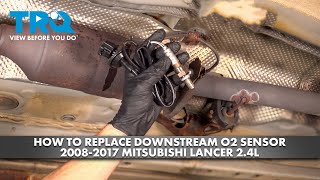
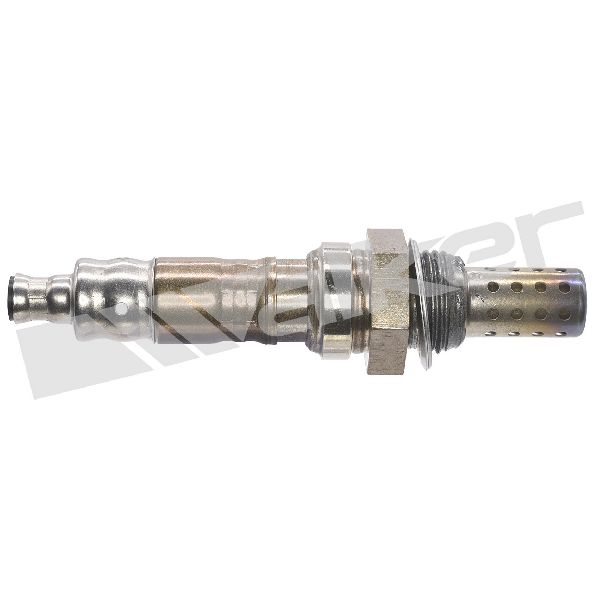
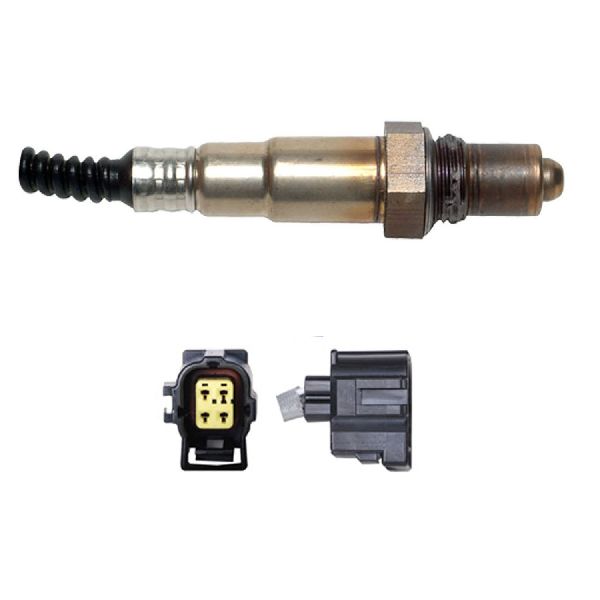
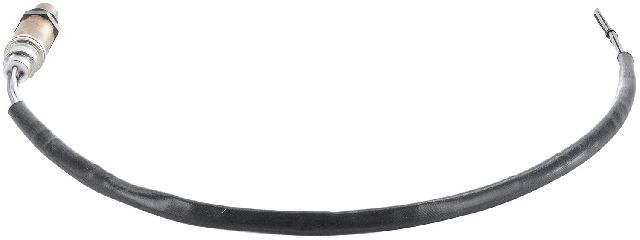
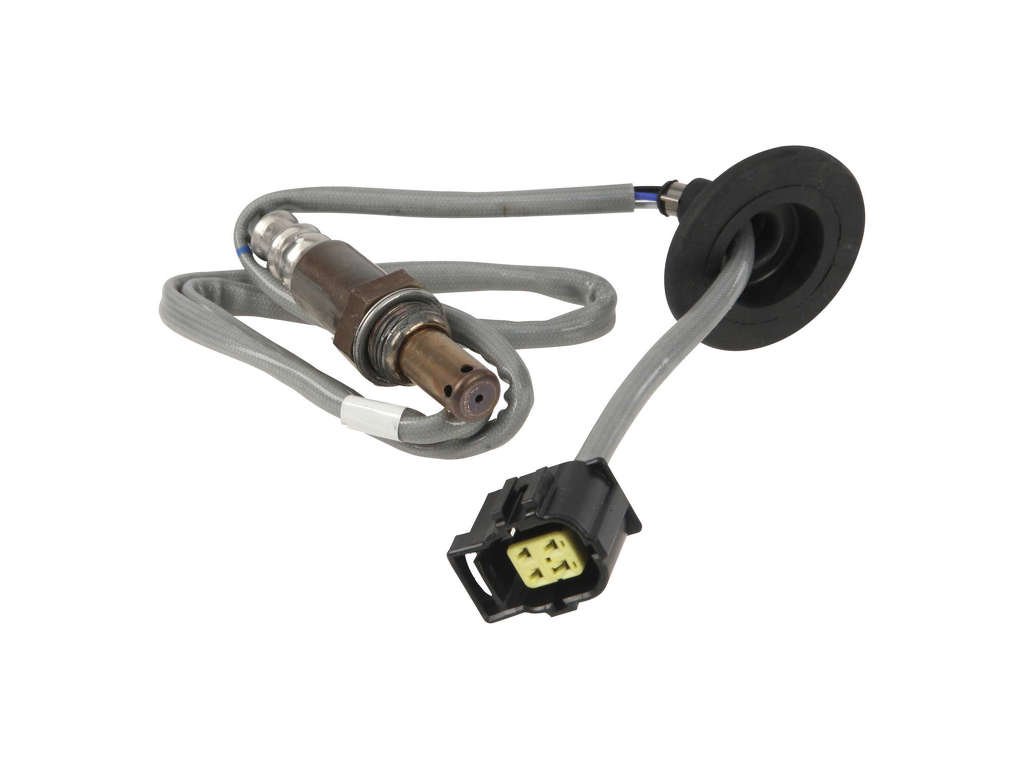
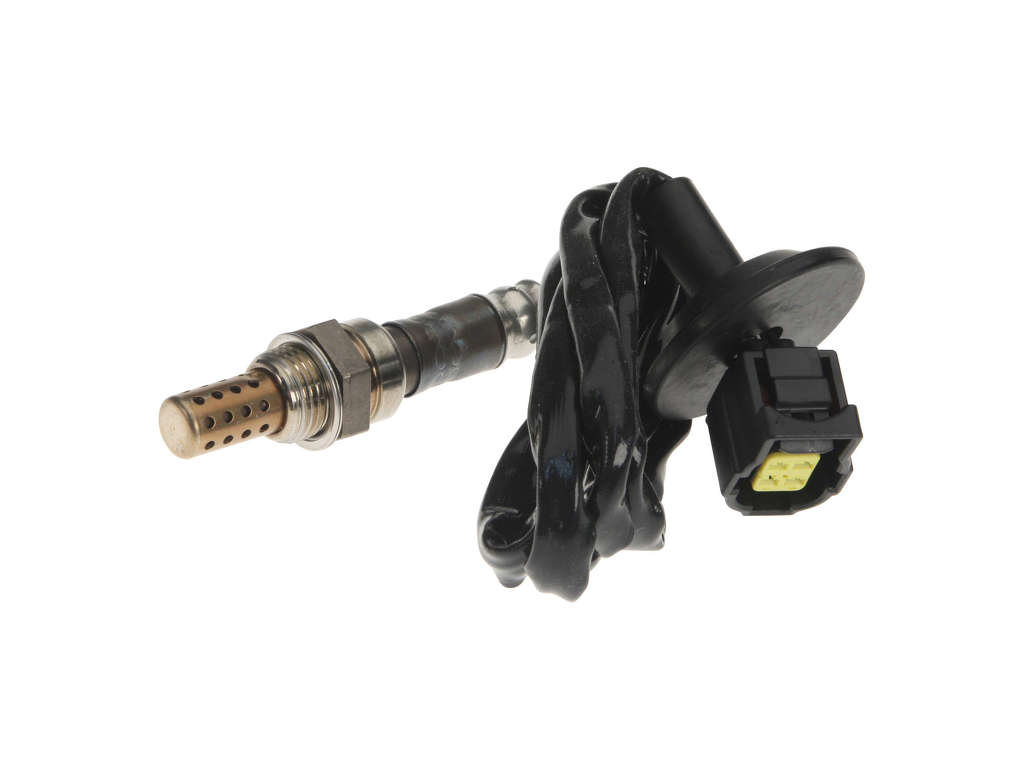
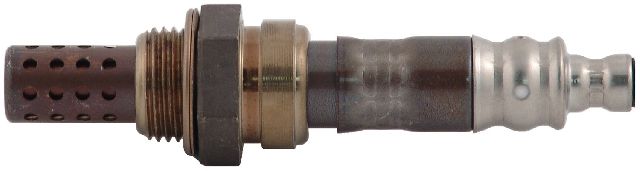
- Downstream Oxygen Sensor (Bank 1, Sensor 2)
(OEM #1588A144, 1588A171)— The internal heater element is the most common failure point that triggers the P0036 code.
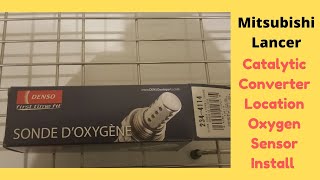
Trusted brands: Denso (e.g., part number 234-4114), NGK/NTK (e.g., part number 25693)
OEM price range: $150-$250
Aftermarket price range: $40-$120
Platform-Specific Known Issues
- Owner Experience with Aftermarket Sensors: Forum discussions among Lancer owners reiterate the importance of using high-quality, direct-fit O2 sensors from brands like Denso or NTK. While cheaper 'universal' sensors are available, they often require splicing wires and can lead to incorrect readings or premature failure, causing the P0036 code to return. Sticking to a reputable brand is a common recommendation.
Mechanic-Grade Diagnostic Values
- Rear O2 Sensor Heater Resistance — expected: 4.5 - 8.0 Ohms. Failure: Infinite resistance (OL) or a reading significantly outside the expected range.
- Heater Circuit Power Supply Voltage — expected: ~12V (Battery Voltage). Failure: A reading below 9V or no voltage indicates a problem with the MFI relay, fuse, or wiring.
- Sensor Ground Strap to Chassis Resistance — expected: Below 0.1 Ohms. Failure: Values above 0.1 Ω suggest a poor ground connection, which can cause intermittent issues.
Scan Tool Commands That Help
- Mitsubishi MUT-III: Live Data Monitoring — The dealer-level MUT-III scan tool can be used to monitor live data from the oxygen sensor, although for a simple heater circuit fault like P0036, basic multimeter tests are usually sufficient.
Wiring & Ground Locations
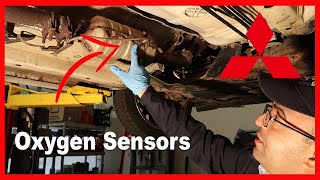
- Rear O2 Sensor Connector — The harness passes through a rubber grommet in the floorpan and the connector is located under the carpet beneath the front passenger seat.. 🎬 See this video on locating the Lancer's oxygen sensor This is the primary connection point to test the sensor and the vehicle-side harness. It can be a point of failure due to moisture if the grommet fails.
- Heater Power Supply — Power is supplied from the MFI (Multi-Port Fuel Injection) relay, which is located in the engine bay fuse/relay box.. A faulty MFI relay will prevent the 12V supply from reaching the O2 sensor heater, directly causing a P0036 code.
- Heater Control (Ground-Side) — The ECM controls the heater by switching the ground. For automatic transmission models, this is Pin 26 on the ECM connector. For manual transmission models, it is Pin 54.. A break in the wire between the ECM pin and the sensor connector will result in an open circuit for the heater.
- Engine Bay Fuse Box — Located on the driver's side of the engine compartment.. Contains the MFI relay and potentially a fuse labeled 'A/F Heater' that provides power to the O2 sensor heater circuit.
- Interior Fuse Panel — Located under the dashboard on the driver's side, behind a removable panel.. While the primary power fuse is in the engine bay, this panel should be checked for any related circuit issues.
OEM Part Supersession History
1588A171→1588A144— Part number consolidation and updates by Mitsubishi.
Heads up: 1588A144 is the current and widely accepted OEM part number for the rear oxygen sensor for the 2008-2017 Lancer range.
Diagnostic Flowchart
Other Known Issues on This Vehicle
Issues unrelated to this code that are worth knowing about as an owner of this generation:
- CVT Transmission Overheating and Failure 🔴 High — Common, especially on earlier models (2008-2012) or vehicles with over 60,000-80,000 miles. Can be exacerbated by lack of regular fluid changes.
- ASC System Service Required Warning 🟠 Medium — A frequent electronic issue, often caused by a failing ABS wheel speed sensor, a weak battery, or a faulty ABS/ASC control module. (Ref: There was a recall in the US for the ABS hydraulic unit on some models which can cause this warning.)
- Clear Coat Peeling 🟡 Low — Common on this generation, particularly on darker colors like red and black. Peeling often starts on horizontal surfaces like the roof, spoiler, and hood after several years.
- Radiator Fan Control Module Failure 🟠 Medium — A known issue that can cause the engine to overheat, especially in stop-and-go traffic, as the cooling fans will not activate.
- Front Subframe Corrosion 🔴 High — Primarily affects vehicles in regions where road salt is used. The front subframe can rust severely, compromising structural integrity. (Ref: A recall was issued for this problem on some early models of this generation.)
- Engine Stalling 🟠 Medium — Some owners report intermittent stalling at idle or when slowing down, which can be caused by a faulty MAP sensor or a clogged throttle body.
Used vs. New Parts: Buying Guide for This Vehicle
When a used part is the smart pick: It is almost never a good idea to buy a used oxygen sensor. They are wear-and-tear items with a finite lifespan, and a used part may fail shortly after installation, wasting time and money.
Donor-vehicle mileage cap: roughly under 30000 miles for the part to have meaningful remaining life.
What to inspect on the donor part:
- If considering used, ensure the donor vehicle has very low mileage.
- Inspect the wiring for any signs of brittleness, melting, or physical damage.
- Check the connector for corrosion or bent pins.
- Avoid sensors from vehicles that show signs of burning oil or coolant, as this contaminates the sensor.
OEM-only on this vehicle (don't cheap out):
- While not strictly OEM-only, it is critical to use a high-quality, direct-fit sensor. Cheap, no-name, or universal sensors that require splicing are known to cause persistent issues on this platform.
Aftermarket brands forum-validated for this vehicle:
- Denso (OEM supplier)
- NGK / NTK
Brands owners have reported issues with on this vehicle:
- Universal sensors requiring wire splicing
- Unbranded, low-cost sensors from online marketplaces
Real Owner Stories
Aggregated from forums and TSBs cited above. Mileages and costs reflect what owners reported in those sources.
2009 Mitsubishi Lancer ES — 124274 miles
Symptoms: Check engine light came up with code P0037.
What fixed it: The owner was advised to replace the rear O2 sensor downstream of the catalytic converter, using penetrating oil to deal with rust during the DIY replacement.
Source hint: reddit.com r/mitsubishi "Bank 1 sensor 2 location?"
2008-2017 Mitsubishi Lancer 4B11/4B12
Symptoms: Incorrect readings or premature failure after installing cheaper 'universal' sensors.
What fixed it: Replacing the universal sensor with a high-quality, direct-fit O2 sensor from brands like Denso or NTK.
Source hint: evolutionm.net and lancerforums.com discussions cited in Owner Experience with Aftermarket Sensors
Related OBD-II Codes
Frequently Asked Questions
What is the specific resistance range I should look for when testing the O2 sensor heater on my Lancer?
Is there a specific brand of oxygen sensor recommended for the Lancer to prevent P0036 from returning?
Which fuse should I check on my Lancer if I suspect a power issue to the O2 sensor?
Where is the sensor associated with P0036 located on the 2008-2017 Lancer?
Are there any recalls for the Lancer that might be related to electronic warnings or emissions?
Can I use an O2 sensor from a Mitsubishi Outlander on my Lancer?
Helpful Videos
We Have This Part in Stock

The information in this article is provided for general reference and educational purposes only. Vehicle specifications, procedures, and part compatibility can vary by production date, trim level, and region. Always consult your vehicle's factory service manual and verify part numbers before purchasing or performing repairs. Safety-critical components such as airbags, seat belts, and braking systems should be installed by a qualified professional.
- Mitsubishi Lancer:
- 🧭 Diagnostic Flowchart
- 🎬 Helpful Videos
- 🛍️ Shop This Part
- What's Unique About the 2008-2017 Mitsubishi Lancer
- Symptoms You May Notice
- Most Likely Causes
- Rare But Worth Checking
- Diagnosis Steps
- Parts You'll Likely Need
- Platform-Specific Known Issues
- Mechanic-Grade Diagnostic Values
- Scan Tool Commands That Help
- Wiring & Ground Locations
- OEM Part Supersession History
- Other Known Issues on This Vehicle
- Used vs. New Parts: Buying Guide for This Vehicle
- Real Owner Stories
- 2009 Mitsubishi Lancer ES — 124274 miles
- 2008-2017 Mitsubishi Lancer 4B11/4B12
- Related OBD-II Codes
- Frequently Asked Questions
- 🎟️ Get 5% Off