

P0037 on 2005-2015 Toyota Tacoma 4.0L V6: O2 Sensor Heater Circuit Causes and Fixes
On a 2nd Gen Tacoma with the 4.0L V6, P0037 almost always means the heater inside the downstream oxygen sensor on the passenger side has failed. Before replacing the sensor, check the 25A 'A/F HEATER' fuse in the engine bay. A new Denso sensor (the OEM supplier) costs around $50-$90 and is a DIY-friendly fix, though the old sensor can be seized with rust.
- P0037 on a 4.0L Tacoma points specifically to the heater circuit for the oxygen sensor on the passenger side, after the catalytic converter.
- The most likely cause is a failed oxygen sensor, which is a common and relatively inexpensive repair.
- Before replacing the sensor, always check the 25A 'A/F HEATER' fuse and the corresponding relay in the engine bay fuse box as a simple, low-cost first step.
- Use a quality Denso (part no. 234-4261) or NGK/NTK replacement sensor to avoid compatibility issues and repeat failures.
- This repair is DIY-friendly with basic tools and a 22mm O2 sensor socket, but the old sensor can sometimes be seized in the exhaust and require penetrating oil and significant effort to remove.
What's Unique About the 2005-2015 Toyota Tacoma
On the 1GR-FE V6 engine in the 2nd Generation Tacoma, the P0037 code is a straightforward and very common diagnostic issue. There are no widespread design flaws or complex platform-specific problems associated with this code. The most common cause is simply the end of the service life for the original oxygen sensor's heater element, a frequent occurrence on other Toyota models sharing this engine, like the 4Runner, FJ Cruiser, and Tundra. Owners consistently find that replacing the sensor itself, typically with an OEM-quality Denso part, resolves the issue without further complications.
Symptoms You May Notice
- Check Engine Light is on
- Vehicle will fail an emissions/smog test.
- Potential for slightly reduced fuel economy, with some owners reporting a noticeable drop of 4-5 MPG.
- On some models, the TRAC OFF light may also illuminate along with the Check Engine Light.
- Replacing the oxygen sensor without first checking the 25A 'A/F HEATER' fuse. A blown fuse will prevent a new sensor from working and the code will return immediately.
- Assuming the sensor is bad when the wiring harness has been damaged. A visual inspection of the harness for melting or chafing is critical.
Most Likely Causes
- Failed Bank 1, Sensor 2 Oxygen Sensor 🔴 High Probability → Shop Oxygen Sensor The internal heater element is a common wear item that fails due to constant heat cycles over many years and miles, often after 100,000 miles.
How to confirm: After confirming the fuse and relay are good, disconnect the sensor and measure the resistance between the two heater pins (usually the two same-colored wires, e.g., white or black). A reading of 'OL' (Open Loop/infinite resistance) on a multimeter confirms a burned-out heater. The expected resistance for a good sensor is typically between 11 and 16 ohms at room temperature (68°F/20°C).
Typical fix: Replace the Bank 1, Sensor 2 (passenger side, downstream) oxygen sensor. Using a 22mm (or 7/8") oxygen sensor socket is recommended. The old sensor is often seized by rust, so applying penetrating oil liberally beforehand is a crucial step.
Est. part cost: $50-$180 - Blown 'A/F HEATER' Fuse or Relay 🟡 Medium Probability A short circuit in the sensor's heater element or its wiring can cause the protective fuse to blow. This is a shared circuit, so a short in another O2 sensor can also blow this fuse.
How to confirm: Locate the fuse box in the engine compartment and inspect the fuse labeled 'A/F HEATER' (typically 25A). If the fuse is blown, replace it. The 'A/F HEATER' relay can also be tested by swapping it with an identical relay from a non-critical circuit (like the horn). If multiple O2 heater codes (e.g., P0031, P0051, P0057) are present simultaneously, a blown fuse or relay is the most likely cause.
Typical fix: Replace the blown fuse or faulty relay. If the new fuse blows immediately, a short circuit exists in the wiring or one of the oxygen sensors.
Est. part cost: $1-$25 - Damaged Wiring or Connector ⚪ Low Probability As a truck, the underbody wiring is exposed to road debris, moisture, and off-road hazards. The wiring harness can get snagged, melt on the hot exhaust, or be chewed by rodents. The connector itself is often located inside the cab under the passenger-side carpet/sill plate, requiring trim removal for access.
How to confirm: Visually inspect the entire wiring harness from the sensor to where it passes through the cabin floor for any signs of melting, chafing against the frame or driveshaft, corrosion in the connector, or other physical damage.
Typical fix: Repair the damaged section of wire or replace the connector pigtail. Sourcing a pigtail from a salvage yard is a cost-effective option.
Est. part cost: $10-$30
Rare But Worth Checking
- Failed Engine Control Module (ECM): → Shop Engine Control Module (ECM) This is extremely rare. A TacomaWorld forum user reported that after replacing sensors and checking wiring, the issue was traced to a failed driver chip on the ECM circuit board. The user was able to identify and order the specific driver chip (part number "497-2487-1-ND") and solder a new one onto the board to fix the issue. This should only be considered after all other possibilities have been exhaustively ruled out by a professional.
Diagnosis Steps
- Read the trouble code with an OBD-II scanner to confirm P0037 is present.
- Locate the main fuse box in the engine bay and inspect the 'A/F HEATER' fuse (typically 25A). Replace if blown.
- If the fuse is good, test the 'A/F HEATER' relay. You can swap it with a known-good, identical relay (e.g., from the horn circuit) to see if the fault clears.
- Safely raise and support the vehicle on jack stands. Locate the Bank 1, Sensor 2 oxygen sensor on the passenger side exhaust pipe, after the catalytic converter.
- Visually inspect the sensor's wiring harness for obvious damage like melting on the exhaust, chafing against the frame, or corrosion.
- Trace the harness to its connector. On many Tacomas, this requires pulling back the carpet and removing the plastic sill plate on the passenger side to access the connector inside the cab.
- Disconnect the sensor. With the ignition key ON (engine OFF), use a multimeter to check for battery voltage (approx. 12V) at the heater power wire in the harness-side connector.
- With the sensor still disconnected, switch the multimeter to Ohms (Ω) and measure the resistance across the two heater pins on the sensor itself. A reading of infinite resistance (Open Loop or 'OL') means the heater is burned out. A correct reading is between 11-16 Ω at room temperature.
- If the fuse, relay, wiring, and sensor resistance all check out, the issue may be in the ground control wire between the ECM and the sensor, or in a rare case, the ECM itself.
Parts You'll Likely Need
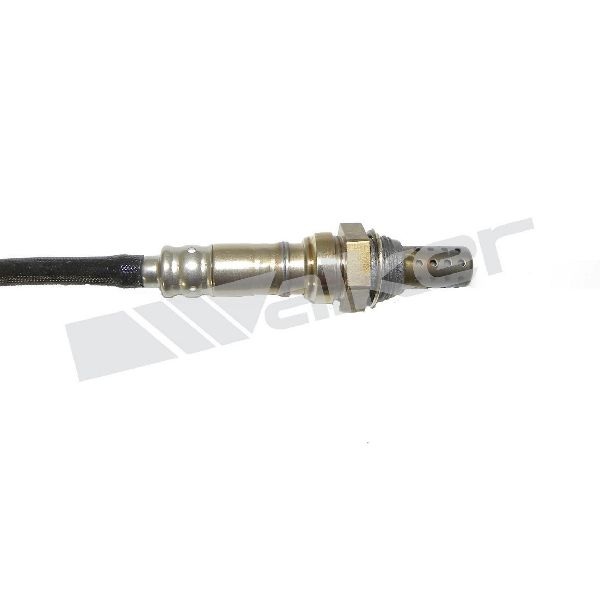
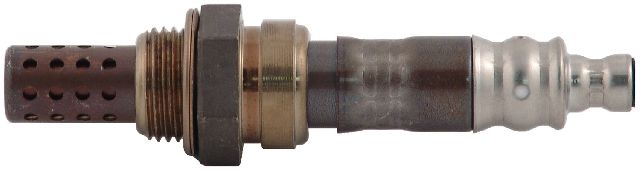
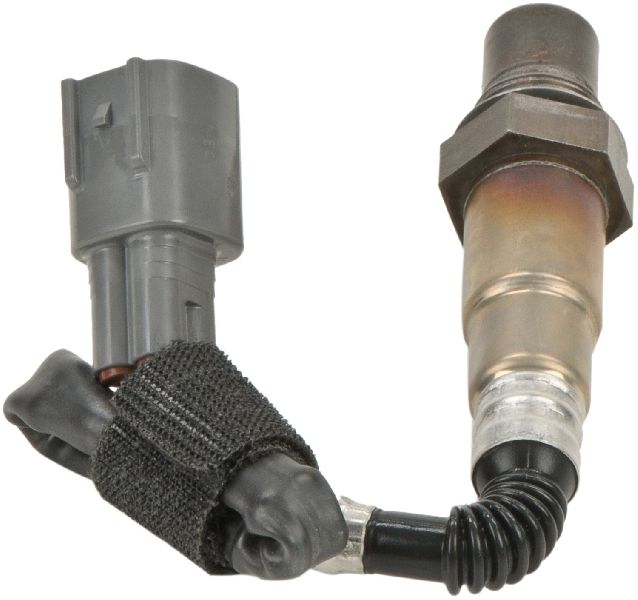
- Oxygen Sensor (Bank 1, Sensor 2)
(OEM #89465-04350)— The internal heater element fails from age and heat cycles, which is the direct cause of the P0037 code in the vast majority of cases.
Trusted brands: Denso (OEM Supplier), NGK/NTK, Bosch (reports of mixed compatibility with Toyota)
OEM price range: $130-$180
Aftermarket price range: $50-$90
Related Codes That Often Appear With This One
- P0031 (Bank 1 Sensor 1 Heater Circuit Low)
- P0051 (Bank 2 Sensor 1 Heater Circuit Low)
- P0057 (Bank 2 Sensor 2 Heater Circuit Low)
Platform-Specific Known Issues
- The electrical connector for the B1S2 sensor is often located inside the passenger cabin, under the carpet and sill plate trim, requiring interior disassembly to access for testing or replacement.
- Due to the truck's design and potential for use in harsh environments, the underbody sensor and wiring are highly susceptible to rust and physical damage. Seized sensors are a very common complaint during replacement.
Mechanic-Grade Diagnostic Values
- O2 Sensor Heater Element Resistance — expected: 11 - 16 Ω at 20°C (68°F). Failure: An open circuit ('OL' on a multimeter) or resistance far outside the specified range.
- Heater Circuit Current Draw (as monitored by ECM) — expected: Greater than 0.3 Amps when active.. Failure: The ECM sets code P0037 when the measured current is less than 0.3 Amps.
- Voltage at Harness Connector (Heater Power Pin to Ground) — expected: 9 - 14 V with Key On, Engine Off.. Failure: Less than 9V indicates a problem with the power supply (A/F Heater fuse, EFI Main relay, or wiring).
- Voltage at ECM Connector (Terminal HT2B to Body Ground) — expected: 9 - 14 V with Ignition ON.. Failure: Low or no voltage points to an issue in the wiring harness between the ECM and the sensor connector.
Scan Tool Commands That Help
- Toyota Techstream: Active Test: 'Control the O2 Sensor Heater' — After checking fuses and wiring, this command allows a technician to manually turn the B1S2 heater circuit on and off. By monitoring live data for heater voltage or current simultaneously, you can confirm if the ECM driver is functioning and if the circuit responds to commands, helping to isolate the fault between the ECM, wiring, and the sensor itself.
Wiring & Ground Locations
- B1S2 Sensor Connector — Inside the passenger cabin, under the plastic sill plate and carpet. The harness passes through a rubber grommet in the floor pan.. This is the primary access point for testing. Since it's inside the cab, it's protected from the elements, but requires interior trim removal to access for voltage and resistance checks.
- A/F HEATER Fuse — In the main fuse box located in the engine compartment, typically a 25A fuse.. This is the main power source for the heater circuits of all four oxygen/AF sensors. A failure here will usually set multiple heater codes (P0031, P0037, P0051, P0057).
- EFI MAIN Relay — In the engine compartment relay box (R/B No. 2).. This relay provides the B+ voltage to the A/F Heater circuit. A failure of this relay will cut power to the O2 sensor heaters.
- ECM Terminal HT2B — On the Engine Control Module (ECM) connector, which is typically located behind the glove compartment.. This is the specific pin on the ECM that controls the ground side for the Bank 1 Sensor 2 heater. Advanced diagnostics would involve checking for voltage or a pulsed signal at this pin to confirm the ECM driver is functioning.
Real Owner Repair Stories
- TacomaWorld Forum (2017 Toyota Tacoma (demonstrates issue is common across generations)) — Check Engine Light, ECM Malfunction light, 2wd-4wd change malfunction light.
❌ Tried (didn't work) Initial diagnosis pointed towards 4WD actuator.
✅ What actually fixed it The root cause was extensive rodent damage to the engine wiring harness. Wires for the camshaft sensor were chewed completely off, and a fuel line was also damaged. The fix required either a difficult harness repair or a complete harness replacement, with an estimated cost of $7,000.
OEM Part Supersession History
89465-04350→89465-04350 (current)— Part number has remained stable for the specified model years.
Heads up: Toyota uses different part numbers for the left (Bank 2, 89465-04340) and right (Bank 1, 89465-04350) downstream sensors, likely due to harness length differences. While some aftermarket sensors use a universal length, it is best to use the side-specific OEM part or a confirmed cross-reference like the Denso 234-4261 to ensure proper fitment.
Diagnostic Flowchart
Other Known Issues on This Vehicle
Issues unrelated to this code that are worth knowing about as an owner of this generation:
- Frame Rust Perforation 🔴 High — Very common, especially in cold climate states with high road salt usage. Affects all years of the generation. (Ref: Multiple Customer Support Programs (e.g., ZKA, ZH6) and Limited Service Campaigns (e.g., K0D) were issued, offering frame inspection, corrosion-resistant compound application, or full frame replacement depending on severity and vehicle age.)
- Rear Leaf Spring Fracture 🔴 High — Common on 2005-2011 4x4 and PreRunner models. Corrosion and stress can cause a leaf to snap. (Ref: Safety Recall E02 was issued because a broken leaf could puncture the fuel tank or a brake line. The remedy involved replacing the leaf spring packs.)
- Secondary Air Injection System Failure 🟠 Medium — More common on 2012-2015 models. The air pumps or switching valves can fail, leading to expensive repairs and check engine lights (e.g., P2440, P2442). (Ref: A warranty extension program was offered for this issue on some model years.)
- Head Gasket Failure (Early Models) 🟠 Medium — Reported to be more prevalent on early 1GR-FE engines, particularly from 2005-2006, potentially due to cooling system design.
- Front Crankshaft Seal Oil Leak 🟡 Low — Known to occur on engines built before 2008, causing minor oil leaks at the front of the engine. (Ref: A revised seal was reportedly used in later production models to address the issue.)
Used vs. New Parts: Buying Guide for This Vehicle
When a used part is the smart pick: For this repair, sourcing a used part is generally NOT recommended for the oxygen sensor itself, as it is a wear item with a finite lifespan. However, a used part is an excellent choice for a replacement wiring harness pigtail or connector if the original is damaged.
Donor-vehicle mileage cap: roughly under 150000 miles for the part to have meaningful remaining life.
What to inspect on the donor part:
- For a connector/pigtail: Ensure the locking tab is intact and not brittle.
- Check for any signs of corrosion (green or white powder) on the pins.
- Ensure there is at least 4-6 inches of clean, un-nicked wire attached to the pigtail for splicing.
Aftermarket brands forum-validated for this vehicle:
- Denso (OEM supplier for Toyota, highly recommended)
- NGK / NTK
Brands owners have reported issues with on this vehicle:
- Generic, unbranded 'no-name' sensors from online marketplaces are frequently reported to fail prematurely or be incompatible with Toyota's ECM logic.
Real Owner Stories
Aggregated from forums and TSBs cited above. Mileages and costs reflect what owners reported in those sources.
Toyota Tacoma 1GR-FE 4.0L V6 — ~115000 miles
Symptoms: The B1S2 sensor was found dangling under the vehicle, triggering the P0037 code.
What fixed it: Replacing the sensor with a Denso part resolved the code.
Source hint: TacomaWorld: 'P0037 Error code'
Toyota Tacoma 1GR-FE 4.0L V6
Symptoms: The owner reported a noticeable 4-5 MPG loss in fuel economy along with the P0037 code.
What fixed it: Replacement of the Bank 1, Sensor 2 oxygen sensor.
Source hint: TacomaWorld: 'P0037 code need help!'
Toyota Tacoma 1GR-FE 4.0L V6
Symptoms: A persistent P0037 code that remained even after standard troubleshooting of the sensor and wiring.
What fixed it: Repairing a failed driver chip on the ECM circuit board by soldering a new chip onto the board.
Source hint: TacomaWorld: 'Troubleshoot P0037...ending with : Replace ECM'
Related OBD-II Codes
Frequently Asked Questions
Where is the Bank 1, Sensor 2 connector located on my Tacoma? I can't find it under the truck.
My Tacoma has the P0037 code along with P0031, P0051, and P0057. Do I need to replace all four sensors?
Is there a specific resistance I should look for when testing the B1S2 sensor on my 1GR-FE engine?
Why did my TRAC OFF light come on at the same time as the Check Engine Light for P0037?
Are there any recalls for the 2005-2015 Tacoma that might be related to underbody sensor damage?
What brand of sensor should I use for the replacement?
Helpful Videos
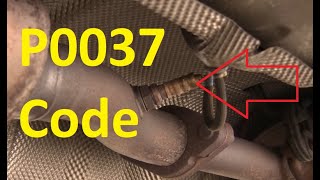
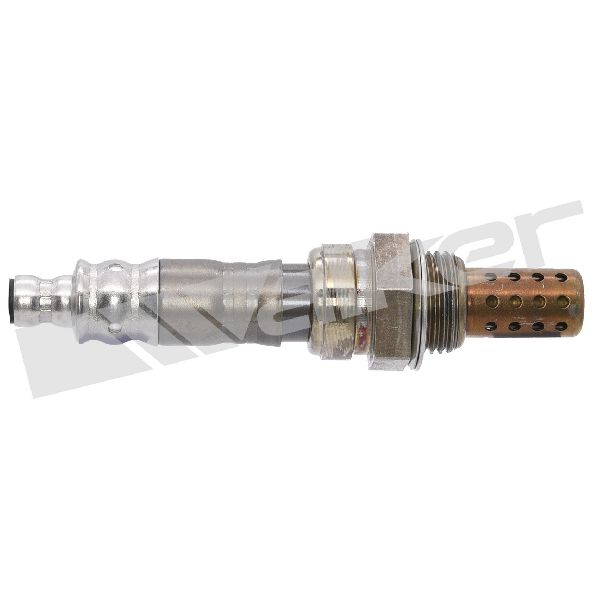
We Have This Part in Stock


The information in this article is provided for general reference and educational purposes only. Vehicle specifications, procedures, and part compatibility can vary by production date, trim level, and region. Always consult your vehicle's factory service manual and verify part numbers before purchasing or performing repairs. Safety-critical components such as airbags, seat belts, and braking systems should be installed by a qualified professional.
- Toyota Tacoma:
- 🧭 Diagnostic Flowchart
- 🎬 Helpful Videos
- 🛍️ Shop This Part
- What's Unique About the 2005-2015 Toyota Tacoma
- Symptoms You May Notice
- Most Likely Causes
- Rare But Worth Checking
- Diagnosis Steps
- Parts You'll Likely Need
- Related Codes That Often Appear With This One
- Platform-Specific Known Issues
- Mechanic-Grade Diagnostic Values
- Scan Tool Commands That Help
- Wiring & Ground Locations
- Real Owner Repair Stories
- OEM Part Supersession History
- Other Known Issues on This Vehicle
- Used vs. New Parts: Buying Guide for This Vehicle
- Real Owner Stories
- Toyota Tacoma 1GR-FE 4.0L V6 — ~115000 miles
- Toyota Tacoma 1GR-FE 4.0L V6
- Toyota Tacoma 1GR-FE 4.0L V6
- Related OBD-II Codes
- Frequently Asked Questions
- 🎟️ Get 5% Off