

P0068 on 2013-2019 Ford Taurus 3.5L: MAP/MAF Throttle Position Correlation Causes and Fixes
On a 2013-2019 Ford Taurus with the 3.5L V6, code P0068 is most often caused by a vacuum leak, a dirty electronic throttle body, or a dirty MAF sensor. Start by cleaning the throttle body and MAF sensor, and inspect for cracked vacuum hoses, particularly in the PCV system. If cleaning doesn't work, suspect a failed throttle body assembly.
- Start with the simplest and cheapest fixes: inspect for vacuum leaks and clean the MAF sensor and throttle body.
- A vacuum leak is a very common cause for P0068. A smoke test is the most reliable way to find it.
- The electronic throttle body on the 3.5L V6 is a known weak point; if cleaning doesn't help and other codes like P2112 are present, it may need replacement.
- Don't immediately replace sensors. The code indicates a *correlation* problem, which is often caused by a mechanical issue (like a leak or blockage) rather than a failed sensor.
What's Unique About the 2013-2019 Ford Taurus
The 3.5L Cyclone V6 in the sixth-generation Taurus uses an electronic throttle body that is known to be sensitive to oil and carbon buildup from the PCV system. This accumulation can disrupt airflow at the throttle plate, directly causing the sensor correlation error of P0068. While the code can be triggered by several issues, a dirty or failing throttle body is a particularly common point of failure on this and similar Ford platforms using this engine family. TSB 16-0139 was issued for this problem on 2015-2016 models, leading to a revised part. Additionally, Ford vehicles operating at high altitudes (above 3,500 feet) have been noted in manufacturer communications like TSB Bulletin #TSB 18-2370 to exhibit an illuminated MIL with only DTC P0068 stored, suggesting that environmental factors can sometimes trigger this correlation fault.
Symptoms You May Notice
- Check Engine Light is on
- Rough or unstable idle
- Hesitation or stumbling during acceleration
- Reduced engine power or entering 'limp mode'
- Increased fuel consumption
- Occasional stalling, especially when coming to a stop
- Difficulty starting the engine
- Replacing the MAP or MAF sensor without first checking for vacuum leaks or cleaning the throttle body. A sensor is often blamed when the real problem is unmetered air (vacuum leak) or restricted airflow (dirty throttle body).
Most Likely Causes
- Dirty or Failing Electronic Throttle Body (ETB) 🔴 High Probability → Shop Fuel Injection Throttle Body Oil vapor from the PCV system can bake onto the throttle plate and bore, restricting airflow and causing the plate to stick. Complete electronic failure is also a known issue, addressed by Ford TSB 16-0139 for 2015-2016 models, which led to a revised part.
How to confirm: Remove the intake ducting and inspect the throttle body bore and plate for significant black, greasy carbon/oil buildup. If cleaning doesn't resolve the issue, and codes like P2111 or P2112 are present, the ETB has likely failed electronically.
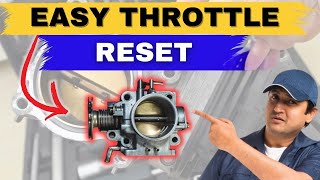
Typical fix: Clean the throttle body thoroughly with a dedicated cleaner and a soft brush or rag. Do not push the throttle plate open manually on an electronic unit. If the unit has failed, it must be replaced. A throttle relearn procedure is recommended after cleaning or replacement.
Est. part cost: $5 (cleaner) - $250 (new ETB) - Vacuum Leak 🔴 High Probability Rubber and plastic hoses in the PCV system and intake manifold can become brittle and crack with age and heat cycles. The intake manifold gaskets can also fail.
How to confirm: Visually inspect all vacuum lines, especially the PCV hoses, for cracks or disconnection. A smoke test is the most effective way to find small, hard-to-see leaks. Listening for a hissing sound at idle can also reveal a leak. You can also carefully spray carb cleaner around suspected leak points with the engine running; an RPM spike indicates a leak.
Typical fix: Replace the cracked hose or leaking gasket. PCV hoses are a common failure point.
Est. part cost: $10-$50 - Dirty or Faulty Mass Airflow (MAF) Sensor 🟡 Medium Probability → Shop Fuel Injection Air Flow Meter The sensor's delicate hot wire can become contaminated by dust, oil, or debris, especially if an aftermarket oiled air filter is used. This causes it to report incorrect airflow values to the PCM.
How to confirm: Remove the sensor from the intake tube and visually inspect the small wires for contamination. Use a scan tool to monitor the MAF reading (in g/s) at idle; it should be stable and within the manufacturer's specified range. A faulty sensor may provide erratic or out-of-range readings.
Typical fix: Clean the sensor using only dedicated MAF sensor cleaner spray. Do not touch the sensor wires. If cleaning does not restore proper function, the sensor must be replaced.
Est. part cost: $10 (cleaner) - $150 (new sensor) - Faulty Manifold Absolute Pressure (MAP) Sensor ⚪ Low Probability → Shop Manifold Absolute Pressure Sensor
How to confirm: Use a scan tool to monitor the MAP sensor reading with the key on, engine off (should match barometric pressure, around 4.5-5.0 volts) and at idle (should be a low pressure/high vacuum reading, around 1.0-1.8 volts). Compare these values to specifications.
Typical fix: Replace the MAP sensor.
Est. part cost: $40-$100
Rare But Worth Checking
- Damaged Wiring or Connectors: Corrosion or damage to the wiring for the MAP, MAF, or TPS sensors can cause intermittent or incorrect signals, leading to this code. Always inspect connectors for damage, corrosion, or water intrusion when diagnosing a sensor.
- Clogged Air Filter: A severely clogged engine air filter can restrict airflow enough to cause a discrepancy between sensor readings. This is easy to check and should be part of routine maintenance.
Diagnosis Steps
- Check for any other stored trouble codes to provide more diagnostic clues. Codes like P2111/P2112 point strongly to the throttle body.
- Perform a thorough visual inspection of the entire air intake system, from the air filter box to the intake manifold. Look for disconnected hoses, cracked plastic, or loose clamps.
- Pay close attention to all vacuum lines connected to the intake manifold, especially the PCV system hoses and the brake booster hose.
- Using a scan tool, view live data for the MAF (g/s), MAP (kPa or Volts), and TPS (%) sensors. Watch their values at idle and as you slowly increase engine RPM. The readings should be smooth and logical. For the TPS, voltage should climb smoothly from ~0.5V to ~4.5V with no dropouts.
- Remove the intake duct from the throttle body and inspect the throttle plate and bore. If significant carbon buildup is present, clean it with throttle body cleaner and a soft cloth or brush.
- If accessible, remove and inspect the MAF sensor. If dirty, clean it with dedicated MAF sensor cleaner and let it dry completely before reinstalling.
- If a vacuum leak is suspected but not found visually, perform a smoke test to pinpoint the source of the leak. Alternatively, carefully spray short bursts of carb cleaner near suspected leak areas (intake gaskets, vacuum hoses) while monitoring engine RPM for changes.
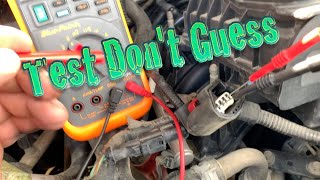
- If a sensor is still suspected, test its connector for proper voltage, ground, and signal integrity before replacing the component.
Parts You'll Likely Need
- Electronic Throttle Body
(OEM #DS7Z-9E926-H (replaces DS7Z-9E926-B))— This component is a common point of failure, either due to heavy carbon/oil buildup or internal electronic faults. TSB 16-0139 addresses this issue.
Trusted brands: Motorcraft, Bosch
OEM price range: $150-$250
Aftermarket price range: $100-$180 - Mass Airflow (MAF) Sensor
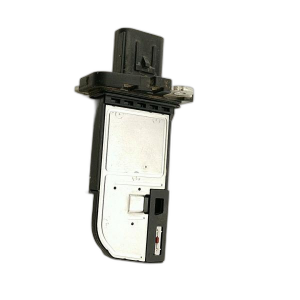
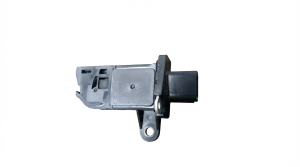
(OEM #AFLS-165)— Often becomes contaminated, leading to incorrect airflow readings. Cleaning is often sufficient, but replacement is the next step.
Trusted brands: Motorcraft, Hitachi, Denso
OEM price range: $120-$180
Aftermarket price range: $60-$120 - PCV Hose / Vacuum Line — These rubber hoses are a primary source of vacuum leaks as they become brittle and crack over time.
Trusted brands: Motorcraft
OEM price range: $20-$50
Aftermarket price range: $10-$30
Related Codes That Often Appear With This One
- P0171 / P0174 — These codes indicate a lean condition on Bank 1 and Bank 2. A vacuum leak is a primary cause of both P0068 and lean codes, as it introduces unmetered air that the MAF sensor doesn't see but the oxygen sensors detect.
- P2111 / P2112 — These codes indicate the throttle actuator is stuck open or closed. They often appear with P0068 when the root cause is a failing electronic throttle body assembly, as noted in Ford TSB 16-0139.
Technical Service Bulletins (TSBs) & Recalls
- Ford TSB 16-0139: Issued October 10, 2016, for various 2015-2016 Ford/Lincoln models including the Taurus with the 3.5L engine. It addresses an intermittent loss of power and wrench light with DTCs P2111, P2112, and/or P2119, which are often related to P0068. The fix involves replacing the electronic throttle body with an updated part.
- TSB Bulletin #TSB 18-2370: While specifically noting the 2.3L EcoBoost engine, this bulletin highlights that Ford vehicles operating in altitudes of 3,500 feet or higher may exhibit an illuminated MIL with only DTC P0068 stored in the powertrain control module.
Platform-Specific Known Issues
- Owner Experience: Throttle Body Cleaning Fix: → Shop Fuel Injection Throttle Body Multiple owners on forums like 'TaurusClub.com' and 'FordForums.com' report that a thorough cleaning of the electronic throttle body resolved their P0068 code and rough idle symptoms. The buildup is often described as a black, oily film that causes the throttle plate to stick slightly at low openings.
- Real-World Diagnosis: Cracked PCV Hose: → Shop PCV Valve Hose A common repair story involves finding a cracked PCV hose or elbow at the back of the intake manifold. This small leak is often hard to see but introduces enough unmetered air to trigger the P0068 correlation fault. A smoke test is the definitive way to find such a leak.
Mechanic-Grade Diagnostic Values
- Mass Airflow (MAF) Sensor Reading at Idle — expected: Approximately 4-7 g/s for a fully warmed-up 3.5L V6.. Failure: Readings significantly lower than 4 g/s, stuck at a specific value, or not increasing smoothly with RPM.
- Manifold Absolute Pressure (MAP) Sensor Voltage (KOEO) — expected: ~4.5 - 5.0 V (at sea level, should match Barometric Pressure).. Failure: Voltage that does not match the BARO sensor reading or is significantly lower.
- Manifold Absolute Pressure (MAP) Sensor Voltage (at Idle) — expected: 1.0 - 1.8 V.. Failure: Voltage is stuck high near the KOEO reading (e.g., above 4.0V) and does not drop when the engine is started.
- Throttle Position Sensor (TPS) Voltage Range — expected: A smooth climb from ~0.5V at idle to ~4.5V at wide-open throttle.. Failure: Any spikes, dropouts, or non-linear response as the pedal is depressed.
Scan Tool Commands That Help
- Manual Procedure / Scan Tool: Throttle Body Relearn / Idle Learn Reset — This procedure is critical after cleaning or replacing the electronic throttle body. The PCM has learned to compensate for airflow restrictions caused by carbon buildup, and it must be reset to learn the new, correct baseline airflow of the clean throttle body to prevent a high idle or recurrence of the P0068 code.
Real Owner Repair Stories
- ford-trucks.com forum user (Ford F-150 (engine unspecified, but common 3.5L issue)) — Intermittent stalling and P0068 code.
❌ Tried (didn't work) Replacing the MAF sensor, Checking for vacuum leaks
✅ What actually fixed it The final solution was replacing the entire electronic throttle body assembly. - NHTSA ODI #11559506: An owner reported experiencing a sudden loss of power and stalling, forcing them to pull to the shoulder. Upon checking the vehicle with a code reader, they found DTC P0068 stored.
OEM Part Supersession History
DS7Z-9E926-B→DS7Z-9E926-H— Updated part to address issues noted in TSB 16-0139, likely improving reliability against electronic failure or carbon buildup sensitivity.
Model Year Variations Within This Range
- 2013-2019: The 2013 model year marked a significant refresh for the Taurus. The standard 3.5L V6 engine was updated to produce more power (288 hp vs 263 hp) and better efficiency than the 2010-2012 models. While the fundamental causes of P0068 remain the same, parts and procedures in this guide are specific to the updated 2013-2019 generation.
Diagnostic Flowchart
Other Known Issues on This Vehicle
Issues unrelated to this code that are worth knowing about as an owner of this generation:
- Internal Water Pump Failure 🔴 High — Common after 80,000-150,000 miles. Failure can occur with little warning. (Ref: No recall, but it is a widely documented design flaw. The pump is driven by the timing chain, and a seal failure leaks coolant directly into the engine oil, leading to catastrophic engine damage.)
- AWD Power Transfer Unit (PTU) Failure 🔴 High — Common on AWD models, especially those with over 60,000 miles. The unit is located near the hot exhaust, causing the 'lifetime' fluid to break down. (Ref: No recall, but Dorman and other aftermarket companies offer improved replacement units with drain plugs. Symptoms include grinding noises on turns or a burning/propane smell.)
- Front Strut Mount Bearing Failure 🟠 Medium — Relatively common; owners report failures even with OEM replacement parts. (Ref: null)
- Blend Door Actuator Failure 🟡 Low — Very common failure, especially on the passenger side. Leads to loss of temperature control on one side or a persistent clicking noise from the dashboard. (Ref: null)
Used vs. New Parts: Buying Guide for This Vehicle
When a used part is the smart pick: A used electronic throttle body (ETB) can be a cost-effective option, provided it is from a lower-mileage, late-model donor vehicle (ideally 2017+ to be further from the TSB range). Given the high failure rate, a used part is a calculated risk. Used sensors (MAF, MAP) are generally acceptable if confirmed to be in good working order. Simple components like vacuum hoses or intake ducting are excellent candidates for used parts.
Donor-vehicle mileage cap: roughly under 75000 miles for the part to have meaningful remaining life.
What to inspect on the donor part:
- For a throttle body, inspect the throttle bore for excessive scoring or carbon buildup that suggests a hard life.
- Check the electrical connector pins on any sensor or the ETB for corrosion or damage.
- Ask for the donor vehicle's VIN to check its year and confirm it's outside the main TSB-affected years (2015-2016).
- Ensure any hoses are still pliable and not brittle or cracked.
OEM-only on this vehicle (don't cheap out):
- Electronic Throttle Body: While some aftermarket brands exist, the OEM Motorcraft part is strongly recommended due to the sensitivity of the electronics and the known issues addressed by Ford's part revisions. Using a cheap aftermarket unit may lead to a quick return of the code.
- Mass Airflow (MAF) Sensor: Similar to the throttle body, many technicians and forum users recommend sticking with an OEM Motorcraft MAF sensor to avoid calibration and compatibility issues that are common with cheaper aftermarket alternatives.
Aftermarket brands forum-validated for this vehicle:
- Bosch (for Throttle Body and Sensors)
- Denso (for MAF Sensor)
- Hitachi (for MAF Sensor)
Brands owners have reported issues with on this vehicle:
- Unbranded or 'white-box' electronic parts from online marketplaces are a significant risk and often fail prematurely or are out of spec from the start.
Real Owner Stories
Aggregated from forums and TSBs cited above. Mileages and costs reflect what owners reported in those sources.
2015 Ford Taurus 3.5L
Symptoms: Intermittent loss of power and illuminated wrench light.
What fixed it: Replacement of the electronic throttle body with a revised, updated part as specified in TSB 16-0139.
Source hint: Ford TSB 16-0139
2013-2019 Ford Taurus 3.5L
Symptoms: Rough idle and P0068 code; black, oily film found causing the throttle plate to stick slightly at low openings.
What fixed it: A thorough cleaning of the electronic throttle body using dedicated cleaner and a soft cloth.
Source hint: TaurusClub.com thread discussing P0068 and similar codes
2013-2019 Ford Taurus 3.5L
Symptoms: P0068 correlation fault caused by unmetered air entering the system; leak was difficult to see visually.
What fixed it: Replacing a cracked PCV hose/elbow located at the back of the intake manifold after identifying it with a smoke test.
Source hint: Real-World Diagnosis: Cracked PCV Hose
NHTSA Reported Incident
Symptoms: Sudden loss of engine power while driving, necessitating a move to the shoulder; code reader identified P0068.
What fixed it: This report (NHTSA ODI #11559506) highlights a recurring issue where the vehicle enters a dangerous state due to the correlation fault.
Source hint: NHTSA ODI #11559506
Related OBD-II Codes
Frequently Asked Questions
Does Ford TSB 16-0139 apply to my 2015 Ford Taurus 3.5L?
Can I manually open the throttle plate on my 2013-2019 Taurus to clean it?
What is the most common cause of P0068 on the Ford 3.5L Cyclone V6?
Is there a specific procedure I should follow after cleaning the throttle body?
How can I check if my Taurus has a vacuum leak causing this code?
Will an aftermarket oiled air filter affect my Taurus's MAF sensor?
Helpful Videos

Used OEM Parts in Stock
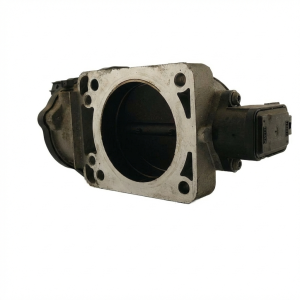
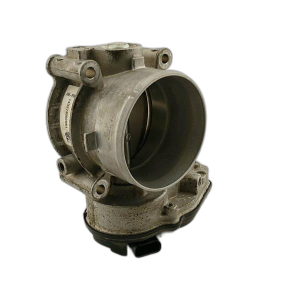
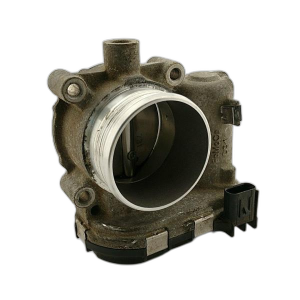
New Aftermarket Parts Available

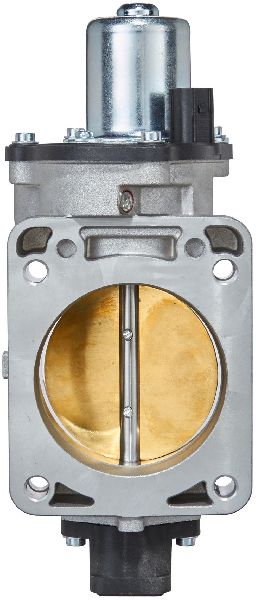

The information in this article is provided for general reference and educational purposes only. Vehicle specifications, procedures, and part compatibility can vary by production date, trim level, and region. Always consult your vehicle's factory service manual and verify part numbers before purchasing or performing repairs. Safety-critical components such as airbags, seat belts, and braking systems should be installed by a qualified professional.
- Ford Taurus:
- 🧭 Diagnostic Flowchart
- 🎬 Helpful Videos
- 🛍️ Shop This Part
- What's Unique About the 2013-2019 Ford Taurus
- Symptoms You May Notice
- Most Likely Causes
- Rare But Worth Checking
- Diagnosis Steps
- Parts You'll Likely Need
- Related Codes That Often Appear With This One
- Technical Service Bulletins (TSBs) & Recalls
- Platform-Specific Known Issues
- Mechanic-Grade Diagnostic Values
- Scan Tool Commands That Help
- Real Owner Repair Stories
- OEM Part Supersession History
- Model Year Variations Within This Range
- Other Known Issues on This Vehicle
- Used vs. New Parts: Buying Guide for This Vehicle
- Real Owner Stories
- 2015 Ford Taurus 3.5L
- 2013-2019 Ford Taurus 3.5L
- 2013-2019 Ford Taurus 3.5L
- NHTSA Reported Incident
- Related OBD-II Codes
- Frequently Asked Questions
- 🎟️ Get 5% Off