

P0069 on 2006-2010 Jeep Commander 3.0L CRD: MAP/BARO Correlation Explained
P0069 on your Jeep Commander 3.0L CRD means the MAP and Barometric Pressure sensors disagree. It's often a faulty MAP sensor (a ~$50-$100 part), but on this specific engine, it can also indicate a more serious issue with the Barometric sensor located inside the engine computer (ECU). Diagnosis is key before replacing parts.
- P0069 means the MAP and BARO sensor readings don't match when they should.
- Before replacing any parts, use a scanner to check the MAP and BARO readings with the key on and engine off to see which one is incorrect.
- The most likely cause is a faulty MAP sensor, which is a DIY-friendly replacement.
- BE AWARE: On this specific Jeep, the BARO sensor is inside the engine computer (ECU). If the MAP sensor is good, you may need a costly ECU repair or replacement.
- Do not automatically replace the MAP sensor without diagnosis, as the problem could be the much more expensive ECU.
What's Unique About the 2006-2010 Jeep Commander
The key challenge with the P0069 code on the Jeep Commander's 3.0L CRD (a Mercedes-Benz OM642 engine) is the location of the Barometric Pressure (BARO) sensor. Unlike many vehicles where both the MAP and BARO sensors are separate and easily replaceable, on this engine the BARO sensor is integrated *inside* the Engine Control Unit (ECU). This means that while the problem could be a simple MAP sensor replacement, it could also point to a failure within the ECU itself, making diagnosis and repair potentially much more complex and costly. Forum users have repeatedly confirmed this is a major diagnostic hurdle.
Symptoms You May Notice
- Check Engine Light is on
- Flashing red lightning bolt symbol on the dash
- Reduced engine power or 'limp mode'
- Rough or unstable idle
- Hesitation or lag during acceleration
- Decreased fuel economy
- Occasional engine stalling
- Difficulty starting, especially when cold
- Replacing the MAP sensor without confirming it's the faulty component. If the BARO sensor inside the ECU is the actual problem, a new MAP sensor will not fix the issue and the code will return.
Most Likely Causes
- Faulty Manifold Absolute Pressure (MAP) Sensor 🔴 High Probability → Shop Manifold Absolute Pressure Sensor MAP sensors are exposed to engine conditions and can fail over time due to heat, vibration, or contamination from oil or carbon. The OM642 engine is known for oil leaks from the turbo inlet seal which can contaminate components in the vicinity.
How to confirm: With a scan tool, compare the MAP sensor reading to the BARO sensor reading with the Key On, Engine Off. If the BARO reading is correct for your altitude but the MAP reading is skewed, the MAP sensor is likely faulty. You can also test the sensor's voltage output against its specifications. A leaking O-ring on the sensor itself can also cause a vacuum leak and faulty readings.
Typical fix: Replace the MAP sensor. It is located on the intake manifold and is relatively easy to access and replace.
Est. part cost: $50-$150 - Faulty Engine Control Unit (ECU) / Internal Barometric Sensor 🟡 Medium Probability The BARO sensor is located inside the ECU on the OM642 engine. Corrosion or failure of the internal sensor or its connections on the ECU's circuit board will cause this code. This is a known, and feared, issue on this platform. Forum discussions suggest that corrosion on the ECU's internal MPC chip is a common failure point.
How to confirm: This is diagnosed by exclusion. If the MAP sensor and its wiring have been tested and confirmed to be good, the fault lies with the BARO sensor. Since it's internal to the ECU, the ECU itself is the point of failure. This requires professional diagnosis, often involving opening the ECU for visual inspection of the board and the 8-legged golden BARO sensor for corrosion or sending it to a specialist for testing.
Typical fix: The ECU must be repaired by a specialist or replaced entirely. A replacement ECU will require programming to your vehicle's VIN. Some owners attempt to clean corrosion from the board, but this is a high-risk repair.
Est. part cost: $500-$1500+ - Wiring or Connector Issue ⚪ Low Probability Engine bay vibrations and heat can cause wiring to fray or connectors to become loose or corroded over time. The MAP sensor wiring harness can sometimes come unclipped and get damaged by the serpentine belt.
How to confirm: Visually inspect the wiring harness and connector for the MAP sensor. Look for any signs of damage, chafing, or corrosion on the pins. Use a multimeter to check for continuity and proper voltage (typically a 5V reference) at the connector.
Typical fix: Repair the damaged section of wiring or clean/replace the connector.
Est. part cost: $10-$50
Rare But Worth Checking
- Clogged Air Filter or Intake Restriction: → Shop Air Cleaner Assembly A severely clogged air filter could theoretically affect the pressure reading in the manifold enough to cause a discrepancy, though it's less likely to be the root cause of a KOEO (Key On, Engine Off) correlation failure.
- Vacuum Leak: A significant vacuum leak from a cracked hose or bad gasket could throw off the MAP sensor's readings while the engine is running, though it is less likely to cause the KOEO correlation fault. A bad O-ring on the MAP sensor itself is a possible source.
Diagnosis Steps
- Connect an OBD-II scanner and verify that P0069 is present. Note any other codes.
- Access the live data stream on the scanner.
- With the engine OFF but the ignition ON (KOEO), observe the readings for both the MAP sensor and the BARO sensor.
- The two readings should be very close to each other (within a small tolerance specified by the manufacturer). The BARO reading should correspond to your current altitude (e.g., around 14.7 psi / 101 kPa at sea level, decreasing with higher altitude).
- If the MAP sensor reading is significantly different from a plausible BARO reading, the MAP sensor is the primary suspect.
- If the BARO sensor reading is clearly incorrect for your altitude (e.g., reading 10 psi at sea level), the problem is with the BARO sensor, which is inside the ECU.
- Visually inspect the MAP sensor's electrical connector and wiring for any damage, corrosion, or loose connections. Ensure the harness is properly secured away from the serpentine belt.
- If the wiring looks good, test the MAP sensor circuit for the correct voltage (usually a 5V reference), ground, and signal using a multimeter.
- If the MAP sensor has proper power and ground but the signal is incorrect, the MAP sensor is faulty and should be replaced.
- If the MAP sensor and its wiring test good, the fault is almost certainly with the BARO sensor inside the ECU. The ECU will need to be sent for repair or replaced and programmed.
Parts You'll Likely Need
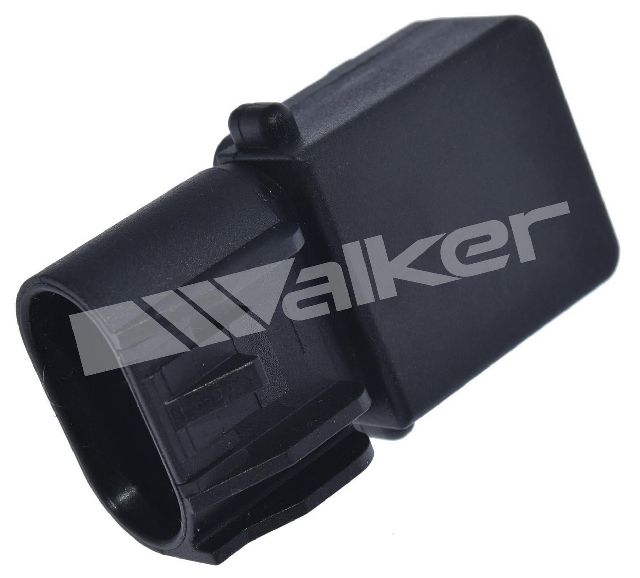
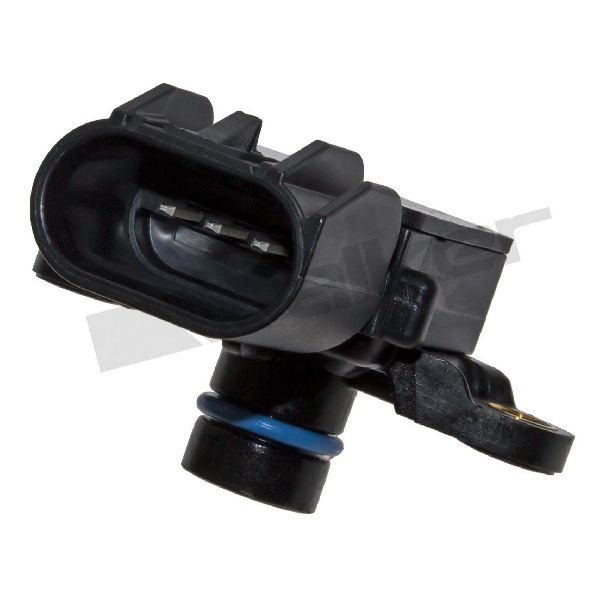
- Manifold Absolute Pressure (MAP) Sensor
(OEM #5117545AB)— This is the most common and accessible part to fail that causes this code. It directly measures the pressure in the intake manifold.
Trusted brands: Mopar, Bosch, NGK, SKP
OEM price range: $100-$180
Aftermarket price range: $50-$100 - Engine Control Unit (ECU) — Required if the internal Barometric Pressure (BARO) sensor has failed, which is a known issue on this specific 3.0L CRD engine. Repair is often more feasible than replacement.
Trusted brands: Mopar (OEM), ECU Repair Services (e.g., SIA Electronics, Module Experts)
OEM price range: $1000-$2000+
Aftermarket price range: Repair services typically range from $200-$600.
Related Codes That Often Appear With This One
- P0299 — A faulty MAP sensor can provide incorrect boost pressure readings to the ECU, potentially triggering a P0299 (Turbocharger Underboost) code.
- P0107 — This code indicates MAP Sensor Circuit Low Input. A failing MAP sensor or wiring issue can trigger both P0107 and P0069 simultaneously.
- P2010 — This code relates to the intake manifold runner control. Issues in the intake system, such as a failing swirl motor (a common OM642 problem), can sometimes occur alongside pressure sensor faults.
Platform-Specific Known Issues
- The most significant issue for this vehicle and code is the integration of the barometric pressure sensor within the Engine Control Unit (ECU). This design choice means a simple sensor failure can necessitate a complex and expensive ECU repair or replacement.
- A user on MHH AUTO forum with a 2007 Commander 3.0 CRD reported having a persistent P0069 code even after replacing the MAP, MAF, and another air pressure sensor. The community pointed directly to the internal ECU BARO sensor or corrosion on the ECU's main processor chip as the most probable cause.
Mechanic-Grade Diagnostic Values
- MAP Sensor 5V Reference Voltage — expected: Approximately 5.0 Volts DC with Key On, Engine Off.. Failure: A reading significantly lower than 5V or 0V indicates a wiring issue or a fault in the ECU's 5V supply circuit.
- MAP Sensor Ground Circuit — expected: Approximately 12.0 Volts DC when measuring from the battery positive terminal to the sensor's ground pin.. Failure: A reading significantly lower than battery voltage indicates a poor ground connection.
- MAP Sensor Operating Pressure Range (Bosch P/N 0281002845) — expected: 0.2 to 3.0 bar (20 to 300 kPa).. Failure: A sensor reading outside this range, or a static reading that doesn't change with engine vacuum, indicates a failed sensor.
- MAP Sensor Operating Voltage Range (Bosch P/N 0281002845) — expected: 250 to 4750 mV (0.25 to 4.75 V).. Failure: A voltage reading outside this range at the signal wire indicates a failed sensor.
Scan Tool Commands That Help
- Chrysler WiTech or Mercedes STAR (for OM642 engine functions): Reset adaptations / Re-adapt air cleaners — After replacing air filters or other major intake components on the OM642 engine, this function should be performed to reset the ECU's learned values for airflow, preventing potential performance issues or fault codes.
Wiring & Ground Locations
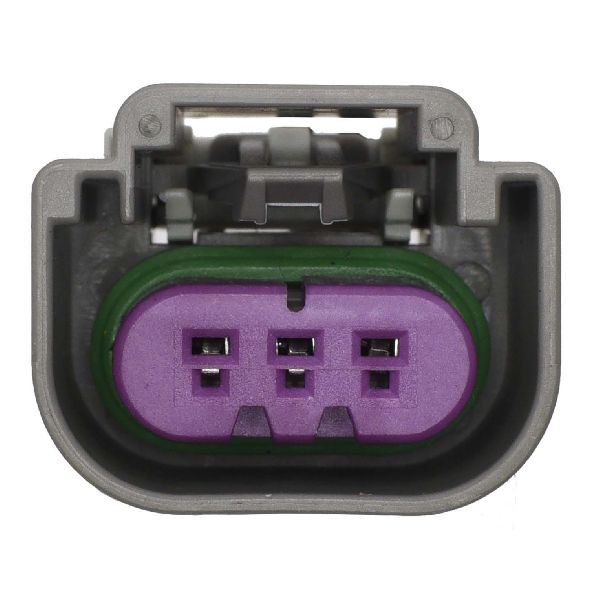
- MAP Sensor Connector — On the MAP sensor itself, which is mounted on the intake manifold.. The 4-pin connector provides the sensor with power, ground, and returns the pressure and temperature signals to the ECU. A loose, corroded, or damaged connector or wiring is a common cause of sensor correlation faults. The pins are typically: 5V reference, ground, pressure signal, and temperature signal.
Real Owner Repair Stories
- MHH AUTO Forum (2007 Jeep Commander 3.0L CRD) — Persistent P0069 fault code and a flashing red lightning bolt symbol on the dash.
❌ Tried (didn't work) Replacing the Turbocharger, Replacing the Air Pressure Sensor (P/N 56044591AA), Replacing the MAP Sensor (P/N 5117545AB), Replacing the Mass Airflow Sensor (P/N 53013673AA)
✅ What actually fixed it The diagnosis concluded the fault was the internal Barometric Pressure sensor located inside the ECU. The forum identified the most probable cause as corrosion on the ball connections of the main MPC chip on the ECU circuit board, requiring ECU-level repair. - JustAnswer (2006 Chrysler (with 3.0L CRD engine)) — P0069 code that would not clear.
❌ Tried (didn't work) Replacing the MAP sensor, Plugging the EGR vacuum solenoid, Replacing the MAF sensor
✅ What actually fixed it The final diagnosis pointed to a problem with the MAP sensor signal itself being stuck at a fixed value (254 kPa) even with the engine running, indicating either a wiring fault or an internal sensor failure that the initial replacement did not solve (possibly due to a faulty new part or an underlying wiring issue).
"I Checked Everything" — The Actual Cause
- Because P0069 is a Key On, Engine Off (KOEO) electrical correlation check, a smoke test for vacuum leaks is typically not performed. The common failure pattern is not 'smoke test clean, but actually X,' but rather 'replaced MAP sensor, but actually the ECU'. Technicians who replace the external MAP sensor based on the code definition without verifying live data often find the code returns immediately, because the true fault lies with the non-replaceable BARO sensor inside the ECU.
When the Usual Fixes Don't Work
- Multiple owner accounts confirm that simply replacing the MAP sensor, even with a genuine OEM part, often fails to resolve the P0069 code on the 3.0L CRD engine. The most common counter-narrative to a simple sensor swap is the discovery that the barometric pressure sensor, which is internal to the ECU, has failed. This requires a much more involved repair, either by sending the original ECU to a specialist for board-level repair or by sourcing a used ECU and having it cloned (transferring the VIN and immobilizer data from the original). Ignoring this vehicle-specific possibility is the most common reason for repeat repairs and misdiagnosis.
OEM Part Supersession History
Bosch 0281002845→Bosch 0281006076— Standard part revision and consolidation by the manufacturer.
Heads up: The new part number (0281006076) is a direct replacement for the original and also supersedes other numbers like 0281002437 and 0281002680. They are fully interchangeable.
Model Year Variations Within This Range
- 2006-2009: OM642 engines manufactured before 2010 were known to have a higher incidence of oil leaks from the oil cooler seals located in the engine valley. While not a direct cause of P0069, this oil leakage can saturate and contaminate nearby sensors and wiring, including the MAP sensor, potentially increasing the failure rate of this part on earlier models of the Commander.
Diagnostic Flowchart
Other Known Issues on This Vehicle
Issues unrelated to this code that are worth knowing about as an owner of this generation:
- Oil Cooler Seal Leak 🔴 High — Very common. The seals are made of a rubber that hardens and degrades over time, causing oil to leak into the engine valley. Often occurs after 80,000 miles.
- Swirl Motor Failure 🔴 High — Extremely common. The electronic swirl motor, located in the engine valley, often fails due to oil contamination from a leaking turbo inlet seal. This causes a check engine light and limp mode.
- Turbo Inlet Seal Leak ('Elephant Hose') 🟠 Medium — Very common. The seal on the turbo air inlet pipe hardens and leaks oil, which drips directly onto the swirl motor below, causing it to fail. A popular DIY fix is the 'Elephant Hose Mod' which re-routes the crankcase vent.
- Glow Plug / Glow Plug Module Failure 🟠 Medium — Common. The glow plug controller module is prone to failure, which will set a code and cause hard starting in cold weather. The glow plugs themselves can also seize in the cylinder head, making replacement difficult.
- Plastic Turbo Resonator Failure 🟡 Low — Common. The plastic resonator on the turbo outlet is known to crack or split, causing a boost leak, noise, and reduced power. Aftermarket silicone hose replacements are a popular upgrade.
Used vs. New Parts: Buying Guide for This Vehicle
When a used part is the smart pick: A used part is a smart choice for the Engine Control Unit (ECU). If the internal BARO sensor has failed, purchasing a used ECU with a matching part number and having it 'cloned' by a specialist service is significantly cheaper than buying and programming a new one from the dealer. A used MAP sensor is also a reasonable choice if it can be tested or is from a low-mileage donor.
Donor-vehicle mileage cap: roughly under 100000 miles for the part to have meaningful remaining life.
What to inspect on the donor part:
- For a used ECU, ensure the part number matches your original ECU exactly.
- Verify the donor vehicle was not in a flood or fire.
- When buying a used MAP sensor, inspect the O-ring for pliability and the sensor tip for heavy oil or carbon contamination.
OEM-only on this vehicle (don't cheap out):
- While not strictly 'OEM-only', using a Bosch-branded MAP sensor is highly recommended as they are the original equipment supplier. Low-quality unbranded sensors are a common source of persistent issues.
Aftermarket brands forum-validated for this vehicle:
- Bosch (for the MAP sensor, as it is the OEM supplier)
- SIA Electronics, Karman Auto, MoPower Calibrations (for ECU repair/cloning services)
Brands owners have reported issues with on this vehicle:
- Unbranded, no-name MAP sensors from online marketplaces should be avoided as their calibration and reliability are often questionable.
Real Owner Stories
Aggregated from forums and TSBs cited above. Mileages and costs reflect what owners reported in those sources.
2007 Jeep Commander 3.0L CRD
Symptoms: A persistent P0069 code remained even after replacing the MAP, MAF, and another air pressure sensor.
What fixed it: The issue was diagnosed by the community as a faulty internal BARO sensor or corrosion on the ECU's main processor chip, requiring ECU repair or replacement.
Source hint: MHH AUTO Forum (mhhauto.com)
2006-2010 Jeep Commander 3.0L CRD
Symptoms: The vehicle had a P0069 code.
What fixed it: Replacing the MAP sensor did not fix the code, indicating a more complex underlying issue consistent with the known ECU problems on this engine.
Source hint: Jeepmania Forum (Jeepmania)
Related OBD-II Codes
Frequently Asked Questions
I replaced the MAP sensor on my Commander 3.0L CRD, but the P0069 code is still on. What's the next step?
Why is fixing a P0069 code on my Jeep Commander potentially so expensive?
How can I test the sensors for P0069 on my Jeep without just replacing parts?
Is a wiring problem a likely cause for P0069 on this vehicle?
I heard the BARO sensor is inside the ECU. Can I fix it myself?
Do other vehicles with the same 3.0L CRD engine have this same P0069 ECU problem?
We Have This Part in Stock


The information in this article is provided for general reference and educational purposes only. Vehicle specifications, procedures, and part compatibility can vary by production date, trim level, and region. Always consult your vehicle's factory service manual and verify part numbers before purchasing or performing repairs. Safety-critical components such as airbags, seat belts, and braking systems should be installed by a qualified professional.
- Jeep Commander:
- 🧭 Diagnostic Flowchart
- 🛍️ Shop This Part
- What's Unique About the 2006-2010 Jeep Commander
- Symptoms You May Notice
- Most Likely Causes
- Rare But Worth Checking
- Diagnosis Steps
- Parts You'll Likely Need
- Related Codes That Often Appear With This One
- Platform-Specific Known Issues
- Mechanic-Grade Diagnostic Values
- Scan Tool Commands That Help
- Wiring & Ground Locations
- Real Owner Repair Stories
- "I Checked Everything" — The Actual Cause
- When the Usual Fixes Don't Work
- OEM Part Supersession History
- Model Year Variations Within This Range
- Other Known Issues on This Vehicle
- Used vs. New Parts: Buying Guide for This Vehicle
- Real Owner Stories
- 2007 Jeep Commander 3.0L CRD
- 2006-2010 Jeep Commander 3.0L CRD
- Related OBD-II Codes
- Frequently Asked Questions
- 🎟️ Get 5% Off