

P0073 on 2013-2019 Ford Escape: Ambient Air Temperature Sensor Causes and Fixes
On a 2013-2019 Ford Escape, code P0073 is most often caused by broken wiring or a corroded connector for the Ambient Air Temperature (AAT) sensor, located in the front grille. Before replacing the sensor, always inspect the two wires leading to it, as a simple wire repair is a very common fix. The sensor's exposed location makes it vulnerable to damage from road debris, car washes, and snow.
- P0073 on a 2013-2019 Escape points to an issue with the Ambient Air Temperature (AAT) sensor circuit, almost always an open circuit.
- Always inspect the wiring and connector for the AAT sensor before buying a new part. A broken wire is the most likely cause.
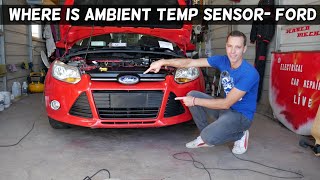
- The sensor is located in the lower driver's side of the front grille and is accessed by removing the cornering lamp or reaching from underneath.
- This is a DIY-friendly repair that typically costs under $50 and can be completed in about an hour.
- Driving with this code is safe, but your automatic A/C may not work until it is fixed.
What's Unique About the 2013-2019 Ford Escape
On the third-generation Ford Escape, the AAT sensor is located in the lower part of the front grille, making it highly susceptible to damage from road debris, water, and ice. The most common point of failure is not the sensor itself, but the thin wires leading to its connector, which are known to break or corrode. Owners frequently find a severed wire right at the back of the connector, which will trigger a P0073 code while the sensor itself is still perfectly functional. This issue is also common on its platform mate, the Ford Focus.
Symptoms You May Notice
- Check Engine Light is illuminated
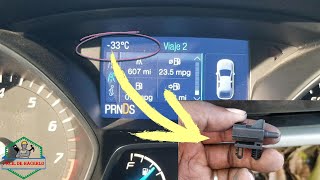
- Inaccurate outside temperature reading on the dashboard (may show dashes or a default low value like -40°F)
- Automatic air conditioning (A/C) does not blow cold air or blows warm air
- Automatic climate control system behaves erratically or does not work properly.
- Radiator fan runs continuously when the engine is on (fail-safe mode when sensor signal is lost).
- Replacing the AAT sensor without first inspecting the wiring. Many owners replace a good sensor only to find the problem was a simple broken wire.
- Mistaking the A/C issue for a refrigerant leak or failed compressor, when it's actually the AAT sensor data preventing the A/C from engaging.
Most Likely Causes
- Damaged Wiring or Connector for AAT Sensor 🔴 High Probability The sensor's location in the lower front grille exposes the wiring to road debris, moisture, and physical stress, often causing wires to break or the connector pins to corrode. The wires are thin and can easily be severed by impact or become brittle over time.
How to confirm: Visually inspect the two wires and the electrical connector attached to the AAT sensor. Gently tug on the wires to see if they are broken inside the insulation right at the connector. Check for green or white corrosion on the connector pins.
Typical fix: Repair the broken wire(s) using solder and heat-shrink tubing or, more reliably, replace the connector pigtail. The Motorcraft pigtail WPT-1258 is a commonly cited replacement.
Est. part cost: $15-$35 for a new pigtail connector - Failed Ambient Air Temperature (AAT) Sensor 🟡 Medium Probability → Shop Ambient Air Temperature Sensor The sensor is exposed to the elements and can fail from moisture intrusion, physical damage from road debris, or internal component failure over time.
How to confirm: After confirming the wiring is intact, unplug the sensor and test its resistance with a multimeter. A reading of infinite resistance (open circuit) confirms the sensor has failed. While exact specs vary, a functional sensor should show resistance that changes with temperature (e.g., around 10 kOhms at 77°F/25°C).
Typical fix: Replace the AAT sensor. It typically unclips from its mounting bracket in the grille.
Est. part cost: $25-$50
Rare But Worth Checking
- Powertrain Control Module (PCM) Fault: → Shop Engine Control Module (ECM) This is extremely rare and should only be considered after all wiring and sensor issues have been definitively ruled out. This fault would likely be accompanied by other trouble codes and drivability issues. Ford issued TSB SSM 51536 advising against swapping modules for diagnosis as it can cause further errors.
Diagnosis Steps
- Read the code with an OBD-II scanner to confirm P0073 is present.
- Locate the AAT sensor. On the 2013-2019 Escape, it is mounted behind the lower front grille, typically on the driver's side.
- Access the sensor's connector. This is often possible by reaching up from under the front bumper or by removing the driver's side cornering lamp/bezel for better access.
- Thoroughly inspect the wiring and connector for any signs of corrosion, moisture, or physical damage. Check for broken wires right at the back of the connector by gently pulling on them.
- If wiring is damaged, repair it by splicing in a new pigtail connector like the Motorcraft WPT-1258. Use heat-shrink butt connectors for a weather-resistant seal.
- If the wiring appears intact, unplug the sensor and use a multimeter to test its resistance. The value should change with temperature. An open circuit (infinite resistance) indicates a bad sensor.
- With the key on and sensor unplugged, you can also test the connector for a 5-volt reference signal from the PCM to confirm the circuit is live up to that point.
- If the sensor and wiring are good, the issue may be further up the harness or, in very rare cases, the PCM.
Parts You'll Likely Need
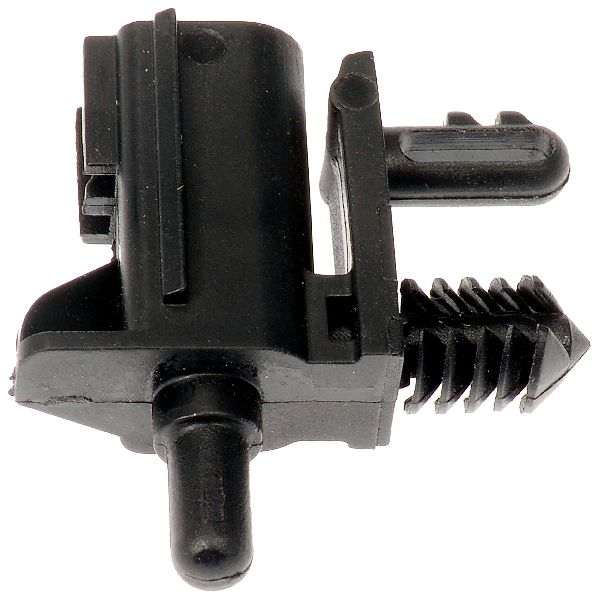
- Ambient Air Temperature Sensor
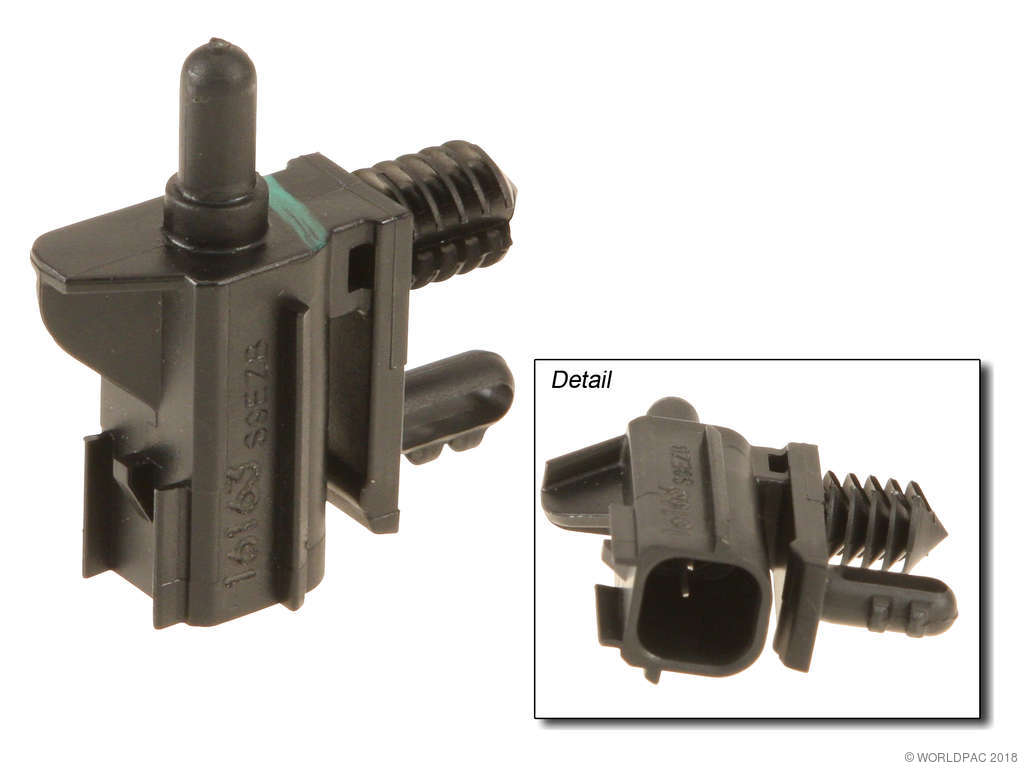
(OEM #DY-1160 (Motorcraft) / AU5Z-12A647-B (Ford))— This is the sensor that fails or whose wiring gets damaged, causing the P0073 code.
Trusted brands: Motorcraft, Dorman, Standard Motor Products
OEM price range: $30-$50
Aftermarket price range: $15-$35 - Ambient Air Temperature Sensor Connector Pigtail
(OEM #WPT-1258 (Motorcraft))— Needed if the original connector is corroded or damaged, or if the wires are broken too close to the connector to be repaired. This is a very common failure point.
Trusted brands: Motorcraft, Dorman, Standard Motor Products (S2495)
OEM price range: $20-$35
Aftermarket price range: $10-$25
Platform-Specific Known Issues
- A common failure point is a broken wire within an inch of the sensor connector, which can be difficult to spot without removing the cornering lamp for better access.
- Some owners on forums report the sensor becoming dislodged from its mounting clip, causing it to hang loose and sustain damage.
- Manufacturer service bulletin #SSM 54522 notes that some vehicles may exhibit an illuminated MIL with DTC P0073 stored in the PCM and/or B1B38 stored in the body control module (BCM), potentially resulting in no ambient air temperature display.
- Similarly, Bulletin #SSM 54217 describes instances where the P0073 code is stored in the PCM alongside B1B38 in the BCM, affecting the ambient air temperature reporting.
Mechanic-Grade Diagnostic Values
- AAT Sensor Circuit Voltage (Live Data) — expected: 0.5V (hot) to 4.8V (cold). Failure: Voltage is stuck above 4.9V, often at a full 5.0V. 🎬 See how to diagnose P0073 circuit high input codes. This indicates an open circuit and triggers P0073.
- AAT Sensor Resistance — expected: Approximately 2-3k Ohms at 20°C (68°F). Resistance decreases as temperature rises.. Failure: Infinite resistance (OL on multimeter) indicates an internally open/failed sensor.
- Continuity of AAT Signal and Ground Wires — expected: Below 3.0 Ohms from sensor connector to the PCM/BCM connector.. Failure: Resistance above 3.0 Ohms (or infinite/OL) indicates a break in the wire.
Scan Tool Commands That Help
- FORScan: Live Data PID Monitoring (AAT_V, AAT) — To monitor the real-time voltage (AAT_V) and temperature (AAT) being reported by the sensor to the PCM. This allows you to see if the voltage is stuck high (>4.9V) and if the temperature is defaulted to -40°F, confirming the fault condition.
- Ford IDS / High-End Scan Tool: HVAC System Reset / AAT Sensor Reset — After replacing the sensor or repairing the wiring, the displayed temperature may not update immediately. A specific reset procedure is required.
Wiring & Ground Locations
- AAT Sensor Connector — Behind the lower front grille on the driver's side.. This is the primary failure point. The two wires, often Green-Violet (Signal) and Black-Yellow (Signal Return/Ground), break right at the connector.
- AAT Sensor Wires — The two wires are typically Green-Violet (VT) for the signal and Black-Yellow (BK-YE) for the signal return, which runs back to the PCM.. Knowing the wire colors is essential for testing continuity from the sensor connector back to the PCM and for correctly splicing a new pigtail connector.
Technical Service Bulletins (TSBs) & Recalls
- Bulletin #SSM 51491: While documented for larger Ford trucks, this bulletin highlights that when performing pinpoint tests for P0073, technicians should follow specific Workshop Manual sections to address the ambient air temperature sensor circuit.
- Bulletin #SSM 50742: This manufacturer record notes that the P0073 code for the ambient air temperature sensor is stored in the powertrain control module (PCM) and requires specific pinpoint testing (such as test BF) to diagnose correctly.
Real Owner Repair Stories
- Motor Vehicle Maintenance & Repair Stack Exchange (2019 Ford Escape) — Check Engine Light on for Ambient Temp Sensor.
❌ Tried (didn't work) Initially could not locate the sensor, removed driver's side cornering lamp based on a video but didn't see it at first.
✅ What actually fixed it The sensor was located in the lower driver's side grille. Access was gained by removing the cornering lamp bezel and lamp assembly. The problem was not the sensor itself, but one of the two wires was severed about 3/8" from the connector. The user cut the other wire, spliced in 8" of new wire to create slack, and reconnected everything with solder and heat shrink, which resolved the code. - YouTube - Bearded Ford Tech (2017 Ford Escape with 80,913 miles) — Temperature display read -40°, A/C was not working.
✅ What actually fixed it The technician found water inside the AAT sensor connector. The fix was to replace both the sensor and the pigtail connector. After replacement, a reset procedure was required: driving the vehicle over 20 mph for more than 5 minutes caused the temperature display to update from -40° to the correct ambient temperature, and the A/C began working again. - NHTSA ODI #11219480: An owner of a related Ford model reported receiving a warning light for a driver side airbag fault alongside engine code P0073 and a vehicle over-speed condition (P0297) while driving.
OEM Part Supersession History
DY-1345, FC4Z-12A647-A→AU5Z-12A647-B (also sold as Motorcraft DY-1160)— Part number consolidation and revision by Ford.
Heads up: AU5Z-12A647-B is the correct current part for the specified vehicle range. Using older, superseded numbers may lead to incorrect parts.
Model Year Variations Within This Range
- 2013-2019: While the sensor part number and general location remained consistent through the 2017 facelift, a specific reset procedure is often required after replacement. This can be done by driving over 20 mph for 5+ minutes or by a specific button press sequence on the HVAC controls (Press A/C and Recirc simultaneously, release, then press A/C again within 2 seconds). This procedure forces the system to update from the default -40° reading.
Diagnostic Flowchart
Other Known Issues on This Vehicle
Issues unrelated to this code that are worth knowing about as an owner of this generation:
- 1.5L/1.6L/2.0L EcoBoost Coolant Intrusion 🔴 High — Common issue, can occur at relatively low mileage (under 100k miles). A design flaw in the engine block can allow coolant to leak into the cylinders. (Ref: TSB 19-2346 (for 1.5L/2.0L) and others address this, often recommending a short or long block replacement.)
- 6F35 Transmission Failures 🔴 High — Widespread complaints of shuddering, hesitation, harsh shifting, and complete failure, particularly in earlier 2013-2016 models. (Ref: Multiple TSBs exist, but no general recall has been issued for the transmission itself, though a recall (22S43) was issued for a related shift cable bushing.)
- Faulty Door Latches 🟠 Medium — Very common across many Ford models of this era. A component in the latch can break, preventing the door from closing securely or causing it to open while driving. (Ref: Subject to multiple recalls, including NHTSA campaign 16V643000 (Ford recall #16S30).)
- Engine Stalling 🟠 Medium — Reported across multiple engine types, can be caused by various issues including faulty throttle bodies, failing fuel pumps, or wiring harness problems. (Ref: Recall 14S17 addressed a wiring harness splice issue on 2.0L engines that could cause stalling.)
Used vs. New Parts: Buying Guide for This Vehicle
When a used part is the smart pick: A used OEM sensor from a junkyard is a reasonable choice, as they are not a high-wear item. A used connector pigtail is also a good option if it has plenty of wire length and is not corroded. Given the low cost of new aftermarket parts, the savings may be minimal.
Donor-vehicle mileage cap: roughly under 100000 miles for the part to have meaningful remaining life.
What to inspect on the donor part:
- For a sensor: Ensure the plastic housing is not cracked and the connector pins are clean and straight.
- For a pigtail: Inspect for at least 6 inches of flexible, undamaged wire. Avoid any pigtails with brittle insulation, visible corrosion, or previous repairs.
- Check the donor vehicle for signs of a front-end impact near the sensor location, as this could have damaged the part you're about to pull.
Aftermarket brands forum-validated for this vehicle:
- Standard Motor Products (SMP)
- Dorman
Brands owners have reported issues with on this vehicle:
- No-name, unbranded sensors from online marketplaces can have poor calibration, leading to inaccurate temperature readings even if they clear the code.
Real Owner Stories
Aggregated from forums and TSBs cited above. Mileages and costs reflect what owners reported in those sources.
2019 Ford Escape
Symptoms: Check engine lamp was on for the Ambient Temp Sensor.
What fixed it: Found one of the two wires cut about 3/8" from the connector. Repaired it by cutting the other wire and soldering in an 8-inch extension to both wires for easier installation, then sealing with heat shrink.
Source hint: motorvehiclemaintenance.stackexchange.com
2017 Ford Escape
Symptoms: The A/C went out while driving and the outside temperature reading was incorrect.
What fixed it: The ambient temperature sensor was replaced.
Source hint: YouTube - 'Ambient Temperature Sensor Failure FORD ESCAPE 2013-2019... by Fácil De Hacerlo'
2015 Ford Escape
Symptoms: Check Engine Light illuminated with code P0073, accompanied by erratic A/C operation.
What fixed it: Repaired broken wires at the sensor pigtail, which is the overwhelmingly common fix reported by owners for this code.
Source hint: fordescape.org
Related OBD-II Codes
Frequently Asked Questions
My A/C isn't blowing cold and the dash temperature shows dashes. Is this related to the P0073 code on my Escape?
What is the most common cause for a P0073 code on a 2013-2019 Ford Escape?
Where is the ambient air temperature sensor located on this generation of Ford Escape?
I found a broken wire at the sensor. What is the recommended part to fix it?
Why is my radiator fan running constantly ever since the check engine light came on for P0073?
Is the P0073 wiring issue also a problem on the Lincoln MKC?
Helpful Videos
We Have This Part in Stock


The information in this article is provided for general reference and educational purposes only. Vehicle specifications, procedures, and part compatibility can vary by production date, trim level, and region. Always consult your vehicle's factory service manual and verify part numbers before purchasing or performing repairs. Safety-critical components such as airbags, seat belts, and braking systems should be installed by a qualified professional.
- Ford Escape:
- 🧭 Diagnostic Flowchart
- 🎬 Helpful Videos
- 🛍️ Shop This Part
- What's Unique About the 2013-2019 Ford Escape
- Symptoms You May Notice
- Most Likely Causes
- Rare But Worth Checking
- Diagnosis Steps
- Parts You'll Likely Need
- Platform-Specific Known Issues
- Mechanic-Grade Diagnostic Values
- Scan Tool Commands That Help
- Wiring & Ground Locations
- Technical Service Bulletins (TSBs) & Recalls
- Real Owner Repair Stories
- OEM Part Supersession History
- Model Year Variations Within This Range
- Other Known Issues on This Vehicle
- Used vs. New Parts: Buying Guide for This Vehicle
- Real Owner Stories
- 2019 Ford Escape
- 2017 Ford Escape
- 2015 Ford Escape
- Related OBD-II Codes
- Frequently Asked Questions
- 🎟️ Get 5% Off