

P0073 on 2012-2017 Toyota Camry: Ambient Air Temperature Sensor Circuit High Causes and Fixes
On a 2012-2017 Toyota Camry, code P0073 is most often caused by a failed ambient air temperature sensor located at the front of the car. Replacing the sensor is a simple, low-cost fix, typically costing $20-$60 for the part. A 'Circuit High' fault indicates an open circuit, usually from the sensor failing internally or a wiring break.
- P0073 on your Camry almost certainly means the small, inexpensive ambient temperature sensor has failed.
- You can continue to drive the car without issue, but your A/C may not work correctly.
- This is a great DIY-friendly repair. The part is cheap, and the replacement is straightforward, though access can sometimes be tight.
- Before buying a part, visually check the sensor behind the front grille to ensure the wiring isn't simply disconnected or damaged.
- Confirm the part number for your specific VIN, but 88790-22131 is the most likely fit, superseding the older 88790-22130 part.
What's Unique About the 2012-2017 Toyota Camry
For the 2012-2017 (XV50 generation) Camry, this code is almost always a straightforward issue with the sensor or its wiring. The sensor is mounted in a vulnerable position behind the front grille, making it susceptible to damage from road debris, moisture, and minor front-end impacts. There are no major generation-specific complexities for this code within this year range, and it is a very common and well-documented failure.
Symptoms You May Notice
- Check Engine Light is illuminated
- Outside temperature gauge on the dashboard is incorrect, often stuck at a default low value like -40°F or showing no reading at all.
- Automatic climate control system does not regulate cabin temperature properly or efficiently.
- Air conditioning may not blow cold air, as the system may disable the A/C compressor.
- Replacing the ECM when the actual fault is a simple wiring break.
- Assuming the climate control head unit is faulty without first checking for this common and inexpensive sensor failure.
Most Likely Causes
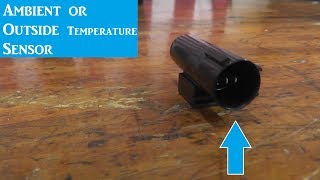
- Failed Ambient Air Temperature Sensor 🔴 High Probability → Shop Ambient Air Temperature Sensor The sensor is located in the front of the vehicle, behind the grille, where it is exposed to weather, road debris, and potential damage from minor impacts. The sensor is a simple thermistor that can fail open from age and exposure.
How to confirm: Check the live data on a scan tool; if the temperature reads a fixed, illogical value (like -40°F), the sensor is likely bad. You can also test the sensor's resistance with a multimeter; an infinite resistance (OL) reading indicates an open circuit and a failed sensor.
Typical fix: Replace the ambient air temperature sensor. The OEM part number is 88790-22131, which supersedes 88790-22130.
Est. part cost: $20-$85 - Damaged Wiring or Connector 🟡 Medium Probability Wiring near the front bumper can be damaged by road debris, corrosion from salt and moisture, or during unrelated front-end service. The connector pins can also corrode, leading to a poor connection.
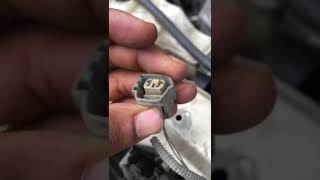
How to confirm: Visually inspect the wiring harness and connector leading to the sensor for any breaks, corrosion, or loose pins. Use a multimeter to check for the 5-volt reference signal at the connector with the key on. If voltage is present, you can use a jumper wire across the two terminals of the harness connector; the temperature reading on the scan tool should change to a very high value, confirming the wiring to the ECM is intact. 🎬 Watch: How to test and fix the P0073 circuit high code.
Typical fix: Repair the broken wire or clean/replace the connector.
Est. part cost: $5-$30
Rare But Worth Checking
- Faulty Engine Control Module (ECM): → Shop Engine Control Module (ECM) This is extremely rare and should only be considered after the sensor and wiring have been thoroughly tested and confirmed to be good. A faulty ECM will typically present other trouble codes as well.
Diagnosis Steps
- Connect an OBD-II scanner and confirm P0073 is the active code. Check the live data for the 'Ambient Air Temperature' reading. A reading of -40°F or another extreme, unchanging value strongly suggests a sensor or circuit issue.
- Locate the ambient air temperature sensor. On the 2012-2017 Camry, it is mounted to the radiator support, visible behind the front grille, often slightly to one side of the center latch.
- Visually inspect the sensor and its electrical connector for any signs of physical damage, corrosion, or loose wires.
- Disconnect the sensor. Inspect the connector terminals for corrosion or damage. Clean as necessary.
- With the key in the 'ON' position (engine off), use a multimeter to check for a reference voltage (typically around 5 volts) at the harness-side of the connector.
- If voltage is present, the wiring is likely okay. Test the sensor itself. Set your multimeter to measure resistance (Ohms) and connect the probes to the sensor's two pins. A reading of infinite resistance (OL) means the sensor is open and has failed. If you get a reading, you can try warming the sensor with a hairdryer to see if the resistance changes, confirming it is functioning. 🎬 See this walkthrough for testing the sensor and fixing A/C issues.
- If reference voltage is NOT present at the connector, you have a wiring problem between the connector and the ECM. You will need to trace the wiring to find the break.
- If the sensor and wiring test good, the issue may be with the ECM, but this is highly unlikely.
Parts You'll Likely Need
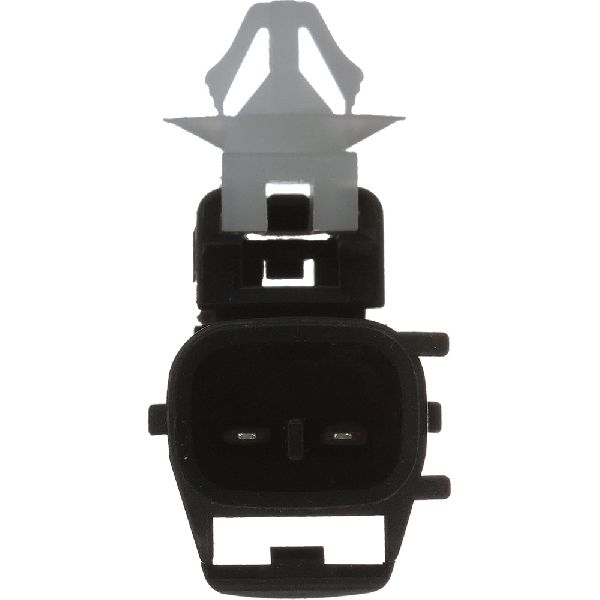
- Ambient Air Temperature Sensor
(OEM #88790-22131)— This is the most common failure point for code P0073. It is a simple thermistor that fails open over time due to heat cycles and exposure to the elements.
Trusted brands: Toyota (Genuine), Denso, Duralast, Standard Motor Products
OEM price range: $55-$85
Aftermarket price range: $20-$50
Platform-Specific Known Issues
- Access to the sensor can sometimes be tight. While some owners report being able to reach it by hand through the grille slats, others find it necessary to remove the upper radiator cover or the entire front bumper cover for full access. A YouTube video by 'Denny Le' demonstrates a 5-minute replacement by popping the grille forward without full removal.
Mechanic-Grade Diagnostic Values
- Ambient Air Temperature Sensor Resistance — expected: Approximately 3.0 to 4.2 kΩ at 10°C (50°F), and 1.3 to 1.7 kΩ at 30°C (86°F).. Failure: A reading of infinite resistance (OL - Open Loop) indicates a failed sensor.
- AAT Sensor Connector Voltage (Key On, Engine Off) — expected: Approximately 5.0 volts on the reference/signal wire (THA).. Failure: A reading of 0 volts indicates a break in the wiring from the ECM. A reading significantly less than 5V could indicate a short.
- Scan Tool Live Data (AAT) — expected: Should display a temperature that is plausible for the current ambient conditions.. Failure: A fixed, illogical low temperature (e.g., -40°F/-40°C) confirms an open circuit (High Circuit) fault.
Scan Tool Commands That Help
- Toyota Techstream: Data List -> Coolant — This is the primary function used for diagnosis. Select the 'Ambient Temp' PID to view the temperature being reported to the ECM in real-time. This allows you to instantly see if the sensor is reading an illogical value like -40°F, confirming the fault condition.
Wiring & Ground Locations
- A3 (Ambient Temperature Sensor Connector) — Behind the front grille, mounted on the radiator core support.. This is the connector where all physical tests of the sensor and circuit begin. Damage or corrosion here is a common cause of P0073.
- Pin 1 (Signal - THA) — On the A3 connector. Often a Green wire on this generation Camry.. This wire carries the variable voltage signal back to the ECM. A break in this wire will cause the ECM to see 5V, triggering P0073.
- Pin 2 (Ground - E2) — On the A3 connector. Often a White wire with a Black stripe on this generation Camry.. This is the sensor's ground reference, which is provided directly by the ECM, not the chassis. A break in this wire will also cause an open circuit and trigger P0073. It cannot be fixed by simply running a new wire to a nearby chassis ground point.
Real Owner Repair Stories
- ToyotaNation Forum (2012 Toyota Camry) — Check Engine Light on, outside temperature display showed -40°F.
❌ Tried (didn't work) Initially, the owner was unsure of the cause.
✅ What actually fixed it The owner located the sensor behind the grille, disconnected it, and replaced it with a new OEM sensor (part number 88790-22131). The code was cleared and did not return, and the temperature display began working correctly immediately. The repair was done without removing the front bumper. - YouTube - 'Automotive Vitals' (2012 Toyota Camry) — No outside temperature reading on the instrument cluster (dash-dash degrees Fahrenheit) and DTC B1412 (Ambient Temperature Sensor Circuit) stored in the A/C ECU, which is a related code to P0073.
✅ What actually fixed it Upon visual inspection, the technician found the sensor was completely missing from its connector, likely due to a previous front-end collision. The connector and wiring were intact. Installing a new sensor and clearing the code resolved the issue.
OEM Part Supersession History
88790-22130→88790-22131— Standard part revision by the manufacturer. Often for minor improvements in materials or manufacturing process.
Heads up: None. The new part number 88790-22131 is a direct, fully compatible replacement for the older 88790-22130.
Model Year Variations Within This Range
- 2012-2017: While the XV50 Camry received a major facelift for the 2015 model year with different styling for the grille and bumper, the location and part number for the ambient air temperature sensor remained the same throughout the entire 2012-2017 production run.
Diagnostic Flowchart
Other Known Issues on This Vehicle
Issues unrelated to this code that are worth knowing about as an owner of this generation:
- Torque Converter Shudder 🟠 Medium — Common on 2012-2014 models with the U760E 6-speed automatic, typically appearing between 25-50 mph under light load. Often occurs after 80,000 miles. (Ref: T-SB-0034-14 (supersedes T-SB-0086-12) and T-SB-0312-17 describe the issue and repair, which involves either an ECM reprogram or torque converter replacement.)
- Musty / Moldy Smell from A/C Vents 🟡 Low — A common complaint across many Toyota models of this era, not just the Camry. Caused by condensation building up in the evaporator case when the A/C is not allowed to dry out before shutting the vehicle off.
- Sticky / Melting Dashboard 🟠 Medium — Primarily affected the prior generation (2007-2011), but some early 2012 models could still be susceptible. Caused by a combination of heat and humidity. The issue was less prevalent on the XV50 generation compared to the XV40. (Ref: Toyota initiated a Warranty Enhancement Program (ZJA) to cover dashboard replacement for affected vehicles, even outside of the standard warranty.)
- Engine Rattle on Cold Start (2AR-FE) 🟠 Medium — Some 2012 models with the 4-cylinder engine could experience a brief rattle from the engine bay on a cold startup. (Ref: T-SB-0041-13 points to a potential issue with the Camshaft Timing Gear Assembly, recommending replacement to fix the noise.)
Used vs. New Parts: Buying Guide for This Vehicle
When a used part is the smart pick: A used sensor from a reputable auto recycler is a very smart choice for this repair. The part is not a typical wear-and-tear item; it usually fails from physical damage or an internal electronic fault. A used, undamaged sensor is highly likely to function correctly.
Donor-vehicle mileage cap: roughly under 200000 miles for the part to have meaningful remaining life.
What to inspect on the donor part:
- Visually inspect for any cracks in the plastic sensor body.
- Ensure the electrical connector pins are straight and free of corrosion.
- Confirm the mounting tab is not broken.
- If possible, ask the seller to test the resistance with a multimeter; it should not read 'OL' (Open Loop/infinite resistance).
OEM-only on this vehicle (don't cheap out):
- None for this specific repair. The sensor is a simple component.
Aftermarket brands forum-validated for this vehicle:
- Denso (OEM supplier, identical to Genuine Toyota)
- Standard Motor Products (SMP)
- Duralast
Brands owners have reported issues with on this vehicle:
- No-name, ultra-low-cost sensors from online marketplaces can have poor quality control and may fail prematurely or provide inaccurate readings.
Real Owner Stories
Aggregated from forums and TSBs cited above. Mileages and costs reflect what owners reported in those sources.
2012-2017 Toyota Camry
Symptoms: The Check Engine Light came on and the outside temperature display was incorrect. The climate control was also not working properly.
What fixed it: Performed a DIY replacement of the ambient temperature sensor located behind the front grille.
Source hint: ToyotaNation Forum: Multiple threads on this forum corroborate that P0073 is a common code for a failed ambient temperature sensor, with many users successfully performing a DIY replacement.
2012-2017 Toyota Camry
Symptoms: Check engine light was on due to a failed ambient temperature sensor.
What fixed it: Replaced the sensor by popping the front grille forward to gain access, avoiding the need for full bumper removal. The job was completed in just a few minutes.
Cost: $15-$20
Source hint: YouTube - Denny Le: A video titled 'how to change camry 2000-2021 ambient temperature sensor change $17 in 2 mins'
Related OBD-II Codes
Frequently Asked Questions
Where is the ambient air temperature sensor located on my 2015 Toyota Camry?
My A/C isn't blowing cold air. Could this P0073 code be the cause?
Do I have to remove the entire front bumper to replace the temperature sensor?
What is the correct OEM part number for the ambient temperature sensor on a 2012-2017 Camry?
The temperature on my dashboard is stuck at -40°F. Is that a symptom of P0073?
Are there any good aftermarket brands for this sensor, or should I only buy a Genuine Toyota part?
My 2013 Camry is shuddering between 25-50 mph. Is there a TSB for this?
Helpful Videos
We Have This Part in Stock


The information in this article is provided for general reference and educational purposes only. Vehicle specifications, procedures, and part compatibility can vary by production date, trim level, and region. Always consult your vehicle's factory service manual and verify part numbers before purchasing or performing repairs. Safety-critical components such as airbags, seat belts, and braking systems should be installed by a qualified professional.
- Toyota Camry:
- 🧭 Diagnostic Flowchart
- 🎬 Helpful Videos
- 🛍️ Shop This Part
- What's Unique About the 2012-2017 Toyota Camry
- Symptoms You May Notice
- Most Likely Causes
- Rare But Worth Checking
- Diagnosis Steps
- Parts You'll Likely Need
- Platform-Specific Known Issues
- Mechanic-Grade Diagnostic Values
- Scan Tool Commands That Help
- Wiring & Ground Locations
- Real Owner Repair Stories
- OEM Part Supersession History
- Model Year Variations Within This Range
- Other Known Issues on This Vehicle
- Used vs. New Parts: Buying Guide for This Vehicle
- Real Owner Stories
- 2012-2017 Toyota Camry
- 2012-2017 Toyota Camry
- Related OBD-II Codes
- Frequently Asked Questions
- 🎟️ Get 5% Off