

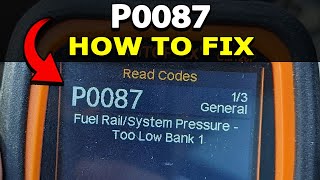
P0087 on 2013-2016 Dodge Dart 1.4L Turbo: Low Fuel Pressure Causes and Fixes
For a P0087 code on a 2013-2016 Dodge Dart with the 1.4L Turbo engine, the most common cause is a failing high-pressure fuel pump (HPFP). Other possibilities include a weak in-tank low-pressure fuel pump, a faulty fuel rail pressure sensor, or a clogged fuel filter integrated with the low-pressure pump. Expect costs to range from $100 for a sensor to over $1,000 for a professionally installed HPFP.
- P0087 on your Dodge Dart 1.4L Turbo means the fuel pressure is dangerously low, and you should not drive the vehicle.
- Diagnosis requires a scan tool that can read live fuel pressure data to compare what the computer wants ('desired') versus what it's getting ('actual').
- While several parts could be the cause, the most common culprit is the engine-mounted high-pressure fuel pump (HPFP).
- Always check the easier and cheaper parts first: start by verifying the low-pressure pump is working before condemning the expensive high-pressure pump.
- Due to the extremely high pressures and fire risk, this repair is best left to a professional mechanic with experience in GDI systems.
What's Unique About the 2013-2016 Dodge Dart
The 1.4L MultiAir Turbo engine in the Dodge Dart is a unique powertrain developed by Fiat Powertrain Technologies. Unlike a conventional engine, it uses a high-pressure, common-rail fuel system similar in principle to many diesel engines. This system has two fuel pumps: a low-pressure pump in the tank and a high-pressure pump (HPFP) driven by the engine's camshaft. The complexity of this dual-pump, high-pressure system makes it susceptible to specific failures that cause the P0087 code, often related to the HPFP or its regulating components. This same engine and fuel system are used in platform mates like the Fiat 500 Abarth and Jeep Renegade, which also report this issue.
Symptoms You May Notice
- Check Engine Light is on
- Engine hesitation or stumbling during acceleration
- Reduced engine power or entering "limp mode"
- Rough idle
- Engine stalling, especially under load or when coming to a stop
- Difficulty starting the engine or a no-start condition
- Decreased fuel economy
- Smell of unburned fuel from the exhaust
- Replacing spark plugs or ignition coils. While these can cause performance issues, they do not directly cause a P0087 code.
- Replacing only the in-tank fuel pump when the high-pressure pump is the actual failure.
- Replacing the HPFP without replacing the cam follower (tappet), leading to premature failure of the new pump.
Most Likely Causes
- Failing High-Pressure Fuel Pump (HPFP) 🔴 High Probability → Shop Fuel Pump High-pressure pumps are a common failure point on many GDI engines due to the extreme pressures they operate under. The 1.4L MultiAir is no exception, with many owner and technician reports confirming the HPFP as the primary culprit for P0087.
How to confirm: Use a scan tool to monitor desired vs. actual fuel rail pressure during idle and under load. A significant and consistent lag or drop in actual pressure points to a weak HPFP. A professional may also check the cam lobe that drives the pump for wear when the pump is removed. A video on a related Jeep Renegade with a T270 engine shows a similar diagnostic process.
Typical fix: Replace the high-pressure fuel pump and the associated cam follower (tappet). It is critical to replace the follower as a worn one can quickly destroy a new pump.
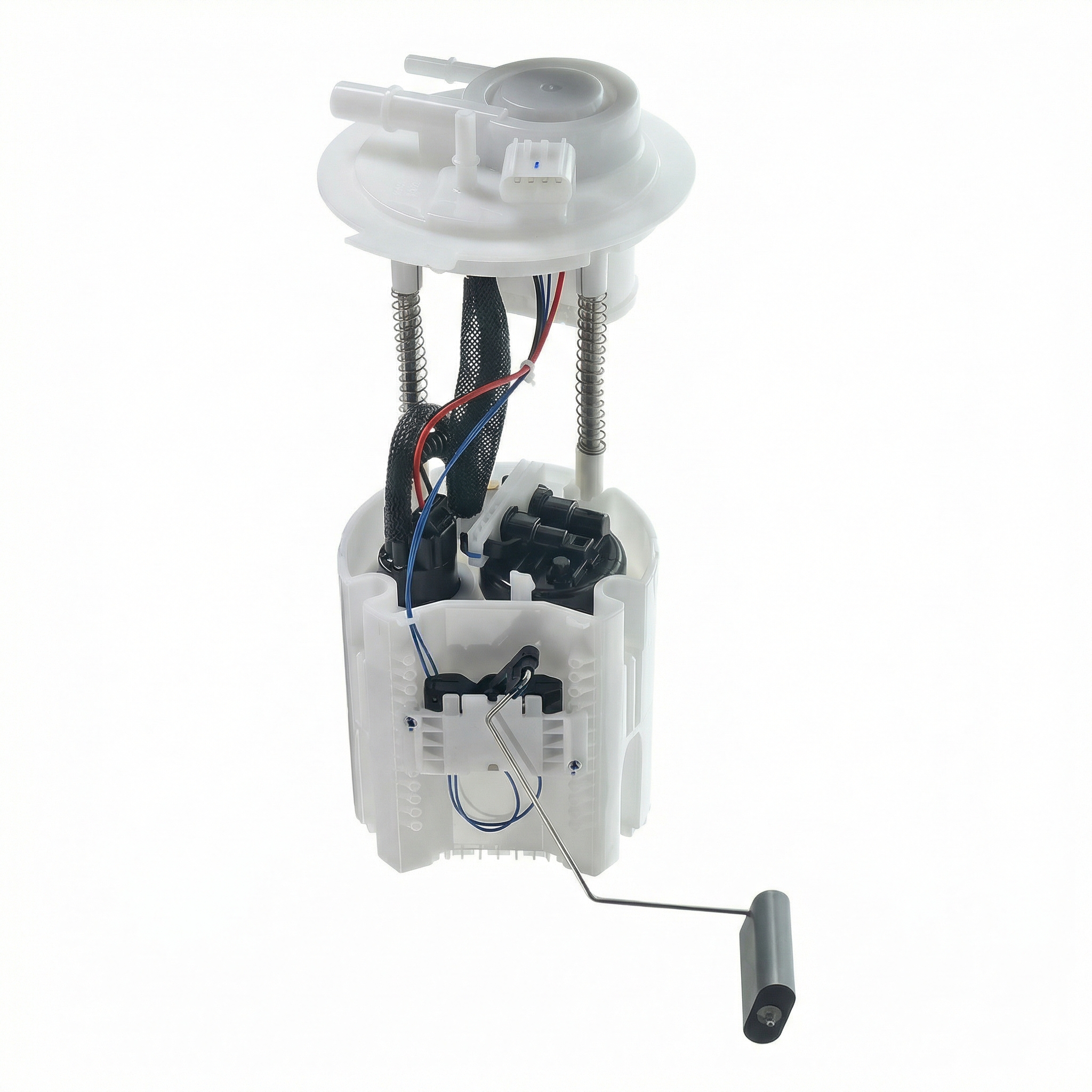
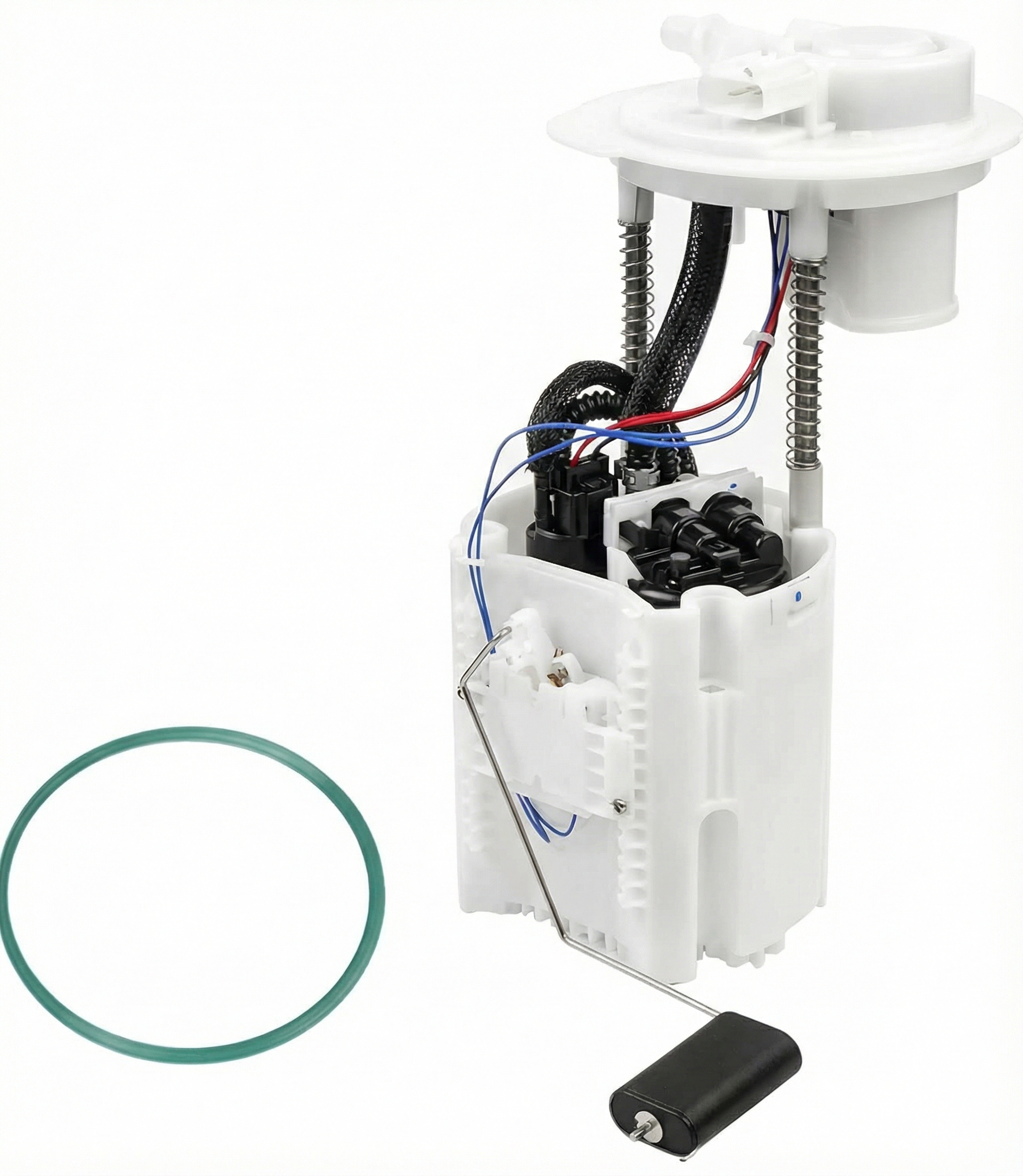
Est. part cost: $400-$800 - Failing Low-Pressure (In-Tank) Fuel Pump 🟡 Medium Probability → Shop Fuel Pump The in-tank pump can weaken over time, failing to supply the HPFP with enough fuel volume to maintain high pressure. This is a common failure point across many vehicles, not just the Dart.
How to confirm: Connect a mechanical fuel pressure gauge to the low-pressure fuel line. The pressure should meet the manufacturer's specification (typically 50-70 PSI) at idle. If it's low, the in-tank pump is likely the cause. A YouTube video demonstrates how to test the fuel pump on a Dart using a scanner to activate the pump relay.
Typical fix: Replace the in-tank fuel pump assembly.
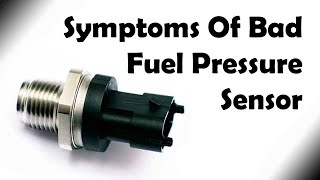
Est. part cost: $150-$300 - Faulty Fuel Rail Pressure Sensor 🟡 Medium Probability → Shop Fuel Pressure Sensor The sensor provides the critical pressure reading to the PCM. An electronic failure can cause it to send inaccurate low-pressure signals, tricking the computer into setting a P0087 code even if the pressure is mechanically sound.
How to confirm: With a scan tool, compare the key-on, engine-off fuel pressure reading to a known baseline. If the reading is erratic, zero, or doesn't change with engine RPM, the sensor is suspect. A technician can also compare the scan tool reading to a reading from a mechanical gauge.
Typical fix: Replace the fuel rail pressure sensor.
Est. part cost: $50-$150 - Clogged Fuel Filter ⚪ Low Probability → Shop Fuel Filter The fuel filter on the Dodge Dart is integrated into the in-tank fuel pump module. While not a common standalone failure, a severely clogged filter can restrict flow to the HPFP, starving it of fuel and causing low pressure on the high-pressure side.
How to confirm: This is diagnosed by confirming low pressure from the in-tank pump. Since the filter is part of the pump assembly, it's usually replaced along with the pump.
Typical fix: Replace the in-tank fuel pump module, which includes the filter.
Est. part cost: $150-$300
Rare But Worth Checking
- Faulty Fuel Pump Control Solenoid (SCV): → Shop Fuel Pump Some sources indicate a separate solenoid or valve controls fuel flow into the HPFP. A failure here could mimic a bad pump. This part is sometimes called a Fuel Metering Control Solenoid or Suction Control Valve. One source indicates this solenoid is interchangeable with part numbers like 0928400736 across various Chrysler, Fiat, and GM vehicles with the 1.4L turbo engine.
- Worn Camshaft Lobe: → Shop Engine Camshaft The HPFP is mechanically driven by a lobe on the camshaft. If this lobe wears down, it can no longer fully actuate the pump, leading to low pressure. This is a significant mechanical repair and is often checked during HPFP replacement.
- Leaking Fuel Injector: → Shop Fuel Injector A fuel injector that is stuck open can cause a drop in rail pressure, though this would typically be accompanied by other symptoms like a rich running condition, black smoke, and specific cylinder misfire codes.
Diagnosis Steps
- Connect an OBD-II scanner and verify P0087 is present. Check for any other codes, especially misfire (P030x) or sensor-related (P0191) codes.
- Using the scanner's live data function, monitor 'Desired Fuel Rail Pressure' and 'Actual Fuel Rail Pressure'.
- At idle, the values should be close. Rev the engine; the actual pressure should track the desired pressure closely. If the actual pressure drops significantly or lags, it indicates a problem in the fuel system.
- Check the low-pressure side first. Connect a fuel pressure gauge to the low-pressure line (before the HPFP) and verify it meets OEM specifications (around 50-70 PSI). If pressure is low, the in-tank pump or its integrated filter is the likely culprit.
- If low-side pressure is good, the problem is in the high-pressure system.
- Inspect the wiring and connector for the fuel rail pressure sensor for any damage or corrosion.
- If the sensor and wiring appear fine, the most likely cause is the high-pressure fuel pump (HPFP).
- Before replacing the HPFP, it's wise to inspect the camshaft lobe that drives it for wear, though this requires partial engine disassembly. Always replace the cam follower (tappet) when replacing the HPFP.
Parts You'll Likely Need
- High-Pressure Fuel Pump
(OEM #0261520152 (Bosch OEM))— This is the most common failure point in the high-pressure fuel system that leads to a P0087 code on this engine.
Trusted brands: Bosch, Mopar
OEM price range: $600-$800
Aftermarket price range: $350-$550 - Low-Pressure Fuel Pump Module
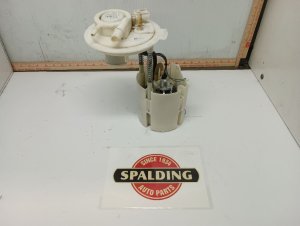
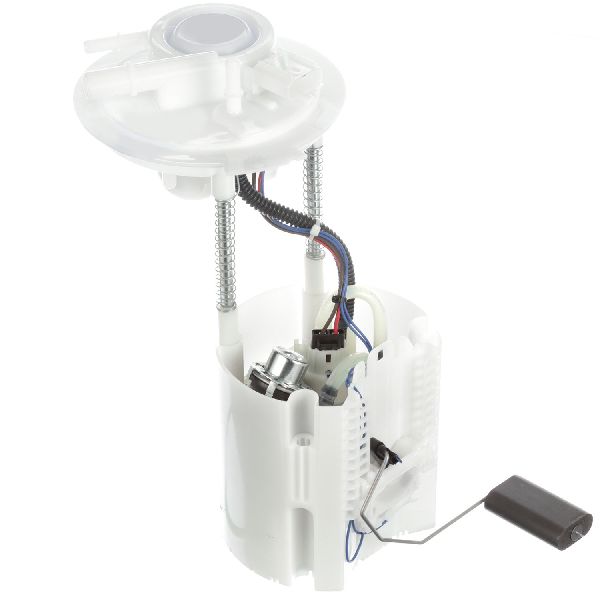
(OEM #68104562AC)— A weak in-tank pump can starve the HPFP, causing low rail pressure. It is often the second most likely cause. An owner of a related Fiat 500 with a 1.4L Turbo reported fixing their P0087 code by replacing the in-tank pump assembly.
Trusted brands: Denso, Delphi, Mopar
OEM price range: $250-$400
Aftermarket price range: $150-$250 - Fuel Rail Pressure Sensor — A faulty sensor can send incorrect low-pressure readings to the PCM, triggering the code even if the pressure is actually normal.
Trusted brands: Bosch, Standard Motor Products, Mopar
OEM price range: $100-$180
Aftermarket price range: $50-$100
Related Codes That Often Appear With This One
- P0300-P0304 — Random or specific cylinder misfires can occur when low fuel pressure leads to a lean air/fuel mixture, preventing proper combustion.
- P0191 — This code for 'Fuel Rail Pressure Sensor Circuit Range/Performance' can appear if the sensor's signal is erratic or out of its expected range, which often happens alongside a P0087.
- P0088 — Although it means 'Fuel Rail Pressure Too High', it can sometimes appear intermittently with P0087 if the fuel pressure regulator or sensor is failing erratically.
Platform-Specific Known Issues
- Owner Experience with P0087 on Fiat 500 Abarth (Platform Mate): An owner of a 2015 Fiat 500 Turbo (which shares the 1.4L engine) reported experiencing stalling and a P0087 code. They suspected the in-tank fuel pump, replaced the assembly with part number 68143629AB, and reported that it resolved the issue.
Mechanic-Grade Diagnostic Values
- Low-Pressure Fuel System Pressure — expected: Should maintain a minimum of 483 kPa (70 PSI).. Failure: Pressure consistently below 70 PSI indicates a failing in-tank pump or clogged filter.
- High-Pressure Fuel Rail Pressure (at idle) — expected: Approximately 50 bar (725 PSI).. Failure: Pressure significantly below 725 PSI or fluctuating wildly at idle.
- High-Pressure Fuel Rail Pressure (under load) — expected: Should rise to 90-120 bar (1300-1740 PSI).. Failure: Actual pressure fails to rise with desired pressure or drops off during acceleration.
- HPFP Fuel Metering Control Solenoid Resistance — expected: 2.1 ± 0.3 ohms across the solenoid's terminals.. Failure: Resistance is out of this range (open circuit or shorted), indicating a failed solenoid, which is integral to the HPFP.
Scan Tool Commands That Help
- wiTECH (Chrysler/Dodge/Fiat Dealer Tool): Fuel Pump Relay Activation Test — This bidirectional command allows the technician to manually turn on the low-pressure in-tank fuel pump without the engine running. It's used to verify the pump's operation and to check for correct low-side fuel pressure.
- wiTECH or advanced aftermarket scanner: Fuel System Tests — This function group may include automated tests that command specific fuel pressures and monitor the system's response, helping to isolate a faulty HPFP, LPFP, or sensor without manual pressure gauges.
Wiring & Ground Locations
- Powertrain Control Module (PCM) — Located in the right rear corner of the engine compartment for the 1.4L engine.. The PCM is the source of the 5V reference and ground for the fuel pressure sensor and controls both the low and high-pressure pumps. All related wiring terminates here.
- G103 / G104 — G103 is on the left side of the engine compartment. G104 is on the left front side of the engine.. These are primary engine grounds. A poor ground connection at these points can cause erratic sensor readings and incorrect module operation, potentially leading to a false P0087 code.
- Fuel Pump Relay & Fuse — Located in the under-hood fuse box (Power Distribution Center). The relay provides power to the low-pressure pump via a 20-amp fuse in the same box.. A faulty relay or blown fuse will cut power to the in-tank pump, starving the HPFP of fuel and immediately causing a P0087 code.
- Engine Harness Chafe Point — A documented case showed a harness shorting to ground on a bracket near the turbocharger tubing.. A short in the engine harness can blow fuses that power critical fuel system components like solenoids or sensors, leading to a P0087 code among others.
Real Owner Repair Stories
- GOLFMK7 Forum (VW Golf, similar GDI system) (VW Golf/GTI MK7) — P0087 code, car enters limp mode at full throttle.
❌ Tried (didn't work) Initial diagnosis pointed towards replacing the fuel rail pressure sensor.
✅ What actually fixed it A technician found that the internal clamping of the pins in the rail pressure sensor's electrical connector was loose. Replacing the five pins in the connector resolved the issue without replacing the sensor itself. - Reddit r/GolfGTI (Tuned VW MK7 GTI) — Sudden loss of power while driving, crank-no-start condition, P0087 code.
❌ Tried (didn't work) Waiting for a tow truck.
✅ What actually fixed it The owner diagnosed the issue as a failed Low-Pressure Fuel Pump (LPFP). The key diagnostic clue was the complete absence of the usual fuel pump priming sound from the rear of the car when the ignition was turned on. - NHTSA ODI #10689909 (Dodge RAM 3500, cross-manufacturer reference) — An owner reported experiencing low fuel rail pressure while driving. A technician confirmed the P0087 code was present, though the required repair part was on backorder.
"I Checked Everything" — The Actual Cause
- In a case on a similar GDI engine, standard pressure and leak tests would show no faults, but the root cause was loose pins inside the fuel rail pressure sensor's electrical connector. This created a poor electrical connection, sending an incorrect low-pressure signal to the PCM. The fix was to replace the connector pins, not the sensor or any part of the fuel system.
OEM Part Supersession History
68104562AA, 68104562AB→68104562AC— Part revision by the manufacturer, likely for improved reliability or minor design changes.
Heads up: The newer part number (68104562AC) is the correct and backward-compatible replacement for the older versions.
Model Year Variations Within This Range
- 2014-2016: For the 2014 model year, Dodge changed the engine lineup. The 1.4L MultiAir Turbo engine was only available in the fuel-economy-focused 'Aero' trim. All other trims (SXT, GT, Limited) were equipped with a 2.4L naturally aspirated engine, which has a different fuel system. Therefore, this P0087 guide primarily applies to all 2013 1.4T models and 2014-2016 Dart Aero models.
Documented NHTSA Reports
- NHTSA ODI #11642736: A diagnostic scan on a related Dodge vehicle retrieved DTC P0087 along with P0471 and U029D. Additionally, metal fragments were found in the engine oil during inspection.
Diagnostic Flowchart
Other Known Issues on This Vehicle
Issues unrelated to this code that are worth knowing about as an owner of this generation:
- MultiAir Actuator ('Brick') Failure 🔴 High — Common issue, can occur at various mileages. Often preceded by codes like P1067 or P1524. Extremely sensitive to oil quality and level.
- Manual Transmission Clutch System Failure 🔴 High — Widespread problem on manual transmission models, leading to a class-action lawsuit. The clutch pedal may stick to the floor due to a faulty slave or master cylinder. (Ref: Class Action Lawsuit (Victorino v. FCA US, LLC))
- Turbocharger Wastegate/Actuator Issues 🟠 Medium — Commonly causes underboost code P0299. Owners report a loss of power, and sometimes a simple adjustment of the wastegate actuator rod can resolve the issue, while other times the wastegate solenoid fails.
- Dual Dry Clutch Transmission (DDCT) Problems 🔴 High — Subject to recalls for unexpectedly shifting into neutral due to TCM issues and stalling in cold weather. (Ref: Recalls 15V522000, 13V558000)
- Excessive Oil Consumption 🟠 Medium — Many owners of both 1.4L and 2.4L engines report high oil consumption, requiring frequent top-offs to prevent engine damage or MultiAir system issues.
- Shifter Cable Detachment 🟠 Medium — A recall was issued because the shifter cable bushing can detach from the transmission, preventing the driver from shifting and causing a rollaway risk. (Ref: Recall 23V-630)
Used vs. New Parts: Buying Guide for This Vehicle
When a used part is the smart pick: For this repair, used parts are generally not recommended for the fuel pumps due to their high failure rate. A used part may have limited life remaining. However, sourcing a used connector pigtail for the fuel pressure sensor or fuel pump could be a cost-effective solution if the original is damaged.
Donor-vehicle mileage cap: roughly under 50000 miles for the part to have meaningful remaining life.
What to inspect on the donor part:
- For any electronic part, check for clean, corrosion-free connector pins.
- For a fuel pump assembly, ensure there is no visible rust or debris in the inlet/outlet ports.
- Verify the part number on the donor part matches the required OEM number or its supersessions.
OEM-only on this vehicle (don't cheap out):
- High-Pressure Fuel Pump (HPFP): This is a precision component operating under extreme pressure. The OEM is Bosch. Using a new Bosch or Mopar-branded pump is strongly advised, as cheap aftermarket GDI pumps have a very high failure rate.
Aftermarket brands forum-validated for this vehicle:
- Low-Pressure Fuel Pump: Denso, Delphi (as noted in Pass 2)
- Fuel Rail Pressure Sensor: Bosch, Standard Motor Products (SMP)
Real Owner Stories
Aggregated from forums and TSBs cited above. Mileages and costs reflect what owners reported in those sources.
2015 Fiat 500 Turbo (1.4L MultiAir)
Symptoms: The owner reported experiencing stalling and a P0087 code.
What fixed it: Replaced the in-tank fuel pump assembly with part number 68143629AB.
Source hint: vehicle_specific_issues: Owner Experience with P0087 on Fiat 500 Abarth (Platform Mate)
Related OBD-II Codes
Frequently Asked Questions
Is there a recall for the transmission on my 2013-2016 Dodge Dart that might cause stalling like P0087?
I'm replacing the High-Pressure Fuel Pump (HPFP) on my 1.4L MultiAir; do I need to replace anything else?
Can I just replace the fuel filter on my Dodge Dart to fix a P0087 code?
Is there a known issue with the manual transmission clutch on these Darts?
What should the low-side fuel pressure be for the 1.4L MultiAir Turbo engine?
Could my P0087 code be related to the MultiAir 'Brick' failure?
Helpful Videos

Used OEM Parts in Stock
New Aftermarket Parts Available




The information in this article is provided for general reference and educational purposes only. Vehicle specifications, procedures, and part compatibility can vary by production date, trim level, and region. Always consult your vehicle's factory service manual and verify part numbers before purchasing or performing repairs. Safety-critical components such as airbags, seat belts, and braking systems should be installed by a qualified professional.
- Dodge Dart:
- 🧭 Diagnostic Flowchart
- 🎬 Helpful Videos
- 🛍️ Shop This Part
- What's Unique About the 2013-2016 Dodge Dart
- Symptoms You May Notice
- Most Likely Causes
- Rare But Worth Checking
- Diagnosis Steps
- Parts You'll Likely Need
- Related Codes That Often Appear With This One
- Platform-Specific Known Issues
- Mechanic-Grade Diagnostic Values
- Scan Tool Commands That Help
- Wiring & Ground Locations
- Real Owner Repair Stories
- "I Checked Everything" — The Actual Cause
- OEM Part Supersession History
- Model Year Variations Within This Range
- Documented NHTSA Reports
- Other Known Issues on This Vehicle
- Used vs. New Parts: Buying Guide for This Vehicle
- Real Owner Stories
- 2015 Fiat 500 Turbo (1.4L MultiAir)
- Related OBD-II Codes
- Frequently Asked Questions
- 🎟️ Get 5% Off