

P0088 on 2012-2018 Ford Focus 2.0L EcoBoost: Causes and Fixes for High Fuel Pressure
Code P0088 on a 2.0L EcoBoost Focus most often means a faulty fuel rail pressure sensor or a failing high-pressure fuel pump (HPFP). Start by testing the sensor, which is a much cheaper fix (~$80-$150) before suspecting the expensive HPFP (~$500-$900+). A key diagnostic is to check fuel pressure with the key on but the engine off; a high reading strongly indicates a bad sensor.
- P0088 indicates dangerously high pressure in the fuel rail; do not continue to drive the vehicle.
- The most likely cause is a faulty Fuel Rail Pressure Sensor. Always diagnose this part before considering the more expensive High-Pressure Fuel Pump (HPFP).
- Use a scan tool to watch live fuel pressure data. A sensor reading that is stuck high or doesn't make sense is a clear sign the sensor has failed.
- This is not a beginner-friendly DIY repair due to the extreme pressures in the direct injection system. Professional diagnosis and repair are highly recommended.
- Check if your vehicle has had recall 18S32 performed, as it addresses other critical fuel system issues on this engine.
What's Unique About the 2012-2018 Ford Focus
The 2.0L EcoBoost is a Gasoline Direct Injection (GDI) engine, which uses two fuel pumps: a low-pressure pump in the tank and a high-pressure fuel pump (HPFP) driven by the camshaft. Code P0088 specifically relates to the high-pressure side, which operates at thousands of PSI. The most common culprits for this code are the components managing this intense pressure: the HPFP itself (specifically its internal regulator) or the sensor that measures its output. It's crucial not to confuse this with issues in the low-pressure system.
Symptoms You May Notice
- Check Engine Light is on
- Engine hesitation or stuttering, especially during acceleration
- Significant loss of engine power
- Rough or erratic idle
- Engine stalling, sometimes without warning
- Hard starting or long crank times
- Reduced fuel economy
- Black smoke from the exhaust
- Engine oil smells of gasoline (oil dilution)
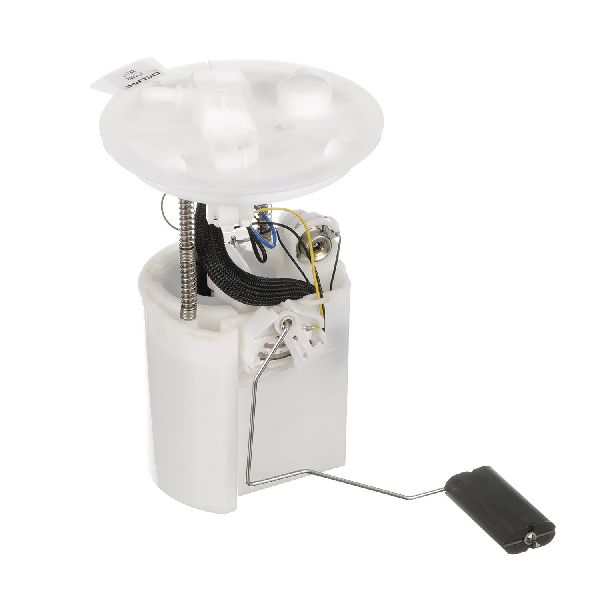
- Replacing the in-tank low-pressure fuel pump, which does not cause a high-pressure fault code.
- Replacing the expensive High-Pressure Fuel Pump (HPFP) before properly diagnosing the much cheaper and more common fuel rail pressure sensor failure. Always perform the KOEO sensor check first. 🎬 Watch: Step-by-step diagnosis and repair for the P0088 code.
Most Likely Causes
- Faulty Fuel Rail Pressure Sensor 🔴 High Probability → Shop Fuel Pressure Sensor The sensor is a sensitive electronic component that operates in a harsh environment on the engine's fuel rail. It's a common failure point that can get stuck or send incorrect high-pressure readings to the PCM, even when the actual pressure is normal.
How to confirm: Use an OBD-II scanner to monitor live fuel rail pressure. With the Key On, Engine Off (KOEO), the pressure should read very low (near 0 PSI). If it shows a high reading, the sensor is almost certainly bad. If the reading is stuck at a maximum value (e.g., 2500+ PSI) and doesn't change with engine RPM, the sensor has failed.
Typical fix: Replace the fuel rail pressure sensor. It is located on the high-pressure fuel rail on the passenger side of the engine.
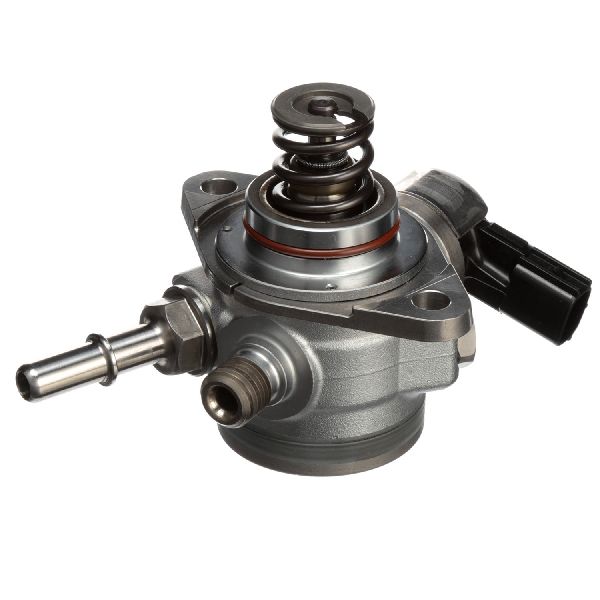
Est. part cost: $60-$120 - Failing High-Pressure Fuel Pump (HPFP) 🟡 Medium Probability → Shop Fuel Pump The HPFP is a mechanical pump that is constantly working to generate immense pressure. Its internal pressure regulator valve can fail and get stuck in a closed position, causing the pump to continuously build pressure far beyond what the PCM is commanding. A manufacturer service bulletin for other Ford models, Bulletin #20B41, notes that if a fuel orifice becomes dislodged, it can damage the pressure control valve pintle, resulting in DTC P0088.
How to confirm: This is diagnosed after confirming the fuel pressure sensor is working correctly. If the sensor is good but the 'Actual Fuel Rail Pressure' live data is consistently and significantly higher than the 'Desired Fuel Rail Pressure', the HPFP is the prime suspect.
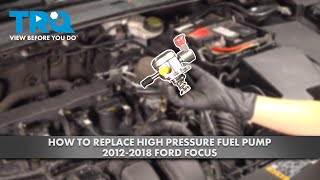
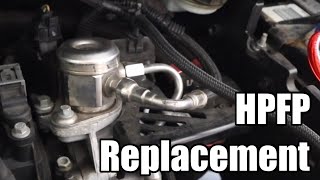
Typical fix: Replace the high-pressure fuel pump. This is a more involved and expensive repair. 🎬 Watch: How to replace the high-pressure fuel pump.
Est. part cost: $250-$600
Rare But Worth Checking
- Wiring Harness Damage: Check the wiring and connector for the fuel rail pressure sensor. A short to voltage in the signal wire could cause the PCM to see a false high-pressure reading, mimicking a failed sensor.
- Blocked Fuel Return Line: While less common on modern GDI systems where the HPFP regulates pressure internally, a severe restriction in a return line (if equipped) could theoretically cause pressure to build.
- Powertrain Control Module (PCM) Fault: → Shop Engine Control Module (ECM) This is extremely rare, but a software glitch or internal failure in the PCM could lead to a false P0088 code. This should only be considered after all other possibilities have been exhausted.
Diagnosis Steps
- Connect a high-quality OBD-II scanner capable of reading live Ford-specific data.
- Check for any other stored fault codes to see if they provide more context (e.g., P0193 sensor circuit codes, P0300 misfire codes).
- KOEO Sensor Check: Turn the key to the 'On' position but DO NOT start the engine. Observe the 'Fuel Rail Pressure' (FRP) live data. The pressure should be very low, typically under 100 PSI. If the scanner shows significantly high pressure, the Fuel Rail Pressure Sensor is faulty and should be replaced.
- Live Data Analysis (Engine Running): If the KOEO test passes, start the engine. Monitor both 'Fuel Rail Pressure' (actual) and 'Desired Fuel Rail Pressure'.
- Compare the actual FRP to the desired FRP. If the actual pressure is consistently and significantly higher than the desired pressure (e.g., desired is 500 PSI at idle, but actual is 2000+ PSI), this confirms a real over-pressure condition.
- If the FRP reading is stuck at a maximum value or seems irrational (and the KOEO test failed), the fuel rail pressure sensor is the most likely culprit.
- Wiring Inspection: If sensor failure is suspected, inspect the wiring and connector for the fuel rail pressure sensor for any signs of damage, corrosion, or loose connections. Check for a possible short to voltage.
- Suspect the HPFP: If the sensor passes the KOEO check and its readings appear logical (not stuck), but the actual pressure is confirmed to be too high compared to desired pressure, the High-Pressure Fuel Pump (HPFP) is the next component to suspect. Its internal regulator is likely failing.
- Before replacing any parts, ensure all safety procedures for depressurizing the high-pressure fuel system are followed meticulously.
Parts You'll Likely Need
- Fuel Rail Pressure Sensor
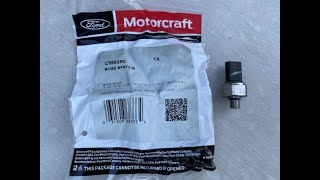
(OEM #CM-5250 (Motorcraft Service #), BU5Z-9F972-B (Ford OEM #))— This sensor is the most common failure point for a P0088 code. It can send false high-pressure readings to the computer, triggering the code even if the mechanical parts are fine.
Trusted brands: Motorcraft, Bosch
OEM price range: $65-$100
Aftermarket price range: $40-$80 - High-Pressure Fuel Pump (HPFP)
(OEM #AG9E-9D376-AB (supersedes to AG9Z-9350-B))— If the pressure sensor is confirmed to be working, the HPFP is the next likely cause. Its internal regulator can fail, causing it to produce excessive pressure.
Trusted brands: Motorcraft, Bosch (often the OEM manufacturer)
OEM price range: $400-$700+
Aftermarket price range: $250-$500
Related Codes That Often Appear With This One
- P0193 — This code means "Fuel Rail Pressure Sensor Circuit High Input," which points directly to a problem with the sensor or its circuit, reinforcing it as a likely cause.
- P0300-P0304 — These are misfire codes. An incorrect fuel pressure can lead to a poor air/fuel mixture, causing the engine to misfire, especially under load.
Technical Service Bulletins (TSBs) & Recalls
- No specific Technical Service Bulletin for P0088 on this platform was found during research. Diagnosis relies on standard workshop procedures for the fuel system.
- Cross-Manufacturer Reference: While issued for larger Ford trucks, Bulletin #SSM 49185 notes that P0088 may be due to the pressure control valve in the fuel rail, requiring replacement of the rail and valve. Similarly, Bulletin #TSB 11-4-22 was published specifically to address P0088 and a lack of power on other Ford diesel platforms.
Platform-Specific Known Issues
- Recall 18S32 (NHTSA 18V-735): While not a direct cause of P0088, this major recall affects the 2012-2018 Focus 2.0L engine. A faulty Canister Purge Valve (CPV) can cause excessive vacuum in the fuel tank, leading to stalling and drivability issues. The fix involves a PCM reprogram and potential replacement of the CPV and other fuel system components. It's worth checking if your vehicle has had this recall performed.
- Tuned Vehicles: Owners of modified and tuned Focus ST models report that the P0088 code can be triggered more easily, especially during high-RPM, full-throttle operation when the fuel system is under maximum stress.
Mechanic-Grade Diagnostic Values
- Low-Pressure Fuel System (KOEO) — expected: 55.1–79.7 psi (380–550 kPa). Failure: Pressure is significantly outside this range, though this system is less likely to cause P0088.
- High-Pressure Fuel System (GDI) — expected: Varies with load, typically 500-2,500 PSI (34-172 bar).. Failure: Actual pressure is consistently and significantly higher than the PCM's desired pressure.
- Fuel Rail Pressure Sensor Voltage — expected: Operates on a 0.5 to 4.5 volt scale. Voltage increases with pressure.. Failure: A constant reading of 5 volts or more suggests a short to power or a bad ground in the sensor circuit.
- Fuel Rail Pressure Sensor Range (Nominal) — expected: The sensor is designed to read from 0 to 26 MPa (0 to 3770 psi).. Failure: This is the sensor's maximum range; readings stuck at the top end indicate a sensor failure.
Scan Tool Commands That Help
- Ford IDS (Integrated Diagnostic System): Power Balance Test — If P0088 is accompanied by misfire codes (P030x), this test can help determine if the misfire is related to fuel, ignition, or compression by analyzing the power contribution of each cylinder.
- Ford IDS (Integrated Diagnostic System): Fuel System - High Pressure Test — This is a guided diagnostic routine within the dealer tool that can command specific pressures and monitor the system's response to help isolate a faulty HPFP, sensor, or regulator.
- High-End Bidirectional Scanners (e.g., FOXWELL NT710): Fuel Pump Active Test — Allows the technician to command the fuel pump on/off to verify the functionality of the pump and its circuit, which can be useful in ruling out control-side issues.
Wiring & Ground Locations
- G103 — Located on the left rear of the engine.. This is a primary engine ground. A poor connection here can cause erratic behavior from engine-mounted sensors, including the fuel rail pressure sensor.
- G107 — Located on the right side of the engine compartment.. Provides a ground path for various components in the engine bay. Verifying its integrity is part of a thorough electrical diagnosis.
- Main ground under air box — Underneath the air cleaner box, bolted to the chassis in front of the battery.. This is a critical chassis ground point. Corrosion or looseness here can cause a host of electrical issues, including incorrect sensor readings reported to the PCM.
- Fuel Rail Pressure (FRP) Sensor Connector — On the high-pressure fuel rail, which is on the front of the engine assembly for this model.. The connector itself or the wiring leading to it can be a point of failure. Inspect for damage, corrosion, or wires shorting together, which can send a false high voltage signal.
Real Owner Repair Stories
- Reddit user on r/FocusST (Ford Focus ST (year not specified)) — P0088 code, car running extremely rich, black smoke from exhaust.
❌ Tried (didn't work) Initially suspected a bad tune or sensor.
✅ What actually fixed it The high-pressure fuel pump (HPFP) had failed. The user noted that the lobe on the camshaft that drives the pump was also worn down, requiring replacement of both the HPFP and the camshaft. - NHTSA ODI #11515513: An owner of a Ford vehicle reported that while driving approximately 50-55 MPH, a winding sound was detected and code P0088 was displayed, requiring the vehicle to be towed for diagnosis.
- NHTSA ODI #10721001: A driver reported experiencing a lack of power and pulled engine codes to find P0088, indicating fuel rail pressure was too high, which they noted was a known manufacturer defect on their specific Ford platform.
OEM Part Supersession History
AG9Z-9350-AA→AG9Z-9350-B— Standard part revision by the manufacturer, likely for improved reliability or a change in manufacturing.
Heads up: The parts are interchangeable. AG9Z-9350-B is the current service part for this application.
Model Year Variations Within This Range
- 2015-2018: In 2015, Ford introduced a second-generation 2.0L EcoBoost engine. While still a 2.0L GDI, it featured a redesigned aluminum block, a new cylinder head with an integrated exhaust manifold, and a twin-scroll turbocharger. The compression ratio was increased from 9.3:1 to 10.0:1, and the fueling system was upgraded. While the P0088 diagnostic process is similar, technicians should be aware they are working on a mechanically different engine in post-2014 models.
Diagnostic Flowchart
Real Owner Stories
Aggregated from forums and TSBs cited above. Mileages and costs reflect what owners reported in those sources.
2014 Focus ST3 — 68000 miles
Symptoms: Hundreds of misfires, car could barely rev without stuttering, CEL with codes P0088, P0300, P0354. Misfires continue past 4k RPMs after initial 'fix'.
What fixed it: No definitive fix was reported by the original poster. The user suspected the issue could be the injectors, high-pressure fuel pump, or low-pressure fuel pump after replacing spark plugs and tightening a coil pack failed to resolve it.
Source hint: reddit.com r/FocusST - Hi guys, I could really use some help diagnosing a misfire issue
Ford Focus ST
Symptoms: Got the P0088 code again a year after previously replacing the fuel rail pressure sensor.
What fixed it: Suspected the high-pressure fuel pump (HPFP) was the culprit after the sensor replacement didn't permanently solve the issue.
Source hint: Reddit r/FocusST thread titled 'P0088'
Ford Focus
Symptoms: Engine will not start, accompanied by code P0088 (high fuel pressure).
What fixed it: A mechanic replaced the fuel pressure regulator but the problem persisted, illustrating that diagnosis can be tricky.
Source hint: Ford Owners Club thread 'Engine will not start with P0088 error code - high fuel pressure'
Related OBD-II Codes
Frequently Asked Questions
Does Recall 18S32 fix the P0088 code on my 2012-2018 Focus?
I have a tuned Focus ST. Why am I getting a P0088 code during hard acceleration?
How can I test if the fuel rail pressure sensor is bad on my 2.0L EcoBoost?
If my fuel rail pressure sensor is good, what else causes P0088 on this engine?
Are there any other Ford models that share this exact P0088 issue?
Why does my engine oil smell like gasoline with this code?
Helpful Videos
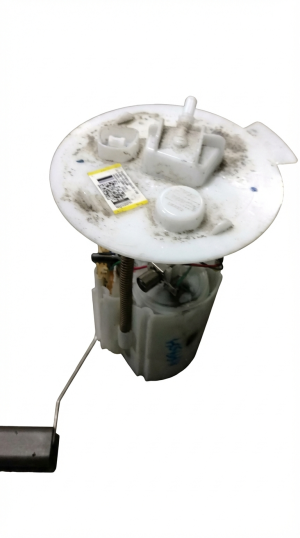
Used OEM Parts in Stock
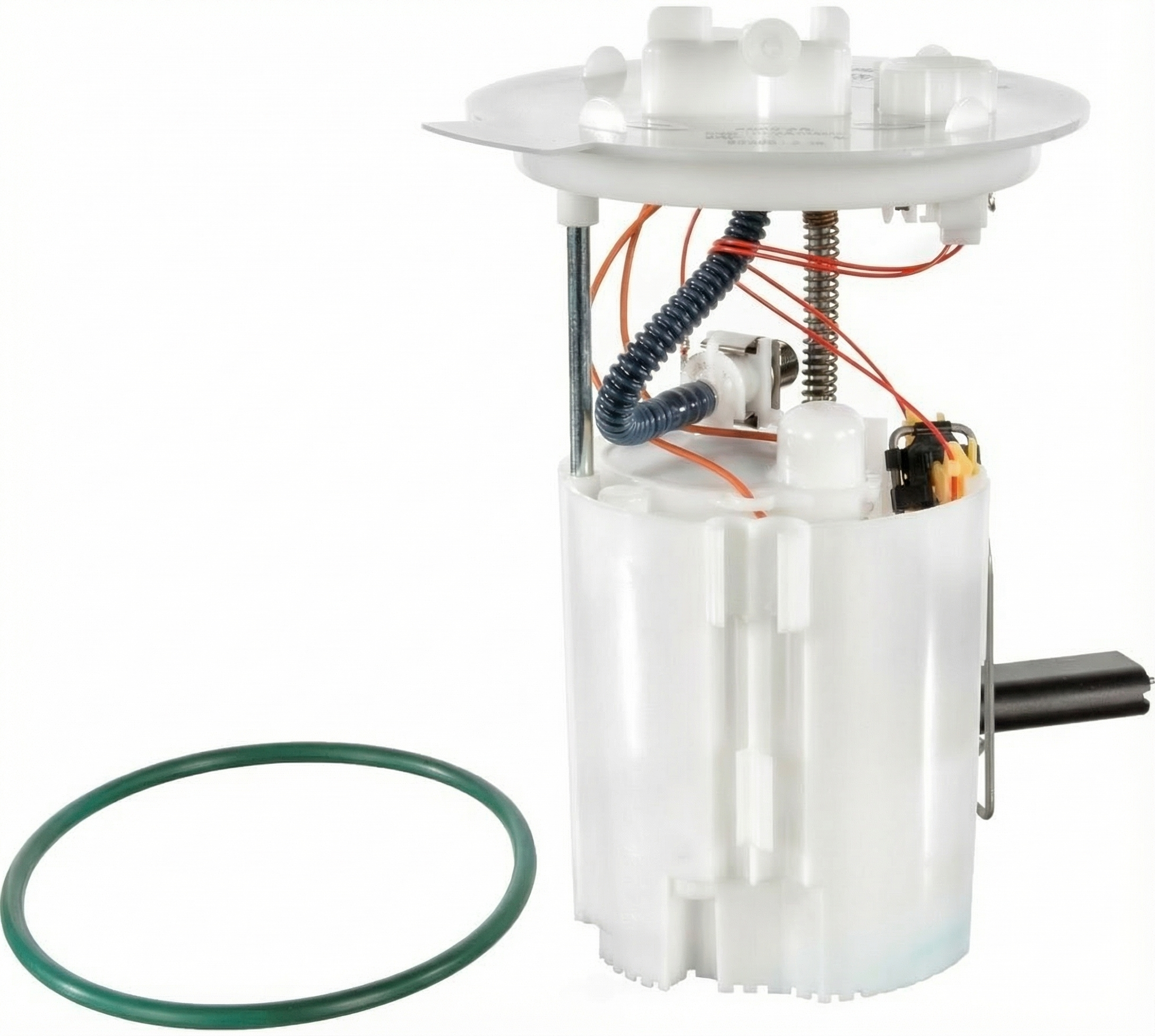
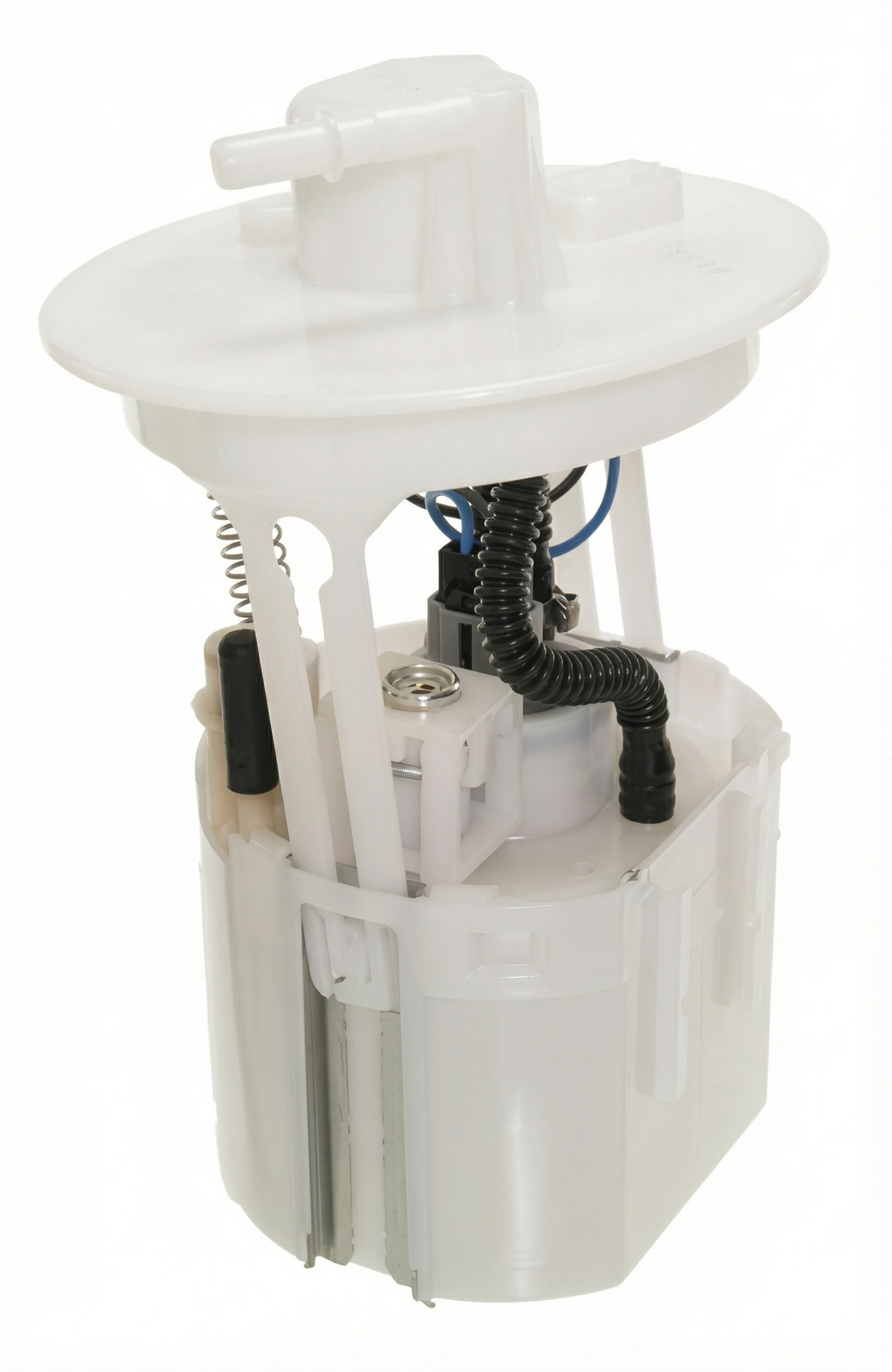
New Aftermarket Parts Available



The information in this article is provided for general reference and educational purposes only. Vehicle specifications, procedures, and part compatibility can vary by production date, trim level, and region. Always consult your vehicle's factory service manual and verify part numbers before purchasing or performing repairs. Safety-critical components such as airbags, seat belts, and braking systems should be installed by a qualified professional.
- Ford Focus:
- 🧭 Diagnostic Flowchart
- 🎬 Helpful Videos
- 🛍️ Shop This Part
- What's Unique About the 2012-2018 Ford Focus
- Symptoms You May Notice
- Most Likely Causes
- Rare But Worth Checking
- Diagnosis Steps
- Parts You'll Likely Need
- Related Codes That Often Appear With This One
- Technical Service Bulletins (TSBs) & Recalls
- Platform-Specific Known Issues
- Mechanic-Grade Diagnostic Values
- Scan Tool Commands That Help
- Wiring & Ground Locations
- Real Owner Repair Stories
- OEM Part Supersession History
- Model Year Variations Within This Range
- Real Owner Stories
- 2014 Focus ST3 — 68000 miles
- Ford Focus ST
- Ford Focus
- Related OBD-II Codes
- Frequently Asked Questions
- 🎟️ Get 5% Off