

P0088 on 2017-2024 Mazda CX-5 SKYACTIV-D 2.2: Causes and Fixes for High Fuel Pressure
On the Mazda CX-5 2.2L diesel, code P0088 is most often caused by a failing Suction Control Valve (SCV) on the high-pressure fuel pump. Replacing the SCV is the most common fix. The genuine Denso part is number 294200-2760 or 294200-4760. Expect to pay around $80-$150 for the part.
- P0088 on your diesel CX-5 means fuel pressure is dangerously high, and you should stop driving to prevent damage.
- The most likely cause is a faulty Suction Control Valve (SCV) located on the high-pressure fuel pump.
- Always start diagnosis by checking the service date on the diesel fuel filter and replacing it if it's old.
- Do not confuse this issue with the recall for the low-pressure fuel pump, which causes stalling but not this specific code.
- This is not a DIY-friendly repair due to the extreme pressures in the common rail diesel system; professional service is strongly recommended.
What's Unique About the 2017-2024 Mazda CX-5
This code appears on a common rail diesel engine, which operates at extremely high fuel pressures. Unlike gasoline engines, pressure is primarily managed by a Suction Control Valve (SCV) on the high-pressure fuel pump that meters fuel entering the pump. This SCV is the most frequent failure point for this code on the SKYACTIV-D platform. While the SKYACTIV-D 2.2 is known for other issues like DPF problems, oil dilution from incomplete regenerations, and timing chain stretch, P0088 is almost exclusively linked to the fuel delivery system. While Mazda has issued recalls for fuel pumps on some CX-5 models, those were for the low-pressure in-tank pump, which typically causes low fuel pressure (P0087), not this high-pressure code.
Symptoms You May Notice
- Check Engine Light is on
- Vehicle enters 'limp mode' with significantly reduced engine power
- Engine runs rough or hesitates
- Increased engine idle speed (part of the fail-safe function)
- i-Stop (start/stop) system is disabled
- Difficulty starting the engine
- Black smoke from the exhaust
- Engine stalling
- Replacing the low-pressure fuel pump. A recall was issued for the in-tank low-pressure pump on 2018-2019 CX-5s, but this causes stalling and a *low* pressure condition (often code P0087), not the high pressure of P0088.
Most Likely Causes
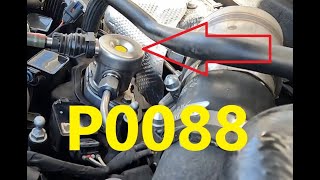
- Faulty Suction Control Valve (SCV) 🔴 High Probability The SCV is a known wear item on Denso high-pressure pumps used in many diesel vehicles, including the SKYACTIV-D. It is a small electronic solenoid that physically moves to regulate fuel volume and can wear out, get stuck, or become contaminated by dirty fuel over time, leading to pressure control failure.
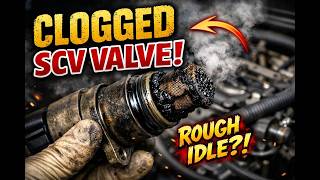
How to confirm: A technician can monitor requested vs. actual fuel rail pressure with a diagnostic scan tool. If actual pressure is consistently high and doesn't respond to commands, and the fuel pressure sensor tests okay, the SCV is the likely culprit. A bench test can also be performed by applying voltage to check for mechanical actuation. 🎬 Watch how to clean and electrically test a sticking SCV. The resistance of the SCV coil should be tested; a reading outside the 1.9-2.3 ohm range indicates a fault.
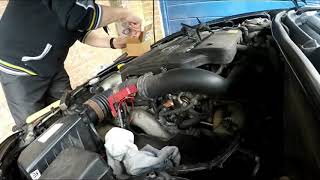
Typical fix: Replace the Suction Control Valve. It is typically mounted on the high-pressure fuel pump 🎬 See a walkthrough of the suction control valve replacement process. with two screws. After replacement, a 'pump re-learn' or 'calibration' procedure may be necessary using a capable scan tool.
Est. part cost: $80-$150 - Clogged Fuel Filter 🟡 Medium Probability → Shop Fuel Filter Diesel fuel systems are sensitive to contamination. A clogged filter can restrict flow, sometimes causing the high-pressure pump to work erratically and create pressure spikes as it tries to compensate.
How to confirm: Check the vehicle's service history to see when the fuel filter was last replaced. If it is overdue, replace it as a first step. The official Mazda diagnostic procedure lists checking the fuel filter for clogging before inspecting more complex components.
Typical fix: Replace the diesel fuel filter element.
Est. part cost: $40-$80 - Faulty Fuel Rail Pressure Sensor ⚪ Low Probability → Shop Fuel Pressure Sensor While less common than an SCV failure, the sensor that reads the fuel pressure can fail and send an incorrect high-pressure signal to the PCM, even if the pressure is normal. Manufacturer TSB Bulletin #01-004-15-3028 notes that vehicles may experience a check engine light with DTC P0088:00 stored in memory specifically due to fuel pressure sensor circuit issues.
How to confirm: With the engine off (key on), the fuel rail pressure reading on a scan tool should be near zero. If it shows a high reading, the sensor is likely faulty. A technician can also test the sensor's voltage output against specifications. A shorted wire can also cause a constant high voltage reading, tricking the PCM.
Typical fix: Replace the fuel rail pressure sensor. On the SKYACTIV-D 2.2, the sensor is part of the common rail assembly, which means the entire rail must be replaced.
Est. part cost: $100-$300
Rare But Worth Checking
- High-Pressure Fuel Pump Failure: → Shop Fuel Pump While the SCV is the most common part to fail *on* the pump, an internal mechanical failure of the pump itself can also cause this code. This is a much more expensive repair.
- Fuel Pressure Relief Valve Malfunction: The common rail has a mechanical safety valve that is supposed to open if pressure gets dangerously high. If this valve is stuck closed, it can contribute to an over-pressure condition. Mazda's diagnostic procedure includes inspecting this valve.
- PCM Malfunction: In very rare cases, the engine's computer can fail and misinterpret sensor data, causing the code. This should only be considered after all other possibilities have been exhausted.
- Kinked or Restricted Fuel Return Line: A blockage in the fuel return line can prevent excess fuel from leaving the rail, causing pressure to build up. This is less common but a possible cause.
Diagnosis Steps
- Connect a professional scan tool to read the fault code and view live data. Note the freeze frame data to see the engine conditions when the code was set.
- Monitor 'Requested Fuel Rail Pressure' and 'Actual Fuel Rail Pressure'. With P0088, the actual pressure will be significantly higher than the requested pressure.
- Check for any related Technical Service Bulletins (TSBs). Note that TSB 01-004/15 for P0088 applies to gasoline SKYACTIV engines due to a faulty high-pressure pump, not the diesel.
- Inspect and replace the diesel fuel filter if its age is unknown or it is past its service interval. This is a crucial and relatively inexpensive first step.
- If the issue persists, perform a functional test of the Suction Control Valve (SCV) using the scan tool. If it fails to regulate pressure as commanded, it is faulty.
- Test the fuel rail pressure sensor. With the engine off, the sensor should read atmospheric pressure. If it reads a high value, it is likely defective.
- Inspect fuel lines for any kinks or restrictions, particularly the return line from the fuel rail.
- If the SCV and sensor are confirmed to be good, further diagnosis of the high-pressure pump, pressure relief valve, and wiring is required.
Parts You'll Likely Need
- Suction Control Valve (SCV)
(OEM #SHY1-13-V21)— This is the most common failure point for code P0088 on the SKYACTIV-D 2.2 engine. It is the primary actuator for regulating pressure in the common rail system.
Trusted brands: Denso (OEM)
OEM price range: $120-$200
Aftermarket price range: $80-$150 - Diesel Fuel Filter
(OEM #SH01-13-ZA5)— A clogged filter is a common cause of fuel pressure issues and should always be considered as part of routine maintenance and diagnosis for this code.
Trusted brands: Bosch, Mahle, Denso, Mazda (OEM)
OEM price range: $60-$90
Aftermarket price range: $40-$80
Related Codes That Often Appear With This One
- P0087 — If the Suction Control Valve is failing erratically, it may stick open (causing P0088) and then stick closed or fail to build pressure, causing a low pressure condition (P0087) at different times.
- P0089 — This code for 'Fuel Pressure Regulator Performance' often accompanies P0087 or P0088, as it indicates a general problem with the SCV's ability to maintain the target pressure, rather than just being too high or too low.
Technical Service Bulletins (TSBs) & Recalls
- Recall 5321K / NHTSA 21V-904: Pertains to a failing LOW-pressure fuel pump on 2018-2019 CX-5s, which causes low pressure (P0087), not P0088. This is a common point of confusion.
- Mazda TSB 01-004/15: This bulletin addresses P0088 on 2012-2013 Mazda3 and other models with 2.0L/2.5L SKYACTIV-G (gasoline) engines, calling for the replacement of the high-pressure fuel pump. It is NOT applicable to the SKYACTIV-D diesel engine.
- TSB Bulletin #01-004-15-3028: This manufacturer record notes that some vehicles may experience a Check Engine Light with DTC P0088:00 stored in memory, specifically identifying the fuel pressure sensor circuit as a point of concern.
Platform-Specific Known Issues
- Owner Experience: Limp Mode and SCV Replacement: Multiple owners in forums for the CX-5 and Mazda 6 with the 2.2L diesel engine report sudden entry into 'limp mode' accompanied by the check engine light and P0088. The consensus fix in the community is the replacement of the Suction Control Valve on the high-pressure fuel pump. Many have successfully performed the replacement DIY, though it requires care due to the high pressures involved.
Mechanic-Grade Diagnostic Values
- Suction Control Valve (SCV) coil resistance — expected: Approx. 2.1 Ohms at 20°C (68°F). A common acceptable range is 1.9 - 2.3 Ohms.. Failure: A reading significantly outside this range, or an open/short circuit, indicates a faulty SCV coil.
- Fuel Rail Pressure Sensor (FRP) reference voltage — expected: Approx. 5V at the connector with sensor unplugged and key on.. Failure: No voltage suggests a wiring or PCM issue. A constant 5V or higher on the signal wire with the sensor connected suggests a short to power or a bad ground.
Hidden / Shadow Codes Worth Checking
- Pending Code: The Mazda PCM will store a 'PENDING CODE' for P0088 on the first drive cycle where the fault condition is met. The Check Engine Light will not illuminate until the fault is detected on a second consecutive drive cycle. (see via A standard OBD-II scanner capable of reading pending codes.)
Scan Tool Commands That Help
- Mazda M-MDS (or equivalent like FORScan): Fuel System/Pump Re-learn — After replacing the Suction Control Valve (SCV) or high-pressure fuel pump, this function is used to initialize the new component and allow the PCM to learn its operational characteristics.
- Mazda M-MDS (or equivalent dealer tool): Injector QR Code Registration / Learning — While not a direct cause of P0088, it's a critical related procedure. If injectors are ever replaced during diagnosis, they must be coded to the ECU. The Denso system for this engine uses a multi-level learning process at different pressures (up to 197 MPa) to ensure precise fuel delivery, which can only be performed with a dealer-level tool.
- Mazda M-MDS: Drive Mode Type A — The official Mazda diagnostic procedure calls for performing this specific drive mode after repairs to verify that the fault does not return and to clear the pending code.
Wiring & Ground Locations
- Wiring Diagram Note — Engine Bay Harness. The official Mazda workshop manual for DTC P0088 explicitly states 'SYSTEM WIRING DIAGRAM: Not applicable'. This indicates that Mazda does not consider wiring faults to be a primary cause and directs technicians to focus on component testing (SCV, fuel filter, pump, sensor). However, general best practice still involves visually inspecting the harnesses for the SCV and fuel rail pressure sensor for any obvious damage, such as from rodents.
Real Owner Repair Stories
- Reddit user arduinoRedge on /r/CX5 (2013 CX-5 2.2L AWD Diesel) — Car stalled without warning, would not restart, no fuel pressure on scan tool.
❌ Tried (didn't work) Swapping the high-pressure fuel pump with a 'known good one'., Replacing the fuel filter., Using an injector cleaning machine to bypass the supply pump., Swapping the fuel rail and distribution rail.
✅ What actually fixed it The 'known good' high-pressure fuel pump was actually faulty. Replacing it with a brand new high-pressure pump finally resolved the no-pressure condition. This serves as a critical lesson in not trusting used or unverified parts during diagnosis.
When the Usual Fixes Don't Work
- While P0088 on the SKYACTIV-D is almost always a high-pressure side fault, it's important to be aware of how this code behaves on other engines. In one documented case on a gasoline 2014 Mazda 3, a P0088 code accompanied by a no-start condition was ultimately caused by a failed in-tank low-pressure fuel pump. A technician working on a CX-5 must be absolutely certain they are diagnosing the correct engine (SKYACTIV-D vs. SKYACTIV-G), as the common causes for the same code can be completely different.
OEM Part Supersession History
Denso 294200-2760→Often listed with 294200-4760— These part numbers are frequently listed as cross-compatible or equivalent for the same applications, including the Mazda SHY1-13-V21. It is less of a direct supersession and more of an interchangeable set, but it is critical to verify application.
Heads up: A diesel parts supplier warns that for some Denso pumps, there are visually similar 'long' and 'short' SCV valves. They strongly recommend a VIN check before purchasing to ensure the correct part is supplied, as installing the wrong one will cause issues.
Model Year Variations Within This Range
- 2018-2020: The SKYACTIV-D 2.2 engine underwent significant revisions to meet stricter WLTP emissions standards. The higher-output version was upgraded from 175ps to 184ps. While the fundamental cause of P0088 (SCV failure) is unlikely to have changed, these revisions to the engine and its management system could mean software versions and specific operating parameters differ from earlier (2017) or later models.
Diagnostic Flowchart
Real Owner Stories
Aggregated from forums and TSBs cited above. Mileages and costs reflect what owners reported in those sources.
Mazda CX-5 SKYACTIV-D 2.2
Symptoms: Sudden entry into 'limp mode' accompanied by the check engine light and code P0088.
What fixed it: Replaced the Suction Control Valve (SCV) on the high-pressure fuel pump (Denso part 294200-4760 / 294200-2760).
Cost: $80-$150
Source hint: Mazdas247 Forum ('CX-5 Powertrain & SkyActiv' sub-forum)
Related OBD-II Codes
Frequently Asked Questions
Does TSB 01-004/15 apply to my 2017 CX-5 diesel for code P0088?
Is code P0088 covered under the Mazda fuel pump recall (Recall 5321K / NHTSA 21V-904)?
Why did my i-Stop system stop working when the check engine light came on with P0088?
Can I just replace the fuel rail pressure sensor on my SKYACTIV-D 2.2 to fix this?
What is the most common fix for P0088 on the CX-5 diesel?
How can a mechanic confirm the Suction Control Valve (SCV) is the problem?
Related OBD-II Codes
Real Owner Repair Stories
- Reddit user arduinoRedge on /r/CX5 (2013 CX-5 2.2L AWD Diesel) — Car stalled without warning, would not restart, no fuel pressure on scan tool.
❌ Tried (didn't work) Swapping the high-pressure fuel pump with a 'known good one'., Replacing the fuel filter., Using an injector cleaning machine to bypass the supply pump., Swapping the fuel rail and distribution rail.
✅ What actually fixed it The 'known good' high-pressure fuel pump was actually faulty. Replacing it with a brand new high-pressure pump finally resolved the no-pressure condition. This serves as a critical lesson in not trusting used or unverified parts during diagnosis.
When the Usual Fixes Don't Work
- While P0088 on the SKYACTIV-D is almost always a high-pressure side fault, it's important to be aware of how this code behaves on other engines. In one documented case on a gasoline 2014 Mazda 3, a P0088 code accompanied by a no-start condition was ultimately caused by a failed in-tank low-pressure fuel pump. A technician working on a CX-5 must be absolutely certain they are diagnosing the correct engine (SKYACTIV-D vs. SKYACTIV-G), as the common causes for the same code can be completely different.
OEM Part Supersession History
Denso 294200-2760→Often listed with 294200-4760— These part numbers are frequently listed as cross-compatible or equivalent for the same applications, including the Mazda SHY1-13-V21. It is less of a direct supersession and more of an interchangeable set, but it is critical to verify application.
Heads up: A diesel parts supplier warns that for some Denso pumps, there are visually similar 'long' and 'short' SCV valves. They strongly recommend a VIN check before purchasing to ensure the correct part is supplied, as installing the wrong one will cause issues.
Model Year Variations Within This Range
- 2018-2020: The SKYACTIV-D 2.2 engine underwent significant revisions to meet stricter WLTP emissions standards. The higher-output version was upgraded from 175ps to 184ps. While the fundamental cause of P0088 (SCV failure) is unlikely to have changed, these revisions to the engine and its management system could mean software versions and specific operating parameters differ from earlier (2017) or later models.
Helpful Videos


The information in this article is provided for general reference and educational purposes only. Vehicle specifications, procedures, and part compatibility can vary by production date, trim level, and region. Always consult your vehicle's factory service manual and verify part numbers before purchasing or performing repairs. Safety-critical components such as airbags, seat belts, and braking systems should be installed by a qualified professional.
- Mazda CX-5:
- 🧭 Diagnostic Flowchart
- 🎬 Helpful Videos
- What's Unique About the 2017-2024 Mazda CX-5
- Symptoms You May Notice
- Most Likely Causes
- Rare But Worth Checking
- Diagnosis Steps
- Parts You'll Likely Need
- Related Codes That Often Appear With This One
- Technical Service Bulletins (TSBs) & Recalls
- Platform-Specific Known Issues
- Mechanic-Grade Diagnostic Values
- Hidden / Shadow Codes Worth Checking
- Scan Tool Commands That Help
- Wiring & Ground Locations
- Real Owner Repair Stories
- When the Usual Fixes Don't Work
- OEM Part Supersession History
- Model Year Variations Within This Range
- Real Owner Stories
- Mazda CX-5 SKYACTIV-D 2.2
- Related OBD-II Codes
- Frequently Asked Questions
- Related OBD-II Codes
- Real Owner Repair Stories
- When the Usual Fixes Don't Work
- OEM Part Supersession History
- Model Year Variations Within This Range
- 🎟️ Get 5% Off