

P0088 on 2007-2013 Mazda Mazdaspeed3: Fuel Pressure Too High Causes and Fixes
On a Mazdaspeed3, code P0088 is almost always caused by a failing High-Pressure Fuel Pump (HPFP), specifically its internal spill valve. A faulty fuel rail pressure sensor is the next most likely cause. Expect to pay $500-$800 for an OEM pump (Part No. L3K9-13-35ZC). It is critical to check the engine oil for fuel contamination before and after the repair, as this secondary failure can destroy the engine.
- P0088 on your Mazdaspeed3 almost always points to a problem with the High-Pressure Fuel Pump (HPFP) on the engine.
- Before replacing any parts, use a scan tool to watch the 'Actual' vs. 'Desired' fuel rail pressure. If 'Actual' is much higher, the HPFP is the problem.
- ALWAYS check your engine oil for a gasoline smell. If it's contaminated, you MUST change the oil and filter when you replace the pump to avoid destroying your engine.
- A faulty fuel rail pressure sensor is a possible but less common cause.
- Do not confuse this issue with the in-tank (low-pressure) fuel pump; P0088 is specific to the high-pressure system.
What's Unique About the 2007-2013 Mazda Mazdaspeed3
The MZR 2.3L DISI Turbo engine uses a camshaft-driven High-Pressure Fuel Pump (HPFP) to achieve pressures up to 1885 psi for its direct injection system. This HPFP is a well-documented weak point on the platform. The internal pressure-regulating component, known as the spill valve, is prone to sticking or failing, which directly causes the over-pressurization condition that triggers code P0088. This is a very common issue for Mazdaspeed3, Mazdaspeed6, and CX-7 models sharing this engine.
Generation note: The 2007-2013 year range covers both the first generation (BK, 2007-2009) and second generation (BL, 2010-2013) Mazdaspeed3. Both generations use the same MZR 2.3L DISI Turbo engine and high-pressure fuel system, and the causes and fixes for P0088 are identical for both.
Symptoms You May Notice
- Check Engine Light is on
- Sudden loss of power or engine going into "limp mode"
- Engine sputtering or hesitating, especially during acceleration
- Reduced fuel economy
- Hard starting or stalling
- Black smoke from the exhaust, indicating a rich condition
- Smell of raw fuel near the engine or from the exhaust
- Replacing the in-tank low-pressure fuel pump. This code is specific to the high-pressure side of the fuel system on the engine. A failing in-tank pump would cause low pressure codes (P0087).
- Replacing fuel injectors. While excessive pressure can affect injectors, they are rarely the root cause of the P0088 code itself.
Most Likely Causes
- Failing High-Pressure Fuel Pump (HPFP) 🔴 High Probability → Shop Fuel Pump The internal spill valve, which regulates pressure, is a known common failure point on the OEM HPFP for this engine. It gets stuck, causing the pump to run at maximum pressure continuously, which directly triggers the P0088 code.
How to confirm: Use a scan tool to monitor live data. Compare 'Desired Fuel Rail Pressure' to 'Actual Fuel Rail Pressure'. If the actual pressure is significantly higher than desired (e.g., 1800+ psi at idle when desired is ~450 psi), the HPFP has almost certainly failed.
Typical fix: Replace the High-Pressure Fuel Pump. The latest OEM part number is L3K9-13-35ZC. 🎬 Watch: Step-by-step high-pressure fuel pump replacement guide It is critical to also check the engine oil for fuel contamination. If the oil smells strongly of gasoline, an oil and filter change is mandatory to prevent engine damage.
Est. part cost: $500-$800 - Faulty Fuel Rail Pressure Sensor 🟡 Medium Probability → Shop Fuel Pressure Sensor The sensor can fail electronically, sending an incorrect high-pressure signal to the PCM even if the pressure is normal. Corrosion on the connector is also a possibility.
How to confirm: With the engine off and key on, the fuel rail pressure on a scan tool should read close to the low-pressure system's value (around 60-70 psi). If it reads an abnormally high value, the sensor is likely faulty. You can also check the sensor's signal wire; a constant 5-volt reading indicates a short or a bad sensor.
Typical fix: Replace the fuel rail pressure sensor. The correct aftermarket part is Bosch 0261545038. 🎬 See this quick fuel rail pressure sensor replacement walkthrough
Est. part cost: $50-$150
Rare But Worth Checking
- Faulty Pressure Relief Valve (PRV): A forum user reported a case where a faulty PRV, in combination with a bad spill valve, was the cause. The PRV is a mechanical safety valve 🎬 Watch: How to diagnose and fix a failing relief valve on the fuel rail.
- Wiring Harness Issue: A short-to-voltage in the fuel rail pressure sensor's signal wire can cause the PCM to see a permanently high reading, mimicking a sensor failure. A poor ground for the HPFP spill valve can also cause erratic operation, a point often raised by owners after installing upgraded pumps.
- Shorted Shared Electrical Circuit: In one documented case on a Mazda CX-7 with the same engine, a shorted EVAP leak detection pump blew a fuse ('Engine Bar 1' 15A) that it shared with the fuel pressure regulator, causing fuel pressure codes. This highlights the need to check for seemingly unrelated codes and examine wiring diagrams.
Diagnosis Steps
- Connect an OBD-II scanner and verify P0088 is the primary code. Check for any other related codes like P0089, P0193, or even seemingly unrelated electrical codes.
- Access live data on the scanner. Observe 'Desired Fuel Rail Pressure' and 'Actual Fuel Rail Pressure' at idle. A healthy engine idles around 400-500 psi. If 'Actual' pressure is pegged at 1800+ psi while 'Desired' is low, the HPFP is the primary suspect.
- CRITICAL STEP: Turn off the engine and check the engine oil dipstick. Smell the oil for a strong gasoline odor. If fuel contamination is present, the HPFP has failed and is leaking into the crankcase. Do not run the engine further until the pump and oil are replaced.
- If the pressure readings are erratic or pegged high even with the engine off (key on), suspect the Fuel Rail Pressure Sensor or its wiring.
- Inspect the wiring harness and connectors for the HPFP spill valve and the fuel rail pressure sensor for any visible damage, corrosion, or loose connections. Pay special attention to the ground wire on the HPFP bracket.
- If the HPFP and sensor are confirmed to be good, investigate the rare possibility of a stuck pressure relief valve (PRV) or a restriction in the fuel return system.
- Consult a wiring diagram to see if other components share a fuse or power source with the fuel pressure control system, as a short elsewhere can trigger this code.
Parts You'll Likely Need
- High-Pressure Fuel Pump (HPFP)
(OEM #L3K9-13-35ZC)— This is the most common failure point for code P0088 on the 2.3L MZR DISI engine due to an internal spill valve malfunction. The part number L3K9-13-35ZC supersedes older versions L3K9-13-35ZA and L3K9-13-35ZB.
Trusted brands: Mazda OE, Bosch
OEM price range: $500-$800
Aftermarket price range: $250-$500 - Fuel Rail Pressure Sensor
(OEM #L807-18-211)— This is the second most likely cause, responsible for reporting incorrect high-pressure readings to the PCM. The correct aftermarket replacement is Bosch P/N 0261545038.
Trusted brands: Bosch, Denso
OEM price range: $100-$200
Aftermarket price range: $50-$120 - Engine Oil and Filter — This is a mandatory replacement if the failing HPFP has contaminated the engine oil with fuel, a very common and dangerous side effect of this failure.
Trusted brands: Pennzoil, Mobil 1, Castrol
OEM price range: $50-$90
Aftermarket price range: $40-$70
Related Codes That Often Appear With This One
- P0089 — This code for 'Fuel Pressure Regulator Performance' directly relates to the function of the spill valve inside the HPFP, which is the most common cause of P0088.
- P0193 — This code for 'Fuel Rail Pressure Sensor Circuit High' points specifically to an electrical fault or a sensor that is sending a signal voltage that is too high. If seen with P0088, it strongly suggests the PCM believes the high reading is plausible and the system is mechanically over-pressurized.
- P0300 — A 'Random Misfire' code can occur because the excessively high fuel pressure leads to poor fuel atomization and fouled spark plugs, causing misfires.
Technical Service Bulletins (TSBs) & Recalls
- TSB 01-004/15: This TSB addresses P0088 but applies to later model years with SKYACTIV engines (2012+ Mazda3, CX-5, etc.), not the 2007-2013 Mazdaspeed3 with the MZR DISI Turbo. There are no known official TSBs from Mazda for code P0088 on the MZR engine.
- Manufacturer TSB Bulletin #01-004-15-3028: While issued for other Mazda models like the CX-5, this bulletin notes that vehicles may experience the Check Engine Light with DTC P0088:00 stored in memory due to fuel pressure sensor circuit issues.
Platform-Specific Known Issues
- The camshaft-driven High-Pressure Fuel Pump (HPFP) is a widely recognized weak point on this platform, with many owners opting for aftermarket upgraded internals for better reliability, especially on modified vehicles.
- Fuel leaking from a failed HPFP into the crankcase is a common and dangerous secondary failure. It severely degrades the oil's lubricating properties and can quickly lead to spun bearings and catastrophic engine failure if not addressed immediately with an oil change.
Mechanic-Grade Diagnostic Values
- HPFP Spill Valve Resistance — expected: ~1.8 Ω. Failure: A significantly higher or lower reading indicates a potential issue with the valve's coil.
- Fuel Rail Pressure Sensor Signal Voltage (KOEO) — expected: 0.5V - 1.9V. Should correspond to low-side fuel pressure (approx. 60-70 psi).. Failure: A reading of 0V or a constant 5V indicates a sensor or wiring fault. A reading of 1.9V was reported by a user as seeming high.
- Fuel Rail Pressure Sensor Reference Voltage — expected: 5V. Failure: No voltage indicates a wiring or PCM issue.
- HPFP Spill Valve Connector Voltage (KOEO) — expected: Battery Voltage. Failure: Low or no voltage suggests a wiring or power supply issue upstream of the valve.
Hidden / Shadow Codes Worth Checking
- Pending P0088: The PCM will set a pending (or temporary) code on the first drive cycle that a fuel pressure fault is detected. The Check Engine Light will not illuminate until the fault is detected on a second consecutive drive cycle. (see via Any standard OBD-II scanner that can read 'Pending' or 'Mode $07' codes.)
Scan Tool Commands That Help
- Mazda M-MDS (or equivalent advanced scanner): Fuel System Pressure Bleed Procedure — To safely relieve high pressure from the fuel rail before servicing components. The manual procedure involves disconnecting the HPFP and in-tank pump relay, then starting the engine until it stalls from fuel starvation.
Wiring & Ground Locations
- ECU Connector B, Pin 2G — At the Powertrain Control Module (PCM/ECU).. This pin (Yellow wire) is the control signal for the High-Pressure Fuel Pump's spill valve.
- ECU Connector B, Pin 2R — At the Powertrain Control Module (PCM/ECU).. This pin (White/Green wire) is the signal input from the Fuel Rail Pressure Sensor.
- ECU Connector B, Pin 2I — At the Powertrain Control Module (PCM/ECU).. This pin (Green/Black wire) provides the 5V reference voltage to the Fuel Rail Pressure Sensor.
- HPFP Ground — A small black wire from the engine harness, typically secured to the metal bracket that holds the electrical connectors near the HPFP on the passenger side of the engine.. A poor ground can cause erratic operation of the HPFP's spill valve, leading to incorrect fuel pressure control.
Real Owner Repair Stories
- MazdaSpeeds.org forum user (2008 Mazdaspeed3, heavily modified) — Fuel pressure dropping to in-tank pressure (~60 psi) under load, causing hesitation. Also, fuel pressure would not exceed ~1700 psi.
❌ Tried (didn't work) Initially replacing the Pressure Relief Valve (PRV) did not fix the pressure drops, but it did allow pressure to exceed 1700 psi, indicating the old PRV was also faulty.
✅ What actually fixed it The primary issue of pressure dropping to ~60 psi was fixed by replacing the HPFP's spill valve. The final diagnosis was a dual failure of both the spill valve and the PRV. - Reddit user on r/mazdaspeed3 (Mazdaspeed3 (year not specified)) — P0192 (Fuel Rail Pressure Sensor Circuit Low Input), engine stalling, running pig rich, smelling of raw fuel.
❌ Tried (didn't work) Installing a Bosch 0261545074 sensor (listed for a CX-7) caused the pressure to read a constant 2200+ psi and made the car run poorly.
✅ What actually fixed it Replacing the fuel rail pressure sensor with the correct part: Bosch 0261545038, which is marketed as a Ford OEM sensor but is the correct fit and function for the Mazdaspeed3.
OEM Part Supersession History
L3K9-13-35ZA, L3K9-13-35ZB→L3K9-13-35ZC— Revisions to improve reliability of the high-pressure fuel pump.Mazda OEM Fuel Rail Pressure Sensor (not sold separately)→Bosch 0261545038— This is the correct, available aftermarket replacement from the original equipment manufacturer.
Heads up: Do NOT use Bosch P/N 0261545074. While it may be listed for the 2.3L engine in the CX-7, its connector is slightly different and will cause incorrect pressure readings (pegged at 2200+ psi) on a Mazdaspeed3.
Model Year Variations Within This Range
- 2010-2013 (Gen 2): The Gen 2 models feature a faster ECU that is reportedly more sensitive to airflow modifications (intake, etc.). This makes upgrading the HPFP internals even more critical on Gen 2 cars to prevent fuel cuts and potential engine damage, compared to Gen 1.
- 2010-2013 (Gen 2): The engine received minor revisions, including improved piston crowns and a revised (more reliable) VVT actuator from the factory. However, the HPFP design and its failure mode for P0088 remain identical to the Gen 1.
Diagnostic Flowchart
Other Known Issues on This Vehicle
Issues unrelated to this code that are worth knowing about as an owner of this generation:
- VVT Actuator Failure & Timing Chain Stretch 🔴 High → Shop Engine Timing Chain — Very common, typically between 50k-100k miles. A defective lock pin in the VVT actuator fails, causing the timing chain to slacken, rattle on startup, and eventually jump time, leading to catastrophic engine damage. (Ref: Mazda issued a Special Service Program (SSP) / warranty extension for this issue on 2007-2010 models, but it has since expired.)
- K04 Turbocharger Seal Failure (Smoking Turbo) 🟠 Medium — Common, especially on higher mileage or modified cars. The stock K04 turbo's internal oil seals fail, causing blue/white smoke from the exhaust, particularly at idle after the engine is warm. It leads to high oil consumption but not immediate performance loss.
- Intake Valve Carbon Buildup 🟠 Medium — Inevitable on all DISI engines, typically requires cleaning every 60k-85k miles. Since fuel is injected directly into the cylinder, it never washes over the intake valves. Oil vapor from the PCV system bakes onto the valves, restricting airflow and causing misfires and power loss over time.
- Stock HPFP Incapable of Handling Modifications 🔴 High — Occurs immediately upon adding performance parts like a downpipe or tune. The stock HPFP cannot supply enough fuel for increased power, leading to dangerous lean conditions and potential engine failure ('Zoom-Zoom Boom'). Upgrading the pump's internals (e.g., with Autotech or CorkSport parts) is considered a mandatory first modification.
Used vs. New Parts: Buying Guide for This Vehicle
When a used part is the smart pick: For this specific repair, buying used parts is generally not recommended. The OEM HPFP has a known high failure rate, making a used unit a significant gamble. A used fuel pressure sensor is also risky as it is an electronic component. The only scenario could be sourcing a complete fuel rail from a very low-mileage donor car to obtain the sensor, which Mazda does not sell separately.
Donor-vehicle mileage cap: roughly under 40000 miles for the part to have meaningful remaining life.
What to inspect on the donor part:
- For an HPFP, there is no reliable way to visually inspect the critical internal spill valve.
- For a fuel rail/sensor, check for any physical damage, corrosion on the connector, or signs of leaking.
OEM-only on this vehicle (don't cheap out):
- High-Pressure Fuel Pump (Full Assembly): If not upgrading the internals, sticking with a new Mazda OEM pump (L3K9-13-35ZC) is the safest bet to avoid issues with aftermarket build quality.
Aftermarket brands forum-validated for this vehicle:
- Autotech: Widely regarded in forums as the most reliable choice for upgraded HPFP internals.
- CorkSport: A popular option for HPFP internals, though some users have reported part or shipping issues.
- Bosch: The OEM manufacturer for the fuel rail pressure sensor; part number 0261545038 is the correct replacement.
Brands owners have reported issues with on this vehicle:
- Used HPFP Internals: Forum consensus strongly advises against buying used internals due to the high risk of failure and potential for catastrophic engine damage.
- Unbranded/Generic HPFPs: Given the precision required and the history of OEM failures, cheap, unbranded complete pump assemblies are a major risk.
Real Owner Stories
Aggregated from forums and TSBs cited above. Mileages and costs reflect what owners reported in those sources.
2014 Mazda 3 (SKYACTIV engine)
Symptoms: Performance loss, high fuel consumption, strange noises, and hard starting.
What fixed it: The owner reported these as classic symptoms of the P0088 error on the platform.
Source hint: Reddit (r/mazda3) URL: reddit.com/r/mazda3/comments/k23z1j/2014_mazda_3_p0088_error/
Mazdaspeed6 (2.3L MZR DISI Turbo)
Symptoms: Misfires after an HPFP upgrade.
What fixed it: Fixing a poorly connected ground wire on the HPFP bracket.
Source hint: Reddit (r/mazdaspeed6) URL: reddit.com/r/mazdaspeed6/comments/z84q9d/hpfp_help/
Mazdaspeed3 (2.3L MZR DISI Turbo)
Symptoms: During cold start, it would idle at 500 rpm with low fuel pressure around 250 psi; bad clicking/clanking from the HPFP; hesitation at high rpms and stutter/pop during WOT.
What fixed it: The owner was performing a relief valve test and investigating HPFP internal issues after running Autotech internals.
Source hint: MazdaSpeeds.org owner_reports
Related OBD-II Codes
Frequently Asked Questions
Does TSB 01-004/15 apply to my 2007-2013 Mazdaspeed3 with the MZR engine?
What is the specific part number for the replacement HPFP on my Mazdaspeed3?
Can I use a generic fuel rail pressure sensor, or is there a specific one recommended?
Why is my oil smelling like gasoline after getting the P0088 code?
Is it true that I need to upgrade my HPFP if I install a downpipe?
Could a simple wiring issue cause P0088 on this car?
Helpful Videos
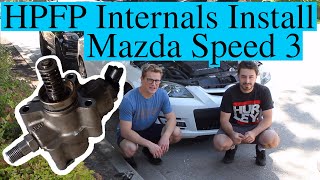
![How to Install your Mazdaspeed 3 [HPFP] Internals](https://img.youtube.com/vi/G80hqXgNq4U/mqdefault.jpg)
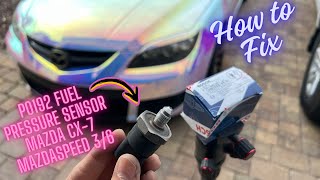
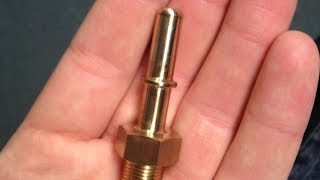
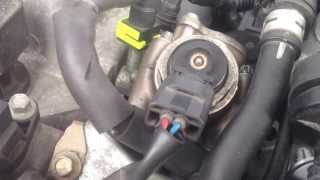
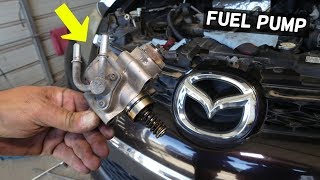
We Have This Part in Stock

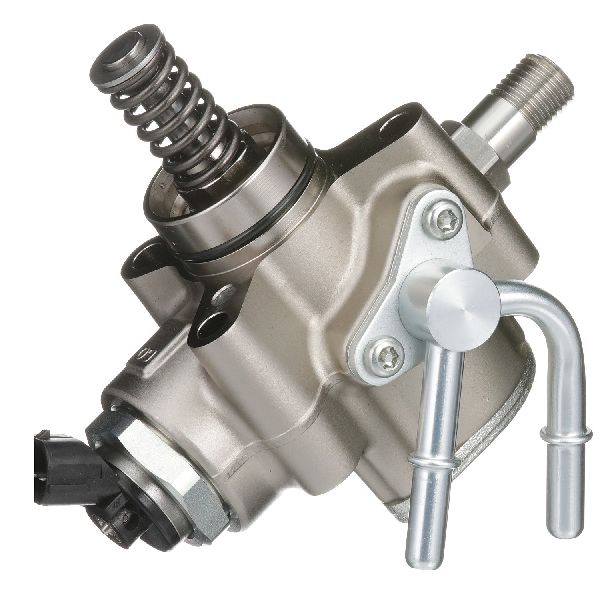

The information in this article is provided for general reference and educational purposes only. Vehicle specifications, procedures, and part compatibility can vary by production date, trim level, and region. Always consult your vehicle's factory service manual and verify part numbers before purchasing or performing repairs. Safety-critical components such as airbags, seat belts, and braking systems should be installed by a qualified professional.
- Mazda Mazdaspeed3:
- 🧭 Diagnostic Flowchart
- 🎬 Helpful Videos
- 🛍️ Shop This Part
- What's Unique About the 2007-2013 Mazda Mazdaspeed3
- Symptoms You May Notice
- Most Likely Causes
- Rare But Worth Checking
- Diagnosis Steps
- Parts You'll Likely Need
- Related Codes That Often Appear With This One
- Technical Service Bulletins (TSBs) & Recalls
- Platform-Specific Known Issues
- Mechanic-Grade Diagnostic Values
- Hidden / Shadow Codes Worth Checking
- Scan Tool Commands That Help
- Wiring & Ground Locations
- Real Owner Repair Stories
- OEM Part Supersession History
- Model Year Variations Within This Range
- Other Known Issues on This Vehicle
- Used vs. New Parts: Buying Guide for This Vehicle
- Real Owner Stories
- 2014 Mazda 3 (SKYACTIV engine)
- Mazdaspeed6 (2.3L MZR DISI Turbo)
- Mazdaspeed3 (2.3L MZR DISI Turbo)
- Related OBD-II Codes
- Frequently Asked Questions
- 🎟️ Get 5% Off