

P0088 on 2001-2009 Volvo S60: Fuel Pressure Too High Causes and Fixes
For a 2001-2009 Volvo S60, code P0088 most often points to a faulty Fuel Pressure Sensor (FPS) or a failing Fuel Pump Electronic Module (PEM). The FPS can send false high readings, while a corroded PEM can command the fuel pump to run at maximum speed. Replacing the sensor is a common first step and costs around $50-$100 for a quality aftermarket part.
- P0088 on a 2001-2009 S60 means fuel pressure is too high.
- The most likely cause is a faulty Fuel Pressure Sensor (FPS). Confirm this by comparing scan tool data to a mechanical gauge.
- The second most likely cause is a corroded Fuel Pump Electronic Module (PEM), especially on earlier models where it's mounted under the car.
- Do not immediately replace the expensive fuel pump; the sensor and module are more common, cheaper fixes.
- Driving with this code can cause stalling and damage other expensive components like the catalytic converter.
What's Unique About the 2001-2009 Volvo S60
On the first-generation (P2 platform) Volvo S60, the two most common culprits for P0088 are distinct. The Fuel Pressure Sensor (FPS) at the end of the fuel rail is a frequent failure point, often sending erratic high-pressure signals. Additionally, the Fuel Pump Electronic Module (PEM), which controls fuel pump speed, is notoriously prone to failure. On models up to around 2004, the PEM was mounted under the car near the passenger-side rear wheel, where it is exposed to water and road salt, causing severe corrosion. When the PEM fails, it often defaults to running the fuel pump at 100% duty cycle, causing genuinely high fuel pressure. Later models had the PEM relocated inside the trunk to prevent this common issue.
Symptoms You May Notice
- Check Engine Light is on
- "Engine System Service Urgent" message on the dash
- Hesitation or stumbling during acceleration
- Engine stalling, especially when coming to a stop or at low speeds
- Reduced engine power or sluggish performance
- Rough idle
- Strong smell of fuel or black smoke from the exhaust
- Car may not start
- Poor fuel economy
- Replacing the entire in-tank fuel pump assembly when the issue is only the Fuel Pressure Sensor (FPS) or the Fuel Pump Electronic Module (PEM). Always diagnose the sensor and module first, as they are more common failure points, easier to access, and less expensive to replace.
Most Likely Causes
- Faulty Fuel Pressure Sensor (FPS) 🔴 High Probability → Shop Fuel Pressure Sensor The sensor is a very common failure item on P2 platform Volvos. It can send incorrect high-pressure readings to the ECU, often in the form of sudden, erratic spikes, even when the actual pressure is normal.
How to confirm: Use an OBD-II scanner with live data to monitor the 'Fuel Rail Pressure' reading. If the scanner shows erratic or impossibly high pressure spikes (e.g., over 80-100 PSI), especially during deceleration or steady cruising, the sensor is likely bad. The definitive test is to compare the scanner's reading to a mechanical fuel pressure gauge connected to the fuel rail's Schrader valve. If the readings differ significantly (e.g., scanner shows 90 PSI, gauge shows 45 PSI), the sensor is faulty.
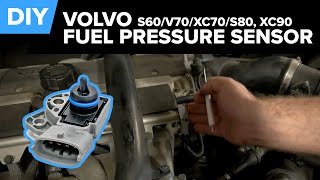
Typical fix: Replace the fuel pressure sensor located on the end of the fuel rail. This is a DIY-friendly job that involves relieving fuel pressure, disconnecting the connector, and removing a single T25 Torx screw. 🎬 Watch: This easy DIY walkthrough shows the sensor replacement process.
Est. part cost: $50 - $150 - Failed Fuel Pump Electronic Module (PEM) 🟡 Medium Probability → Shop Fuel Pump On early P2 models (approx. 2001-2004), the PEM is mounted under the car near the fuel filter, making it highly susceptible to corrosion from water and road salt. When it fails, it often defaults to running the fuel pump at maximum speed, causing excessive pressure. This was a known design flaw corrected in later models.
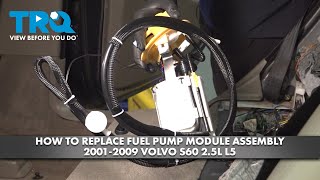
How to confirm: Visually inspect the PEM for corrosion, which often appears as a white, crusty powder on the aluminum casing and connector pins. It is located in front of the rear passenger-side wheel well, sometimes tucked above the fuel tank. 🎬 See this video to find the PEM location on your Volvo. If the fuel pressure is confirmed to be physically high (with a mechanical gauge reading over ~60 PSI) and the FPS is known to be good, the PEM is the next likely culprit.
Typical fix: Replace the Fuel Pump Electronic Module. If replacing an externally mounted one, it is highly recommended to purchase a relocation kit or longer harness to move the new module to a protected area, like inside the trunk near the spare tire.
Est. part cost: $100 - $250 - Kinked or Blocked Fuel Return Line ⚪ Low Probability This is not a platform-specific issue but can happen during other repairs, like a fuel pump replacement. However, P2 Volvos use a returnless fuel system where the PEM controls pump speed, making a blocked return line less common than on older systems. A restriction in the line would prevent excess fuel from being managed correctly, causing pressure to build up.
How to confirm: Visually inspect the fuel lines running from the engine bay back to the fuel tank for any obvious kinks or damage. This is more likely to be the cause if the issue appeared immediately after a fuel pump or fuel filter service.
Typical fix: Straighten any kinks or replace the damaged section of the fuel line.
Est. part cost: $20 - $100
Rare But Worth Checking
- Failing In-Tank Fuel Pump: → Shop Fuel Pump While a failing pump usually causes low pressure (P0087), an internal failure of its integrated pressure regulator can theoretically cause high pressure. This is less common than a bad FPS or PEM and should be considered after those have been ruled out.
- Wiring Harness Damage: A short in the wiring to the fuel pressure sensor can cause it to send a false high-voltage signal to the ECU, tricking it into reporting high pressure. Inspect the harness around the fuel rail for any signs of melting, chafing, or other damage.
Diagnosis Steps
- Connect an OBD-II scanner and confirm the presence of P0088 and any other related codes like P0190 or P0193.
- Use the scanner's live data feature to observe the 'Fuel Rail Pressure' reading. Normal idle pressure should be around 43-55 PSI (approx. 300-380 kPa). Watch for erratic behavior, such as sudden spikes to 80+ PSI when letting off the throttle or at random intervals.
- Connect a mechanical fuel pressure gauge to the Schrader valve on the fuel rail to verify the actual pressure.
- Start the engine and compare the reading on the mechanical gauge to the live data from the scanner. If the scanner shows high pressure (e.g., 90 PSI) but the gauge shows normal pressure (43-55 PSI), the Fuel Pressure Sensor (FPS) is bad and must be replaced.
- If both the scanner and the mechanical gauge show excessively high pressure (e.g., 85 PSI), the problem is not the sensor. The system is genuinely over-pressurized.
- In this case, locate and inspect the Fuel Pump Electronic Module (PEM). On pre-2005 models, it's under the car, ahead of the rear passenger-side wheel, often covered in corrosion. On later models, it's inside the trunk. Given its vulnerability on early models, it's a strong suspect for causing the pump to run at full speed.
- If the PEM looks fine (or has already been replaced/relocated), inspect the fuel return line for any kinks or blockages that would prevent pressure from being relieved.
- If all other components check out, the issue could be a rare internal failure of the in-tank fuel pump assembly's regulator, or a wiring issue between the sensor and the ECM.
Parts You'll Likely Need
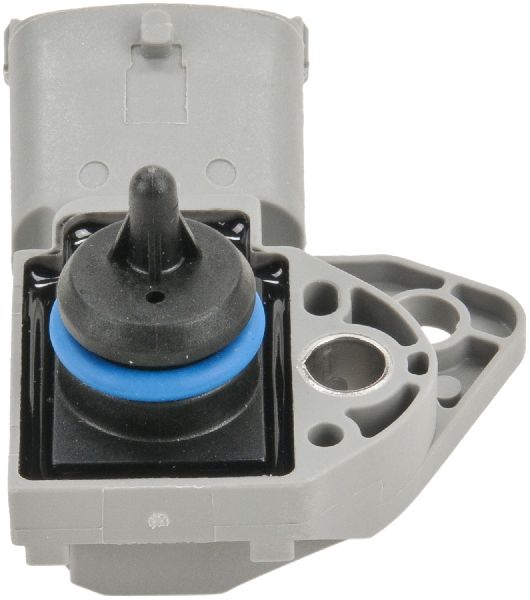
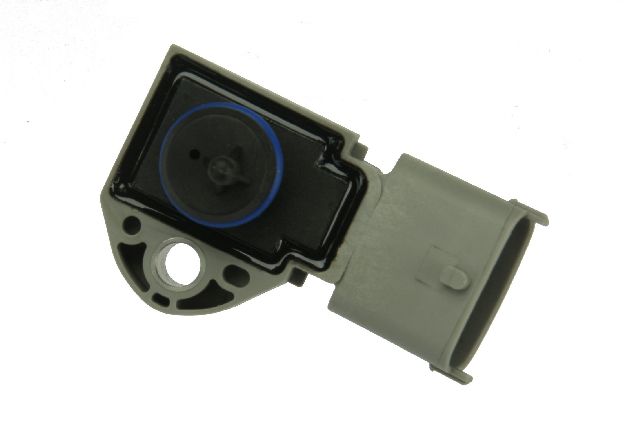
- Fuel Pressure Sensor
(OEM #31272730)— This is the most common failure point. It sends false high-pressure signals to the computer. Bosch is the original equipment manufacturer.
Trusted brands: Bosch (P/N: 0261230110), Standard Motor Products, Genuine Volvo
OEM price range: $100-$150
Aftermarket price range: $50-$90 - Fuel Pump Electronic Module (PEM)
(OEM #30769225, 30742823)— This module controls the fuel pump's speed. Due to its poor location on earlier models, it corrodes and fails, often causing the pump to run at 100% duty cycle, creating high pressure. Part number 30769225 is often associated with a relocation kit for cars with steel tanks, while 30742823 is for plastic tanks.
Trusted brands: Genuine Volvo, Bosch
OEM price range: $200-$250
Aftermarket price range: $100-$180
Related Codes That Often Appear With This One
- P0190 — This code specifically means 'Fuel Rail Pressure Sensor Circuit Malfunction'. It often appears with P0088 because a failing sensor is a primary cause for the high-pressure reading.
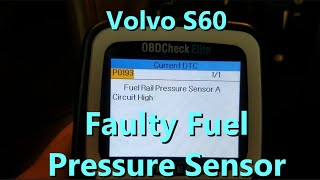
- P0193 — This code means 'Fuel Rail Pressure Sensor Circuit High Input', directly pointing to an electrical fault or a sensor that is sending a signal indicating very high pressure. It strongly reinforces the diagnosis of a bad sensor or wiring issue. 🎬 Watch: How to fix a P0193 code by replacing the sensor.
- P0087 — This code for 'Fuel Pressure Too Low' can sometimes appear alongside P0088 if the fuel pressure sensor is failing erratically, sending both impossibly high and low signals to the ECU.
Technical Service Bulletins (TSBs) & Recalls
- While no specific TSB for P0088 was found, the issue with the PEM location and corrosion is widely documented in owner forums and technical discussions. A TNN (Technical News Note) document mentioned in forums points to part number 30769225 as the part for a PEM relocation/update.
Platform-Specific Known Issues
- The external mounting location of the Fuel Pump Electronic Module (PEM) on models up to around 2004-2005 is a significant design flaw. It is highly prone to water and salt damage, leading to failure. Later models had the PEM moved inside the trunk/spare tire well. Owners of early models often proactively relocate the module inside the car to prevent future
Mechanic-Grade Diagnostic Values
- Fuel Pressure Sensor (FPS) Signal Voltage — expected: Approximately 1.5V at idle (around 50 PSI).. Failure: If the signal voltage is stuck at 5V, it indicates a sensor or wiring fault. The voltage should fluctuate with engine load.
- Fuel Pressure Sensor (FPS) 3-Wire Connector Test (Key On, Engine Off) — expected: Pin 1: 5V (Reference from ECM), Pin 2: 0V (Signal, may have a low floating voltage), Pin 3: ~0V (Ground).. Failure: Absence of 5V on the reference pin or a bad ground (not close to 0V) indicates a wiring or ECM issue, not a sensor failure.
- Fuel Pump Control Module (PEM) PWM Signal — expected: Approximately 35% duty cycle at idle with a warm engine.. Failure: A duty cycle stuck at 100% would command the fuel pump to run at maximum speed, causing genuine high pressure.
Hidden / Shadow Codes Worth Checking
- ECM-280B: Fuel Pressure Sensor - Signal too high. This is a Volvo-specific code that directly corresponds to P0193 and is a common companion to P0088 when the sensor is the root cause. (see via Volvo's VIDA diagnostic software or a compatible high-end scanner.)
- ECM-2900: Fuel Pressure - Faulty Signal. This Volvo code often sets with P0088 and indicates the ECM sees a pressure signal that is out of the expected range, pointing towards either the sensor or the PEM controller. (see via Volvo's VIDA diagnostic software or a compatible high-end scanner.)
Scan Tool Commands That Help
- Volvo VIDA: Activate Fuel Pump — After confirming high pressure with a mechanical gauge, a technician can use VIDA to command the fuel pump to run at different duty cycles. If the pressure does not respond to lower commanded speeds, it helps isolate the fault to the PEM or a physical blockage, ruling out the ECM.
- Volvo VIDA: Read Fuel Pressure Sensor Value — This is the primary live data PID to watch. Comparing the VIDA reading directly to a mechanical gauge is the definitive test for a faulty Fuel Pressure Sensor. A large discrepancy confirms a bad sensor.
Wiring & Ground Locations
- Fuel Pressure Sensor Connector — At the end of the fuel rail, on the driver's side of the engine.. This 3-pin connector provides power, ground, and signal for the sensor. Checking for 5V reference, good ground, and the signal voltage at this connector is a key diagnostic step.
- Fuel Pump Electronic Module (PEM) Connector — On pre-2005 models, it's located under the car, forward of the passenger-side rear wheel well. On 2005+ models, it's in the trunk near the spare tire well.. This connector is highly susceptible to corrosion on early models. Inspecting the pins for green or white crust is critical. A poor connection can cause the module to default to full power, triggering P0088.
- PEM Ground Wire — The PEM is grounded through its wiring harness, which ultimately connects to a chassis ground point. A common ground point for rear electronics is located in the trunk area.. A faulty ground can cause erratic behavior from the PEM, potentially leading to incorrect fuel pump speed control and high pressure.
Real Owner Repair Stories
- Reddit user 'killerjags' (2006 Volvo S60) — Random hesitation, drops in power, momentary loss of power and lurching, stalling. Scan tool showed pressure spikes to over 80 PSI on deceleration.
❌ Tried (didn't work) Replaced the Fuel Pump Electronic Module (PEM).
✅ What actually fixed it Replacing the Fuel Pressure Sensor (FPS) resolved all symptoms and the code did not return. - Reddit user 'Doogwhan' (2004 V70R (P2 Platform sibling) with 218,000 miles) — P0088 code with confirmed, genuine high fuel pressure of 85 PSI measured with a mechanical gauge.
❌ Tried (didn't work) Considered replacing the fuel pressure sensor, but ruled it out since the mechanical gauge confirmed the high pressure reading was accurate.
✅ What actually fixed it Replacing the Fuel Pump Electronic Module (PEM) with a used unit from eBay fixed the issue and brought fuel pressure back to a nominal level. - Reddit user 'HealthyHelicopter109' (2012 Volvo S60 T5 (newer generation, but same principle)) — Car wants to stall after warming up for 30+ minutes.
❌ Tried (didn't work) Initial diagnosis was uncertain between the sensor and the pump.
✅ What actually fixed it Replacing the fuel pressure sensor fixed the issue. The owner noted the actual pressure was a little high before replacement, but normalized after the new sensor was installed and the code was cleared.
OEM Part Supersession History
8699449, 30756097→31272730— Standard part evolution and consolidation.
Heads up: The current part number, 31272730 (Bosch 0261230110), is the correct replacement for the earlier numbers on P2 platform vehicles.30742823 (for plastic fuel tank)→30769225 (often sold with relocation harness)— To address the corrosion failure of the externally mounted module, Volvo created a kit to move the module inside the vehicle.
Heads up: It is critical to use the correct PEM for the fuel tank type (plastic vs. steel). While the modules may be electronically similar, the harness and fitment can differ. Using a relocation kit is always recommended for early models.
Model Year Variations Within This Range
- 2001-2004: The Fuel Pump Electronic Module (PEM) is mounted externally, under the car near the passenger-side rear wheel, making it extremely vulnerable to corrosion.
- 2005-2009: The PEM was relocated by the factory to inside the trunk, on the right side of the spare tire well, protecting it from the elements. Additionally, the T5 engine was updated from 2.3L to 2.4L in 2004 for the 2005 model year, with a slight power increase.
- 2004-2005: This was a facelift/refresh period. Changes included revised bumpers, new headlights, and interior console updates. The key change for P0088 diagnosis is the PEM relocation which occurred during this time. A 2005 model will have the internally mounted PEM.
Diagnostic Flowchart
Used vs. New Parts: Buying Guide for This Vehicle
When a used part is the smart pick: A used Fuel Pump Electronic Module (PEM) is a reasonable choice, especially if sourced from a 2005+ donor car where the part was protected inside the trunk. This ensures the part is less likely to have suffered from corrosion. Since the PEM is a plug-and-play module with no programming required, a used part is a cost-effective repair.
Donor-vehicle mileage cap: roughly under 150000 miles for the part to have meaningful remaining life.
What to inspect on the donor part:
- For a PEM, visually inspect the aluminum casing for any white, powdery corrosion or pitting.
- Check the connector pins on the module and the harness side to ensure they are clean, straight, and free of any green or white residue.
- If possible, source the part from a post-2004 vehicle that had the module mounted inside the trunk.
- For any used part, confirm the seller's return policy.
OEM-only on this vehicle (don't cheap out):
- While not strictly 'OEM-only', it is highly recommended to use the Bosch-manufactured Fuel Pressure Sensor, as Bosch is the Original Equipment Manufacturer for Volvo. Cheaper, no-name sensors are known to have high failure rates and may not provide accurate readings.
Aftermarket brands forum-validated for this vehicle:
- Bosch (for Fuel Pressure Sensor and potentially PEM)
Brands owners have reported issues with on this vehicle:
- Unnamed, low-cost 'white-box' electronic sensors from online marketplaces should be avoided, as their reliability and accuracy are often poor.
Real Owner Stories
Aggregated from forums and TSBs cited above. Mileages and costs reflect what owners reported in those sources.
2003 S60 R
Symptoms: The car was throwing a P0088 code. A new Fuel Pressure Sensor did not solve the problem.
What fixed it: Replacing the weathered and faulty Fuel Pump Electronic Module (PEM) fixed the P0088 code, as the failed unit was defaulting to running the pump at full speed.
Source hint: Volvo Owners Club Forum - S60 R High Fuel Pressure 0088 Warning
2004 V70R
Symptoms: The vehicle had a P0088 code and a mechanical pressure gauge confirmed the fuel pressure was genuinely high at 85 PSI.
What fixed it: Replacing the Fuel Pump Electronic Module (PEM) with a used unit resolved the high-pressure issue.
Source hint: Reddit (r/Volvo) - 2004 V70R throwing code P0088 for high fuel pressure. Mechanical tester shows 85psi!!!
2006 S60
Symptoms: The owner experienced engine stuttering, which corresponded directly with the scan tool capturing fuel pressure spikes as high as 111 PSI.
What fixed it: The issue was identified as a classic example of a failing Fuel Pressure Sensor (FPS) sending false high-pressure readings.
Source hint: Volvo Forums - 2006 S60 Fuel Pressure Logic, Fuel Rail Sensor
2006 Volvo S60
Symptoms: The car experienced hesitation, power loss, and stalling. A diagnostic tool showed random fuel pressure spikes over 80 PSI, especially during deceleration.
What fixed it: The symptoms and diagnostic data pointed strongly toward a faulty Fuel Pressure Sensor (FPS) as the cause.
Source hint: Reddit (r/Volvo) - 2006 Volvo S60 throwing P0088 code. Diagnostic tool shows random spikes of 80+psi...
Related OBD-II Codes
Frequently Asked Questions
My scanner shows erratic fuel pressure spikes over 100 PSI on my 2006 S60. Is the fuel pump dangerously over-pressurizing the system?
I have a 2003 S60 with P0088. What is the most common cause for this specific model year?
How can I definitively tell if the Fuel Pressure Sensor is bad or if the fuel pressure is actually too high?
I need to replace the corroded PEM on my early S60. Is there a recommended way to prevent it from failing again?
What should the normal fuel rail pressure be on my S60 when the engine is idling?
My P0088 code appeared right after I had the fuel filter replaced. What should I check?
Helpful Videos

We Have This Part in Stock


The information in this article is provided for general reference and educational purposes only. Vehicle specifications, procedures, and part compatibility can vary by production date, trim level, and region. Always consult your vehicle's factory service manual and verify part numbers before purchasing or performing repairs. Safety-critical components such as airbags, seat belts, and braking systems should be installed by a qualified professional.
- Volvo S60:
- 🧭 Diagnostic Flowchart
- 🎬 Helpful Videos
- 🛍️ Shop This Part
- What's Unique About the 2001-2009 Volvo S60
- Symptoms You May Notice
- Most Likely Causes
- Rare But Worth Checking
- Diagnosis Steps
- Parts You'll Likely Need
- Related Codes That Often Appear With This One
- Technical Service Bulletins (TSBs) & Recalls
- Platform-Specific Known Issues
- Mechanic-Grade Diagnostic Values
- Hidden / Shadow Codes Worth Checking
- Scan Tool Commands That Help
- Wiring & Ground Locations
- Real Owner Repair Stories
- OEM Part Supersession History
- Model Year Variations Within This Range
- Used vs. New Parts: Buying Guide for This Vehicle
- Real Owner Stories
- 2003 S60 R
- 2004 V70R
- 2006 S60
- 2006 Volvo S60
- Related OBD-II Codes
- Frequently Asked Questions
- 🎟️ Get 5% Off