

P0089 on 2014-2019 Chevrolet Corvette: Fuel Pressure Regulator Performance Causes and Fixes
On a C7 Corvette, code P0089 almost always points to a failing high-pressure fuel pump (HPFP). Symptoms include hesitation, stalling, a 'Reduced Engine Power' message, and often a distinct rattling or ticking noise from the engine. A new OEM pump costs between $500-$1000, and professional installation is strongly recommended due to the system's complexity and extreme pressures.
- P0089 on a C7 Corvette almost always indicates a problem with the high-pressure fuel system.
- The most likely cause is a failing High-Pressure Fuel Pump (HPFP), which contains the integrated fuel pressure regulator.
- Symptoms are serious and include engine hesitation, stalling, and a 'Reduced Engine Power' warning.
- Diagnosis involves using a scan tool to compare desired vs. actual fuel rail pressure; a significant discrepancy points to the HPFP.
- This is not a DIY-friendly repair due to the extremely high fuel pressures and the location of the pump under the intake manifold. Professional service is strongly advised.
What's Unique About the 2014-2019 Chevrolet Corvette
The 2014-2019 (C7) Corvette's direct injection fuel system is a dual-pressure design, with a low-pressure pump in the tank feeding a high-pressure, camshaft-driven pump at the engine. Code P0089 almost exclusively relates to a performance issue on the high-pressure side. Failures of the high-pressure fuel pump (HPFP) are a known issue on this platform, often causing this specific code. Forum discussions and owner experiences frequently link P0089 directly to a needed HPFP replacement, sometimes accompanied by a distinct rattling or ticking noise from the engine bay, which can be heard from inside the cabin.
Symptoms You May Notice
- Check Engine Light illuminated
- Reduced Engine Power message on the dash
- Engine hesitation or stumbling during acceleration
- Rough or unstable idle
- Engine stalling, especially under load
- Extended crank time or hard starting
- Noticeable rattling or ticking sound from the engine bay, loudest at the rear of the intake manifold, that increases with RPM
- Strong smell of fuel or raw fuel visible from the exhaust
- Replacing only the fuel rail pressure sensor without confirming its failure. While it can be the cause, the HPFP is a more frequent failure point for this specific code on the C7 platform.
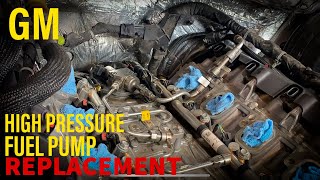
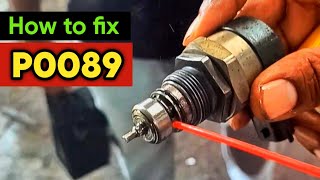
- Replacing the in-tank low-pressure fuel pump when the issue is on the high-pressure side. It's critical to diagnose both systems to pinpoint the failure. 🎬 See this breakdown of common P0089 causes and fixes.
Most Likely Causes
- Failing High-Pressure Fuel Pump (HPFP) 🔴 High Probability → Shop Fuel Pump The HPFP is a complex mechanical component driven by a dedicated three-point lobe on the camshaft. The internal regulator solenoid or mechanical parts are common failure points on the LT1/LT4 engines, leading directly to this code.
How to confirm: Use a diagnostic scan tool to monitor 'Desired Fuel Rail Pressure' vs. 'Actual Fuel Rail Pressure'. If the actual pressure cannot keep up with the desired pressure, especially under load, the HPFP is likely failing. A rattling noise from the pump location is also a strong indicator. Check the engine oil for a strong fuel smell, as a failed pump seal can leak gasoline into the crankcase.
Typical fix: Replace the high-pressure fuel pump. The fuel feed pipe is a one-time use part and must also be replaced. An oil change is mandatory as a failing pump can leak fuel into the crankcase, diluting the oil and causing engine damage.
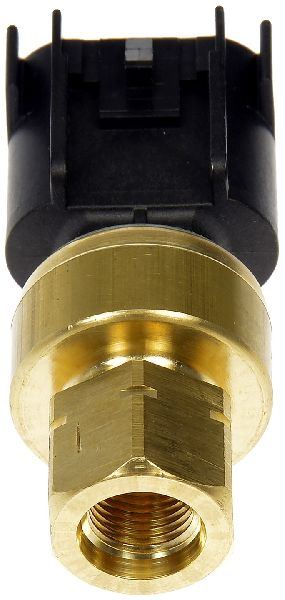
Est. part cost: $500 - $1200 - Faulty Fuel Rail Pressure Sensor (FRPS) 🟡 Medium Probability → Shop Fuel Pressure Sensor GM issued TSB #PIP5279A for a group of fuel system codes, including P0089, suggesting the FRPS could be the cause if other diagnostics are inconclusive. This TSB applies to a wide range of GM vehicles with direct injection, including the Corvette.
How to confirm: With the key on and engine off, use a scan tool to compare the fuel rail pressure reading to the low-side fuel pressure reading; they should be nearly identical. If the rail pressure sensor reads an erratically high or low value, or is unresponsive, it is suspect.
Typical fix: Replace the fuel rail pressure sensor, which is located on the driver's side fuel rail.
Est. part cost: $50 - $150 - Weak Low-Pressure Fuel Pump ⚪ Low Probability → Shop Fuel Pump While less common on stock vehicles, if the in-tank low-pressure pump cannot supply adequate volume to the HPFP, the high-pressure side will starve and trigger P0089. This is more likely on modified vehicles (e.g., supercharged) or those running high ethanol blends that exceed the stock pump's capacity.
How to confirm: Monitor the low-pressure fuel system readings with a scan tool. If the pressure drops significantly under load (WOT), the in-tank pump may be failing or insufficient for the engine's demand.
Typical fix: Replace the in-tank fuel pump module.
Est. part cost: $300 - $600
Rare But Worth Checking
- Leaking Fuel Injector: → Shop Fuel Injector A fuel injector stuck open can cause a drop in rail pressure, potentially triggering P0089. This would likely be accompanied by misfire codes (like P0300) for a specific cylinder and a strong smell of raw fuel.
- Wiring Harness Issue: Damage or corrosion in the wiring to the HPFP's internal regulator or the fuel rail pressure sensor can cause erratic signals and trigger the code. A high resistance of over 2 Ohms in the HPFP control circuit has been noted to cause intermittent DTCs.
- Worn Camshaft Lobe: → Shop Engine Camshaft The HPFP is driven by three lobes on the intake camshaft. Excessive wear on these lobes can prevent the pump from generating sufficient pressure, leading to P0089. This is a mechanical issue that would require camshaft inspection and likely replacement.
Diagnosis Steps
- Connect a high-quality OBD-II scanner and check for any other stored codes, paying close attention to P228C, P0172/P0175, or P0300.
- Using the scanner's live data function, graph 'Desired Fuel Rail Pressure' and 'Actual Fuel Rail Pressure' at idle, during steady cruising, and under wide-open throttle. Note any significant deviations where actual pressure cannot meet the desired command.
- At idle, listen for an abnormal ticking or rattling sound coming from the top-rear of the engine, under the intake manifold, where the HPFP is located. This sound often increases with engine RPM.
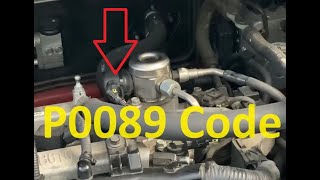
- With the Key On, Engine Off, compare the 'Fuel Rail Pressure' reading to the 'Low Side Fuel Pressure' reading. They should be very close. If the rail pressure is stuck high or low, suspect the sensor. 🎬 Watch: Understanding fuel pressure regulator performance and diagnostic codes.
- Carefully remove the engine oil dipstick and check for a strong gasoline smell. Fuel contamination of the oil is a definitive sign of a failed HPFP internal seal.
- Inspect the wiring harness and connector for the HPFP and the fuel rail pressure sensor for any visible damage, corrosion, or loose connections.
- If live data shows actual pressure failing to meet desired pressure under load, and the low-pressure system is healthy, the high-pressure fuel pump is the primary suspect.
- If the HPFP is replaced, an oil and filter change is mandatory to remove any fuel that may have contaminated the engine oil.
Parts You'll Likely Need
- High-Pressure Fuel Pump (HPFP)
(OEM #12705224 (supersedes 12688607))— This is the most common point of failure for code P0089 on the C7 Corvette. The internal fuel pressure regulator fails, requiring the replacement of the entire pump assembly.
Trusted brands: ACDelco (OEM), GM Genuine
OEM price range: $900 - $1500
Aftermarket price range: $400 - $800 - Fuel Rail Pressure Sensor
(OEM #12679364)— If diagnostic tests point to erratic sensor readings rather than poor pump performance, this sensor is the likely culprit. It is a known, though less common, cause per TSB PIP5279A.
Trusted brands: ACDelco (OEM), Bosch
OEM price range: $100 - $150
Aftermarket price range: $50 - $90 - High-Pressure Fuel Feed Pipe
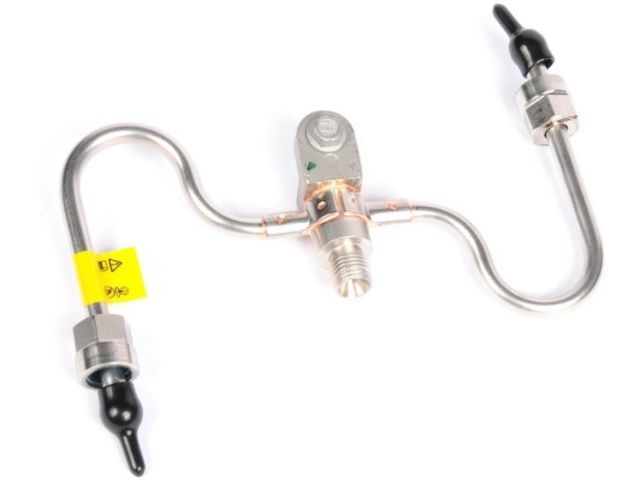
(OEM #12655391 (LT1) or 12677004 (LT4))— This is a one-time-use, torque-to-yield part that connects the HPFP to the fuel rail. It must be replaced anytime it is disconnected, per GM service procedures.
Trusted brands: ACDelco (OEM)
OEM price range: $30 - $60
Related Codes That Often Appear With This One
- P228C — This code, 'Fuel Pressure Regulator Control Performance - Low Pressure,' often appears with P0089, indicating the high-pressure system is failing to build or maintain pressure, pointing strongly toward the HPFP.
- P0172/P0175 — These 'System Too Rich' codes can occur if the HPFP fails in a way that leaks fuel into the engine's crankcase. The PCV system then pulls these fuel vapors into the intake, causing a rich condition.
- P0300 — 'Random/Multiple Cylinder Misfire' can be triggered by the unstable fuel pressure from a failing HPFP, causing poor combustion across all cylinders.
- P228D — 'Fuel Pressure Regulator Control Performance - High Pressure' can set along with P0089, especially on modified vehicles during throttle transitions, indicating the control loop for the HPFP is struggling to manage pressure spikes or drops.
Technical Service Bulletins (TSBs) & Recalls
- PIP5279A: This Preliminary Information bulletin covers a range of fuel system codes (P0089, P228C, P0192, P0193, etc.) on many Gen V engines. It advises that if standard diagnostics are inconclusive, the Fuel Rail Pressure Sensor (FRPS) should be replaced. Manufacturer TSB Bulletin #PIP5279A specifically notes that technicians may find P0089 alongside other codes like P127C, P127D, and P006C, and should follow published Service Information diagnostics.
Platform-Specific Known Issues
- A known failure point for the LT1/LT4 engine platform is the high-pressure fuel pump, making P0089 a relatively common code as these vehicles age.
- Running higher concentrations of ethanol (E85) on a stock fuel system, especially on modified cars, can over-stress the HPFP and low-pressure pump, leading to premature failure and this code.
- Tracking the vehicle with low fuel levels (below 1/4 tank) can potentially cause fuel starvation during high-G cornering, which may stress the fuel pumps and contribute to this code appearing.
Mechanic-Grade Diagnostic Values
- High-Pressure Fuel System Pressure (Wide-Open Throttle) — expected: LT1: ~2,175 PSI (15 MPa). LT4: ~2,900 PSI (20 MPa).. Failure: Actual pressure significantly lags behind desired pressure under load.
- Fuel Rail Pressure Sensor (FRPS) Voltage (Key On, Engine Off) — expected: ~0.5 V. Failure: Voltage is significantly different, zero, or maxed out (near 5V).
- Fuel Rail Pressure Sensor (FRPS) Voltage (at Idle) — expected: ~1.32 V. Failure: Voltage is erratic or does not correspond to a stable idle pressure reading.
- HPFP Control Circuit Resistance — expected: < 2.0 Ohms. Failure: Resistance over 2.0 Ohms can cause intermittent codes and indicates a wiring issue.
- Low-Side Fuel Pressure (In-tank pump) — expected: 50 - 76 PSI, commanded by the Fuel Pump Control Module (FPCM).. Failure: Pressure drops significantly under load, starving the HPFP.
Scan Tool Commands That Help
- GM GDS2 / Tech2Win: Fuel System Tests — Allows a technician to command specific fuel pressures to the HPFP and monitor the system's response, helping to isolate a faulty pump from a sensor or wiring issue.
- GM GDS2 / Tech2Win: Fuel Pressure Regulator Control — Provides bidirectional control to directly command the HPFP's internal regulator solenoid, testing its function independently. A lack of response indicates a failed pump.
Wiring & Ground Locations
- G103 — On the left (driver's) side of the engine block. Some diagrams show it on the cowl above the brake booster.. This is a major engine and control module ground. A poor connection here can cause erratic behavior from the ECM, fuel pump control module, and various sensors, potentially leading to incorrect fuel pressure readings or commands.
- Fuel Rail Pressure Sensor Connector — On the driver's side high-pressure fuel rail, under the intake manifold.. This is the primary connection point for the FRPS. For the 3-pin sensor, Pin 1 is Low Reference (ground), Pin 2 is the 5V Reference, and Pin 3 is the signal wire to the ECM. Testing voltage and ground at this connector is a key diagnostic step.
- High-Pressure Fuel Pump Connector — At the rear of the engine valley, on the HPFP itself, under the intake manifold.. This connector provides power and control signals to the pump's internal regulator solenoid. Checking for proper voltage and resistance on these circuits can rule out a wiring fault before condemning the pump.
Real Owner Repair Stories
- CorvetteForum.com user 'Newton06' (2015 Corvette Z51, 7-speed manual, 11,500 miles) — P0089 code appeared after a track day (HPDE). The Check Engine Light later cleared on its own, but a new, loud ticking/rattling noise began, audible from inside the cabin and tied to engine RPM. The noise was loudest from under the intake manifold.
❌ Tried (didn't work) The first dealership visit was inconclusive because the code was no longer active.
✅ What actually fixed it A second dealership with a certified Corvette technician diagnosed the issue. The final repair was the replacement of the high-pressure fuel pump and the fuel rail pressure sensor, which resolved both the code and the noise. - CorvetteForum.com user with a modified C7 Z06 (C7 Corvette Z06 with heads, cam (38% fuel lobe), headers, and E85 conversion.) — Recurring P228D and P0089 codes, triggering limp mode. The issue was repeatable during high-RPM, on-off throttle driving, but not during simple wide-open-throttle pulls.
❌ Tried (didn't work) Replacing the fuel rail pressure sensor did not fix the issue.
✅ What actually fixed it The user suspected a tuning issue described as 'integral windup,' where the ECM's control loop for the HPFP accumulates error during rapid throttle changes. The resolution path was to get the car on a dyno with HPTuners to log the fault and have the tune adjusted to better handle the rapid pressure changes demanded by the modified engine.
OEM Part Supersession History
12688607→12705224— Likely an internal revision to improve reliability or address a known failure mode in the original design.12679364 (FRPS)→13579380, 13516496— Part number consolidation and updates across multiple GM platforms.
Heads up: Always verify the correct part number by VIN, but these are generally interchangeable for the C7.
Model Year Variations Within This Range
- 2014-2019: The LT1 (Stingray, Grand Sport) and LT4 (Z06) engines use physically different High-Pressure Fuel Pumps. The LT1 pump operates at a lower maximum pressure (~2175 PSI) compared to the LT4 pump (~2900 PSI). While an LT4 pump is a common upgrade for modified LT1s, it requires corresponding LT4 fuel lines and tuning adjustments. They are not directly interchangeable without supporting modifications.
- 2015-2019: Starting in 2015, the 8L90 8-speed automatic transmission was introduced, replacing the previous 6-speed automatic. This does not directly affect the P0089 code's cause but is a significant model year change within the generation.
Diagnostic Flowchart
Other Known Issues on This Vehicle
Issues unrelated to this code that are worth knowing about as an owner of this generation:
- A8 Automatic Transmission Shudder 🔴 High — Very common on 2015-2019 models with the 8L90 automatic transmission. Often appears as a vibration or shudder during light acceleration. (Ref: TSB #18-NA-355 advises a 'triple flush' with an updated Mobil 1 synthetic ATF. If not resolved, torque converter replacement may be necessary.)
- Cracked Wheels (Grand Sport & Z06) 🔴 High — Widespread issue on 2015-2019 Z06 and 2017-2019 Grand Sport models with wide, cast aluminum wheels. Prone to bending and cracking from normal road impacts. (Ref: No TSB or recall, but multiple class-action lawsuits were filed. GM eventually created a reimbursement program for some owners.)
- AFM/DOD Lifter Failure 🟠 Medium — A potential issue on all Gen V V8s (LT1, LT4, L83, L86). A lifter for the Active Fuel Management (AFM) system can become stuck or fail, causing a ticking/knocking noise, misfires, and potential camshaft damage. (Ref: Various TSBs exist for related symptoms across different GM models, but no single recall for the C7 Corvette specifically.)
- Z06 (LT4) Supercharger Overheating 🟠 Medium — Common on 2015-2018 Z06 models during extended high-performance driving or track use, causing the car to enter limp mode. Less of an issue on 2019 models. (Ref: No recall, but GM made design changes to the hood and supercharger lid on later models to improve cooling. A class-action lawsuit was also filed.)
- Infotainment Screen Failure / Delamination 🟡 Low — Fairly common across all C7 models. The screen can delaminate ('spider-webbing') or become unresponsive to touch. Sometimes caused by a loose HMI module connection.
Used vs. New Parts: Buying Guide for This Vehicle
When a used part is the smart pick: For this specific repair, sourcing a used High-Pressure Fuel Pump (HPFP) is NOT recommended. The HPFP is a known high-failure-rate item on this platform. A used pump carries a significant risk of having the same internal wear or impending failure as the part being replaced. Used sensors or wiring harnesses from a low-mileage donor are acceptable.
Donor-vehicle mileage cap: roughly under 30000 miles for the part to have meaningful remaining life.
What to inspect on the donor part:
- For any used part, verify the donor vehicle's VIN to confirm it's a compatible model year and engine (LT1 vs. LT4).
- Ask for photos of the donor vehicle before it was dismantled to assess for major collision damage or signs of fire.
- For a wiring harness, inspect all connectors for bent pins, corrosion, or cut wires. Ensure locking tabs are intact.
OEM-only on this vehicle (don't cheap out):
- High-Pressure Fuel Pump (HPFP)
- High-Pressure Fuel Feed Pipe (this is a one-time-use part and must be bought new)
Aftermarket brands forum-validated for this vehicle:
- Bosch (for Fuel Rail Pressure Sensor)
Brands owners have reported issues with on this vehicle:
- Unnamed, no-brand 'white box' HPFPs from online marketplaces. The complexity and high pressure of this part make quality control critical. Sticking with OEM (ACDelco/GM Genuine) is the safest option to avoid repeat failures.
Real Owner Stories
Aggregated from forums and TSBs cited above. Mileages and costs reflect what owners reported in those sources.
2014-2019 Chevrolet Corvette 6.2L LT1/LT4
Symptoms: P0089 code triggered during or after a High Performance Driving Event (HPDE) at VIR. The owner noticed a new ticking/rattling noise coming from under the intake manifold after running with low fuel.
What fixed it: Dealer replacement of the high-pressure fuel pump and the fuel rail pressure sensor.
Source hint: CorvetteForum.com: Thread 'P0089 during/after an HPDE at VIR'
Related OBD-II Codes
Frequently Asked Questions
Does TSB #PIP5279A apply to my Corvette if I have a P0089 code?
I hear a rattling noise from the rear of my intake manifold along with P0089; what is that?
Can running E85 cause a P0089 code on my C7 Corvette?
Why is an oil change required after replacing the high-pressure fuel pump?
Can track driving cause this fuel pressure code to trigger?
Is the fuel feed pipe reusable when fixing P0089?
Helpful Videos
Used OEM Parts in Stock
New Aftermarket Parts Available


The information in this article is provided for general reference and educational purposes only. Vehicle specifications, procedures, and part compatibility can vary by production date, trim level, and region. Always consult your vehicle's factory service manual and verify part numbers before purchasing or performing repairs. Safety-critical components such as airbags, seat belts, and braking systems should be installed by a qualified professional.
- Chevrolet Corvette:
- 🧭 Diagnostic Flowchart
- 🎬 Helpful Videos
- 🛍️ Shop This Part
- What's Unique About the 2014-2019 Chevrolet Corvette
- Symptoms You May Notice
- Most Likely Causes
- Rare But Worth Checking
- Diagnosis Steps
- Parts You'll Likely Need
- Related Codes That Often Appear With This One
- Technical Service Bulletins (TSBs) & Recalls
- Platform-Specific Known Issues
- Mechanic-Grade Diagnostic Values
- Scan Tool Commands That Help
- Wiring & Ground Locations
- Real Owner Repair Stories
- OEM Part Supersession History
- Model Year Variations Within This Range
- Other Known Issues on This Vehicle
- Used vs. New Parts: Buying Guide for This Vehicle
- Real Owner Stories
- 2014-2019 Chevrolet Corvette 6.2L LT1/LT4
- Related OBD-II Codes
- Frequently Asked Questions
- 🎟️ Get 5% Off