

P0089 on 2017-2020 Chevy Silverado 6.6L Duramax: Fuel Pressure Regulator Performance Causes and Fixes
On a 2017-2020 L5P Duramax, code P0089 is most often caused by a poor electrical connection at the fuel rail pressure sensor, not a failed part. GM issued a Technical Service Bulletin (TSB 20-NA-197) for this exact problem. Inspect and likely replace the sensor's pigtail connector (GM Part #85518225 or #19367009) before considering more expensive parts like regulators or pumps.
- Before replacing any expensive parts for code P0089, ALWAYS inspect the fuel rail pressure sensor's electrical connector for corrosion or damage.
- Reference GM Technical Service Bulletin 20-NA-197, which directly addresses this exact issue.
- The most likely required part is an inexpensive connector pigtail (GM #19367009), not a fuel pump or regulator.
- Due to the extremely high pressures in the common rail system, diagnosis and repair are best left to a qualified professional.
- Always start with basic maintenance: ensure the fuel filter has been replaced at its recommended service interval.
What's Unique About the 2017-2020 Chevrolet Silverado 2500HD/3500HD
For the L5P Duramax engine in this specific year range, the P0089 code is very frequently a ghost code caused by an electrical issue, not a mechanical one. General Motors released Technical Service Bulletin #20-NA-197 that specifically identifies corrosion, moisture, and poor pin tension (fretting) in the fuel rail pressure sensor's electrical connector as the root cause for P0089 and a host of other fuel-related codes. The bulletin notes that the dielectric grease in the connector may turn black, indicating a poor connection. This means that while the code points to the regulator, the problem is often just a few inches away at the sensor's wiring harness, leading many to misdiagnose the issue by replacing expensive fuel system components unnecessarily.
Generation note: This range covers the end of the third generation (K2XX platform, 2017-2019) and the start of the fourth generation (T1XX platform, 2020). However, the 6.6L L5P Duramax engine and its fuel system are largely carryovers. The primary cause of this code, as identified in TSB 20-NA-197, affects all models from 2017 through 2021, so the diagnosis is consistent across these generations.
Symptoms You May Notice
- Check Engine Light (Malfunction Indicator Lamp) is on
- Vehicle enters 'Reduced Engine Power' or 'Limp Mode'
- Engine hesitation, surging, or poor acceleration
- Engine may stall or fail to start
- Unstable or rough idle
- Service StabiliTrak message may appear
- Long crank times
- Replacing the fuel pressure regulator or the entire high-pressure fuel pump without first inspecting the fuel rail pressure sensor connector as outlined in TSB 20-NA-197.
- Replacing the fuel rail pressure sensor when only the connector pigtail is faulty.
- Replacing the entire fuel rail when only the regulator (FPR2) or sensor is bad.
Most Likely Causes
- Faulty Fuel Rail Pressure Sensor Electrical Connector 🔴 High Probability → Shop Fuel Pressure Sensor This is a known issue documented by GM in Technical Service Bulletin 20-NA-197. The connector is susceptible to moisture intrusion, corrosion, and poor terminal tension (fretting), causing an erratic or intermittent signal to the ECM.
How to confirm: Unplug the connector from the fuel rail pressure sensor (located on the passenger side fuel rail, behind the throttle body) and inspect the connector terminals and sensor pins for any signs of green or white corrosion, backed-out pins, or signs of the dielectric grease turning black. A technician would use a special tool (terminal test kit) to test the drag on each female terminal to confirm proper tension. Some owners report success by slightly twisting the male pins on the sensor to improve contact.
Typical fix: Replace the fuel rail pressure sensor connector pigtail. 🎬 Watch: How this sensor connector causes common fuel system issues. The official GM part number has been superseded multiple times; the latest recommended part is #85518225, which replaces older numbers like #19367009. The new connector must be spliced into the existing engine harness, and the terminals should be packed with dielectric grease (GM Part #12377900) before installation.
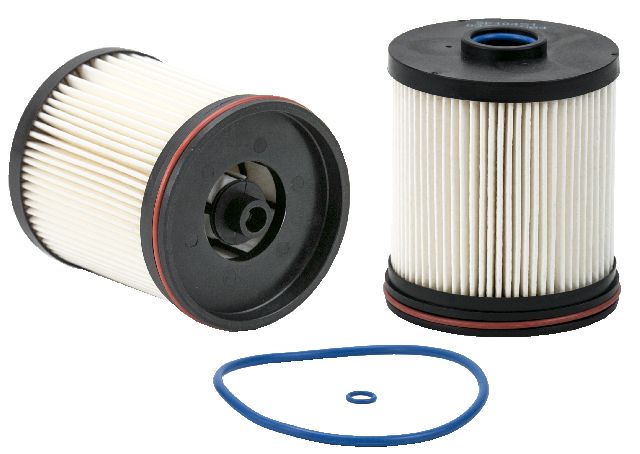
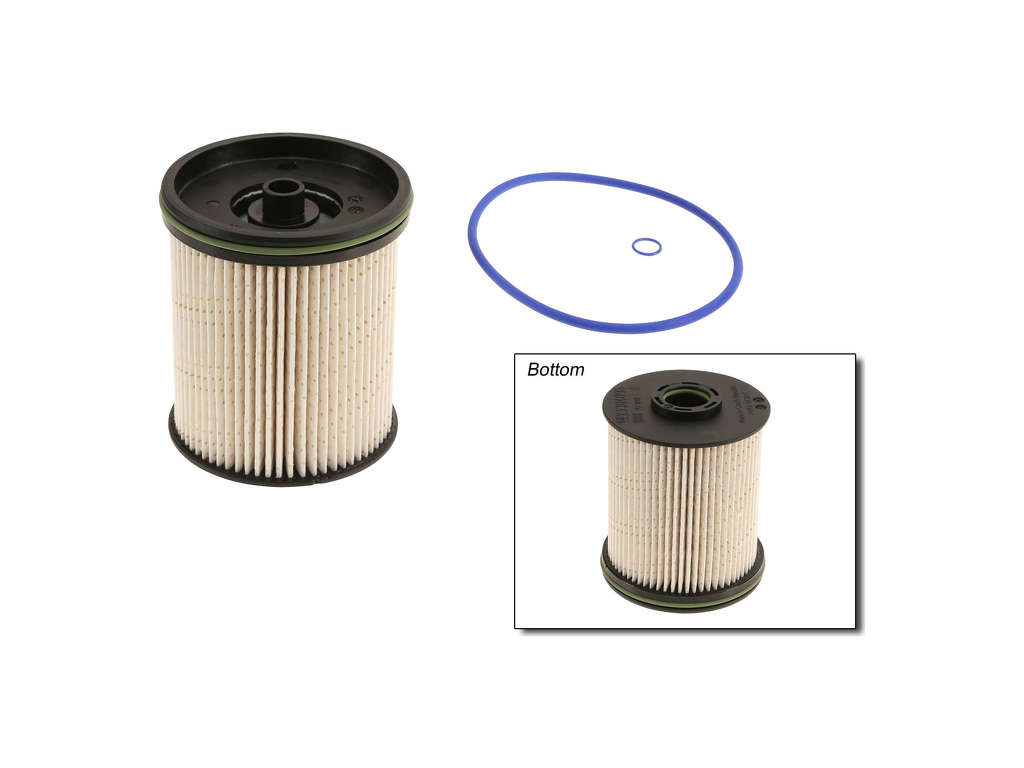
Est. part cost: $40-$65 - Clogged Fuel Filter 🟡 Medium Probability → Shop Fuel Filter Diesel fuel systems are extremely sensitive to contamination and water. The fuel filter is a critical maintenance item that, if neglected, can become restricted and cause unstable fuel pressure, triggering a performance code.
How to confirm: Check the vehicle's service records or the Driver Information Center for the remaining fuel filter life. If it's near or past its service interval (typically every 22,500 miles), replace it. When replacing, inspect the old filter for metallic shavings, which could indicate a more severe injection pump failure.
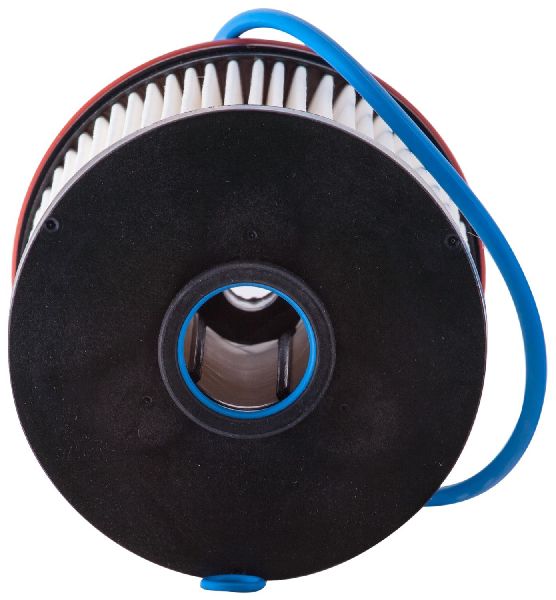
Typical fix: Replace the engine-mounted fuel filter cartridge. 🎬 See this step-by-step tutorial for replacing your fuel filter. Use a high-quality OEM or equivalent filter (e.g., ACDelco TP1015). Many owners recommend upgrading to a higher-efficiency Donaldson or CAT filter using an adapter.
Est. part cost: $40-$80 - Failing Fuel Pressure Regulator ⚪ Low Probability → Shop Fuel Injection Pressure Regulator While less common than the connector issue, the regulators themselves can fail. The L5P has two: Regulator 1 (FPR1) on the HP4 injection pump and Regulator 2 (FPR2) on the fuel rail. They can become sticky or contaminated with debris, causing them to fail to respond correctly to ECM commands.
How to confirm: This requires advanced diagnostics with a scan tool to monitor desired vs. actual fuel rail pressure while commanding the regulators to specific duty cycles. Unplugging the regulator may cause the pressure to spike, indicating some level of function. TSB 21-NA-111 suggests inspecting FPR1 for magnetic debris if a pump failure is suspected.
Typical fix: Replace the faulty regulator. Regulator 1 is on the injection pump. Regulator 2 is on the driver's side fuel rail and is typically sold as part of the entire fuel rail assembly 🎬 Watch: Walkthrough on replacing the #2 fuel pressure regulator. (GM Part #12686810).
Est. part cost: $150-$500 - Failing Fuel Rail Pressure Sensor ⚪ Low Probability → Shop Fuel Pressure Sensor The sensor itself can fail internally, sending incorrect data to the ECM even with a perfect electrical connection. One owner on a forum reported replacing the sensor after finding a discolored pin, which resolved the issue.
How to confirm: After confirming the connector and wiring are in perfect condition (pigtail replaced), and if scan tool data is still irrational (e.g., pressure reading is fixed at one value or jumps erratically), the sensor is the next likely culprit. This is a 'parts-cannon' approach if done without confirming the wiring first.
Typical fix: Replace the fuel rail pressure sensor (GM Part #12686809) located on the passenger side fuel rail.
Est. part cost: $100-$250
Rare But Worth Checking
- Failing High-Pressure (HP4) Injection Pump: This is a catastrophic and expensive failure. It is more likely to present with a P0087 (Fuel Rail Pressure Too Low) code, but erratic performance during the initial stages of failure could potentially trigger P0089. One forum user with the related code P1089 ended up needing an injection pump replacement after other fixes failed.
- Failing In-Tank Lift Pump: The L5P has a factory lift pump that supplies the high-pressure pump. If it fails to maintain a steady 54-65 PSI, it can starve the high-pressure system and cause performance codes. A scan tool can monitor lift pump pressure to verify its operation.
Diagnosis Steps
- Check for other DTCs. Pay close attention to codes like P0191, P0087, and P1089, which are all linked by TSB 20-NA-197.
- Check Fuel Filter Life. Using the driver information center or a scan tool, check the remaining fuel filter life. If it is near or at 0%, replace the fuel filter first as a baseline step.
- Inspect the Fuel Rail Pressure Sensor Connector. This is the most critical step. Locate the sensor on the passenger side fuel rail, near the front of the engine. Disconnect it and carefully inspect the connector and sensor pins for any signs of corrosion (white/green powder), moisture, or blackened dielectric grease.
- Test Terminal Tension. If you have the proper tools (terminal probe kit), check the tension of the female pins in the connector. Poor tension is a primary cause of this issue and may not be visually obvious.
- Replace Connector Pigtail if Necessary. If any corrosion, damage, or loose pin tension is found, replace the connector pigtail (GM Part #85518225 or equivalent). Ensure you use quality butt connectors with heat shrink and apply new dielectric grease (GM Part #12377900) to the terminals before reconnecting.
- Monitor Fuel Pressure with a Scan Tool. Compare 'Desired Fuel Rail Pressure' with 'Actual Fuel Rail Pressure'. If the actual pressure is erratic, does not follow desired, or bounces wildly during steady throttle or deceleration after the connector has been verified as good, the sensor or a regulator may be at fault.
- Test Regulators and Sensor. If the problem persists, follow service manual procedures to test the fuel pressure regulators and the fuel rail pressure sensor independently. This may involve commanding regulator duty cycles and checking for a response or testing sensor voltage output. This is best left to a professional.
Parts You'll Likely Need
- Fuel Rail Pressure Sensor Connector Pigtail
- Fuel Filter
- Fuel Rail Pressure Sensor
- Fuel Rail Assembly (with FPR2)
Related Codes That Often Appear With This One
- P0191 — Fuel Rail Pressure Sensor 'A' Circuit Range/Performance. This code is also caused by the faulty connector issue described in TSB 20-NA-197 and often appears with P0089.
- P0087 — Fuel Rail / System Pressure - Too Low. This can be triggered by the same intermittent open/short in the sensor connector causing the signal to drop out.
- P1089 — Fuel Rail Pressure Performance During Deceleration. This is another performance code listed in TSB 20-NA-197, pointing to the same connector issue.
- P026D — Injection Quantity Too High. Also listed in TSB 20-NA-197, this code can be set due to the erratic pressure readings caused by the faulty connector.
Technical Service Bulletins (TSBs) & Recalls
- Malfunction Indicator Lamp (MIL) Illuminated - DTC P0087, P0089, P0191, etc.: This is the primary TSB for this issue. It identifies corrosion or damage at the fuel pressure sensor electrical connector as the cause for over a dozen fuel-related DTCs. The prescribed fix is to inspect the terminals and replace the connector pigtail if any damage, corrosion, or blackened grease is found.
Platform-Specific Known Issues
- GM Technical Service Bulletin 20-NA-197 was issued specifically to address P0089 and other fuel codes caused by a faulty fuel rail pressure sensor connector on 2017-2021 L5P Duramax engines.
Mechanic-Grade Diagnostic Values
- Low-Pressure Fuel System (Lift Pump) Pressure — expected: 54 to 65 PSI. Failure: Pressure below 54 PSI indicates a weak or failing lift pump, which can starve the high-pressure pump.
- High-Pressure Fuel Rail at Idle — expected: 5,000 to 7,000 PSI (approx. 34-48 MPa). Failure: Pressure that is highly erratic, significantly above or below this range, or does not stabilize.
- High-Pressure Fuel Rail under Load — expected: Up to ~29,000 PSI (200 MPa). Failure: Inability to reach target pressure under acceleration, or pressure wildly exceeding the desired value.
- Fuel Injector Coil Resistance — expected: ~0.8 Ohms. Failure: Significantly higher resistance or an open circuit when measured at the injector pins. Measuring through the harness will show higher resistance (e.g., 3.8 Ohms), which can indicate a wiring issue.
- DTC P0089 Set Condition — expected: Actual fuel rail pressure should closely track desired pressure.. Failure: Code will set if actual fuel rail pressure is more than 20 MPa (2900 PSI) greater than desired pressure.
Scan Tool Commands That Help
- GDS2 / Professional Scan Tool: Fuel Pump Enable / Low Side Pressure Monitoring — Use this command with key-on, engine-off to verify the in-tank lift pump is functional and can build and hold pressure within the specified 54-65 PSI range.
- GDS2 / Professional Scan Tool: Desired vs. Actual Fuel Rail Pressure Monitoring — This is the primary data to watch during all diagnostic phases (cranking, idle, driving). A large, persistent deviation between desired and actual pressure, especially after the pigtail is confirmed good, points toward a sensor, regulator, or pump issue.
- GDS2 / Professional Scan Tool: Fuel Injection Small Quantity Data Reset — This reset procedure should be performed after replacing fuel system components like the fuel rail pressure sensor to ensure the ECM adapts to the new part correctly.
Wiring & Ground Locations
- Fuel Rail Pressure Sensor Connector (X123) — On the passenger side fuel rail, mounted toward the front of the engine, behind the throttle body assembly.. This connector is the number one cause of P0089 and related codes due to a high rate of corrosion and poor pin tension, as documented in GM TSB 20-NA-197.
- Fuel Rail Pressure Sensor Connector Pinout — At the sensor connector.. When splicing a new pigtail, knowing the wire order is critical. A forum user identified the order as: Pin 1: Blue/Black, Pin 2: Black/Blue, Pin 3: Yellow. Incorrect wiring will cause multiple other codes to set.
- ECM Main Harness Connectors — On the Engine Control Module (ECM), typically mounted on the driver's side of the engine bay.. A loose connection at one of the main ECM plugs can cause an intermittent open circuit for fuel system components, mimicking a part failure. One owner found applying firm pressure to the end-most connector resolved a no-start issue related to fuel pressure codes.
Real Owner Repair Stories
- YouTube channel 'C Farmer' (L5P Duramax (year not specified, but in range)) — Truck would not restart after being shut off, throwing a fuel pressure regulator code.
❌ Tried (didn't work) Wiggling the fuel pressure regulator pigtail., Planning to replace the entire fuel rail assembly.
✅ What actually fixed it The issue was a poor connection at one of the main ECM harness plugs. After reading a similar story, the owner applied firm pressure to the connector, and the truck started and ran reliably. It was not a fuel system part failure. - Reddit user 'Wcearp' on r/Duramax (2018 L5P Duramax) — Intermittent P0191 code (related to P0089) and limp mode. Would run fine for days or weeks, then fail.
❌ Tried (didn't work) Clearing the code (problem would return).
✅ What actually fixed it Replaced the fuel rail pressure sensor connector pigtail. The user reported the problem was resolved for over 6 months and 10,000 miles after the repair. - YouTube channel 'Denny Diesel' (L5P Duramax (year not specified, but in range)) — Fuel system problems, suspected low fuel pressure, drivability issues.
❌ Tried (didn't work) Replacing the fuel pressure regulator.
✅ What actually fixed it Replacing the fuel rail pressure sensor on the passenger side rail ultimately resolved the issue. - DuramaxDiesels.com forum user (2019 L5P Duramax at 13,000 miles) — P1089 code (Fuel Rail Pressure Performance During Deceleration), pressure bouncing during decel.
❌ Tried (didn't work) Replacing the fuel rail.
✅ What actually fixed it Replacing the high-pressure (HP4) injection pump.
When the Usual Fixes Don't Work
- While TSB 20-NA-197 correctly identifies the sensor connector pigtail as the most common cause, it is not the only cause. In one documented case, a technician replaced the fuel pressure regulator without success, only to find the actual fix was a new fuel rail pressure sensor. In another severe case, a no-start condition with fuel pressure codes was traced back to a loose main connector at the ECM, not a component on the fuel rail itself. These instances prove that while starting with the TSB is correct, if the pigtail replacement doesn't fix the issue, other root causes must be investigated.
OEM Part Supersession History
19300397, 19331705, 19367009→85518225— Standard part evolution and potential design improvements to combat corrosion/fretting issues outlined in TSB 20-NA-197.
Heads up: All parts are interchangeable, but 85518225 is the latest, most recommended service part for the fuel rail pressure sensor connector pigtail.
Model Year Variations Within This Range
- 2020: The 2020 model year introduced the 10-speed Allison 10L1000 transmission, replacing the 6-speed Allison used in 2017-2019 models. While this doesn't directly impact the cause of P0089, it is a significant powertrain difference within the specified vehicle range.
- 2017-2021: The root cause of P0089, the faulty fuel rail pressure sensor connector, is a consistent issue across all years covered by TSB 20-NA-197, indicating no significant change was made to this specific component during this period.
Diagnostic Flowchart
Other Known Issues on This Vehicle
Issues unrelated to this code that are worth knowing about as an owner of this generation:
- DEF Tank Heater Failure 🔴 High — Very common, especially on 2017-2020 models in colder climates. Can cause 'Service Emission System' warnings and limp mode. (Ref: TSB 21-NA-078, 22-NA-198, PIP5908E, N212342980.)
- Steering Wheel Oscillation / Shake 🟠 Medium — Affects some 2020+ models, causing a shake or vibration at highway speeds (50-80 mph). (Ref: TSB 19-NA-240.)
- MAP Sensor Clogging 🟡 Low — Common issue where the MAP sensor gets clogged with soot around 30,000-50,000 miles, causing rough idle and sluggish performance.
- Coolant Level Sensor Failure 🟡 Low — Common on 2017-2019 models, causing a false 'Low Coolant' message. The surge tank and sensor often require replacement.
- Upper Steering Shaft Clunk 🟠 Medium — Some owners report a clunking or popping noise from the steering system, which can feel like excessive play. (Ref: TSB PIT5809.)
- Glow Plug Failures 🟠 Medium — Failures of one or more glow plugs are reported, particularly as mileage exceeds 100k. Can cause hard starting in cold weather.
Used vs. New Parts: Buying Guide for This Vehicle
When a used part is the smart pick: For major mechanical assemblies like a complete fuel rail (if both the sensor and regulator are confirmed bad) or a throttle body assembly needed for access, a low-mileage part from a reputable salvage yard can be a cost-effective alternative to new OEM parts.
Donor-vehicle mileage cap: roughly under 75000 miles for the part to have meaningful remaining life.
What to inspect on the donor part:
- Inspect for any signs of corrosion on electrical connectors.
- Check for physical damage or stripped threads.
- Verify the donor vehicle was not in a severe front-end collision.
- Ask for the donor vehicle's VIN to check for reported issues if possible.
OEM-only on this vehicle (don't cheap out):
- Fuel Rail Pressure Sensor
- Fuel Pressure Regulator(s)
- High-Pressure Fuel Pump (HP4)
- Fuel Injectors
Aftermarket brands forum-validated for this vehicle:
- Lift Pumps: FASS, AirDog
- Fuel Filters: Donaldson, CAT (often require an adapter)
- Cold Air Intakes: S&B, Banks
Brands owners have reported issues with on this vehicle:
- Unbranded or generic electrical connectors and pigtails from online marketplaces. Forum users specifically warn against using cheap connectors as they often lead to repeat failures.
Real Owner Stories
Aggregated from forums and TSBs cited above. Mileages and costs reflect what owners reported in those sources.
2019 Chevrolet Silverado 2500HD/3500HD 6.6L Duramax L5P
Symptoms: Recurring P1089 and P0191 codes. The owner faced a frustrating battle with these codes even after the dealer replaced the sensor and harness multiple times.
What fixed it: The issue was persistent and required multiple attempts at replacing the sensor and harness, highlighting the difficulty of resolving the electrical connection issues.
Source hint: GM-Trucks.com: 2019 L5P Unresolved Issues
2017-2020 Chevrolet Silverado 2500HD/3500HD 6.6L Duramax L5P
Symptoms: Bouncing rail pressure specifically during deceleration.
What fixed it: While some suggested a sticky regulator or replacing the entire fuel rail, one user's issue was ultimately a failed injection pump.
Source hint: DuramaxDiesels.com: L5p p1089
2019 Chevrolet Silverado 2500HD/3500HD 6.6L Duramax L5P
Symptoms: Intermittent high and low fuel pressure readings triggering code P1089.
What fixed it: Replacing the fuel rail pressure sensor connector pigtail, though the technician noted it was difficult due to the tight workspace.
Source hint: Diesel Training Group Forum: 2019 Duramax L5P Rail Pressure Sensor Connector help
Related OBD-II Codes
Frequently Asked Questions
Does TSB 20-NA-197 apply to my 2018 Chevrolet Silverado 2500HD with the L5P Duramax?
What is the latest GM part number for the fuel rail pressure sensor connector pigtail?
Where is the fuel rail pressure sensor located on the 6.6L L5P engine?
Can a dirty fuel filter cause a P0089 code on my Silverado 3500HD?
Is there a specific grease I should use when repairing the sensor connector?
My truck is showing 'Reduced Engine Power' and a Service StabiliTrak message; is this related to P0089?
Helpful Videos
We Have This Part in Stock


The information in this article is provided for general reference and educational purposes only. Vehicle specifications, procedures, and part compatibility can vary by production date, trim level, and region. Always consult your vehicle's factory service manual and verify part numbers before purchasing or performing repairs. Safety-critical components such as airbags, seat belts, and braking systems should be installed by a qualified professional.
- Chevrolet Silverado 2500HD/3500HD:
- 🧭 Diagnostic Flowchart
- 🎬 Helpful Videos
- 🛍️ Shop This Part
- What's Unique About the 2017-2020 Chevrolet Silverado 2500HD/3500HD
- Symptoms You May Notice
- Most Likely Causes
- Rare But Worth Checking
- Diagnosis Steps
- Parts You'll Likely Need
- Related Codes That Often Appear With This One
- Technical Service Bulletins (TSBs) & Recalls
- Platform-Specific Known Issues
- Mechanic-Grade Diagnostic Values
- Scan Tool Commands That Help
- Wiring & Ground Locations
- Real Owner Repair Stories
- When the Usual Fixes Don't Work
- OEM Part Supersession History
- Model Year Variations Within This Range
- Other Known Issues on This Vehicle
- Used vs. New Parts: Buying Guide for This Vehicle
- Real Owner Stories
- 2019 Chevrolet Silverado 2500HD/3500HD 6.6L Duramax L5P
- 2017-2020 Chevrolet Silverado 2500HD/3500HD 6.6L Duramax L5P
- 2019 Chevrolet Silverado 2500HD/3500HD 6.6L Duramax L5P
- Related OBD-II Codes
- Frequently Asked Questions
- 🎟️ Get 5% Off