

P0101 on 2015-2017 Chrysler 200 2.4L: MAF Sensor Range/Performance Causes and Fixes
For the P0101 code on a 2015-2017 Chrysler 200, the most likely causes are a dirty MAF sensor, a needed PCM software update, or a vacuum leak. Cleaning the sensor costs about $15 for the cleaner, while a dealer software update can range from $100-$250. Before any work, physically verify if your car has a MAF sensor, as some California-emissions models do not.
- First, physically confirm if your 2.4L engine has a MAF sensor on the intake tube; some models do not.
- The easiest and most common first step is to clean the existing MAF sensor with dedicated cleaner.
- Before replacing any parts, contact a dealer to see if your vehicle needs a PCM software update as specified in TSB #18-051-16 REV. B.
- Thoroughly inspect the entire air intake system for cracks or loose hoses, as vacuum leaks are a frequent cause.
- Do not assume the MAF sensor is bad; it is often just dirty or reacting to a separate issue like a vacuum leak or software glitch.
What's Unique About the 2015-2017 Chrysler 200
A critical issue for the 2.4L MultiAir engine in the Chrysler 200 is that not all versions have a Mass Airflow (MAF) sensor. Vehicles built to Federal emissions standards typically have a MAF sensor, while those built for California emissions (PZEV or 'U.S. EPA' and 'California' on the VECI label) may use a MAP-only (speed density) system. Before attempting any diagnosis, you must physically check the air intake tube for a sensor. Additionally, Chrysler issued a Technical Service Bulletin (TSB #18-051-16 REV. B) indicating that a PCM software update is a common fix for this code, sometimes even when no mechanical fault is present. On a MAP-only car, a P0101 indicates a calculated airflow error by the PCM, pointing towards issues with other sensors or a vacuum leak.
Symptoms You May Notice
- Check Engine Light (Malfunction Indicator Lamp) is on
- Rough or erratic idle
- Engine hesitation or stumbling during acceleration
- Stalling, especially when coming to a stop
- Reduced fuel economy
- Black smoke from the tailpipe
- Hard starting
- Engine may enter 'limp-home mode' with reduced power
- Replacing the MAF sensor immediately without cleaning it first or checking for vacuum leaks and software updates.
- Mistaking a P0101 code on a California-emissions (MAP-only) vehicle for a literal MAF sensor failure, leading to wasted time searching for a non-existent part.
Most Likely Causes
- Dirty or Contaminated Mass Airflow (MAF) Sensor 🔴 High Probability → Shop Fuel Injection Air Flow Meter Oil vapor from the PCV system or fine dust that gets past the air filter can coat the sensor's delicate sensing element, insulating it and causing inaccurate readings. This is a very common cause for P0101 across all makes.
How to confirm: Visually inspect the MAF sensor's wires/filaments. If they appear dirty or oily, cleaning is warranted. This is the easiest and cheapest first step before replacing parts.
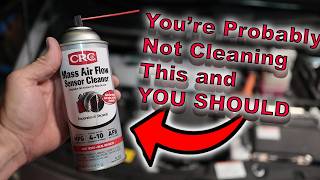
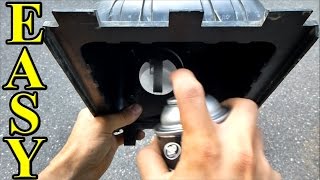
Typical fix: Remove the sensor and clean it using only dedicated Mass Airflow Sensor cleaner. 🎬 Watch: A quick guide on cleaning your MAF sensor properly. Do not use brake or carb cleaner, as they can damage the sensor. Let it dry completely before reinstalling.
Est. part cost: $10-$20 for MAF sensor cleaner - Powertrain Control Module (PCM) Software Update Needed 🔴 High Probability Chrysler released TSB #18-051-16 REV. B, which specifically addresses P0101 (among other codes) by updating the PCM software. This indicates the original software logic was too sensitive or had flaws in how it interpreted sensor data under certain conditions. Other TSBs like 18-014-16 also mention P0101 as being resolved by a flash.
How to confirm: Contact a Chrysler dealership with your vehicle's VIN to see if TSB #18-051-16 REV. B or any other software update is open for your vehicle.
Typical fix: A Chrysler dealer must perform a PCM software flash using a wiTECH scan tool. This is not a DIY repair.
Est. part cost: $0 if covered by warranty/campaign, otherwise $100-$250 for dealer labor - Vacuum Leak 🟡 Medium Probability The 2.4L MultiAir engine uses numerous plastic and rubber components in its intake system that can crack or degrade over time. A leak in the intake manifold gasket, a cracked intake air boot, or a broken vacuum hose allows unmetered air to enter the engine after the MAF sensor, causing the sensor's readings to conflict with what the engine is actually doing. A failed intake manifold gasket is a documented problem on these cars.
How to confirm: Perform a smoke test on the intake system. Smoke will visibly exit from any cracks or bad seals. Alternatively, you can carefully spray carburetor cleaner around suspected leak points with the engine running; a change in engine idle indicates a leak.
Typical fix: Replace the cracked hose, intake boot, or faulty gasket. The intake manifold gasket is a common failure point requiring replacement.
Est. part cost: $10-$80 depending on the leaking part. An intake manifold gasket set can cost around $58. - Faulty Wiring or Loose Connection ⚪ Low Probability An ALLDATA tech tip identified a specific issue with splice SK900A, located on top of the engine. A loose connection at this splice can cause an intermittent P0101 code, particularly under hard acceleration.
How to confirm: Inspect the wiring harness going to the MAF sensor for damage. Specifically locate and check the integrity of splice SK900A on top of the motor.
Typical fix: Repair the loose connection at the splice point by re-crimping or soldering the wires.
Est. part cost: $5-$15 for wiring repair supplies
Rare But Worth Checking
- Clogged or Dirty Engine Air Filter: → Shop Air Cleaner Assembly A severely restricted air filter can starve the engine for air, causing the MAF sensor to report lower-than-expected values. This is a simple and essential check before moving to more complex diagnostics.
- Faulty Mass Airflow (MAF) Sensor: → Shop Fuel Injection Air Flow Meter While often suspected first, the sensor itself fails less frequently than it gets dirty or is affected by other issues. An ALLDATA case study showed a technician swapped a MAF with a known-good one, but the problem persisted until a wiring splice was repaired. Only replace the sensor after confirming all other possibilities are ruled out.
- Restricted Exhaust System: A clogged catalytic converter can create excessive backpressure, disrupting airflow through the engine and causing the MAF sensor readings to be out of range. This is usually accompanied by a significant loss of power and potentially other codes.
Diagnosis Steps
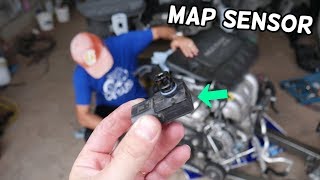
- Verify your vehicle has a MAF sensor. Check the air intake tube between the air filter box and the throttle body. If no sensor is present, your car has a MAP-based system 🎬 See this walkthrough for locating and replacing the MAP sensor. and the diagnosis should shift to vacuum leaks, MAP sensor issues, and software.
- Check for Technical Service Bulletins (TSBs). Contact a Chrysler dealer with your VIN to check for open recalls or applicable TSBs, especially #18-051-16 REV. B or #18-014-16 for a PCM software update.
- Inspect the Air Intake System. Check the engine air filter and replace it if it's dirty. Carefully inspect the entire intake tract from the airbox to the throttle body for any cracks, loose clamps, or disconnected hoses.
- Clean the MAF Sensor. If present, disconnect the electrical connector, remove the screws holding the sensor, and carefully lift it out. Spray the sensing element with dedicated MAF sensor cleaner only. Let it air dry completely before reinstalling.
- Inspect Wiring. Check the MAF sensor connector and harness for any signs of corrosion or damage. If the code appears under hard acceleration, specifically locate and check the integrity of splice SK900A on top of the engine.
- Check for Vacuum Leaks. With the engine running, listen for hissing sounds. A smoke test is the most effective way to find leaks from gaskets (like the intake manifold gasket) or hoses.
- Test the MAF Sensor. Using a scan tool, monitor the MAF sensor's live data (in grams/second) at idle and while revving the engine. The readings should be smooth and increase with RPM. A multimeter can also be used to check for proper voltage and ground at the connector.
- If all other steps fail to resolve the issue, the MAF sensor itself may be faulty and require replacement.
Parts You'll Likely Need
- Mass Airflow Sensor Cleaner — This is the most common and cost-effective first step, as a dirty sensor is a primary cause of P0101.
Trusted brands: CRC, Liqui Moly
Aftermarket price range: $10-$20 - Mass Airflow (MAF) Sensor
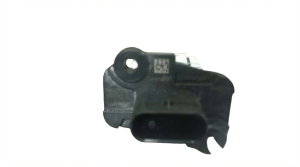
(OEM #68144197AA, 68144197AB)— If cleaning the sensor and checking for other issues fails, the sensor itself may have failed and needs replacement.
Trusted brands: Mopar, Delphi, Standard Motor Products
OEM price range: $130-$200
Aftermarket price range: $50-$110
Related Codes That Often Appear With This One
- P0171 — System Too Lean (Bank 1). A vacuum leak after the MAF sensor is a common cause for both P0101 and P0171, as unmetered air is entering the engine, causing the computer to see a lean condition.
- P0335 — Crankshaft Position Sensor Circuit. TSB #18-014-16 lists this code appearing with P0101 as part of a group of faults that can be resolved with a PCM software update.
- U1424 — Implausible Engine Torque Signal Received. This network code can be triggered when the MAF sensor provides faulty data, as its readings are a key input for the PCM's torque calculations. TSB 18-110-20 also links this code to P0101.
- P0128 — Thermostat Rationality. This code is also mentioned in TSB 18-110-20 alongside P0101, indicating a potential software logic issue connecting airflow and engine temperature calculations that a PCM flash can resolve.
Technical Service Bulletins (TSBs) & Recalls
- TSB #18-051-16 REV. B: PCM software update to correct faulty logic that could trigger P0101.
- TSB #18-014-16: Addresses P0101 and other codes on 2016 models via a PCM software flash.
- TSB #18-110-20: Lists P0101 along with U1424 and P0128 for 2017 models, solvable with a PCM update.
Platform-Specific Known Issues
- Federal vs. California Emissions: It is critical to determine if the vehicle has a MAF sensor (Federal) or is a MAP-only system (California PZEV) before starting diagnosis.
Mechanic-Grade Diagnostic Values
- MAF Sensor Live Data (g/s) at warm idle — expected: 2-4 g/s. Failure: A reading that is stuck, erratic, or significantly outside this range.
- MAF Sensor Live Data (g/s) at 2500 RPM — expected: 15-25 g/s. Failure: A reading that does not rise smoothly with RPM or is significantly lower/higher than expected.
- MAP Sensor Voltage (Key On, Engine Off) - for CA-emissions models — expected: 4.5 - 5.0 Volts. Failure: A voltage significantly lower than this range suggests a sensor or wiring issue.
- MAP Sensor Voltage (Engine Running at Idle) - for CA-emissions models — expected: 1.0 - 2.0 Volts. Failure: Voltage that remains high (near KOEO reading) or is below 1.0V suggests the sensor is not reading vacuum correctly.
Wiring & Ground Locations
- Splice SK900A — On top of the motor, within the engine wiring harness.. A loose connection at this specific factory splice has been identified by ALLDATA as a cause for intermittent P0101 codes, especially during hard acceleration when engine movement can disrupt the connection.
- G303 — Located at the left "B" pillar.. While not directly for the MAF sensor, this is a major body ground point. A poor ground here can cause a variety of difficult-to-diagnose electrical issues and sensor faults due to floating ground references. This is a general check for any complex electrical issue.
Real Owner Repair Stories
- ALLDATA Tech Tip (2016 Chrysler 200, FWD, L4-2.4L with 25,320 miles) — Malfunction Indicator Light (MIL) would come on only under hard acceleration, such as merging onto a highway.
❌ Tried (didn't work) Checking MAF sensor connections, Swapping the MAF sensor with a known-good part
✅ What actually fixed it A loose connection was found at splice SK900A, located on top of the motor. Repairing the splice resolved the issue completely.
OEM Part Supersession History
68144197AA→68144197AB— Standard part revision, likely for improved reliability or manufacturing process change.
Model Year Variations Within This Range
- 2015-2017: The most significant variation is not by year, but by the vehicle's intended market for emissions standards. Vehicles built for California (PZEV) often lack a MAF sensor entirely and use a MAP-only (speed-density) system, making the diagnostic approach for P0101 completely different. This must be verified by checking the VECI label under the hood and physically inspecting the intake tube.
Diagnostic Flowchart
Other Known Issues on This Vehicle
Issues unrelated to this code that are worth knowing about as an owner of this generation:
- Excessive Oil Consumption 🔴 High — Widespread issue affecting 2015-2016 models, often consuming a quart of oil per 1,000 miles. A class-action lawsuit was filed regarding this defect. (Ref: TSB 09-003-23 REV. A and 'XB1' warranty extension were issued by FCA to address the problem, which may lead to a dealer-performed consumption test and potential engine replacement.)
- ZF 9-Speed Transmission Failure/Erratic Shifting 🔴 High — Very common on 2015 models. Symptoms include harsh shifting, lurching, sudden shifts to neutral, and complete failure. (Ref: Recall S55 / NHTSA 16V-529 was issued for some 2015 models to address unexpected shifts to neutral caused by a wiring harness crimping issue. Multiple software updates and a class-action lawsuit settlement also relate to this transmission's performance.)
- Engine Stalling While Driving 🔴 High — Reported across multiple model years, including 2015-2017. The engine may stall without warning, particularly at low speeds. (Ref: Investigations have pointed to various causes, including faulty PCMs, low oil levels from the consumption issue, and throttle body problems.)
- Electronic Throttle Body Failure 🟠 Medium → Shop Fuel Injection Throttle Body — A common issue where the internal sensors or gears fail, causing the Electronic Throttle Control (ETC) warning light (lightning bolt) to illuminate, putting the car in limp mode. (Ref: No specific recall, but it is a widely documented failure. Replacement of the entire throttle body assembly is the typical fix.)
- Random Deployment of Active Head Restraints (AHR) 🟠 Medium — A factory defect can cause the active head restraints to deploy without a collision, potentially causing injury. (Ref: A class-action lawsuit (Costa, et al., v. FCA US LLC) was filed concerning this issue.)
Used vs. New Parts: Buying Guide for This Vehicle
When a used part is the smart pick: A used OEM Mopar MAF sensor from a low-mileage donor vehicle can be a smart, cost-effective choice. It is often more reliable than a cheap, new aftermarket sensor which may have calibration issues. Given the simplicity of the part, failure is often electronic, not mechanical wear, so a working used part is likely to remain working.
Donor-vehicle mileage cap: roughly under 75000 miles for the part to have meaningful remaining life.
What to inspect on the donor part:
- Check for a clean donor vehicle; avoid engines with heavy oil leaks.
- Inspect the sensor's connector pins for corrosion or damage.
- Ensure the delicate sensing wires inside the sensor housing are intact and not physically broken.
- If possible, get the VIN of the donor car to confirm it's not from a PZEV (California emissions) model that lacks the sensor.
Aftermarket brands forum-validated for this vehicle:
- Delphi
- Standard Motor Products
- Bosch
- Denso
Brands owners have reported issues with on this vehicle:
- Unbranded, no-name sensors from online marketplaces should be avoided, as they are frequently cited as having incorrect calibration, leading to persistent codes or poor performance.
Real Owner Stories
Aggregated from forums and TSBs cited above. Mileages and costs reflect what owners reported in those sources.
2016 Chrysler 200 2.4L
Symptoms: The P0101 code would trigger specifically and only under hard acceleration.
What fixed it: Repairing a loose connection at splice SK900A located on top of the engine.
Source hint: ALLDATA Tech-Assist Case Study (2016 Chrysler 200)
Related OBD-II Codes
Frequently Asked Questions
Does my 2015-2017 Chrysler 200 2.4L definitely have a MAF sensor to clean?
Is there a software update for the P0101 code on my 2015 Chrysler 200?
My 2016 Chrysler 200 is throwing P0101; are there any other TSBs I should know about?
Can I use any cleaner to fix a dirty MAF sensor on my 2.4L MultiAir?
I have a 2017 Chrysler 200 with P0101 and a U1424 code. Is there a single fix?
Could a vacuum leak cause P0101 on the 2.4L Tigershark engine?
Helpful Videos
We Have This Part in Stock

The information in this article is provided for general reference and educational purposes only. Vehicle specifications, procedures, and part compatibility can vary by production date, trim level, and region. Always consult your vehicle's factory service manual and verify part numbers before purchasing or performing repairs. Safety-critical components such as airbags, seat belts, and braking systems should be installed by a qualified professional.
- Chrysler 200:
- 🧭 Diagnostic Flowchart
- 🎬 Helpful Videos
- 🛍️ Shop This Part
- What's Unique About the 2015-2017 Chrysler 200
- Symptoms You May Notice
- Most Likely Causes
- Rare But Worth Checking
- Diagnosis Steps
- Parts You'll Likely Need
- Related Codes That Often Appear With This One
- Technical Service Bulletins (TSBs) & Recalls
- Platform-Specific Known Issues
- Mechanic-Grade Diagnostic Values
- Wiring & Ground Locations
- Real Owner Repair Stories
- OEM Part Supersession History
- Model Year Variations Within This Range
- Other Known Issues on This Vehicle
- Used vs. New Parts: Buying Guide for This Vehicle
- Real Owner Stories
- 2016 Chrysler 200 2.4L
- Related OBD-II Codes
- Frequently Asked Questions
- 🎟️ Get 5% Off