

P0101 on 2005-2011 Ford Focus: MAF Sensor Causes and Fixes
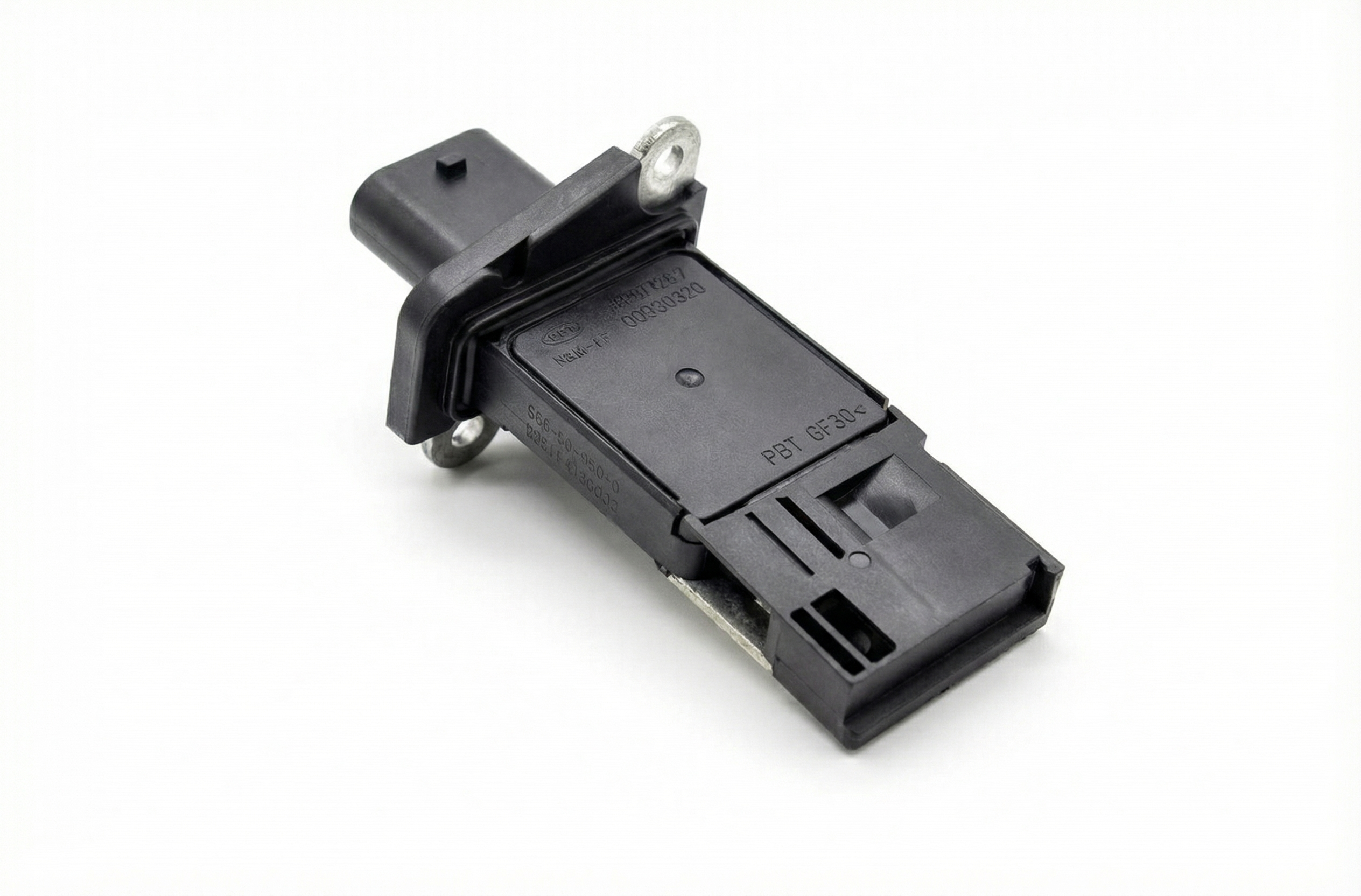
For a 2005-2011 Ford Focus, P0101 is most often caused by a dirty Mass Airflow (MAF) sensor or a vacuum leak. Start by cleaning the MAF sensor with a dedicated cleaner (around $15) and inspecting the air intake for cracks. A common failure point is the air filter box screws stripping out, preventing a good seal. A new sensor costs between $50 and $150.
- Always try cleaning the MAF sensor with dedicated cleaner before replacing it; this is the most common and cheapest fix.
- Thoroughly inspect the air intake hose for cracks, as vacuum leaks are a very common cause of P0101 on the Focus.
- When changing your air filter, double-check that it is seated perfectly in the airbox to prevent dirt from contaminating your MAF sensor.
- This code is often paired with P0171 (System Too Lean), which reinforces the likelihood of a vacuum leak or a faulty MAF sensor reading.
- This is a very DIY-friendly repair, with the most common fixes requiring minimal tools and expense.
What's Unique About the 2005-2011 Ford Focus
The 2.0L Duratec engine used across this generation of Ford Focus is generally reliable, but the MAF sensor is a well-documented common point of failure leading to this code. The issue is frequently not the sensor itself failing electronically, but rather becoming contaminated by dirt or oil, especially if the air filter isn't seated perfectly. A specific known issue is the plastic threads for the air filter box cover screws stripping out, which allows the cover to sit loose and let unfiltered, unmetered air bypass the filter and contaminate the MAF sensor. Owners often find that simply cleaning the sensor or fixing a small, unmetered air leak in the plastic intake system resolves the code without needing expensive parts.
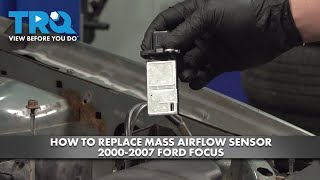
Generation note: This range covers the end of the first-generation (Mk1) North American Focus (2005-2007) 🎬 Watch: How to replace the MAF sensor on 2000-2007 models and the entire second-generation (Mk2) (2008-2011). Both generations primarily used a 2.0L Duratec engine and share the same common causes and fixes for code P0101, as the intake and MAF sensor design are very similar. Forum discussions confirm that swapping intake components between these generations without PCM recalibration will cause a P0101 code due to differences in MAF sensor characteristics and location. The PCM software uses a specific ratio factor to calculate total air volume based on the sensor's partial reading, and this factor is different for the pre- and post-facelift intake designs.
Symptoms You May Notice
- Check Engine Light is on
- Engine idles roughly, sometimes stalling at stops
- Hesitation or stumbling during acceleration
- Noticeable loss of engine power
- Decreased fuel economy
- Black smoke from the exhaust in some cases
- Jerky or unsmooth throttle response and shifting
- Replacing the MAF sensor without first trying to clean it.
- Replacing O2 sensors when the root cause is a vacuum leak throwing off the air/fuel mixture.
- Replacing the throttle body when the issue is a simple cracked intake boot or vacuum hose.
Most Likely Causes
- Dirty or Contaminated MAF Sensor 🔴 High Probability → Shop Fuel Injection Air Flow Meter The sensor's delicate wires are sensitive to dirt and oil. An improperly seated air filter or the use of an oiled aftermarket filter can quickly contaminate the sensor. The design of the air filter box, with screws that thread into plastic, is prone to stripping, which prevents a proper seal and allows dirty air to get to the sensor.
How to confirm: Visually inspect the small wires inside the MAF sensor. If they look coated in grime, they need cleaning. A user on a Ford Focus forum noted a significant improvement in smoothness after cleaning a sensor that looked very dirty.
Typical fix: Remove the sensor (held by two T15 or T20 Torx screws) and spray the internal wires thoroughly with a dedicated Mass Airflow Sensor Cleaner. Do not touch the wires. Allow it to dry completely before reinstalling.
Est. part cost: $10-$20 for MAF cleaner spray - Vacuum Leak 🔴 High Probability The plastic and rubber components of the intake system, particularly the intake boot between the airbox and throttle body, can become brittle and crack with age, allowing unmetered air to enter the engine after the MAF sensor.
How to confirm: Visually inspect the air intake tube for cracks or loose clamps. Listen for a hissing sound at idle. A professional can perform a smoke test to pinpoint the leak. A DIY method is to carefully spray carburetor cleaner around suspected leak points with the engine running; a change in engine idle indicates a leak.
Typical fix: Replace the cracked intake hose or faulty gasket. Check PCV hoses as well.
Est. part cost: $20-$80 for an intake hose - Clogged or Incorrectly Installed Air Filter 🟡 Medium Probability → Shop Air Cleaner Assembly The air filter housing design can make it easy to misalign the filter. More commonly, the housing screws strip out, breaking the seal and allowing dirty air to bypass it and contaminate the MAF sensor. A clogged filter can also restrict airflow enough to trigger the code.
How to confirm: Open the air filter box and inspect the filter. Check if it is dirty and ensure it is seated correctly. Attempt to tighten the airbox cover screws; if they don't tighten, the threads are stripped.
Typical fix: Replace the dirty air filter. If the screw holes are stripped, some owners have successfully repaired them using methods like wrapping the screws or using slightly larger screws to ensure the housing seals tightly.
Est. part cost: $15-$30 - Failed MAF Sensor 🟡 Medium Probability → Shop Fuel Injection Air Flow Meter
How to confirm: If cleaning the sensor and confirming there are no vacuum leaks does not resolve the code, the sensor has likely failed electronically. A scan tool can monitor the sensor's output in g/s (grams per second). A healthy sensor on a 2.0L engine should read approximately 2-7 g/s at idle and rise to 15-25 g/s at 2500 RPM. A reading of 0, a fixed high value, or a slow/unresponsive reading indicates a failed sensor or wiring issue.
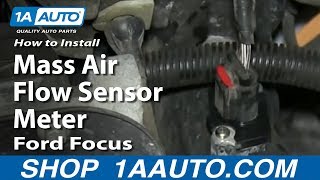
Typical fix: Replace the Mass Airflow Sensor. This is typically a simple DIY job requiring only a few screws and unplugging a connector. 🎬 See this walkthrough for replacing the air flow meter sensor
Est. part cost: $80-$180 for OEM, $50-$100 for aftermarket - Damaged MAF Sensor Wiring or Connector ⚪ Low Probability → Shop Fuel Injection Air Flow Meter
How to confirm: Inspect the wiring harness and connector leading to the MAF sensor for any signs of corrosion, damage, or loose pins. On some Focus models, check for chafing where the harness may rub against the starter motor or transmission bell housing, which can cause wires to short.
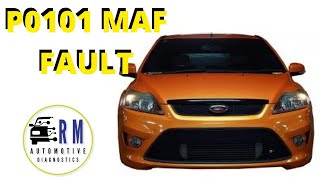
Typical fix: Repair the damaged wires by soldering and heat-shrinking, or replace the connector pigtail. A YouTube video by RMAutodiag documents a Focus ST with a P0101 caused by a wiring loom rubbing through on the bell housing.
Est. part cost: $15-$40 for a pigtail
Rare But Worth Checking
- Faulty Intake Manifold Runner Control (IMRC): → Shop Engine Intake Manifold
Diagnosis Steps
- Read the codes with an OBD-II scanner. Note any other codes present, especially P0171 or P2004.
- Inspect the engine air filter. Ensure it's clean and properly seated in the airbox. Check that the airbox cover screws are tight and not stripped.
- Visually inspect the entire air intake system from the airbox to the throttle body. Look for cracks in the flexible tubing, loose clamps, or disconnected PCV hoses.
- Unplug and inspect the MAF sensor's electrical connector for corrosion or damage. Inspect the wiring harness for chafing, especially where it passes over the transmission bell housing. 🎬 Watch: Diagnosing a P0101 code caused by damaged wiring
- Remove the MAF sensor (usually held by two Torx screws). Visually inspect the sensing elements. If dirty, clean them ONLY with dedicated MAF sensor cleaner spray. Let it air dry completely.
- Reinstall the sensor, clear the codes with the scanner, and perform a test drive to see if the code returns.
- If the code returns, use a scan tool to monitor the MAF sensor data (PID) in g/s at idle. A reading near 0 or one that doesn't change with RPM suggests a bad sensor or wiring issue.
- If the MAF signal seems plausible but the code persists, the next logical step is to check for vacuum leaks using a smoke machine.
- If no vacuum leaks are found and cleaning did not work, the MAF sensor itself has likely failed and should be replaced.
Parts You'll Likely Need
- Mass Airflow Sensor (MAF)
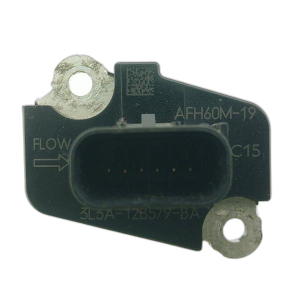
(OEM #3L3Z-12B579-BA)— This is the most common part to fail or require service for a P0101 code. The Motorcraft service part is often labeled AFLS169. While the OEM part number 3L3Z-12B579-BA is listed for many Ford applications, it's crucial to verify fitment for the specific Focus year.
Trusted brands: Motorcraft, Delphi, Hitachi, Bosch
OEM price range: $120-$180
Aftermarket price range: $50-$100 - Mass Airflow Sensor Cleaner — Often, the sensor is just dirty, and cleaning it is the only fix needed. This should always be the first step.
Trusted brands: CRC, Liqui Moly
Aftermarket price range: $10-$20
Related Codes That Often Appear With This One
- P0171 — A vacuum leak or faulty MAF sensor causes the engine to run lean (too much air, not enough fuel), which triggers the P0171 (System Too Lean Bank 1) code. These two codes frequently appear together.
- P0113 — The Intake Air Temperature (IAT) sensor is often integrated into the MAF sensor housing. A failure or wiring issue with the MAF sensor can therefore also trigger a P0113 (Intake Air Temperature Sensor 1 Circuit High) code.
Platform-Specific Known Issues
- Stripped Air Filter Box Screws: → Shop Air Cleaner Assembly A very common issue on this Focus generation is for the Torx screws holding the air filter box lid to strip the plastic threads in the lower housing. This prevents a tight seal, allowing unfiltered air to be drawn in post-filter, directly contaminating the MAF sensor. A user on Focusclub.nl described this exact problem leading to a P0101 code.
Mechanic-Grade Diagnostic Values
- MAF Sensor Live Data (PID) at Idle — expected: 2 to 7 grams/second (g/s). Failure: A reading that is stuck, unresponsive, or significantly outside the expected range.
- MAF Sensor Live Data (PID) at 2500 RPM — expected: 15 to 25 grams/second (g/s). Failure: A reading that does not rise with RPM or rises erratically.
- MAF Sensor Power Supply Voltage (KOEO) — expected: 12 Volts (Battery Voltage). Failure: Significantly less than battery voltage indicates a wiring or fuse issue.
- MAF Sensor Ground Circuit Voltage Drop — expected: Less than 100 millivolts (0.1V). Failure: A higher voltage reading indicates a poor ground connection, which can cause incorrect sensor readings.
- MAF Sensor Signal Voltage at Idle (Engine Warm) — expected: A steady base voltage, typically around 0.6V to 1.2V. The exact voltage is less important than its behavior.. Failure: A voltage that is stuck at 0V, 5V, or does not change smoothly when the throttle is applied.
Scan Tool Commands That Help
- FORScan: Live Data Monitoring (PID: MAF) — Use to monitor the MAF sensor's g/s readings at idle and while revving the engine. A healthy sensor will show responsive, smooth changes. This can confirm if a sensor is lazy or non-responsive even if cleaning it didn't fix the code.
- Generic OBD-II Scanner: Reset KAM (Keep Alive Memory) — After cleaning or replacing the MAF sensor, performing a KAM reset (often done by disconnecting the battery for 15-30 minutes) forces the PCM to clear learned fuel trims and immediately use the new data from the corrected sensor. This can resolve issues faster than waiting for the PCM to relearn on its own.
Wiring & Ground Locations
- MAF Connector Pin A — On the MAF sensor electrical connector.. This is the 12V power supply pin. With Key On, Engine Off (KOEO), this pin should have battery voltage when tested against a known good ground. Lack of voltage points to a blown fuse or a break in the power wire.
- MAF Connector Pin B & C — On the MAF sensor electrical connector.. These are the ground pins. Pin B is typically the chassis ground, and Pin C is the PCM-supplied sensor ground. A voltage drop test on these pins should show less than 100mV, confirming a solid ground connection is present. A bad ground is a common cause of erratic sensor readings.
- MAF Connector Pin D — On the MAF sensor electrical connector.. This is the signal wire that sends airflow data back to the PCM. When back-probed with the engine running, it should show a variable voltage that increases smoothly as the engine is revved. A stuck or erratic voltage here indicates a faulty sensor.
- Engine Wiring Harness — The section of the main engine wiring harness that routes over the top of the transmission bell housing and near the starter motor.. This area is a known chafe point. Vibrations can cause the harness to rub through on the metal bell housing, shorting wires together. This can cause a loss of the 5V reference, a short to ground, or a short to power for the MAF circuit, leading to a P0101 and other codes.
Real Owner Repair Stories
- RMAutodiag on YouTube (Ford Focus ST (shares similar wiring principles)) — P0101 code, MAF sensor reading stuck at 5 volts on scan tool.
❌ Tried (didn't work) Initial diagnosis pointed to a bad MAF sensor because it was reading a fixed 5V, suggesting an internal short.
✅ What actually fixed it The wiring loom had rubbed through on the transmission bell housing, causing multiple wires to short together. This short circuit damaged the MAF sensor internally and also caused the loss of the 5V reference signal from the ECU. The fix required repairing the damaged section of the wiring harness and replacing the now-fried MAF sensor. - Ford Focus Club forum user (2007 2.0 TDCi (C-Max, but shares Focus platform)) — P0101 code immediately after swapping from a pre-facelift airbox to a facelift airbox.
❌ Tried (didn't work) Using a new MAF sensor for the new airbox., Cleaning the new MAF sensor., Checking for intake leaks., Rewiring the connector multiple times.
✅ What actually fixed it The user discovered that the pre-facelift and post-facelift MAF sensors and intake designs are not directly interchangeable without PCM recalibration. The PCM software is programmed with a specific 'ratio factor' based on the original intake and sensor design. Swapping them causes the calculated airflow to be out of the expected range, triggering P0101. The fix was to revert to the original airbox and MAF sensor.
OEM Part Supersession History
XL3F-12B579-BA→3L3Z-12B579-BA— Part revision and consolidation across multiple Ford platforms.
Heads up: While 3L3Z-12B579-BA (Motorcraft AFLS131/AFLS169) is a very common service part, it is critical to verify fitment by VIN. There are subtle differences in MAF sensors for different engine calibrations (e.g., PZEV vs. non-PZEV) and model years that can cause P0101 if the wrong sensor is installed, even if it physically fits.
Model Year Variations Within This Range
- 2005-2007 vs 2008-2011: The North American facelift in 2008 brought changes to the air intake system design, including the MAF sensor location and characteristics. While the root causes of P0101 are similar, the physical parts (airbox, intake tube, and sometimes the MAF sensor itself) are not always interchangeable between the pre-facelift (Mk1.5) and facelift (Mk2) models without causing a P0101 code due to differences in PCM calibration.
Diagnostic Flowchart
Real Owner Stories
Aggregated from forums and TSBs cited above. Mileages and costs reflect what owners reported in those sources.
Ford Focus
Symptoms: Check engine light came on. Removed the MAF sensor, checked the plug for damage, and ensured all 4 wires were snug.
What fixed it: Carefully cleaned the MAF sensor, reinstalled it, and cleared the code using the Torque Pro app.
Source hint: Reddit r/Cartalk
Ford Focus
Symptoms: P0101 code persisted even after cleaning the MAF sensor multiple times.
What fixed it: Discovered the air filter housing screws were stripped and loose, preventing a proper seal. The code was only resolved after the housing was properly secured so dirty air couldn't bypass the filter.
Source hint: focusclub.nl - 'P0101 storing, MAF en luchtfilterhuis...'
Ford Focus 1.8 TDCi
Symptoms: Rough engine running, poor throttle response, and a very dirty MAF sensor.
What fixed it: Cleaned the MAF sensor with a dedicated cleaner, which resulted in a dramatic improvement in engine smoothness and throttle response.
Source hint: Ford Focus Club - 'Clean your MAF sensor and reset your PCM...'
Ford Focus ST
Symptoms: Persistent P0101 code due to an electrical short.
What fixed it: Repaired the wiring loom that had rubbed through and shorted out on the transmission bell housing.
Source hint: YouTube video by RMAutodiag
Related OBD-II Codes
Frequently Asked Questions
Why does my 2005-2011 Ford Focus keep getting a dirty MAF sensor and a P0101 code?
What should the MAF sensor read on my 2.0L Ford Focus at idle?
Where should I check for wiring damage on my Focus that might cause a P0101?
What tools do I need to remove the MAF sensor on my Ford Focus for cleaning?
I have a P0101 code and an ESP system fault on my Focus ST. Are they related?
Can a cracked intake boot cause a P0101 on my Focus?
Helpful Videos
We Have This Part in Stock

The information in this article is provided for general reference and educational purposes only. Vehicle specifications, procedures, and part compatibility can vary by production date, trim level, and region. Always consult your vehicle's factory service manual and verify part numbers before purchasing or performing repairs. Safety-critical components such as airbags, seat belts, and braking systems should be installed by a qualified professional.
- Ford Focus:
- 🧭 Diagnostic Flowchart
- 🎬 Helpful Videos
- 🛍️ Shop This Part
- What's Unique About the 2005-2011 Ford Focus
- Symptoms You May Notice
- Most Likely Causes
- Rare But Worth Checking
- Diagnosis Steps
- Parts You'll Likely Need
- Related Codes That Often Appear With This One
- Platform-Specific Known Issues
- Mechanic-Grade Diagnostic Values
- Scan Tool Commands That Help
- Wiring & Ground Locations
- Real Owner Repair Stories
- OEM Part Supersession History
- Model Year Variations Within This Range
- Real Owner Stories
- Ford Focus
- Ford Focus
- Ford Focus 1.8 TDCi
- Ford Focus ST
- Related OBD-II Codes
- Frequently Asked Questions
- 🎟️ Get 5% Off