

P0101 on 2010-2015 Hyundai Tucson: MAF Sensor Causes and Fixes
For a 2010-2015 Tucson with the 2.0L or 2.4L Theta II engine, code P0101 is most often caused by a dirty Mass Airflow (MAF) sensor. Cleaning it with dedicated MAF sensor cleaner is the most likely fix and costs under $15. If that fails, a vacuum leak from a cracked air intake boot or a faulty sensor are the next most common causes. This is a very common and usually simple DIY fix.
- Start by cleaning the MAF sensor with dedicated cleaner; this is the cheapest and most common fix.
- Thoroughly inspect the air intake hose between the air filter and the engine for cracks; this is the second most likely cause.
- Always check your engine air filter; a clogged filter can trigger this code.
- Do not use brake cleaner or touch the MAF sensor wires, as this will permanently damage it.
- If you replace the MAF sensor, be aware that a 're-learn' procedure with a scan tool may be necessary for the engine to run smoothly.
What's Unique About the 2010-2015 Hyundai Tucson
On the 2010-2015 (LM generation) Tucson, particularly with the 2.0L and 2.4L Theta II gasoline engines, the P0101 code is a very common and straightforward issue. The problem is rarely with the computer itself but almost always related to the physical components that measure airflow. The most frequent culprit is simple contamination of the MAF sensor's delicate hot wire, followed by cracks in the plastic and rubber air intake ducting, which become brittle with age. Unlike some other brands or even other Hyundai models, there are no widespread reports of complex software issues or TSBs specifically for P0101 on this platform, making it a highly predictable diagnosis.
Symptoms You May Notice
- Check Engine Light illuminated
- Rough or erratic idle
- Engine hesitation or stumbling during acceleration
- Reduced engine power and sluggish performance
- Poor fuel economy
- Stalling, especially when coming to a stop
- Black smoke from the exhaust (in rare cases, indicating a rich condition)
- Difficulty starting the engine
- Replacing the oxygen sensors. O2 sensors measure the result of combustion, but P0101 is about the air going into the engine. A bad air measurement can cause O2 sensor codes, but replacing the O2 sensor won't fix the root P0101 cause.
- Replacing the throttle body. While a very dirty throttle body can affect airflow, it is not a common cause for P0101 and is a much more expensive repair to start with.
Most Likely Causes
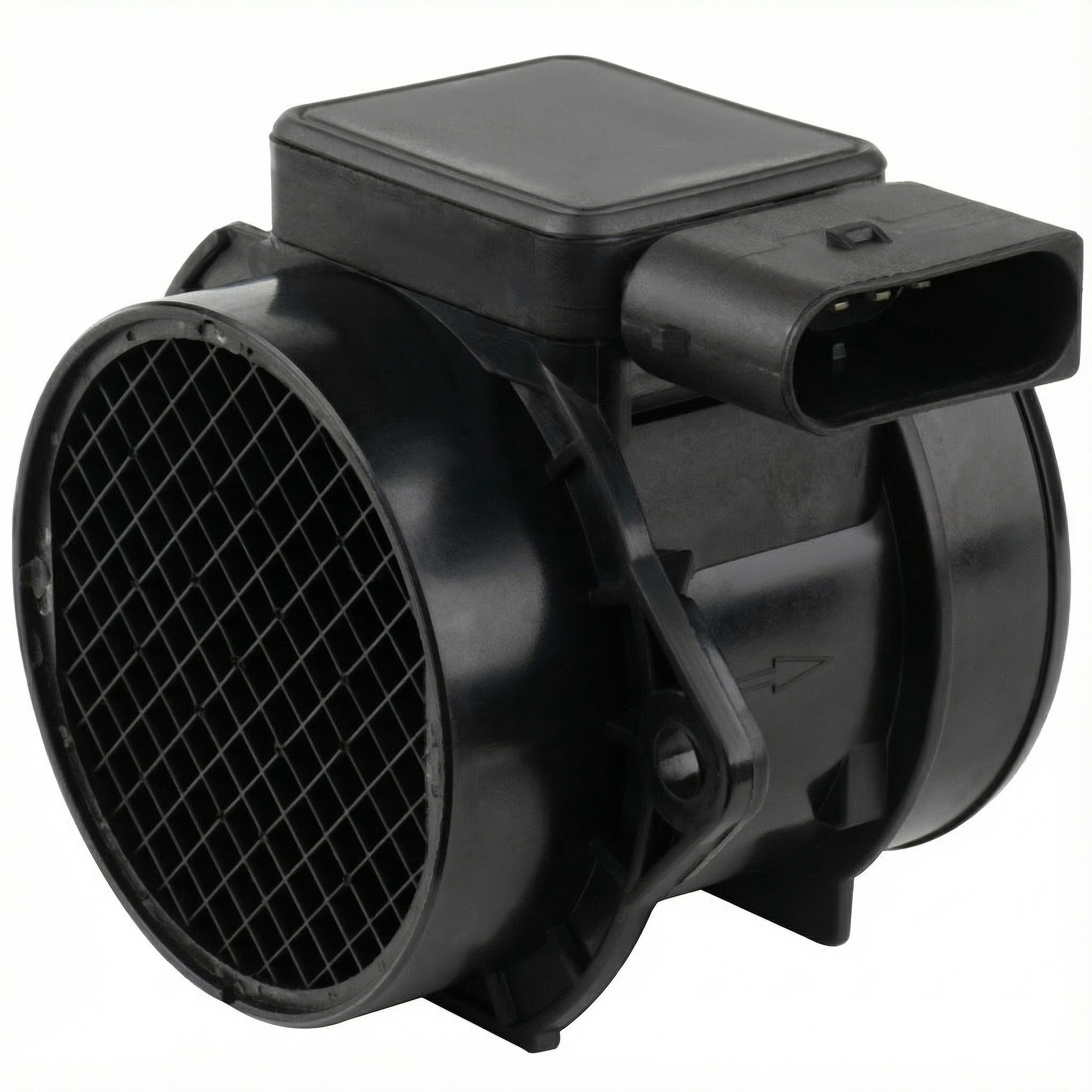
- Dirty or Contaminated MAF Sensor 🔴 High Probability → Shop Fuel Injection Air Flow Meter The MAF sensor uses a sensitive hot wire to measure airflow. Over time, dust, oil vapor from the PCV system, or fibers from the air filter can coat this wire, insulating it and causing inaccurate readings. This is the number one cause for P0101 on this vehicle.
How to confirm: Remove the sensor (located on the air intake tube right after the air filter box) and visually inspect the small wires inside the sensor's housing. Any visible dirt or grime is a clear indicator. A can of MAF cleaner is a cheap first diagnostic step.
Typical fix: Clean the sensor wires carefully using only dedicated Mass Airflow Sensor cleaner. 🎬 Watch: Detailed walkthrough on how to clean your MAF sensor. Do not touch the wires or use other chemicals like brake cleaner, which will destroy the sensor. Let it air dry completely for at least 30 minutes before reinstalling.
Est. part cost: $10-$20 - Vacuum Leak (Cracked Intake Boot) 🟡 Medium Probability The flexible rubber/plastic air intake tube that runs from the air filter housing (containing the MAF) to the throttle body can develop cracks from age and heat cycles. This allows 'unmetered' air to enter the engine after the MAF sensor, confusing the ECM and often triggering a P0171 (System Too Lean) code alongside P0101.
How to confirm: With the engine running, listen for a hissing sound around the intake area. Visually inspect the entire intake boot, squeezing it to reveal any hidden cracks, especially in the ribbed sections. 🎬 See how a cracked intake boot causes these engine codes. A smoke test is the most definitive way to find a leak.
Typical fix: Replace the cracked air intake boot. This is a common failure point.
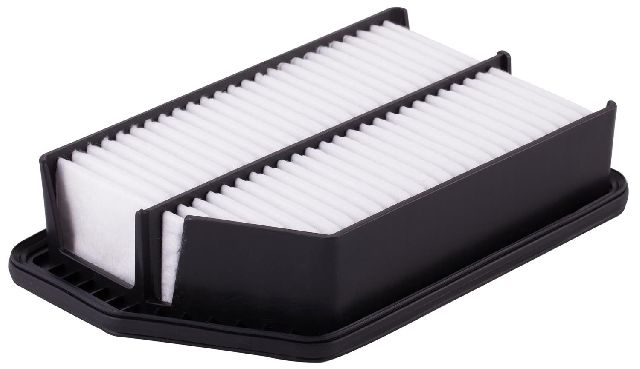
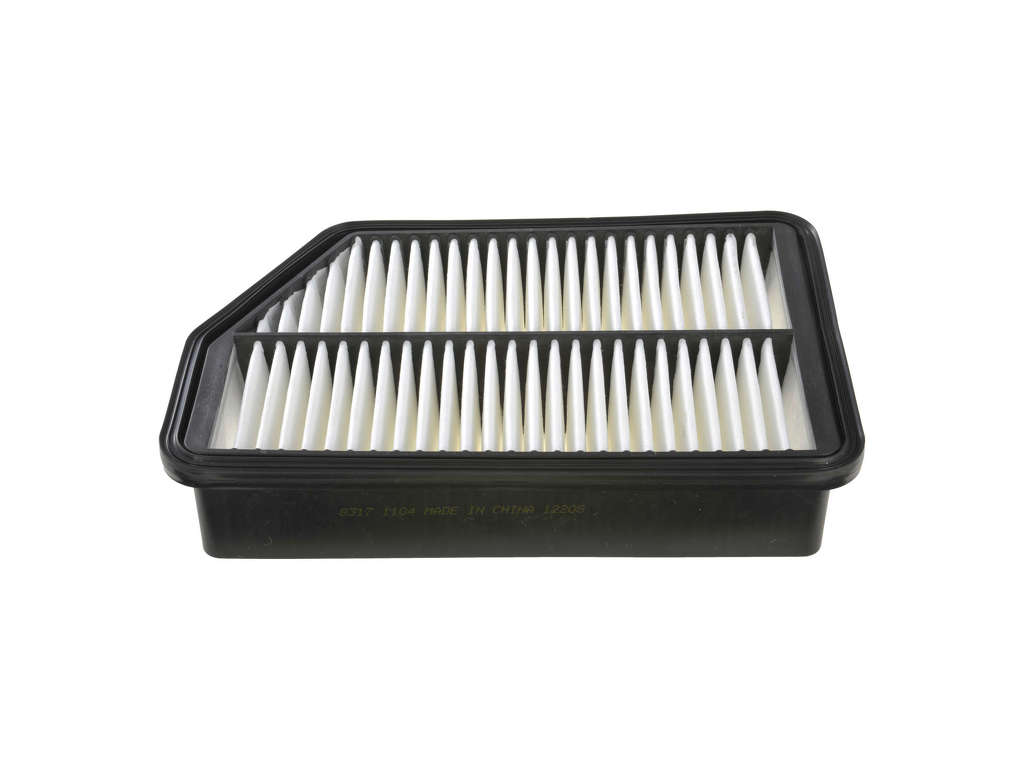
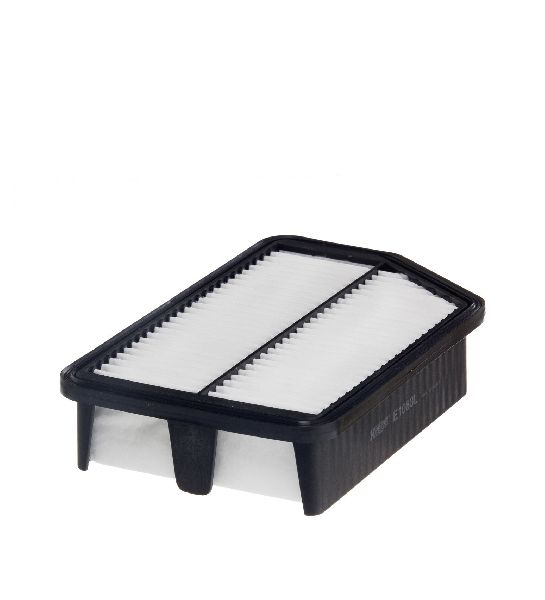
Est. part cost: $40-$100 - Dirty or Clogged Engine Air Filter 🟡 Medium Probability → Shop Air Cleaner Assembly
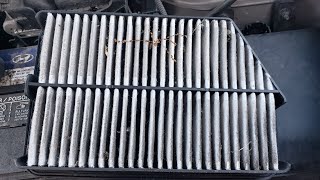
How to confirm: Remove the engine air filter and inspect it. If it is visibly dirty, clogged with debris, or has not been changed in a long time, it is restricting airflow.
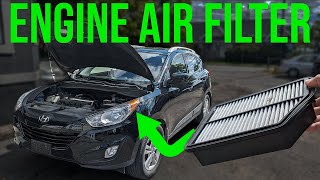
Typical fix: Replace the engine air filter. This is a basic maintenance item that should be checked first before any other diagnosis. 🎬 Watch: How to quickly replace your engine air filter.
Est. part cost: $15-$30 - Faulty MAF Sensor ⚪ Low Probability → Shop Fuel Injection Air Flow Meter
How to confirm: If the code returns immediately after cleaning the sensor and you have confirmed there are no vacuum leaks or wiring issues, the sensor's internal electronics have likely failed. A diagnostic scan tool can monitor the live data from the sensor to confirm erratic or non-responsive readings (see 'Diagnosis Steps (Advanced)').
Typical fix: Replace the Mass Airflow Sensor. On this platform, an ECU 'relearn' is not typically required for a MAF sensor replacement; the fuel trims will adapt automatically after a short drive cycle.
Est. part cost: $70-$250
Rare But Worth Checking
- Damaged MAF Sensor Wiring or Connector: → Shop Fuel Injection Air Flow Meter Check the wiring harness leading to the MAF sensor for any chafed, broken, or corroded wires. Wiggle the connector with the engine running to see if it affects the idle, which could indicate a poor connection.
- Clogged Catalytic Converter: A severely restricted exhaust can cause airflow backpressure that throws off MAF sensor readings. This is usually accompanied by a significant loss of power, especially at high RPMs, a sulfur-like smell, and potentially other codes like P0420.
- Severely Clogged PCV System: A stuck-closed PCV valve can alter crankcase pressure and affect the air-fuel mixture, indirectly contributing to a P0101 code in some fringe cases. It can also accelerate the contamination of the MAF sensor with oil vapor.
Diagnosis Steps
- Read the code with an OBD-II scanner to confirm P0101 and check for any other codes.
- Visually inspect the entire air intake tract from the air filter box to the throttle body. Look for loose clamps or cracks in the flexible tubing, especially the accordion-style sections.
- Inspect the engine air filter. If it's dirty, replace it. This is the cheapest and easiest step.
- Unplug and remove the MAF sensor. It is typically held in by two Phillips head screws.
- Carefully clean the MAF sensor using only dedicated MAF sensor cleaner. Spray the small wires/elements inside the sensor housing 10-15 times. Do NOT touch them. Let it air dry for at least 30 minutes.
- Reinstall the sensor, clear the code with the scanner, and test drive the vehicle for at least 10-15 minutes to see if the code returns.
- If the code returns, the next step is to check for vacuum leaks. A professional smoke test is the most effective method.
- If no vacuum leaks are found, inspect the MAF sensor connector and wiring for damage.
- If all other possibilities are ruled out, the MAF sensor itself is likely faulty and should be replaced.
Parts You'll Likely Need
- Mass Airflow Sensor Cleaner — This is the first and most common fix. A specialized aerosol cleaner is required to safely clean the sensor's delicate components.
Trusted brands: CRC, Liqui Moly, WD-40 Specialist
Aftermarket price range: $10-$20 - Mass Airflow Sensor (2.4L Theta II)
(OEM #28164-2G000)— This is the sensor that fails or gets dirty. If cleaning doesn't work, replacement is the next step. This part number is for the 2.4L engine.
Trusted brands: Hyundai (OEM), Bosch, Delphi, Denso
OEM price range: $150-$250
Aftermarket price range: $70-$150 - Mass Airflow Sensor (2.0L Theta II)
(OEM #28164-2E000)— The 2.0L engine uses a different MAF sensor. If cleaning doesn't work, this is the replacement part.
Trusted brands: Hyundai (OEM), Delphi, Walker
OEM price range: $120-$200
Aftermarket price range: $60-$120 - Air Intake Hose / Boot
(OEM #28138-2S000 (for 2.4L))— This hose frequently cracks with age, causing a major vacuum leak that is a very common cause of P0101.
Trusted brands: Hyundai (OEM), Various Aftermarket
OEM price range: $50-$80
Aftermarket price range: $30-$60 - Engine Air Filter
(OEM #28113-2S000)— A clogged air filter restricts airflow and can cause the P0101 code. It's an inexpensive and critical maintenance item.
Trusted brands: Hyundai (OEM), WIX, Fram, Purolator
OEM price range: $25-$40
Aftermarket price range: $15-$30
Related Codes That Often Appear With This One
- P0171 — System Too Lean - A vacuum leak allows unmetered air into the engine, causing the MAF to under-report airflow. The engine computer sees more oxygen in the exhaust than expected and sets a lean code.
- P0172 — System Too Rich - A failing MAF sensor might incorrectly report a very high amount of airflow, causing the computer to inject too much fuel, leading to a rich condition.
Technical Service Bulletins (TSBs) & Recalls
- TSB 19-01-002H (Campaign 953): This TSB is not for P0101 directly, but is highly relevant for owners. It details the installation of the Knock Sensor Detection System (KSDS) software update designed to detect early signs of engine bearing failure, a major issue with Theta II engines. An engine in the early stages of failure could potentially have combustion instability that might contribute to erratic sensor readings.
- Bulletin #21-01-041H: While issued for other Hyundai models like the Elantra, this bulletin notes updated logic for DTC P0101 regarding Mass Air Flow (MAF) Sensor Range/Performance and its correlation with manifold pressure and throttle position.
- Bulletin #20-01-028H (also referenced as Campaign T5B Dea): This manufacturer bulletin discusses ECU DTC codes including P0101 and P0106 in conjunction with transmission control updates to resolve specific performance conditions.
Platform-Specific Known Issues
- Owner Experience: Simple Cleaning Fix: A user on the 'Hyundai-Forums.com' website with a 2011 Tucson reported a P0101 code and rough idle. Following advice from the forum, they purchased a can of CRC MAF Sensor Cleaner, removed and cleaned the sensor, and cleared the code. The fix took less than 30 minutes and the code did not return, saving them a trip to the dealer.
- Owner Experience: Cracked Intake Boot: A 2012 Tucson owner on Reddit's r/MechanicAdvice posted about a persist
Mechanic-Grade Diagnostic Values
- MAP Sensor Voltage (Key On, Engine Off) — expected: ~4.5 V at sea level. Failure: Voltage significantly lower than 4.5V suggests a sensor or wiring issue.
- MAP Sensor Voltage (Engine at Idle) — expected: 1.0 V - 1.8 V. Failure: Voltage stuck high (e.g., above 2.5V) or low (e.g., below 0.5V) at idle points to a faulty sensor or a significant vacuum leak.
Scan Tool Commands That Help
- Hyundai GDS (Global Diagnostic System): Live Data / Current Data — To monitor the MAP sensor's voltage or pressure (kPa) reading in real-time. Observe the reading at KOEO, idle, and while snapping the throttle to see if it responds logically and stays within the expected ranges. The GDS can show core sensor values related to a specific DTC.
- Hyundai GDS (Global Diagnostic System): Flight Recorder — For intermittent P0101 issues, the flight recorder can be activated to log sensor data during a test drive. When the symptom occurs, the technician can trigger it to save the data from the preceding minutes, helping to capture the exact conditions of the fault.
- Hyundai GDS (Global Diagnostic System): Case Analysis — After retrieving the P0101 code, the GDS 'Case Analysis' function can search a database for documented repair cases related to this specific code and vehicle, providing technician-sourced diagnostic guidance.
Wiring & Ground Locations
- MAP Sensor Location — Mounted directly on the top of the black plastic intake manifold, often near the throttle body. It is typically secured with a single 10mm bolt.. This is the primary sensor the ECM uses to calculate engine load. Its physical location makes it susceptible to oil vapor contamination from the PCV system and makes it a good place to start visual and electrical checks.
- MAP Sensor Connector — A 4-pin electrical connector plugging directly into the MAP sensor on the intake manifold.. The connector and its wiring are critical. Check for corrosion, pushed-out pins, or damaged wires, as this will cause incorrect signals and trigger a P0101 even with a good sensor.
Real Owner Repair Stories
- Online Product Review (Hyundai Tucson (2013-2017 range), engine not specified) — Persistent check engine light, rough idling, no power under acceleration, 25% increase in fuel consumption.
❌ Tried (didn't work) Not specified, but the issue was persistent before the final fix.
✅ What actually fixed it The P0101 code was diagnosed as a 'Manifold Absolute Pressure Sensor Circuit Range/Performance Problem.' Replacing the original MAP sensor with a new compatible unit (cross-referencing to part 0261230022) resolved all symptoms immediately. The check engine light disappeared and performance returned to normal.
When the Usual Fixes Don't Work
- The most common advice for P0101 involves cleaning or replacing the Mass Airflow (MAF) sensor. However, on the 2010-2015 Tucson, this is incorrect as the vehicle does not have a MAF sensor. Owners who follow generic P0101 advice will be unable to find the part and will waste time and money. The actual fix for P0101 symptoms on this vehicle is almost always related to the Manifold Absolute Pressure (MAP) sensor or a vacuum leak that causes the MAP sensor to provide an irrational reading to the computer.
OEM Part Supersession History
39300-2B000→39300-2B100 (in some applications)— Part update or consolidation for newer models.
Heads up: Part 39300-2B000 is widely listed for 2010-2013 2.4L MPI models. Part 39300-2B100 is specified for 2.0L models from late 2014 onward (likely GDI engines). While they may be physically similar, using the wrong sensor can cause incorrect voltage scaling. Always verify the part number with the vehicle's VIN.
Model Year Variations Within This Range
- 2010-2013: These models primarily used 2.0L and 2.4L Theta II Multi-Port Injection (MPI) engines. The MAP sensor is typically part number 39300-2B000.
- 2014-2015: For the 2014 model year, Hyundai introduced new 2.0L 'Nu' and 2.4L 'Theta II' engines with Gasoline Direct Injection (GDI). These engines may use a different MAP sensor, with part number 39300-2B100 being specified for the 2.0L GDI engine starting from late 2014.
Diagnostic Flowchart
Other Known Issues on This Vehicle
Issues unrelated to this code that are worth knowing about as an owner of this generation:
- Catastrophic Engine Failure (Theta II) 🔴 High — Widespread across millions of Hyundai/Kia vehicles with 2.0L and 2.4L GDI/MPI engines. Manufacturing debris could block oil passages, leading to connecting rod bearing failure, engine seizure, and potential fires. Failures can occur at various mileages, often without warning. (Ref: Multiple recalls and a massive class-action lawsuit settlement. Hyundai implemented Service Campaign 953 which includes a Knock Sensor Detection System (KSDS) software update (DTC P1326) and extended engine warranties.)
- Excessive Oil Consumption 🟠 Medium — Common on the 2.4L Theta II engine, often a precursor to more serious engine problems. Owners report needing to add oil between changes. It's linked to issues with piston rings and cylinder wall scoring. (Ref: Covered under the broader engine class-action lawsuit and extended warranties if it leads to failure.)
- Worn Steering Coupler 🟡 Low — Very common across many Hyundai models of this era. The flexible rubber coupler in the electronic power steering column wears out, causing a distinct clicking or ticking noise when turning the steering wheel. The issue is typically noticed after 50,000 miles. (Ref: Hyundai issued TSB 17-ST-002 and extended the warranty for this specific part to 10 years/100,000 miles. The replacement part is 56315-2K000-FFF.)
- Harsh or Delayed Transmission Shifting 🟡 Low — Some owners report issues with the 6-speed automatic transmission, including harsh engagement or delayed shifts. (Ref: TSB 18-AT-004 provides a diagnostic procedure for dealers to analyze shift times using the GDS tool. Sometimes a software update or fluid change can improve behavior.)
Used vs. New Parts: Buying Guide for This Vehicle
When a used part is the smart pick: A used air intake hose/boot from a low-mileage, rear-ended donor vehicle can be a good value, as its primary failure mode is age-related cracking. Structural plastic components of the air filter box are also excellent used-part candidates.
Donor-vehicle mileage cap: roughly under 50000 miles for the part to have meaningful remaining life.
What to inspect on the donor part:
- For intake boots, squeeze the rubber firmly and bend it in all directions, especially in the accordion sections. Any sign of dry rot, brittleness, or fine cracks means it should be avoided.
- For a used MAP sensor, inspect the connector pins for any corrosion or damage. Avoid sensors from engines that show signs of heavy oil leaks or a blown head gasket.
Aftermarket brands forum-validated for this vehicle:
- For the MAP sensor, brands like NTK, Delphi, Standard Motor Products (SMP), and Walker are considered reliable aftermarket alternatives to OEM.
Brands owners have reported issues with on this vehicle:
- Avoid unbranded, no-name electronic sensors from online marketplaces. While cheap, they have a high failure rate and often have incorrect voltage scaling, which can cause persistent issues or even worsen performance.
Real Owner Stories
Aggregated from forums and TSBs cited above. Mileages and costs reflect what owners reported in those sources.
2011 Hyundai Tucson GLS 2.4L
Symptoms: Check engine light illuminated and the engine had a rough idle.
What fixed it: Removed the MAF sensor, cleaned it with a can of CRC MAF Sensor Cleaner, and cleared the code.
Cost: $10-$20
Source hint: Hyundai-Forums.com thread titled '2011-tucson-gls-2-4l-check-engine-light-p0101.673033/'
2012 Hyundai Tucson
Symptoms: Persistent P0101 code.
What fixed it: Replacement of the cracked air intake boot (flexible rubber/plastic tube).
Source hint: Reddit r/MechanicAdvice
Related OBD-II Codes
Frequently Asked Questions
Does TSB 19-01-002H (Campaign 953) address the P0101 code on my Hyundai Tucson?
Can I use brake cleaner to clean the MAF sensor on my 2010-2015 Tucson?
Is there a specific part number for the steering noise I hear along with my engine issues?
Do I need to perform an ECU relearn after replacing the MAF sensor on this platform?
Where is the MAF sensor located on the 2010-2015 Tucson?
Could a cracked intake boot cause a P0101 code on my Tucson?
Helpful Videos
Used OEM Parts in Stock
New Aftermarket Parts Available


The information in this article is provided for general reference and educational purposes only. Vehicle specifications, procedures, and part compatibility can vary by production date, trim level, and region. Always consult your vehicle's factory service manual and verify part numbers before purchasing or performing repairs. Safety-critical components such as airbags, seat belts, and braking systems should be installed by a qualified professional.
- Hyundai Tucson:
- 🧭 Diagnostic Flowchart
- 🎬 Helpful Videos
- 🛍️ Shop This Part
- What's Unique About the 2010-2015 Hyundai Tucson
- Symptoms You May Notice
- Most Likely Causes
- Rare But Worth Checking
- Diagnosis Steps
- Parts You'll Likely Need
- Related Codes That Often Appear With This One
- Technical Service Bulletins (TSBs) & Recalls
- Platform-Specific Known Issues
- Mechanic-Grade Diagnostic Values
- Scan Tool Commands That Help
- Wiring & Ground Locations
- Real Owner Repair Stories
- When the Usual Fixes Don't Work
- OEM Part Supersession History
- Model Year Variations Within This Range
- Other Known Issues on This Vehicle
- Used vs. New Parts: Buying Guide for This Vehicle
- Real Owner Stories
- 2011 Hyundai Tucson GLS 2.4L
- 2012 Hyundai Tucson
- Related OBD-II Codes
- Frequently Asked Questions
- 🎟️ Get 5% Off