

P0101 on 2012-2016 Mazda CX-5 2.2L Diesel: MAF, Carbon, and Camshaft Fixes
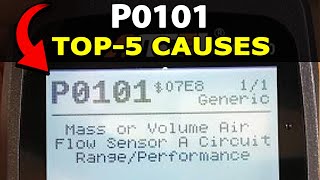
On the Mazda CX-5 2.2L Skyactiv-D, code P0101 is rarely caused by a bad Mass Airflow (MAF) sensor. It is most often a symptom of severe carbon buildup in the intake manifold or a worn exhaust camshaft. While cleaning the MAF sensor is a good first step, expect a more involved repair like professional carbon cleaning ($800-$1500) or camshaft replacement to be the actual fix.
- Do not automatically replace the MAF sensor for a P0101 code on this diesel engine; it is very rarely the actual problem.
- The most likely cause is severe carbon buildup in the intake manifold, which requires professional cleaning.
- A worn exhaust camshaft is the second most likely cause and should be inspected if carbon cleaning does not solve the issue.
- This code is often accompanied by multiple other warning lights (SCBS, TCS, TPMS) and can put the vehicle into limp mode.
- After repairs, a PCM software update from a Mazda dealer may be required to fully resolve the code.
What's Unique About the 2012-2016 Mazda CX-5
While P0101 is a generic code, its root cause on the 2.2L Skyactiv-D engine is highly platform-specific. Unlike gasoline engines where a dirty sensor or vacuum leak is the usual culprit, on this diesel engine the code is most often a symptom of a deeper mechanical issue. The two most common underlying problems are severe carbon buildup restricting airflow in the intake manifold, or a prematurely worn exhaust camshaft. Both of these issues disrupt engine breathing in a way that the PCM misinterprets as a MAF sensor fault, making simple MAF replacement an ineffective fix in most cases. The worn camshaft fails to open the exhaust valves sufficiently, causing exhaust gas to back up into the intake, which triggers the MAF sensor fault.
Symptoms You May Notice
- Check Engine Light is on
- Vehicle enters 'limp mode' with reduced power
- Multiple warning lights on the dash (SCBS, Traction Control, TPMS, Handbrake)
- Warning message 'Vehicle System Malfunction' on the display
- Poor acceleration and loss of power
- Rough or unstable idle
- Black or blue smoke from the exhaust
- Poor fuel economy
- i-stop function stops working
- Error appears specifically during deceleration or light braking
- Replacing the MAF sensor without investigating for carbon buildup or camshaft wear. On this specific diesel engine, the MAF sensor itself is rarely the root cause.
Most Likely Causes
- Severe Carbon Buildup in Intake System 🔴 High Probability The Skyactiv-D engine's heavy reliance on EGR to meet emissions standards without an AdBlue system leads to extreme carbon accumulation in the intake manifold, EGR passages, and on intake valves, physically restricting airflow. Mechanics report removing large quantities of carbon on engines with around 70k-100k miles.
How to confirm: Physical inspection is required, which involves removing the intake manifold. A borescope can be used for an initial check. The MAP sensor is often caked in carbon, which is a strong indicator.
Typical fix: The intake manifold and associated components must be removed and physically cleaned. Walnut blasting is a common and effective professional service for this. Chemical 'in-place' cleans are ineffective.
Est. part cost: $50-$150 for gaskets and seals. - Worn Exhaust Camshaft 🟡 Medium Probability Early Skyactiv-D engines (pre-2018) are known to experience premature wear on the exhaust camshaft lobes. This is often linked to compromised oil lubrication due to fuel dilution from DPF cycles and a material mismatch where the rocker arms are harder than the camshaft. The worn lobes fail to provide adequate valve lift, disrupting engine breathing and causing airflow to be misread by the MAF sensor.
How to confirm: Requires removing the valve cover and visually inspecting the camshaft lobes for scoring, pitting, or a flattened profile. This is the definitive check if carbon cleaning does not resolve the P0101 code.
Typical fix: The exhaust camshaft, rocker arms, and often the vacuum pump (which is driven by the camshaft and can be damaged by metal debris) must be replaced. A PCM software update may be required after the repair.
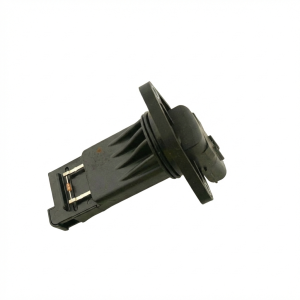
Est. part cost: $500-$1200+. The camshaft itself is part number SH01-12-440 or a later revision. - Dirty or Faulty Mass Air Flow (MAF) Sensor ⚪ Low Probability → Shop Fuel Injection Air Flow Meter While less common as the root cause on this engine, oil or carbon contamination can still foul the sensor element. However, it should be considered a primary suspect only after the more common mechanical issues are ruled out.
How to confirm: Remove the sensor and inspect the sensing wire/element for contamination. Use a scan tool to monitor MAF (g/s) readings; at idle, a healthy reading is often cited as being around 5 g/s, while faulty vehicles may show lower readings like 1.3-1.7 g/s. A reading of 0 g/s with the engine off is expected.
Typical fix: First, attempt to clean the sensor using a dedicated MAF sensor cleaner spray. If cleaning fails and other causes are ruled out, replace the sensor with an OEM/Denso part. Aftermarket sensors are known to cause persistent issues.
Est. part cost: $10-$20 for cleaner, $150-$250 for a new OEM sensor. - Intake Air Leaks (Vacuum Leak) ⚪ Low Probability Cracked hoses or loose clamps between the MAF sensor and the turbocharger can allow unmetered air to enter the system. While possible, this is less frequently the cause of P0101 on this diesel platform compared to carbon or camshaft issues.
How to confirm: Visually inspect all intake ducting for cracks, especially in flexible rubber sections. A smoke test can be performed to pressurize the intake system and reveal hidden leaks.
Typical fix: Replace the cracked hose or tighten the loose clamp.
Est. part cost: $50-$150 for a new intake hose.
Rare But Worth Checking
- Faulty Vacuum Pump: A failing vacuum pump can trigger a P0101 code. Its failure is often linked to the more common issue of a worn exhaust camshaft which drives the pump. Live data showing brake booster pressure significantly above the target 7.6 kPa at idle can indicate a weak pump.
- Faulty Turbocharger / Wastegate Control: → Shop Turbocharger In at least one documented case, after all other common causes were eliminated, a persistent P0101 was traced to a faulty turbo wastegate solenoid stuck at an 85% duty cycle, causing extremely high exhaust backpressure (over 300 kPa).
- PCM Software Issue / Failure: Mazda issued TSBs for some models regarding internal PCM failures or glitches that could cause various issues. A PCM software update or reset of adaptations is also often required after major mechanical repairs like camshaft replacement to clear persistent codes.
Diagnosis Steps
- Scan for all DTCs. Note any other codes that appear with P0101, such as P0401, P2262, or P258B, as they strongly point towards carbon or camshaft issues.
- As a preliminary step, remove and inspect the MAF sensor. If it appears dirty, clean it with dedicated MAF sensor cleaner and reinstall. Clear codes and test drive.
- Visually inspect the entire air intake tract from the air filter to the turbo for any cracks, loose clamps, or disconnections. A smoke test is more definitive.
- If the code returns, investigate for severe carbon buildup. A good starting point is to inspect the MAP sensor; if it is heavily coated in carbon, the intake manifold is almost certainly clogged.
- If significant carbon is suspected, perform a thorough intake cleaning service (e.g., walnut blasting). This requires removing the intake manifold.
- If carbon buildup is minimal or cleaning does not resolve the code (especially if the code appears on deceleration), the next step is to inspect the exhaust camshaft. Remove the valve cover to visually inspect the lobes for scoring, pitting, or a flattened profile.
- If the camshaft is worn, it must be replaced along with related components like rocker arms and potentially the vacuum pump.
- After any major repair like carbon cleaning or camshaft replacement, use a tool like FORScan to perform 'injector calibration' and 'EGR initialization' or have a Mazda dealership update the PCM software and reset engine learned adaptations to prevent the code from returning.
Parts You'll Likely Need
- Intake Manifold Gasket Kit
(OEM #SHY1-13-Z10B)— Required when removing the intake manifold for carbon cleaning, which is the most common fix.
Trusted brands: Mazda OE, Victor Reinz
OEM price range: $50-$100
Aftermarket price range: $30-$60 - Exhaust Camshaft
(OEM #SH01-12-440B)— A known failure point on this engine that directly causes a P0101 code by altering airflow. Often replaced as a kit with rocker arms. Use the latest revision available.
Trusted brands: Mazda OE
OEM price range: $400-$700 - Rocker Arm / Tappet Set
(OEM #SH02-12-420A)— Should be replaced along with the exhaust camshaft as they wear together.
Trusted brands: Mazda OE
OEM price range: $200-$300 - Mass Air Flow Sensor
(OEM #SH01-13-215)— Replaced only after cleaning fails and more common mechanical causes are ruled out. Aftermarket versions are not recommended.
Trusted brands: Mazda OE, Denso
OEM price range: $150-$250
Aftermarket price range: $50-$100
Related Codes That Often Appear With This One
- P0401 — EGR Flow Insufficient. The same carbon deposits that restrict intake airflow and trigger P0101 also clog the EGR passages.
- P2262 — Turbocharger Boost Pressure Not Detected. Severe intake restriction from carbon buildup can prevent the turbo from building the expected amount of boost. This code was seen in an owner's diagnostic journey alongside P0101.
- P258B — Vacuum Pump Control Range/Performance. This code can appear when the vacuum pump is failing, which is often a direct consequence of a worn exhaust camshaft that drives it.
- P061B — Internal Control Module Torque Calculation Performance. This code is frequently documented in manufacturer bulletins alongside P0101 following PCM software updates.
Technical Service Bulletins (TSBs) & Recalls
- While no specific TSB for P0101 on the diesel was found, related TSBs are critical. TSB 01-017/16 addresses PCM failures on 2013-2016 models which can cause various issues.
- European TSB R087/16d reportedly addresses the camshaft wear issue, outlining inspection and replacement procedures.
- Early recalls and service campaigns in markets like Australia involved a software update and a new dipstick to manage the oil dilution problem, which is a contributing factor to camshaft wear.
- Manufacturer Bulletin #SA-060-17 notes that some vehicles may experience a Check Engine Light with DTC P0101 and/or P061B after reprogramming the PCM using specific IDS versions.
- Manufacturer Bulletin #SA386 states that a check engine light with DTCs P0101, P061B, P2122, or P2138 may illuminate after PCM reprogramming due to a mislogic detection in the PCM calibration.
Platform-Specific Known Issues
- This engine is widely documented to have issues with premature exhaust camshaft wear, which directly leads to a P0101 code. This is particularly true for pre-2018 models.
- Extreme carbon buildup in the intake system is a very common problem, often requiring professional cleaning services like walnut blasting to resolve airflow-related codes.
- A Reddit user detailed a long and expensive diagnostic journey for P0101 on their 106k mile 2.2D, involving MAF swaps, solenoid replacements, and eventually a dealer diagnosis pointing to vacuum pump replacement and mandatory walnut blasting.
Mechanic-Grade Diagnostic Values
- MAF Sensor Reference Voltage (KOEO) — expected: ~5.0 V. Failure: Voltage significantly lower than 5.0 V indicates a wiring or PCM issue.
- MAF Sensor Signal Voltage (KOEO) — expected: ~0.75 V. Failure: A reading of 0V or a value significantly different may indicate a faulty sensor.
- MAF Sensor Live Data (g/s) at warm idle — expected: ~5.0 g/s (with EGR closed). Failure: Readings significantly lower (e.g., 1.3-1.7 g/s) can indicate an airflow problem or a failing sensor.
- MAF Sensor Voltage at warm idle — expected: 1.085 V - 1.235 V. Failure: Values outside this range suggest a sensor or airflow issue.
- Brake Booster Pressure at idle — expected: ~7.6 kPa. Failure: Pressure significantly higher than 7.6 kPa points to a weak or failing vacuum pump, often secondary to camshaft wear.
- Exhaust Back Pressure at idle — expected: Well below 100 kPa. Failure: Extremely high pressure (e.g., >300 kPa) indicates a severe restriction, possibly from a malfunctioning turbo wastegate, not just carbon buildup.
Scan Tool Commands That Help
- FORScan: Initialize EGR / Calibrate Injectors — After performing major intake cleaning or replacing components like injectors. A user reported this resolved a persistent P0101 code when all mechanical fixes failed, likely by resetting incorrect long-term adaptations.
- Mazda MDARS (Dealer Tool): PCM Update and Adaptation Reset — This is often required after major mechanical repairs like replacing the exhaust camshaft to prevent the P0101 code from returning even though the mechanical fault is fixed.
Wiring & Ground Locations
- MAF Sensor Connector (Early models, c. 2012) — On the intake tube after the air filter box.. Pinout for testing: The BLACK wire is the signal output, and the GRAY wire is the 5V reference from the PCM.
- MAF Sensor Connector (Later models, c. 2018) — On the intake tube after the air filter box.. Pinout for testing: The ORANGE wire is the signal output, and the BROWN wire is the reference. Knowing the color change is critical for accurate testing.
- PCM Terminal 2BC — At the Powertrain Control Module connector.. This is the specific terminal where the PCM receives the MAF sensor signal voltage. It can be probed for advanced diagnostics to rule out wiring issues between the sensor and the module.
Real Owner Repair Stories
- Reddit user in r/CX5 (2016 Mazda CX-5 2.2L Diesel, 106k miles) — P0101, P2262, 'Vehicle System Malfunction' warning.
❌ Tried (didn't work) Replacing MAF sensor with a cheap aftermarket part, Replacing MAF sensor with a second-hand OEM part, Cleaning the MAP sensor, Replacing a vacuum pump solenoid valve
✅ What actually fixed it The issue persisted. A Mazda dealer diagnosed a faulty vacuum pump (which was replaced) and then stated the next steps were walnut blasting for severe carbon buildup and a possible turbo replacement. The P0101 code returned after the pump replacement, strongly indicating the carbon buildup was the remaining root cause. - YouTube channel MrNiceGuy (mechanic) (Mazda CX-5 2.2L Skyactiv-D) — P0101, limp mode, multiple dash lights (SCBS, traction control, TPMS).
❌ Tried (didn't work) The mechanic noted that simply replacing the MAF sensor is almost never the fix on this engine.
✅ What actually fixed it The root cause was a worn exhaust camshaft. The final repair involved replacing the exhaust camshaft and performing a PCM software update to clear the persistent code. - Reddit user Sufficient_Humor_236 (2015 Mazda 6 2.2D, 250,000 km) — Persistent P0101 code for 1.5 years.
❌ Tried (didn't work) Intake manifold cleaning by a Mazda garage, Replacement of the vacuum pump, Replacement of both MAF and MAP sensors
✅ What actually fixed it After all mechanical fixes failed, the owner used FORScan software to run the 'initialize egr' and 'calibrate injectors' service functions. The P0101 code stopped appearing and did not return. - NHTSA ODI #10978705 — An owner reported that P0101 and P061B problems were present even though the MAF sensor appeared fine. The vehicle continued malfunctioning after an oil change and inspection.
"I Checked Everything" — The Actual Cause
- In a documented case on a 2015 CX-5 2.2D, a persistent P0101 that occurred during engine braking was not caused by an intake leak (smoke test was clean), carbon buildup, or a worn camshaft. The actual root cause was a faulty turbo wastegate solenoid that was stuck at an 85% duty cycle at idle, creating extreme exhaust backpressure (over 300 kPa) that disrupted airflow readings.
When the Usual Fixes Don't Work
- While carbon buildup and camshaft wear are the most common causes, they are not the only ones. In one case, a persistent P0101 was only resolved after using FORScan to reset EGR and injector adaptations, suggesting a software/adaptation issue can mimic a mechanical fault. In another, a turbo wastegate fault was the true cause after all intake-side and camshaft checks passed.
OEM Part Supersession History
SH01-12-440→SH01-12-440A, then SH01-12-440B— To address premature lobe wear on the exhaust camshaft. The material composition was likely changed in later revisions.
Heads up: Always use the latest available OEM part number for replacement to ensure the most durable revision is installed.
Model Year Variations Within This Range
- Pre-2018: Engines in this period are highly susceptible to premature exhaust camshaft wear, which is a primary cause of P0101. Later models used revised parts.
- 2012 vs. later models: The wiring colors for the MAF sensor connector are different. Early models use a black signal wire, while later models use an orange one, which is critical for accurate electrical testing.
Diagnostic Flowchart
Other Known Issues on This Vehicle
Issues unrelated to this code that are worth knowing about as an owner of this generation:
- Oil Dilution from DPF Regeneration 🔴 High — Very common, especially on vehicles used for frequent short trips. Can occur at any mileage. (Ref: Mazda addressed this early on with a software update and a revised dipstick, but the underlying issue of fuel entering the oil during incomplete DPF regeneration cycles persists.)
- Injector Seal Failure & Oil Starvation 🔴 High — A critical and common failure. Leaking copper injector seals allow combustion gases to contaminate oil, forming sludge that clogs the oil pump pickup strainer, leading to oil starvation.
- Premature Turbocharger Failure 🔴 High → Shop Turbocharger — Common, often occurring around 120,000-180,000 km. Frequently a secondary failure caused by oil starvation from a clogged pickup strainer or a loose bolt on the turbo's changeover valve.
- Timing Chain Stretch 🟠 Medium — Reported in some instances, often exacerbated by oil dilution which reduces the oil's lubricating properties for the chain and tensioners.
- Sudden Head Gasket Failure / Overheating 🔴 High — A known design issue where the engine can overheat without warning, leading to head gasket failure or a cracked cylinder head. (Ref: In some regions, this led to extended engine warranties due to its prevalence.)
Used vs. New Parts: Buying Guide for This Vehicle
When a used part is the smart pick: Only for non-wear, structural components like the intake manifold (must be professionally cleaned before installation) or cosmetic items like the engine cover. Avoid used wear-and-tear parts for this specific engine.
Donor-vehicle mileage cap: roughly under 70000 miles for the part to have meaningful remaining life.
What to inspect on the donor part:
- For a used engine, demand inspection with the valve cover off to check for camshaft lobe scoring.
- Check for excessive oil sludge or a fuel smell in the oil, indicating severe fuel dilution.
- Ask for vehicle history to see if it was used for short trips, which worsens carbon and DPF issues.
OEM-only on this vehicle (don't cheap out):
- Exhaust Camshaft - This is a critical design flaw; only the latest OEM revision should be used.
- Mass Air Flow (MAF) Sensor - Forum reports indicate cheap aftermarket sensors often fail or do not resolve the code.
- Vacuum Pump - Failure is often linked to camshaft wear; an OEM part is recommended for longevity.
Aftermarket brands forum-validated for this vehicle:
- No specific aftermarket brands are consistently recommended for the primary failure parts (camshaft, vacuum pump). Consensus points to Mazda OE.
Brands owners have reported issues with on this vehicle:
- Unbranded, 'cheap' MAF sensors from online marketplaces like Amazon have been reported by owners to be ineffective.
Real Owner Stories
Aggregated from forums and TSBs cited above. Mileages and costs reflect what owners reported in those sources.
2016 Mazda CX-5 2.2L Diesel — 106000 miles
Symptoms: P0101 error code, vehicle system malfunction message. Owner replaced MAF sensors and vacuum solenoids with no success.
What fixed it: A Mazda dealer diagnosed a faulty vacuum pump and recommended walnut blasting for carbon buildup.
Source hint: Reddit r/CX5 - P0101 error code (2016 2.2 diesel, 106k miles)
2012-2016 Mazda CX-5 2.2L Skyactiv-D — ~85000 miles
Symptoms: P0101 code and multiple dash lights appearing during deceleration. Owner found '4 glasses of carbon' during an intake clean.
What fixed it: The intake carbon clean (€1300) did not solve the problem, suggesting the exhaust camshaft wear was the actual root cause.
Source hint: Mazda Forum - CX-5 code p0101 and warning lights
2012-2016 Mazda CX-5 2.2L Skyactiv-D
Symptoms: P0101 code and associated limp mode.
What fixed it: Replacement of the exhaust camshaft and rocker arms after visual inspection revealed scoring and pitting on the lobes.
Source hint: YouTube - MrNiceGuy - Mazda P0101 FIXED after Worn Exhaust Camshaft Replacement
NHTSA Reported Incident — ODI #10978705
Symptoms: Check engine light with P0101 and P061B codes present. The owner noted the MAF sensor appeared fine, but the vehicle continued to malfunction even after an oil change and inspection.
What fixed it: The owner sought further professional diagnosis after initial maintenance failed to resolve the bucking and warning lights.
Related OBD-II Codes
Frequently Asked Questions
Is there a TSB for the exhaust camshaft wear issue on my 2012-2016 Mazda CX-5 2.2L diesel?
Why does my CX-5 show 'Vehicle System Malfunction' and multiple warning lights like SCBS and TPMS alongside P0101?
Can I fix the P0101 code on my Skyactiv-D with a chemical intake cleaner?
What is the healthy MAF sensor reading for a 2.2L Skyactiv-D at idle?
Why does the P0101 error specifically appear during deceleration or light braking?
Is there a specific part number for the replacement camshaft if mine is worn?
Can a PCM software update cause a P0101 code?
Helpful Videos


We Have This Part in Stock

The information in this article is provided for general reference and educational purposes only. Vehicle specifications, procedures, and part compatibility can vary by production date, trim level, and region. Always consult your vehicle's factory service manual and verify part numbers before purchasing or performing repairs. Safety-critical components such as airbags, seat belts, and braking systems should be installed by a qualified professional.
- Mazda CX-5:
- 🧭 Diagnostic Flowchart
- 🎬 Helpful Videos
- 🛍️ Shop This Part
- What's Unique About the 2012-2016 Mazda CX-5
- Symptoms You May Notice
- Most Likely Causes
- Rare But Worth Checking
- Diagnosis Steps
- Parts You'll Likely Need
- Related Codes That Often Appear With This One
- Technical Service Bulletins (TSBs) & Recalls
- Platform-Specific Known Issues
- Mechanic-Grade Diagnostic Values
- Scan Tool Commands That Help
- Wiring & Ground Locations
- Real Owner Repair Stories
- "I Checked Everything" — The Actual Cause
- When the Usual Fixes Don't Work
- OEM Part Supersession History
- Model Year Variations Within This Range
- Other Known Issues on This Vehicle
- Used vs. New Parts: Buying Guide for This Vehicle
- Real Owner Stories
- 2016 Mazda CX-5 2.2L Diesel — 106000 miles
- 2012-2016 Mazda CX-5 2.2L Skyactiv-D — ~85000 miles
- 2012-2016 Mazda CX-5 2.2L Skyactiv-D
- NHTSA Reported Incident — ODI #10978705
- Related OBD-II Codes
- Frequently Asked Questions
- 🎟️ Get 5% Off