

P0101 on 2009-2018 Subaru Forester: MAF Sensor Causes and Fixes
For a 2009-2018 Subaru Forester, code P0101 is most often caused by a dirty Mass Airflow (MAF) sensor. Cleaning it with dedicated MAF sensor cleaner for about $15 is the most common fix and a good first step. If that fails, inspect for a cracked intake air duct before replacing the sensor, as this is another common failure point.
- P0101 on a Forester almost always points to an issue with the Mass Airflow (MAF) sensor or a vacuum leak after the sensor.
- The most likely fix is simple and cheap: buy a can of MAF sensor cleaner and clean the sensor. This resolves the issue in many cases.
- If cleaning the MAF doesn't work, thoroughly inspect the rubber air intake duct for cracks before spending money on a new sensor.
- If you must replace the sensor, use a genuine Subaru or Denso part to avoid compatibility issues common with cheaper aftermarket sensors.
What's Unique About the 2009-2018 Subaru Forester
On this generation of Subaru Forester, the P0101 code is a very common and well-documented issue. The primary cause is frequently contamination of the MAF sensor element, sometimes exacerbated by owners using aftermarket oiled air filters which can coat the sensor's delicate wire. Another frequent cause on these models is a cracked air intake boot (the flexible rubber tube between the air filter box and the throttle body), which allows unmetered air to enter the engine. The vehicle's computer is sensitive to these inaccurate readings, and will often trigger a flashing cruise control light and disable the vehicle dynamics control (VDC) system simultaneously with the Check Engine Light, which can be alarming but is standard Subaru behavior for this type of fault.
Generation note: This range covers the SH (2009-2013) and SJ (2014-2018) generations of the Forester. The causes and diagnostic steps for P0101 are identical for both. However, be aware that the 2.0L turbo (XT) models in the SJ generation use a different MAF sensor part number than the naturally aspirated 2.5L models. The 2.5L engine changed from the EJ25 (with a timing belt) to the FB25 (with a timing chain) in 2011, but the P0101 issue and its causes are common to both.
Symptoms You May Notice
- Check Engine Light is on
- Flashing cruise control light
- Vehicle Dynamics Control (VDC) / Traction Control light is on
- Rough or unstable idle
- Engine hesitation or sluggish acceleration
- Reduced fuel economy
- Stalling, especially when coming to a stop
- Black smoke from the exhaust in some cases
- Difficulty starting the engine
- Hissing noise from the engine bay, indicating a vacuum leak
- Replacing oxygen (O2) sensors. While fuel trim issues can be related (P0101 is often seen with P0171/P0172), P0101 points specifically to a discrepancy in measured airflow, which should be investigated first.
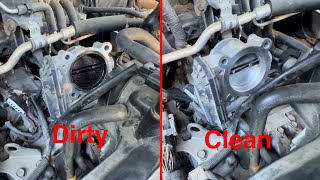
- Replacing the throttle body. While a dirty throttle body can cause idle issues, it is not a primary cause for the P0101 code itself.
Most Likely Causes
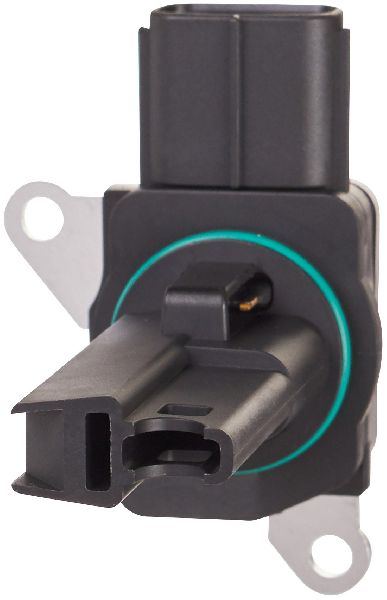
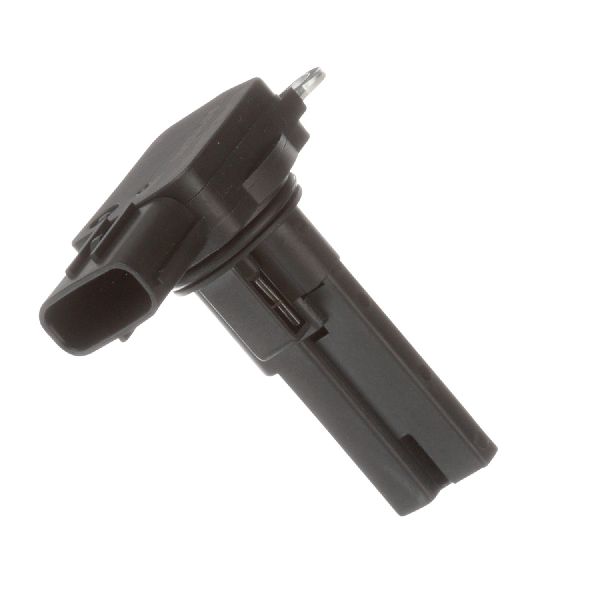
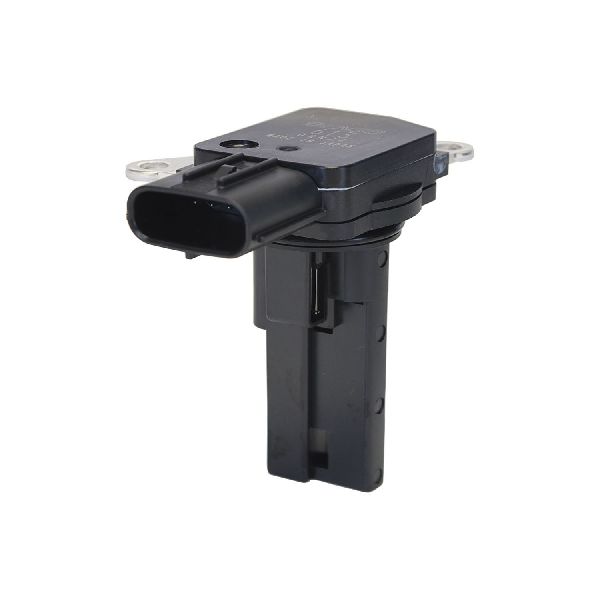
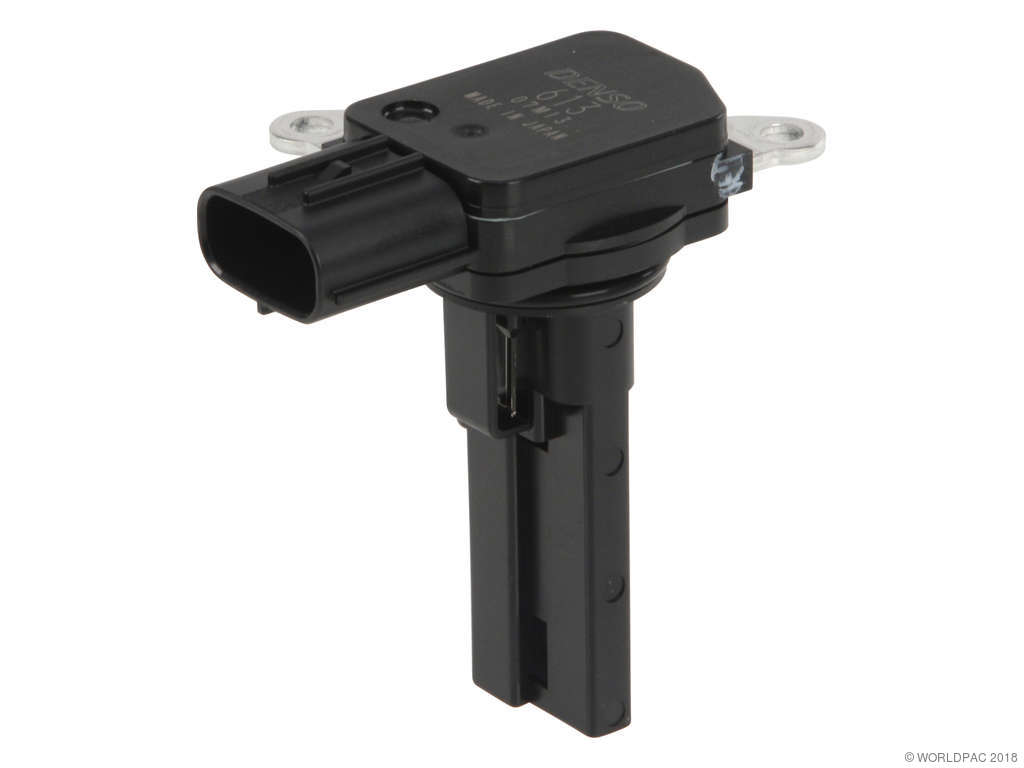
- Dirty Mass Airflow (MAF) Sensor 🔴 High Probability → Shop Fuel Injection Air Flow Meter The sensor's hot wire is sensitive to contamination from dust, oil, and other debris. Oiled aftermarket air filters are a frequent source of contamination that fouls the sensor. Even with OEM filters, fine dust can accumulate over time.
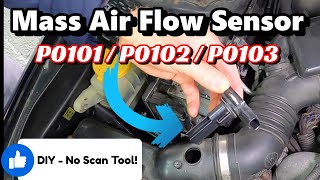
How to confirm: Visually inspect the sensor's internal wires for a coating of grime. Often, cleaning the sensor is the confirmation, as the code will not return if this was the cause. A scan tool may show low g/s readings at idle (a healthy 2.5L engine is often 3-5 g/s at idle).
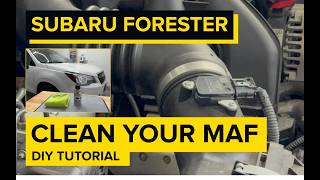
Typical fix: Remove the sensor and clean it thoroughly using only dedicated MAF sensor cleaner spray. 🎬 Watch: A step-by-step guide to cleaning your Forester's MAF sensor. Do not touch the internal components or use harsh chemicals like brake cleaner.
Est. part cost: $10-$20 for a can of MAF cleaner. - Vacuum Leak (Cracked Intake Duct) 🔴 High Probability The flexible rubber intake duct, especially the accordion section, is known to develop cracks from age and heat cycles. This allows un-metered air to enter the engine after the MAF sensor, causing the ECM to receive an airflow reading that is lower than the actual amount entering the cylinders.
How to confirm: Perform a smoke test on the intake system to see if smoke escapes from any cracked hoses, loose clamps, or bad gaskets. A hissing sound at idle can also be an indicator. Carefully flex and inspect the intake duct, especially in the ribbed sections, for hidden cracks. 🎬 See why you should check for intake leaks before buying parts.
Typical fix: Replace the cracked intake hose, tighten the loose clamp, or replace the faulty gasket. The intake duct is the most common failure point.
Est. part cost: $50-$150 for a new intake duct, less for a clamp or gasket. - Clogged or Improperly Installed Engine Air Filter 🟡 Medium Probability → Shop Air Cleaner Assembly
How to confirm: Visually inspect the engine air filter. If it is visibly dirty, clogged with debris, or not seated correctly in the airbox, it is restricting airflow and can cause the P0101 code.
Typical fix: Replace the engine air filter and ensure the new one is installed correctly and the airbox is securely latched.
Est. part cost: $20-$40 - Failed Mass Airflow (MAF) Sensor ⚪ Low Probability → Shop Fuel Injection Air Flow Meter
How to confirm: If cleaning the sensor and confirming there are no vacuum leaks does not resolve the code, the sensor itself has likely failed electronically. This can be confirmed by monitoring sensor data with an advanced scan tool (looking for erratic or non-responsive voltage/g-s readings) or by substituting a known-good sensor. 🎬 Learn how to professionally test and replace a faulty MAF sensor.
Typical fix: Replace the MAF sensor. It is highly recommended to use an OEM or OEM-supplier part (like Denso) as aftermarket sensors are known to cause issues.
Est. part cost: $70-$265 depending on OEM vs aftermarket.
Rare But Worth Checking
- Clogged Catalytic Converter: A severe exhaust restriction can affect the engine's ability to breathe, throwing off the expected airflow readings. This is usually accompanied by other symptoms like a significant loss of power, especially at high RPMs, and potentially other exhaust-related codes.
- Damaged MAF Sensor Wiring or Connector: → Shop Fuel Injection Air Flow Meter Frayed wires or a corroded connector can cause an intermittent or complete loss of signal from the sensor to the ECM. Visually inspect the harness leading to the sensor for damage.
- Poor Engine Ground Connection: A corroded or loose main engine-to-chassis ground strap can cause a variety of strange electrical issues and sensor faults, including P0101, due to unstable sensor reference voltage.
Diagnosis Steps
- Read the code with an OBD-II scanner to confirm P0101 is present. Note any other codes like P0171 or P0172.
- Visually inspect the entire air intake tract from the air filter box to the throttle body. Pay extremely close attention to the flexible rubber intake tube, bending and squeezing it to reveal any hidden cracks, especially in the accordion ribs.
- Check that all intake clamps are tight and the airbox is fully sealed.
- Remove and inspect the engine air filter. Replace if it is dirty or clogged.
- Carefully remove the MAF sensor, which is located on the air intake tube and held by two screws.
- Generously spray the internal wires and sensing elements of the MAF sensor with a dedicated MAF sensor cleaner. DO NOT use brake cleaner or carburetor cleaner, and DO NOT touch the wires.
- Allow the sensor to air dry completely for at least 15-20 minutes before reinstalling.
- Clear the trouble code with the scanner, start the engine, and perform a test drive covering various speeds and loads to see if the code returns.
- If the code returns, the next step is to professionally test for vacuum leaks using a smoke machine. This is the most definitive way to find small leaks in hoses or gaskets.
- If no vacuum leaks are found and the wiring appears intact, the MAF sensor itself is the most likely remaining culprit and should be replaced, preferably with an OEM or Denso part.
Parts You'll Likely Need
- Mass Air Flow Sensor (2.5L Non-Turbo)
(OEM #22680AA380)— This is the correct part for most 2.5L non-turbo models from 2009-2018 (EJ25 and FB25 engines). It is the component that fails or gets dirty. Denso is the original equipment manufacturer.
Trusted brands: Denso (OEM), Hitachi
OEM price range: $180-$265
Aftermarket price range: $70-$150 - Mass Air Flow Sensor (2.0L Turbo XT Models)
(OEM #22680AA410)— This is the specific sensor for the 2014-2018 Forester XT with the 2.0L turbocharged engine.
Trusted brands: Denso (OEM)
OEM price range: $190-$270
Aftermarket price range: $80-$160 - MAF Sensor Cleaner — This is often all that is needed to fix the issue. A dirty sensor is the most common cause, and cleaning is the first and cheapest step.
Trusted brands: CRC, Liqui Moly
Aftermarket price range: $10-$20 - Engine Air Intake Hose
(OEM #14462AA510 (Example for some 2.5L models, verify by VIN))— This rubber duct is a very common failure point, developing cracks that cause vacuum leaks and trigger P0101.
Trusted brands: Subaru (OEM), Aftermarket equivalents
OEM price range: $70-$120
Aftermarket price range: $40-$80
Related Codes That Often Appear With This One
- P0171 (System Too Lean Bank 1)
- P0172 (System Too Rich Bank 1)
Platform-Specific Known Issues
- Cracked Air Intake Duct: The flexible, ribbed portion of the air intake hose between the MAF sensor and the throttle body is a well-known weak point on these models. It frequently develops cracks with age, causing a vacuum leak that is a primary cause of P0101.
Mechanic-Grade Diagnostic Values
- MAF Sensor Reading at Idle (g/s) — expected: Approximately 1.8g/sec per liter of engine displacement. For a 2.5L engine, this is 4.5 g/s. A healthy range is generally 3-6 g/s at a stable, warm idle.. Failure: A reading significantly lower than expected (e.g., <2.5 g/s) often points to a vacuum leak (unmetered air). A reading that is stuck, erratic, or doesn't increase smoothly with RPM indicates a faulty sensor.
- MAF Sensor Signal Voltage at Idle — expected: Typically around 0.9 - 1.5 Volts at warm idle.. Failure: Voltage should increase smoothly and linearly as the engine RPM increases, reaching up to 4.5-5.0V at wide-open throttle. If the voltage is stuck, drops out, or shows spikes/dips that don't correspond to engine speed, the sensor or its wiring is faulty.
- MAF Sensor Power Supply Voltage (Key On, Engine Off) — expected: 12 Volts (Battery Voltage) at the power supply pin on the connector.. Failure: Low or no voltage indicates a problem with the power supply from the ECM, a blown fuse, or a wiring issue between the fuse box and the sensor.
Scan Tool Commands That Help
- Subaru Select Monitor (SSM) or equivalent advanced scanner: Current Data Display & Save — This is the primary function used to diagnose P0101. It allows a technician to monitor live data streams from the MAF sensor (both g/s and voltage), short-term and long-term fuel trims, and other relevant engine parameters to see if the MAF readings are rational compared to what the engine is actually doing.
- Manual Procedure (or advanced scanner): Idle Relearn Procedure / Throttle Body Reset — After disconnecting the battery, cleaning the throttle body, or replacing the MAF sensor, the ECU's learned idle values are lost. This can cause stalling or an unstable idle. An idle relearn procedure forces the ECU to find the correct idle position. Some scanners have a dedicated function, but a manual procedure also exists.
Wiring & Ground Locations
- MAF Sensor Connector (D22 on some diagrams) — On the air intake tube, immediately after the air filter housing.. This is the primary connection point. The 5-pin connector provides power, ground, and signal return to the ECM. Corrosion or damage to pins/wires here will directly cause P0101.
- GE-1 (Ground Point) — Top center rear of the engine.. This is a major engine ground point. A loose or corroded connection here can create an unstable ground reference for various sensors, including the MAF, leading to erratic readings and codes like P0101.
- GB-2 (Ground Point) — Left front of the engine compartment.. Another key chassis/engine ground in the vicinity of the intake system. A poor connection here can cause a variety of electrical faults.
- Engine Control Module (ECM) — Located on the right side of the dash for 2.5L models.. This is the destination for the MAF sensor signal. While rare, issues at the ECM connector or the module itself can cause P0101, but all other possibilities should be exhausted first.
Real Owner Repair Stories
- subaruforester.org forum user (2010 Subaru Forester 2.5X (SH generation)) — P0101 and P0171 codes, rough idle, stalling when coming to a stop.
❌ Tried (didn't work) Cleaning the MAF sensor, Replacing the MAF sensor, Replacing the front O2 sensor
✅ What actually fixed it The user performed a smoke test which revealed no leaks in the main intake boot. However, upon closer inspection, they found a small, hidden crack in the PCV (Positive Crankcase Ventilation) hose where it connected to the intake manifold. This created a vacuum leak that the smoke test in the main intake tract missed. Replacing the small PCV hose resolved all codes and symptoms.
"I Checked Everything" — The Actual Cause
- A stuck-open PCV valve can cause a P0101 code. This is a vacuum leak, but it may not be detected by a standard intake smoke test if smoke is only introduced at the throttle body. Because the PCV system pulls air from the crankcase into the intake manifold, a valve stuck open allows unmetered air to enter, causing a lean condition and an irrational MAF reading that the ECM flags.
OEM Part Supersession History
22680AA38A→22680AA380— Standard part revision by the manufacturer.
Heads up: The parts are interchangeable. 22680AA380 is the current part number supplied by Subaru for vehicles that originally used 22680AA38A.
Model Year Variations Within This Range
- 2009-2010: These models use the EJ25 series engine, which has a timing belt. The MAF sensor and common P0101 causes are largely the same as later models.
- 2011-2018: These models use the FB25 series engine, which has a timing chain. While the engine architecture is different, it still uses the same MAF sensor (part 22680AA380 for non-turbo) and suffers from the same P0101 causes (dirty sensor, cracked intake boot).
- 2014-2018 (XT Models): The Forester XT uses a 2.0L turbocharged engine (FA20DIT). It requires a different MAF sensor, part number 22680AA410. While the causes are similar, the intake plumbing is more complex due to the turbocharger and intercooler.
Diagnostic Flowchart
Other Known Issues on This Vehicle
Issues unrelated to this code that are worth knowing about as an owner of this generation:
- Excessive Oil Consumption (FB25 Engine) 🔴 High — Common in 2011-2015 models. Subaru considers consumption up to 1 quart per 1200 miles 'acceptable'. A class-action lawsuit and TSB 02-157-14R addressed this, with the fix being a new short block assembly. (Ref: TSB 02-157-14R)
- CVT Transmission Issues & Warranty Extension 🔴 High — Affects models with the Lineartronic CVT. Symptoms include shuddering, hesitation, and potential failure. Subaru extended the CVT warranty to 10 years/100,000 miles for many affected vehicles, including the 2014-2018 Forester. (Ref: CVT Warranty Extension Program)
- Head Gasket Failure (EJ25 Engine) 🔴 High — A notorious issue primarily on the EJ25 engine used in 2009-2010 non-turbo models. Less common than in prior generations but still a possibility at higher mileage, leading to oil and coolant leaks.
- Premature Wheel Bearing Failure 🟠 Medium — Owners report wheel bearings failing earlier than expected, often before 100,000 miles. The symptom is a loud humming or droning noise that increases with vehicle speed.
- Failing A/C Condenser or Compressor 🟠 Medium — The A/C system, particularly the condenser (prone to rock damage) or compressor clutch/assembly, is a common point of failure.
- Rear Suspension Spring Failure 🟡 Low — Some owners have experienced rear coil springs breaking, particularly on earlier SJ generation (2014+) models. A recall was issued for some vehicles to address this. (Ref: Recall may apply, check VIN)
Used vs. New Parts: Buying Guide for This Vehicle
When a used part is the smart pick: A used MAF sensor from a reputable salvage yard with a low-mileage donor vehicle can be a cost-effective option if you've ruled out all other causes. A used air filter box or other plastic intake components are also generally safe buys.
Donor-vehicle mileage cap: roughly under 60000 miles for the part to have meaningful remaining life.
What to inspect on the donor part:
- For a MAF sensor, ensure the connector pins are clean and straight, with no signs of corrosion.
- Check the vehicle's history if possible to ensure the donor car wasn't in a front-end collision that could have damaged the sensor.
- Avoid sensors that look physically dirty or oily on the exterior, as it suggests poor maintenance.
OEM-only on this vehicle (don't cheap out):
- Engine Air Intake Hose: This is a rubber part that fails due to age and heat. A used one from a junkyard is likely to have the same fatigue and will fail soon, if it hasn't already. Always buy this part new.
Aftermarket brands forum-validated for this vehicle:
- Denso: Denso is the Original Equipment Manufacturer (OEM) for Subaru's MAF sensors. Buying a Denso-branded sensor is equivalent to buying the genuine Subaru part, often at a lower cost.
Brands owners have reported issues with on this vehicle:
- Unnamed, low-cost sensors from online marketplaces. Forum users consistently report that cheap, no-name aftermarket MAF sensors often are dead on arrival, have incorrect calibration, or fail within a few months, causing the P0101 code to return.
Real Owner Stories
Aggregated from forums and TSBs cited above. Mileages and costs reflect what owners reported in those sources.
Subaru Forester (Year not specified)
Symptoms: The owner replaced the MAF sensor three times, but the P0101 code persisted.
What fixed it: The issue was finally resolved by finding and repairing a vacuum leak.
Source hint: reddit.com/r/MechanicAdvice thread
Subaru Forester (Year not specified)
Symptoms: P0101 and P0172 codes present simultaneously.
What fixed it: Cleaning the MAF sensor or finding a vacuum leak.
Source hint: reddit.com/r/SubaruForester thread
2009-2018 Subaru Forester
Symptoms: Check engine light with P0101; owner followed a common pattern of cleaning the sensor first.
What fixed it: Inspecting and replacing the intake duct for cracks after cleaning the MAF sensor failed to clear the code.
Source hint: subaruforester.org
Related OBD-II Codes
Frequently Asked Questions
My 2014 Forester is shuddering and has a P0101 code; could this be related to the transmission?
Is there a specific TSB for the oil consumption I'm seeing alongside my engine codes?
I hear a hissing noise from my Forester's engine bay and have a P0101. What is the most likely part to check?
Can I use any cleaner to fix the MAF sensor on my Subaru?
Should I buy an aftermarket MAF sensor for my 2009-2018 Forester?
Why did my Traction Control and Cruise Control lights turn on with the Check Engine Light?
Helpful Videos
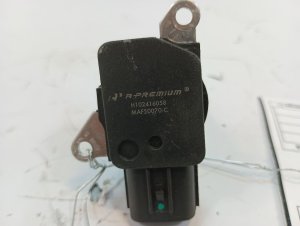
Used OEM Parts in Stock
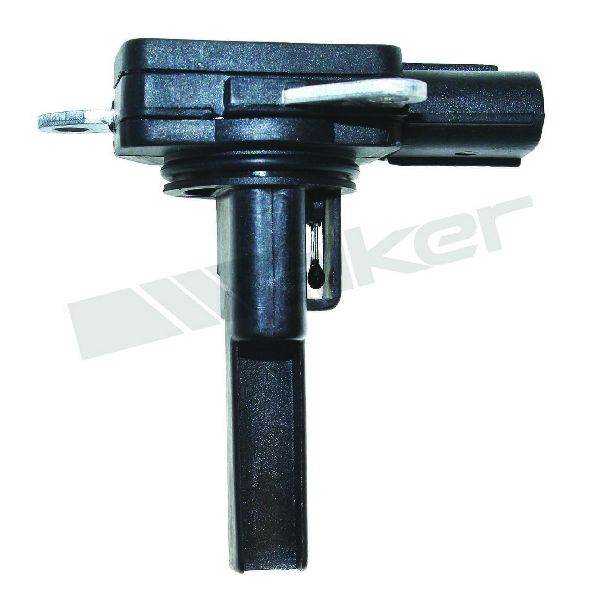
New Aftermarket Parts Available


The information in this article is provided for general reference and educational purposes only. Vehicle specifications, procedures, and part compatibility can vary by production date, trim level, and region. Always consult your vehicle's factory service manual and verify part numbers before purchasing or performing repairs. Safety-critical components such as airbags, seat belts, and braking systems should be installed by a qualified professional.
- Subaru Forester:
- 🧭 Diagnostic Flowchart
- 🎬 Helpful Videos
- 🛍️ Shop This Part
- What's Unique About the 2009-2018 Subaru Forester
- Symptoms You May Notice
- Most Likely Causes
- Rare But Worth Checking
- Diagnosis Steps
- Parts You'll Likely Need
- Related Codes That Often Appear With This One
- Platform-Specific Known Issues
- Mechanic-Grade Diagnostic Values
- Scan Tool Commands That Help
- Wiring & Ground Locations
- Real Owner Repair Stories
- "I Checked Everything" — The Actual Cause
- OEM Part Supersession History
- Model Year Variations Within This Range
- Other Known Issues on This Vehicle
- Used vs. New Parts: Buying Guide for This Vehicle
- Real Owner Stories
- Subaru Forester (Year not specified)
- Subaru Forester (Year not specified)
- 2009-2018 Subaru Forester
- Related OBD-II Codes
- Frequently Asked Questions
- 🎟️ Get 5% Off