

P0101 on 2007-2011 Toyota Camry 2.4L: MAF Sensor Causes and Fixes
On a 2007-2011 Camry with the 2.4L engine, code P0101 is most often caused by a dirty Mass Airflow (MAF) sensor. Before replacing anything, try cleaning the sensor with dedicated MAF cleaner (a ~$15 can). If that doesn't work, check for vacuum leaks like a cracked air intake hose, which is a very common failure point. If all else fails, a new Denso (OEM) sensor costs about $120-$200.
- Always try cleaning the MAF sensor with dedicated cleaner before buying a new one; this solves the problem more than half the time.
- A cracked rubber air intake hose is the second most likely cause after a dirty sensor. Inspect it carefully.
- If you must replace the sensor, use a Denso (OEM) part. Cheaper aftermarket sensors are known to fail prematurely or provide inaccurate readings.
- This code is very DIY-friendly. The sensor is held by two screws and is easily accessible on top of the engine's air filter box.
- Do not immediately replace O2 sensors if you also have a P0171 or P0172 code; fix the P0101 first, as it is likely the root cause.
What's Unique About the 2007-2011 Toyota Camry
For the 2.4L 2AZ-FE engine in this generation of Camry, the P0101 code is a very common and straightforward issue. There are no major design flaws that make it uniquely problematic. The issue almost always traces back to a simple cause: a contaminated MAF sensor, a vacuum leak from a cracked intake boot, or a failed sensor. Unlike some platforms with complex electronic or software-related MAF issues, the fix on this Camry is typically mechanical and accessible for a DIY-er.
Symptoms You May Notice
- Check Engine Light is on
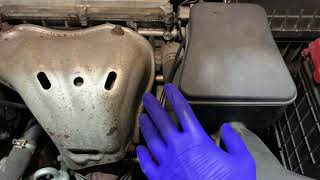
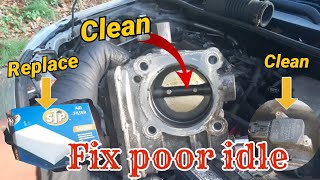
- Rough idle or stalling, especially when coming to a stop 🎬 Watch: How to fix a rough idle and P0101 code.
- Hesitation or lack of power during acceleration 🎬 Watch: Troubleshooting power loss and long cranks on a Camry.
- Poor fuel economy
- Difficulty starting the engine
- Black smoke from the exhaust (less common, indicates a rich condition)
- Engine shuddering after driving for 30+ minutes and then stopping
- Replacing the oxygen (O2) sensors. The P0101 code can cause the engine to run lean or rich, which will trigger codes like P0171 or P0172. The O2 sensors are often just correctly reporting the air/fuel mixture problem caused by the MAF issue, but are not the root cause themselves.
Most Likely Causes
- Dirty or Contaminated Mass Airflow (MAF) Sensor 🔴 High Probability → Shop Fuel Injection Air Flow Meter Over time, dust, oil vapors from the PCV system, or oil from an over-oiled aftermarket air filter can coat the sensor's delicate hot-wire element, insulating it and causing inaccurate readings.
How to confirm: Visually inspect the MAF sensor's wire or filament. If it appears dirty, cleaning is the first logical step. A more definitive test is to monitor the MAF reading in grams per second (g/s) with an OBD-II scanner. At a warm, stable idle with no accessories on, the reading should be close to the engine's displacement, approximately 2.4 g/s. A significantly lower or higher reading suggests a problem.
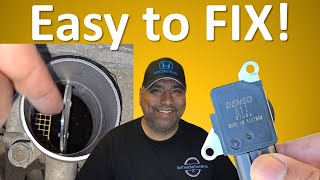
Typical fix: Remove the sensor and clean it thoroughly using only dedicated Mass Airflow Sensor cleaner spray. 🎬 See this simple trick for cleaning your MAF sensor. Do not touch the internal wires.
Est. part cost: $10-$20 for a can of MAF cleaner. - Vacuum Leak (Cracked Air Intake Hose) 🟡 Medium Probability With age, the large flexible rubber air intake boot between the air filter housing and the throttle body becomes brittle and cracks. The cracks often form in the accordion-like ribs, especially on the underside, allowing unmetered air to enter the engine after the MAF sensor, which confuses the ECU.
How to confirm: Visually inspect the air intake boot, squeezing the folds to reveal hidden cracks. A smoke test is the most effective method to definitively find leaks in the intake system.
Typical fix: Replace the cracked air intake boot. OEM and aftermarket options are widely available.
Est. part cost: $30-$80 for an aftermarket intake boot, $85+ for OEM. - Failed Mass Airflow (MAF) Sensor ⚪ Low Probability → Shop Fuel Injection Air Flow Meter
How to confirm: If the code persists after cleaning the sensor and confirming there are no vacuum leaks or wiring issues, the sensor has likely failed internally. Live data showing erratic or stuck g/s readings during acceleration can also point to a failed sensor. A KOEO (Key On, Engine Off) test can be performed; after 30 seconds, the MAF reading on a scan tool should be less than 0.45 g/sec. A higher value indicates a faulty sensor.
Typical fix: Replace the MAF sensor. It is highly recommended to use the OEM Denso part (part number 197-6110) for reliability.
Est. part cost: $120-$200 for an OEM Denso sensor, $40-$90 for aftermarket. - Severely Clogged Engine Air Filter ⚪ Low Probability → Shop Air Cleaner Assembly
How to confirm: Inspect the engine air filter. If it is visibly black and clogged with debris, it is restricting airflow and can skew MAF readings.
Typical fix: Replace the engine air filter.
Est. part cost: $15-$30
Rare But Worth Checking
- Damaged MAF Sensor Wiring or Connector: → Shop Fuel Injection Air Flow Meter Check for frayed wires or corrosion on the connector pins, especially if work has recently been done in that area of the engine bay. High resistance in the circuit can cause P0101.
- Clogged Catalytic Converter: A restricted exhaust can cause a lack of power and throw off the airflow calculations, potentially triggering a P0101 code. This is usually accompanied by other symptoms like a sulfur smell or a P0420 code.
- Aftermarket Cold Air Intake (CAI): → Shop Engine Air Intake Resonator Some aftermarket intakes, particularly those with oiled filters or different tubing diameters around the sensor, can alter airflow characteristics and trigger a P0101 code even if there are no leaks.
Technical Service Bulletins (TSBs) & Recalls
While the Camry is the primary focus, it is worth noting that other vehicles in the manufacturer's lineup have faced similar performance issues. For instance, TSB Bulletin #T-SB-0092-15 notes that certain vehicles may experience a MIL “ON” condition with DTC P0101 (Mass Air Flow Circuit Range/Performance Problem) and provides specific procedures to address the condition.
Diagnosis Steps
- Read the code with an OBD-II scanner and confirm P0101 is present. Note any other codes, especially P0171 or P0172.
- Visually inspect the entire air intake tract from the air filter box to the throttle body. Pay close attention to the rubber intake boot, bending and squeezing it to check for hidden cracks.
- Inspect the engine air filter. If it's dirty, replace it.
- With the engine warm and at idle (A/C off), use a scan tool to view live data for the MAF sensor. The reading should be stable and near 2.4 g/s. Readings below 2.0 g/s or above 3.5 g/s at idle strongly suggest a problem.
- Disconnect the battery. Locate the MAF sensor on the air filter housing. Unplug the electrical connector and remove the two Phillips head screws.
- Carefully remove the sensor and inspect the two small wires inside. Look for any debris, fuzz, or oil coating.
- Liberally spray the sensor wires with a dedicated MAF sensor cleaner. Do not use brake cleaner or carburetor cleaner, and do not touch the wires. Let it air dry completely.
- Reinstall the sensor, plug it back in, and reconnect the battery.
- Clear the codes and drive the vehicle to see if the code returns. Let the car idle for several minutes to allow the ECU to relearn.
- If the code returns, the next step is to definitively check for vacuum leaks. A smoke test is the most effective method.
- If no vacuum leaks are found and the sensor has been cleaned, the sensor itself is the most likely culprit. Replace the MAF sensor, preferably with an OEM Denso part (Denso #197-6110).
Parts You'll Likely Need
- Mass Airflow (MAF) Sensor
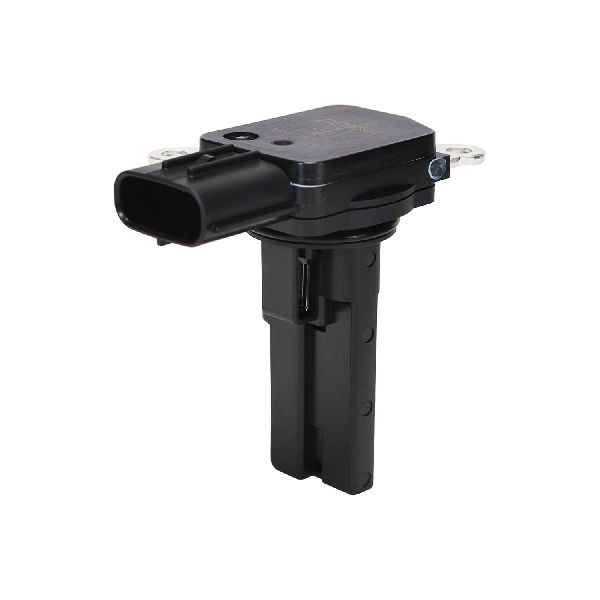
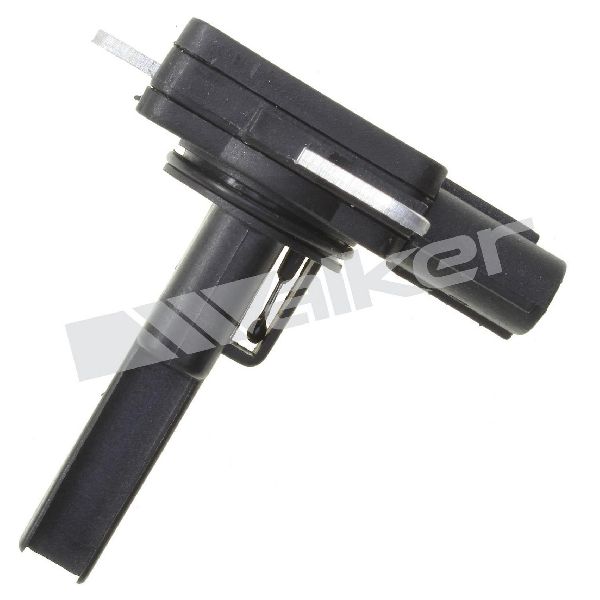
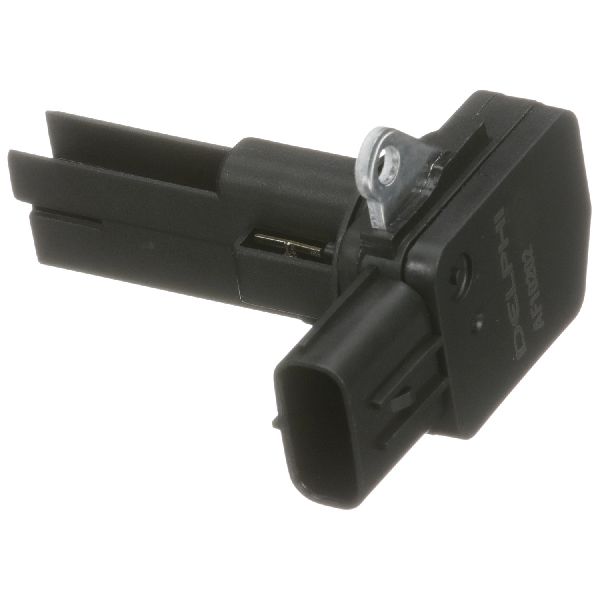
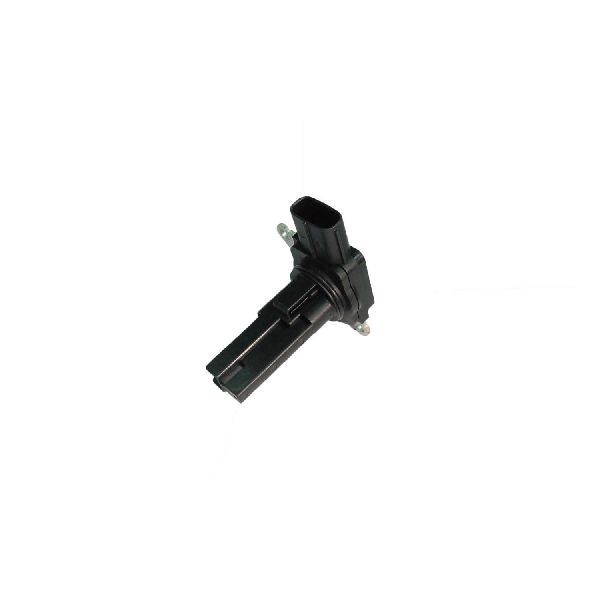
(OEM #22204-31020 (Supersedes: 22204-0H010, 22204-0P010))— This is the part that fails if cleaning and checking for vacuum leaks does not resolve the code. It is the primary component responsible for measuring airflow.
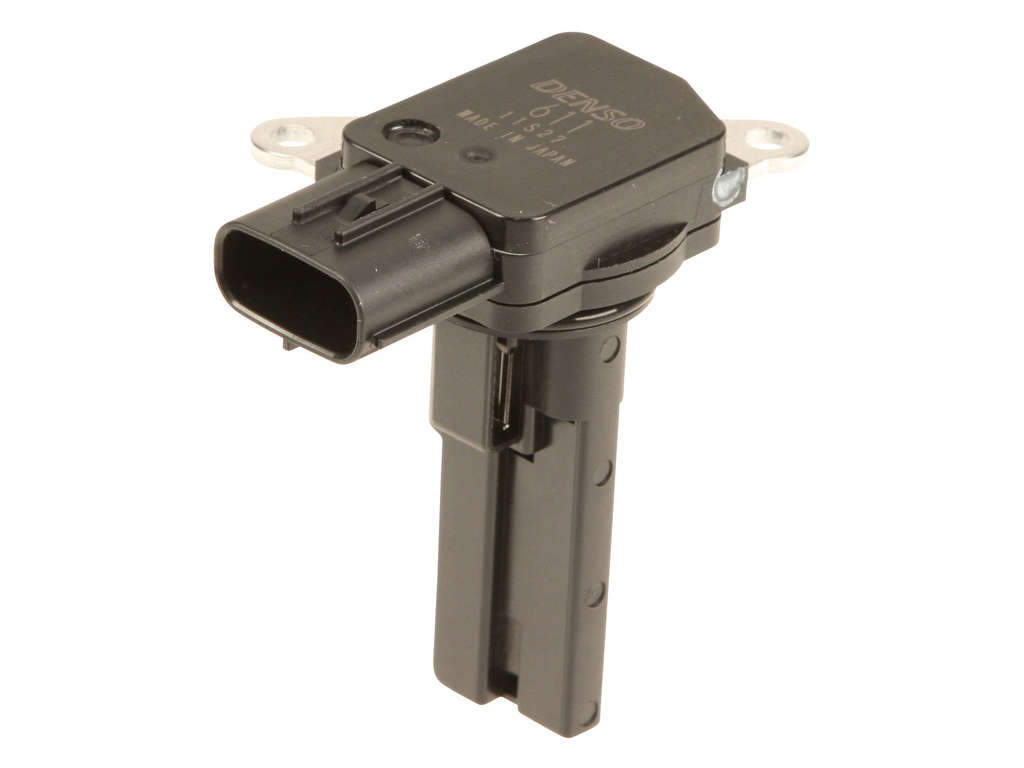
Trusted brands: Denso (OEM, Part #197-6110), Toyota (Genuine)
OEM price range: $120-$211
Aftermarket price range: $40-$90 - Air Intake Hose (Boot)
(OEM #17881-0H060)— This rubber boot is a very common failure point, cracking with age and causing vacuum leaks that trigger P0101 and P0171.
Trusted brands: Dorman, Toyota (Genuine)
OEM price range: $85-$110
Aftermarket price range: $30-$60 - MAF Sensor Cleaner — This is the first and most common fix. A dirty sensor is far more common than a completely failed one.
Trusted brands: CRC, WD-40 Specialist
Aftermarket price range: $10-$20
Related Codes That Often Appear With This One
- P0171 — System Too Lean. A vacuum leak or an under-reporting MAF sensor can cause this code to appear alongside P0101 because the engine is getting more air than it has measured. The ECU tries to compensate by adding fuel, leading to high positive fuel trims.
- P0172 — System Too Rich. A faulty MAF sensor that incorrectly reports high airflow can cause the ECU to inject too much fuel, leading to a rich condition and high negative fuel trims.
Mechanic-Grade Diagnostic Values
- MAF Sensor Reading (Scan Tool, KOEO) — expected: Less than 0.45 g/sec. Failure: A value greater than 0.45 g/sec after the engine has been off for 30 seconds with the key on suggests a faulty MAF meter.
- Long Term Fuel Trim #1 (Scan Tool) — expected: -15% to +15%. Failure: A value consistently outside this range (e.g., +25% or higher) indicates the ECU is trying to correct for a major lean or rich condition that could be related to the P0101 fault.
- MAF Sensor Connector - Power Wire Voltage — expected: ~12V (Battery Voltage). Failure: Significantly lower or no voltage indicates a wiring or fuse issue upstream of the sensor.
- MAF Sensor Connector - Ground Wire Voltage — expected: Less than 100mV (0.1V). Failure: A higher voltage reading indicates a poor ground connection, which can cause incorrect sensor readings.
- MAF Sensor Connector - Signal Wire Voltage (Warm Idle) — expected: Approximately 0.7V - 1.7V. Failure: Voltage that is stuck, erratic, or significantly outside this range during stable idle points to a faulty sensor or wiring issue.
Scan Tool Commands That Help
- Toyota Techstream / Intelligent Tester: Data List > Primary > LONG FT#1 & MAF — This is not a bidirectional command, but the specific OEM scan tool path used to view the critical data points (Long Term Fuel Trim and MAF g/s) needed for diagnosis according to the service manual.
Wiring & Ground Locations
- MAF Sensor Connector (A26) — On the MAF sensor itself, which is mounted on the air filter housing assembly in the engine bay.. This 5-pin connector provides power, ground, and signal lines for both the mass airflow and intake air temperature sensors. A loose connection, corrosion on pins, or damaged wires here is a direct cause of P0101.
- Engine Ground Points (e.g., E2, E3) — The 2AZ-FE engine has several ground points bolted to the engine block and chassis. For example, wiring diagrams show ground points designated 'E2' and 'E3' on the dash panel and engine compartment.. The MAF sensor's ground circuit (typically a Brown wire) terminates at one of these common ground points. A corroded or loose ground connection at these locations can cause a voltage offset and incorrect sensor readings, leading to a P0101 code even with a good sensor.
Real Owner Repair Stories
- YouTube channel 'Honest Car Guy' (2007-2011 Toyota Camry (specific year 2008)) — Check Engine Light with code P0171 (System Too Lean), which is often paired with P0101. Car died while driving and had a long crank symptom.
❌ Tried (didn't work) Initial inspection for vacuum leaks on main intake hoses showed no obvious cracks.
✅ What actually fixed it The problem was twofold: a torn PCV hose creating a vacuum leak, and a failing fuel pump causing low fuel pressure. Replacing both the PCV hose and the entire fuel pump assembly resolved the code and drivability issues. The check engine light did not return after a 120-mile test drive. - ToyotaNation Forums, user 'JoshuaJakob' (2009 Toyota Camry LE 2.4L 2AZ-FE with 270k miles) — Persistent P0171 and a new P0101 code. Rough/low idle (~650rpm), engine vibration, poor acceleration, and hard starting. Long Term Fuel Trim was extremely high at +25% to +35.9%.
❌ Tried (didn't work) Cleaning the MAF sensor., Replacing spark plugs (2x)., Replacing PCV valve (2x)., Visual inspection for vacuum leaks (none found)., Using a catalytic converter cleaner additive.
✅ What actually fixed it The thread is a diagnostic journey rather than a final fix, but it highlights expert suggestions when the common fixes fail. A mechanic suggested the cause could be a leaking brake booster diaphragm (a hidden vacuum leak) or a fuel delivery issue (failing fuel pump check valve causing pressure bleed-down). This illustrates a real-world scenario where a smoke test might be clean, but a less obvious component is the root cause.
"I Checked Everything" — The Actual Cause
- A stuck-open PCV valve can create a significant vacuum leak that triggers P0101 and P0171. This may be missed because some technicians focus smoke testing only on the main intake tract and don't test the crankcase ventilation system, or the valve may only stick under specific vacuum conditions.
- A leak in the brake booster diaphragm can allow unmetered air into the intake manifold. A mechanic in a forum thread suggested this as a potential cause for a stubborn P0171/P0101 after more common causes were ruled out. This is often missed as it's not part of the primary air intake boot.
When the Usual Fixes Don't Work
- While cleaning the MAF sensor or replacing a cracked intake boot resolves the majority of P0101 cases, there are documented instances where the code persists. In one such case involving a 2008 Camry with P0101 and P0171, the final solution was to replace a faulty fuel pump and a torn PCV hose, after initial vacuum leak checks on the main intake tract found nothing. This highlights that fuel delivery issues or less obvious vacuum leaks in the PCV system can mimic a primary MAF sensor fault.
OEM Part Supersession History
22204-0H010, 22204-0P010, 22204-31010→22204-31020— Standard part consolidation and potential minor revisions by the manufacturer over the vehicle's lifecycle.
Heads up: The newer part number 22204-31020 is the correct and final service replacement for the earlier numbers on this platform. There are no known incompatibility issues when using the latest OEM part.
Model Year Variations Within This Range
- 2007-2009: These model years exclusively used the 2.4L 2AZ-FE engine as the base 4-cylinder option.
- 2010-2011: The base 4-cylinder engine was updated to the 2.5L 2AR-FE. However, the 2.4L engine (as the 2AZ-FXE variant) continued to be used in the Camry Hybrid models for these years. Diagnosis for a P0101 on a 2010-2011 non-hybrid Camry would involve the 2.5L engine, which has different specifications.
Diagnostic Flowchart
Real Owner Stories
Aggregated from forums and TSBs cited above. Mileages and costs reflect what owners reported in those sources.
2007 Toyota Camry 2.4L
Symptoms: Check engine light with codes P0101 and P0172, RPMs fluctuate up and down, eventually stalling.
What fixed it: The user did not report a final fix, but other commenters suggested checking for a vacuum leak, particularly the intake gaskets which are known to leak when cold on this engine. The owner had previously hit diagnostic dead ends replacing O2 sensors, the MAF sensor, spark plugs, coils, oil, and the air filter.
Source hint: Reddit r/MechanicAdvice
Toyota Camry 2.4L
Symptoms: Set a P0101 code with a low MAF reading at idle.
What fixed it: Professional diagnosis confirmed the MAF reading was as low as 1.9 g/s at idle, indicating a fault setting the P0101 code, whereas a healthy 2.4L should read approximately 2.4 g/s.
Source hint: ScannerDanner Forum
Toyota Camry 2.4L 2AZ-FE
Symptoms: Check Engine Light with codes P0101 and P0171.
What fixed it: Owners found the issue was almost always a vacuum leak from a cracked intake boot or a dirty/faulty MAF sensor.
Source hint: ToyotaNation & CamryForums
Related OBD-II Codes
Frequently Asked Questions
What should the MAF sensor reading be at idle for my 2.4L Camry?
I have both P0101 and P0171 codes on my 2007-2011 Camry. What does this mean?
Which replacement MAF sensor should I buy for the 2.4L 2AZ-FE?
Where is the most common place for a vacuum leak on this specific Camry generation?
Can an aftermarket air filter cause the P0101 code on my Camry?
How can I test the MAF sensor on my Camry without the engine running?
Helpful Videos

Used OEM Parts in Stock
New Aftermarket Parts Available


The information in this article is provided for general reference and educational purposes only. Vehicle specifications, procedures, and part compatibility can vary by production date, trim level, and region. Always consult your vehicle's factory service manual and verify part numbers before purchasing or performing repairs. Safety-critical components such as airbags, seat belts, and braking systems should be installed by a qualified professional.
- Toyota Camry:
- 🧭 Diagnostic Flowchart
- 🎬 Helpful Videos
- 🛍️ Shop This Part
- What's Unique About the 2007-2011 Toyota Camry
- Symptoms You May Notice
- Most Likely Causes
- Rare But Worth Checking
- Technical Service Bulletins (TSBs) & Recalls
- Diagnosis Steps
- Parts You'll Likely Need
- Related Codes That Often Appear With This One
- Mechanic-Grade Diagnostic Values
- Scan Tool Commands That Help
- Wiring & Ground Locations
- Real Owner Repair Stories
- "I Checked Everything" — The Actual Cause
- When the Usual Fixes Don't Work
- OEM Part Supersession History
- Model Year Variations Within This Range
- Real Owner Stories
- 2007 Toyota Camry 2.4L
- Toyota Camry 2.4L
- Toyota Camry 2.4L 2AZ-FE
- Related OBD-II Codes
- Frequently Asked Questions
- 🎟️ Get 5% Off