

P0102 on 2011-2018 Porsche Cayenne: MAF Circuit Low Causes and Fixes
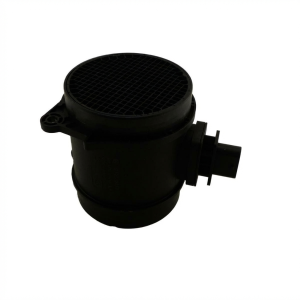
P0102 on a 2011-2018 Porsche Cayenne indicates the Mass Air Flow (MAF) sensor is sending a signal to the engine computer that is lower than expected. The most common fix is cleaning the MAF sensor with a dedicated cleaner. If that fails, replacing the sensor, which is often a Bosch or Hitachi unit, is the next step. A dirty air filter or a vacuum leak in the intake system, particularly from the PCV/AOS system, are also frequent culprits.
- P0102 on a Cayenne means the MAF sensor signal is too low.
- Always start by cleaning the MAF sensor with a dedicated cleaner; this is a cheap and often effective fix.
- Thoroughly check for vacuum leaks in the intake system, as this is a common cause on these vehicles.
- If you must replace the MAF sensor, use a high-quality OEM brand like Bosch or Hitachi to avoid further issues.
- A dirty air filter can cause this code, so check it as part of your diagnosis.
What's Unique About the 2011-2018 Porsche Cayenne
On the Porsche Cayenne V8 models, there are two MAF sensors—one for each cylinder bank. The P0102 code specifically refers to a low input from the Bank 1 sensor (the passenger side in LHD countries). This can complicate diagnosis, as a failing sensor on one bank can sometimes cause codes for the other. The 3.6L VR6 engine uses a single MAF sensor. Both engine variants are sensitive to unmetered air leaks from cracked intake hoses, faulty Air-Oil Separator (AOS) diaphragms, or vacuum line fittings, which can trigger a P0102 code. Owners and technicians on forums like Rennlist and 6speedonline frequently stress the importance of using high-quality OEM (Bosch) replacement sensors, as aftermarket units are known to be poorly calibrated and cause persistent issues.
Symptoms You May Notice
- Check Engine Light is on
- Rough or unstable idle
- Engine hesitation or stumbling during acceleration
- Reduced engine power or 'limp mode'
- Poor fuel economy
- Engine stalling, especially at idle or when coming to a stop
- Black smoke from the exhaust (if running rich)
- Hard starting
- Replacing the MAF sensor without first checking for vacuum leaks. A smoke test is often necessary to find hidden cracks in intake hoses or a failed AOS diaphragm.
- Replacing oxygen sensors. A bad MAF reading can cause the DME to create an incorrect fuel mixture, which can trigger secondary lean (P0171/P0174) or rich (P0172/P0175) codes.
Most Likely Causes
- Dirty or Contaminated MAF Sensor 🔴 High Probability → Shop Fuel Injection Air Flow Meter Oiled aftermarket air filters (e.g., K&N) are a notorious source of contamination, as the oil can coat the delicate sensor element. A neglected stock filter can also allow fine dust to pass through and accumulate on the sensor.
How to confirm: Visually inspect the MAF sensor's wire or film. If it appears dirty, oily, or has debris on it, cleaning is the first logical step. The sensor is located in the intake tract between the air filter box and the throttle body.
Typical fix: Remove the sensor and clean it carefully using only a dedicated MAF sensor cleaner spray. Do not touch the sensing element. Allow it to dry completely before reinstalling.
Est. part cost: $10-$20 for MAF cleaner - Vacuum Leak / Unmetered Air Leak 🟡 Medium Probability The plastic and rubber components in the engine bay, such as the Air-Oil Separator (AOS) and its associated crankcase breather hoses, are known to become brittle and crack from heat cycles, creating significant vacuum leaks.
How to confirm: Perform a visual inspection of all intake ducting after the MAF sensor for cracks or loose clamps. Check the AOS and small vacuum lines for cracking. A smoke test is the most effective method to pressurize the intake system and definitively pinpoint the source of a hidden leak. 🎬 See how to perform a smoke test for vacuum leaks
Typical fix: Replace the cracked hose, intake boot, AOS/PCV valve, or faulty gasket 🎬 Watch: How to replace the AOS diaphragm on a V8 that is causing the leak.
Est. part cost: $50-$500 depending on the specific hose, valve, or gasket - Faulty MAF Sensor 🟡 Medium Probability → Shop Fuel Injection Air Flow Meter The sensor's internal electronics can fail over time due to age, heat, and vibration. It's a sensitive electronic component in a harsh environment.
How to confirm: After cleaning the sensor and ruling out vacuum leaks, use a diagnostic scan tool to monitor the MAF sensor's live data (in grams/second). If the readings are stuck at zero or a very low value and do not increase smoothly with engine RPM, the sensor is likely faulty. Another quick test is to unplug the sensor; if the engine's running condition improves, it's a strong sign the sensor was providing bad data.
Typical fix: Replace the MAF sensor. It is highly recommended to use an OEM part from Bosch. On V8 models, some owners choose to replace both sensors at the same time for preventative maintenance.
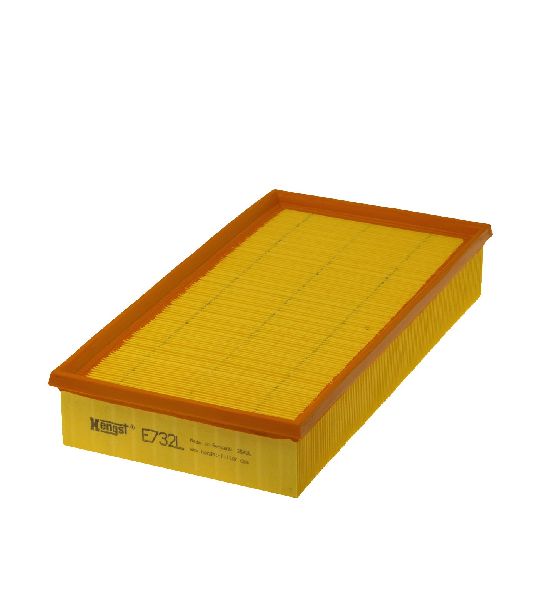
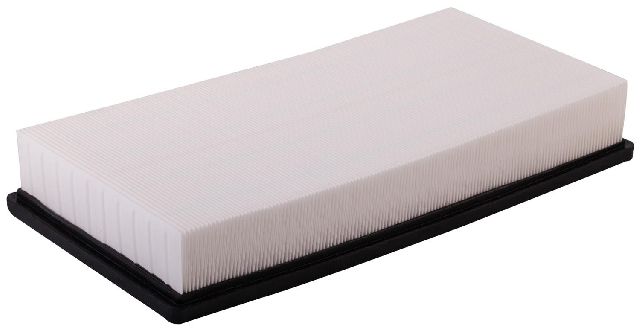
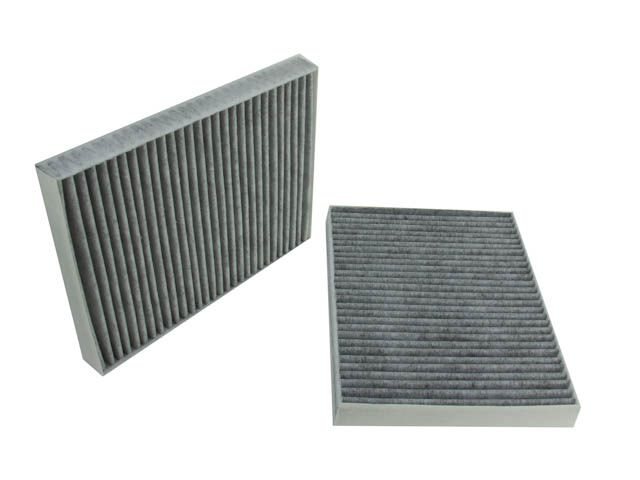
Est. part cost: $150-$400 per sensor - Clogged Engine Air Filter ⚪ Low Probability → Shop Air Cleaner Assembly A severely clogged filter can restrict airflow to the point that the MAF sensor reads an abnormally low value, triggering the code.
How to confirm: Visually inspect the engine air filter. If it is black, filled with debris, or has not been changed in a long time, it is likely restricting airflow.
Typical fix: Replace the engine air filter.
Est. part cost: $30-$80
Rare But Worth Checking
- Wiring Harness or Connector Issue: A damaged wire or corroded pins on the MAF sensor connector can cause a low or intermittent signal. Wiggle the connector and wiring with the engine running while watching live data on a scan tool to see if it causes the reading to drop out.
- Faulty Engine Control Module (DME): This is extremely rare, but the DME itself can fail. This should only be considered after all other possibilities, including wiring, have been exhaustively checked by a professional.
Diagnosis Steps
- Read all fault codes with a Porsche-compatible OBD-II scanner.
- Inspect the engine air filter. If it's dirty, clogged, or an oiled type, replace it with a quality paper filter.
- Visually inspect the MAF sensor connector for corrosion or loose pins. Ensure it is securely connected.
- Inspect the intake system between the MAF sensor(s) and the engine for any obvious cracks, loose clamps, or disconnected hoses. Pay close attention to the crankcase ventilation (AOS) hoses.
- Remove the MAF sensor(s) and clean with a dedicated MAF sensor cleaner. Let it air dry completely before reinstalling. Do not touch the internal elements.
- Clear the codes and test drive. If the P0102 code returns, proceed to the next steps.
- Use a scan tool to monitor live data for the MAF sensor(s). On a V8, monitor both Bank 1 and Bank 2. The airflow reading (g/s) should be stable at idle and increase smoothly and proportionally with engine RPM. If the Bank 1 sensor is stuck low or erratic, it's likely bad.
- Perform the 'unplug test': with the engine off, disconnect the MAF sensor. Start the engine. If it runs noticeably better, the sensor was providing faulty data and should be replaced.
- If a vacuum leak is suspected but not visible, perform a smoke test to pressurize the intake system and identify the source of the leak.
- If all else fails, check the wiring between the MAF sensor and the DME for continuity, shorts, power, and ground at the sensor connector using a multimeter.
Parts You'll Likely Need
- Mass Air Flow (MAF) Sensor
(OEM #3.6L VR6: 958-606-125-01 (Bosch 0280218260) | 4.8L V8: 955-606-123-40 (Bosch 0280218198))— This is the most common part to fail if cleaning does not resolve the issue. The sensor's delicate electronics can wear out over time.
Trusted brands: Bosch (OEM), Hitachi
OEM price range: $250-$400
Aftermarket price range: $100-$200 - MAF Sensor Cleaner — Often, the sensor is just dirty and cleaning it is the first and most cost-effective step in diagnosis.
Trusted brands: CRC, Liqui Moly
OEM price range: $15-$20
Aftermarket price range: $10-$15 - Engine Air Filter — A clogged air filter can restrict airflow and cause a P0102 code. It should be inspected and replaced if necessary as part of routine maintenance.
Trusted brands: Mahle, Mann-Filter
OEM price range: $50-$80
Aftermarket price range: $30-$50
Related Codes That Often Appear With This One
- P0171 — System Too Lean (Bank 1) - If unmetered air enters the engine after the MAF (from a vacuum leak), the sensor reports less air than is actually present, causing the DME to inject too little fuel, resulting in a lean condition.
- P0174 — System Too Lean (Bank 2) - Same reason as P0171, but for the opposite engine bank on V8 models. A large vacuum leak can affect both banks.
- P0101 — Mass Air Flow (MAF) Circuit Range/Performance - This code often appears alongside P0102 and indicates the sensor's output is not correlating correctly with other sensors, like the throttle position sensor.
Platform-Specific Known Issues
- On the 4.8L V8, P0102 points to the Bank 1 MAF sensor. A user on Rennlist with a 2011 Cayenne S (4.8L) experienced P0102 and P0103 codes; cleaning the sensors provided no relief, but replacing both Bosch MAF sensors resolved the issue completely.
- A common failure point for vacuum leaks is the crankcase ventilation system, also known as the Air-Oil Separator (AOS). The internal diaphragm can tear or the plastic hoses can crack, leading to unmetered air that triggers a P0102 code.
Mechanic-Grade Diagnostic Values
- MAF Sensor Voltage (Key On, Engine Off) — expected: 0.9V to 1.1V. Failure: Voltage is significantly outside this range or stuck at a specific value.
- MAF Sensor Voltage at Idle (Warm Engine) — expected: ~1.2V to 1.5V. Failure: Voltage is stuck at the KOEO value (e.g., 1.0V) and does not increase with RPM, or is erratically low.
- MAF Airflow at Idle (Warm Engine, ~680 RPM) — expected: 14 to 18 kg/hr. Failure: Reading is significantly lower than this range, or does not increase smoothly as RPMs rise.
- MAF Sensor Connector - Power Supply Pin — expected: 12V (Battery Voltage). Failure: No voltage or significantly low voltage indicates a wiring or fuse issue upstream.
- MAF Sensor Connector - Reference Voltage Pin — expected: 5V. Failure: No voltage or low voltage points to a problem with the DME or the wiring from the DME.
Hidden / Shadow Codes Worth Checking
- P0102 + P0171/P0174: This combination strongly indicates an unmetered air leak (vacuum leak). The MAF reads low (P0102) because air is sneaking in after the sensor, and the oxygen sensors detect the resulting lean mixture (P0171/P0174). (see via Standard OBD-II Scanner)
- P0102 + P0562: This combination suggests the P0102 code may be a 'false code' triggered by low system voltage from a weak battery or failing alternator. MAF sensors are sensitive to voltage, and low system power can corrupt their signal. (see via Standard OBD-II Scanner)
Scan Tool Commands That Help
- Any OBD-II Scanner / Manual Procedure: ECU Reset / Adaptation Clearing — After replacing the MAF sensor or fixing a vacuum leak, the DME's learned fuel trims must be reset. This can be done by clearing codes with a scanner or by disconnecting the negative battery terminal for 15-30 minutes to erase the ECU's volatile memory. A drive cycle under various conditions is then needed for the ECU to relearn adaptations with the new/clean sensor.
Wiring & Ground Locations
- Engine-to-Chassis Ground Strap (Under Hood) — In the engine bay, a braided strap typically runs from the engine block (often near the top) to one of the strut towers.. A corroded or loose main ground can create electrical resistance, causing unstable voltage supply to various sensors, including the MAF, leading to erroneous readings and codes.
- Engine-to-Chassis Ground Strap (Underneath) — Underneath the vehicle, typically in the front right corner, connecting the bottom of the engine or subframe to the main chassis/frame rail.. This is another primary ground path. Corrosion from road salt and moisture is common here. A bad connection can cause a host of electrical issues, including sensor circuit faults like P0102.
- MAF Sensor Connector Pins — The electrical connector plugging directly into the MAF sensor.. Technicians must verify power, ground, and signal integrity directly at the sensor. A typical test involves using a multimeter to check for ~12V (power), good continuity to ground, and a ~1.0V signal with key on, engine off.
Real Owner Repair Stories
- Rennlist Forum Member (Porsche 996 (similar DME logic to Cayenne)) — Hard to start, won't idle without throttle input, lumpy idle.
❌ Tried (didn't work) Cleaning the MAF sensor, Cleaning IACV and throttle body, Comprehensive smoke test (no vacuum leaks found), Checking wiring continuity and resistance from DME to MAF plug (all good)
✅ What actually fixed it Replacing the MAF sensor with a new Bosch unit resolved all issues. The old sensor's voltage was stuck and would not increase with RPM, indicating an internal electronic failure despite no visible wiring or vacuum issues.
"I Checked Everything" — The Actual Cause
- In some cases, a comprehensive smoke test will show no vacuum leaks, and wiring continuity checks out perfectly. The root cause can still be an internal failure of the MAF sensor itself, where its electronics have failed and it produces a fixed low voltage signal regardless of actual airflow. The only fix in this scenario is to replace the sensor.
- A leaking oil filler tube cap can introduce a significant unmetered air leak, causing lean conditions and a P0102 code. This small leak source is sometimes missed during a standard smoke test if the cap itself is not specifically checked for a loose fit or a degraded seal.
Model Year Variations Within This Range
- 2015-2018 (958.2 Facelift): For the 2015 model year facelift, the Cayenne S and GTS trims switched from the naturally-aspirated 4.8L V8 to a 3.6L Twin-Turbo V6. The Base model retained its 3.6L naturally-aspirated VR6 engine. This is a critical distinction when ordering parts, as a '2016 Cayenne S' uses a different engine and MAF system than a '2014 Cayenne S'.
Diagnostic Flowchart
Other Known Issues on This Vehicle
Issues unrelated to this code that are worth knowing about as an owner of this generation:
- Transfer Case Failure 🔴 High — Very common, especially on 2015-2018 models, but can occur at any mileage. Symptoms include shuddering/jerking on low-speed acceleration and turns. (Ref: Porsche issued a warranty extension for many affected vehicles. TSB SY2516 and SY0416 address diagnosis and replacement.)
- Camshaft Adjuster Bolt Failure (V8 Only) 🔴 High — Primarily affects 2010-2012 V8 engines. Aluminum bolts can shear, causing timing to jump and potentially leading to catastrophic engine failure. (Ref: US/Canada Safety Recall AH08 (NHTSA 17V-368) and workshop campaign WC-22 were issued to replace the aluminum bolts with steel ones.)
- Coolant Pipe & Housing Leaks 🟠 Medium — Common across all engine types. Adhesive on coolant pipes, particularly those in the 'V' of the V8, can fail, causing major coolant leaks. Plastic vent lines and fittings also become brittle.
- High-Pressure Fuel Pump (HPFP) Failure 🟠 Medium — Can occur on both V6 and V8 direct-injection engines, typically over 60,000 miles. Leads to long crank times, stalling, and engine hesitation.
- Cracked PCV / Air-Oil Separator (AOS) 🟠 Medium — The diaphragm in the PCV/AOS can tear, or the plastic housing/hoses can crack, creating a large vacuum leak. This is a common source of lean codes and rough running.
Used vs. New Parts: Buying Guide for This Vehicle
When a used part is the smart pick: A used part is a reasonable choice only if it is a genuine OEM Bosch sensor pulled from a documented low-mileage donor vehicle. Given the electronic sensitivity and high failure rate, a new part is generally a safer investment.
Donor-vehicle mileage cap: roughly under 60000 miles for the part to have meaningful remaining life.
What to inspect on the donor part:
- Verify the part number on the sensor housing matches your original part exactly.
- Inspect the connector pins for any signs of corrosion or damage.
- Ask for the donor vehicle's VIN to check its mileage and history if possible.
- Avoid sensors from vehicles that show signs of a major engine fire or flood damage.
OEM-only on this vehicle (don't cheap out):
- Mass Air Flow (MAF) Sensor - Forum consensus overwhelmingly recommends using only the OEM Bosch sensor. Aftermarket sensors are widely reported to be poorly calibrated, leading to persistent codes and performance issues.
Aftermarket brands forum-validated for this vehicle:
- Bosch (This is the Original Equipment Manufacturer, so it's the best choice)
Brands owners have reported issues with on this vehicle:
- Unnamed or generic 'white-box' sensors from online marketplaces are highly likely to cause issues.
Real Owner Stories
Aggregated from forums and TSBs cited above. Mileages and costs reflect what owners reported in those sources.
2011 Cayenne S 4.8L V8
Symptoms: Experienced both P0102 and P0103 codes; cleaning the sensors provided no relief.
What fixed it: Replacing both Bosch MAF sensors resolved the issue completely.
Source hint: Vehicle-specific issues section / Rennlist
2011 Cayenne S 4.8L V8
Symptoms: Multiple engine warnings including those related to P0102.
What fixed it: The issues were traced back to the known camshaft adjuster bolt failure.
Source hint: 6speedonline forum citation
Related OBD-II Codes
Frequently Asked Questions
I have a 2011 Cayenne S with a V8; could my P0102 code be related to the camshaft adjuster bolt issue?
Should I use an aftermarket MAF sensor to fix the P0102 code on my Cayenne?
Does the 4.8L V8 have more than one MAF sensor that could trigger this code?
Can my K&N air filter cause the P0102 fault?
Is there a specific vacuum leak point on the 958 Cayenne that triggers P0102?
If I unplug my MAF sensor and the engine runs better, does that confirm the sensor is bad?
Helpful Videos
Used OEM Parts in Stock
New Aftermarket Parts Available



The information in this article is provided for general reference and educational purposes only. Vehicle specifications, procedures, and part compatibility can vary by production date, trim level, and region. Always consult your vehicle's factory service manual and verify part numbers before purchasing or performing repairs. Safety-critical components such as airbags, seat belts, and braking systems should be installed by a qualified professional.
- Porsche Cayenne:
- 🧭 Diagnostic Flowchart
- 🎬 Helpful Videos
- 🛍️ Shop This Part
- What's Unique About the 2011-2018 Porsche Cayenne
- Symptoms You May Notice
- Most Likely Causes
- Rare But Worth Checking
- Diagnosis Steps
- Parts You'll Likely Need
- Related Codes That Often Appear With This One
- Platform-Specific Known Issues
- Mechanic-Grade Diagnostic Values
- Hidden / Shadow Codes Worth Checking
- Scan Tool Commands That Help
- Wiring & Ground Locations
- Real Owner Repair Stories
- "I Checked Everything" — The Actual Cause
- Model Year Variations Within This Range
- Other Known Issues on This Vehicle
- Used vs. New Parts: Buying Guide for This Vehicle
- Real Owner Stories
- 2011 Cayenne S 4.8L V8
- 2011 Cayenne S 4.8L V8
- Related OBD-II Codes
- Frequently Asked Questions
- 🎟️ Get 5% Off