

P0102 on 2012-2017 Toyota Prius V: MAF Circuit Low Causes and Fixes
On a 2012-2017 Prius V, code P0102 is most often caused by a dirty MAF sensor or a connector that was left unplugged after an air filter change. Start by inspecting the connector and cleaning the sensor with dedicated MAF cleaner (~$15) before considering a replacement. Be aware the code may persist as a 'Permanent DTC' even after the fix, requiring a specific drive cycle to fully clear.
- Before buying any parts, first confirm the MAF sensor is plugged in securely. This is a very common oversight on the Prius V.
- The second step should always be to clean the MAF sensor with a dedicated cleaner spray. This resolves the code in many cases.
- If you must replace the sensor, use an OEM or Denso part. Aftermarket MAF sensors are known to cause performance issues on Toyota vehicles.
- Inspect the wiring harness near the sensor for any signs of rodent damage, a known issue for this platform.
What's Unique About the 2012-2017 Toyota Prius V
For the Prius V with the 2ZR-FXE engine, one of the most frequent causes of a P0102 code is simple human error: the MAF sensor connector is often left unplugged after routine service like an air filter replacement. The connector is on the underside of the air filter housing and is easy to miss. Additionally, this platform is known to be susceptible to rodent damage, as the soy-based wiring insulation can attract mice and other pests that may chew through the MAF sensor wires. A unique frustration on this platform is that even after fixing the underlying issue, the code may be stored as a 'Permanent DTC' that won't clear with a standard scan tool or battery disconnect, requiring a specific, multi-step drive cycle to be performed before it will extinguish.
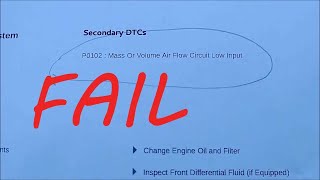
🎬 Watch: How to clear a permanent P0102 code for smog tests.Symptoms You May Notice
- Check Engine Light is on
- Engine runs rough, especially at idle
- Hesitation or lack of power during acceleration
- Engine may stall, particularly when coming to a stop
- Noticeably decreased fuel economy
- Difficulty starting the engine
- Black smoke from the exhaust
- Replacing the MAF sensor before checking if the connector is simply unplugged.
- Replacing the MAF sensor when it only needs to be cleaned.
- Assuming the problem is still present when only a 'Permanent DTC' remains, which requires a special drive cycle to clear.
Most Likely Causes
- MAF Sensor Connector Unplugged or Loose 🔴 High Probability → Shop Fuel Injection Air Flow Meter The connector is located on the top/rear of the air filter box and is frequently forgotten during air filter changes. This is the most common cause reported by owners.
How to confirm: Visually inspect and physically check that the MAF sensor's electrical connector is fully seated and locked in place. It plugs in from the underside and can be hard to see.
Typical fix: Securely plug the connector back into the MAF sensor. Clear the code. If a 'permanent' code remains, the vehicle must be driven through a specific drive cycle to clear it.
Est. part cost: $0 - Dirty or Contaminated MAF Sensor 🔴 High Probability → Shop Fuel Injection Air Flow Meter Oil vapors from the PCV system or fine dust that gets past the air filter can coat the sensor's delicate hot wire, insulating it and causing it to read low. Over-oiling a reusable aftermarket air filter (like a K&N) is a known cause of contamination on this platform.
How to confirm: Remove the sensor (two Phillips screws) and visually inspect the two small wires inside the sensor's housing. If they appear dull, coated, or have debris on them, they need cleaning.
Typical fix: Remove the sensor and clean it carefully using only dedicated Mass Airflow Sensor cleaner spray. 🎬 Watch: A step-by-step guide to cleaning your Prius MAF sensor. Do not touch the wires or use other chemicals like brake cleaner. Allow it to dry completely before reinstalling. The sensor is fragile and can be damaged by cleaning.
Est. part cost: $10-$20 for a can of MAF cleaner. - Damaged Wiring or Poor Connection 🟡 Medium Probability Prius models use soy-based wiring insulation which can attract rodents, leading to chewed wires in the engine bay. The MAF sensor harness is in an accessible location for pests.
How to confirm: Inspect the wiring harness leading to the MAF sensor for any signs of chewing, fraying, or breaks. A YouTube video by 'Mr. B' shows a clear example of this on a 2012 Prius. Gently tug on each wire at the connector to ensure it's secure.
Typical fix: Repair the damaged section of wire using solder and heat shrink tubing. In severe cases, the connector pigtail may need to be replaced.
Est. part cost: $5-$30 for wiring repair supplies or a new pigtail. - Vacuum Leak (Unmetered Air) ⚪ Low Probability Rubber and plastic components in the intake system can become brittle with age and heat, leading to cracks in hoses or the intake boot between the MAF and the throttle body.
How to confirm: With the engine running, listen for hissing sounds around the intake manifold and vacuum lines. A smoke test is the most effective way to find small leaks. A vacuum leak will often be accompanied by a P0171 (System Too Lean) code.
Typical fix: Replace the cracked or broken vacuum hose or intake boot.
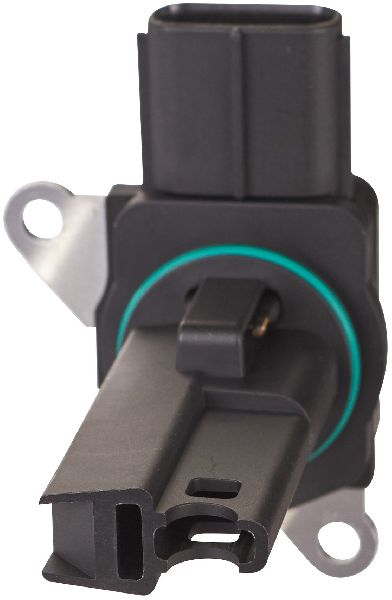
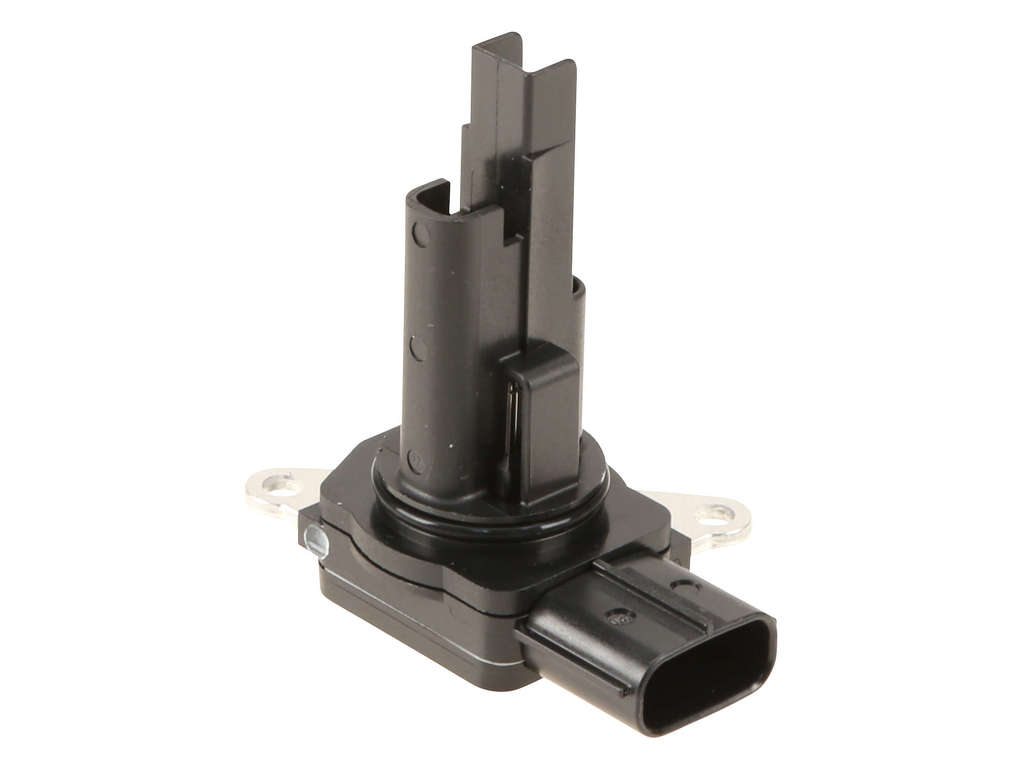
Est. part cost: $10-$100 depending on the specific hose or gasket. - Faulty MAF Sensor ⚪ Low Probability → Shop Fuel Injection Air Flow Meter While not a high-failure part, the sensor can fail electronically over time. It's more common for it to be dirty than outright faulty.
How to confirm: After confirming wiring is good and the sensor is clean, use a scan tool to monitor the 'MAF' data PID. At idle, it should be around 1.5-2.5 g/s. A quick, informal 'smack test' can sometimes reveal a faulty sensor: with the engine running, lightly tap the sensor with the handle of a screwdriver. If the engine stumbles or stalls, the sensor is likely bad. If the reading is stuck at 0 or a very low number, the sensor has failed.
Typical fix: Replace the Mass Airflow Sensor. It is highly recommended to use an OEM or Denso-branded part, as aftermarket sensors are known to cause issues.
Est. part cost: $80-$150 for a quality aftermarket part, $180-$250 for an OEM part.
Rare But Worth Checking
- Clogged Engine Air Filter: → Shop Air Cleaner Assembly A severely clogged air filter can restrict airflow enough to trigger the code. Always check the filter as a basic step.
- Blown EFI No. 2 Fuse: A Reddit user reported that a blown, intermittently-connecting 'EFI #2' fuse was the root cause of their P0102 code after other repairs. This should be checked if wiring and the sensor seem okay.
- Faulty Engine Control Module (ECM): This is extremely rare and should only be considered after all other possibilities (wiring, sensor, leaks, fuses) have been exhaustively ruled out by a professional.
Diagnosis Steps
- Check for other stored trouble codes to see if they provide more context (e.g., P0171 for a vacuum leak, P0113 for a shared connector issue).
- Visually inspect the MAF sensor's electrical connector. Ensure it is plugged in securely and the lock tab is engaged. This is the most common fix.
- Inspect the wiring leading to the sensor for any signs of damage, such as chewing from rodents, chafing, or breaks.
- Inspect the engine air filter. If it is dirty, clogged, or over-oiled (if reusable), replace or clean it.
- Remove the MAF sensor from the air filter housing 🎬 See this walkthrough on removing and cleaning the sensor. (two Phillips screws).
- Carefully clean the sensor element using only a dedicated MAF sensor cleaning spray. Do not touch the internal wires. Let it air dry completely.
- Reinstall the sensor, clear the codes, and perform a test drive. Check if a 'Permanent DTC' remains, which may require a specific drive cycle to clear.
- If the code persists, use a scan tool to monitor the MAF sensor reading in the live data stream. The value (in grams/second) should increase smoothly as you raise the engine RPM. If it is stuck at or near zero, or if it glitches when you lightly tap the sensor housing, the sensor or its circuit is faulty.
- Check related fuses, specifically the 'EFI #2' fuse.
- If you suspect a vacuum leak, perform a smoke test on the intake system to pinpoint the source of the leak.
Parts You'll Likely Need
- Mass Air Flow Sensor
(OEM #22204-37010 (may be superseded by 22204-28010))— This is the part that fails if cleaning and wiring checks do not resolve the issue.
Trusted brands: Denso (OEM supplier, P/N 197400-5080), Toyota (Genuine OEM)
OEM price range: $180-$250
Aftermarket price range: $80-$150 - Mass Air Flow Sensor Cleaner — Often, the sensor is just dirty and cleaning it is the only fix required. This should always be the first step before replacing the part.
Trusted brands: CRC, WD-40 Specialist
Aftermarket price range: $10-$20 - MAF Sensor Connector Pigtail — Required if the connector or wiring harness is damaged, often by rodents or brittle plastic.
Related Codes That Often Appear With This One
- P0171 — If a vacuum leak exists after the MAF sensor, air enters the engine that the sensor doesn't measure. The MAF reports low airflow (P0102), while the oxygen sensors detect the extra, un-fueled air and report a lean condition (P0171).
- P3190 — This code means 'Poor Engine Power' and can be set alongside P0102 because the lack of a valid MAF signal prevents the hybrid system from starting the gasoline engine correctly, leading to a lack of power.
- P0113 — The Intake Air Temperature (IAT) sensor is integrated into the same physical housing as the MAF sensor. Therefore, a disconnected plug or damaged wiring will often cause both P0102 (MAF Circuit Low) and P0113 (IAT Circuit High) to appear simultaneously.
Technical Service Bulletins (TSBs) & Recalls
- No specific Technical Service Bulletins (TSBs) for a P0102 fault are widely reported for this vehicle. Diagnosis follows standard procedure for MAF circuit faults.
Platform-Specific Known Issues
- Permanent DTC P0102 Lingers After Fix: A common complaint on Prius forums is that after fixing the root cause (like plugging the sensor back in), the P0102 code remains stored as a 'Permanent DTC'. This type of code cannot be cleared by a standard OBD-II scanner or by disconnecting the battery. It requires the vehicle's computer to successfully run its internal self-test over several drive cycles. A specific, and sometimes complex, driving pattern may be needed to force the monitor to run and clear the permanent code.
- Contamination from Oiled Air Filters: → Shop Air Cleaner Assembly Owners using reusable, oiled air filters (such as K&N) have reported triggering code P0102. If the filter is over-oiled after cleaning, the excess oil can aerosolize and coat the delicate MAF sensor element, causing it to read incorrectly.
- Code Appears After Adjacent Maintenance: There are multiple reports of P0102 appearing immediately after owners perform other maintenance in the engine bay, such as cleaning the EGR cooler or intake manifold. This strongly suggests the MAF connector was either forgotten during reassembly or the wiring was inadvertently damaged during the procedure.
Mechanic-Grade Diagnostic Values
- MAF Sensor Power Supply Voltage — expected: 11 to 14 V. Failure: Voltage below 11V or absent indicates a power supply issue from the EFI relay or wiring.
- MAF Sensor Signal Voltage (VG Pin) — expected: Varies with airflow. The ECM triggers P0102 if voltage is below 0.2V for 3 seconds.. Failure: A reading consistently below 0.2V with the engine running points to a sensor or wiring failure.
- Continuity between MAF connector and ECM — expected: Below 1 Ω. Failure: Resistance higher than 1 Ω indicates an open or high resistance in the wiring harness.
- Resistance between MAF signal wire and body ground — expected: 10 kΩ or higher. Failure: Resistance below 10 kΩ indicates a short to ground in the wiring harness.
- Scan Tool Live Data: 'MAF' value (KOEO) — expected: Less than 0.25 g/sec. Failure: A value higher than 0.25 g/sec with the engine off (Key On Engine Off) after 30 seconds suggests a faulty sensor.
Scan Tool Commands That Help
- Toyota Techstream: Data List -> Primary / MAF — To monitor the live g/s reading of the MAF sensor. The value should be low at idle and increase smoothly as the engine is revved. This confirms if the sensor is responding to airflow changes.
- Toyota Techstream: Utility -> All Readiness — To check the status of the monitors required to clear a 'Permanent DTC' like P0102. This helps determine if the confirmation drive cycle has been successfully completed.
Wiring & Ground Locations
- MAF Connector Pin 3 (+B) — On the 5-pin connector at the MAF sensor.. This pin provides 12V power to the sensor from the EFI main relay. A lack of voltage here will cause P0102.
- MAF Connector Pin 4 (E2G) — On the 5-pin connector at the MAF sensor.. This is the sensor's ground wire. A poor ground connection will cause incorrect readings and can trigger P0102.
- MAF Connector Pin 5 (VG) — On the 5-pin connector at the MAF sensor.. This is the signal wire that sends the airflow reading back to the ECM. An open or short on this wire is a direct cause of P0102.
- Engine Ground Points — There are multiple ground wire clusters on the 2ZR-FXE engine harness that bolt directly to the engine block and chassis, often near the coolant reservoir.. A loose or corroded main engine ground can cause a variety of sensor issues, including erratic MAF sensor readings, as it affects the sensor's reference ground at the ECM.
Real Owner Repair Stories
- PriusChat user 'danlatu' (2010 Toyota Prius (Gen 3, same engine family)) — Knocking sound on startup, Check Engine Light with codes P0102 (MAF), P0113 (IAT), and P0401 (EGR).
❌ Tried (didn't work) Initially suspected a blown head gasket due to the knocking sound.
✅ What actually fixed it Found that rodents had chewed through the wiring harness for the MAF sensor and fuel injectors. The final fix was repairing the chewed wires with a used wiring harness section, solder, heat shrink, and wrapping the repair in Honda's rodent-deterrent tape. - Reddit user post (2012 Toyota Prius V) — P0102 code appeared immediately after replacing the Intake Manifold, EGR cooler, and EGR valve.
❌ Tried (didn't work) Cleaning the MAF sensor with MAF cleaner spray., Driving the car multiple times.
✅ What actually fixed it The final resolution was not posted in the thread, but another user correctly advised that the code appearing after major work points to a damaged wire or a forgotten ground wire during re-installation, rather than a faulty MAF sensor. - NHTSA ODI #11296751 (Toyota Prius) — An owner reported that error codes P0113 and P0102, along with warning messages for the check engine light and ICS malfunction, appeared when starting their garaged vehicle.
OEM Part Supersession History
22204-37010→22204-28010— Standard part consolidation and potential minor revisions by the manufacturer.
Heads up: The parts are generally cross-compatible, but it is always best to verify with a VIN. The Denso OEM equivalent is 197400-5080.
Model Year Variations Within This Range
- Late 2014-2017: Engines produced from late 2014 onward received updated piston rings to address oil consumption issues common in earlier 2ZR-FXE engines. While this doesn't directly affect the P0102 code, it's a significant reliability difference within the model range.
- 2015-2017: The Prius V received a facelift for the 2015 model year, which included cosmetic changes and an updated, higher-resolution Multi-Functional Display (MFD). This does not impact the diagnosis of P0102 but is a notable change in the vehicle's interior technology.
Diagnostic Flowchart
Real Owner Stories
Aggregated from forums and TSBs cited above. Mileages and costs reflect what owners reported in those sources.
Toyota Prius
Symptoms: The readiness monitor was stuck 'incomplete' and a permanent P0102 code lingered after the MAF sensor had been unplugged.
What fixed it: Driving the vehicle through a specific drive cycle to force the monitor to run and clear the permanent code.
Source hint: PriusChat: 'permanent P0102 readiness monitor stuck "incomplete"'
Toyota Prius
Symptoms: Triggered P0102 and P0113 codes immediately after performing a big tune up and installing a K&N air filter.
What fixed it: Addressing the contamination on the MAF sensor caused by over-oiling the K&N filter.
Source hint: PriusChat: 'P0113 & P0102 codes after big tune up'
2012 Toyota Prius V
Symptoms: Code P0102 appeared immediately after replacing EGR components in the engine bay.
What fixed it: Checking the MAF sensor connector and verifying the 'EFI #2' fuse.
Source hint: Reddit r/prius: '2012 Toyota Prius V Code P0102'
2012 Toyota Prius
Symptoms: MAF sensor wiring harness was chewed by rodents due to the soy-based wiring insulation.
What fixed it: Repaired the damaged section of the wiring harness using solder and heat shrink tubing.
Source hint: YouTube video by 'Mr. B'
Related OBD-II Codes
Frequently Asked Questions
Why won't the P0102 code clear on my Prius V even after I plugged the MAF sensor back in?
I just cleaned my EGR cooler and intake manifold, and now I have a P0102 code. What happened?
Can a reusable K&N air filter cause a P0102 on the 2ZR-FXE engine?
Are there any specific fuses I should check for a P0102 on my 2012-2017 Prius V?
Are there any Technical Service Bulletins (TSBs) for the P0102 code on this vehicle?
My Prius V wiring looks chewed near the airbox. Is this a known issue?
Helpful Videos


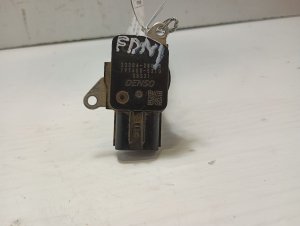
Used OEM Parts in Stock
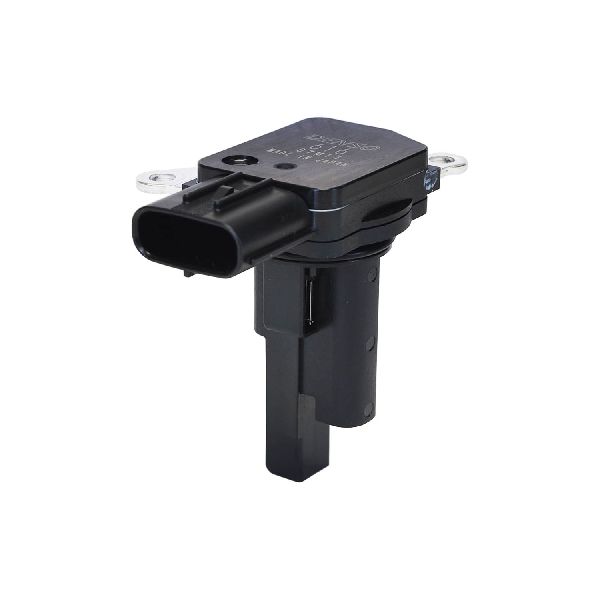
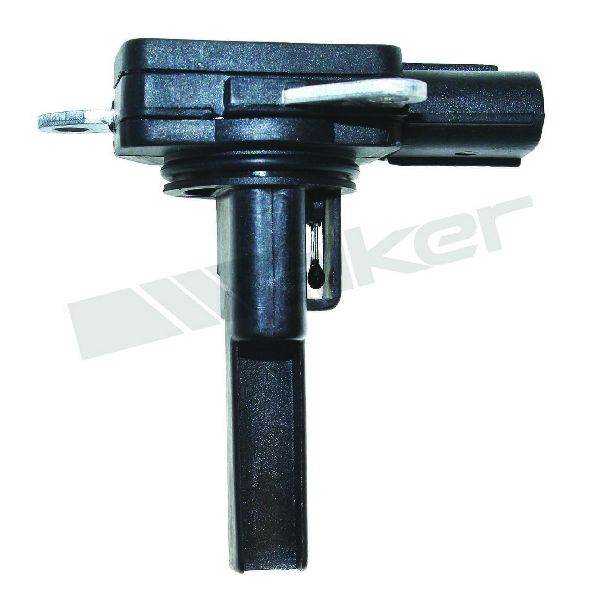
New Aftermarket Parts Available


The information in this article is provided for general reference and educational purposes only. Vehicle specifications, procedures, and part compatibility can vary by production date, trim level, and region. Always consult your vehicle's factory service manual and verify part numbers before purchasing or performing repairs. Safety-critical components such as airbags, seat belts, and braking systems should be installed by a qualified professional.
- Toyota Prius V:
- 🧭 Diagnostic Flowchart
- 🎬 Helpful Videos
- 🛍️ Shop This Part
- What's Unique About the 2012-2017 Toyota Prius V
- Symptoms You May Notice
- Most Likely Causes
- Rare But Worth Checking
- Diagnosis Steps
- Parts You'll Likely Need
- Related Codes That Often Appear With This One
- Technical Service Bulletins (TSBs) & Recalls
- Platform-Specific Known Issues
- Mechanic-Grade Diagnostic Values
- Scan Tool Commands That Help
- Wiring & Ground Locations
- Real Owner Repair Stories
- OEM Part Supersession History
- Model Year Variations Within This Range
- Real Owner Stories
- Toyota Prius
- Toyota Prius
- 2012 Toyota Prius V
- 2012 Toyota Prius
- Related OBD-II Codes
- Frequently Asked Questions
- 🎟️ Get 5% Off