

P0102 on 2005-2015 Toyota Tacoma 2.7L: Causes and Fixes for MAF Circuit Low
On a 2005-2015 Tacoma with the 2.7L engine, P0102 is most often caused by a dirty Mass Air Flow (MAF) sensor. Before replacing parts, clean the sensor with dedicated MAF cleaner (~$10). This simple fix resolves the issue in a majority of cases. If cleaning doesn't work, suspect a vacuum leak before condemning the sensor itself.
- P0102 means the MAF sensor is sending a low voltage signal to the engine computer.
- The most likely cause on a 2.7L Tacoma is a dirty MAF sensor, not a failed one.
- Always start by cleaning the sensor with dedicated MAF cleaner spray before buying any parts.
- If you must replace the sensor, use an OEM or Denso part to avoid further issues.
- Check for vacuum leaks (cracked hoses) if cleaning the sensor doesn't fix the problem, especially if you also have a P0171 code.
What's Unique About the 2005-2015 Toyota Tacoma
The 2.7L (2TR-FE) engine in the second-generation Tacoma is known for its reliability, and P0102 is a straightforward code on this platform. Unlike some vehicles where this code points to complex electrical issues, on the Tacoma it's very frequently a simple maintenance problem. Owners often find the MAF sensor gets contaminated, especially if using an aftermarket oiled air filter. Cleaning the sensor is a common and effective first step for Tacoma owners before any parts are replaced. The code is also frequently paired with P0171 (System Too Lean) when a vacuum leak is present, as unmetered air enters the engine after the MAF sensor, causing the oxygen sensors to detect a lean condition while the MAF sensor reports low flow.
Symptoms You May Notice
- Check Engine Light is on
- Engine runs rough or idles erratically
- Hesitation or stumbling during acceleration
- Poor fuel economy
- Engine stalling, especially at idle or right after starting.
- Black smoke from the exhaust
- Difficulty starting the engine, may require giving it gas to keep it running.
- Lack of engine power. 🎬 See how cleaning the MAF sensor restores lost engine power.
- Replacing the MAF sensor without cleaning it first. Cleaning is often sufficient and much cheaper.
- Replacing oxygen (O2) sensors. While a lean condition (P0171) can accompany P0102 due to a vacuum leak, the root cause is often the unmetered air, not the O2 sensor itself.
Most Likely Causes
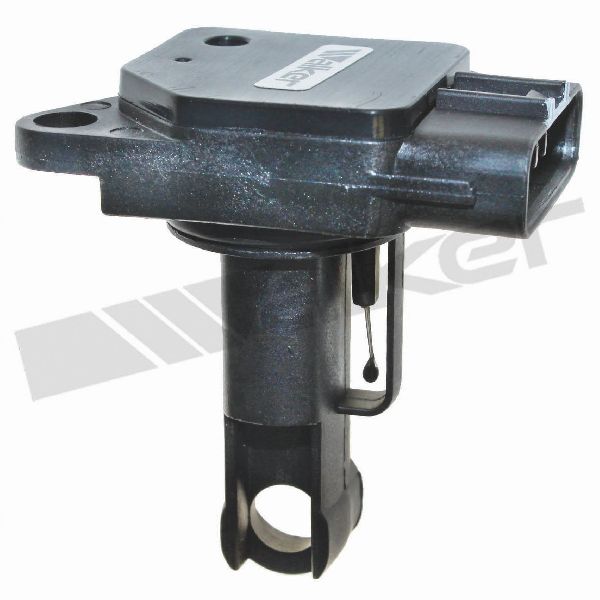
- Dirty or Contaminated MAF Sensor 🔴 High Probability → Shop Fuel Injection Air Flow Meter Use of aftermarket oiled air filters (like K&N) can deposit a fine layer of oil on the sensor's delicate wire, causing incorrect readings. Regular dust and debris can also accumulate over time.
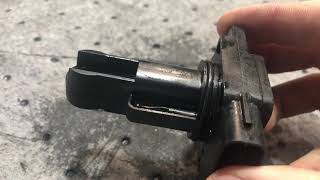
How to confirm: Visually inspect the two small wires inside the MAF sensor housing. If they appear coated, dirty, or oily, they need cleaning. The sensor is located on the air intake tube just after the air filter box.
Typical fix: Carefully remove the sensor (held by two Phillips head screws) and clean it ONLY with a dedicated Mass Air Flow sensor cleaner spray. 🎬 Watch: Step-by-step guide to cleaning your Tacoma's MAF sensor. Do not touch the wires. Allow it to dry completely for at least 15-30 minutes before reinstalling.
Est. part cost: $10-$15 for a can of MAF cleaner. - Vacuum Leak 🟡 Medium Probability Intake hoses and gaskets can become brittle and crack over time, allowing unmetered air to enter the engine after the MAF sensor. This is a very common cause for a P0102, especially when paired with a P0171 lean code.
How to confirm: With the engine running, listen for hissing sounds around the intake manifold and vacuum lines. A common spot for leaks is the intake boot between the air filter box and the throttle body. A smoke test is the most effective way to find a leak. You can also spray brake cleaner or a flammable fluid around suspected areas; a change in engine idle indicates a leak.
Typical fix: Replace the cracked hose or faulty gasket.
Est. part cost: $20-$100 depending on the specific hose or gasket. - Faulty MAF Sensor ⚪ Low Probability → Shop Fuel Injection Air Flow Meter
How to confirm: If cleaning the sensor and checking for vacuum leaks doesn't resolve the code, the sensor itself may have failed. You can test the sensor's output voltage with a multimeter; it should change smoothly as engine RPMs increase. A faulty sensor will have no output or an erratic signal. However, some forum members note that a definitive test can be difficult without a proper scan tool to read live data.
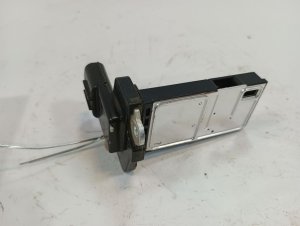
Typical fix: Replace the MAF sensor. It is highly recommended to use an OEM or Denso-branded sensor, as aftermarket sensors are known to cause issues on Toyota vehicles. The correct OEM part is Toyota P/N 22204-0F030.
Est. part cost: $115-$250 for an OEM/Denso sensor. - Clogged Engine Air Filter ⚪ Low Probability → Shop Air Cleaner Assembly
How to confirm: Visually inspect the engine air filter. If it is visibly dirty, clogged with debris, or has been in service beyond its recommended interval, it can restrict airflow and trigger the code.
Typical fix: Replace the engine air filter.
Est. part cost: $20-$40
Rare But Worth Checking
- Wiring Harness Issue: Check for damaged wires or a loose connection at the MAF sensor connector. Rodent damage can also be a cause. A user on TacomaWorld noted a wiring issue could cause low voltage. Another user triggered the code after installing a stereo system, suggesting a wiring short or ground issue.
- Blown EFI Fuse: A blown 'EFI No. 2' fuse can cause a P0102 code along with other sensor issues. This is an uncommon but quick item to check in the fuse box.
Diagnosis Steps
- Read the code with an OBD-II scanner to confirm P0102 is present. 🎬 Watch: Understanding the causes and fixes for the P0102 code. Note if it is a 'Permanent' code, which will clear itself after a set number of drive cycles once the fault is fixed.
- Visually inspect the MAF sensor connector for a secure fit and check the wiring for any obvious damage.
- Inspect the engine air filter. If it's dirty, replace it.
- Carefully remove the MAF sensor. Inspect the sensor wires for contamination (oil, dirt).
- Clean the MAF sensor using only dedicated MAF sensor cleaner spray. Let it air dry completely for 15-30 minutes.
- Reinstall the sensor. It is often recommended to disconnect the battery for 10-15 minutes to reset the ECU's fuel trims, then drive for up to 100 miles to allow the ECU to relearn.
- If the code returns, check for vacuum leaks. Listen for hissing sounds or use a smoke machine to inspect the intake boot, vacuum lines, and intake manifold gasket.
- If no vacuum leaks are found, check the EFI fuse in the engine bay fuse box.
- If the fuse is good and the code persists, test the MAF sensor's voltage and ground signals at the connector to rule out a wiring problem. If wiring is good, the sensor itself is likely faulty and requires replacement.
Parts You'll Likely Need
- Mass Air Flow Sensor
(OEM #22204-0F030)— This is the part that fails if cleaning doesn't resolve the issue. Using an OEM or Denso part is critical for proper performance on Toyota trucks. This part number also supersedes 22204-75030.
Trusted brands: Denso, Toyota OE
OEM price range: $115-$250
Aftermarket price range: $50-$120 - Mass Air Flow Sensor Cleaner — This is the most common and cheapest fix. A contaminated sensor is the leading cause of P0102.
Trusted brands: CRC, WD-40
Aftermarket price range: $10-$15
Related Codes That Often Appear With This One
- P0171 — System Too Lean (Bank 1). This code is very common with P0102. It occurs when there is a vacuum leak after the MAF sensor. The sensor reports low airflow (P0102), but the extra, unmetered air makes the engine run lean, which the oxygen sensor detects (P0171).
- P0100, P0101, P0103, P0104 — These are all related MAF circuit codes. They can be triggered by similar faults like air leaks or sensor damage.
Platform-Specific Known Issues
- The 2005-2015 Tacoma is part of a major class-action settlement regarding premature frame rust, particularly in states that use road salt. The settlement covers 2005-2010 Tacomas and could result in frame inspection and free replacement if perforation is found.
- Aftermarket cold air intakes, especially those with oiled filters, are a frequent cause of MAF sensor contamination and P0101/P0102 codes on this platform.
- A recall was issued for 2005-2011 Tacomas due to rear leaf springs that could corrode, fracture, and potentially puncture the fuel tank or damage a brake line.
Mechanic-Grade Diagnostic Values
- MAF Live Data (Scan Tool) — expected: Approximately 2.7 g/s at fully warmed-up, stable idle. Should be close to engine displacement in liters.. Failure: A reading significantly higher (e.g., 4.0 g/s or more) or lower than expected at idle suggests a fault.
- MAF Live Data (Scan Tool), Engine Off — expected: Close to 0.0 g/s. A service manual for a similar Toyota engine specifies less than 0.70 g/s.. Failure: Any reading significantly above zero with the engine off points to a sensor or wiring issue.
- MAF Sensor Signal Voltage (Multimeter) — expected: 0.9V - 1.2V DC at warm idle, measured by back-probing the signal wire.. Failure: Voltage is fixed, zero, or does not increase smoothly when the engine is revved.
- MAF Sensor Power Supply Voltage (Multimeter) — expected: Battery voltage (~12V with key on, ~14V with engine running) at the B+ terminal of the MAF connector.. Failure: Low or no voltage indicates a problem with the power supply, likely the 'EFI No. 2' fuse or wiring.
- Intake Air Temperature (IAT) Sensor Resistance (part of MAF sensor) — expected: 2-3 kΩ at 20°C (68°F); 0.4-0.7 kΩ at 60°C (140°F). Measured between THA and E3 terminals on the sensor itself.. Failure: Resistance is infinite (open circuit) or far outside the expected range for the ambient temperature.
Scan Tool Commands That Help
- Toyota Techstream: Data List > All Data > MAF — This is the primary professional diagnostic method. It allows for real-time monitoring of the air flow in grams per second (g/s) to see if the sensor's readings are logical for the engine's state (idle, off, under load).
Wiring & Ground Locations
- MAF Sensor Connector — On the air intake tube, immediately following the air filter housing.. This is the primary connection point for the sensor. A loose or corroded connector will directly cause a P0102. The pins include power (from EFI No. 2 fuse), ground, and the signal wire to the ECM.
- Engine Ground Points — Key grounds for the 2TR-FE are located on the cylinder head and engine block. A wiring diagram shows specific points that provide ground for the ECM and sensors.. A poor engine-to-chassis ground can cause floating voltages and erratic sensor readings, including the MAF sensor, leading to a P0102 code.
- EFI No. 2 Fuse — In the engine compartment fuse/relay box.. This 10A fuse provides power to the MAF sensor, as well as the A/F and O2 sensors. If it blows, the MAF sensor will have no power, causing an immediate P0102.
Real Owner Repair Stories
- TacomaWorld Forum User (2007 Tacoma 2.7L) — Truck would only start if the throttle was held open, sputtering on turns.
❌ Tried (didn't work) Beating on the fuel tank (suspecting a fuel pump issue).
✅ What actually fixed it Unplugging, replugging, and tapping on the MAF sensor and throttle position sensor allowed the truck to start normally, indicating a poor electrical connection was the root cause. - TacomaWorld Forum User (Year not specified, but post implies 2nd Gen Tacoma) — P0102 code appeared immediately after installing a stereo system. Truck would die unless the gas pedal was pressed to keep it running.
❌ Tried (didn't work) Cleaning the MAF sensor., Cleaning the MAF sensor connector.
✅ What actually fixed it The discussion pointed strongly to a blown 'EFI No. 2' fuse, which powers the MAF sensor. The user was advised to check this fuse, which was likely shorted during the stereo installation.
OEM Part Supersession History
22204-75030→22204-0F030— Standard part revision and consolidation by Toyota.
Heads up: None. 22204-0F030 is the correct and direct replacement for the original part.
Model Year Variations Within This Range
- 2015: For the 2015 model year, the 2TR-FE engine was updated with Dual VVT-i (previously only intake VVT-i), a higher compression ratio of 10.2:1 (up from 9.6:1), and other internal friction-reducing measures. While the P0102 diagnostic process is the same, the ECU's expected airflow tables and fuel trims may differ from earlier 2005-2014 models.
Diagnostic Flowchart
Other Known Issues on This Vehicle
Issues unrelated to this code that are worth knowing about as an owner of this generation:
- Premature Frame Rust/Corrosion 🔴 High — Very common, especially in the 'Salt Belt'. Led to a $3.4 billion class-action settlement for 2005-2010 models. Frames could be inspected and replaced free of charge. (Ref: Class-Action Lawsuit Settlement (not a formal recall))
- Rear Leaf Spring Fracture 🔴 High — Common enough to trigger a recall for ~690,000 2005-2011 4x4 and PreRunner models. Springs could corrode and snap, potentially puncturing the fuel tank. (Ref: NHTSA Campaign #14V604000)
- Secondary Air Injection System Failure 🟠 Medium — More common on 2012+ models. The foam filter for the air pump disintegrates, sending debris into the pump and valves, causing failure and codes like P2440/P2442. Often puts the truck in 'limp mode'. (Ref: T-SB-0033-17, Special Service Campaign 20TC01)
- Timing Chain Cover Oil Seep 🟡 Low — A slow oil seep from the timing chain cover is a known, but often minor, issue. Most owners monitor the oil level rather than perform the labor-intensive repair.
- Weak Head Gaskets (Early V6 Only) 🔴 High — Primarily affects the 4.0L V6 in 2005-early 2006 models, not the 2.7L 4-cyl. Included for general platform awareness. Gaskets were prone to failure around 150k-200k miles.
- Driveshaft 'Clunk' or Shudder 🟡 Low — Some owners report a 'clunk' noise when coming to a stop, often attributed to the driveshaft slip yoke needing lubrication.
Used vs. New Parts: Buying Guide for This Vehicle
When a used part is the smart pick: A used part is only recommended for passive components like the plastic intake air tube if it is cracked. For the MAF sensor itself, used is a significant gamble and generally not advised due to the sensitivity of the electronics.
Donor-vehicle mileage cap: roughly under 75000 miles for the part to have meaningful remaining life.
What to inspect on the donor part:
- For an intake tube, ensure there are no visible cracks, especially around the clamps.
- For a used MAF sensor, look for an intact connector, no physical damage, and a visually clean sensor element (though this is not a guarantee of function).
OEM-only on this vehicle (don't cheap out):
- Mass Air Flow (MAF) Sensor. Aftermarket sensors are widely reported to be poorly calibrated for Toyota vehicles, leading to persistent performance issues, incorrect fuel trims, and recurring codes even when new.
Aftermarket brands forum-validated for this vehicle:
- Denso. Denso is the Original Equipment Manufacturer (OEM) for Toyota. A Denso-branded MAF sensor is identical in quality and performance to the part sold in a Toyota box.
Brands owners have reported issues with on this vehicle:
- Generic, unbranded sensors from online marketplaces (Amazon, eBay).
- Store brands that are not explicitly re-boxed Denso parts.
Real Owner Stories
Aggregated from forums and TSBs cited above. Mileages and costs reflect what owners reported in those sources.
2005-2015 Toyota Tacoma 2.7L
Symptoms: The truck would not start without giving it gas.
What fixed it: The issue was linked to potential fuse or wiring issues after electrical work was performed, triggering the P0102 code.
Source hint: TacomaWorld.com - Thread 'P0102 code, truck won't start without gas'
2005-2015 Toyota Tacoma 2.7L
Symptoms: P0102 code present along with P0031 and P0051.
What fixed it: Cleaning the MAF sensor which had been contaminated by a K&N oiled filter intake.
Source hint: TacomaWorld.com - Thread 'AIR FUEL PROBLEMS P0102, p0031, p0051'
2005-2015 Toyota Tacoma 2.7L
Symptoms: Check engine light with code P0102.
What fixed it: Cleaning the MAF sensor and throttle body, then driving for over 100 miles to allow the ECU to relearn.
Source hint: TacomaWorld.com - Thread 'code P0102'
Documented NHTSA Reports
Manufacturer Reference (Toyota/Lexus)
Symptoms: Error codes P0113 and P0102 appeared along with warning messages for the Check Engine light and ICS malfunction when starting the vehicle.
What fixed it: NHTSA ODI #11296751 describes these symptoms occurring upon startup, highlighting how P0102 can be part of a broader electrical or sensor fault sequence in Toyota-manufactured systems.
Source hint: NHTSA ODI #11296751
Related OBD-II Codes
Frequently Asked Questions
Can I use an aftermarket air filter like a K&N on my 2.7L Tacoma?
Is there a specific MAF sensor brand I should buy for my 2005-2015 Tacoma?
Does the frame rust settlement apply to my 2012 Tacoma?
My truck won't start unless I give it gas; is this related to P0102?
Is there a recall for the rear leaf springs on my 2008 Tacoma?
How long should I let the MAF sensor dry after cleaning it?
Helpful Videos
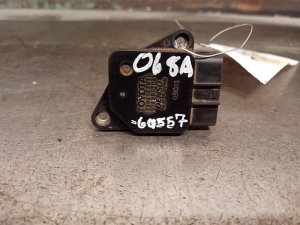
Used OEM Parts in Stock
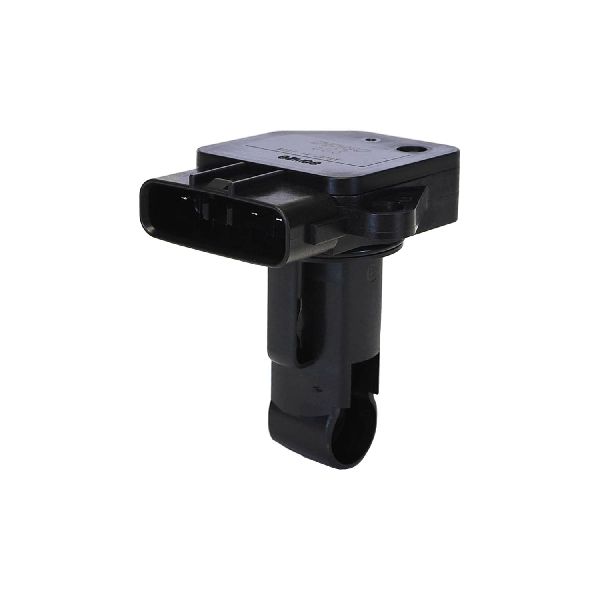
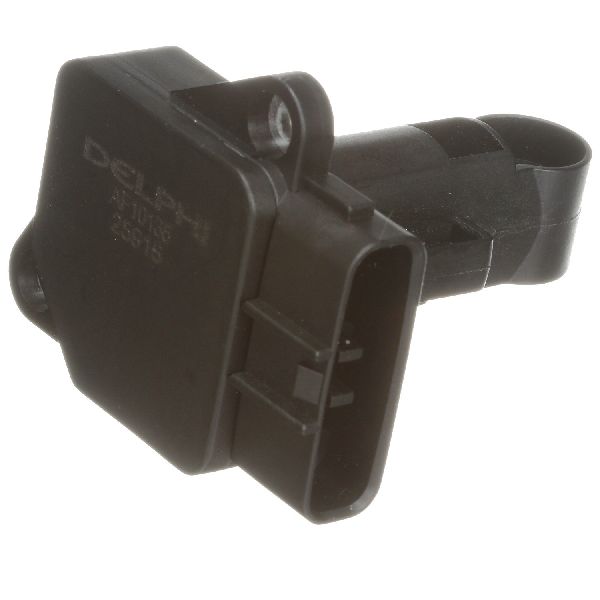
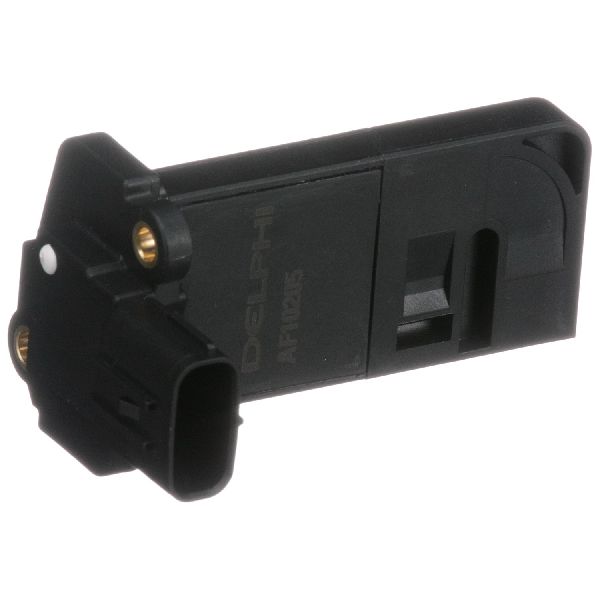
New Aftermarket Parts Available


The information in this article is provided for general reference and educational purposes only. Vehicle specifications, procedures, and part compatibility can vary by production date, trim level, and region. Always consult your vehicle's factory service manual and verify part numbers before purchasing or performing repairs. Safety-critical components such as airbags, seat belts, and braking systems should be installed by a qualified professional.
- Toyota Tacoma:
- 🧭 Diagnostic Flowchart
- 🎬 Helpful Videos
- 🛍️ Shop This Part
- What's Unique About the 2005-2015 Toyota Tacoma
- Symptoms You May Notice
- Most Likely Causes
- Rare But Worth Checking
- Diagnosis Steps
- Parts You'll Likely Need
- Related Codes That Often Appear With This One
- Platform-Specific Known Issues
- Mechanic-Grade Diagnostic Values
- Scan Tool Commands That Help
- Wiring & Ground Locations
- Real Owner Repair Stories
- OEM Part Supersession History
- Model Year Variations Within This Range
- Other Known Issues on This Vehicle
- Used vs. New Parts: Buying Guide for This Vehicle
- Real Owner Stories
- 2005-2015 Toyota Tacoma 2.7L
- 2005-2015 Toyota Tacoma 2.7L
- 2005-2015 Toyota Tacoma 2.7L
- Documented NHTSA Reports
- Manufacturer Reference (Toyota/Lexus)
- Related OBD-II Codes
- Frequently Asked Questions
- 🎟️ Get 5% Off