

P0106 on 2003-2006 Mazda 6 4-Cylinder: MAP/Boost Sensor Causes and Fixes
For a 2003-2006 Mazda 6, code P0106 is most often caused by a faulty Manifold Absolute Pressure (MAP) sensor, which Mazda calls the 'EGR Boost Sensor'. Replacing this sensor is the most common fix, with aftermarket parts costing around $80-$110. Before replacement, thoroughly inspect all related vacuum hoses for cracks, as this is a very common and cheaper failure point.
- On this Mazda 6, P0106 almost always points to the 'EGR Boost Sensor' (which is the MAP sensor), its related vacuum lines, or the accompanying solenoid.
- Before replacing the sensor, always inspect the small vacuum hoses for cracks or breaks and check the intake manifold port for carbon blockage, as these are cheap and easy fixes.
- A known TSB for sensor corrosion makes the sensor itself a high-probability cause.
- The correct OEM part number for the sensor is BP4W-18-211 and for the solenoid is LF15-18-741.
- Do not confuse the MAP/Boost sensor on the firewall with the MAF (Mass Airflow) sensor located on the engine's air intake tube.
What's Unique About the 2003-2006 Mazda 6
What's unique to this Mazda platform is the terminology and system integration. The component is frequently called the 'EGR Boost Sensor' in Mazda-specific forums and literature, which can be confusing as it is, fundamentally, a MAP sensor. It works in tandem with a separate solenoid valve (EGR Boost Sensor Solenoid) on the same bracket to provide pressure data for both engine load calculations and EGR system monitoring. A Mazda Technical Service Bulletin (TSB) was issued for these models (and others like the Mazda 3 and 5) due to corrosion on this specific sensor, pointing to a known weakness.
Symptoms You May Notice
- Check Engine Light is on
- Rough or erratic idle
- Hesitation or stumbling during acceleration
- Reduced fuel economy
- Black smoke from the exhaust
- Difficulty starting the engine
- Engine stalling, especially at stops
- Failed emissions test
- Replacing the EGR valve itself when the issue is with the sensor, its solenoid, or the vacuum lines.
- Replacing the Mass Airflow (MAF) sensor instead of the Manifold Absolute Pressure (MAP) sensor. The MAF is on the air intake tube, while the MAP/Boost sensor is on the firewall.
Most Likely Causes
- Faulty MAP / EGR Boost Sensor 🔴 High Probability A known Mazda TSB points to issues with corrosion at the MAP sensor for 2003-2006 Mazda 6 models, suggesting a potential design or material vulnerability. The sensor is the most common single component to fail for this code.
How to confirm: After checking vacuum lines and wiring, test the sensor's voltage output with a multimeter. With the key on and engine off, it should read around 4.5-5.0V. At idle, it should drop to 1.0-2.0V. If the voltage is stuck or doesn't change correctly with engine vacuum, the sensor is likely faulty.
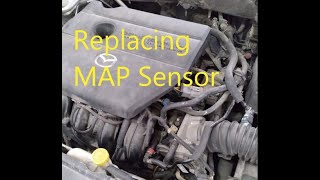
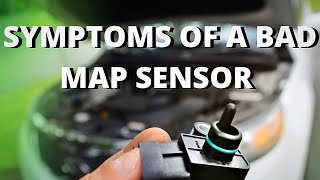
Typical fix: Replace the MAP/EGR Boost Sensor. It is located on a bracket on the firewall in the right-rear of the engine bay, alongside its solenoid. 🎬 Watch: Step-by-step MAP sensor replacement on a 2.3L Mazda 6.
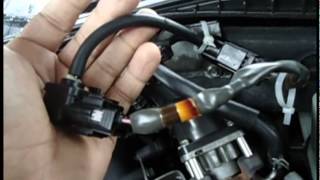
Est. part cost: $80-$110 - Vacuum Leak 🟡 Medium Probability The small rubber vacuum hoses become brittle and crack with age and heat. Forum users on Mazda-related forums frequently report these hoses as the cause. The plastic nipples on the sensor and its accompanying solenoid are also known to break easily 🎬 Watch: A clever alternative fix for broken plastic sensor nipples. when being worked on.
How to confirm: Visually inspect all small vacuum lines connected to the sensor and solenoid for cracks, breaks, or loose connections. One line runs from the intake manifold to the solenoid, and another runs from the solenoid to the sensor. A smoke test can definitively identify hard-to-see leaks.
Typical fix: Replace the cracked or broken vacuum hose(s). If a plastic nipple on the sensor or solenoid is broken, the component itself will need to be replaced.
Est. part cost: $5-$20 - Clogged Intake Manifold Vacuum Port ⚪ Low Probability → Shop Engine Intake Manifold Carbon buildup from the EGR system can clog the small vacuum port on the intake manifold where the line to the EGR boost solenoid connects. This is a known issue on Mazda engines of this era.
How to confirm: Disconnect the vacuum hose from the intake manifold that leads to the EGR boost solenoid. With the engine idling, check for strong vacuum at the port with a gauge or your finger. If vacuum is weak or absent, the port is likely clogged.
Typical fix: Carefully clean the carbon out of the port using a small pick or drill bit (turned by hand) to restore vacuum flow.
Est. part cost: $0 - Wiring or Connector Issue ⚪ Low Probability
How to confirm: Inspect the sensor's 3-pin electrical connector for corrosion, dirt, or damaged wires. Check for 5V reference voltage and a good ground at the connector with the key on, engine off. A poor connection can mimic a failed sensor.
Typical fix: Clean the connector terminals. If wiring is damaged, repair or replace the pigtail connector.
Est. part cost: $15-$30
Rare But Worth Checking
- Faulty EGR Boost Solenoid: The MAP sensor works with a solenoid valve on the same bracket. If the solenoid fails (e.g., gets stuck open or closed), it can prevent the sensor from seeing the correct pressure changes, triggering the P0106 code. It can be tested by applying 12V to its two terminals and listening for a click.
Diagnosis Steps
- Read the code with an OBD-II scanner to confirm P0106 is present.
- Visually inspect the vacuum hoses running to and from the MAP/EGR Boost Sensor and its solenoid. Look for cracks, breaks, or loose connections. Pay close attention to the hose running from the intake manifold to the solenoid, and the short hose from the solenoid to the sensor.
- Disconnect the vacuum line at the solenoid (the one coming from the intake manifold) and check for strong vacuum with the engine at idle. If there is no vacuum, the port on the intake manifold is likely clogged with carbon and needs to be cleaned.
- Inspect the electrical connector on the sensor for corrosion or damage. Ensure it is plugged in securely.
- If vacuum lines and the port are good, check the sensor's signal. Using a scan tool with live data or a multimeter, verify the sensor's voltage reading changes with engine vacuum. It should be high (near 5V) with the key on/engine off and low (1-2V) at idle.
- If the voltage is stuck or does not respond correctly, and you have confirmed good vacuum to the sensor, the MAP/Boost sensor is the likely culprit.
- If the sensor and vacuum lines appear good, consider testing the EGR boost solenoid that is paired with the sensor by applying 12V and listening for a click.
- After any repair, clear the code and perform a test drive to ensure the fix was successful.
Parts You'll Likely Need
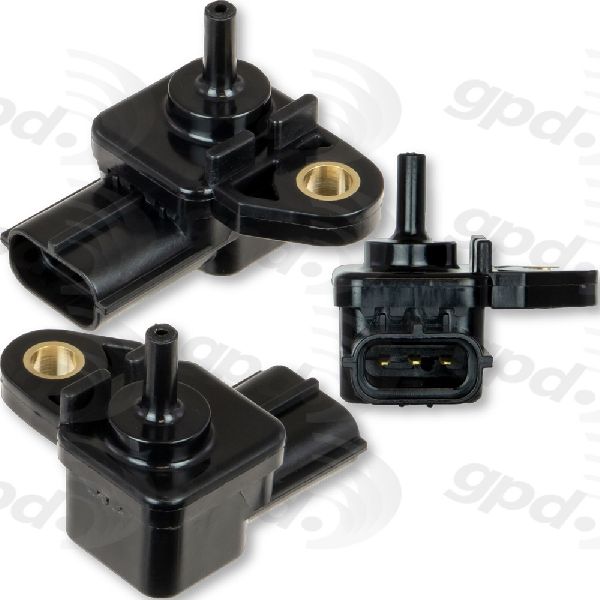
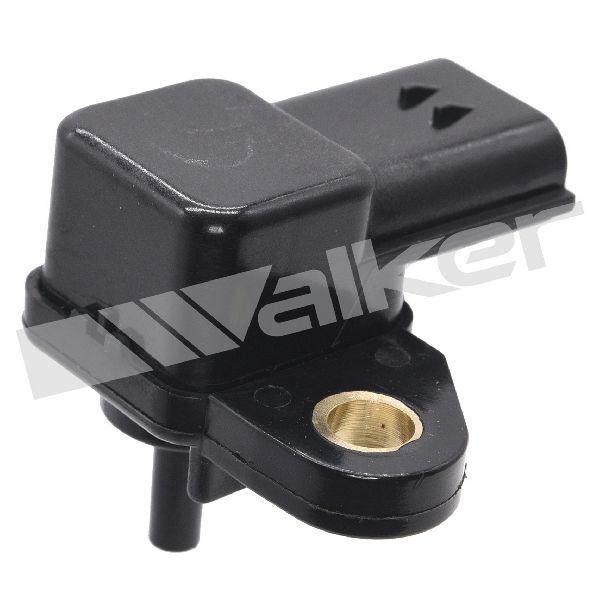
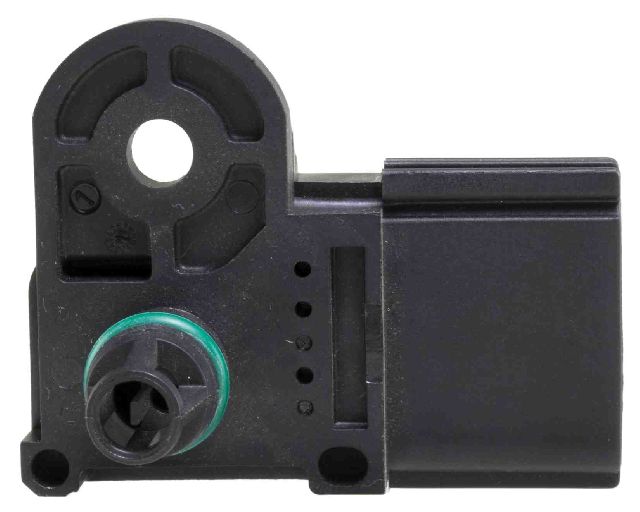
- MAP Sensor (EGR Boost Sensor)
(OEM #BP4W-18-211)— This is the most frequent cause of P0106 on this vehicle, often due to internal failure or corrosion as noted in a manufacturer TSB.
Trusted brands: Bosch, NGK, Delphi, Standard Motor Products
OEM price range: $120-$160
Aftermarket price range: $80-$110 - EGR Boost Solenoid Valve
(OEM #LF15-18-741)— This solenoid controls the vacuum applied to the sensor. It can fail, causing an incorrect reading and triggering P0106. It is often replaced along with the sensor as a preventative measure.
Trusted brands: Mazda (OEM), Dorman
OEM price range: $65-$90
Aftermarket price range: $40-$60 - Vacuum Hose — The small rubber hoses that connect to the sensor and solenoid become brittle and crack over time, creating vacuum leaks that trigger the code.
OEM price range: $10-$20
Aftermarket price range: $5-$10
Related Codes That Often Appear With This One
- P0171 — A vacuum leak causing an incorrect MAP sensor reading can also lead to an unmetered air condition, making the engine run lean and triggering a System Too Lean code.
- P0300 — Incorrect MAP sensor data can lead to improper air/fuel mixture and timing, causing random engine misfires.
- P0401 — If the vacuum port for the MAP/Boost sensor system is clogged, the PCM may not see the expected pressure change when the EGR valve is commanded open, leading to an EGR Flow Insufficient code.
Technical Service Bulletins (TSBs) & Recalls
- A Mazda TSB mentioned by Samarins.com covers 2003-2006 Mazda 6 (and other 4-cyl models) for P0106 caused by corrosion on the MAP sensor, recommending replacement. While the exact TSB number is not consistently cited, its existence is widely corroborated in repair databases.
Platform-Specific Known Issues
- A Mazda Technical Service Bulletin (TSB) was issued for 2003-2006 4-cylinder Mazda 6 models (among others) due to corrosion forming at the MAP sensor, causing P0106 and requiring replacement with an updated part.
- Forum discussions frequently highlight the importance of checking for clogged vacuum ports on the intake manifold, a common issue on these Mazda engines that prevents the sensor from getting a proper reading.
Mechanic-Grade Diagnostic Values
- MAP Sensor Signal Voltage (Key On, Engine Off) — expected: 4.5 - 5.0 Volts. Failure: Voltage significantly lower than 4.5V or absent.
- MAP Sensor Signal Voltage (Engine at Idle) — expected: 1.0 - 1.5 Volts (at sea level). Failure: Voltage is stuck high (near KOEO reading) or does not respond to changes in engine vacuum.
- MAP Sensor 5V Reference Voltage at Connector — expected: ~5.0 Volts. Failure: Voltage is significantly lower than 5V or absent, indicating a PCM or wiring issue.
- MAP Sensor Ground Circuit Check (Voltage Drop) — expected: Near 0 Volts (or battery voltage when testing from positive terminal). Failure: High voltage reading (when testing from positive terminal) or significant voltage drop indicates a poor ground connection.
Wiring & Ground Locations
- G3 — At the left rear of the engine.. This is a primary engine ground. A poor connection here can cause erratic behavior in various engine sensors, including the MAP sensor, by creating an unstable ground reference for the PCM.
- G1 — At the left side of the engine compartment, on the inner fender panel.. This is a major chassis and component ground point. Corrosion or looseness at this location can affect the operation of multiple systems, including the PCM and its sensor inputs.
- MAP Sensor Connector Pins — On the 3-pin connector for the MAP/EGR Boost Sensor.. Testing for 5V reference, signal, and ground directly at the sensor connector is the most direct way to diagnose the sensor circuit. A fault in the harness or PCM can be isolated by comparing readings here to readings at the PCM connector.
Real Owner Repair Stories
- GM-Trucks.com Forum user (General Motors vehicle, not Mazda specific, but relevant P0106 diagnosis) — P0106 code, SES light came on after replacing MAP and MAF sensors.
❌ Tried (didn't work) Replaced MAP sensor, Replaced PCV valve and O-rings, Cleaned MAF sensor, Sprayed electrical cleaner on connectors
✅ What actually fixed it The root cause was a clogged catalytic converter and dirty O2 sensors. Adding three canisters of Wurth CAT/O2 cleaner to a full tank of gas resolved the issue and the code did not return. - Mazdaspeeds.org Forum user 'Rogi' (2007 Mazdaspeed 6 (different engine, but relevant diagnostic process)) — No voltage to injectors after engine install, leading to a no-start condition.
❌ Tried (didn't work) Checking multiple known ground points (passenger motor mount, HPFP ground, starter ground, frame ground under headlight).
✅ What actually fixed it The PCM was not sending a ground signal to the injector relay. The user confirmed this by running a temporary ground wire to the relay, which allowed the car to start. This highlights that a missing PCM ground output, not just a bad chassis ground input, can cause complex issues.
OEM Part Supersession History
BP4W-18-211→BP4W-18-211A (or later revisions)— The original sensor was prone to corrosion, as noted in a Mazda TSB. The updated part likely has improved sealing or materials to combat this issue.
Heads up: While older parts may still function, using the latest revision is recommended to prevent recurrence of the corrosion-related failure.
Model Year Variations Within This Range
- 2006: For the 2006 model year, the optional automatic transmission for the 4-cylinder engine was upgraded from a four-speed to a five-speed unit (FS5A-EL). While this doesn't directly affect the MAP sensor's function, PCM software and shift logic that relies on engine load data from the MAP sensor would be different from the 2003-2005 models.
Diagnostic Flowchart
Real Owner Stories
Aggregated from forums and TSBs cited above. Mileages and costs reflect what owners reported in those sources.
2003-2006 Mazda 6 (4-cylinder)
Symptoms: P0106 (MAP sensor malfunction), lack of power, rough idle, as well as too high or too low idle speed.
What fixed it: Replaced the MAP sensor with an updated part as recommended by the Mazda TSB.
Source hint: Samarins.com P0106 Manifold Absolute Pressure/Barometric Pressure Circuit Range/Performance Problem
2006 Mazda 6
Symptoms: Code P0106 triggered, requiring diagnostic attention.
What fixed it: Identified the EGR Boost Sensor on the firewall and checked for a clogged vacuum port on the intake manifold as a primary diagnostic step.
Source hint: Mazda Forum (mazdaforum.com) - Thread 'code p0106 what need attention???'
Mazda Protege
Symptoms: MAP sensor code P0106 generated by EGR or vacuum leaks.
What fixed it: Checked for carbon buildup in the EGR hose connection to the intake manifold.
Source hint: Mazdas247 (mazdas247.com) - Thread 'Map sensor code; generated by EGR or vacuum leaks? P0106'
2006 Ford Escape / Mazda Tribute 2.3 liter
Symptoms: P0106 code in the engine computer, but couldn't find the MAP sensor due to very limited access.
What fixed it: Located and replaced the MAP sensor despite the difficult access.
Source hint: YouTube comment on '2006 Ford Escape / Mazda tribute 2.3 liter Map sensor location / replacement DTC P0106 .'
Related OBD-II Codes
Frequently Asked Questions
Is there a known TSB for the P0106 code on my 2003-2006 Mazda 6?
Where is the MAP sensor located on the 2003-2006 Mazda 6 4-cylinder?
I replaced the MAP sensor but still have the P0106 code. What else is common on this Mazda engine?
Can brittle vacuum hoses cause a P0106 on my Mazda 6?
How do I test the MAP/EGR Boost Sensor on my Mazda 6?
Does the P0106 code affect other Mazda models with the 2.3L engine?
Helpful Videos
We Have This Part in Stock


The information in this article is provided for general reference and educational purposes only. Vehicle specifications, procedures, and part compatibility can vary by production date, trim level, and region. Always consult your vehicle's factory service manual and verify part numbers before purchasing or performing repairs. Safety-critical components such as airbags, seat belts, and braking systems should be installed by a qualified professional.
- Mazda 6:
- 🧭 Diagnostic Flowchart
- 🎬 Helpful Videos
- 🛍️ Shop This Part
- What's Unique About the 2003-2006 Mazda 6
- Symptoms You May Notice
- Most Likely Causes
- Rare But Worth Checking
- Diagnosis Steps
- Parts You'll Likely Need
- Related Codes That Often Appear With This One
- Technical Service Bulletins (TSBs) & Recalls
- Platform-Specific Known Issues
- Mechanic-Grade Diagnostic Values
- Wiring & Ground Locations
- Real Owner Repair Stories
- OEM Part Supersession History
- Model Year Variations Within This Range
- Real Owner Stories
- 2003-2006 Mazda 6 (4-cylinder)
- 2006 Mazda 6
- Mazda Protege
- 2006 Ford Escape / Mazda Tribute 2.3 liter
- Related OBD-II Codes
- Frequently Asked Questions
- 🎟️ Get 5% Off