

P0106 on 2007-2013 Mercedes-Benz S-Class: MAP Sensor and Intake Manifold Guide
On the M273 V8, P0106 is most often caused by a failing intake manifold, where internal plastic components break, causing vacuum leaks and incorrect pressure readings. A faulty MAP sensor or simple vacuum hose leak are also possible. Expect to pay $800-$1500 for a full intake manifold replacement, which is the recommended fix.
- P0106 on this S-Class is very frequently caused by a failed intake manifold, not just a bad sensor.
- A thorough diagnosis is crucial. Perform a smoke test to check for vacuum leaks before spending money on parts.
- If other codes like P2004-P2006 or P0171/P0174 are present, the intake manifold is almost certainly the culprit.
- When replacing the intake manifold, it is highly recommended to use a complete new assembly rather than attempting a repair with a lever kit, as other internal failures are common.
What's Unique About the 2007-2013 Mercedes-Benz S-Class
The M273 V8 engine, along with its V6 (M272) counterpart, is well-known for a specific failure point that directly causes the P0106 code: the variable-length intake manifold. This manifold, made of a magnesium or aluminum alloy, uses plastic levers and internal flaps to change the length of the air runners for optimal power and torque at different RPMs. Over time, these plastic components, particularly the actuator lever at the front, become brittle from heat and stress and can break. This breakage causes massive vacuum leaks or jams the flaps, leading to illogical pressure readings that the MAP sensor reports to the ECU.
Symptoms You May Notice
- Check Engine Light is on
- Rough or unstable idle
- Hesitation or loss of power during acceleration
- Reduced fuel economy
- Difficulty starting the engine
- Black smoke from the exhaust
- Engine stalling, especially at idle
- Audible hissing sound from the engine bay, indicating a vacuum leak
- Replacing the MAP sensor when the actual problem is a vacuum leak from the intake manifold or a cracked hose. Always perform a vacuum leak test before replacing sensors.
- Using an intake manifold repair kit (for the external lever) when the leak is internal to the manifold body or the internal flaps are damaged.
Most Likely Causes
- Failed Intake Manifold 🔴 High Probability → Shop Engine Intake Manifold The M273 engine's intake manifold uses plastic levers and flaps for its variable runner system. These parts are a well-documented failure point, becoming brittle and breaking from heat cycles and stress, causing vacuum leaks or jamming the internal flaps.
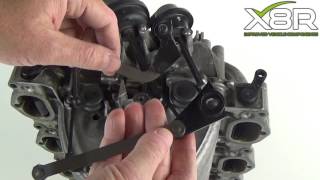
How to confirm: With the engine running, spray brake cleaner or starting fluid around the intake manifold seams and actuator arms. If the engine RPM changes or stumbles, a vacuum leak is present. A professional smoke test is the most definitive way to find the leak. You may also hear a hissing sound. Visual inspection may reveal broken plastic levers at the front of the manifold, often hidden beneath the secondary air pump. 🎬 Watch: Common M272 and M273 intake manifold failure points explained.
Typical fix: Complete replacement of the intake manifold assembly is the recommended repair. While repair kits with metal levers exist to fix the external actuator, other internal plastic parts can still fail, and the labor to remove the manifold is significant, making a full replacement more reliable.
Est. part cost: $600-$1200 - Faulty Manifold Absolute Pressure (MAP) Sensor 🟡 Medium Probability → Shop Manifold Absolute Pressure Sensor The sensor itself can fail electronically over time, sending incorrect voltage signals to the ECU. It can also become contaminated with oil from the PCV system or give false readings due to a leak in the small vacuum hose that connects it to the manifold.
How to confirm: Use a scan tool to monitor the MAP sensor's live data with the key on and engine off (KOEO). The reading should be close to the barometric pressure (approx. 14.7 psi at sea level). At idle, the voltage should be around 1-1.5 volts, and rise to ~4.5 volts at wide-open throttle. You can also test the sensor's voltage output with a multimeter while applying vacuum with a hand pump.
Typical fix: Replace the MAP sensor. It is located on the top-front of the intake manifold and is relatively easy to access after removing the front engine cover. 🎬 See this quick walkthrough on how to replace the MAP sensor. Always inspect the small vacuum hose attached to it for cracks first.
Est. part cost: $40-$120 - Cracked or Disconnected Vacuum Hoses ⚪ Low Probability → Shop Vacuum Hose Rubber and plastic hoses become brittle with age and heat cycles in the engine bay, leading to cracks and leaks. The small hose connecting directly to the MAP sensor is a common culprit.
How to confirm: Visually inspect all vacuum lines connected to the intake manifold, throttle body, and brake booster for cracks, splits, or loose connections. A user on MBWorld.org noted the hose connecting to the MAP sensor broke off at the manifold connector, causing P0106 and P2279 codes. A smoke test is the most effective method for finding small leaks.
Typical fix: Replace the damaged vacuum hose. This is often a very inexpensive and simple repair.
Est. part cost: $5-$30
Rare But Worth Checking
- Clogged Catalytic Converters: A clogged exhaust can create excessive backpressure, which can affect intake manifold pressure and potentially trigger a P0106 code. This is usually accompanied by other codes and a severe lack of power at higher RPMs.
- Faulty Engine Control Unit (ECU/PCM): In very rare cases, the engine computer itself can fail and misinterpret sensor signals. This should only be considered after all other possibilities have been exhaustively ruled out.
Diagnosis Steps
- Scan for Codes: Use an OBD-II scanner to confirm P0106 and check for any other related codes (e.g., P2004-P2006, P0171, P0174, P2279). Note any freeze-frame data.
- Visual Inspection: Remove the engine cover. Inspect all visible vacuum hoses for cracks, brittleness, or loose connections. Pay close attention to the small hose going to the MAP sensor. Check the electrical connector and wiring for the MAP sensor for any damage.
- Check Live Data: With a scan tool, observe the MAP sensor reading with the Key On, Engine Off (KOEO). It should match the Barometric Pressure (BARO) reading (approx. 14.7 psi at sea level). Start the engine and observe the reading at idle (it should be a low voltage/pressure, ~1-1.5V) and then snap the throttle (it should increase sharply to ~4.5V).
- Test for Vacuum Leaks: Perform a smoke test on the intake system. This is the most effective way to find leaks from the intake manifold gaskets, actuator seals, or hidden vacuum lines. Alternatively, carefully spray brake cleaner around the manifold; a change in engine idle indicates a leak.
- Inspect Intake Manifold Actuators: Visually inspect the plastic levers at the front of the intake manifold. If they are broken, the entire manifold needs to be replaced. This may require a flashlight to see properly.
- Test the MAP Sensor: If no vacuum leaks are found, test the MAP sensor directly. Disconnect it and use a multimeter and vacuum pump to verify its output voltage changes correctly according to the pressure applied.
- Replace Components: Based on your findings, replace the faulty component. If the intake manifold is leaking or its internal mechanism is broken, replace the entire assembly. 🎬 Watch: Step-by-step DIY guide for replacing the intake manifold. If only the sensor is bad, replace the sensor. If a hose is cracked, replace the hose.
Parts You'll Likely Need
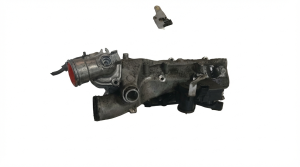
- Intake Manifold Assembly
(OEM #A2731400701)— This is the most common failure point on the M273 engine that causes a P0106 code due to internal plastic components breaking and creating vacuum leaks.
Trusted brands: Genuine Mercedes-Benz, Pierburg
OEM price range: $800-$1200
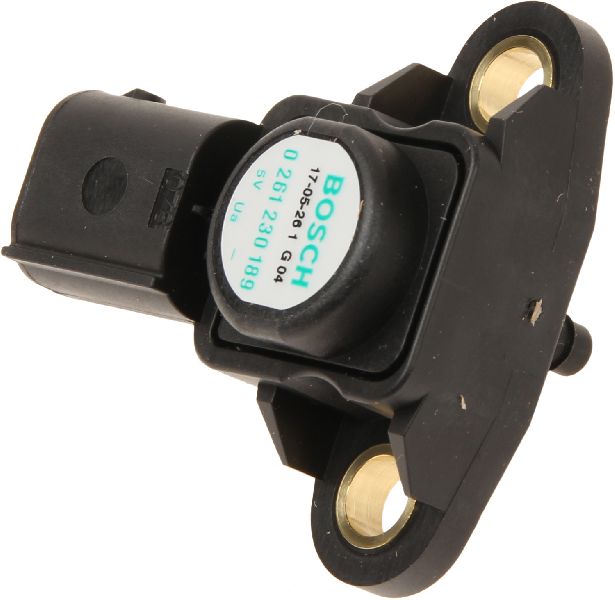
Aftermarket price range: $500-$800 - Manifold Absolute Pressure (MAP) Sensor
(OEM #A0051535028)— The sensor can fail electronically or become contaminated, causing incorrect readings. It's a common cause if the intake manifold is confirmed to be good.
Trusted brands: Bosch, Genuine Mercedes-Benz
OEM price range: $80-$140
Aftermarket price range: $40-$90 - Intake Manifold Repair Kit (Lever) — An aftermarket solution, often made of aluminum, to replace the failure-prone plastic actuator lever on the front of the manifold. While cheaper, it does not address other potential internal failure points like worn flap bushings or cracks in the manifold body, making complete replacement a more reliable long-term fix.
Trusted brands: X8R, AGA
OEM price range: N/A
Aftermarket price range: $50-$100
Related Codes That Often Appear With This One
- P2004, P2005, P2006 — These codes relate to the intake manifold runner control (tumble flaps) being stuck. Their presence strongly points to a failed intake manifold as the root cause.
- P0171, P0174 — These are 'System Too Lean' codes, which are often caused by unmetered air entering the engine, such as from a vacuum leak in a cracked intake manifold.
- P2279 — This code means 'Intake Air System Leak' and is a direct confirmation that unmetered air is entering the engine, often appearing with P0106 when the intake manifold or a vacuum hose has failed.
Platform-Specific Known Issues
- The variable-length intake manifold on the M273 engine is a well-documented, high-failure-rate item. The plastic construction of the internal runner flaps and external actuator levers cannot withstand long-term heat and stress, leading to breakage. This is the most likely cause of P0106 on this platform, often accompanied by tumble flap codes (P2004, P2005, P2006).
Mechanic-Grade Diagnostic Values
- MAP Sensor Signal Voltage (KOEO - Key On, Engine Off) — expected: ~1.9V at atmospheric pressure. Failure: Significantly higher or lower voltage. A reading of 1.85V-1.9V for a sensor rated up to 265 kPa is considered normal at sea level.
- MAP Sensor Signal Voltage at Idle — expected: 1.0V to 1.5V. Failure: Voltage outside this range at a steady idle indicates a sensor or vacuum issue.
- MAP Sensor Signal Voltage at Wide-Open Throttle (WOT) — expected: ~4.5V. Failure: Voltage does not rise to this level, indicating a sensor or restriction issue.
- MAP Sensor 5V Reference Voltage at Connector — expected: ~5.0V. Failure: No voltage or significantly lower voltage indicates a wiring or ECU problem.
- MAP Sensor Ground Circuit Resistance — expected: < 0.5 ohms to chassis ground. Failure: High resistance indicates a poor ground connection, which can cause incorrect sensor readings.
Scan Tool Commands That Help
- XENTRY/DAS (Mercedes-Benz Dealer Tool): Reset of mixture adaptation values — After replacing a component that affects air/fuel ratio, such as the intake manifold or MAP sensor, resetting fuel trims can resolve rough running or persistent lean/rich conditions. This forces the ECU to relearn the engine's fueling requirements from a baseline.
- XENTRY/DAS (Mercedes-Benz Dealer Tool): Guided Tests for P0106 — This function provides a step-by-step diagnostic plan, prompting the technician to check specific live data, perform actuations, and verify wiring based on the fault code, which is more efficient than manual diagnosis.
- XENTRY/DAS (Mercedes-Benz Dealer Tool): Teach-in process for new component — After replacing the intake manifold, there is a 'teach-in' or adaptation process for the new tumble flap actuators. Running this function ensures the ECU recognizes the full range of motion of the new flaps, preventing related codes like P2004-P2006 from appearing.
Wiring & Ground Locations
- B28 (Pressure Sensor) — On the M273, the MAP sensor (designated B28) is located on the front of the intake manifold, slightly to the driver's side, visible after removing the front engine cover.. This is the primary sensor for the P0106 code. Its wiring harness connector and the vacuum hose attached to it are common points of failure due to heat and vibration.
- W11 (ECU/ECM Ground) — Located in the engine bay, often on the inner fender or firewall. A forum post on MBWorld shows this ground point near the main wiring harness duct on the driver's side.. The Engine Control Module (ECU) relies on a clean, solid ground connection. A corroded or loose W11 ground can cause floating voltages and erratic behavior from any sensor connected to the ECU, including the MAP sensor, leading to false codes.
- Engine-to-Chassis Ground Strap — Typically a braided strap connecting the engine block or bell housing to the vehicle's chassis/frame rail.. A degraded main engine ground can cause the electrical system to seek ground through smaller sensor ground wires, potentially overloading them or causing voltage offsets that lead to incorrect readings and codes like P0106.
Real Owner Repair Stories
- MBWorld.org Forums User (Mercedes-Benz GL with M273 engine) — Check Engine Light with codes P0106 and P2279 (Intake Air System Leak).
❌ Tried (didn't work) Initial thought was a bad MAP sensor.
✅ What actually fixed it The vacuum hose from the intake manifold to the MAP sensor had become brittle from heat. It broke off at the plastic nipple connector on the manifold itself. The user was able to carefully remove the broken piece of hose from the nipple, cut a new piece of generic vacuum hose, and re-attach it, resolving both codes for a very low cost.
"I Checked Everything" — The Actual Cause
- A smoke test may come back clean if the leak is intermittent or only occurs under specific temperature/vibration conditions. In some cases, the internal flaps of the intake manifold can break and jam without causing a significant external vacuum leak, leading to irrational pressure readings and a P0106 code. The MAP sensor reports a pressure that is illogical for the current throttle position and RPM, but a smoke test at idle won't reveal the jammed internal component.
OEM Part Supersession History
A2731400701→273-140-07-01-80 (Remanufactured)— The original intake manifold is prone to failure. Mercedes-Benz now offers a remanufactured version as the primary replacement part, which is common for high-failure, high-cost components.
Diagnostic Flowchart
Real Owner Stories
Aggregated from forums and TSBs cited above. Mileages and costs reflect what owners reported in those sources.
Mercedes-Benz GL-Class (M273 Engine)
Symptoms: Pulled P0106 (bad MAP sensor) and P2279 (unmetered air) error codes. Found that the brittle vacuum hose to the MAP sensor had broken off at the manifold connector.
What fixed it: Replaced the damaged vacuum hose connecting to the MAP sensor.
Source hint: MBWorld.org thread titled 'P0106 and P2279 codes'
Mercedes-Benz (M272/M273 Engine)
Symptoms: Experienced code P0106 accompanied by tumble flap code P2004 due to the common intake manifold failure.
What fixed it: Replaced the entire intake manifold assembly rather than using a repair kit, due to the risk of internal plastic parts failing.
Source hint: MBWorld.org thread titled 'Intake manifold broken?'
Mercedes-Benz S-Class W221
Symptoms: Triggered a P0106 code.
What fixed it: Diagnosed and addressed vacuum leaks related to the notorious intake manifold linkages.
Source hint: MBWorld.org thread titled 'code P0106'
Related OBD-II Codes
Frequently Asked Questions
Why is the intake manifold on my M273 engine so prone to causing a P0106 code?
Can I just install a metal lever repair kit on my S-Class intake manifold instead of replacing the whole thing?
I hear a hissing sound from the engine bay of my S550 along with the P0106 code. What does this mean?
How can I test the MAP sensor on my 2007-2013 S-Class?
Are there other Mercedes models that share this exact P0106 intake manifold issue?
Helpful Videos



Used OEM Parts in Stock
New Aftermarket Parts Available


The information in this article is provided for general reference and educational purposes only. Vehicle specifications, procedures, and part compatibility can vary by production date, trim level, and region. Always consult your vehicle's factory service manual and verify part numbers before purchasing or performing repairs. Safety-critical components such as airbags, seat belts, and braking systems should be installed by a qualified professional.
- Mercedes-Benz S-Class:
- 🧭 Diagnostic Flowchart
- 🎬 Helpful Videos
- 🛍️ Shop This Part
- What's Unique About the 2007-2013 Mercedes-Benz S-Class
- Symptoms You May Notice
- Most Likely Causes
- Rare But Worth Checking
- Diagnosis Steps
- Parts You'll Likely Need
- Related Codes That Often Appear With This One
- Platform-Specific Known Issues
- Mechanic-Grade Diagnostic Values
- Scan Tool Commands That Help
- Wiring & Ground Locations
- Real Owner Repair Stories
- "I Checked Everything" — The Actual Cause
- OEM Part Supersession History
- Real Owner Stories
- Mercedes-Benz GL-Class (M273 Engine)
- Mercedes-Benz (M272/M273 Engine)
- Mercedes-Benz S-Class W221
- Related OBD-II Codes
- Frequently Asked Questions
- 🎟️ Get 5% Off