

P0106 on 2005-2009 Subaru Outback 2.5L: MAP Sensor Causes and Fixes
On a 2005-2009 Subaru Outback, code P0106 is most often caused by a failing Manifold Absolute Pressure (MAP) sensor or a vacuum leak. First, check for obvious vacuum leaks from aged, brittle hoses, then consider cleaning or replacing the MAP sensor, which is a relatively inexpensive part.
- P0106 on your Outback means the MAP sensor signal is performing out of its expected range.
- Before buying parts, perform a thorough visual inspection of all vacuum hoses for cracks or leaks, as this is a common and cheap fix.
- The most likely failed part is the MAP sensor itself. It is relatively inexpensive and easy to replace for a DIYer.
- The MAP sensor is located on the intake manifold and is usually held on by one or two small screws.
- The correct OEM part number for the MAP sensor is 22627AA470.
What's Unique About the 2005-2009 Subaru Outback
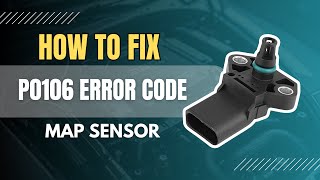
For the third-generation Outback with the EJ253 engine, the P0106 code is a straightforward diagnostic challenge. 🎬 Watch this step-by-step guide to fixing your MAP sensor issue. Unlike some other manufacturers that have issued software updates for overly sensitive P0106 triggers, there are no widely documented Technical Service Bulletins (TSBs) for this specific issue on this Subaru model. The problem is almost always mechanical, pointing to either the MAP sensor itself or a leak in the vacuum system. The MAP sensor is conveniently located on the intake manifold, making it relatively easy to access for inspection and replacement.
Symptoms You May Notice
- Check Engine Light is on
- Rough or unstable idle
- Poor acceleration or hesitation
- Reduced fuel economy
- Engine stalling, especially when coming to a stop
- Black smoke from the exhaust in some cases
- Replacing the throttle position sensor (TPS) without proper diagnosis. While symptoms can be similar, P0106 specifically points to a pressure rationality problem, not a throttle angle problem.
- Replacing the O2 sensor. While a bad MAP sensor can affect the air-fuel ratio and potentially trigger O2 sensor codes, the root cause is the pressure reading, not the exhaust sensor.
Most Likely Causes
- Faulty Manifold Absolute Pressure (MAP) Sensor 🔴 High Probability → Shop Manifold Absolute Pressure Sensor Sensors can fail over time due to heat cycles and contamination from oil vapor. Some owner experiences suggest these sensors are a common failure point, especially in cold weather climates or after high mileage.
How to confirm: With the engine off, use a scan tool to check if the MAP reading matches the BARO (barometric pressure) reading. With the engine running, monitor the voltage or pressure reading as you apply and release the throttle; it should change smoothly. You can also test the sensor with a hand-held vacuum pump and a multimeter to verify its voltage output changes according to the vacuum applied.
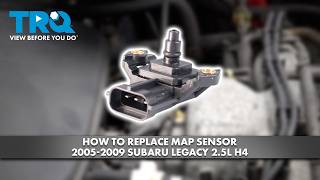
Typical fix: Replace the MAP sensor. It is typically held in by one or two screws and is easily accessible on the intake manifold. Ensure the O-ring is in good condition and properly seated to prevent a new vacuum leak. 🎬 See this replacement walkthrough for the 2.5L Legacy and Outback.
Est. part cost: $40-$100 - Vacuum Leak 🟡 Medium Probability Rubber vacuum hoses and intake gaskets become brittle, hard, and crack with age and exposure to engine heat, which is common on vehicles over 10 years old. Hoses for the brake booster and PCV system are common culprits.
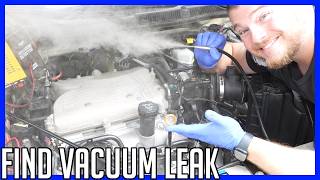
How to confirm: Visually inspect all vacuum hoses connected to the intake manifold for cracks, breaks, or loose connections. Listen for a hissing sound around the intake manifold with the engine running. A smoke test is the most effective way to find a hard-to-see leak. 🎬 See EricTheCarGuy's expert tips for finding hidden vacuum leaks. You can also spray brake cleaner or propane around suspected areas and listen for a change in engine RPM, but this method carries a fire risk.
Typical fix: Replace the cracked hose or leaking gasket. It is often recommended to replace all accessible vacuum lines at once since they are of the same age.
Est. part cost: $5-$50 - Dirty or Clogged MAP Sensor Port ⚪ Low Probability → Shop Manifold Absolute Pressure Sensor Carbon buildup from the EGR and PCV systems can sometimes clog the small port where the MAP sensor reads manifold pressure. This can cause the sensor to give slow or inaccurate readings.
How to confirm: When you remove the MAP sensor, inspect the port on the intake manifold. Check if it is blocked with carbon or other debris. Also inspect the sensor tip itself for oil or carbon fouling.
Typical fix: Carefully clean the port using a small pick or brush and throttle body cleaner. Be careful not to drop debris into the intake manifold. The sensor itself can often be cleaned with dedicated electronics or MAF sensor cleaner; allow it to dry completely before reinstalling.
Est. part cost: $0-$10
Rare But Worth Checking
- Clogged Catalytic Converter: A clogged exhaust creates backpressure that can throw off intake manifold pressure readings. This is usually accompanied by a severe loss of power at higher RPMs, a rotten egg smell, and potentially other exhaust-related codes like P0420.
- Damaged Wiring or Connector: Check the wiring harness and connector going to the MAP sensor for any signs of corrosion, damage, or loose pins. This is less common than sensor failure but should be ruled out before replacing parts.
- Failing Engine Control Module (ECM): This is extremely rare. The ECM should only be considered after all other possibilities, including the sensor, wiring, and vacuum system, have been exhaustively tested and ruled out.
- Incorrectly Routed Vacuum Hoses: → Shop Vacuum Hose If recent work has been performed on the engine, it's possible vacuum lines were reconnected to the wrong ports. A forum user on sl-i.net discovered their P0106 was caused by incorrectly routed hoses for the purge control solenoid, which created a constant vacuum draw from the canister.
Diagnosis Steps
- Read the codes with an OBD-II scanner to confirm P0106 and check for any other related codes.
- With the engine off and key on, check the live data on your scanner. The MAP sensor reading should be very close to the Barometric Pressure (BARO) reading. At sea level, this is around 101 kPa or 29.9 inHg.
- Visually inspect all vacuum lines connected to the intake manifold for cracks, brittleness, or loose connections. Pay close attention to the PCV hose and the brake booster line.
- Inspect the air intake hose between the air filter box and the throttle body for cracks or loose clamps.
- Locate the MAP sensor on the intake manifold. Inspect its electrical connector for corrosion or damage. Ensure it is plugged in securely.
- Remove the MAP sensor and inspect its port for any carbon buildup or blockage. Clean if necessary.
- If no vacuum leaks are found and the sensor is clean, the MAP sensor itself is the most likely culprit. Replacing it is the next logical step.
- For advanced diagnosis, use a multimeter to check for the 5-volt reference signal and a good ground at the sensor's connector.
- If the problem persists after replacing the sensor, perform a smoke test to find a hidden vacuum leak or check for a clogged catalytic converter.
Parts You'll Likely Need
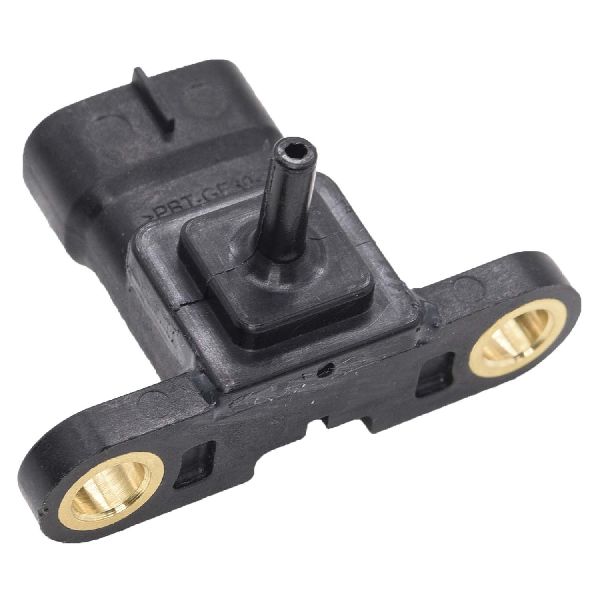
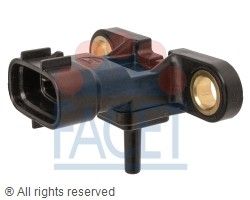
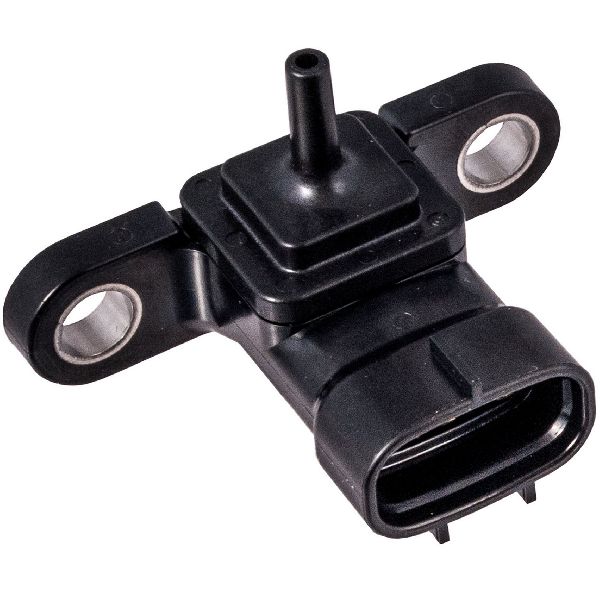
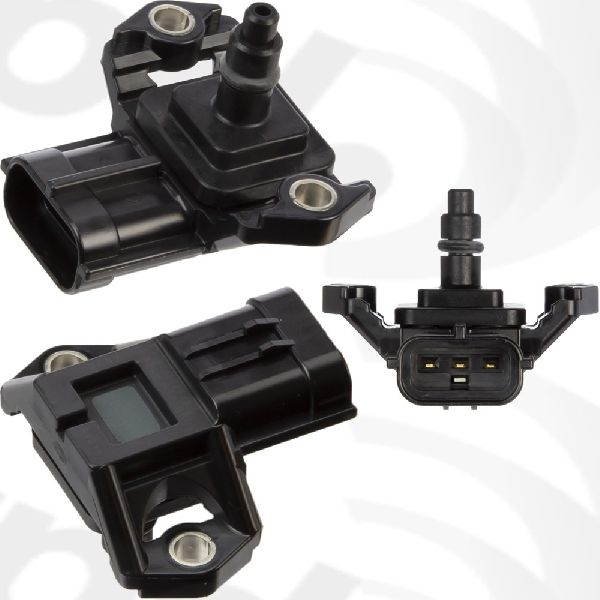
- Manifold Absolute Pressure (MAP) Sensor
(OEM #22627AA470 (replaces 22627AA350))— This is the most common part to fail for a P0106 code after vacuum leaks have been ruled out.
Trusted brands: Denso (OEM Supplier), Bosch, Subaru (Genuine)
OEM price range: $90-$150
Aftermarket price range: $40-$100
Related Codes That Often Appear With This One
- P0107 — P0107 (MAP Sensor Circuit Low Input) can appear if the sensor's performance issue involves dropping voltage unexpectedly.
- P0108 — P0108 (MAP Sensor Circuit High Input) can appear if the sensor's performance issue involves voltage spiking or getting stuck high.
- P0441 — P0441 (Evaporative Emission Control System Incorrect Purge Flow) can sometimes appear alongside P0106 if a vacuum leak or faulty purge solenoid is the root cause affecting both systems.
Mechanic-Grade Diagnostic Values
- MAP Sensor Signal Voltage (Key On, Engine Off) — expected: ~4.5-5.0 Volts. Failure: A reading of 0V or significantly less than 5V indicates a wiring or sensor issue.
- MAP Sensor Signal Voltage (Engine at Idle) — expected: ~1.0 - 1.5 Volts. Failure: Voltage that is stuck high, low, or does not change with throttle input.
- MAP Sensor Live Data (Key On, Engine Off) — expected: Should match local barometric pressure (approx. 101 kPa at sea level).. Failure: A reading significantly different from barometric pressure, or a reading of 0.
- MAP Sensor Live Data (Engine at Idle) — expected: 30-32 kPa. Failure: A reading below 13.3 kPa may trigger a P0107, while a reading above 119.5 kPa may trigger a P0108.
- 5V Reference Voltage at Connector — expected: Approximately 5 Volts. Failure: No voltage indicates a problem with the ECM or the wiring between the ECM and the sensor.
- Ground Circuit Continuity — expected: Less than 0.5 Ohms between the ground pin at the connector and a known good chassis ground.. Failure: A reading greater than 0.5 Ohms indicates high resistance in the ground circuit.
Scan Tool Commands That Help
- Subaru Select Monitor (SSM) or equivalent: Live Data Monitoring for 'Mani. Absolute Pressure' — This is the primary function used to diagnose P0106. It allows the technician to compare the MAP sensor's readings at KOEO, idle, and under load against specified values to determine if the sensor is performing correctly.
Wiring & Ground Locations
- MAP Sensor Connector — On the MAP sensor itself, located on the top right rear of the engine (intake manifold).. This connector is the primary interface for the sensor. Corrosion, damage, or loose pins here will directly cause P0106. The MAP sensor signal wire for the 2005-2009 Outback 2.5L Non-Turbo is White.
- Engine Ground — Multiple ground points exist on the intake manifold and cylinder heads. A key ground strap is often found from the firewall to the engine block.. A poor engine ground can cause floating or incorrect readings on various sensors, including the MAP sensor, leading to performance-related codes like P0106.
OEM Part Supersession History
22627AA350→22627AA470— Standard part update/revision by the manufacturer.
Heads up: The new part number (22627AA470) is a direct replacement for the old one and is fully compatible with the 2005-2009 Subaru Outback.
Diagnostic Flowchart
Other Known Issues on This Vehicle
Issues unrelated to this code that are worth knowing about as an owner of this generation:
- Head Gasket Failure 🔴 High — Very common, typically between 100,000 and 150,000 miles. The EJ253 is known for external oil and coolant leaks from the head gaskets.
- Wheel Bearing Failure 🟠 Medium — Common failure item, often starting around 100,000 miles. Symptoms include a grinding or groaning noise that changes with vehicle speed and when turning.
- Active Valve Lift System (AVLS) Issues 🟡 Low — The oil pressure switch for the AVLS can fail or leak, and the oil control solenoid can malfunction, sometimes causing codes like P0026/P0028. Clogged filter screens for the solenoids are also a potential problem.
- Catalytic Converter Failure (P0420) 🟠 Medium — The front catalytic converter can fail with age, leading to a P0420 'Catalyst System Efficiency Below Threshold' code. This is a common issue on many Subarus of this era.
- Cracked Radiator Top Tank 🟠 Medium — The plastic top tank of the radiator can become brittle and crack over time, leading to coolant leaks and potential overheating. This is a common failure point on high-mileage vehicles.
Used vs. New Parts: Buying Guide for This Vehicle
When a used part is the smart pick: A used OEM MAP sensor from a reputable auto recycler can be a cost-effective option, especially if the donor vehicle is low-mileage. Given the simplicity and high cost of a new OEM part, a used one is a reasonable gamble if it comes with a short warranty.
Donor-vehicle mileage cap: roughly under 80000 miles for the part to have meaningful remaining life.
What to inspect on the donor part:
- Check for any physical damage to the sensor body or connector.
- Ensure the O-ring is present and not flattened or cracked, though replacing it is always recommended.
- Avoid sensors from engines that show signs of heavy oil leaks or sludge.
- Ask for the VIN of the donor car to verify it's from a compatible model year and engine.
Aftermarket brands forum-validated for this vehicle:
- Denso (often the original OEM supplier)
- Bosch
Brands owners have reported issues with on this vehicle:
- No-name, unbranded sensors from online marketplaces are frequently reported on forums to be poorly calibrated, failing quickly, or being dead-on-arrival.
Real Owner Stories
Aggregated from forums and TSBs cited above. Mileages and costs reflect what owners reported in those sources.
1998 Legacy Outback Wagon EJ25 DOHC
Symptoms: Rough Idle, Loss of power at around 2500 RPM, much higher fuel consumption, flashing CEL, multiple codes including P0400 and P0106, and misfires on all cylinders.
What fixed it: The owner replaced 90% of engine vacuum lines, EGR solenoid valve, MAP sensor, pressure sensor, plugs/wires, head gaskets, air filter, and PCV valve, and cleaned the EGR valve and MAF.
Source hint: r/subaruoutback
1997 Legacy GT
Symptoms: Throwing codes P0106 and P0441.
What fixed it: The issue was traced to incorrectly routed vacuum hoses after an engine swap.
Source hint: sl-i.net - 'throwing code p0106. help?'
1998 Legacy
Symptoms: Low/rough idle and sputtering acceleration.
What fixed it: The symptoms pointed toward a fundamental MAP sensor or vacuum issue after replacing plugs, filters, and the EGR solenoid failed to solve the problem.
Source hint: LegacyGT.com - 'Persistent P0106 Code'
Related OBD-II Codes
Frequently Asked Questions
My 2005 Outback is idling roughly and stalling at stops; could this be the MAP sensor?
How can I tell if my EJ253 MAP sensor is actually bad or just dirty?
Are there specific vacuum hoses on the 2.5L Outback that I should check first for a P0106?
Can I use a scan tool to verify the MAP sensor on my Subaru before buying a new one?
Is the P0106 code related to the common head gasket issues on the EJ253 engine?
Does the 2005-2009 Legacy 2.5i suffer from this same P0106 issue?
Helpful Videos

We Have This Part in Stock


The information in this article is provided for general reference and educational purposes only. Vehicle specifications, procedures, and part compatibility can vary by production date, trim level, and region. Always consult your vehicle's factory service manual and verify part numbers before purchasing or performing repairs. Safety-critical components such as airbags, seat belts, and braking systems should be installed by a qualified professional.
- Subaru Outback:
- 🧭 Diagnostic Flowchart
- 🎬 Helpful Videos
- 🛍️ Shop This Part
- What's Unique About the 2005-2009 Subaru Outback
- Symptoms You May Notice
- Most Likely Causes
- Rare But Worth Checking
- Diagnosis Steps
- Parts You'll Likely Need
- Related Codes That Often Appear With This One
- Mechanic-Grade Diagnostic Values
- Scan Tool Commands That Help
- Wiring & Ground Locations
- OEM Part Supersession History
- Other Known Issues on This Vehicle
- Used vs. New Parts: Buying Guide for This Vehicle
- Real Owner Stories
- 1998 Legacy Outback Wagon EJ25 DOHC
- 1997 Legacy GT
- 1998 Legacy
- Related OBD-II Codes
- Frequently Asked Questions
- 🎟️ Get 5% Off