

P0106 on 1997-2001 Toyota Camry: MAP Sensor Performance Causes and Fixes
For the 1997-2001 Camry, code P0106 almost always points to a faulty Manifold Absolute Pressure (MAP) sensor or a vacuum leak. The sensor fails from age and heat, causing stalling, rough idle, and poor acceleration. A new OEM-quality sensor is the most common fix, costing around $40-$80 for the part, and is a simple 15-minute DIY replacement located on the firewall.
- P0106 on a 1997-2001 Camry points to a problem with the MAP sensor's performance.
- The most likely cause is a failed MAP sensor, followed by a cracked vacuum hose.
- Check for obvious vacuum leaks before buying parts, especially the small hose going to the sensor.
- Replacing the MAP sensor is a very simple DIY job that requires minimal tools and can be done in under 15 minutes.
- Driving with this code can lead to stalling, poor fuel economy, and potential safety issues, so it should be addressed promptly.
What's Unique About the 1997-2001 Toyota Camry
The 1997-2001 Toyota Camry (XV20 generation) with the 2.2L 5S-FE engine is known for its reliability, but like many vehicles of its era, its sensors can fail with age. For this specific model, the P0106 code is very frequently caused by the MAP sensor itself simply wearing out after 100,000+ miles. While vacuum leaks are a possible cause, forum discussions and mechanic videos for this Camry generation consistently point to the firewall-mounted MAP sensor as the primary culprit. The sensor is relatively easy to access on the passenger side of the firewall, connected by a single vacuum hose and an electrical connector, making it a common DIY repair.
Symptoms You May Notice
- Check Engine Light is on
- Rough or unstable idle
- Engine hesitates or stumbles during acceleration
- Engine may stall, especially when coming to a stop or shifting into gear
- Decreased fuel economy
- Black smoke from the exhaust, indicating a rich fuel mixture
- Difficulty starting the engine
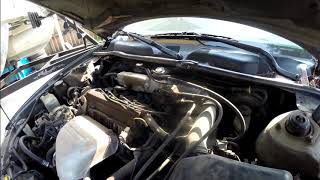
- Replacing the throttle position sensor (TPS) or idle air control (IAC) valve. While these can cause similar idling and drivability issues, they will typically set different trouble codes. P0106 specifically points to a pressure-related fault. 🎬 Watch: A quick overview of P0106 causes and common fixes.
- Mistaking a vacuum leak for a bad sensor. A significant vacuum leak can cause the MAP sensor readings to be out of range, mimicking a sensor failure. Always check for leaks before replacing the sensor.
Most Likely Causes
- Faulty Manifold Absolute Pressure (MAP) Sensor 🔴 High Probability → Shop Manifold Absolute Pressure Sensor Sensors of this era have a finite lifespan and tend to fail after many years and heat cycles. It is the most commonly reported failure point for this code on this specific vehicle, often after 100,000+ miles.
How to confirm: With the engine off and key on, use a scan tool to check if the MAP sensor reading (in kPa or inHg) matches the local barometric pressure; they should be nearly identical. With the engine running, check for a smooth voltage change on the signal wire as you apply and release the throttle (approx. 1-1.5V at idle, sweeping up to ~4.5V at wide-open throttle). A jumpy, stuck, or non-responsive signal indicates a bad sensor.
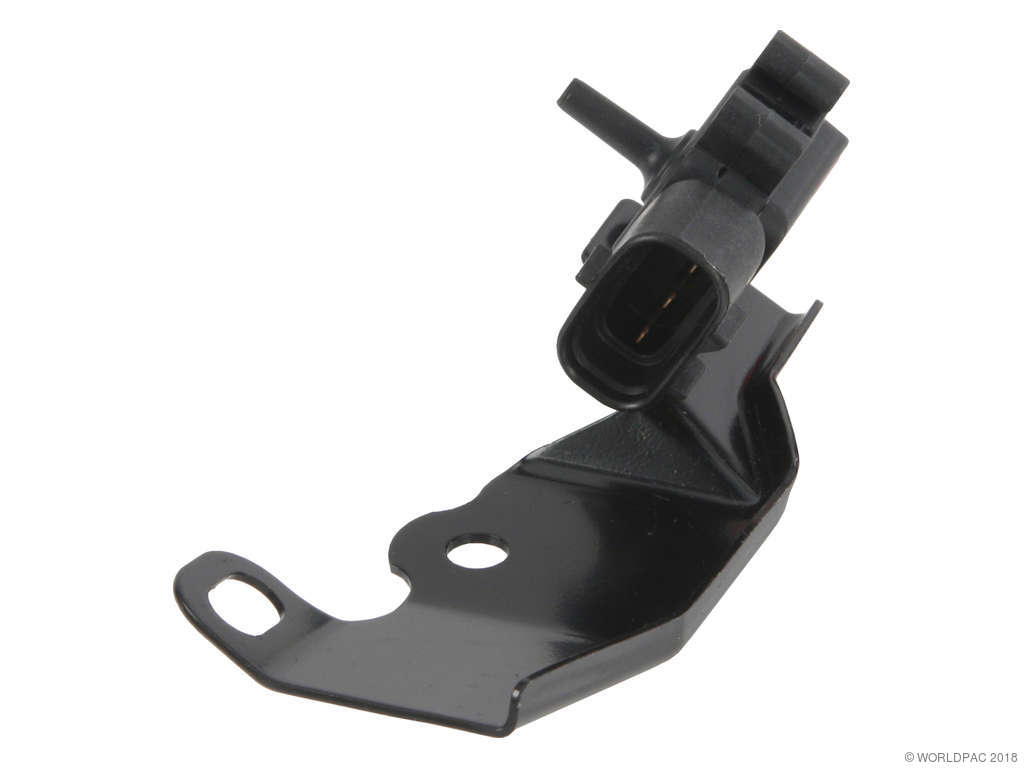
Typical fix: Replace the MAP sensor. It is mounted on the passenger-side firewall and connected by a short vacuum hose to the intake manifold.
Est. part cost: $40-$100 - Vacuum Leak 🟡 Medium Probability The rubber and plastic vacuum hoses become brittle and crack over 20+ years, leading to unmetered air entering the engine and confusing the MAP sensor. The small hose going to the MAP sensor itself is a common failure point.
How to confirm: Visually inspect all vacuum hoses connected to the intake manifold, especially the small hose going to the MAP sensor itself, for cracks, splits, or loose connections. You can also spray brake cleaner or starter fluid around suspected leak areas with the engine running; a change in idle speed indicates a leak. A smoke test is the most definitive way to find a leak.
Typical fix: Replace the cracked or broken vacuum hose(s).
Est. part cost: $5-$20 - Damaged Wiring or Connector ⚪ Low Probability
How to confirm: Visually inspect the MAP sensor's electrical connector and wiring for any signs of corrosion, damage, or loose pins. Use a multimeter to check for a 5V reference signal, a good ground (<0.1V), and signal continuity back to the ECU.
Typical fix: Repair the damaged section of the wiring harness or replace the connector.
Est. part cost: $10-$50
Rare But Worth Checking
- Clogged Catalytic Converter: A severely clogged catalytic converter can create backpressure in the exhaust, which can affect the intake manifold pressure and potentially trigger a P0106 code. This is usually accompanied by other symptoms like a severe loss of power, especially at high RPMs, and potentially a P0420 code.
- Faulty Powertrain Control Module (PCM): This is extremely rare. The PCM should only be considered after all other possibilities, including the sensor, its wiring, and all potential vacuum leaks, have been exhaustively ruled out.
Diagnosis Steps
- Retrieve the code with an OBD-II scanner to confirm P0106 is present and check for any other codes.
- Visually inspect all vacuum hoses connected to the intake manifold for obvious cracks, breaks, or loose connections. Pay close attention to the small hose that runs from the intake to the MAP sensor on the firewall.
- Inspect the MAP sensor's electrical connector for corrosion, damage, or a loose fit. Check the wiring for any visible fraying or breaks.
- With a scan tool that shows live data, observe the MAP sensor reading (kPA or voltage) with the Key On, Engine Off. It should be close to the Barometric Pressure (BARO) reading.
- Start the engine and observe the live data at idle. The reading should drop significantly (indicating high vacuum). Rev the engine; the pressure (or voltage) should change smoothly and instantly with the throttle. Jumps or a static reading suggest a faulty sensor.
- If a vacuum leak is suspected but not visible, perform a smoke test to precisely locate the source of the leak. This is more reliable than using flammable sprays.
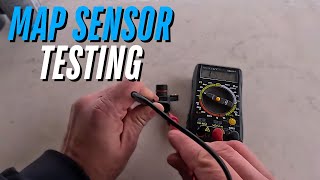
- If wiring and vacuum are confirmed to be good, test the sensor's circuit. Back-probe the connector to verify a 5V reference wire, a good ground wire, and a responsive signal wire using a multimeter. 🎬 Watch: Step-by-step guide to testing your MAP sensor at home.
- If all tests point to the sensor, replace the MAP sensor.
- After any repair, clear the code with the scanner and perform a test drive to ensure the code does not return.
Parts You'll Likely Need
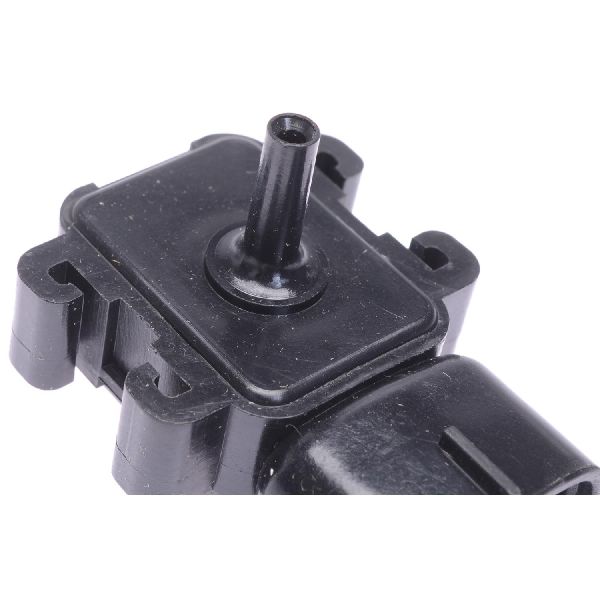
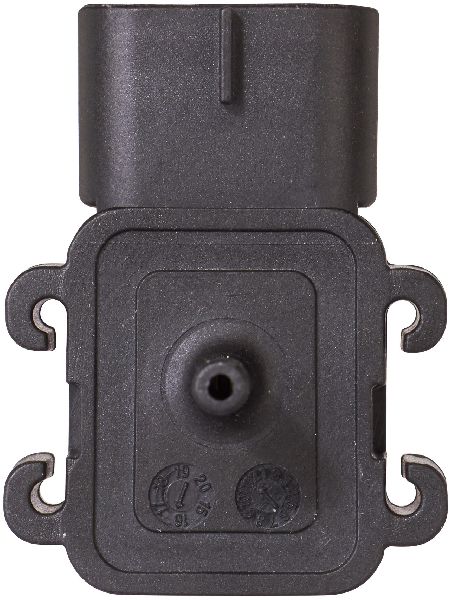
- Manifold Absolute Pressure (MAP) Sensor
(OEM #89420-16060)— This sensor is the most frequent failure point for code P0106 on this specific vehicle due to age and heat cycles.
Trusted brands: Denso (OEM Manufacturer), Standard Motor Products (SMP), NGK/NTK
OEM price range: $120-$180
Aftermarket price range: $40-$80 - Vacuum Hose — The small rubber hose connecting the intake manifold to the MAP sensor can become brittle and crack, causing a vacuum leak that triggers the code.
Trusted brands: Generic vacuum tubing (check for correct inner diameter)
OEM price range: $5-$15
Aftermarket price range: $2-$10
Related Codes That Often Appear With This One
- P0105 — This code indicates a MAP sensor circuit malfunction (e.g., open or short). It can appear with P0106 if there's an electrical problem with the sensor or its wiring.
- P0171 — This code means 'System Too Lean'. A vacuum leak, which is a common cause of P0106, allows unmetered air into the engine, creating a lean condition that the ECU tries to correct.
- P0172 — This code means 'System Too Rich'. A faulty MAP sensor that incorrectly reports a high engine load can cause the ECU to inject too much fuel, leading to a rich condition. A Reddit user reported seeing P0106 and P0172 together on their 2001 Camry.
- P0401 — This code indicates 'EGR Insufficient Flow'. On some Camry models, the MAP sensor is involved in monitoring EGR system performance, and a fault in one can sometimes trigger a code for the other.
Platform-Specific Known Issues
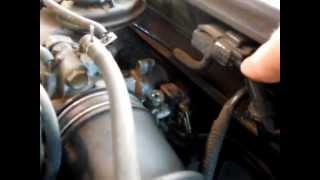
- The MAP sensor is located on the passenger side of the firewall, held by one or two 10mm bolts. It is not on the intake manifold itself, which can confuse some DIYers. 🎬 Watch: See the exact location of the MAP and TPS sensors.
- Due to its location, the short vacuum hose running to the sensor can be overlooked during a general vacuum leak inspection but is a frequent point of failure.
Mechanic-Grade Diagnostic Values
- MAP Sensor Voltage at Key On, Engine Off (KOEO) — expected: 3.8 - 4.2 Volts. Failure: Voltage significantly outside this range indicates a faulty sensor or wiring issue.
- MAP Sensor Signal Voltage at Idle — expected: 1.0 - 1.5 Volts. Failure: Voltage is jumpy, stuck high, or does not respond smoothly to throttle changes.
- MAP Sensor Wiring Harness Resistance to Ground — expected: > 1k ohms. Failure: Resistance less than 1k ohms on the signal or 5V reference wire indicates a short to ground in the harness.
Hidden / Shadow Codes Worth Checking
- Mode $06: This is not a specific code, but a diagnostic mode that provides access to the results of the ECU's non-continuous self-tests. For P0106, a technician can view the raw test data for the MAP sensor's rationality check, including the test value and the upper/lower limits. This allows for identifying a sensor that is performing marginally or close to failing, even before it consistently fails enough to trigger the Check Engine Light. (see via A professional scan tool with Mode $06 capabilities is required. Examples include Toyota's Techstream software or advanced scanners from brands like Autel or Launch.)
Scan Tool Commands That Help
- Toyota Techstream: Data List (Live Data) — Used to monitor the MAP sensor voltage or pressure reading in real-time. A technician will watch this data while revving the engine or applying a manual vacuum to the sensor to see if it responds smoothly and logically.
- Toyota Techstream: Active Test — While there isn't a direct 'test MAP sensor' command, a technician can use Active Test to command the EGR valve or its VSV to open and close. They would then monitor the MAP sensor's live data to see if it registers the corresponding change in manifold pressure, helping to validate sensor responsiveness.
Wiring & Ground Locations
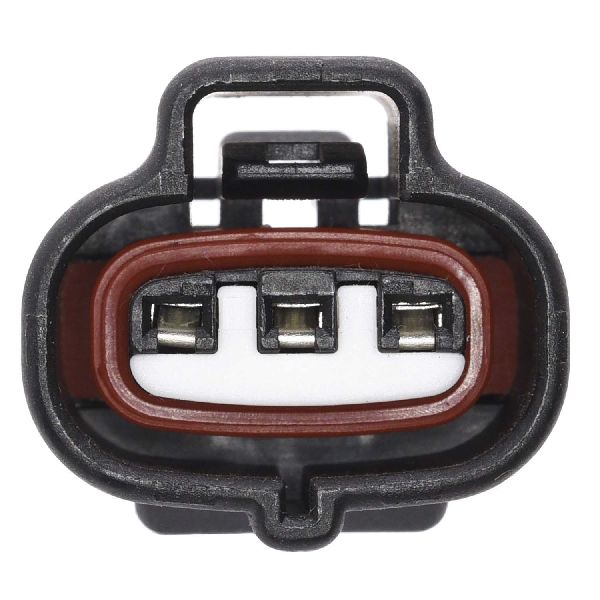
- MAP Sensor Connector — On the MAP sensor itself, located on the passenger side of the engine bay firewall.. This 3-pin connector provides the sensor with power, ground, and a path for the signal to the ECU. Corrosion or damage here is a common point of failure. The pins are for 5V reference, signal, and ground.
- Ground Point EA / EC — On the intake manifold.. The ECU and its sensors rely on clean ground connections. A corroded or loose ground on the intake manifold can create a floating ground or voltage offset, causing the MAP sensor to send incorrect data to the ECU, triggering a P0106 even if the sensor itself is good.
- ECU Terminals E11-16 (E21) and E11-24 (E1) — At the Engine Control Module (ECU) connector, typically located behind the glove box.. These are the specific pins for the sensor ground (E21) and ECM ground (E1). A technician would test for continuity from the sensor connector back to these pins to rule out a break in the wiring harness.
"I Checked Everything" — The Actual Cause
- A clogged Positive Crankcase Ventilation (PCV) system. A stuck-closed PCV valve or clogged hose can increase pressure in the crankcase, which can affect the vacuum reading in the intake manifold in a way that a smoke test for vacuum leaks won't detect. This can cause the MAP sensor readings to become erratic, triggering a P0106. In some cases, this can also lead to oil being forced past seals and coating the MAP sensor, causing it to fail.
OEM Part Supersession History
89420-16060→89420-0W020— Standard part update/revision by Toyota.
Heads up: None found. The new part number is a direct replacement for the original. The OEM manufacturer for Toyota is Denso.
Model Year Variations Within This Range
- 1997-2001: The primary variation within this range is not by year, but by the emissions standard the vehicle was built to: Federal (FED) or California (CA/CARB). While the P0106 code and MAP sensor are the same, other related components like the ECU and throttle body may have different part numbers and internal logic. Swapping parts between emissions types can cause performance codes like P0106.
Diagnostic Flowchart
Other Known Issues on This Vehicle
Issues unrelated to this code that are worth knowing about as an owner of this generation:
- Valve Cover Gasket Oil Leak 🟡 Low → Shop Engine Valve Cover — Very common as the vehicle ages. The gasket becomes hard and brittle, allowing oil to seep out, especially around the spark plug tubes.
- Engine Oil Sludge (V6 Primarily, but can affect 5S-FE) 🔴 High — More prevalent on the V6 (1MZ-FE) engine, but the 5S-FE can also develop sludge if oil changes are neglected or low-quality oil is used. Can lead to oil starvation and catastrophic engine failure. (Ref: Toyota had a limited service campaign, but it has long since expired.)
- Failing Starter Motor / Solenoid 🟠 Medium — Common after 150,000 miles. Symptoms include a single click but no crank when turning the key.
- Cracked/Broken Interior Door Handles 🟡 Low — The plastic handles become brittle with age and sun exposure, frequently breaking during normal use.
- EGR System Clogs (P0401) 🟠 Medium — The EGR valve and passages can become clogged with carbon, leading to a P0401 code. Often caused by a faulty EGR vacuum switching valve (VSV).
Used vs. New Parts: Buying Guide for This Vehicle
When a used part is the smart pick: A used OEM Denso MAP sensor from a reputable auto recycler can be a cost-effective option. Since the part is simple, not mechanical, and failure is due to age/heat, a part from a lower-mileage donor vehicle is often a reliable choice over a new, cheap aftermarket part.
Donor-vehicle mileage cap: roughly under 150000 miles for the part to have meaningful remaining life.
What to inspect on the donor part:
- No visible cracks in the black plastic housing.
- Electrical connector pins are straight and free of green or white corrosion.
- The vacuum port nipple is intact and not clogged with debris.
- Ask for the donor vehicle's mileage if possible.
OEM-only on this vehicle (don't cheap out):
- While not strictly 'OEM-only', using a cheap, unbranded aftermarket MAP sensor is strongly discouraged. The risk of incorrect voltage calibration leading to a repeat code is very high.
Aftermarket brands forum-validated for this vehicle:
- Denso (OEM supplier)
- NGK / NTK
- Standard Motor Products (SMP)
Brands owners have reported issues with on this vehicle:
- Unbranded sensors from online marketplaces (eBay, Amazon, AliExpress) that are significantly cheaper than known brands.
- Any part marketed as 'Universal Fit' that would require splicing wires.
Real Owner Stories
Aggregated from forums and TSBs cited above. Mileages and costs reflect what owners reported in those sources.
1997-2001 Toyota Camry — ~125000 miles
Symptoms: The Check Engine Light was on with code P0106 or P0105. When starting the car, the idle was very low, and the engine would shut off when shifting into Drive or Reverse.
What fixed it: Replacement of the MAP sensor located on the firewall.
Source hint: YouTube: Toyota carry po105 or po106 Manifold Absolute Pressure
2001 Toyota Camry 5S-FE
Symptoms: Severe drivability issues accompanied by both P0106 and P0172 codes.
What fixed it: The owner investigated a potential sensor failure causing a rich condition rather than replacing the catalytic converter.
Source hint: Reddit r/Cartalk: '2001 Camry reads codes P0106 and P0172. Catalytic converter needs replacement?'
Related OBD-II Codes
Frequently Asked Questions
Where is the MAP sensor located on my 1997-2001 Camry 2.2L? I can't find it on the intake manifold.
My 2001 Camry has P0106 and P0172. Could this be a bad catalytic converter?
Is there a common reason why the MAP sensor fails on the 5S-FE engine?
Can I use a cleaning spray to fix the P0106 code on my Camry?
Is there a TSB or recall for engine sludge on my 2.2L Camry?
My Camry stalls when I shift into Reverse or Drive; is this related to P0106?
Helpful Videos

We Have This Part in Stock


The information in this article is provided for general reference and educational purposes only. Vehicle specifications, procedures, and part compatibility can vary by production date, trim level, and region. Always consult your vehicle's factory service manual and verify part numbers before purchasing or performing repairs. Safety-critical components such as airbags, seat belts, and braking systems should be installed by a qualified professional.
- Toyota Camry:
- 🧭 Diagnostic Flowchart
- 🎬 Helpful Videos
- 🛍️ Shop This Part
- What's Unique About the 1997-2001 Toyota Camry
- Symptoms You May Notice
- Most Likely Causes
- Rare But Worth Checking
- Diagnosis Steps
- Parts You'll Likely Need
- Related Codes That Often Appear With This One
- Platform-Specific Known Issues
- Mechanic-Grade Diagnostic Values
- Hidden / Shadow Codes Worth Checking
- Scan Tool Commands That Help
- Wiring & Ground Locations
- "I Checked Everything" — The Actual Cause
- OEM Part Supersession History
- Model Year Variations Within This Range
- Other Known Issues on This Vehicle
- Used vs. New Parts: Buying Guide for This Vehicle
- Real Owner Stories
- 1997-2001 Toyota Camry — ~125000 miles
- 2001 Toyota Camry 5S-FE
- Related OBD-II Codes
- Frequently Asked Questions
- 🎟️ Get 5% Off