

P0108 on 2005-2007 Mazdaspeed 6: MAP Sensor Circuit High Causes and Fixes
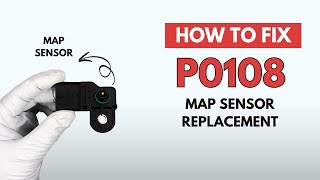
On a 2005-2007 Mazdaspeed 6, code P0108 almost always means the Manifold Absolute Pressure (MAP) sensor has failed. It's a common issue for the 2.3L DISI Turbo engine, often caused by oil vapor contamination from the PCV system. Replacing the sensor is a straightforward DIY job. The OEM sensor is made by Bosch, and using this specific part (Bosch 0 261 230 128) is highly recommended over generic aftermarket alternatives, with parts costing between $40 and $120.
- P0108 on your Mazdaspeed6 almost certainly points to a failed MAP sensor.
- Before replacing the sensor, always inspect the connector and wiring for damage or oil saturation.
- Use a scan tool to watch live data; a MAP voltage that is stuck high (around 4.5-5V) at idle confirms the issue.
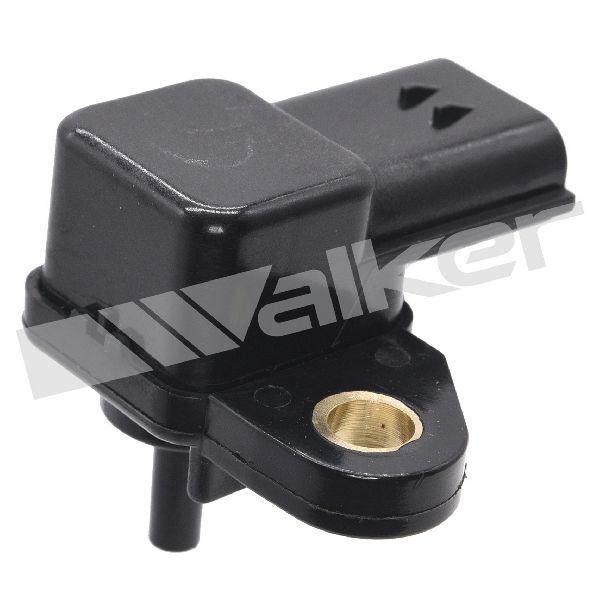
- The correct OEM part number is L3K9-18-211A, which corresponds to Bosch part number 0 261 230 128. Using the Bosch part is highly recommended.
- This is a DIY-friendly repair that can be done in under an hour with basic tools.
What's Unique About the 2005-2007 Mazda 6
The Mazdaspeed6 shares its L3-VDT 2.3L DISI Turbo engine with the Mazdaspeed3 and Mazda CX-7, and all three are known for MAP sensor failures leading to code P0108. The sensor on this direct-injected, turbocharged engine is particularly susceptible to contamination from oil vapor coming from the Positive Crankcase Ventilation (PCV) system, which can foul the sensor's internal components. This fouling, combined with high engine bay heat cycles, is a primary cause of sensor failure on this specific platform. Some owners proactively install an oil catch can to reduce the amount of oil vapor entering the intake manifold.
Symptoms You May Notice
- Check Engine Light is on
- Rough or unstable idle, especially when coming to a stop
- Hesitation or significant loss of power during acceleration
- Black smoke from the exhaust, especially under load
- Poor fuel economy
- Engine stalling, especially when coming to a stop or at low RPM
- On scan tools or access ports, the boost/pressure reading may be stuck at a static, incorrect value
- Replacing the Mass Airflow (MAF) sensor. P0108 is specific to the Manifold Absolute Pressure (MAP) sensor circuit. While both measure air, they are different parts with distinct functions.
Most Likely Causes
- Faulty Manifold Absolute Pressure (MAP) Sensor 🔴 High Probability → Shop Manifold Absolute Pressure Sensor The sensor is known to fail on the L3-VDT engine, often due to contamination from the PCV system and high engine bay temperatures. It is a well-documented common failure item across all platforms using this engine.
How to confirm: With a scan tool, check live data. With Key On, Engine Off (KOEO), the MAP voltage should be around 4.0-4.5V and should correspond to the BARO reading. At idle, the voltage should drop to around 1.2-1.8V. If the voltage is stuck high (near 4.5V-5V) even at idle, the sensor has failed. Cleaning is sometimes a temporary fix, but replacement is the reliable solution.
Typical fix: Replace the MAP sensor. It is mounted on the intake manifold with a single bolt. It is highly recommended to use the OEM Bosch sensor (part number 0 261 230 128) as unbranded aftermarket sensors are known to fail quickly on this platform.
Est. part cost: $40-$120 - Wiring or Connector Issue 🟡 Medium Probability The wiring harness in the engine bay is exposed to heat and vibration, which can lead to frayed wires, internal breaks, or corrosion in the connector pins over time. Oil contamination can also degrade the connector and wiring.
How to confirm: Visually inspect the MAP sensor connector and its wiring for any signs of damage, melting, or green corrosion. Unplug the connector and use a multimeter to check for a 5-volt reference, a good ground, and the signal wire with the key on. A wiggle test on the harness while monitoring live data can help identify intermittent shorts.
Typical fix: Repair the damaged section of wiring or clean/replace the connector pigtail. Apply dielectric grease to the new connection to prevent future moisture intrusion and corrosion.
Est. part cost: $10-$30
Rare But Worth Checking
- Faulty Powertrain Control Module (PCM): → Shop Engine Control Module (ECM) This is extremely rare. It should only be considered after the sensor and wiring have been thoroughly tested and ruled out. One owner on a platform-mate (Mazdaspeed3) reported that bent pins on the ECU connector, damaged during a turbo replacement, caused a persistent P0108 and P0096. Carefully inspect the ECU connectors if recent major work was performed.
- Clogged Catalytic Converter: A severe exhaust restriction can increase pressure in the engine, which might affect MAP sensor readings. This would typically be accompanied by other codes and a significant loss of high-RPM power.
- Major Vacuum or Boost Leak: While a vacuum leak typically causes a P0107 (low input), a significant post-throttle body leak on a turbo car, such as a loose intercooler boot clamp, can sometimes cause erratic readings that may trigger a P0108.
Diagnosis Steps
- Connect an OBD-II scanner and confirm P0108 is the active code. Note any other codes present, like P0234 or P0096.
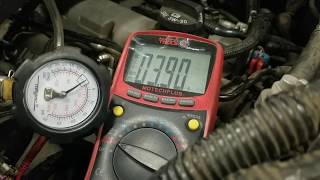
- With the Key On, Engine Off (KOEO), view live data. The MAP sensor voltage should be around 4.0-4.5V, and the pressure reading should be nearly identical to the Barometric Pressure (BARO) reading.
- Start the engine and let it idle. The MAP sensor voltage should drop significantly, typically to between 1.2V and 1.8V. If the voltage remains high (e.g., above 4.5V), the sensor is likely faulty or there is a short in the signal wire to the 5V reference.
- Turn the engine off. Locate the MAP sensor on the intake manifold.
- Visually inspect the sensor's connector and the surrounding wiring harness for any signs of damage, corrosion, oil contamination, or loose connections.
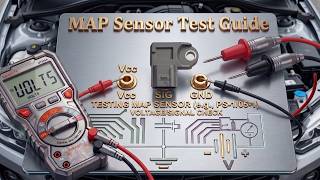
- Disconnect the sensor. With the key on, use a multimeter to test the connector terminals. You should find a 5V reference wire, a ground wire (check for continuity to chassis ground), and the signal wire.
- If the 5V reference or ground is missing, you have a wiring issue that needs to be traced back to the PCM. A common failure point for grounds is the main ground on the passenger motor mount.
- If wiring and connectors are confirmed good, the sensor itself is the culprit. Replace it with a high-quality OEM part (Bosch).
Parts You'll Likely Need
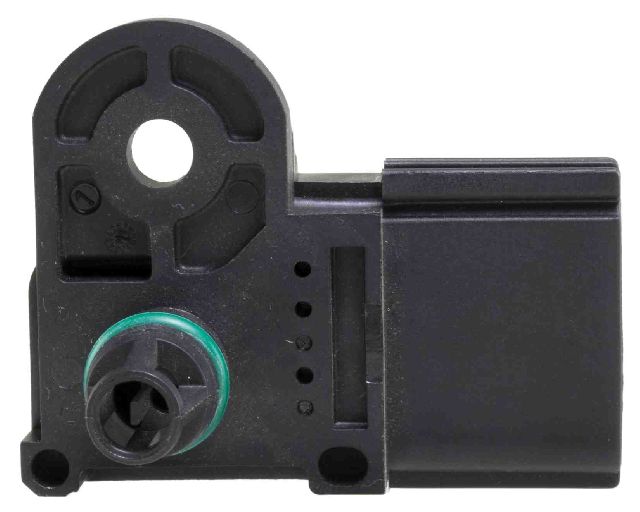
- Manifold Absolute Pressure (MAP) Sensor
(OEM #L3K9-18-211A)— This is the most common failure point for code P0108 on the 2.3L DISI Turbo engine due to heat and oil vapor contamination. Forum consensus strongly advises against cheap, unbranded aftermarket parts which are known to fail quickly.
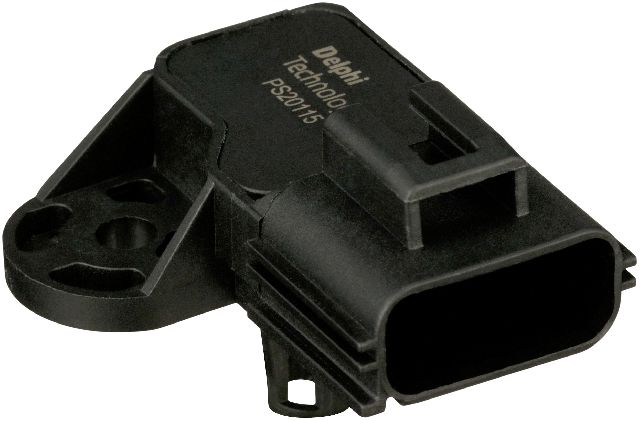
Trusted brands: Bosch (OEM Supplier, Part No. 0 261 230 128), Mazda (Genuine), Delphi, Standard Motor Products (SMP)
OEM price range: $90-$140
Aftermarket price range: $40-$80
Related Codes That Often Appear With This One
- P0234 - Turbocharger Overboost Condition: Often appears with P0108 because the faulty MAP sensor cannot accurately report boost pressure to the PCM, leading to uncontrolled boost spikes.
- P0096 - Intake Air Temperature Sensor 2 Circuit Range/Performance: Can appear with P0108 if there is damage to the ECU connector affecting pins for multiple sensors.
Platform-Specific Known Issues
- The MAP sensor on the L3-VDT engine is prone to fouling from oil vapor from the PCV system, which is a common cause of failure.
- The Mazdaspeed6 shares this engine and MAP sensor (L3K9-18-211A) with the Mazdaspeed3 and CX-7, all of which experience similar failure rates for this part.
- Owner experiences strongly suggest using the OEM Bosch sensor (0 261 230 128) as it is more reliable than many cheaper aftermarket alternatives that may fail prematurely.
Mechanic-Grade Diagnostic Values
- MAP Sensor Signal Voltage (Key On, Engine Off) — expected: Approximately 4.5V, should be nearly identical to BARO sensor reading.. Failure: A difference of more than 0.5V between MAP and BARO readings points to a faulty sensor.
- MAP Sensor Signal Voltage (Engine Idling) — expected: 1.0V to 1.8V at normal idle vacuum.. Failure: Voltage remains high (above 2.0V, or near 4.5V) at idle, indicating the sensor is not reading engine vacuum.
- MAP Sensor 5V Reference (Connector Pin C) — expected: 5V ± 0.5V with key on, engine off.. Failure: No voltage or significantly low voltage indicates a wiring issue or a problem with the PCM's 5V supply circuit.
- MAP Sensor Ground Wire Resistance (Connector Pin A) — expected: Less than 1.0 ohm between the connector's ground pin and a clean chassis ground.. Failure: Resistance greater than 0.5 ohms indicates a poor ground connection, which can cause the signal voltage to be skewed high.
Scan Tool Commands That Help
- Mazda M-MDS / FORScan: PID/DATA Monitor for 'MAP' and 'MAP_V' — This is the primary function used to observe live voltage (MAP_V) and pressure (MAP) readings from the sensor. It is essential for comparing Key On, Engine Off (KOEO) values against the BARO sensor and for watching the voltage drop at idle to confirm sensor functionality.
Wiring & Ground Locations
- MAP Sensor Connector (C129) — On the intake manifold, to the immediate left of the oil dipstick.. This is the primary connection point for the sensor. It's a 4-pin connector. The pins are: Pin A (Ground), Pin B (Signal to PCM), Pin C (5V Reference from PCM), Pin D (Intake Air Temp Signal). A P0108 is a fault in the circuit related to Pin B.
- Main Engine Ground (Passenger Side) — On the passenger side motor mount.. A corroded or loose main engine ground is a known issue on this platform and can cause a variety of sensor errors, including P0108. It can create a floating ground, causing the MAP sensor's reference to be unstable and leading to high voltage readings.
- Ground Point under Driver Headlight — A multi-wire ground point mounted to the frame, located underneath the driver's side headlight assembly.. This is another critical chassis ground point. While less directly related to the MAP sensor than the engine ground, corrosion here can cause widespread electrical issues that are difficult to trace. It should be checked if other ground points are clean and the issue persists.
Real Owner Repair Stories
- Mazdaspeed Forums user (Mazdaspeed6, unknown year/mileage) — Car running extremely rich, black smoke, poor idle, P0108 code present.
❌ Tried (didn't work) Cleaning the MAP sensor, Checking for vacuum leaks
✅ What actually fixed it The user replaced the MAP sensor with a new OEM Bosch unit. After replacement and clearing the code, the car immediately ran correctly with no black smoke and a stable idle. The user noted that the old sensor was likely internally shorted, causing the constant high voltage signal.
OEM Part Supersession History
L3K9-18-211→L3K9-18-211A— Standard part revision by Mazda. The 'A' suffix typically denotes a minor update or change in supplier for the same component.Bosch 0 261 230 128→Bosch 0 261 230 129— Part number update by Bosch. The components are functionally identical for this application.
Heads up: Both part numbers are cross-compatible for the Mazdaspeed L3-VDT engine.
Diagnostic Flowchart
Other Known Issues on This Vehicle
Issues unrelated to this code that are worth knowing about as an owner of this generation:
- Variable Valve Timing (VVT) Actuator Failure & Timing Chain Stretch 🔴 High — Very common, especially on earlier models (2005-2008). Often presents as a loud rattling/grinding noise from the engine for a few seconds on cold startup. If ignored, it leads to a stretched timing chain which can cause the engine to jump time, resulting in catastrophic engine failure. (Ref: Mazda issued a warranty extension program (SSP 87) for this issue.)
- Smoking Turbocharger (K04) 🟠 Medium → Shop Turbocharger — Common, especially after periods of prolonged idling. Caused by oil leaking past the turbo's internal seals and burning in the exhaust, producing heavy blue/white smoke. Often a result of oil starvation from a clogged banjo bolt filter screen or poor oil drainage. Some owners install an oil restrictor bolt to mitigate the issue. (Ref: Mazda issued a service bulletin acknowledging smoke from the tailpipe after prolonged idle.)
- High Pressure Fuel Pump (HPFP) Internals Weakness 🔴 High — The stock HPFP can be insufficient for even light modifications and can sometimes fail even on stock cars under high load (e.g., flooring it in a high gear at low RPM). Failure leads to a drop in fuel pressure, a lean running condition, and potential for catastrophic engine damage. Upgrading the pump internals is considered a mandatory first modification for anyone seeking more power.
Used vs. New Parts: Buying Guide for This Vehicle
When a used part is the smart pick: A used MAP sensor is generally not recommended for this vehicle. Given the high failure rate due to internal electronic faults and contamination, a used part carries a significant risk of being faulty or having a very short remaining lifespan. The cost of a new, reliable aftermarket or OEM part is low enough that the savings from a used part do not justify the potential for repeat labor.
Donor-vehicle mileage cap: roughly under 40000 miles for the part to have meaningful remaining life.
What to inspect on the donor part:
- Ensure the donor vehicle was not in a front-end collision that could have damaged the sensor or wiring.
- Inspect the sensor's electrical connector for any signs of corrosion, melting, or oil saturation.
- If possible, ask for the vehicle's history to see if the part was already replaced once.
OEM-only on this vehicle (don't cheap out):
- Manifold Absolute Pressure (MAP) Sensor
Aftermarket brands forum-validated for this vehicle:
- Bosch (OEM supplier, most recommended)
- Delphi
- Standard Motor Products (SMP)
Brands owners have reported issues with on this vehicle:
- Unbranded, no-name sensors from online marketplaces (e.g., eBay, Amazon). Forum consensus strongly indicates these parts fail very quickly on the L3-VDT engine, often within weeks or months.
Real Owner Stories
Aggregated from forums and TSBs cited above. Mileages and costs reflect what owners reported in those sources.
2007-2012 Mazda CX-7 2.3L Turbo
Symptoms: P0108 code, likely accompanied by other drivability issues and a hissing sound from the vacuum leak.
What fixed it: Tightening a loose intercooler boot.
Source hint: mazdaspeedforums.org report cited in P0108 on 2007-2012 Mazda CX-7 2.3L Turbo: Causes and Fixes for MAP Sensor High Input
2003.5 Mazda Mazdaspeed Protege
Symptoms: P0108 code; owner suggested checking voltage while throttling the car to see if it remains static.
What fixed it: Replacement of the MAP sensor.
Source hint: Mazdas247 thread titled 'Code: P0108'
2007-2013 Mazda Mazdaspeed3
Symptoms: P0108 and P0096 codes appearing after a turbo swap.
What fixed it: Straightening bent pins on the ECU connector.
Source hint: r/mazdaspeed3 (Reddit) thread titled '[Solved] MAP sensor, Boost Issues'
Related OBD-II Codes
Frequently Asked Questions
Which specific MAP sensor should I buy for my Mazdaspeed6 to avoid repeat failures?
Is there a TSB or warranty extension for the engine rattling noise I hear alongside my P0108 code?
Why does my Mazdaspeed6 MAP sensor keep failing even after cleaning it?
Can a problem with my intercooler cause the P0108 code?
I just did a turbo swap and now have P0108; what should I check besides the sensor?
Helpful Videos
We Have This Part in Stock


The information in this article is provided for general reference and educational purposes only. Vehicle specifications, procedures, and part compatibility can vary by production date, trim level, and region. Always consult your vehicle's factory service manual and verify part numbers before purchasing or performing repairs. Safety-critical components such as airbags, seat belts, and braking systems should be installed by a qualified professional.
- Mazda 6:
- 🧭 Diagnostic Flowchart
- 🎬 Helpful Videos
- 🛍️ Shop This Part
- What's Unique About the 2005-2007 Mazda 6
- Symptoms You May Notice
- Most Likely Causes
- Rare But Worth Checking
- Diagnosis Steps
- Parts You'll Likely Need
- Related Codes That Often Appear With This One
- Platform-Specific Known Issues
- Mechanic-Grade Diagnostic Values
- Scan Tool Commands That Help
- Wiring & Ground Locations
- Real Owner Repair Stories
- OEM Part Supersession History
- Other Known Issues on This Vehicle
- Used vs. New Parts: Buying Guide for This Vehicle
- Real Owner Stories
- 2007-2012 Mazda CX-7 2.3L Turbo
- 2003.5 Mazda Mazdaspeed Protege
- 2007-2013 Mazda Mazdaspeed3
- Related OBD-II Codes
- Frequently Asked Questions
- 🎟️ Get 5% Off