

P0111 on 2012-2017 Mazda CX-5 SKYACTIV-D 2.2L: Intake Air Temp Sensor Causes and Fixes
This code means the Intake Air Temperature (IAT) sensor's reading is illogical. On the SKYACTIV-D 2.2L, there are two IAT sensors; IAT Sensor No. 1 is integrated into the Mass Airflow (MAF) sensor, and IAT Sensor No. 2 is a separate sensor in the intake manifold. The most common fix is replacing the faulty sensor assembly, which is often confirmed by a scan tool showing an impossible temperature reading like 215°C on a cold engine.
- P0111 on a SKYACTIV-D CX-5 points to a problem with the Intake Air Temperature Sensor No. 1, which is part of the Mass Airflow (MAF) sensor.
- The most likely cause is a failure of the sensor itself, requiring the replacement of the entire MAF sensor assembly (OEM Part SH01-13-215).
- Diagnosis involves checking live sensor data with a scanner; an IAT No. 1 reading that is stuck at an extreme value (e.g., -40°C or 215°C) on a cold engine is a definitive sign of failure.
- Before replacing parts, always inspect the wiring and connector for visible damage, as this can be a cheaper and simpler fix.
- While P0111 is a straightforward electrical fault, owners must be aware that the 2.2L SKYACTIV-D engine is prone to severe, costly issues like carbon buildup, oil dilution, and turbo failure, so any check engine light warrants a thorough diagnosis.
What's Unique About the 2012-2017 Mazda CX-5
The Mazda SKYACTIV-D 2.2L diesel engine uses a sophisticated air management system with multiple temperature sensors to optimize performance and emissions. Unlike many gasoline engines with a single IAT sensor, this diesel engine has at least two: IAT Sensor No. 1, which is built into the Mass Airflow (MAF) sensor housing located after the air filter, and IAT Sensor No. 2, which is a separate sensor mounted on the intake manifold to measure air temperature after the turbocharger and intercooler. The P0111 code specifically points to a performance problem with IAT Sensor No. 1, often requiring replacement of the entire MAF sensor assembly. While this code is usually a straightforward sensor fault, it's important to distinguish it from the many other engine codes on this platform that often point to deeper, systemic issues like severe carbon buildup.
Symptoms You May Notice
- Check Engine Light is on.
- Reduced engine power and torque.
- Poor fuel economy.
- Engine hesitation or rough idle.
- i-Stop (start-stop) system disabled.
- EGR system inhibited.
- Other warning lights may appear, such as for the Smart City Brake Support (SCBS), due to invalid data being broadcast by the PCM.
- Replacing the IAT Sensor No. 2 (on the intake manifold, part number SH01-18-211) when the code P0111 specifically refers to a problem with IAT Sensor No. 1 (in the MAF sensor).
- Assuming the code is related to carbon buildup. While carbon is a major issue for this engine, an isolated P0111 code is almost always an electrical or sensor fault.
Most Likely Causes
- Faulty IAT Sensor No. 1 / MAF Sensor Assembly 🔴 High Probability → Shop Fuel Injection Air Flow Meter The IAT sensor No. 1 is an integrated thermistor within the MAF sensor. This component is a common failure point across many vehicles, but on the SKYACTIV-D, its failure is definitively diagnosed when it sends an irrational signal.
How to confirm: Using a diagnostic scanner, compare the live data readings from IAT Sensor No. 1 and IAT Sensor No. 2 with the engine cold (KOEO). They should be very close to the ambient temperature. An irrational reading from IAT No. 1, such as being stuck at -40°F or an extremely high value like 215°C (419°F), immediately confirms a faulty sensor.
Typical fix: Replace the entire MAF sensor/IAT sensor No. 1 assembly.
Est. part cost: $150-$300 - Damaged Wiring or Connector 🟡 Medium Probability Vibrations and heat can cause wiring to fray or the connector pins to become corroded or loose over time. The wiring harness in the engine bay is exposed to these elements.
How to confirm: Visually inspect the wiring harness and connector for the MAF/IAT sensor for any signs of damage, corrosion, or loose pins. Wiggle the connector and harness while monitoring live data to see if the temperature reading jumps erratically. Use a multimeter to back-probe the connector and check for the correct reference voltage (typically ~5V) and a rational signal voltage.
Typical fix: Repair the damaged wiring or replace the connector pigtail.
Est. part cost: $15-$50 - Dirty or Clogged Air Filter ⚪ Low Probability → Shop Air Cleaner Assembly A severely clogged air filter can restrict airflow, potentially causing erratic temperature readings as the engine struggles to draw in air. While not specific to this vehicle, it's a basic maintenance item that can cause airflow-related codes.
How to confirm: Visually inspect the engine air filter. If it is black, filled with debris, or has not been changed in a long time, it is dirty.
Typical fix: Replace the engine air filter.
Est. part cost: $20-$50
Rare But Worth Checking
- Faulty Powertrain Control Module (PCM): → Shop Engine Control Module (ECM) This is extremely rare. Before condemning the PCM, all other possibilities, including sensor and wiring faults, must be exhaustively ruled out. A faulty PCM driver can cause it to misinterpret a correct sensor signal or internally default to a fault reading.
Diagnosis Steps
- Connect an OBD-II scanner and confirm the presence of the P0111 code. Check for any other related codes.
- View the live data stream on the scanner. With the engine off and cold (Key On, Engine Off), observe the readings for IAT Sensor No. 1, IAT Sensor No. 2, and Engine Coolant Temperature (ECT). The readings should all be within a few degrees of each other and the ambient air temperature.
- Look for an obviously false reading from IAT #1, such as -40°C/F or 215°C. This immediately points to a sensor or circuit fault.
- Start the engine and monitor the IAT Sensor No. 1 reading. It should change smoothly as the engine warms up. A reading that is stuck, erratic, or extremely high/low confirms a fault.
- Turn the ignition off. Locate the MAF/IAT Sensor No. 1 assembly near the air filter box. Inspect the connector and wiring for any visible damage, corrosion, or looseness.
- If the wiring looks good, disconnect the sensor and test the resistance between the IAT sensor terminals using a multimeter. Compare the reading to the manufacturer's specifications at various temperatures.
- If the sensor tests bad or the live data was clearly incorrect, replace the MAF/IAT sensor assembly.
- If the sensor tests good, check the wiring harness for continuity and shorts between the sensor connector and the PCM.
- After repair, clear the DTC with the scanner and perform a drive cycle, including a cold start after letting the vehicle sit for 6+ hours, to ensure the fault does not return.
Parts You'll Likely Need
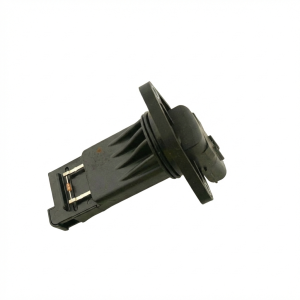
- Mass Air Flow (MAF) / Intake Air Temperature (IAT) Sensor No. 1 Assembly
(OEM #SH01-13-215)— This assembly contains the IAT Sensor No. 1. The P0111 code indicates a performance fault with this specific sensor, and it is the most common point of failure. Note: The petrol engine version uses a similar-looking part, PE01-13-215, so ensure the correct part for the diesel is sourced.
Trusted brands: Denso, Bosch, Mazda (OEM)
OEM price range: $250-$350
Aftermarket price range: $150-$250
Technical Service Bulletins (TSBs) & Recalls
- SA-026/19: A Mazda Service Alert describing the unique technical features and service cautions for the 2018-2019 SKYACTIV-D 2.2L engine, highlighting its complexity compared to conventional diesels.
- Existence of TSBs for related issues: While no specific TSB for P0111 is widely published, Mazda has issued multiple TSBs for other systemic issues on this engine, including exhaust camshaft wear and injector washer updates, which are important for overall engine health.
Platform-Specific Known Issues
- Context vs. Cause: It is critical for owners of the SKYACTIV-D 2.2L to understand that while P0111 is a simple sensor circuit fault, this engine is notorious for complex, cascading failures related to carbon buildup, oil dilution, and turbo wear. An illuminated check engine light should be diagnosed promptly and not assumed to be 'just a sensor' without verification, as it could be masking a more severe underlying problem.
Mechanic-Grade Diagnostic Values
- IAT Sensor No. 1 Resistance — expected: Approximately 2.4 kΩ at 20°C (68°F), decreasing as temperature rises. For example, around 0.32 kΩ at 80°C (176°F).. Failure: An open circuit (infinite resistance) or a short (near zero resistance), or a value that does not correspond to the ambient temperature.
- IAT Sensor No. 1 Signal Voltage (at PCM) — expected: A variable voltage that corresponds to temperature. For example, approximately 3.0V at 10°C (50°F). A reading of 4.7V corresponds to -40°C/F.. Failure: Voltage is stuck high (near 5V) or low (near 0V), or does not change with temperature. A voltage above 4.62V for 5 seconds will trigger a P0113 high input code.
- MAF/IAT Sensor Connector Reference Voltage — expected: Approximately 5.0V at the reference wire from the PCM with the key on, engine off.. Failure: Voltage significantly below 4.8V or above 5.2V indicates a PCM or wiring issue.
- DTC P0111 Trigger Condition — expected: The temperature difference between IAT Sensor No. 1 and IAT Sensor No. 2 (and the boost air temp sensor) is less than 150°C (270°F) within 20 seconds of a cold start.. Failure: A difference of 150°C (270°F) or more for 15 seconds will set the code.
Hidden / Shadow Codes Worth Checking
- Freeze Frame Data (Mode 2): When P0111 is set, the PCM stores a snapshot of critical sensor values at the moment the fault occurred. For this code, the Freeze Frame data will almost always show an impossible IAT No. 1 reading, such as 215°C, while other temperature sensors (coolant, IAT No. 2) show plausible cold-start values. (see via Accessible with most OBD-II scan tools, but more detailed data is available on the Mazda Modular Diagnostic System (M-MDS).)
- Pending Code: The PCM will store a pending code on the first drive cycle that the fault is detected. If the fault is detected on a second consecutive drive cycle, the check engine light will illuminate. This can help determine if the fault is intermittent or persistent. (see via Accessible with most OBD-II scan tools in the 'Pending Codes' or 'Mode $0A' section.)
Scan Tool Commands That Help
- Mazda M-MDS (or equivalent high-level scanner): PID/Data Monitor — This is the primary function for diagnosing P0111. It allows the technician to view IAT Sensor No. 1, IAT Sensor No. 2, Boost Air Temp, and Coolant Temp simultaneously in real-time. Comparing these values on a cold engine is the fastest way to confirm a faulty sensor.
- Mazda M-MDS (or equivalent high-level scanner): Clear DTCs / After Repair Procedure — After replacing the MAF/IAT sensor assembly, the DTC must be cleared. The official Mazda procedure then requires leaving the vehicle for 6+ hours for a true cold start, then starting and idling for 1 minute to verify the repair and ensure the pending code does not return.
Wiring & Ground Locations
- MAF/IAT Sensor No. 1 Connector — On the MAF sensor housing, directly after the engine air filter box.. This is the primary connection point for the sensor. Inspecting for corrosion, pushed-out pins, or harness damage here is a critical first step after checking live data.
- G03 — Left front of the engine compartment.. This is a major engine bay ground point. While not exclusively for the IAT sensor, a poor connection here can cause a variety of sensor and PCM issues, including erratic readings that could potentially trigger a range/performance code.
- PCM Connector — Located in the engine bay, typically near the battery or firewall.. If the sensor and connector are good, the next step is to check for continuity and shorts in the wiring between the MAF/IAT sensor connector and the PCM connector. A fault here is less common but must be ruled out before condemning the PCM.
Real Owner Repair Stories
- Kennedy's garage (YouTube) (Mazda with SKYACTIV-D 2.2L engine) — Check Engine Light, DSC Malfunction, Smart City Breaking Malfunction, Tire Pressure Light on. Scan shows P0111 with IAT stuck at 215°C.
❌ Tried (didn't work) Replacing the MAF/IAT sensor assembly did not fix the issue., Testing the wiring from the sensor to the PCM showed it was intact., Forcing the signal wire voltage high and low with a test light showed the PCM could read a range of temperatures, but never the erroneous 215°C.
✅ What actually fixed it The vehicle had a previous DPF delete and ECU tune. The root cause was determined to be a fault within the PCM itself, likely related to the software modification. The final, albeit unconventional, fix was to programmatically delete the P0111 fault from the ECU's trouble code table to extinguish the check engine light and associated warnings. This is a last resort when a PCM replacement is not viable for the customer.
Diagnostic Flowchart
Other Known Issues on This Vehicle
Issues unrelated to this code that are worth knowing about as an owner of this generation:
- Severe Intake System Carbon Buildup 🔴 High — Very common, especially on vehicles used for frequent short trips. Can become severe by 60,000-80,000 miles, leading to P0401 or P2262 codes. (Ref: No specific recall, but widely documented. Cleaning is a common, labor-intensive repair.)
- Oil Dilution from DPF Regeneration 🔴 High — Common on early models (pre-2014) and vehicles used for city driving. Unsuccessful DPF regenerations dump diesel fuel into the oil sump, raising the oil level and reducing lubricity. (Ref: Mazda issued a service campaign in some markets involving a software update and a revised dipstick to mitigate the issue.)
- Premature Turbocharger Failure 🔴 High — A significant and costly failure point. Often a secondary failure caused by oil starvation from a clogged oil pickup strainer or poor lubrication from fuel-diluted oil. (Ref: Mazda issued TSBs regarding turbo bearing wear. A known specialist in the UK reports repairing multiple turbo failures per week on this engine.)
- Leaking Injector Seals Causing Oil Starvation 🔴 High — Original copper injector seals are a known failure point. They leak combustion gases, which bake oil into hard carbon deposits that fall into the sump, clog the oil pickup strainer, and cause oil pressure loss, leading to catastrophic engine damage. (Ref: Mazda later revised the parts, changing the injector washers from copper to steel (PN SH01-13-H51).)
- Exhaust Camshaft Lobe Wear 🟠 Medium — The exhaust camshaft lobes can wear prematurely, shedding metal particles into the oil, which contributes to turbo failure and other issues. (Ref: Mazda issued TSBs and has had at least three revisions of the camshaft part to address this.)
Used vs. New Parts: Buying Guide for This Vehicle
When a used part is the smart pick: For this specific repair (MAF/IAT sensor), using a used part is strongly discouraged. It is a sensitive electronic component that is a common failure item. The risk of getting a part that is already failing or has a short remaining lifespan is very high, leading to repeated labor and diagnostic costs.
What to inspect on the donor part:
- Not applicable as used parts are not recommended.
OEM-only on this vehicle (don't cheap out):
- While not strictly 'OEM-only', using a new OEM (Mazda) or original manufacturer (e.g., Denso) part is the most reliable choice. The MAF/IAT sensor is critical for engine management, and cheap aftermarket clones are known to have poor accuracy and a high failure rate.
Aftermarket brands forum-validated for this vehicle:
- Denso
- Bosch
Brands owners have reported issues with on this vehicle:
- Unnamed, no-brand 'white box' parts from online marketplaces should be avoided. They often lack the precise calibration required for the SKYACTIV-D engine's complex air management system.
Real Owner Stories
Aggregated from forums and TSBs cited above. Mileages and costs reflect what owners reported in those sources.
2014 Mazda 6 2.2 Diesel
Symptoms: Owner experienced turbo whining and power loss.
What fixed it: The issue was diagnosed as a failed turbo, with the likely root cause being diluted engine oil from failed DPF regenerations, a common cascading failure pattern on this engine.
Source hint: Honest John Forums: '2014 Mazda 6 2.2 Diesel - Turbo Problems'
2012 CX-5 SkyActiv-D 2.2L diesel
Symptoms: Owner reported turbo failure.
What fixed it: The issue was confirmed to be a turbo failure, which is one of the well-documented systemic problems (along with camshafts) that apply even to the earliest models of this engine.
Source hint: Mazdas247: '2012 CX-5 SkyActiv-D 2.2L diesel...Turbos gone?'
2014 Mazda 6 skyactiv d 2.2 diesel — 70000 miles
Symptoms: Owner became aware of the engine's systemic flaws, specifically the pattern of camshaft wear causing metal particles to damage the turbocharger.
What fixed it: The discussion focused on preventative measures and specialized repair, highlighting the importance of changing injector washers from copper to steel to prevent failures.
Source hint: Reddit r/mazda6: 'Help… I've just bought a 2014 skyactiv d 2.2 diesel with 70k on clock and after reading some stuff I'm worried…'
Related OBD-II Codes
Frequently Asked Questions
My i-Stop system isn't working and I have a P0111 code. Are these related on my CX-5 diesel?
The mechanic says I need a new MAF sensor, but the code is for the IAT sensor. Is that correct for the SKYACTIV-D?
How can I quickly check if the IAT sensor is bad myself before buying a new part?
I only have a P0111 code. Should I be worried about the major turbo and carbon buildup problems I've read about for this engine?
Are there any specific Mazda service bulletins (TSBs) for the P0111 code on this engine?
Does this P0111 information also apply to my 2015 Mazda 6 with the 2.2L diesel?
We Have This Part in Stock

The information in this article is provided for general reference and educational purposes only. Vehicle specifications, procedures, and part compatibility can vary by production date, trim level, and region. Always consult your vehicle's factory service manual and verify part numbers before purchasing or performing repairs. Safety-critical components such as airbags, seat belts, and braking systems should be installed by a qualified professional.
- Mazda CX-5:
- 🧭 Diagnostic Flowchart
- 🛍️ Shop This Part
- What's Unique About the 2012-2017 Mazda CX-5
- Symptoms You May Notice
- Most Likely Causes
- Rare But Worth Checking
- Diagnosis Steps
- Parts You'll Likely Need
- Technical Service Bulletins (TSBs) & Recalls
- Platform-Specific Known Issues
- Mechanic-Grade Diagnostic Values
- Hidden / Shadow Codes Worth Checking
- Scan Tool Commands That Help
- Wiring & Ground Locations
- Real Owner Repair Stories
- Other Known Issues on This Vehicle
- Used vs. New Parts: Buying Guide for This Vehicle
- Real Owner Stories
- 2014 Mazda 6 2.2 Diesel
- 2012 CX-5 SkyActiv-D 2.2L diesel
- 2014 Mazda 6 skyactiv d 2.2 diesel — 70000 miles
- Related OBD-II Codes
- Frequently Asked Questions
- 🎟️ Get 5% Off