

P0113 on 2012-2018 Ford Focus 2.0L: IAT Circuit High Causes and Fixes
On a 2012-2018 Ford Focus 2.0L, code P0113 is almost always caused by a failed Intake Air Temperature (IAT) sensor, which is integrated into the Mass Airflow (MAF) sensor. The fix is to replace the entire MAF sensor assembly, which costs around $70-$150 for an aftermarket part and is a simple DIY job.
- P0113 on this Ford Focus points to a problem with the Intake Air Temperature (IAT) sensor circuit.
- The IAT sensor is part of the Mass Airflow (MAF) sensor assembly; you must replace the entire unit (OEM Part # CP9Z-12B579-B) to fix a bad IAT.
- The most common cause is a failed sensor, which is an easy and relatively inexpensive DIY replacement.
- Before buying parts, check the live data on a scanner. A reading of -40° is the key indicator for this specific fault.
- Always inspect the wiring and connector to the MAF sensor for damage before replacing the part, as a wiring fault can mimic a sensor failure.
What's Unique About the 2012-2018 Ford Focus
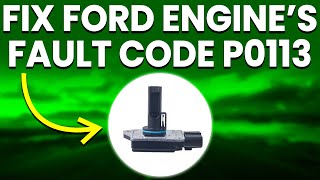
For the 2012-2018 Ford Focus (MK3 generation) with the 2.0L Ti-VCT engine, the key detail is that the IAT sensor is not a standalone part. It is integrated into the Mass Airflow (MAF) sensor housing, located on the air intake tube just after the air filter box. This design means that if the IAT sensor fails, the entire MAF sensor assembly must be replaced, which is different from vehicles where the IAT is a separate, less expensive component. This integrated design is common across many Ford models of the era.
Symptoms You May Notice
- Check Engine Light is on
- Reduced fuel economy
- Rough or unstable idle
- Poor engine performance or hesitation during acceleration
- Increased vehicle emissions
- Difficulty starting the engine in some cases
- Automatic Stop/Start system may be disabled
- Replacing only the oxygen (O2) sensors, as poor fuel mixture symptoms can be similar.
- Assuming a vacuum leak is the primary cause without checking the IAT sensor data first.
- Replacing the wrong sensor, as some owners get confused by separate MAP or ambient air temp sensors.
Most Likely Causes
- Failed MAF/IAT Sensor Assembly 🔴 High Probability The IAT thermistor is integrated into the MAF sensor, making it the single point of failure for this code. Over time, the sensor's internal components can degrade and fail, creating an open circuit.
How to confirm: Use an OBD-II scanner to check live data from the IAT sensor. A reading of -40°F or -40°C is a definitive sign of sensor failure or an open circuit. This is the most reliable diagnostic step before purchasing parts.
Typical fix: Replace the entire Mass Airflow (MAF) sensor assembly. The OEM Motorcraft part number is CP9Z-12B579-B.
Est. part cost: $70-$200 - Damaged Wiring or Connector 🟡 Medium Probability Wiring harnesses can become brittle from engine heat over time, and connectors can corrode or become loose. Wires routed near high-temperature components like the exhaust or high-voltage items like the alternator are particularly susceptible to damage.
How to confirm: Visually inspect the wiring harness and 4-pin connector going to the MAF sensor for any signs of fraying, melting, corrosion, or loose pins. Use a multimeter to check for 5 volts on the reference wire and continuity to ground on the ground wire with the key on, engine off.
Typical fix: Repair the damaged section of wiring or replace the connector pigtail.
Est. part cost: $10-$50
Rare But Worth Checking
- Severely Clogged Engine Air Filter: While a dirty air filter is more likely to cause other codes, in extreme cases it can disrupt airflow and contribute to erratic sensor readings. It's a simple and inexpensive item to check first.
- Faulty Powertrain Control Module (PCM): → Shop Engine Control Module (ECM) This is extremely rare. The PCM should only be considered after all other possibilities, including the sensor and wiring, have been thoroughly tested and ruled out.
Diagnosis Steps
- Connect an OBD-II scanner and confirm that P0113 is present. Note any other codes.
- View the live data stream on the scanner. Check the value for 'Intake Air Temp'. A reading of -40°F or -40°C indicates an open circuit, which points directly to a bad sensor or a wiring issue.
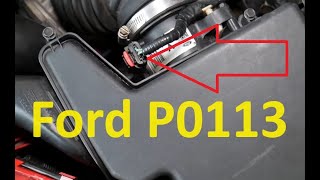
- Turn the engine off. Locate the MAF sensor on the air intake tube between the air filter box and the engine.
- Inspect the MAF sensor's electrical connector and wiring harness. Look for any signs of damage, corrosion, or loose pins. Pay close attention to the area where the harness might rub against other components.
- If the wiring looks good, the MAF/IAT sensor assembly is the most likely culprit and should be replaced. The Motorcraft part is CP9Z-12B579-B.
- For advanced diagnosis: Disconnect the sensor and use a multimeter to test the connector. You should find a 5-volt reference wire and a good ground wire from the PCM. A failure to find these indicates a wiring problem between the connector and the PCM, not a faulty sensor.
Parts You'll Likely Need
- Mass Airflow (MAF) Sensor with Integrated IAT
(OEM #CP9Z-12B579-B (Motorcraft))— This is the primary fix, as the IAT sensor is built into the MAF sensor assembly on this vehicle. The OEM part number is CP9Z-12B579-B.
Trusted brands: Motorcraft (OEM), Bosch, Delphi, Hitachi, Walker
OEM price range: $125-$200
Aftermarket price range: $70-$150
Related Codes That Often Appear With This One
- P0103 — Mass Air Flow (MAF) Circuit High Input. Since the IAT is integrated with the MAF, a problem with the sensor assembly or its connector can trigger faults for both components simultaneously.
- P0171 or P0172 — System Too Lean or System Too Rich. The faulty IAT reading causes the PCM to calculate the wrong fuel mixture, leading to either a lean (too much air) or rich (too much fuel) condition.
Platform-Specific Known Issues
- Owner Experience: Dealer Diagnosis vs. DIY Fix: An owner on the Ford Focus Club forum reported being quoted £90 for the initial diagnosis of P0113, and then a further £400 for 'investigation'. This highlights the significant cost savings of performing the simple diagnosis (checking live data for -40 degrees) and replacing the MAF sensor as a DIY job.
- Repair Story: Code Persists After Replacement: A user on Reddit reported that their P0113 code remained even after replacing the sensor with an OEM part. This scenario strongly suggests the fault lies within the wiring harness or the connector itself, reinforcing the need to inspect the wiring thoroughly if a new sensor doesn't solve the problem.
Mechanic-Grade Diagnostic Values
- IAT Sensor Resistance (disconnected) — expected: Resistance changes with temperature. Representative values are: ~37 kOhms @ -20°C (-4°F), ~2.7 kOhms @ 25°C (77°F), ~0.24 kOhms @ 90°C (194°F).. Failure: Infinite resistance (open circuit) or zero resistance (short circuit) at any temperature.
- IAT Signal Wire Voltage (KOEO, sensor disconnected) — expected: Approximately 4.6 to 5.0 volts.. Failure: No voltage or significantly lower voltage indicates a problem with the PCM or the wiring from the PCM.
- IAT Signal Wire Voltage (KOEO, live data) — expected: A voltage corresponding to the ambient air temperature.. Failure: A voltage reading above 4.9 volts for more than half a second will trigger P0113. This typically results in a scan tool displaying a temperature of -40°F/-40°C.
Scan Tool Commands That Help
- Scan Tool with Live Data & Test Light: Manual Bidirectional Test — To quickly verify the integrity of the signal wire and PCM response without a dealer-level tool. With the MAF/IAT sensor unplugged (KOEO), the scan tool should read -40°. Then, use a test light connected to battery positive to probe the IAT signal wire terminal on the harness connector. The scan tool reading should jump to a very high temperature (e.g., 260°F+). This confirms the wiring and PCM are capable of reading the full voltage range and are likely not the problem.
Wiring & Ground Locations
- C128 — The 4-pin electrical connector on the MAF/IAT sensor assembly, located on the air intake tube after the air filter box.. This is the primary connection point. Corrosion, backed-out pins, or wire fatigue at this connector are common causes for an open circuit (P0113).
- C128 Pinout (Typical) — At the MAF sensor connector harness.. Knowing the pinout is critical for testing. A typical Ford 4-pin layout is: Pin 1 - IAT Sensor Signal, Pin 2 - Ground, Pin 3 - Power (12V), Pin 4 - MAF Signal. Always verify with a vehicle-specific diagram. P0113 is a fault in the circuit involving Pin 1 and Pin 2.
- G103 / G104 — G103 is a ground point on the engine. G104 is a key ground point located on the left front of the engine compartment.. The IAT sensor circuit relies on a solid ground reference back to the PCM. A corroded or loose main engine or chassis ground can cause floating voltages and erratic sensor readings, including a P0113.
- Engine Harness Chafe Point — On 2012-2014 models, the engine harness may chafe against the intake manifold near the throttle body.. TSB 18-2062 identifies this specific chafe point as a cause for various codes, and the MAF/IAT sensor is one of the affected circuits. A wire can wear through, creating an open and triggering P0113. This is often missed because the damage is on the back side of the harness.
Real Owner Repair Stories
- ScannerDanner Forum (Ford vehicle with MAF/IAT sensor) — Persistent P0113 code.
❌ Tried (didn't work) Replacing the MAF/IAT sensor twice with a new part.
✅ What actually fixed it The replacement MAF/IAT sensors being used were the wrong part number for the vehicle, despite being new. After confirming the correct OEM part number with a Ford dealership and installing the correct sensor, the code was resolved.
OEM Part Supersession History
CP9Z-12B579-B→CP9Z-12B579-B— Part number appears stable for the specified model years.
Heads up: While the OEM part number is stable, a common failure trap is using an incorrect aftermarket part number. As confirmed in a real repair story, a physically similar sensor with the wrong internal calibration will not work and will continue to set the code. Always verify the part number against the vehicle's VIN.
Model Year Variations Within This Range
- 2012-2014: These model years are specifically called out in Ford TSB 18-2062 for a potential engine harness chafe against the intake manifold. This issue can damage the MAF/IAT sensor wiring, causing a P0113 code. Later models may have revised harness routing.
Diagnostic Flowchart
Other Known Issues on This Vehicle
Issues unrelated to this code that are worth knowing about as an owner of this generation:
- PowerShift (DPS6) Automatic Transmission Failure 🔴 High — Extremely common on 2012-2016 models with the automatic transmission. Issues include shuddering, hesitation, slipping, and complete failure of the clutch packs or Transmission Control Module (TCM). (Ref: Multiple class-action lawsuits and warranty extensions (e.g., 19N07) were issued, but the fundamental design is flawed.)
- Passenger-Side Engine Mount Collapse 🟠 Medium — Common after 60,000-100,000 miles. The hydraulic mount fails, causing excessive engine vibration to be felt in the cabin, particularly at idle.
- Electronic Power Steering Failure 🔴 High — Affects some models, where owners report a sudden loss of power steering assist, sometimes intermittently, making the wheel very difficult to turn at low speeds. (Ref: Ford has issued recalls for some vehicles due to faulty sensors or electrical connections in the steering system.)
- EVAP Purge Valve Failure 🟡 Low — A common failure item. A faulty purge valve can cause a rough idle, stalling after refueling, and trigger Check Engine Lights for the EVAP system (e.g., P0443). (Ref: A recall was issued for over a million 2012-2018 Focus models for a faulty purge valve that could deform the fuel tank.)
Used vs. New Parts: Buying Guide for This Vehicle
When a used part is the smart pick: Generally not recommended. The MAF/IAT is a sensitive electronic component with no visible wear indicator. Given the reasonable cost of quality new aftermarket sensors ($70-$150), the risk of getting a faulty or near-failure used part from a junkyard outweighs the small potential savings.
Donor-vehicle mileage cap: roughly under 50000 miles for the part to have meaningful remaining life.
What to inspect on the donor part:
- Inspect the donor vehicle's air filter; avoid if it's a heavily over-oiled aftermarket filter, as oil contamination is a primary cause of MAF failure.
- Check the connector housing for cracks or physical damage.
- Ensure the donor vehicle does not have the same or related trouble codes stored.
Aftermarket brands forum-validated for this vehicle:
- Motorcraft (OEM)
- Hitachi
- Delphi
- Standard Motor Products (SMP)
- Walker Products
Brands owners have reported issues with on this vehicle:
- Unbranded, low-cost sensors from online marketplaces (e.g., eBay, Amazon) are a gamble and a common source of persistent issues, as they may have incorrect calibrations or poor build quality.
Real Owner Stories
Aggregated from forums and TSBs cited above. Mileages and costs reflect what owners reported in those sources.
2014 Ford Focus (base model)
Symptoms: Check engine light, intermittent no-start, and hill start assist issues.
What fixed it: A shop identified and fixed a 'wiring issue' that was causing P0113 along with P068A and P0103.
Source hint: Reddit r/FordFocus - 2014 Focus (base model) check engine light
Ford Focus ST — 98000 miles
Symptoms: Check Engine Light with code P0113, appeared about a week after cleaning the intake.
What fixed it: The IAT sensor was likely disconnected or damaged during recent work on the air intake piping/elbow at the air box.
Source hint: Reddit r/FocusST - 'How can I fix these codes?' (reddit.com)
2018 Ford Focus 1.0L EcoBoost
Symptoms: Check Engine Light (P0113) and was quoted a high price for diagnosis.
What fixed it: The owner was advised to perform a DIY replacement of the sensor to avoid high dealer investigation fees.
Source hint: Ford Focus Club - 'Air Intake Temp Sensor' (fordownersclub.com)
2012-2018 Ford Focus 2.0L Ti-VCT
Symptoms: P0113 code remained even after replacing the sensor with an OEM part.
What fixed it: The fault was located within the wiring harness or the connector itself rather than the sensor.
Source hint: Repair Story: Code Persists After Replacement (Reddit)
Related OBD-II Codes
Frequently Asked Questions
What is the specific Motorcraft replacement part number for the IAT sensor on my 2012-2018 Ford Focus 2.0L?
My scanner shows -40°F for the Intake Air Temp; does this mean the sensor is definitely broken?
Can I just replace the IAT sensor alone, or do I need the whole MAF assembly?
I replaced the sensor but P0113 is still active. What should I check next on my Focus?
Is the P0113 code related to the common PowerShift transmission issues on the 2012-2018 Focus?
Does the Ford C-Max share this same IAT sensor issue?
Helpful Videos






We Have This Part in Stock

The information in this article is provided for general reference and educational purposes only. Vehicle specifications, procedures, and part compatibility can vary by production date, trim level, and region. Always consult your vehicle's factory service manual and verify part numbers before purchasing or performing repairs. Safety-critical components such as airbags, seat belts, and braking systems should be installed by a qualified professional.
- Ford Focus:
- 🧭 Diagnostic Flowchart
- 🎬 Helpful Videos
- 🛍️ Shop This Part
- What's Unique About the 2012-2018 Ford Focus
- Symptoms You May Notice
- Most Likely Causes
- Rare But Worth Checking
- Diagnosis Steps
- Parts You'll Likely Need
- Related Codes That Often Appear With This One
- Platform-Specific Known Issues
- Mechanic-Grade Diagnostic Values
- Scan Tool Commands That Help
- Wiring & Ground Locations
- Real Owner Repair Stories
- OEM Part Supersession History
- Model Year Variations Within This Range
- Other Known Issues on This Vehicle
- Used vs. New Parts: Buying Guide for This Vehicle
- Real Owner Stories
- 2014 Ford Focus (base model)
- Ford Focus ST — 98000 miles
- 2018 Ford Focus 1.0L EcoBoost
- 2012-2018 Ford Focus 2.0L Ti-VCT
- Related OBD-II Codes
- Frequently Asked Questions
- 🎟️ Get 5% Off