

P0117 on 2008-2014 Mercedes-Benz C-Class: Engine Coolant Sensor Causes and Fixes
On a W204 C-Class with the M272 V6, code P0117 is almost always caused by a failed engine coolant temperature (ECT) sensor. The sensor is located in a very tight spot at the rear of the driver's side cylinder head. Expect to pay $25-$60 for a new sensor; replacement is difficult due to access, requiring patience and long-reach tools.
- P0117 on this car means the computer thinks the engine is critically overheating, even if it's not.
- The most common symptom you'll notice is the radiator fan running at full blast from the moment you start the car.
- The cause is almost always a failed coolant temperature sensor, not the thermostat.
- The sensor itself is inexpensive, but replacing it is difficult due to its location at the back of the engine against the firewall.
- Do not ignore this code, as you will have no way of knowing your engine's true temperature.
What's Unique About the 2008-2014 Mercedes-Benz C-Class
On the M272 V6 engine used in the 2008-2014 (W204) C-Class, the P0117 code points directly to the single ECT sensor. The primary challenge is its location: it is notoriously difficult to access, tucked at the rear of the driver's side (left) cylinder head against the firewall, near the crankshaft position sensor. This location subjects the sensor and its wiring to significant heat, which is a likely contributor to its failure rate. Unlike some other Mercedes engines where the sensor is integrated into the thermostat housing, on the M272 it is a separate, replaceable component held in by a single T30 Torx screw.
Symptoms You May Notice
- Check Engine Light is on.
- Radiator cooling fan runs constantly at high speed, even when the engine is cold.
- Temperature gauge on the dashboard may be stuck at its lowest reading, show no reading, or show an inaccurate reading.
- Engine may be difficult to start, especially when cold.
- Rough running, hesitation, or poor acceleration, particularly before the engine warms up.
- Decreased fuel economy due to the ECM defaulting to a rich fuel mixture.
- Replacing the thermostat. While a faulty thermostat can cause cooling issues, it typically triggers different codes (like P0128) and does not cause the 'Circuit Low' input fault of P0117.
Most Likely Causes
- Failed Engine Coolant Temperature (ECT) Sensor 🔴 High Probability → Shop Engine Coolant Temperature Sensor The sensor is located in a high-heat area at the rear of the cylinder head, making it susceptible to failure over time from heat cycles and vibration.
How to confirm: With an OBD-II scanner, check the live data for the ECT sensor. A reading of an impossibly high temperature (e.g., 280°F+) or an extremely low one (e.g., -40°F) when the engine is cold confirms a sensor or circuit fault. You can also test the sensor's internal resistance with a multimeter; at room temperature (~68°F/20°C), it should be between 2,000 and 3,000 ohms. The resistance should decrease smoothly as the sensor is heated.
Typical fix: Replace the engine coolant temperature sensor and its O-ring. Due to the difficult access, this can be a time-consuming job requiring long extensions and a T30 Torx socket.
Est. part cost: $25-$60 - Damaged Wiring or Connector 🟡 Medium Probability The wiring harness is exposed to the same high heat as the sensor, which can make the insulation brittle and prone to cracking or shorting to ground. The connector itself can also become brittle and fail.
How to confirm: Visually inspect the wiring leading to the ECT sensor for any signs of damage, melting, or corrosion on the connector pins. Perform a continuity test on the signal wire to check for a short to ground. A simple test is to disconnect the sensor and bridge the two pins in the harness connector with a paperclip; if the scanner reading changes from -40°F to a very high temp, the wiring to the ECM is likely intact.
Typical fix: Repair the damaged section of the wiring harness or replace the connector pigtail.
Est. part cost: $10-$30
Rare But Worth Checking
- Faulty Engine Control Module (ECM): → Shop Engine Control Module (ECM) This is very rare. Before suspecting the ECM, all other possibilities, including the sensor and wiring, must be thoroughly tested and ruled out. An ECM fault is the cause of last resort.
Diagnosis Steps
- Connect an OBD-II scanner to confirm the P0117 code is active and check for any other codes.
- Access the scanner's live data stream and observe the value for the Engine Coolant Temperature sensor. On a cold engine, it should be close to the ambient air temperature. A reading of -40°F or over 280°F indicates a fault.
- Allow the engine to cool completely. Safety first: never work on a hot cooling system.
- Locate the ECT sensor at the rear of the driver's side (left) cylinder head, near the firewall. It is often near the crankshaft position sensor.
- Inspect the sensor's electrical connector and wiring for any visible damage, corrosion, or loose connections.
- If wiring appears intact, disconnect the sensor. With the key on and engine off, check for reference voltage (typically 5V) at the connector. Check the other wire for a good ground.
- To test the wiring integrity, use a paperclip to jump the two terminals in the harness connector. The live data reading on your scanner should change from extremely cold (-40°F) to extremely hot (>280°F). If it does, the wiring and ECM are likely good, pointing to a bad sensor.
- If access permits, remove the sensor (one T30 Torx screw) and test its resistance with a multimeter while gently heating it. The resistance should change smoothly. A static or open reading indicates a failed sensor.
Parts You'll Likely Need
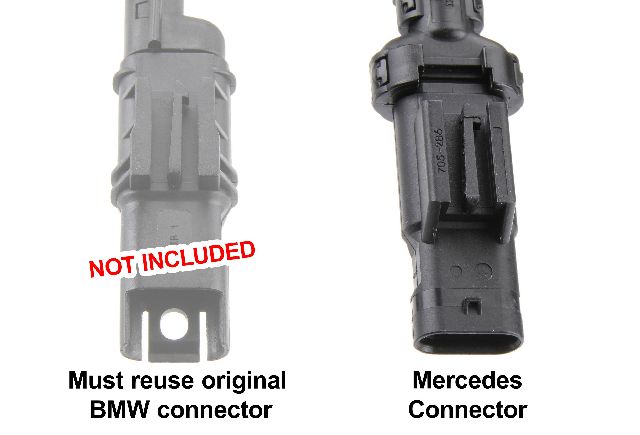
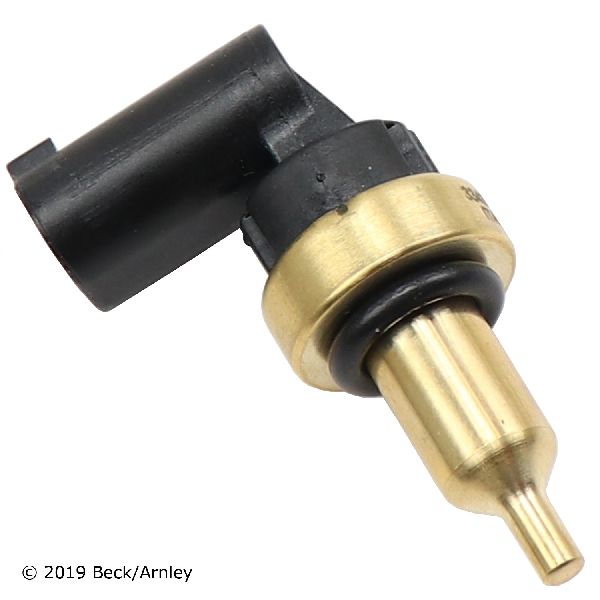
- Engine Coolant Temperature Sensor
(OEM #A0009050700, 0009050700)— This sensor is the most common point of failure for a P0117 code on the M272 engine due to its location and function.
Trusted brands: Mercedes-Benz (OEM), Bosch, Hella, Febi Bilstein, Delphi
OEM price range: $40-$60
Aftermarket price range: $25-$45
Related Codes That Often Appear With This One
- P0116 — P0116 (ECT Sensor Circuit Range/Performance) can appear alongside P0117 if the sensor's signal is erratic or implausible before failing completely into a shorted state.
- P0118 — P0118 (ECT Sensor Circuit High Input) is the opposite code, indicating an open circuit. If you disconnect the sensor to test it, you will likely trigger a P0118, which can be a useful diagnostic step to confirm the wiring is not shorted to ground.
Platform-Specific Known Issues
- Accessing the ECT sensor on the M272 engine is the biggest challenge of this repair. It is located on the back of the driver's side cylinder head, and reaching the T30 Torx bolt that holds it in place requires long extensions and patience. Some owners report it's almost impossible to reach from above.
- A user on MBWorld.org with a similar engine confirmed the fix was replacing this specific sensor, noting the main challenge was the extremely tight access.
Mechanic-Grade Diagnostic Values
- ECT Sensor Resistance (Cold) — expected: 2,000 - 3,000 Ω at 20°C (68°F). Failure: Significantly higher or lower resistance, or an open/short circuit reading. A reading of 16 ohms, hot or cold, indicated a failed sensor in one forum post.
- ECT Sensor Resistance (Hot) — expected: 250 - 350 Ω at 80°C (176°F). Failure: Resistance does not drop smoothly as the engine warms, or the value is outside the expected range.
- ECT Sensor Signal Voltage (Cold) — expected: ~2.0V - 3.0V with key on, engine off (on a cold engine). Failure: Voltage near 0V indicates a short to ground (P0117). Voltage near 5V indicates an open circuit (P0118).
- ECT Sensor Signal Voltage (Hot) — expected: ~0.5V at operating temperature (~80-90°C). Failure: Voltage does not decrease as the engine warms up.
Wiring & Ground Locations
- B4/7 or B11/2 — Rear of the driver's side (left) cylinder head. This is the Mercedes component designation for the engine coolant temperature sensor.. This is the component that the P0117 code is reporting a fault for. Knowing its designation helps in reading official wiring diagrams.
- W11 — In the engine bay, serves as a ground point for the ECU wiring assembly.. A corroded or loose main ECU ground can cause an unstable ground reference for multiple sensors, including the ECT sensor, potentially leading to erroneous fault codes like P0117. All solid brown wires in a Mercedes harness are grounds.
Real Owner Repair Stories
- MBWorld.org Forums user 'DAVECAD2.0' (2006 C230 with M272 V6) — Fan running on high all the time, even with the switch on and engine not running.
❌ Tried (didn't work) Initially suspected the cooling fan assembly which had been replaced a year prior.
✅ What actually fixed it The user tested the sensor and found it had a resistance of 16 ohms whether hot or cold, indicating it was faulty. The implied fix was replacing the sensor.
OEM Part Supersession History
A0009050700→0999053800 / A0999053800— Standard part evolution and consolidation by Mercedes-Benz.
Heads up: The new part number 0999053800 is a direct replacement. Other cross-referenced numbers include 0005425118 and A0005425118.
Diagnostic Flowchart
Other Known Issues on This Vehicle
Issues unrelated to this code that are worth knowing about as an owner of this generation:
- M272 Balance Shaft Sprocket Wear 🔴 High — Common on engines manufactured before mid-2008. Failure can occur from 50,000 miles onward. Repair is extremely labor-intensive and expensive.
- Intake Manifold Swirl Flap Lever Failure 🟠 Medium → Shop Engine Intake Manifold — The plastic lever that actuates the intake runner flaps breaks, causing poor idle, loss of power, and codes like P2004, P2005, P2006. Repair kits with metal levers are available.
- Rear Subframe Corrosion/Rust 🔴 High — The rear subframe is prone to severe internal corrosion, which can lead to structural failure. It is a well-documented issue across many Mercedes models of this era. (Ref: MBUSA has extended the warranty to 20 years/unlimited miles for replacement if perforation (holes) occurs.)
- 7G-Tronic (722.9) Conductor Plate Failure 🟠 Medium — The electronic conductor plate inside the 7-speed automatic transmission is a known failure point, typically between 60,000 and 110,000 miles, causing harsh shifting or getting stuck in gear.
- Camshaft Adjuster Magnet Oil Leak 🟡 Low — The seals on the camshaft adjuster magnets can leak oil, which can then wick through the wiring harness ('capillary action') and potentially damage the main engine computer (ECM). Sacrificial pigtails are available to prevent this.
Used vs. New Parts: Buying Guide for This Vehicle
When a used part is the smart pick: For this specific repair, buying a used Engine Coolant Temperature (ECT) sensor is not recommended. The part is inexpensive new, a known failure item due to heat exposure, and the labor to access it is significant. It is not worth the risk of a premature failure to save a few dollars.
What to inspect on the donor part:
- Not applicable as a used sensor is not advised.
OEM-only on this vehicle (don't cheap out):
- While not strictly 'OEM-only', using a reputable OE-supplier brand is critical. The cost difference between a quality part and a no-name part is minimal, but the reliability difference can be significant.
Aftermarket brands forum-validated for this vehicle:
- Mercedes-Benz (Genuine)
- Bosch
- Hella
- Febi Bilstein
- Continental
Brands owners have reported issues with on this vehicle:
- Unnamed or 'white-box' brands from online marketplaces should be avoided due to the high labor cost of replacement if the part fails prematurely.
Real Owner Stories
Aggregated from forums and TSBs cited above. Mileages and costs reflect what owners reported in those sources.
2008 Mercedes-Benz C300 M272
Symptoms: Check engine light on with codes P0116 and P0117. The temperature gauge does not move at all and the air intake/fan is loud as hell.
What fixed it: Replacement of the coolant temperature sensor located at the rear of the engine.
Source hint: MBWorld.org Forums: "P0116 and P0117 Error codes. Gauge stuck at zero. Fan is unbearably loud at start"
2008-2014 Mercedes-Benz C-Class M272
Symptoms: The radiator fan runs constantly and the temperature gauge on the dashboard does not move.
What fixed it: Replacing the engine coolant temperature sensor, which is separate from the thermostat housing.
Source hint: MBClub.co.uk: "P0117 engine coolant temp sensor fault"
Related OBD-II Codes
Frequently Asked Questions
Where is the Engine Coolant Temperature (ECT) sensor located on my M272 V6 engine?
Why is my radiator fan running at high speed even when I first start my C300 in the morning?
Is the coolant temperature sensor part of the thermostat housing on the 2008-2014 C-Class?
What tools are required to replace the ECT sensor on a Mercedes M272 engine?
Can I check if the sensor is bad using a multimeter?
Are there any known issues with the M272 engine I should be aware of while fixing this code?
Helpful Videos


We Have This Part in Stock


The information in this article is provided for general reference and educational purposes only. Vehicle specifications, procedures, and part compatibility can vary by production date, trim level, and region. Always consult your vehicle's factory service manual and verify part numbers before purchasing or performing repairs. Safety-critical components such as airbags, seat belts, and braking systems should be installed by a qualified professional.
- Mercedes-Benz C-Class:
- 🧭 Diagnostic Flowchart
- 🎬 Helpful Videos
- 🛍️ Shop This Part
- What's Unique About the 2008-2014 Mercedes-Benz C-Class
- Symptoms You May Notice
- Most Likely Causes
- Rare But Worth Checking
- Diagnosis Steps
- Parts You'll Likely Need
- Related Codes That Often Appear With This One
- Platform-Specific Known Issues
- Mechanic-Grade Diagnostic Values
- Wiring & Ground Locations
- Real Owner Repair Stories
- OEM Part Supersession History
- Other Known Issues on This Vehicle
- Used vs. New Parts: Buying Guide for This Vehicle
- Real Owner Stories
- 2008 Mercedes-Benz C300 M272
- 2008-2014 Mercedes-Benz C-Class M272
- Related OBD-II Codes
- Frequently Asked Questions
- 🎟️ Get 5% Off