

P0118 on 2005-2015 Toyota Tacoma 4.0L V6: Engine Coolant Temp Sensor Guide
This code means the Engine Coolant Temperature (ECT) sensor circuit is open. On the 4.0L V6 Tacoma, this is almost always a failed ECT sensor or damaged wiring. The sensor itself is inexpensive, but it is located under the intake manifold, making replacement a 2-3 hour job.
- P0118 on your Tacoma means the computer thinks the engine is frozen (-40°F) due to an open circuit from the coolant temperature sensor.
- The most likely cause is a failed sensor, followed by damaged wiring.
- The biggest challenge is the repair itself: the sensor is buried under the intake manifold on the 4.0L V6 engine.
- Due to the location, DIY replacement is difficult (4/5) and requires replacing intake gaskets.
- Do not drive for long periods, as the resulting rich fuel mixture wastes gas and can foul spark plugs.
What's Unique About the 2005-2015 Toyota Tacoma
The primary challenge with a P0118 code on the 1GR-FE 4.0L V6 engine is the physical location of the ECT sensor. Unlike many engines where the sensor is easily accessible, Toyota placed it on a coolant bypass pipe at the very back of the engine, underneath the entire upper and lower intake manifold assembly. This turns a simple sensor replacement into a more complex job that requires significant disassembly, increasing labor costs and DIY difficulty substantially. This difficult location is shared with other Toyota models using the same engine, like the 4Runner and FJ Cruiser.
Symptoms You May Notice
- Check Engine Light is on
- Difficulty starting the engine, especially when cold
- Rough or unstable idle that may smooth out as the engine warms up
- Significantly reduced fuel economy
- Black smoke from the exhaust on a cold start, indicating a rich fuel mixture
- Cooling fans running constantly, even when the engine is cold
- Inaccurate or non-functional reading on the dashboard temperature gauge (may read full cold)
- Engine hesitates or runs rough until fully warmed up
- Replacing the thermostat. A thermostat issue typically causes overheating or a P0128 code (thermostat rationality), not a P0118 circuit code.
- Replacing the water pump. A failing water pump would cause overheating, not an electrical circuit fault code.
Most Likely Causes
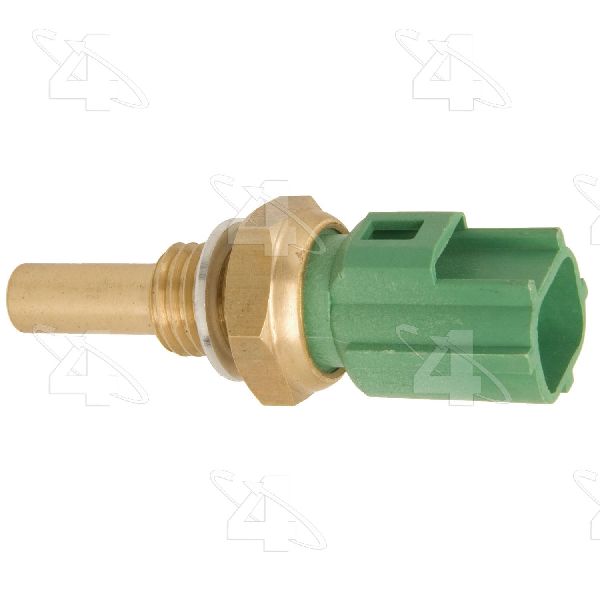
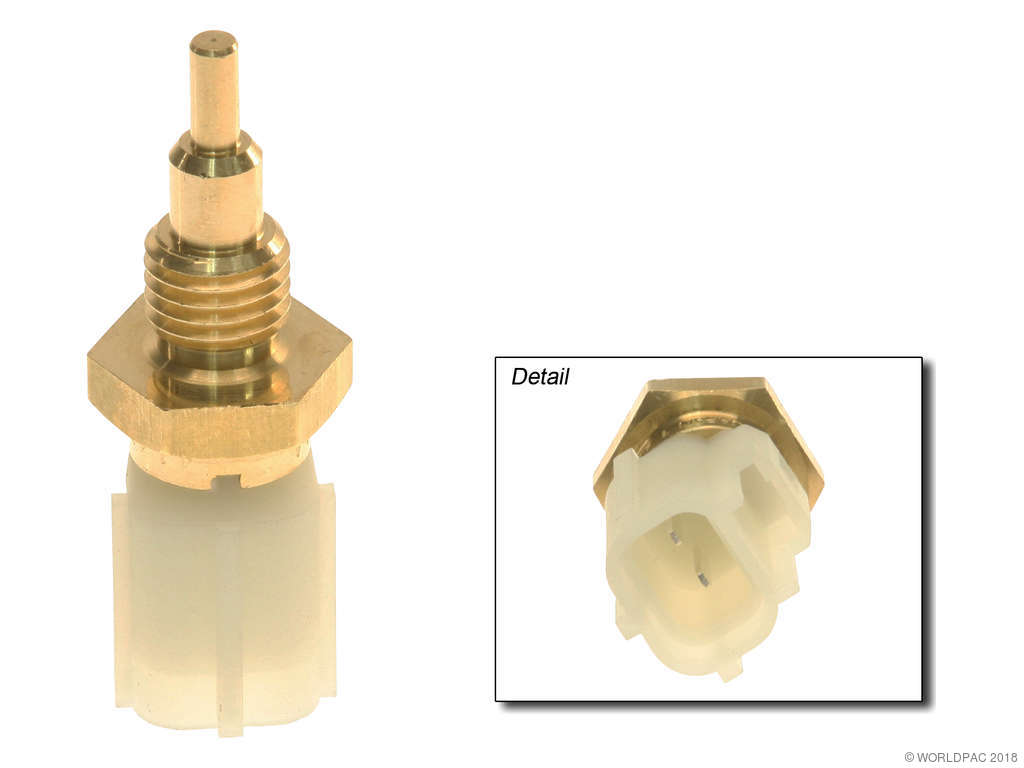
- Failed Engine Coolant Temperature (ECT) Sensor 🔴 High Probability → Shop Engine Coolant Temperature Sensor The sensor is a simple thermistor that can fail over time by developing an internal open circuit, which is a common failure mode for this type of component. Age and countless heat cycles degrade the internal components, leading to infinite resistance.
How to confirm: Using a scan tool, check the live ECT data with the engine cold. If it reads an impossibly low temperature (like -40°F), the sensor is the prime suspect. You can also test the sensor's internal resistance with a multimeter; an open circuit (infinite resistance) confirms failure. At 68°F (20°C), a good sensor should have a resistance between 2,000 and 3,000 ohms.
Typical fix: Replace the ECT sensor. This requires removing the upper and lower intake manifolds to gain access. It is critical to also replace the intake manifold gaskets during this job.
Est. part cost: $40-$100 - Damaged Wiring or Connector 🟡 Medium Probability The engine harness is exposed to heat and vibration. Wires can become brittle and break, or rodents can chew through the insulation, causing an open circuit. The connector pins can also corrode or become loose, breaking the connection to the sensor.
How to confirm: Visually inspect the wiring harness leading to the ECT sensor for any signs of damage, though access is very limited without removing the intake. Unplug the connector and check for corrosion or bent pins. Perform a circuit test by jumping the two pins in the connector with a paperclip or fused wire; the scan tool's temperature reading should swing from -40°F to over 284°F. If it does, the wiring and ECM are good, and the sensor is bad.
Typical fix: Repair the broken wire(s) or replace the damaged connector pigtail. This is often done at the same time as a sensor replacement due to the labor involved in accessing the area.
Est. part cost: $15-$40 - Low Engine Coolant Level / Air Pocket ⚪ Low Probability While less common for a 'high input' code, if the coolant level is very low after a coolant service, an air pocket can form around the sensor. An air pocket can prevent the sensor from reading the coolant temperature accurately, potentially causing erratic signals that the ECM could interpret as a fault.
How to confirm: Check the coolant level in the radiator (when the engine is cold) and the overflow reservoir. If a coolant service was recently performed, the system may not have been properly bled. A user on TacomaWorld reported this code appearing after an incomplete coolant refill.
Typical fix: Top off the coolant with Toyota Super Long Life Coolant and properly bleed the system to remove any air pockets. Find and repair the source of any coolant leak.
Est. part cost: $25-$40
Rare But Worth Checking
- Faulty Engine Control Module (ECM): This is extremely rare. The ECM should only be considered after the sensor, wiring, and connections have been exhaustively tested and proven to be good. A faulty ECM is the last resort diagnosis.
Diagnosis Steps
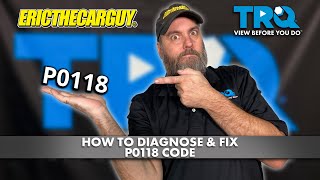
- Connect a scan tool and verify P0118 is the active code. 🎬 Watch: EricTheCarGuy explains what this high input code means. Note any other codes present.
- View live data. With a cold engine (off for several hours), compare the Engine Coolant Temperature (ECT) and Intake Air Temperature (IAT) readings. They should be within a few degrees of each other and the ambient air temperature. A reading of -40°F for the ECT strongly suggests an open circuit.
- Visually inspect the engine bay. Look for obvious signs of damage, such as chewed wires or coolant leaks. Pay close attention to the rear of the engine, though visibility is poor.
- Locate the ECT sensor. On the 1GR-FE, it is at the rear of the engine, under the intake manifold. Access is difficult and requires removing the upper intake manifold (also called the surge tank).
- Once the intake is removed, unplug the sensor connector and inspect for corrosion or damage. With the key on and engine off, use a multimeter to check for a 5-volt reference on one wire and a good ground on the other.
- If voltage and ground are present, the fault is almost certainly the sensor itself.
- To confirm, use a fused jumper wire or paperclip to connect the two terminals in the sensor's electrical connector. The ECT temperature on the scan tool should now read a very high value (e.g., 284°F+). If it does, this confirms the wiring and ECM are okay and the original sensor is bad.
- If the jumper test does not result in a high temperature reading, or if you were missing voltage/ground in step 5, there is a break in the wiring between the connector and the ECM that must be traced and repaired.
- If replacing the sensor, the intake manifold must be removed. It is highly recommended to replace the upper (plenum) and lower intake manifold gaskets at the same time to prevent vacuum leaks. Also replace the throttle body gasket if it is removed.
- After replacing the sensor and reassembling, refill any lost coolant and properly bleed the system to prevent air pockets.
Parts You'll Likely Need
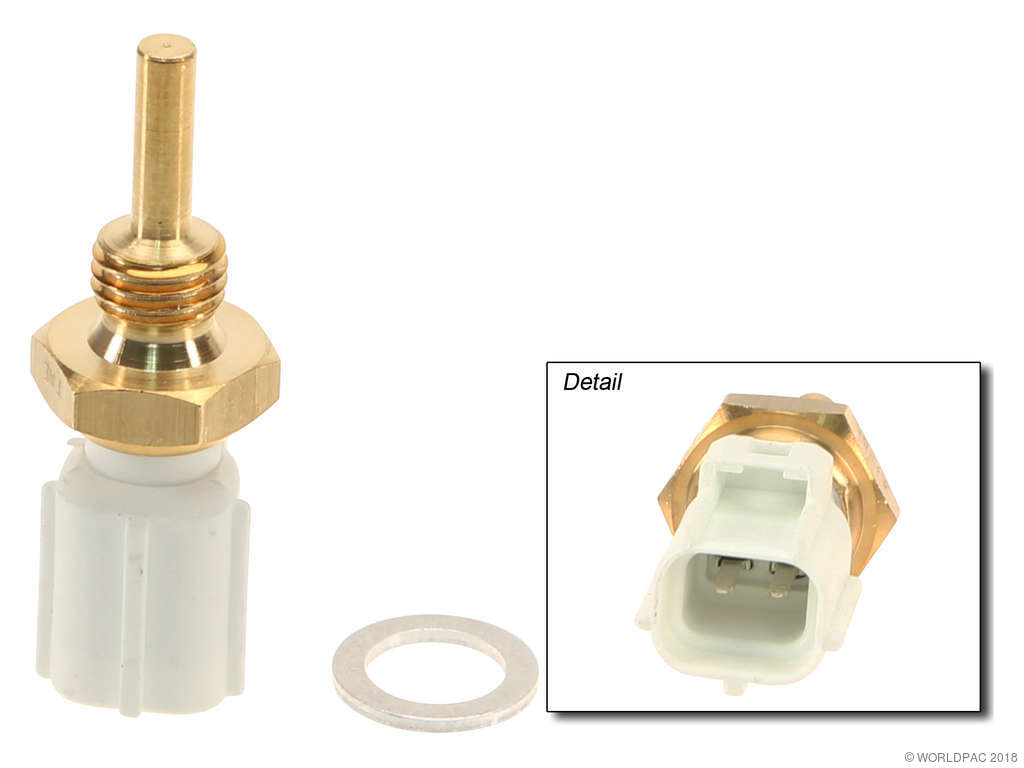
- Engine Coolant Temperature Sensor
(OEM #89422-33030)— This is the most common failure point for a P0118 code. It fails internally, creating an open circuit. This part number is widely used across many Toyota vehicles.
Trusted brands: Denso (OEM Manufacturer), Toyota (Genuine), Beck/Arnley
OEM price range: $65-$100
Aftermarket price range: $20-$50 - Upper and Lower Intake Manifold Gaskets
(OEM #Upper (Plenum/Surge Tank): 17176-0P030; Lower: 17177-0P010 (Set of 2))— These must be replaced when removing the intake manifold to access the ECT sensor on the 4.0L V6 engine. Reusing old gaskets can cause vacuum leaks. Toyota refers to the upper intake manifold as the 'Air Surge Tank'.
Trusted brands: Toyota (Genuine), Fel-Pro, Mahle
OEM price range: $40-$60
Aftermarket price range: $20-$40 - Toyota Super Long Life 50/50 Pre-Mixed Coolant
(OEM #00272-SLLC2)— Some coolant will be lost when the sensor is removed. The system should be topped off with the correct OEM-spec coolant to prevent corrosion and compatibility issues.
Trusted brands: Toyota
OEM price range: $25-$35 per gallon
Related Codes That Often Appear With This One
- P0117 — P0117 is 'ECT Circuit Low Input'. Seeing both may indicate an intermittent wiring problem where the circuit shorts and opens at different times, or a failing sensor that is fluctuating wildly.
- P0116 — P0116 is 'ECT Circuit Range/Performance'. This can be triggered by a sensor that is providing erratic, but not completely open or shorted, signals.
Platform-Specific Known Issues
- The difficult access to the ECT sensor on the 1GR-FE V6 engine is the most significant platform-specific issue. It is located under the intake manifold at the rear of the engine, requiring several hours of labor for what would otherwise be a 15-minute repair on a different engine.
- A TacomaWorld forum member documented their P0118 issue which appeared after an improper coolant refill, highlighting the possibility of air pockets causing the code.
- Another forum user experienced a no-start condition when cold along with a P0118 code, which was resolved by replacing the ECT sensor.
Mechanic-Grade Diagnostic Values
- ECT Sensor Resistance — expected: ~2,200 - 3,000 Ω at 20°C (68°F). Failure: Infinite resistance (Open Line) or a value significantly outside this range.
- ECT Sensor Resistance — expected: ~250 - 350 Ω at 80°C (176°F). Failure: Resistance does not drop to this range when the engine is at operating temperature.
- ECT Sensor Connector Voltage (Key On, Engine Off) — expected: One pin should have a 5V reference from the ECM, the other is the sensor ground.. Failure: Absence of 5V reference points to a wiring or ECM issue, not a sensor failure.
- Scan Tool Live Data - Jumpered ECT Connector — expected: Should read ≥ 140°C (284°F). Failure: If the temperature does not jump to maximum, it indicates an open or high resistance in the wiring harness or a faulty ECM.
Scan Tool Commands That Help
- Toyota Techstream: Data List > Primary > COOLANT TEMP — This is the primary function to diagnose P0118. It shows the exact temperature value the ECM is receiving. A reading of -40°C (-40°F) confirms an open circuit fault.
- Toyota Techstream: Utility > All Readiness — After a repair, this function can be used to check the DTC judgment result and confirm that the monitor for P0118 runs and passes, verifying the fix without waiting for a full drive cycle.
Wiring & Ground Locations
- ECT Sensor Connector — On the coolant bypass pipe at the rear of the engine, under the upper and lower intake manifolds.. This is the primary connection point. Corrosion or damage here is a common cause of the code. It is a 2-pin connector.
- ECM Connector (ECT Pins) — Inside the vehicle's cabin, typically behind the glove box. The ECT signal wire (THW) and ground wire (E2) connect here.. In rare cases of wiring failure, a technician may need to test for continuity from the sensor connector all the way to these pins on the ECM. A video suggests the signal wire may be on pin 74 and ground on pin 63 of the blue plug for some applications, but this should be verified with a vehicle-specific diagram.
- Engine Harness Grounds — The 1GR-FE has critical harness ground points bolted directly to the cylinder heads/valve covers, often under the intake manifold area.. A loose or corroded main engine ground can cause floating ground issues, leading to incorrect readings from multiple sensors, including the ECT. While not a direct cause of a P0118 open circuit, poor grounding can cause a host of electrical gremlins and should be checked if multiple sensor codes appear simultaneously.
Real Owner Repair Stories
- TacomaWorld Forum (2009 Tacoma 2.7L (Note: 2.7L engine, but the P0118 diagnostic principle is identical)) — Check Engine Light with code P0118 appeared the day after a coolant change.
❌ Tried (didn't work) The user suspected an issue with their coolant refill procedure.
✅ What actually fixed it The user reported the code cleared itself after a few days of driving. The likely cause was an air pocket trapped around the sensor after the coolant service, which eventually worked its way out of the system. This confirms that improper bleeding can trigger a P0118. - TacomaWorld Forum (2007 Tacoma 4.0L V6 with 160,000 miles) — CEL came on with P0118 and P0113 (IAT High Input) simultaneously.
❌ Tried (didn't work) The owner planned to clean the MAF and change the coolant.
✅ What actually fixed it A forum expert noted that P0118 (Coolant Temp High Input) is an electrical fault (open circuit), not an overheating condition. The simultaneous appearance with another 'High Input' code often points to a shared ground or power issue, or a wiring harness problem, rather than two separate failed sensors. The final fix was not posted, but the expert diagnosis points away from the sensor itself and towards wiring.
OEM Part Supersession History
89422-35010→89422-33030— Standard part consolidation and potential minor internal improvements over a long production run.
Heads up: The two part numbers are generally interchangeable for this application. 89422-33030 is a widely used sensor across dozens of Toyota, Lexus, and Scion models from the early 2000s to present day.
Model Year Variations Within This Range
- 2005-2009 vs 2010+: While not directly affecting the P0118 fix, the 1GR-FE engine received an update around 2010+ models (in other platforms like the 4Runner/FJ Cruiser) which introduced Dual VVT-i. This led to changes in the cylinder head and intake design. For the Tacoma, the single VVT-i engine was used through 2015, making parts like the intake gaskets consistent across the 2005-2015 range. However, when sourcing a used engine, it's critical to get one from a 2005-2015 Tacoma or a 2005-2009 4Runner to ensure compatibility, as later 1GR-FE engines from other models have significant differences.
Diagnostic Flowchart
Other Known Issues on This Vehicle
Issues unrelated to this code that are worth knowing about as an owner of this generation:
- Frame Rust Perforation 🔴 High — Very common, especially in cold-weather states with road salt use. Primarily affects 2005-2010 models, but can occur on later years. (Ref: Warranty Enhancement Program ZH6 (2005-2010 models) and Limited Service Campaign K0D / CSP ZKA (2011-2017 models) were issued to inspect and, if necessary, replace frames.)
- Secondary Air Injection System Failure 🟠 Medium — Common failure, often occurring between 80,000 and 150,000 miles. The air pump or switching valves fail, triggering CEL with codes like P0410, P0411.
- Weak Head Gaskets (Early Models) 🔴 High — Affects early 1GR-FE engines, primarily 2005 and some early 2006 models. Gaskets can fail without overheating, typically around 150k-200k miles.
- Rear Leaf Spring Breakage 🟠 Medium — Common enough that a recall was issued. Springs can corrode and fracture. (Ref: Toyota issued a recall for 2005-2011 models to inspect and replace the rear leaf spring packs.)
- Throw-out Bearing / Clutch System Issues 🟡 Low — Some owners of manual transmission models report premature wear of the clutch release (throw-out) bearing, causing noise.
Used vs. New Parts: Buying Guide for This Vehicle
When a used part is the smart pick: For this repair, using used parts is generally not recommended for the sensor itself due to the high labor cost of access. However, a used intake manifold assembly from a low-mileage donor vehicle could be a cost-effective option if the original was damaged during removal.
Donor-vehicle mileage cap: roughly under 100000 miles for the part to have meaningful remaining life.
What to inspect on the donor part:
- For an intake manifold, check for cracks, especially around bolt holes.
- Ensure all threaded inserts for brackets and covers are intact.
- Verify the mating surfaces are flat and free of deep gouges.
OEM-only on this vehicle (don't cheap out):
- Engine Coolant Temperature Sensor. Given the 2-3 hours of labor to access it, the risk of a premature failure from a non-OEM sensor is not worth the small cost savings. Denso is the OEM manufacturer and is the preferred choice.
Aftermarket brands forum-validated for this vehicle:
- Denso (for the ECT sensor)
- Fel-Pro (for intake gaskets)
Brands owners have reported issues with on this vehicle:
- No-name, unbranded electronic sensors from online marketplaces should be avoided due to inconsistent quality control and the high labor cost to replace them if they fail.
Real Owner Stories
Aggregated from forums and TSBs cited above. Mileages and costs reflect what owners reported in those sources.
2005-2015 Toyota Tacoma 4.0L V6
Symptoms: The owner experienced a P0118 code immediately following a coolant change.
What fixed it: Properly bleeding the cooling system to remove air pockets that were preventing the sensor from reading correctly.
Source hint: TacomaWorld - 'P0118 Code Engine Coolant Temperature Circuit Fault' (https://www.tacomaworld.com/threads/p0118-code-engine-coolant-temperature-circuit-fault.362399/)
2005-2015 Toyota Tacoma 4.0L V6
Symptoms: The vehicle suffered from a no-start condition during cold starts accompanied by a P0118 trouble code.
What fixed it: Replacement of the Engine Coolant Temperature (ECT) sensor.
Source hint: TacomaWorld forum user report cited in vehicle_specific_issues
2005-2015 Toyota Tacoma 4.0L V6
Symptoms: The owner reported a P0118 code and a specific 'no fuel' condition during cold starts after performing maintenance on the valve covers and timing belt.
What fixed it: Diagnosing the ECT circuit fault which was impacting cold start fuel delivery.
Source hint: TacomaWorld - 'No Fuel on Cold Start After Valve Covers and Timing Belt' (https://www.tacomaworld.com/threads/no-fuel-on-cold-start-after-valve-covers-and-timing-belt.758503/)
Related OBD-II Codes
Frequently Asked Questions
Where is the ECT sensor located on the 4.0L V6 Tacoma, and can I change it quickly?
I just changed my coolant and now I have a P0118 code. Did I break the sensor?
What specific coolant should I use when refilling my 2005-2015 Tacoma after this repair?
Are there any other gaskets I need to buy if I'm replacing the ECT sensor on my 1GR-FE?
My Tacoma won't start when it's cold and shows P0118. Is this common?
Is there a way to test if the sensor is actually bad before I take the whole intake manifold off?
Helpful Videos
We Have This Part in Stock


The information in this article is provided for general reference and educational purposes only. Vehicle specifications, procedures, and part compatibility can vary by production date, trim level, and region. Always consult your vehicle's factory service manual and verify part numbers before purchasing or performing repairs. Safety-critical components such as airbags, seat belts, and braking systems should be installed by a qualified professional.
- Toyota Tacoma:
- 🧭 Diagnostic Flowchart
- 🎬 Helpful Videos
- 🛍️ Shop This Part
- What's Unique About the 2005-2015 Toyota Tacoma
- Symptoms You May Notice
- Most Likely Causes
- Rare But Worth Checking
- Diagnosis Steps
- Parts You'll Likely Need
- Related Codes That Often Appear With This One
- Platform-Specific Known Issues
- Mechanic-Grade Diagnostic Values
- Scan Tool Commands That Help
- Wiring & Ground Locations
- Real Owner Repair Stories
- OEM Part Supersession History
- Model Year Variations Within This Range
- Other Known Issues on This Vehicle
- Used vs. New Parts: Buying Guide for This Vehicle
- Real Owner Stories
- 2005-2015 Toyota Tacoma 4.0L V6
- 2005-2015 Toyota Tacoma 4.0L V6
- 2005-2015 Toyota Tacoma 4.0L V6
- Related OBD-II Codes
- Frequently Asked Questions
- 🎟️ Get 5% Off