

P0121 on 2011-2018 Audi A6 3.0T: Throttle Position Sensor Causes and Fixes
On the Audi A6 3.0T, code P0121 usually means the throttle body is dirty with carbon buildup. Cleaning it and performing a reset (adaptation) often fixes the issue. If that fails, the throttle body assembly, which includes the sensor, likely needs replacement. This is a very common issue across all Audi models using the 3.0T supercharged engine.
- P0121 on your Audi A6 3.0T almost always points to an issue with the throttle body.
- The most common and cost-effective first step is to thoroughly clean the throttle body and perform an electronic adaptation with a scan tool.
- Do not drive the vehicle if the EPC light is on and it is in limp mode, as this can be dangerous in traffic.
- If cleaning doesn't work, the entire throttle body assembly needs to be replaced; the sensors are not available separately.
- Always use a new gasket when reinstalling the throttle body to prevent vacuum leaks.
What's Unique About the 2011-2018 Audi A6
The 3.0L Supercharged V6 (3.0T) engine in the C7 generation A6 uses an electronic throttle body where the position sensors are integrated and not sold separately. While the code is generic, the most common cause on this platform is not immediate sensor failure, but rather carbon buildup in the throttle body bore that restricts the butterfly plate's movement, causing the sensor readings to become implausible. A simple cleaning and electronic adaptation can often resolve the code without replacing any parts. The stock throttle body has a 68mm bore, which is known to be smaller than the supercharger inlet it mates to.
Symptoms You May Notice
- Check Engine Light and/or EPC (Electronic Power Control) light illuminated
- Vehicle enters 'limp mode' with drastically reduced engine power
- Rough or unstable idle
- Hesitation or stumbling during acceleration
- Engine stalling, especially at low speeds or when coming to a stop
- Erratic throttle response
- Poor or delayed acceleration
- Black smoke from exhaust during acceleration
- Replacing the accelerator pedal position sensor. P0121 specifically refers to the sensor at the throttle body ('A' circuit), not the pedal sensor, although they work together.
Most Likely Causes
- Dirty Throttle Body 🔴 High Probability → Shop Fuel Injection Throttle Body Direct injection and crankcase ventilation systems can lead to oil and carbon deposits in the intake tract, including the throttle body, impeding the throttle plate's movement. This is the most common first-step fix.
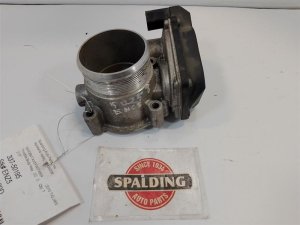
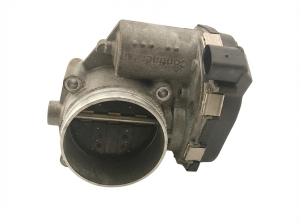
How to confirm: Visually inspect the throttle body bore and plate for a layer of black carbon grime. The plate may feel sticky or difficult to move by hand. The throttle body is located at the rear right side of the supercharger and is easily accessible after removing the main air intake hose.
Typical fix: Remove the throttle body (four T30 Torx bolts), clean it thoroughly with a dedicated throttle body cleaner and a soft brush, and reinstall it. A throttle body adaptation using a diagnostic tool like VCDS is mandatory afterward.
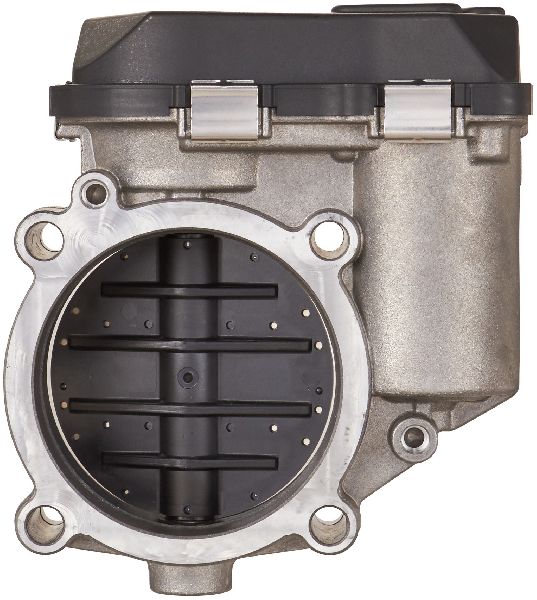
Est. part cost: $10-$25 (for cleaner and gaskets) - Failed Throttle Body Assembly 🟡 Medium Probability → Shop Fuel Injection Throttle Body The internal electronic components of the throttle position sensors or the actuator motor can fail over time due to heat and vibration. The sensors are not sold separately from the throttle body assembly.
How to confirm: If cleaning and adaptation do not resolve the code, and live data on a scan tool shows erratic or non-responsive voltage from the TPS, the unit has likely failed internally. With VCDS, check measuring blocks for throttle position; normal idle is ~15% and wide open throttle is ~90%. If these values are erratic or incorrect, the sensor is bad.
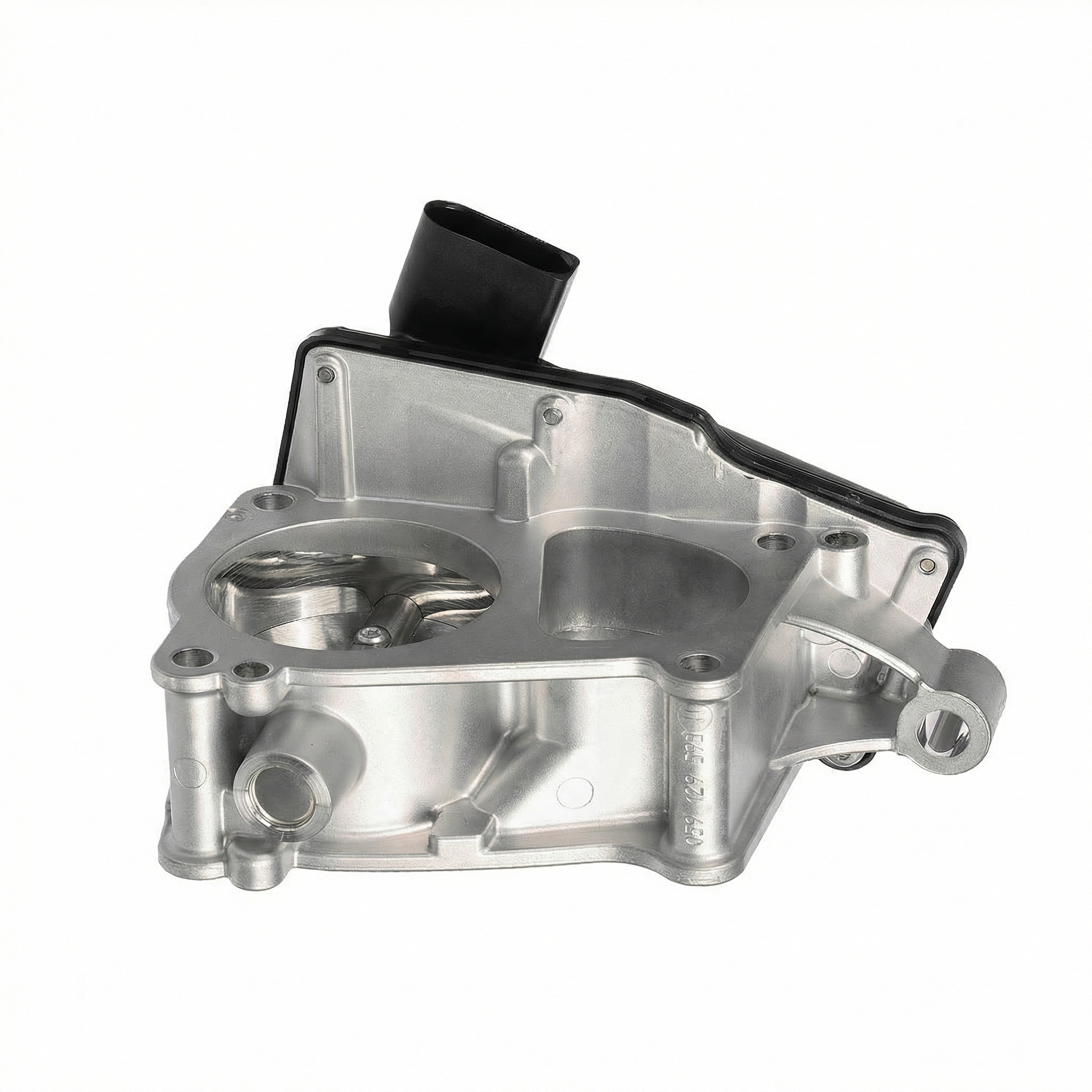
Typical fix: Replace the entire throttle body assembly. The sensors are integrated and cannot be replaced separately. A throttle body adaptation is required after installation.
Est. part cost: $250-$600 - Wiring or Connector Issue ⚪ Low Probability Engine vibration and heat can cause the wiring near the throttle body connector to fray or the connector pins to become loose or corroded over time. Water can also damage the harness.
How to confirm: Inspect the wiring harness and connector pins leading to the throttle body for any signs of damage, corrosion, or loose connections. Wiggle the harness with the engine running to see if it affects idle. Use a multimeter to check for continuity and proper voltage at the connector.
Typical fix: Repair the damaged section of the wiring harness or replace the connector pigtail. Audi has issued TSBs for similar issues on other models, suggesting this is a known vulnerability.
Est. part cost: $20-$50
Rare But Worth Checking
- Faulty Engine Control Module (ECM): This is extremely rare. Before condemning the ECM, all other possibilities, including the throttle body and wiring, must be exhaustively ruled out by a qualified technician. Sometimes a software reflash can resolve the issue.
Diagnosis Steps
- Scan the ECM for all stored trouble codes. Note any other codes that appear alongside P0121.
- Using a capable scan tool (like VCDS), navigate to Engine -> Measuring Blocks -> Group 062. View the live data for Throttle Position Sensor 1 (G69) and Sensor 2 (G188).
- Slowly press and release the accelerator pedal while observing the sensor voltage readings. They should change smoothly, with no dropouts or spikes. Normal readings are around 15% at idle and 90% at wide open throttle. The two sensors have inverse readings.
- Turn off the vehicle and remove the intake boot from the throttle body.
- Visually inspect the throttle body bore and plate for carbon buildup.
- If dirty, remove the four T30 Torx bolts holding the throttle body, and clean it thoroughly using appropriate cleaner and a soft cloth/brush. Do not use abrasive materials.
- Reinstall the throttle body with a new gasket.
- Perform a throttle body adaptation using a diagnostic tool. With VCDS, go to Engine -> Basic Settings -> Group 060 and click 'Go!'. You will hear the throttle body cycle and the status will change to 'ADP. O.K.'. This step is mandatory for the ECM to relearn the sensor's end stops.
- If the code returns after cleaning and adaptation, inspect the wiring and connector at the throttle body for damage, corrosion, or loose pins.
- If the wiring is confirmed to be good, the throttle body assembly itself is likely faulty and requires replacement.
Parts You'll Likely Need
- Throttle Body Assembly
(OEM #06E133062C (or newer revisions 06E133062G, 06E133062H))— If cleaning and adaptation fail to fix the issue, the internal sensors have likely failed. The sensors are integrated into the assembly and not sold separately. The latest revision is generally recommended.
Trusted brands: Bosch, VDO (OEM supplier)
OEM price range: $450-$600
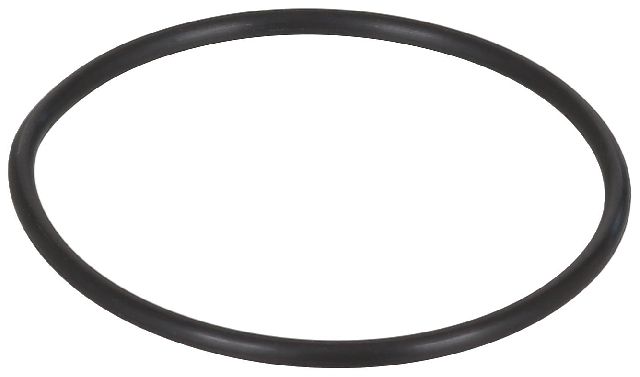
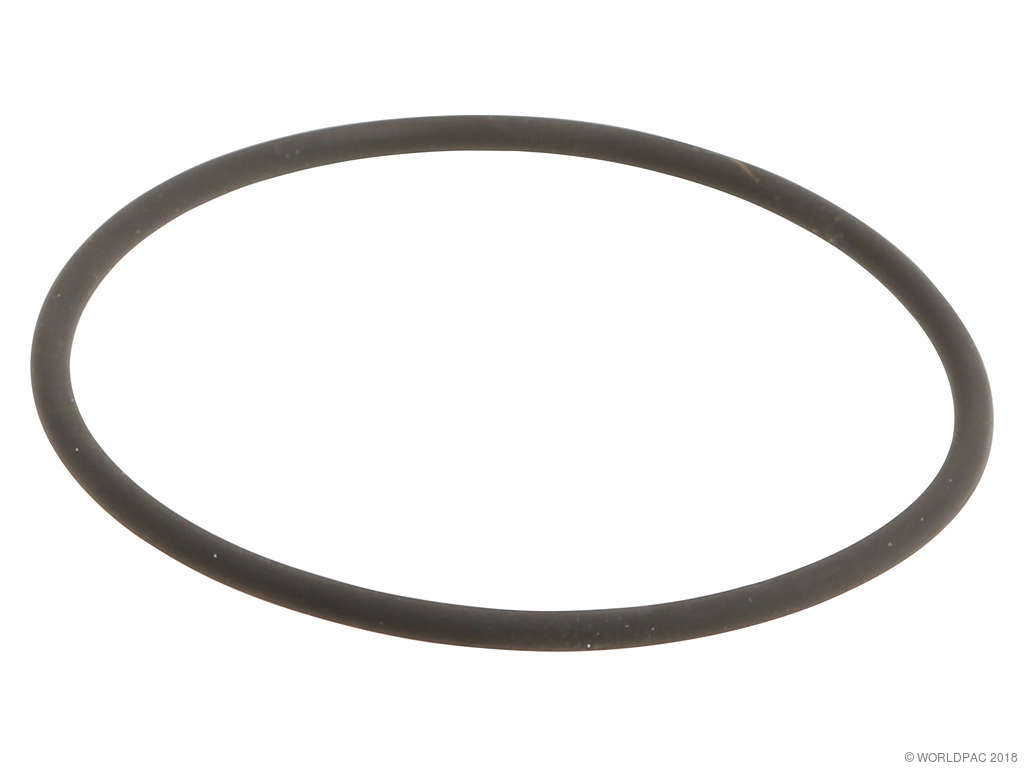
Aftermarket price range: $250-$400 - Throttle Body Gasket
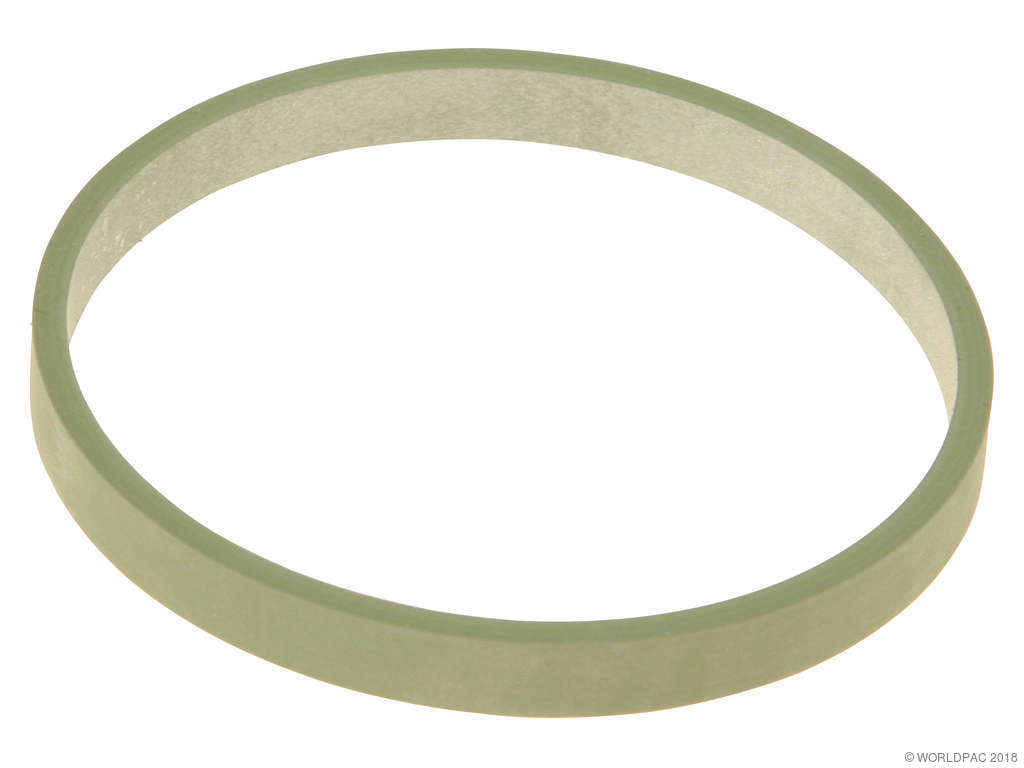
(OEM #06E133109F)— A new gasket should always be used whenever the throttle body is removed to prevent vacuum leaks.
Trusted brands: Victor Reinz, Elring
OEM price range: $10-$20
Aftermarket price range: $5-$15 - Throttle Body Cleaner — Required for the most common and first-step repair: cleaning carbon buildup from the throttle plate and bore.
Trusted brands: CRC, Liqui Moly
Aftermarket price range: $10-$15
Related Codes That Often Appear With This One
- P0221 — This code is for the secondary throttle position sensor ('B' circuit). Since the throttle body has two redundant sensors for safety, a fault in one often triggers an implausibility fault in the other.
- P0638 — This code indicates a fault with the throttle actuator control. It often appears with P0121 because the ECM cannot properly control the throttle plate if it's receiving incorrect position data.
- P0068 — This code indicates a correlation problem between the MAP/MAF sensor and the throttle position. The ECM sees a conflict between how much air it thinks should be entering and the reported throttle angle.
Technical Service Bulletins (TSBs) & Recalls
- TSB 01-15-15 / 2018260/9: While for older models, this TSB addresses P0121 by recommending a wiring repair at the throttle body connector, highlighting that wiring can be a weak point.
- TSB 17-20-08 / TPI 2060259: For NAR market 3.0L V6 TFSI engines (including the A6 from 2012-2018), this TSB addresses PCV breather elbow concerns which can cause related vacuum leak codes.
Platform-Specific Known Issues
- A safety recall (24AP) was issued for some 2012 A6 models with the 3.0T engine for a fuel leak issue, but it is unrelated to the throttle body or code P0121.
Mechanic-Grade Diagnostic Values
- VCDS Measuring Block 062, Field 1 (G185 Angle Sensor 1) — expected: Approx. 85-88% at idle, decreases on acceleration.. Failure: Values are erratic, jumpy, or do not change smoothly with pedal input. The sum of Field 1 and Field 2 should always be ~100%.
- VCDS Measuring Block 062, Field 2 (G69 Angle Sensor 2) — expected: Approx. 12-15% at idle, increases on acceleration.. Failure: Values are erratic, jumpy, or do not change smoothly with pedal input. The sum of Field 1 and Field 2 should always be ~100%.
- Throttle Body Connector (T6k) Pin Voltage — expected: Pins 1 & 5: ~5.0V (VCC from ECM). Pins 2 & 4: ~0V (Ground). Pins 3 & 6: Variable signal voltage that changes smoothly with throttle plate movement.. Failure: No voltage or low voltage on supply pins, or no ground continuity on ground pins, indicates a wiring or ECM issue.
- Fault Trigger Threshold — expected: The difference between the two throttle position sensor readings should be less than ~5.8%.. Failure: If the ECM detects a deviation greater than 5.79% between the two sensors for more than 0.45 seconds, it will log code P0121.
Scan Tool Commands That Help
- VCDS (VAG-COM): [01-Engine] -> [Basic Settings - 04] -> Group 060 -> Go! — This is the Throttle Body Adaptation (TBA). It is mandatory after cleaning or replacing the throttle body. It allows the ECM to relearn the closed, open, and partial-load positions of the throttle plate.
- ODIS (Official Dealer Software): Guided Functions -> Engine Electronics -> J338 - Throttle Valve Control Module, Adaptation — This is the dealer-level equivalent of the VCDS Throttle Body Adaptation. It performs the same function of re-calibrating the throttle plate's learned values.
Wiring & Ground Locations
- Engine-to-Body Ground Strap — Typically found on the passenger side (right side) of the engine bay, connecting the engine block or subframe to the chassis frame rail.. A corroded or loose main ground strap can cause unstable voltage and floating grounds for various engine sensors, including the throttle body. This can lead to erratic sensor readings and trigger P0121 even if the throttle body and its direct wiring are perfectly fine.
- J338 Connector (T6k) — The 6-pin electrical connector on the throttle body assembly itself.. This is the single point of connection for power, ground, and signal lines to the throttle body. Corrosion on these pins (especially from water ingress) or fretting from vibration is a common cause of failure.
- Earth Point 13 — A primary earth point located in the right side of the engine compartment.. This is a common grounding point for the engine wiring harness. Verifying it is clean and tight is a key step when diagnosing any electrical fault in the engine bay.
Real Owner Repair Stories
- AudiWorld Forums (2012 Audi A6 3.0T) — EPC light, limp mode, and a cluster of throttle codes including P0121, P0221, P0638.
❌ Tried (didn't work) Cleaning the throttle body.
✅ What actually fixed it The throttle body assembly was faulty internally and had to be replaced with a new unit (part number 06E133062C). - Audi Revolution Forums (Audi S6 (shares similar throttle body design)) — Intermittent EPC light, limp mode, codes P2101, P0121, and P0221 appearing one at a time.
❌ Tried (didn't work) Initial dealer diagnosis cleaned connections but the problem returned.
✅ What actually fixed it Replacing the throttle body electrical connector pigtail and repairing the associated wiring completely solved the problem. A loose ground was also tightened as part of the initial repair attempt. - AudiWorld Forums (Audi S4 (shares 3.0T engine and throttle body)) — Chronic P0121 and P1545 codes, EPC light, limp mode, even after replacing the throttle body and pedal sensor.
❌ Tried (didn't work) Replacing the throttle body., Replacing the accelerator pedal sensor.
✅ What actually fixed it The root cause was discovered to be water from a water-injection system accumulating in the throttle body housing and shorting the electronics. The issue was resolved by addressing the water ingress. This highlights that any fluid contamination (coolant, water) can cause these failures.
OEM Part Supersession History
06E133062C→06E133062G, then 06E133062H— Minor internal revisions and improvements by the manufacturer for reliability.
Heads up: All revisions (C, G, H) are physically and electronically interchangeable for the 2011-2018 A6 3.0T. It is always recommended to install the latest available revision (06E133062H).
Model Year Variations Within This Range
- 2016-2018 (C7.5 Facelift): While the core 3.0T engine and throttle body part number remained the same, the C7.5 facelift models received updated MMI and potentially different ECU software versions. This could lead to slight differences in the sensitivity or specific conditions under which a P0121 code is triggered, but the physical diagnosis and repair remain identical to earlier C7 models.
- 2012: The 2012 model year marked the introduction of the C7 generation A6. Early production models can sometimes have unique issues or software quirks that are addressed in later years. However, for the P0121 code, the causes and fixes are consistent across the entire 2011-2018 range.
Diagnostic Flowchart
Other Known Issues on This Vehicle
Issues unrelated to this code that are worth knowing about as an owner of this generation:
- PCV Valve (Oil Separator) Failure 🔴 High — Very common, typically fails between 60,000-100,000 miles. The diaphragm tears, causing a massive vacuum leak. (Ref: TSB 17-20-08 / TPI 2060259)
- Water Pump Failure 🔴 High — Common failure item, especially on 2010-2012 models. The plastic housing can crack or seals can fail, leading to coolant leaks. Later models have an improved design. (Ref: A class action settlement covered some models, but issues persist.)
- Thermostat Failure 🟠 Medium — Commonly fails by sticking open or closed, causing overheating or the engine to not reach operating temperature. Often replaced with the water pump.
- Upper Timing Chain Tensioner Rattle 🟠 Medium — A brief rattle on cold start is common and often considered acceptable if it lasts less than 2-3 seconds. Persistent rattling may indicate worn tensioners, a costly repair as the engine must be removed.
- Carbon Buildup on Intake Valves 🟠 Medium — As a direct-injection engine, carbon buildup on the back of the intake valves is inevitable, typically requiring cleaning every 60,000-80,000 miles to restore performance.
- Supercharger Intercooler Leaks 🟠 Medium → Shop Turbocharger — The two air-to-water intercoolers located under the supercharger can develop internal coolant leaks, leading to coolant consumption and potential misfires if coolant enters the cylinders.
Used vs. New Parts: Buying Guide for This Vehicle
When a used part is the smart pick: A used OEM throttle body can be a cost-effective option if the primary failure mode is electronic and not due to physical wear or damage to the throttle plate/bore. Given that the most common cause is carbon buildup (which can be cleaned) and the second is electronic failure, a used part is a reasonable choice.
Donor-vehicle mileage cap: roughly under 75000 miles for the part to have meaningful remaining life.
What to inspect on the donor part:
- Verify the part number is a compatible revision (06E133062C, G, or H).
- Inspect the electrical connector pins for any signs of corrosion, moisture, or damage.
- Check the throttle bore for deep scratches or scoring; light carbon is acceptable and can be cleaned.
- Ensure the butterfly valve moves smoothly by hand without binding (some resistance from the motor is normal).
- Ask for the donor vehicle's mileage and history if possible; avoid parts from flood or front-end collision vehicles.
Aftermarket brands forum-validated for this vehicle:
- VDO (often the original OEM supplier)
- Bosch
Brands owners have reported issues with on this vehicle:
- Unnamed or generic 'white-box' brands from online marketplaces, as their internal electronics may have poor quality control and fail to communicate properly with the Audi ECU.
Real Owner Stories
Aggregated from forums and TSBs cited above. Mileages and costs reflect what owners reported in those sources.
2014 Audi A6 3.0T
Symptoms: Experienced P0121 and P0221 codes; found the throttle body was heavily coated in carbon.
What fixed it: Cleaned the throttle body and performed a throttle body adaptation with VCDS.
Source hint: Audizine thread: 'P0121 Throttle Pedal Position Sensor Switch A Circuit Range Performance'
2012 Audi A6 3.0T
Symptoms: Reported a cluster of throttle-related codes including P0121, P0221, P0638, and P3078.
What fixed it: Replacement of the entire throttle body assembly (part number 06E133062C) after cleaning failed to resolve the issue.
Source hint: AudiWorld forum: 'p0121-p0221-p0638-p3078'
Related OBD-II Codes
Frequently Asked Questions
I have a 2012 Audi A6 3.0T; is there a recall for the throttle body causing P0121?
Can I just replace the sensor on my A6's throttle body to save money?
Does TSB 01-15-15 apply to the wiring issues on my Audi?
What diagnostic tool do I need to fix P0121 on my 2014 A6 3.0T?
Is there a TSB for the vacuum leaks I'm seeing alongside my throttle codes?
Where is the throttle body located on the 3.0L Supercharged V6 engine?
Helpful Videos
Used OEM Parts in Stock
New Aftermarket Parts Available


The information in this article is provided for general reference and educational purposes only. Vehicle specifications, procedures, and part compatibility can vary by production date, trim level, and region. Always consult your vehicle's factory service manual and verify part numbers before purchasing or performing repairs. Safety-critical components such as airbags, seat belts, and braking systems should be installed by a qualified professional.
- Audi A6:
- 🧭 Diagnostic Flowchart
- 🎬 Helpful Videos
- 🛍️ Shop This Part
- What's Unique About the 2011-2018 Audi A6
- Symptoms You May Notice
- Most Likely Causes
- Rare But Worth Checking
- Diagnosis Steps
- Parts You'll Likely Need
- Related Codes That Often Appear With This One
- Technical Service Bulletins (TSBs) & Recalls
- Platform-Specific Known Issues
- Mechanic-Grade Diagnostic Values
- Scan Tool Commands That Help
- Wiring & Ground Locations
- Real Owner Repair Stories
- OEM Part Supersession History
- Model Year Variations Within This Range
- Other Known Issues on This Vehicle
- Used vs. New Parts: Buying Guide for This Vehicle
- Real Owner Stories
- 2014 Audi A6 3.0T
- 2012 Audi A6 3.0T
- Related OBD-II Codes
- Frequently Asked Questions
- 🎟️ Get 5% Off