

P0121 on 2011-2018 Audi Q3 2.0L TDI: Throttle Body Causes and Fixes
On a 2.0L TDI Audi Q3, code P0121 is almost always caused by heavy carbon buildup inside the throttle body (also called the anti-shudder valve), which prevents the valve from moving correctly. A thorough cleaning and a system reset often fixes it. For pre-2015 models with the EA189 engine, this may be exacerbated by the 'Dieselgate' emissions software update. Expect to spend under $30 on cleaning supplies for a DIY fix.
- P0121 on your Q3 2.0L TDI almost always means the throttle body is clogged with carbon, not that the sensor is bad.
- The most effective and cheapest first step is to remove and thoroughly clean the throttle body.
- Do not replace the accelerator pedal; the fault is located at the engine.
- After cleaning or replacing the throttle body, you must perform a 'Throttle Body Adaptation' with a scan tool for the repair to be successful.
- Always replace the throttle body gasket when you remove the part to avoid future vacuum leaks.
What's Unique About the 2011-2018 Audi Q3
The 2.0L TDI engine is well-known for accumulating a thick, tar-like sludge in the intake system. This is caused by the Exhaust Gas Recirculation (EGR) system mixing diesel soot with oily crankcase ventilation vapors. This gunk physically jams the throttle body's valve (often called the anti-shudder valve on diesels), preventing it from moving to its commanded position. So, while the code is for a sensor 'performance' issue, the root cause on this specific engine is almost always a mechanical blockage, not an electronic failure of the sensor itself. 🎬 Watch: Audi Q3 P0121 diagnosis and repair walkthrough Furthermore, pre-facelift models (2011-2014) with the EA189 engine were subject to the 'Dieselgate' emissions recall, and some owners report the subsequent software fix increases EGR duty cycles, potentially accelerating this carbon buildup.
Symptoms You May Notice
- Check Engine Light is on
- Flashing glow plug light on the dashboard
- EPC (Electronic Power Control) light is on
- Vehicle enters 'limp mode' with drastically reduced engine power
- Hesitation or stumbling during acceleration
- Rough or high idle (may idle around 1000 RPM)
- Engine may stall unexpectedly
- Stop-start system may fail to restart the engine, requiring a manual key cycle.
- Replacing the accelerator pedal sensor. On this TDI engine, P0121 almost always relates to the throttle body on the engine, not the pedal inside the car.
- Replacing the throttle body without cleaning it first. A thorough cleaning is often all that is needed to fix the problem and is a very inexpensive first step. Many owners successfully resolve the code with just a cleaning. 🎬 See: How to clean a TDI throttle valve
Most Likely Causes
- Heavy Carbon/Soot Buildup in Throttle Body 🔴 High Probability → Shop Fuel Injection Throttle Body The 2.0L TDI engine's EGR system mixes soot with oil vapor, creating a sludge that builds up and physically restricts the throttle plate's movement. This is especially common on vehicles used for short trips or that have had the EA189 emissions software update.
How to confirm: Remove the air intake hose from the throttle body and visually inspect the throttle plate and bore for thick, black, sticky carbon deposits. The plate may be difficult to move by hand, feeling gritty or stuck.
Typical fix: Remove the throttle body from the vehicle for a thorough off-car cleaning using intake or carburetor cleaner, soft brushes, and scrapers. Do not spray cleaner into the electronic components. A throttle body adaptation procedure with a scan tool (like VCDS) is required after reinstallation.
Est. part cost: $15-$30 - Failed Throttle Body Assembly 🟡 Medium Probability → Shop Fuel Injection Throttle Body If cleaning does not resolve the issue, the internal electronic motor or the integrated position sensors may have failed due to heat, vibration, and stress from trying to move a stuck plate.
How to confirm: If the code P0121 returns shortly after a thorough cleaning and adaptation, and the wiring is confirmed to be good, the unit itself is faulty. This is a diagnosis by exclusion.
Typical fix: Replace the entire throttle body assembly. The sensors are not sold separately. A throttle body adaptation is mandatory after replacement.
Est. part cost: $150-$400 - Wiring or Connector Issue ⚪ Low Probability Engine vibration and heat can cause wires to fray or connector pins to corrode over time, leading to an intermittent or poor signal. The 5-pin connector is located at the front of the engine and exposed to the elements.
How to confirm: Visually inspect the wiring harness and 5-pin connector going to the throttle body for any signs of damage, corrosion, or loose pins. Wiggle the harness with the engine running to see if it affects idle or triggers the fault.
Typical fix: Repair the damaged section of wire or clean/replace the connector pigtail.
Est. part cost: $5-$50
Rare But Worth Checking
- Faulty Powertrain Control Module (PCM): This is extremely rare. The PCM should only be considered after all other possibilities, including the throttle body and its wiring, have been definitively ruled out.
Diagnosis Steps
- Connect an OBD-II scanner (VCDS is recommended for VAG vehicles) and confirm P0121 is present. Note any other codes.
- Check freeze frame data to understand the conditions (engine speed, load, temperature) when the fault was triggered.
- Turn the ignition off and disconnect the battery negative terminal as a safety precaution.
- Remove the plastic engine cover and the main air intake duct connected to the throttle body.
- Visually inspect the throttle plate and the inside of the throttle body for heavy carbon buildup. This is the most likely cause.
- If heavy buildup is found, remove the throttle body assembly for cleaning. This usually involves three T30 Torx bolts, unplugging one 5-pin electrical connector, and detaching the dipstick tube support (10mm bolt).
- Thoroughly clean the throttle body using a dedicated throttle body cleaner, soft brushes, and a plastic or wood scraper. Scrape away heavy deposits carefully. Do not spray cleaner directly into the electronic components or down the butterfly valve shaft to avoid damaging internal gears. Also clean any accessible carbon from the intake manifold opening.
- Reinstall the throttle body with a new gasket to prevent vacuum leaks.
- Reconnect the battery and all electrical connectors.
- Using a capable OBD-II scanner (like VCDS), perform a 'Throttle Body Adaptation' (TBA). For VCDS: go to [01-Engine] -> [Basic Settings - 04] -> Select 'Throttle Valve Adaptation' from the dropdown list and click 'Go!'. You will hear the throttle body cycle. 🎬 Watch: How to perform a throttle body adaptation Wait for the status to read 'Finished correctly'.
- Clear all fault codes, start the vehicle, and perform a test drive to ensure the code does not return. An intermittent fault may take 5-10 miles of driving to reappear if the fix was not successful.
Parts You'll Likely Need
- Throttle Body Assembly
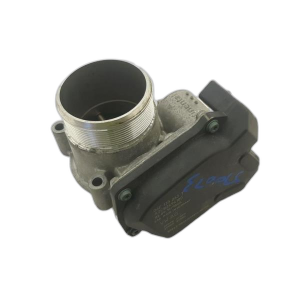
(OEM #03L128063AF (also known as 03L128063A, B, C, D, E))— This is the complete unit that fails if cleaning does not work. The position sensors are integrated and cannot be replaced separately. It is also called an Anti-Shudder Valve (ASV) or Inlet Manifold Flap.
Trusted brands: Bosch, VDO / Continental, Pierburg
OEM price range: $300-$450
Aftermarket price range: $150-$250 - Throttle Body Gasket
(OEM #03L128749)— This gasket should always be replaced whenever the throttle body is removed for cleaning or replacement to prevent vacuum leaks.
Trusted brands: Victor Reinz, Elring
OEM price range: $10-$20
Aftermarket price range: $5-$15 - Intake / Throttle Body Cleaner — Required for cleaning the heavy carbon deposits that are the most common cause of this code on a TDI engine.
Trusted brands: Liqui Moly, CRC
Aftermarket price range: $15-$30
Related Codes That Often Appear With This One
- P0221 — This code is for the secondary throttle position sensor ('B' circuit). Since the throttle body uses two sensors for redundancy, a performance fault in one often triggers an implausibility fault in the other.
- P0638 — This code indicates a fault with the throttle actuator control itself. It often appears with P0121 because the ECM cannot properly control the throttle plate if it's physically stuck or receiving incorrect position data.
Technical Service Bulletins (TSBs) & Recalls
- Audi TSB 01-09-04 / 2018652: While not for this specific engine, this TSB addresses P0121 caused by wiring issues at the throttle body connector, establishing a known failure pattern for this component area within the brand.
Platform-Specific Known Issues
- Impact of 'Dieselgate' Emissions Fix (EA189 Engine): Models from 2011-2014 are typically equipped with the EA189 2.0L TDI engine, which was part of the VW emissions scandal. Many owners and specialists believe the software update ('fix') applied during the recall increases the rate of Exhaust Gas Recirculation (EGR) to lower NOx emissions. A potential side effect is an accelerated buildup of soot and carbon in the intake system, including the throttle body, which can make faults like P0121 more frequent or severe.
Mechanic-Grade Diagnostic Values
- VCDS Measuring Block 062, Fields 1 & 2 — expected: Field 1 (Sensor 1) should read low at idle (e.g., 5-15%) and increase smoothly. Field 2 (Sensor 2) should read high at idle (e.g., 80-95%) and decrease smoothly, moving opposite to Field 1.. Failure: Values are frozen, jump erratically, or do not change when the accelerator is pressed (with Key On, Engine Off).
- VCDS Measuring Block 003 — expected: Shows live data from both throttle position sensors (G69 and G187). The sum of their percentage values should remain close to 100% as the throttle is operated.. Failure: The sum deviates significantly from 100% or one of the values is stuck.
- 5V Reference Voltage at Connector — expected: Approximately 5.0 volts with the ignition on, engine off. This confirms the ECU is supplying correct power to the sensor.. Failure: Voltage is significantly lower than 5V or is absent, indicating a wiring or ECU issue.
- Signal Voltage at Connector — expected: Approximately 0.5V at idle, increasing smoothly to around 4.5V at wide-open throttle.. Failure: Voltage is outside the expected range, does not change, or shows sudden spikes/dropouts as the throttle is moved.
Hidden / Shadow Codes Worth Checking
- P012100: This is the VAG-specific format for the generic P0121 code, often displayed by more advanced scanners like VCDS or ODIS. It means 'Throttle/Pedal Position Sensor A Circuit Range/Performance'. (see via VCDS, ODIS, or other professional-grade VAG-compatible scan tools.)
- P0121 00: A more detailed fault code seen in some logs, where '' is a VAG status byte. It specifies an 'implausible signal' from the throttle potentiometer (G69). (see via VCDS or other advanced diagnostic tools capable of reading VAG-specific status bytes.)
Scan Tool Commands That Help
- VCDS (or equivalent): Throttle Body Adaptation (TBA) — This is mandatory after cleaning or replacing the throttle body. It allows the ECU to relearn the closed, open, and intermediate positions of the throttle plate. The function is typically found in [01-Engine] -> [Basic Settings - 04].
- ODIS (Dealer Tool): Guided Functions -> J338 - Throttle Valve Control Module, Adaptation — This is the dealer-level equivalent of the VCDS TBA. It should be performed any time the throttle body is cleaned, reinstalled, or replaced to ensure correct calibration.
Wiring & Ground Locations
- Throttle Body Connector — A 5-pin oval electrical connector on the throttle body assembly, located at the front of the engine, connected to the intake manifold.. This is the single point of electrical connection for the integrated throttle motor and position sensors. Corrosion, damage, or loose pins here will directly cause P0121 and related codes.
- Ground Point 671 — An earth point located on the front left longitudinal member, near the headlight.. This is a primary chassis ground for components in the front of the engine bay. A poor connection here can cause intermittent and difficult-to-diagnose electrical issues for various engine sensors, including the throttle body.
- Ground Point 14 — An earth point located on the gearbox housing.. The engine and gearbox assembly rely on this ground strap for a solid connection to the chassis ground. A loose or corroded connection here can affect the entire engine management system.
Real Owner Repair Stories
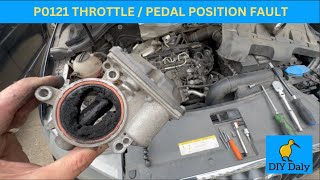
- DIYDaly on YouTube (2014 Audi Q3 TDI) — Intermittent Check Engine Light, EPC light, and limp mode. Fault code P0121 would return 4-6 miles after being cleared.
❌ Tried (didn't work) Clearing the code would only provide a temporary fix.
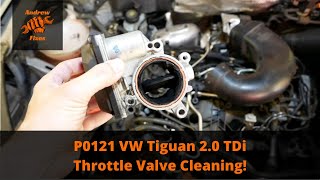
✅ What actually fixed it The throttle body (anti-shudder valve) was removed and found to be extremely clogged with thick carbon buildup. A thorough off-car cleaning restored its function, and the code did not return after a 10+ mile test drive. - AndrewFixes.com blog (2012 VW Tiguan 2.0 TDI (CFFB engine) with 83,000 miles (platform mate to the Q3)) — P0121 code found during a routine scan with VCDS. No engine light was on yet, but the owner noted the car was used for many short journeys.
✅ What actually fixed it Proactively removing and cleaning the throttle valve, which was heavily contaminated with carbon soot. After cleaning and reinstallation, the fault code was cleared and did not return. - AlexTheGrumpyOne on YouTube (2013 Audi Q3 2.0L TDI) — Engine light on, limp mode, fault code P012100.
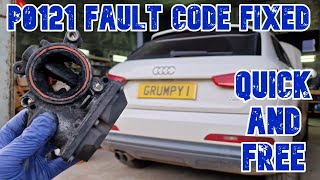
✅ What actually fixed it The video demonstrates that the throttle plate was so caked with carbon it could not shut properly. A complete removal and cleaning of the throttle body resolved the issue for free (excluding cost of cleaner).
OEM Part Supersession History
03L128063A, 03L128063B, 03L128063C, 03L128063D, 03L128063E→03L128063AF— Progressive design revisions by the manufacturer to improve reliability or address known failure modes.
Heads up: No known incompatibilities; the later revisions are considered direct replacements for the earlier ones.
Model Year Variations Within This Range
- 2011-2014: These pre-facelift models are typically fitted with the EA189 series engine. Many of these engines received a software update as part of the 'Dieselgate' emissions recall. This update is believed to increase EGR rates, which can accelerate carbon buildup in the intake and throttle body, making P0121 more common.
Diagnostic Flowchart
Other Known Issues on This Vehicle
Issues unrelated to this code that are worth knowing about as an owner of this generation:
- Timing Belt / Water Pump Failure 🔴 High — A critical maintenance item. Failure can occur if the recommended replacement interval (typically 70k-130k miles or 5-7 years, whichever comes first) is ignored. Water pump or tensioner failure often precedes belt failure.
- Haldex AWD System Service Neglect 🟠 Medium — Common on higher-mileage vehicles where the Haldex fluid and pump filter service (recommended every 20k-40k miles) has been neglected. Leads to a clogged pump strainer, pump failure, and loss of all-wheel-drive.
- Panoramic Sunroof Leaks 🟠 Medium — A widely reported issue where the sunroof frame cracks or the drain tubes become clogged/pinched, causing water to leak into the headliner and cabin electronics. (Ref: Recall 60C1 (for 2015 models, software update) and various TSBs (e.g., TSB 2058523/3) exist for inspection and repair of drain systems.)
- DPF / EGR System Clogging 🟠 Medium — Highly frequent on vehicles used for short, urban trips where the engine doesn't get hot enough for passive DPF regeneration. Can be exacerbated by the 'Dieselgate' emissions fix on EA189 engines.
Used vs. New Parts: Buying Guide for This Vehicle
When a used part is the smart pick: A used throttle body is a viable, cost-effective option for this repair, as the most common failure is carbon buildup, which can be cleaned. A functional electronic unit from a donor car can offer significant savings over a new part.
Donor-vehicle mileage cap: roughly under 80000 miles for the part to have meaningful remaining life.
What to inspect on the donor part:
- Visually inspect the throttle bore and plate for scoring or damage, beyond just carbon.
- Gently move the butterfly valve by hand; it should move smoothly without any grinding, clicking, or sticking points.
- Check the 5-pin electrical connector for any signs of corrosion, bent pins, or cracks in the plastic housing.
- If possible, inquire about the donor vehicle's history; avoid parts from cars with known oil consumption issues or engine fires.
OEM-only on this vehicle (don't cheap out):
- Powertrain Control Module (PCM)
Aftermarket brands forum-validated for this vehicle:
- Pierburg
- VDO / Continental
- Bosch
- Magneti Marelli
- Hitachi
Real Owner Stories
Aggregated from forums and TSBs cited above. Mileages and costs reflect what owners reported in those sources.
2014 Audi Q3 2.0L TDI
Symptoms: Intermittent P0121 fault code accompanied by a flashing glow plug light and EPC light on the dashboard.
What fixed it: The owner removed the throttle body and found heavy carbon buildup. A thorough cleaning of the throttle plate and bore resolved the issue.
Source hint: YouTube: DIY Daly - 'Audi Q3 TDI P0121 Throttle / Pedal position sensor fault fixed'
2013 Audi Q3 2.0L TDI
Symptoms: P012100 fault code triggered.
What fixed it: A detailed cleaning procedure of the throttle body assembly was performed, which fixed the fault for free.
Source hint: YouTube: AlexTheGrumpyOne - 'P0121 fault code fixed for free. Audi/VW/Skoda/Seat 2.0 TDI engine.'
2007-2017 Volkswagen Tiguan 2.0L TDI
Symptoms: P0121 code caused by physical restriction of the throttle valve.
What fixed it: Step-by-step diagnosis and cleaning of the throttle valve to remove carbon buildup.
Source hint: AndrewFixes.com - 'P0121 VW Tiguan 2.0 TDi – Throttle Valve Cleaning'
Related OBD-II Codes
Frequently Asked Questions
Does Audi TSB 01-09-04 / 2018652 apply to my Q3's P0121 code?
Could the 'Dieselgate' emissions fix be causing my throttle body to clog?
Is a special tool required to fix the P0121 code on my Audi Q3?
Can I just spray cleaner into the throttle body while it's on the car?
My Q3 is stalling and the glow plug light is flashing; is this related to P0121?
Helpful Videos

We Have This Part in Stock

The information in this article is provided for general reference and educational purposes only. Vehicle specifications, procedures, and part compatibility can vary by production date, trim level, and region. Always consult your vehicle's factory service manual and verify part numbers before purchasing or performing repairs. Safety-critical components such as airbags, seat belts, and braking systems should be installed by a qualified professional.
- Audi Q3:
- 🧭 Diagnostic Flowchart
- 🎬 Helpful Videos
- 🛍️ Shop This Part
- What's Unique About the 2011-2018 Audi Q3
- Symptoms You May Notice
- Most Likely Causes
- Rare But Worth Checking
- Diagnosis Steps
- Parts You'll Likely Need
- Related Codes That Often Appear With This One
- Technical Service Bulletins (TSBs) & Recalls
- Platform-Specific Known Issues
- Mechanic-Grade Diagnostic Values
- Hidden / Shadow Codes Worth Checking
- Scan Tool Commands That Help
- Wiring & Ground Locations
- Real Owner Repair Stories
- OEM Part Supersession History
- Model Year Variations Within This Range
- Other Known Issues on This Vehicle
- Used vs. New Parts: Buying Guide for This Vehicle
- Real Owner Stories
- 2014 Audi Q3 2.0L TDI
- 2013 Audi Q3 2.0L TDI
- 2007-2017 Volkswagen Tiguan 2.0L TDI
- Related OBD-II Codes
- Frequently Asked Questions
- 🎟️ Get 5% Off