

P0121 on 2008-2017 Audi Q5 2.0L TDI: Causes and Fixes for Throttle Performance Issues
On the Audi Q5 2.0L TDI with the CGLA engine, P0121 is almost always caused by heavy carbon buildup in the throttle body (also called the anti-shudder valve), preventing the flap from moving correctly. A thorough off-car cleaning is the most common fix and costs under $30 for supplies. If cleaning doesn't work, or the code returns quickly, the throttle body assembly may need replacement.
- P0121 on your Q5 TDI is almost certainly a problem at the engine's throttle body, not the gas pedal.
- The most likely cause is heavy carbon buildup jamming the throttle plate; start with a thorough cleaning before buying parts.
- A Throttle Body Adaptation (TBA) with a proper scan tool is highly recommended after cleaning or replacing the part to ensure correct idle and performance.
- If cleaning doesn't fix it, the entire throttle body assembly needs to be replaced, as the sensors are built-in.
- Driving with this fault is unsafe due to the risk of stalling and entering a low-power 'limp mode'.
What's Unique About the 2008-2017 Audi Q5
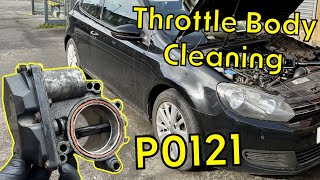
For the CGLA 2.0L TDI engine (part of the EA189 family), this code is exceptionally common and points directly to a physical, not just electrical, problem. The combination of Exhaust Gas Recirculation (EGR) and crankcase ventilation systems causes a sticky, tar-like soot to accumulate in the intake tract. This buildup physically jams the throttle valve (often called the anti-shudder valve on a TDI), preventing it from opening and closing properly 🎬 Watch: How to fix and prevent common TDI throttle body codes, which triggers the P0121 performance code. Many owners consider this a routine cleaning maintenance item every 60,000-80,000 miles.
Symptoms You May Notice
- Check Engine Light and/or EPC (Electronic Power Control) light illuminated
- Vehicle enters 'limp mode' with severely reduced engine power
- Hesitation or stumbling during acceleration
- Rough or unstable idle
- Engine stalling, especially when coming to a stop or at low speeds
- Erratic or unpredictable throttle response
- Engine may be hard to start
- Stop-start system may fail to restart the engine, requiring a manual key cycle.
- Replacing the accelerator pedal sensor. P0121 on this TDI engine almost always relates to the throttle body on the engine, not the pedal inside the car.
- Replacing the throttle body without cleaning it first. A thorough cleaning is often all that is needed to fix the problem and is a very inexpensive first step.
Most Likely Causes
- Heavy Carbon/Soot Buildup in Throttle Body 🔴 High Probability → Shop Fuel Injection Throttle Body Diesel engines with EGR systems, like the 2.0L TDI, are highly susceptible to soot mixing with oil vapor, creating a thick sludge that restricts the throttle valve's movement. This is a well-documented issue on the EA189 engine family.
How to confirm: Remove the air intake hose from the throttle body and visually inspect the throttle plate and bore for a thick, black, tar-like substance. The plate may be difficult to move by hand or feel gritty.
Typical fix: Remove the throttle body (three T30 Torx bolts) 🎬 Watch: Step-by-step guide to repairing the P0121 fault and anti-shudder valve from the vehicle and clean it thoroughly with intake/EGR cleaner and a brush. Scrape away heavy deposits carefully with a non-marring tool. A Throttle Body Adaptation (TBA) using a diagnostic tool like VCDS is recommended after reinstallation.
Est. part cost: $15-$30 (for cleaning supplies and a new gasket) - Faulty Throttle Body Assembly 🟡 Medium Probability → Shop Fuel Injection Throttle Body If cleaning does not resolve the issue, the internal electronics of the position sensor or the actuator motor within the sealed throttle body unit may have failed. This can happen if the motor burns out from trying to move a stuck flap.
How to confirm: After a thorough cleaning and Throttle Body Adaptation, the P0121 code returns quickly, often within a few miles. A diagnostic scan tool may show failing or erratic voltage readings from the sensor during a throttle sweep test. A failed Throttle Body Adaptation (TBA) also points to a bad unit.
Typical fix: Replace the entire throttle body assembly. A Throttle Body Adaptation (TBA) is mandatory after installation.
Est. part cost: $150-$400 - Wiring or Connector Issue ⚪ Low Probability The wiring harness connector at the throttle body is exposed to engine heat and vibration, which can lead to frayed wires or poor pin connections over time.
How to confirm: Visually inspect the wiring harness and 5-pin connector leading to the throttle body for any signs of damage, corrosion, or looseness. Test for 5V reference voltage, ground, and signal continuity with a multimeter.
Typical fix: Repair the damaged section of the wiring harness or replace corroded connector pins. Audi has issued TSBs for similar issues on other engines, suggesting it's a known weak point.
Est. part cost: $10-$50 (for repair supplies)
Rare But Worth Checking
- Faulty Engine Control Module (ECM): This is extremely rare. Before condemning the ECM, all other possibilities, including throttle body and wiring, must be exhaustively ruled out.
Diagnosis Steps
- Connect an OBD-II scanner and confirm P0121 is the primary code. Note any other codes present, like P0222 or P0638.
- Turn the ignition off and remove the plastic engine cover and air intake ducting from the throttle body.
- Visually inspect the throttle plate and intake bore for heavy carbon buildup. This is the most likely cause.
- If significant buildup is present, remove the throttle body assembly for a thorough off-car cleaning. This typically involves removing three T30 Torx bolts and a 10mm bolt for the dipstick bracket.
- Use a quality intake/throttle body cleaner (e.g., Wynn's, Liqui Moly) and soft brushes. Scrape heavy deposits with a plastic or wood tool to avoid scratching the metal.
- While the throttle body is off, inspect its electrical connector and the corresponding wiring harness for any signs of corrosion, damage, or loose pins.
- Clean the entrance to the intake manifold as well before reinstalling the throttle body with a new gasket. Reconnect all hoses and electrical connectors.
- Using a compatible diagnostic tool (like VCDS/VAG-COM), perform a Throttle Body Adaptation (TBA). This step is crucial for the ECM to relearn the sensor's clean start and end positions.
- Clear all fault codes and perform a long road test (10-15 miles) including varied driving conditions to see if the code returns.
- If the code returns after cleaning and successful adaptation, the throttle body assembly itself is likely faulty and requires replacement.
Parts You'll Likely Need
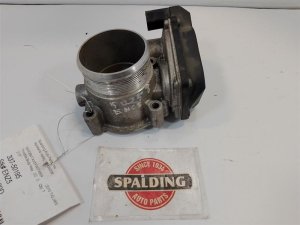
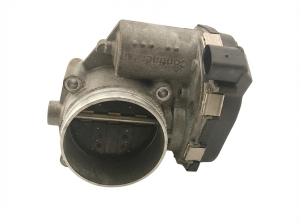
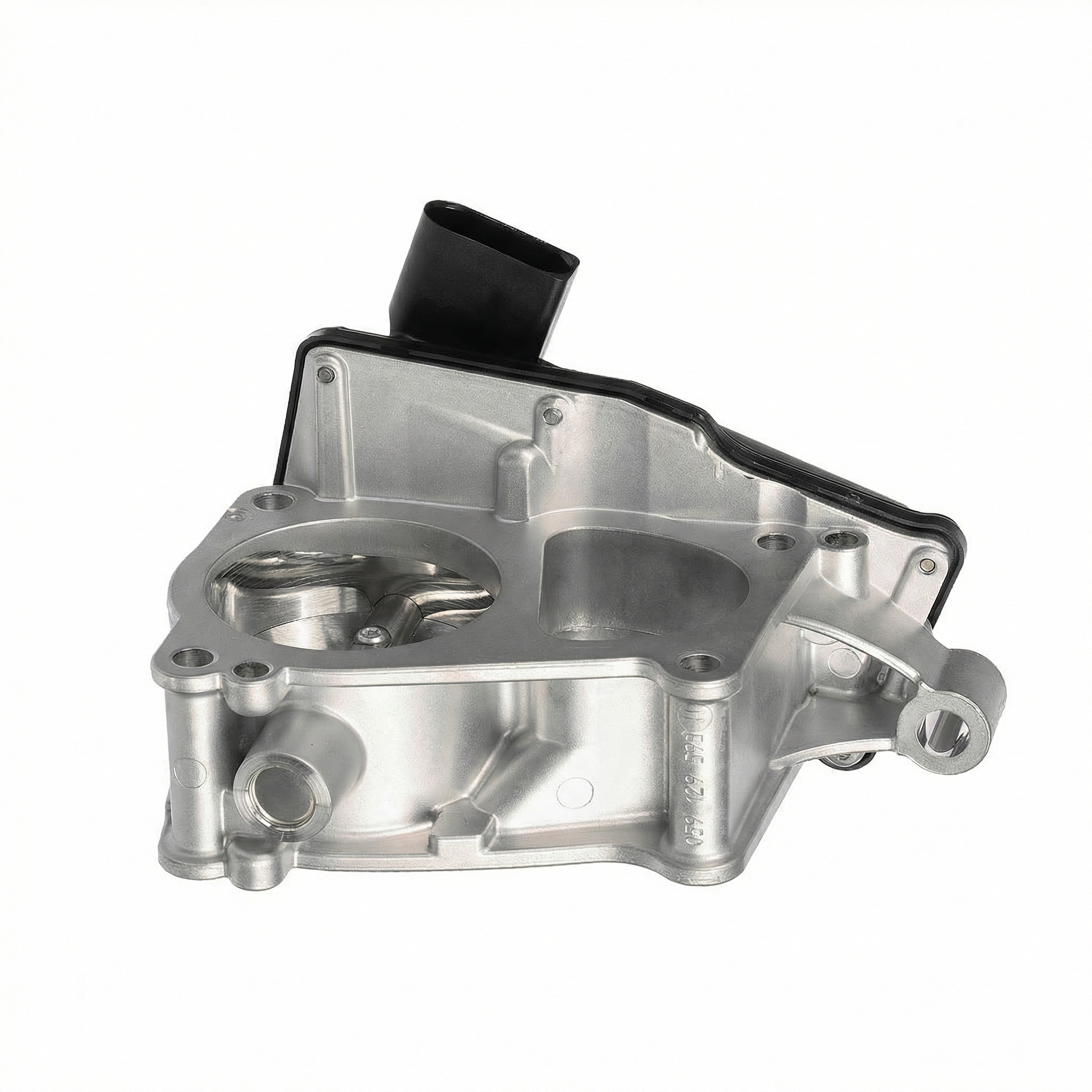
- Throttle Body Assembly
(OEM #03L128063AF)— This is the complete unit that fails, either due to extreme carbon buildup that can't be cleaned or internal electronic failure. The position sensors are integrated and cannot be replaced separately.
Trusted brands: Bosch, VDO, Pierburg, Magneti Marelli
OEM price range: $300-$500
Aftermarket price range: $150-$300 - Throttle Body Gasket
(OEM #03L128749)— The gasket should always be replaced whenever the throttle body is removed for cleaning or replacement to prevent vacuum leaks.
Trusted brands: Victor Reinz, Elring
OEM price range: $10-$20
Aftermarket price range: $5-$15 - Intake / Throttle Body Cleaner — Required for cleaning the heavy carbon deposits that are the most common cause of this code on a TDI engine.
Trusted brands: CRC, Liqui Moly, Wynn's Diesel EGR Extreme Cleaner
Aftermarket price range: $15-$25
Related Codes That Often Appear With This One
- P0222 — This code indicates a low input from the secondary throttle position sensor ('B' circuit). Since the throttle body contains two redundant sensors, a failure often affects both, triggering codes for each.
- P0638 — This code points to a problem with the throttle actuator control. If the ECM can't get a reliable position signal (P0121), it will also flag that it cannot control the throttle actuator correctly.
Technical Service Bulletins (TSBs) & Recalls
- Audi TSB 01-09-04 / 2018652: While for different engines, this TSB addresses wiring repairs at the throttle body connector for P0121, indicating a known potential for wiring issues in this area across the VAG brand.
Platform-Specific Known Issues
- The CGLA 2.0L TDI engine is known for significant carbon buildup in the intake system, directly leading to P0121 faults. This is considered a routine maintenance issue by many owners and technicians.
- A video by Andrew Fixes on YouTube titled 'P0121 VW Tiguan 2.0 TDi - Throttle Valve Cleaning' shows the exact same issue on a platform-mate, detailing the heavy carbon and the cleaning process.
- A user on the Ross-Tech forums with a 2013 Tiguan 2.0 TDI reported that cleaning the 'caked' throttle body resolved their P0121 issue for a couple of months before it started to return, confirming the temporary nature of the fix if driving habits don't change.
Mechanic-Grade Diagnostic Values
- Throttle Position Sensor (G69 & G185) Live Data with VCDS — expected: In Measuring Value Block (MVB) group 062, with KOEO (Key On, Engine Off), Sensor 1 (G187/G185) should read low (5-15%) and Sensor 2 (G188/G69) should read high (80-95%). As the accelerator is pressed, Sensor 1's value should rise smoothly while Sensor 2's value falls smoothly. The sum should always be ~100%.. Failure: Values are stuck, jump erratically, or do not move in opposition. If the values do not change at all when pressing the pedal, it points to a sensor or wiring failure.
- Throttle Body Connector - 5V Reference Voltage — expected: With the connector unplugged and ignition ON, test voltage between Pin 1 and a known good ground. The reading should be approximately 5.0V +/- 0.5V.. Failure: Voltage is significantly lower than 4.5V or is absent (0V), indicating a problem with the ECM or the wiring from the ECM.
- Throttle Body Connector - Ground Continuity — expected: With the connector unplugged and ignition OFF, test for continuity (near 0 ohms resistance) between Pin 3 and the battery negative terminal or a chassis ground point.. Failure: High resistance or an open circuit (OL) indicates a broken or corroded ground wire, which can cause implausible sensor readings.
- Throttle Position Sensor Signal Voltage (Back-probed) — expected: With the connector plugged in and ignition ON, back-probe the signal wire (Pin 2). At idle (throttle closed), voltage should be around 0.5V - 0.7V. As the throttle is manually opened, voltage should increase smoothly to ~4.5V - 4.8V at wide-open throttle.. Failure: Voltage that is stuck, jumps, or has dead spots as the throttle moves indicates a worn or failed internal sensor track.
Scan Tool Commands That Help
- VCDS (VAG-COM): Basic Settings - Group 060 — This is the Throttle Body Adaptation (TBA). It must be performed after cleaning or replacing the throttle body. It allows the ECM to relearn the closed, open, and partial-load positions of the clean throttle plate.
- VCDS (VAG-COM): Output Tests - Throttle Valve Control Module — This function commands the throttle motor to cycle the plate open and closed. It's used to verify if the actuator motor is functional and if the plate moves freely without sticking, independent of sensor readings. A failure to cycle indicates a mechanical jam or a bad motor.
- VCDS (VAG-COM): Measuring Value Blocks (MVB) - Group 003 or 062 — To observe the live percentage readings from the two internal throttle position sensors (G69 and G185). This is critical for diagnosing whether the sensors are reading correctly, showing smooth transitions, or if they have dead spots or erratic behavior.
Wiring & Ground Locations
- J338 Connector (Throttle Body) — The 5-pin electrical connector on the throttle body assembly, located at the front of the engine on the intake manifold.. This is the single point of electrical connection for the throttle motor and both position sensors. Corrosion or damaged pins/wires here are a direct cause of P0121 and related codes. A wiring diagram shows Pin 1 is 5V supply, Pin 2 is signal for G188, Pin 3 is sensor ground, Pin 4 is signal for G69, and Pins 5 & 6 (on 6-pin versions) are for the motor.
- Ground Point 12 — In the engine compartment on the left side, on the suspension strut mount area or long member.. This is a primary engine-to-chassis ground connection. A loose or corroded main ground can cause floating voltages and unstable sensor readings throughout the engine management system, leading to implausible signal faults like P0121.
- Ground Point 609 — Located in the plenum chamber (the area under the windshield wipers).. The Engine Control Module (ECM) is also located in the plenum chamber. A bad ground connection near the ECM can directly affect its ability to correctly interpret sensor data, including the signals from the throttle body.
Real Owner Repair Stories
- Andrew Fixes on YouTube / Blog (2012 VW Tiguan 2.0 TDI (CFFB Engine) with 83,000 miles) — P0121 code found during a routine scan (no CEL yet), but owner noted poor throttle response.
✅ What actually fixed it The throttle body was removed and found to be heavily caked with carbon deposits. A thorough manual cleaning using solvent and scraping tools restored the free movement of the throttle plate. After reinstallation and clearing the code, throttle response was immediately improved and the code did not return. - DIY Daly on YouTube (Audi Q3 2.0 TDI (platform mate)) — Intermittent P0121 fault code that would return within 4-6 miles of driving.
❌ Tried (didn't work) Initial diagnosis pointed towards a potentially faulty throttle body unit.
✅ What actually fixed it Confirmed the cause was extreme carbon buildup physically blocking the valve. After spending 30 minutes on a deep off-car cleaning with scrapers and carbon cleaner, the valve moved freely. After reassembly, a long road test confirmed the fix was successful and the code did not reappear. - Ross-Tech Forums User (2012 Volkswagen Scirocco 2.0L TDI) — P0121 fault code.
❌ Tried (didn't work) Replacing the throttle body assembly did not fix the issue.
✅ What actually fixed it The problem was traced to poorly crimped wires in the throttle body connector from the factory. The final fix was to splice in new VW repair wires (Part No. 000 979 025 D) to create a solid connection.
OEM Part Supersession History
03L128063A, 03L128063B, 03L128063C, 03L128063D, 03L128063E→03L128063AF (and subsequent revisions like G, K, R, S)— Revisions were likely made to improve durability of the internal motor and gears, and potentially the sensor electronics, against the stress caused by carbon buildup and vibration.
Heads up: All listed revisions are generally cross-compatible for the CGLA engine. The aftermarket equivalent from VDO/Continental is A2C59511700, which cross-references to several OEM numbers.
Model Year Variations Within This Range
- 2008-2012 (Pre-Facelift): Early models used earlier revisions of the 03L128063x throttle body. While functionally identical, later revisions are considered more robust. The core issue of carbon buildup is identical across all years.
- 2013-2017 (Post-Facelift): These models came with later revisions of the throttle body from the factory. The facelift also introduced other engine options like a 3.0L TDI V6, but for the 2.0L CGLA TDI, the P0121 cause and diagnosis remains the same.
Diagnostic Flowchart
Other Known Issues on This Vehicle
Issues unrelated to this code that are worth knowing about as an owner of this generation:
- Diesel Particulate Filter (DPF) Clogging 🔴 High — Common for vehicles used primarily for short, urban trips which prevent DPF regeneration cycles. Can occur from 60,000 miles onward.
- High-Pressure Fuel Pump (HPFP) Failure 🔴 High — The Bosch CP4 pump used in 2.0 TDI engines up to ~2012 is known for failing, sending metal debris throughout the fuel system and requiring a very expensive (~$5,000+) repair.
- Timing Belt and Tensioner Failure 🔴 High — While the service interval is long (e.g., 115,000 miles), tensioner failure can occur prematurely, leading to catastrophic engine damage. It is recommended to inspect it regularly and consider earlier replacement.
- EGR Valve/Cooler Failure 🟠 Medium — The EGR valve can fail electrically (triggering codes like P1440) or the cooler can leak, in addition to general clogging issues. This is a common failure point on the EA189 engine family.
- Dieselgate Emissions Scandal 🟠 Medium — The CGLA engine is part of the EA189 family affected by the VW emissions scandal. Vehicles will have undergone a recall for a software update. Some owners report changes in DPF regeneration frequency or EGR behavior post-fix. (Ref: Volkswagen Emissions Recall)
Used vs. New Parts: Buying Guide for This Vehicle
When a used part is the smart pick: A used throttle body is a risky but potentially budget-friendly option ONLY if you can verify it is exceptionally clean or if you are prepared to perform a thorough off-car cleaning yourself before installation. Given that carbon buildup is the primary failure mode, a used part from a high-mileage vehicle will likely have the same problem.
Donor-vehicle mileage cap: roughly under 50000 miles for the part to have meaningful remaining life.
What to inspect on the donor part:
- Ask for clear photos of the inside of the throttle body bore and the throttle plate. Any visible black, tar-like buildup is a major red flag.
- Ensure the electrical connector pins are straight, clean, and free of any corrosion.
- If possible, check that the butterfly valve moves smoothly by hand with no gritty or sticking points (on units where it can be moved manually).
- Prioritize parts from lower-mileage, rear-ended vehicles over high-mileage vehicles with unknown engine health.
Aftermarket brands forum-validated for this vehicle:
- VDO (often the Original Equipment Manufacturer)
- Bosch
- Pierburg
Brands owners have reported issues with on this vehicle:
- Unnamed, no-brand parts from online marketplaces should be avoided, as the quality of the internal electronics and gears can be poor, leading to premature failure or an inability to perform the Throttle Body Adaptation.
Real Owner Stories
Aggregated from forums and TSBs cited above. Mileages and costs reflect what owners reported in those sources.
2013 Volkswagen Tiguan 2.0 TDI
Symptoms: The owner found the throttle body was 'caked' with deposits, leading to a P0121 code.
What fixed it: Cleaning the throttle body resolved the issue, though the code began to return after a couple of months.
Source hint: Ross-Tech forums - Thread 'Audi Q5 intermittent power loss DPF issue'
2012 Audi Q5 2.0L TDI
Symptoms: Intermittent power loss and limp mode, specifically triggered when exceeding a certain speed or load.
What fixed it: The owner's experience involved diagnosing throttle response issues related to limp mode triggers.
Source hint: Ross-Tech Forums - Thread 'Audi Q5 intermittent power loss DPF issue'
2011 Volkswagen Tiguan 2.0 TDI
Symptoms: Heavy carbon buildup causing a P0121 fault on the EA189 engine platform.
What fixed it: A thorough throttle valve cleaning as detailed in the Andrew Fixes guide.
Source hint: AndrewFixes.com - Blog Post 'P0121 VW Tiguan 2.0 TDi – Throttle Valve Cleaning'
Related OBD-II Codes
Frequently Asked Questions
Does Audi TSB 01-09-04 / 2018652 apply to my 2.0L TDI Q5 if I have a P0121 code?
Is the P0121 code common on the CGLA 2.0L TDI engine?
Can I just clean the throttle body on my Q5, or do I need to replace it?
What is a 'Throttle Body Adaptation' and do I need it for my Audi?
Could my Q5's stop-start system failure be related to P0121?
Are there other major issues I should watch for on my 2008-2017 Q5 TDI while fixing this?
Helpful Videos


We Have This Part in Stock

The information in this article is provided for general reference and educational purposes only. Vehicle specifications, procedures, and part compatibility can vary by production date, trim level, and region. Always consult your vehicle's factory service manual and verify part numbers before purchasing or performing repairs. Safety-critical components such as airbags, seat belts, and braking systems should be installed by a qualified professional.
- Audi Q5:
- 🧭 Diagnostic Flowchart
- 🎬 Helpful Videos
- 🛍️ Shop This Part
- What's Unique About the 2008-2017 Audi Q5
- Symptoms You May Notice
- Most Likely Causes
- Rare But Worth Checking
- Diagnosis Steps
- Parts You'll Likely Need
- Related Codes That Often Appear With This One
- Technical Service Bulletins (TSBs) & Recalls
- Platform-Specific Known Issues
- Mechanic-Grade Diagnostic Values
- Scan Tool Commands That Help
- Wiring & Ground Locations
- Real Owner Repair Stories
- OEM Part Supersession History
- Model Year Variations Within This Range
- Other Known Issues on This Vehicle
- Used vs. New Parts: Buying Guide for This Vehicle
- Real Owner Stories
- 2013 Volkswagen Tiguan 2.0 TDI
- 2012 Audi Q5 2.0L TDI
- 2011 Volkswagen Tiguan 2.0 TDI
- Related OBD-II Codes
- Frequently Asked Questions
- 🎟️ Get 5% Off